Evolution vs “Intelligent” Design

An excellent comedy video from NonStampCollector, successfully (and rather wittily) debunking “young Earth” theories and denial of evolution.


I believe that the creator of this series of videos (which I highly recommend – very amusing) is an atheist. I, of course, am Roman Catholic. That doesn’t make his critiques of biblical literalism and fundamentalism any less funny or pertinent.

And the “tornado through a junkyard” analogy is priceless.

Taxes, The Answer To Everything

HMRC taxes


When your default position holds that Government should always be bigger and seek to do more, and play an ever larger role in the life of the citizenry, it generally follows that you will also be obsessed with tax policy, and ingenious ways to come up with new revenues. After all, the all-seeing, all-knowing behemoth has to be funded somehow.

Polly Toynbee, in her latest Guardian column, lambasts the Conservative-led government for “giving up” on trying to find new revenues, and imagines a world where tax avoidance (perfectly legal) and tax evasion (not so much) can be eliminated at the click of her fingers. She writes:

Cutting the 50% top rate suggests no great enthusiasm for rigorous taxing. Last week’s ONS figures revealed gigantic avoidance of the 50% top rate. It could have been collected but George Osborne needed to prove it didn’t work. The Treasury estimated raising the rate to 50% should bring in £6.2bn, but the actual return was a puny £100m.

In year one, before its official start date, high earners gamed the tax by rushing to take dividends and bonuses early. They paid more into pensions, gaining undeserved higher tax relief. Or they used trusts, or took income as capital gains. (That can be stopped, by fixing capital gains, as Nigel Lawson did, at the same rate as income tax, as the Institute for Fiscal Studies advocates.) Once Osborne announced the top rate would fall to 45%, high earners gamed it again. Incomes Data Services reports a massive delay in bonuses until after 6 April, when they leapt up by 107% in the finance sector to catch the new 45% rate. That could have been forestalled.

In Polly Toynbee world, a 50% top rate of tax is absolutely worthy and to be encouraged, and she sees nothing wrong with this, but we already know that. What is more striking, however, is the glib way in which she assumes that the population, outraged by such high taxes, can simply be stopped from taking perfectly legal measures to limit their tax bill. Phrases such as “that can be stopped” or “that could have been forestalled” are boldly laid down, but are not followed up with the how to do it when it comes to implementation.

When she does offer specific prescriptions for raising more tax revenues, she picks and chooses from the worst and most counter-productive tax policies from around the world, including this gem:

Britain can do plenty alone: we could adopt US tax laws that make every UK passport holder, wherever they are in the world, pay UK tax.

Ah yes, double taxation. The United States is the only major western country to enforce this policy of taxing their citizens on money earned overseas, and the policy is universally despised and acts as a significant disincentive for many Americans to work abroad for any length of time. But by all means Polly, let’s adopt that hated policy.

This is not to say that there is not a very real problem of tax avoidance, but it is far more on the business side than the individual side. People are rightly outraged when companies such as Starbucks use crafty mechanisms (“oh, we have to pay all the money we make in our UK stores as a royalty to our European headquarters in Amsterdam, so we don’t have any UK profits to be taxed this year, sorry”) to avoid paying tax on profits earned in Britain. And somehow it seems even worse when those same corporations, under the harsh glare of the media spotlight, deign to cut the government a cheque, to throw the exchequer a small bone to help solve their PR crisis.

Of course, the whole quagmire could be cleaned up very easily if only there was a political party (hi, UKIP) willing to take a scythe to the existing British tax code and rebuild it from the ground up, based on the tenets of real fairness, which of course means a flat tax. A flat rate of tax on income, corporate profits, capital gains and (if we must keep it) on value added, i.e. sales. Wherever possible, double taxation should be avoided – if you have paid tax on income or a purchase already, HMRC should not be allowed to come back for a second bite of that asset later on. And if we have learned nothing else from our friends across the sea in the United States, deductions should be avoided at all costs, as should Gordon Brown’s labyrinthine system of tax credits that you can claim for everything under the sun. Eliminate deductions and tax credits so that you can lower rates for everyone.

Toynbee concludes:

Tax cheating should be Labour’s chance to tell honest political truths: you get what you pay for, you can’t have Swedish services on US tax ideology. Tax is the price we pay for civilisation. At elections, all parties promise the impossible, more with less and cuts in “bureaucracy” to pay for everything. Treating the public like children on tax does nothing for trust in politics. The door has opened for that conversation.

In her mind, big government is synonymous with “civilisation”. The more responsibilities that the government takes on, and the more that citizens are subservient to the government, the more “civilised” that society becomes. Polly Toynbee probably knows more history than me, but I can think of at least a couple of great civilisations from the past that survived and prospered just fine without 50% top rates of income tax, married couples allowances, earned income tax credits or personal allowances.

And if Polly Toynbee really thinks that the door has opened for a conversation about the government going back to talking half of every pound that you earn above a certain threshold, and preventing citizens from making private financial decisions and transactions at a time of their own choosing so as to limit their tax liability, I am reasonably confident that she will find that door slammed very hard in her face by the British people.

“Open The Doors!” (And The Closets?)

An excellent analysis of the progress made so far under Pope Francis, and the challenges still to come, as viewed by Andrew Sullivan.

Andrew Sullivan's avatarThe Dish

VATICAN-POPE-AUDIENCE

If you want to understand just how vastly different this Pope is from his predecessor, read the full and best translation of his recent impromptu remarks to the Latin American and Caribbean Confederation of Religious Men and Women. They blew me away. Can you ever imagine the anal-retentive doctrine cop, Ratzinger, ever saying this about the body that dictates doctrine that he once headed, the Congregation For The Doctrine Of The Faith:

They will make mistakes, they will make a blunder [meter la pata], this will pass! Perhaps even a letter of the Congregation for the Doctrine (of the Faith) will arrive for you, telling you that you said such or such thing… But do not worry. Explain whatever you have to explain, but move forward… Open the doors, do something there where life calls for it. I would rather have a Church that makes mistakes for doing…

View original post 703 more words

The Santorum Threat

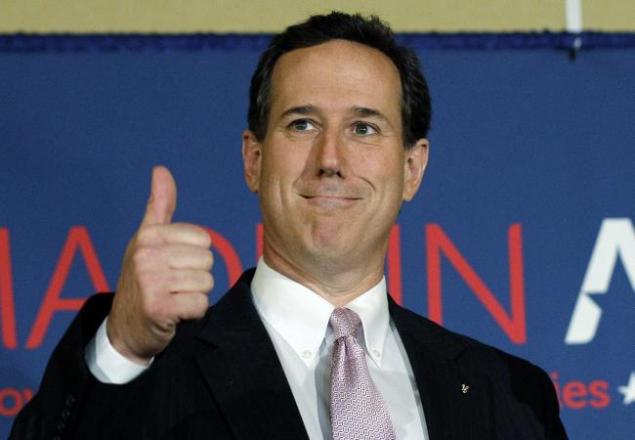
Rick Santorum

You would be forgiven for thinking that Rick Santorum disappeared back into the political wilderness with the end of the 2012 presidential campaign, destined only to pop up occasionally on Fox News to wring his hands about the private sex lives of his neighbours, or to pen wacky columns for World Net Daily.

But you would be wrong.

The great and the good of the Republican Party (and Mark Sanford) have been showing up at the annual Faith & Freedom Coalition conference this past week, to stroke the egos of the evangelical “Christians” and “moral majority” Bible-thumpers therein assembled. Featured prominently among the speakers, none other than Rick Santorum.

Politico reports his speech in the context of Santorum’s implicit criticism of the Mitt Romney 2012 campaign, specifically the focus on the “You Didn’t Build That” theme:

The former Pennsylvania senator recalled all the business owners who spoke at the Republican National Convention.

“One after another, they talked about the business they had built. But not a single—not a single —factory worker went out there,” Santorum told a few hundred conservative activists at an “after-hours session” of the Faith & Freedom Coalition conference in Washington. “Not a single janitor, waitress or person who worked in that company! We didn’t care about them. You know what? They built that company too! And we should have had them on that stage.

Rick Santorum is dangerous, because he alone (with the partial exception of Ron Paul’s principled candidacy) instinctively gets something about the American electorate that is all but completely lost on all of the other past and potential Republican presidential candidates over the past two election cycles.

He understands that – as we saw with the recent Bilderberg Meeting protests – an increasing number of people are becoming disenchanted with the status quo system of economic and financial governance, and are losing faith in the American dream and any hope of regaining the middle class lifestyles that they once took for granted. And he understands the undercurrent of resentment resulting from this realisation, and the corrosive effect on Mitt Romney’s base of support.

The article continues:

Santorum did not mention Romney, whom he challenged in the primaries, by name during a 21-minute speech in a dim ballroom at the Marriott (a company on whose board Romney sits). But there was no doubt who he was talking about.

“When all you do is talk to people who are owners, talk to folks who are Type A’s who want to succeed economically, we’re talking to a very small group of people,” he said. “No wonder they don’t think we care about them. No wonder they don’t think we understand them. Folks, if we’re going to win, you just need to think about who you talk to in your life.”

Trying to carve out a role as a leading populist in the 2016 field, Santorum insisted that Republicans must “talk to the folks who are worried about the next paycheck,” not the CEOs.

This really gets to the rub of the problem, and is an exact restatement of my recent arguments against the secretive Bilderberg group. The Bilderberg attendees meet in secret with other highly successful people just like themselves, and presume to prescribe policies and solutions for the entire world based on their extraordinarily narrow range of experience. Similarly, the majority of GOP presidential candidates wouldn’t spend a moment of their lives in the company of someone who couldn’t write them a fat campaign cheque at the end of the day, but instinctively understand the preoccupations and concerns of business owners and rich financiers. And based on this narrow set of acquaintances they presume to create solutions “for the good of the country”.

Rick Santorum stands out among a sorry crowd of potential Republican contenders as someone who can not only talk to the “47 percent”, but also speak up for them.

Never mind that the solutions that he proposes – more protectionism, propping up inefficient, declining American industries and preventing the inevitable and needed transition toward a more knowledge-based economy – would actually harm this constituency so dear to his heart, as I explained last year when I dubbed him the “Pied Piper of Pennsylvania”. By virtue of the fact that he actually takes the time to understand and advocate for this group of downtrodden Americans, he will inevitably pick up a lot of support should he choose to enter the 2016 Republican presidential primary race.

Unfortunately, by voting for Rick Santorum not only do you get his special nostalgic, doomed-to-failure (but very populist) economic policy, you also get the basket of socially regressive and (in some cases) out-and-out bigoted policies for which he proudly and unapologetically stands. Hence the danger.

Yes, it is slightly ridiculous to be thinking about 2016 already. But at the present time, there is only one Republican who really gets it when it comes to the economic frustrations of the American middle and working class. And the danger – the Santorum Threat – is that if the economic outlook has not significantly improved by the time of the next election, and if the rest of the Republican field remains incapable of sympathising with anyone other than hedge fund managers and “job creators”, the man who lost out to Mitt Romney in 2012 could steal the nomination in three years’ time.

Profit Maximisation vs Public Space

Will Hutton is quite possibly the only person left in Britain who thinks that it would have been a good idea if we had joined the Euro at the currency’s inception (disclaimer: I thought so too at the time, but in my defence I was a naive sixteen-year-old and I didn’t know anything back then). So at this point in time we should probably take most of his public pronouncements with a very large pinch of salt.

However, when the bestselling author and economist writes about matters other than economics, he can sometimes make a lot of sense. Writing in The Guardian today, Hutton makes a very cogent point relating to architecture and town planning, and the way in which too much development in Britain today is focused solely on commercial and retail space, with little or no thought given to public areas or civic spaces that are often the heart of a neighbourhood.

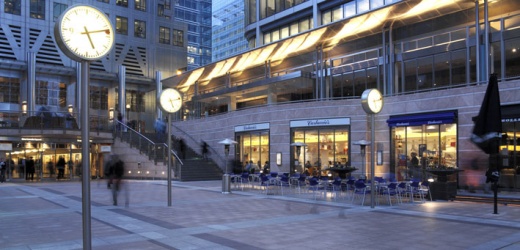
Canary Wharf - Hundreds of restaurants and shops, no public spaces
Canary Wharf – Hundreds of restaurants and shops, no public spaces

With regard to London’s Canary Wharf district (where I have experience of working), a large financial centre increasingly luring business away from the City of London, he writes:

Commercial developers behind the likes of Canary Wharf – the pioneer of vast, privately controlled spaces since emulated in the shopping centres of Liverpool One and Bristol’s Cabot Circus – want to reduce public space as much as they can. They want to be free to configure where we walk, what we visit and who has access because thus they can maximise sales per square foot of shopping and rents.

Public space costs money twice over: it has to be paid for by taxes (and we know many corporations do their utmost to avoid tax) and public space represents lost revenue. In a world in which everything has to be consecrated to “wealth generation”, providing a critical mass of public space that can be used for multiple public and social uses has been a burden too far in almost all recent large-scale urban regeneration projects throughout the country.

This is certainly true. While I love the architecture and the tall, glass and steel buildings that dominate the skyline in that part of the city (a little bit of lower Manhattan in London), it is also true that at times it can feel almost crushingly soulless. And the reason is precisely as Hutton states – almost every square foot of land is designed either to generate revenue, or to ease the passage of pedestrians so that they can move from making one transaction to the next, and then back to their office, with the utmost efficiency.

The most damning proof can be seen after the last Friday-night office revelers leave the bars and steak houses by the waterfront late on Friday night – until Monday morning, when the first bankers sleepily ascend from the tube station, the place is a ghost town for the duration of the weekend. Why go to Canary Wharf if you are not working there? And it is a terrible shame, because but for the addition of a small park, an area of grassland for people to picnic on, and a few other minor alterations, the area could be pleasant to visit at any time of the week.

Hutton continues:

One of the delights of Brighton’s Lanes or Oxford’s covered market is the possibility of escaping the tyranny of the shopping chains. You can go there just to hang out, shop, eat, browse or go for a stroll – and in this environment there is a chance to encounter the new shop, pub or restaurant. The insurgent is on level terms with the incumbent. Minton quotes many European architects who despair at our impoverished, weak municipal authorities unable to deliver such a social and public ethos compared with those in Europe: the Swiss, hardly tribunes of the left, have a strong civic tradition and fabulous livable cities. Why can’t we?

And he concludes:

Britain can do better than be a land fit for the owners of Westfield and Canary Wharf. It can be a place we want to live in; where we go to the city because we want to go to the city – not just to shop. The Victorians built great parks and civic spaces with great pride, openly revolting against the depredations of free market capitalism.

Of course, as with most Will Hutton articles, his central point is served alongside a healthy scoop of scepticism about capitalism and the free market, but in this case his well-worn views on that subject are worth enduring in order to appreciate the central message.

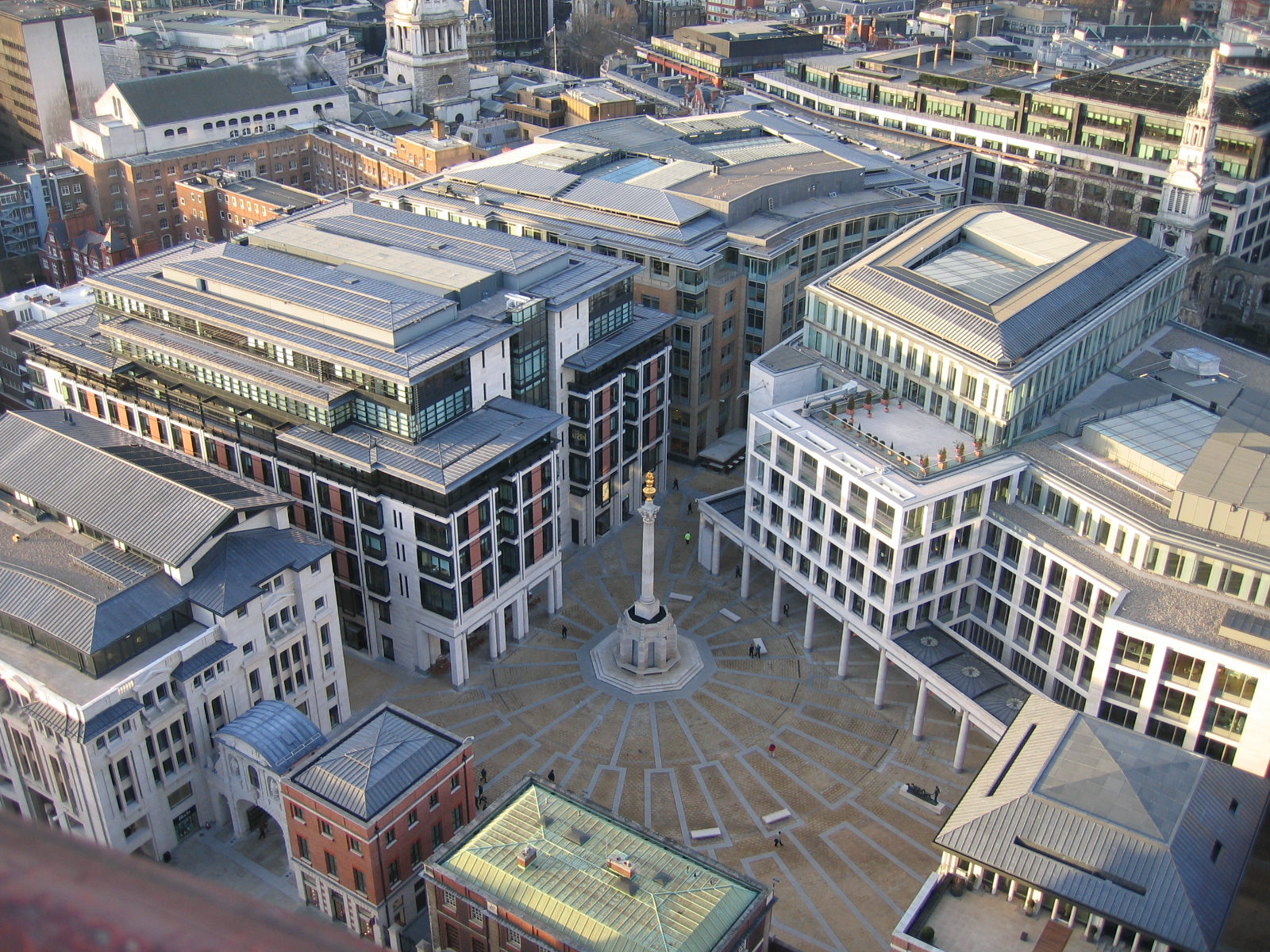
Many times, wandering around Canary Wharf or other similar developments (such as Paternoster Square near St Pauls) I feel almost resentful that in the midst of many areas in this wonderful city, there is nothing to do but eat and shop. Very few benches, almost no green space but a multitude of signs reminding me that this is privately owned land and that I must at all costs obey the directions of the ubiquitous security guards who patrol the courtyards and wield their authority.

Paternoster Square - a cathedral to consumerism next to St Paul's Cathedral
Paternoster Square – a cathedral to consumerism next to St Paul’s Cathedral

To reiterate, I am not against any of these new developments – no Price Charles, I. I love the new architecture that is changing the face of London, and many of these new precincts have helped to revive struggling areas – the new Westfield shopping centres in Shepherds Bush and Stratford, for example.

But an insufficient balance has been struck in recent years, and given the current anti-establishment and (to some degree) anti-capitalist feeling currently roiling the country, it does not speak well that many of London’s newest, shiniest developments – with rare exceptions – serve as pure consumerist temples, with no civic heart.