
St Pancras Station, London.
St Pancras Station, London.

The scandal continues, and embattled French President Francois Hollande’s annual new year’s press conference did absolutely nothing to bring any closure to the saga of the early morning croissant deliveries. Hollande did not even deign to acknowledge the disrepute that he is bringing on his nation during the text of his prepared remarks, and when asked about it during open questions he shot the line of questioning down.
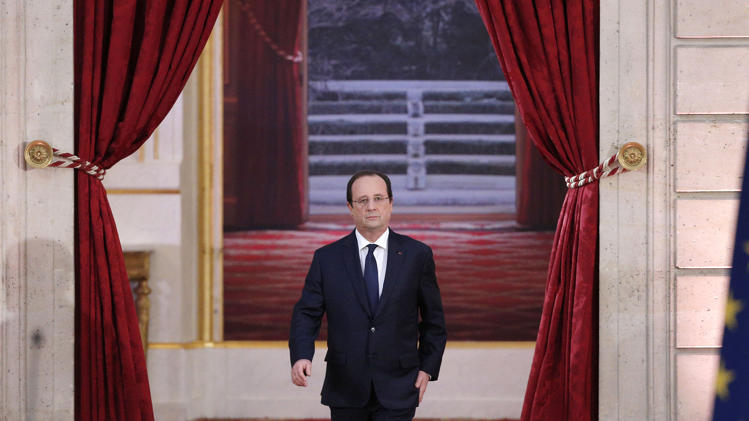
The Guardian summarises the day’s happenings as well as anyone:
Asked in an exceedingly roundabout way whether Trierweiler was still the first lady, Hollande made clear his view that matters pertaining to his private life should be resolved in private, and said he would be taking no further questions on the subject (although he did promise to sort out his situation before his visit to Washington), and that was pretty much that.
There were one or two mild-mannered attempts to come at the question sideways, by asking about changes to France’s strict privacy laws, for example, and a brave bid by the Associated Press to come at it head on (“Does the president’s image matter?”). All received the same curt treatment.
The nature of the press conference revealed a couple of things to me – firstly, the huge deference shown by the local French press to their political leaders in any matters relating to personal behaviour and actions deemed to belong in the never-well-defined “private sphere”. Several commentators have already picked up on the fact that David Cameron or Barack Obama, embroiled in a similar scandal, could never have walked away from a set-piece press conference so unscathed. But what also shocked me was the unwillingness or inability of the foreign press, less beholden to the French political establishment for future favours and a good ongoing working relationship, to press home the lines of questioning. They had little to lose, but almost without exception they failed to follow up after Hollande declared the subject off-limits.
Still, if the French are content with their current arrangement whereby their politicians are free to engage in any manner of behaviour provided that it does not effect their performance in the day job, I suppose that this must be accepted, and the curiosity/outrage felt by many of us foreigners set aside. It is still my gut feeling that the supposed outrage of the French people at the invasion of Hollande’s privacy is partly a view expressed on their behalf by the elites who harbour skeletons of their own, but the polls suggesting that French attitudes toward Hollande remain unchanged are fairly conclusive.
I am glad to see that various media sources have finally started asking the question that I raised on this blog the same day that the story broke – namely, the implications for President Hollande’s security (and, by extension, the national security of the French republic) given the fact that he was taking off from the presidential palace incognito on the back of a scooter, unattended by any bodyguards during the night. As I said at the time:
Skulking around the capital city in the dark with limited protection, exposing oneself (and the secure, uninterupted governance of one’s nation) to any risk of kidnapping, physical harm, blackmailing or worse in the pursuit of a booty call, is probably not behaviour that voters would wish to see in a serving head of state. Transgressions which take place before taking office, honestly explained, atoned for and forgiven by the electorate, are one thing. Actively committing further such acts whilst in office is another matter entirely.
Three days later and the Telegraph picks up on this same concern, which if we are to have no expectations for how a head of state conducts him or herself in their private life is the only real area left for criticism.
Le Monde reported Monday that Mr Hollande had visited the apartment on the Rue du Cirque with two trusted police officers in tow and with another team providing extra security, about ten times since last autumn.
But Mr Valiela said security was so lax that the president’s bodyguards failed to spot the paparazzi who had been spying on the apartment and taking pictures of the president arriving and leaving on two occasions just before and after the start of the new year.
The security detail also apparently failed to inquire about who the flat belonged to.
Yikes. This is pretty much the worst case scenario that I had considered – the lean security team being unaware of paparazzi in the vicinity of the president, let alone any more serious threats. My point, I suppose, is that in accepting the office of president and the powers and responsibilities vested in that office, a person has a responsibility to refrain from endangering the continued exercise of those powers. I’m not suggesting for a second that the French president should follow the lead of the United States and travel around in the excessive pomp of an Obama motorcade, not for a second. But being the leader of your country and sneaking off virtually unprotected to consummate a secret relationship seems to be an either/or proposition. The two just don’t sit very well together, even leaving questions of dignity and decorum entirely aside.
The next chapter in the pointedly unquenched rumour mill is that Hollande’s alleged mistress may be pregnant, thus continuing another time-honoured French presidential tradition. The French president may come to regret his failure to tackle the stories swirling about his personal life head-on when he had the world’s full attention.


The Barbican Estate, London.

When someone in a position of power or influence makes a series of errors so calamitous, profound and grievous that they do real and lasting damage, and fails to ever acknowledge those mistakes or to make any kind of apology, one tends to disregard what they have to say on that particular topic in future. Think neo-conservatives on starting wars in the Middle East, the Labour Party on the economy and Dick Cheney on absolutely anything.
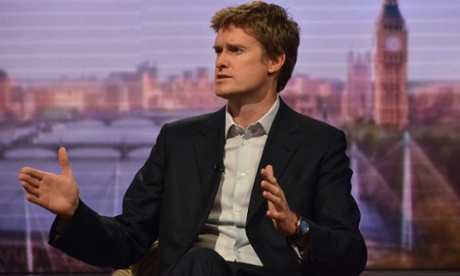
But when someone owns their past mistakes and appears to have learned from them and grown as a result, it is quite different. And so it is with the Labour Party and their approach to education policy while in opposition. Sure, they haven’t undergone a Road to Damascus conversion and mended their ways entirely – the suspicion that their preoccupation with equality of outcome lurks behind everything remains quite strong – but nonetheless I want to give credit where credit is due. And today, credit belongs to Tristram Hunt, Labour’s shadow Education Secretary.
This kudos comes on two fronts. Firstly, the Daily Mail reports that Hunt is repudiating some of Labour’s past educational priorities and actions whilst in government, in terms of pushing as many children as possible to just cross the “no longer an idiot” threshold for the benefit of statistics and league tables, but then failing to challenge them any further:
Labour created a culture of low expectations for state school pupils, Tristram Hunt, the shadow education secretary has admitted.
He said it was a ‘great crime’ that the last government had failed to pushed children more than simply aim for them to achieve a C grade at GCSE level.
He also admitted that exams had been dumbed down in recent years, saying ‘yes, there are elements of grade inflation’.
This is actually quite a significant admission from someone in the shadow cabinet, and the refreshing bravery deserves recognition. The enshrining of the “good” GCSE result as being a grade falling within the A* to C range has certainly created a perverse incentive to push as many laggardly students up into the bottom threshold whilst neglecting the needs of those who had the potential to achieve much more.
This willingness to look as past initiatives and admit mistakes in the field of education policy now makes Labour much more credible on this topic, and they have immediately stolen a march with their new proposal to license teachers in a bid to drive up professional standards. The Guardian reports:
In a sign of how Labour hopes to outflank education secretary Michael Gove on teaching standards, Hunt is to revive a plan the last government abandoned on the eve of the 2010 general election.
Teachers would have to show they are meeting the high standards and would be required to undergo training to update their skills.
Under Hunt’s plans, teachers would have their lessons assessed by other teachers in a system overseen by a new Royal College of Teaching.
As a society we often pay lip service to the importance of education and good teachers, but when it comes to standing behind that commitment, too often we have been found lacking. We claim to admire good teachers and value them, but do not compensate the best of them anywhere near adequately, and do not expect them to adhere to the professional codes of behaviour (as encapsulated by ongoing training and recertification) that are common in many other prestigious lines of work.
Indeed, Tristram Hunt goes on to make this very point:
Hunt insisted that his plans would raise the standing of the teaching profession. He said: “This is about growing the profession. This is about believing that teachers have this enormous importance. Just like lawyers and doctors, they should have the same professional standing which means relicensing themselves, which means continual professional development, which means being the best possible they can be.”
The fact that these proposals are coming from Labour and not the Tories also confers a immediate advantage in terms of winning backing from the teachers unions, which would be essential to their smooth rollout if ever the proposals became law.
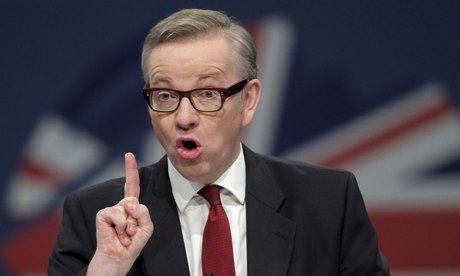
And crucially, from a purely political perspective its puts the Conservatives in the awkward position of having to either reject a potentially very sensible proposal to improve educational standards, or to adopt it and face cries of plagiarism. Rather despairingly, one has to wonder why Michael Gove’s Department of Education didn’t manage to think up a policy proposal such as this on their own.
If Labour ever showed the wherewithal to perform a similar trick on the subject of economic stewardship – admitting their past fault for growing the state to unsustainable levels and proportions of national output, thus making the pain of the recession so much worse for those people more reliant on the government, and acknowledging that some rebalancing is not only necessary but desirable – then the Tories might really be in trouble.
But I imagine there is a greater chance of it snowing in hell than there is of Ed Balls following Tristram Hunt’s lead any time soon.

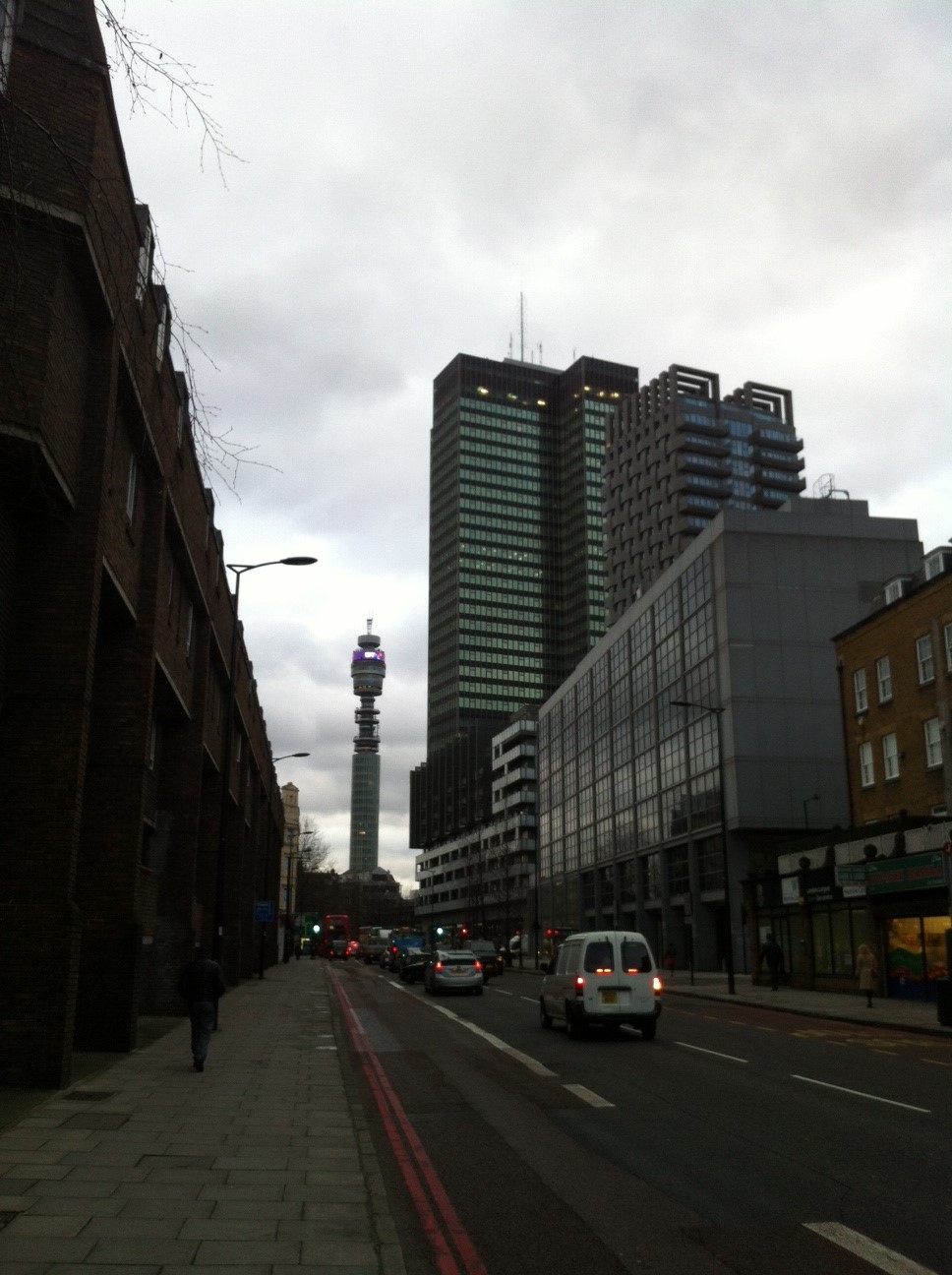
Hampstead Road, Euston, London.


