In Opposing EVEL, Labour Struggles To Defend The Indefensible

Saltire Downing Street BBC EVEL constitutional reform scotland


It’s mighty hard to defend the Labour Party’s current position on devolution and constitutional reform.

Most normal people would not call loudly for a United Kingdom constitutional convention unless they had a brightly shining idea – hell, at least a rough approximation – of what they wanted to come out of it.

And if the concept of EVEL – English Votes for English Laws – is one of those acceptable outcomes, why not simply say so and sidestep all of the criticism now coming their way from the Conservative Party, the media and the general population?

But the Labour Party was silent or dismissive of EVEL during today’s parliamentary debate on the ramifications of the Scottish independence referendum decision precisely because they intend to use a UK constitutional convention (or rather, the distant prospect of one) as a convenient means of burying EVEL forever and maintaining their already heftily unfair electoral advantage in perpetuity.


Continue reading

Defection of Mark Reckless to UKIP Serves Notice To The Establishment

mark reckless nigel farage ukip defection 3


A little less conversation, a little more action.

With the pumped-up remix of the classic song ringing in their ears, UKIP delegates to the party’s 2014 conference in Doncaster stood and cheered and welcomed their latest high profile parliamentary defector: now ex-Conservative MP Mark Reckless.

Say what you want about UKIP’s policies, internal contradictions and some of their wackier personalities, but this does not look like a party of economically left-behind losers or over-the-hill retirees caught up in nostalgia for times past.

As Mark Reckless himself noted, to thunderous applause: “The only nostalgia I see is that of the European bureaucrats as they cling to their fading 1950s vision.”

And in a political landscape where talk is cheap and real progress is rare, all of the action and momentum right now is with UKIP.

Continue reading

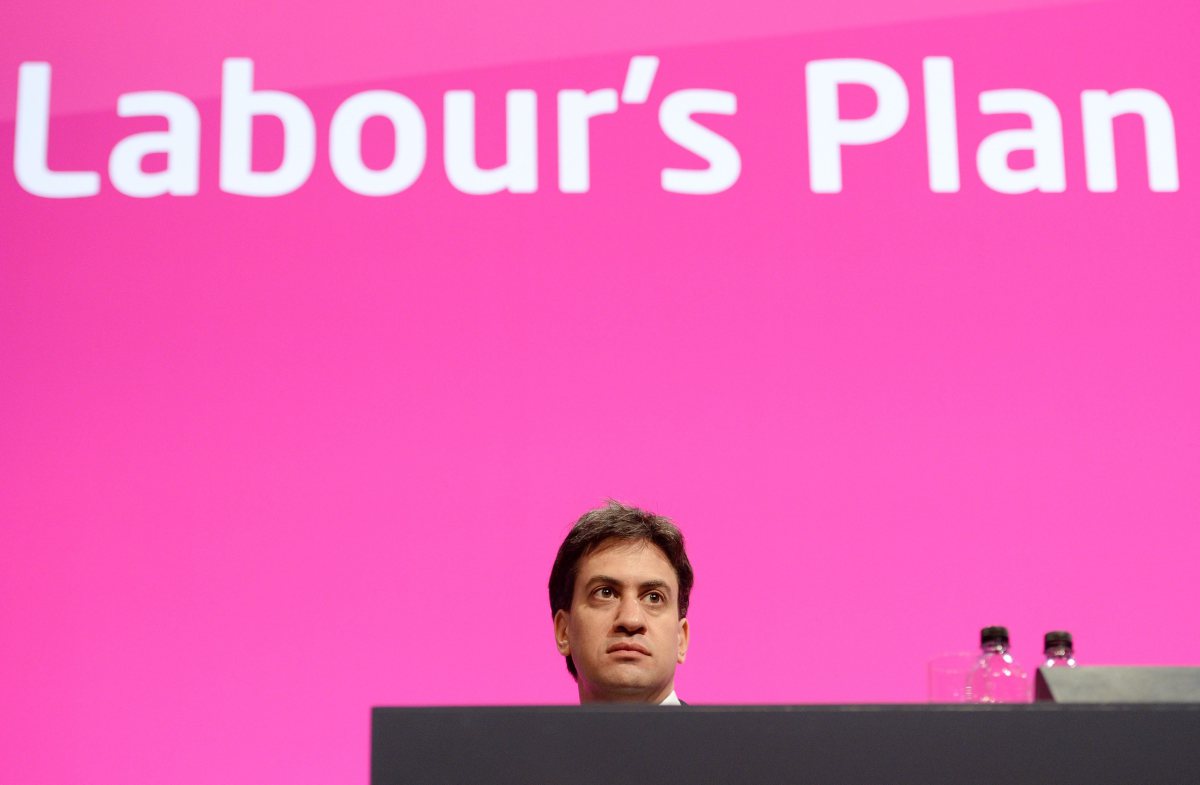
Labour Party Fails To Find Its Soul In Manchester


The 2014 Labour Party conference may be a rapidly receding memory, brushed aside in the news cycle by UKIP’s conference and Parliament’s vote to authorise military action in Iraq (again) – but it will take months for the stench of misplaced smugness, moral superiority and directionless, crusading fervour left in Labour’s wake to fully dissipate from the Manchester Central Convention Complex.

The bland, ambitious, vaguely telegenic personalities were the same.

The toe-curlingly bad speeches were the same.

The policy announcements (where they existed) were the same.

The delegates milled around, congratulating themselves for being the only ones in Britain who care about the poor, the weak and the vulnerable. So much the same.

They called themselves “brother” and “sister”, and talked about “solidarity” as though they were still engaged in some kind of real, urgent, principled struggle.

But it was all an act.

Today’s Labour Party, increasingly under the New Labour era of Tony Blair and Gordon Brown – and now reaching its dismal nadir under Ed Miliband – is nothing but an orchestrated pretence, an amateur dramatic society production of Labour’s Glory Days, with Ed Miliband playing the part of Clement Attlee and introducing Andy Burnham, in his first dramatic role, as Nye Bevan.

Continue reading

With Constitutional Reform, Labour Puts Politics Before Country

ed miliband devolution


The idea that Welsh, Scottish and Northern Irish MPs should no longer be able to vote on matters affecting only England when devolution prevents any English reciprocity is the only reasonable, logical viewpoint for a British citizen to hold – particularly in the aftermath of the Scottish independence referendum.

One might expect that a political party so self-avowedly obsessed with promoting “fairness” would recognise this universal truth, and work swiftly to ensure that the new reality comes to pass.

But Ed Miliband’s Labour Party has many priorities, and advancing this most fundamental form of constitutional fairness is very far down the list. Indeed, it is almost universally viewed as a threat.

The status quo keeps alive the possibility of a future Labour government in Westminster, while ensuring that a Conservative UK government is prevented as much as possible from interfering with any left-wing policies that take shape in the devolved assemblies.

Continue reading

Music For The Day


“Jesu, Joy of Man’s Desiring” by Johann Sebastian Bach.

Performed on the piano by Dame Myra Hess, whose music did so much to soothe the spirits of Londoners during the Blitz.