
–
Agree with this article? Violently disagree? Scroll down to leave a comment.
Follow Semi-Partisan Politics on Twitter, Facebook and Medium.

–
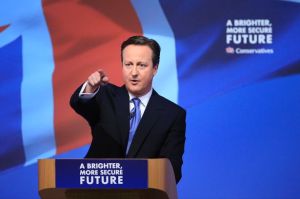
What self-respecting conservative could now bring themselves to support David Cameron’s triangulating, authoritarian, soul-sappingly unambitious Tory party?
Has the time finally come for small-c conservatives to admit that they have been utterly betrayed by Cameronism, and salvage what dignity we have left by deserting David Cameron’s ideology-free Conservative Party?
Pete North argues the case convincingly in an important blog post deserving of wide coverage, in which he excoriates the modern Tory Party for its rootless, centrist managerialism:
If your values are remotely conservative, look around you. We have not seen a reduction in the size of the state. Sure, the registered number of state employees has gone down but that’s because so many functions have been farmed out instead of closed down or truly privatised. Let me remind you that outsourcing is not privatisation – and given the ineptitude of government procurement it’s not going to save you any money either.
Moreover, the so called party of defence has wasted vast sums of money on big ticket toys, most of which barely work and vastly reduce our capability. This is the party that left us without a maritime patrol aircraft and made a pigs ear of procurement.
We have seen back-tracks on free schools and education reforms, u-turns all over the shop, and whatever you might think of welfare, you don’t have to be a foaming leftist to see that it is failing those most in need. Moreover, what is it in your estimation thinks Britain is showing its mettle going grovelling to 27 other states for permission to make a marginal tweak to welfare and immigration policy?
No, the Conservative party is just a continuation of politics-free managerialism, beset by the usual nannying authoritarianism, big spend, high waste massive government and has baulked at any principled reform in the spirit of Mrs Thatcher. At best we can say that Cameron’s conservatives are marginally less dreadful than Miliband’s Labour party would have been.
I must admit that I find myself coming to the same conclusion – I now look at the party of David Cameron and George Osborne and find it utterly indistinguishable from the party of Tony Blair. Neither believe in truly shrinking the state – in fact, both see electoral advantages in keeping it bloated. Neither believe in empowering the individual over the government. And certainly neither believe in the importance of defending the nation state against antidemocratic supranational entities like the European Union.
I haven’t been a member of the Conservative Party since I left Britain for Chicago back in 2010, but when I came back there was little prospect of me rejoining the party for which I campaigned so enthusiastically that year. At the dog end of Gordon Brown’s reign of terror, a fresh Conservative agenda seemed just what the country needed. But after having somehow failed to win that election outright and entering into coalition with the Liberal Democrats, by 2012 it was very clear that in David Cameron we had found ourselves not a new Margaret Thatcher but rather a reanimated Ted Heath.
Of course, you wouldn’t know it from reading the left-wing press or the Left’s loudest voices on social media, all of whom are convinced that David Cameron’s utterly bland, uninteresting government are on an ideological crusade to drown government in the bathtub, trample human rights and sell off Our Blessed NHS to their corporate crony friends.
This would be the same Evil Tory government which has maintained international development spending at 0.7 per cent of GDP while slashing Defence to the bone, which only half rolled back Gordon Brown’s spiteful and unproductive increase in the top rate of income tax, and which ran for re-election on a manifesto pledging a paternalistic, nanny state “plan for every stage of your life”.
But it is on the question of the European Union and Brexit where the Conservative Party are now betraying their principles and their base most grievously, as Pete North points out:
Put simply, if you want to leave the EU, you have already made up your mind that change has to happen and in this there is no room for sentimentality for the brands that used to represent what we believe. Cameron’s empty shell of a party is in no better shape than Labour and if your loyalty to to a brand matters more then you are part of the problem. And that goes double for Ukippers.
If you are a conservative, Cameron is not on your side. He takes you for stupid with phantom vetoes and bogus reforms. This is a man who is lying to us all and treating us with contempt. In the final analysis it’s up to you to decide what it is you really want. If you do want to leave the EU, don’t come bitching to me for pointing out that the Tory Vote Leave operation is catastrophic. Break ranks and take it up with them.
This is absolutely right. The Tory leadership has been indulged and given the benefit of far too many doubts, and the time has come for small-c conservatives to call the bluff of every single sitting Tory MP who has ever uttered a eurosceptic sentiment – and to rain down shame and unrelenting pressure on those whose commitment was false.
Candidate after Conservative candidate won selection by their local association by prancing around as though they were the World’s Biggest Eurosceptic. But now we know that in too many cases, it was all an act. Handed an unexpected majority, a weak opposition and the lucrative prospect of uninterrupted career advancement, too many of the new generation of Conservative MPs are more interested in securing Tory hegemony in government than actually accomplishing any of the things that one might reasonably expect a conservative legislator to do in office.
Hence the sanctimonious, preachy letter signed by 74 of the new Conservative intake, lecturing their older colleagues on the importance of “party unity” and not doing anything to sow divisions during the referendum campaign. But of course, this advice only applies to eurosceptic MPs – europhiles eager to spout David Cameron’s pro-EU lines are unleashed to say and do as they please in their effort to keep Britain inside the EU. It is only the Brexiteers who are muzzled.
One might ordinarily feel sympathy for these older eurosceptic Conservative MPs, being lectured on the importance of putting the party first and not “banging on about Europe” by the new upstart generation of careerists. But then you look at what veteran eurosceptic Tory MPs are actually saying and doing, and any potential sympathy melts away, to be replaced by sheer incredulity that the people who spent twenty years posing as strong critics of Brussels have apparently given no thought at all to how Britain might best leave the European Union.
This could have been the finest hour of politicians like John Redwood, Michael Gove, Daniel Hannan, David Campbell Bannerman and Mark Pritchard. But instead they have either chosen personal loyalty to David Cameron over trifling questions about British democracy and self-determination by campaigning with the Remain side, or they are firing out contradictory statements and half-baked mechanisms for Brexit which are implausible at best, and outright reckless at worst.
And this failure to live up to their rhetoric is not on some trivial issue or arcane policy area, where political horse-trading is to be expected; it is on the single most defining, central question to face the United Kingdom in a generation. On this acid test of conservative principle, nearly all of the “big beast” eurosceptics within the Conservative Party have been found wanting. As few as five (generally second-tier) Tory ministers could end up campaigning for Brexit.
So what possible reason for the failure of the Conservative Party – given the fact that the long awaited referendum could be very imminent – to express anything other than murmurs of approval for David Cameron’s transparent act of political theatre masquerading as a “renegotiation”?
These are the only plausible motivations which come to mind:
1. Despite what Conservative candidates and MPs said when they sought selection and ran for election, they secretly believe in the EU project and want Britain to remain a part of it
2. They lack faith in Britain’s ability to survive or prosper outside the European Union, and this pessimism overrides whatever euroscepticism they have
3. They simply don’t care one way or another
4. They do want to see Britain leave the EU, but they would much rather see their own careers blossom under David Cameron’s patronage than risk isolation by campaigning against the prime minister
None of these possibilities is appealing. And none makes me eager to sprint to my polling station in 2020 to reward them with five more years.
The Conservative candidate in my own constituency of Hampstead and Kilburn (north west London) was a jabbering fool who thought that the EU was simply magnificent, the bedroom tax was actually a tax, and that Britain should unilaterally disarm and get rid of Trident because the United States would do our dirty work for us should the need ever arise. I didn’t vote for him and he didn’t win, because why would the liberal voters of Hampstead vote for a Tory who walks and talks like a Labour candidate when they could just vote for the real thing instead?
But although this breed of Conservative did not manage to win Hampstead & Kilburn in 2015, it is clear that many others did succeed in forming part of the new intake, while a similar number of longer-serving Tory MPs holding the same wishy-washy views entered the parliamentary party in previous elections.
It may sound harsh, but they are all wasting time – ours and theirs. Now is not a time for vacillating centrists and Red Tory / Blue Labour moderates. Now is not a time for fastidious, parsimonious obsession with our public services to the exclusion of all else, or a prime minister who aspires to be a lowly Comptroller of Public Services rather than a world leader. There are still far too many people trapped in welfare dependency or minimum wage drudgery for us to consider pulling up the drawbridge on radical conservative reform.
Steady-as-she-goes Blairism has now reigned for nineteen years, first under the auspices of New Labour and latterly through the coalition years and on into David Cameron’s majority Coke Zero Conservative government. And it is a dull, authoritarian, uninspiring philosophy for government, worthy of a country which has given up on playing any role in shaping human destiny going forward, preferring to jealously obsess over our public services and what’s in it for me, me, me.
I believe that Britain is better than that, and that we still have much to offer the world – particularly if we can now seize this last, best chance to break free of the European Union and rediscover what it means to be an independent, globally engaged, sovereign country once again.
And if achieving this dream means that David Cameron and the Conservative Party in its current form must be circumvented, undermined, sabotaged, attacked and sent to their Armageddon, then so be it. We will have lost nothing.
NOTE:
I encourage you to read the entirety of Pete’s article, and to follow his blog. The analysis of the coming EU referendum and Brexit process to be found there is far superior to anything you will find in the mainstream media, and if there was any justice Pete would have the kind of platform and following usually only obtained by the C-student nepotism beneficiaries who seem to win many of the coveted gigs writing for prestige publications.
Reading Pete’s blog in particular can be a good reminder of the optimism behind the Brexit movement, and it is essential when we fight this campaign that we do not sound like dreary bores, cranks or obsessives focussing on the negatives of Brussels. For however dreary and stultifying the European Union may be, we are at our best when we present our compelling vision of a modern, forward-looking, globalised Britain which seeks to embrace the world rather than shutting ourselves off in a protectionist, mid-century regional trading bloc.
–
Agree with this article? Violently disagree? Scroll down to leave a comment.
Follow Semi-Partisan Politics on Twitter, Facebook and Medium.

–
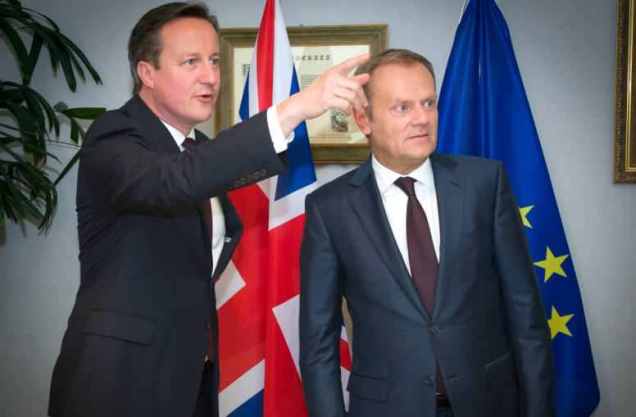
Whether you are staunchly pro-EU or eager for Brexit, the prime minister is playing the British people for fools with his manufactured last-minute crunch talks with Donald Tusk. Do we really want to reward this kind of behaviour from our politicians?
If the conventional media narrative is to be believed (and it isn’t), David Cameron has secured a “major breakthrough” in his talks with EU leaders on our suddenly-central concern about migrants claiming benefits.
Of course, this “win” consists solely of a so-called “emergency brake” on immigration which could only be applied with the consent of other EU members. And migrants coming to Britain to supposedly claim benefits is so far down the list of things which are egregiously offensive and wrong with the European Union that the whole pantomime is laughable. But this is all that David Cameron has, and much of the media is gamely writing it up as a meaningful event.
From the Telegraph:
[European Council President] Mr Tusk had been due to publish his final offer to the UK today, but has now agreed to hold another 24 hours of talks after Mr Cameron told him that the deal on the table was “not good enough”. The Prime Minister warned Mr Tusk that Britain could vote to leave the EU unless Brussels does more to ensure that the number of foreigners coming to the UK is reduced.
[..] Last week the EU offered Mr Cameron a watered-down version of the “emergency brake” that would allow him to temporarily limit access to benefits – but only if Brussels agrees that UK public services are being strained. It was described by Eurosceptic Tories as a “bad joke” and “an insult to Britain”.
On Sunday night Mr Tusk accepted Mr Cameron’s demand that any “emergency brake” comes into force immediately. It allows Mr Cameron to reject claims that his “emergency brake” will be subject to a veto by Brussels.
Of course, this is being breathlessly talked up by Downing Street:
“It is very significant that they have conceded this,” a Downing Street source said. “They are saying that in the current circumstances, levels of migration into the UK meets the requirement for an emergency brake. It shows that this is not a theoretical brake and that it is something that will definitely happen.”
So because Donald Tusk has generously granted that the “emergency brake” may come into force straight away, we are supposed to gratefully take our crumbs from the table and forget about the fact that as with every other area that David Cameron once airily promised to reassert British sovereignty, the critical decision ultimately rests with Brussels.
What a transparently false and cosmetic exercise this all is. If Donald Tusk was prepared to release his “final offer” to the UK today and is now only delaying publication until tomorrow, no significant changes can possibly be made in that short span of time.
David Cameron may have huffed and puffed and made a great show of telling journalists that the current deal is not “good enough”, but he will secure no more from Donald Tusk. 24 hours is insufficient time for Tusk to hammer out a new deal and get sign-off from the twenty-seven other EU member states, so if anything radically different does appear tomorrow it will have been pre-agreed by the other twenty-seven and almost certainly shared with Cameron too as part of a cosmetic, scripted act of political theatre.
At this stage in the game, Donald Tusk knows what the other EU leaders are willing to concede and David Cameron knows exactly how much he can demand if he wants an agreement to be signed off in order to ram the referendum through by June (and this still seems very improbable to me). The only ones in the dark are the British public, who were never meaningfully consulted before the prime minister jetted off to air our concerns to Brussels – concerns which he never took the time to consult over or understand before embarking on his mission.
As I and many other Brexit bloggers have pointed out for some time, there is no “renegotiation” taking place, nor has there been. But if we must persist in talking in terms of a renegotiation then we should recognise that David Cameron is sitting at the same end of the bargaining table as the other EU leaders, sharing as they do a common goal of keeping Britain within the political union. We, the British people, are at the other end of the table, on our own. Nobody is arguing our case. Meanwhile, our prime minister colludes with his European colleagues to determine precisely how little they can get away with offering while still buying our acquiescence.
Of course, all of this is quite immaterial, depressing though it may be. For there is no change or concession possible which will change the European Union from being an explicitly political, tightening union whose every act and function serves to drain sovereignty and autonomy from its constituent member states and pool it in Brussels, where it can be wielded by politicians who make the Westminster political establishment look like the model of transparency and accountability.
On this point at least, Daniel Hannan is absolutely right when he writes in CapX:
Either way, the ‘row’ between David Cameron and Donald Tusk, which journalists are reporting so breathlessly, is non-existent. There is nothing to have a row about. Either Westminster is still in charge of welfare policy, in which case the PM doesn’t need anyone’s permission to change the rules; or Brussels is, in which case any alteration requires a treaty change which, as all sides now accept, won’t happen for many years.
I realise that reporters have to write something. I’m sure someone somewhere will have been interested to read that the Downing Street menu involved apple and pear crumble. But, please, guys: the whole thing is such an utter, obvious, confection. You can be pro-EU or anti-EU. There are sincere arguments both ways. But let’s not pretend that anything is changing.
But while the back-and-forth with Donald Tusk and the eventual reveal of whatever package they have already cooked up is hardly news, it is still worth reminding ourselves of the lengths to which the British prime minister will go in order to trick the British people into believing that he has radically changed the terms of our EU membership.
And it should rightly make one wonder: if David Cameron can be so manipulative when it comes to the European Union, how can we trust him on any other matter?
–
Agree with this article? Violently disagree? Scroll down to leave a comment.
Follow Semi-Partisan Politics on Twitter, Facebook and Medium.

–
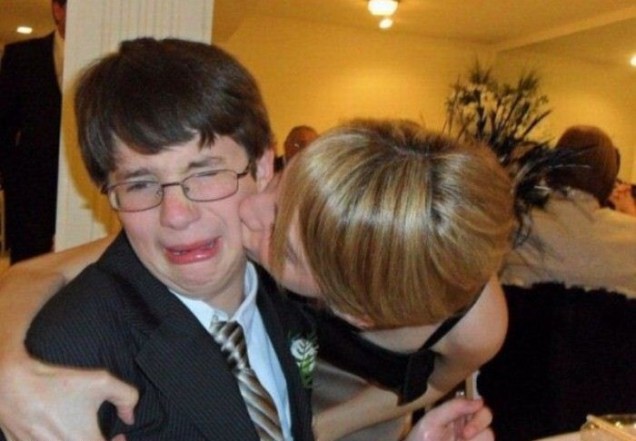
Kissing? You’re doing it wrong
Just when you think the infantilisation of students and policing of normal human behaviour could not possibly get any more ridiculous, it does.
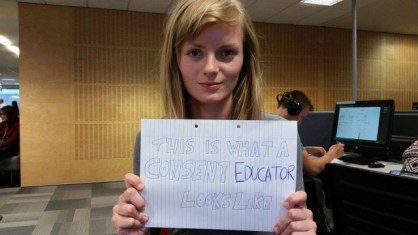
This time, the University of Southern California takes the spotlight for organising a “Consent Carnival” to dispense the usual patronising lessons to the already-converted.
But part of this particular carnival was a “kissing booth” – not the fun kind, but an authoritarian re-education booth which drilled the following checklist into the minds of all those who enter:
Affirmative: We’re really excited to share this kiss with you and we’re letting you know!
Coherent: We’re present and able to recognize exactly what’s happening when we give this kiss to you.
Willing: We made the decision to give you this kiss ourselves, without pressure or manipulation from you or anybody else.
Ongoing: Should you come back for another kiss, check in to see if we’d still like to give you one.
Mutual: Sure, we offered you a kiss, but that doesn’t mean you have to accept it. Coming over to our table doesn’t forfeit your right to say no.
Note the particular absurdity of step four, “ongoing”. What, precisely, is the statute of limitations on an initial act of consent? If two kisses are one second apart, does the second kiss require a new act of consent? How about five seconds? Thirty seconds? One minute? Five minutes? Thirty minutes?
(Apparently the correct answer is ten minutes).
And for this ludicrous act of infantilising nonsense to mean anything, evidence of consent-checking needs to be written down or recorded in some way, should it become necessary to prove consent in the event of future dispute. So freshmen should probably all be given checklists to carry around with them in the event that they hook up with someone while at university.
Signatures should be mandatory – preferably witnessed and countersigned by a trusted third party. Sure, turning natural, healthy human relationships into risk-minimising contractual agreements may strip away any intimacy or spontaneity from our lives, but that’s the price we have to pay. To cleanse ourselves of our “rape culture”.
Better yet, since police forces across America are already considering equipping even more of their officers with body cameras, perhaps the US government should just order one for every citizen and make it a criminal offence to not wear it at all times. I’m sure they would get a great discount for ordering in bulk.
Surely that is the best way to deal with the endemic “rape culture” in our society and university campuses. After all, if we all receive mandatory training in how to deal with every possible scenario which may emerge in the course human relationships and surrender our privacy to constant on-body video surveillance (since good people have nothing to hide), then all of our problems will be solved.
Because without the consent classes and the checklists and the body cameras and the safe spaces, we will all revert to our primal, animalistic roots, and be a constant danger to anybody who strays too close to us.
Thank the Lord for the University of Southern California and their kissing booth, saving humanity one sanctimonious lecture at a time.
–
Agree with this article? Violently disagree? Scroll down to leave a comment.
Follow Semi-Partisan Politics on Twitter, Facebook and Medium.

–
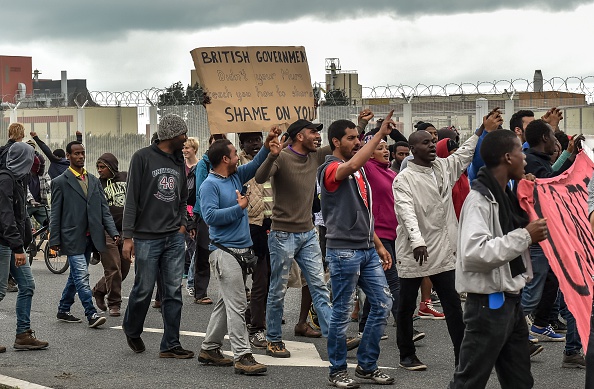
Rather than reflexively blaming the hard-hearted British people for failing to welcome more refugees from Syria, our political elites should acknowledge their part in making a more generous humanitarian response a political impossibility
Dan Hodges has a reflective and rather wistful column in yesterday’s Telegraph, in which he says that people who pride themselves on their progressive values must accept that they have lost the argument, and that Britain will not make a more meaningful contribution in terms of accepting a number of Syrian asylum seekers more in line with many of our European neighbours.
Hodges writes:
There is no longer an argument to be had about whether or not significant numbers of refugees should be admitted to the UK. The pendulum of empathy – which swung briefly following thepublication of photos of little Alan Kurdi lying motionless on that Turkish beach – has swung back. The clashes at the Hungarian-Serbian border. The Paris attacks. Cologne. They are shaping public opinion now. And it will not be reshaped.
[..] There is no longer any point in expending energy on morally comforting tokenism. The argument about whether to accept 3,000 refugee children from Europe, or whether to accept them from camps within region, is as relevant to the crisis we – or more importantly, they – are facing as debating whether to accept 3,000 refugee children from Mars. According to the latest figures from the UNHCR, there are 4,597,436 registered Syrian refugees. 39 per cent of them are under the age of 11. A further 13 per cent are between the ages of 12 and 17. To continue to use the children of Syria in a proxy argument over our willingness to “do our bit” is not an exercise in compassion but an exercise in grotesque self-indulgence.
There is also no longer any point attempting to delude ourselves the solution to the Syrian refugee crisis can be found in Europe. Yes, we have the resources to provide sanctuary. But we do not have the political will to provide sanctuary. Actually, blaming the politicians on this one is a cop out. We do not have the public will to provide sanctuary.
Hodges is right that there is simply no longer any public will to take in poor, tired, huddled masses trying to escape from civil war and the particularly murderous theocracy of ISIS. And his notion of a “pendulum of empathy” is powerful and accurate way of describing what has happened to public opinion here.
But why is this the case? Why has the pendulum swung so hard away from generosity and toward selfishness? While Dan Hodges’ piece is eminently pragmatic in its acknowledgement of failure and suggestions for a feasible way forward, it fails to ask why we are where we are – why British hearts are so hardened to the idea of welcoming many thousands more refugees.
I would make a couple of suggestions:
1. The line between refugee and economic migrant has become almost impossibly blurred in our globalised age of jet travel and smartphones. People living in benighted parts of the world know better than ever just how good we have it in prosperous countries like Britain, and it is easier than ever before (though still perilous for some) for many to travel here – and ever more tempting compared to the life of hardship and drudgery facing them at home if they stay.
But where do you possibly draw the line between economic migrant and refugee? If being in a country engaged in civil war is sufficient qualification then all 22 million Syrian citizens would be entitled to refuge in Europe, and those of other countries too. But this would be quite unfeasible. Besides the impossibility of emptying a country of its every last non-combatant whenever hostilities break out, it ignores the vital agency that at lease some of these citizens must have in fighting for their own freedoms and liberties.
So if not all citizens, how do you choose among those who have risked their lives to reach safety, often with little or no paperwork or proof that they have a particular fear of persecution or harm to distinguish them from any other.
I simply don’t see a way that any such process can be anything other than arbitrary, endlessly bureaucratic and cruel. Add to this the fact that accepting people blindly on a first-come, first-served basis is untenable and creates serious potential national security issues, and the current paralysis is quite understandable, if no less frustrating.
2. Britain has accepted hundreds of thousands of new arrivals through legal immigration routes, particularly from some of the A10 countries which joined the European Union in 2004. And we did so while any talk about the potential impact that this relatively huge wave of immigration might have on community cohesion, housing or public services was instantly dismissed by scornful elites as xenophobic tub thumping at best, or outright racism at worse.
Prior to the rise of UKIP as a legitimate, non-extreme outlet for these concerns, nobody in the establishment was talking about this issue, and the ground was ceded to the likes of the extremist BNP. There was effectively a conspiracy of silence and intimidation against those who questioned the extent of immigration into Britain, with those in power doing nothing to respond meaningfully to public concerns partly because the political class were fortunate enough to belong to the group which disproportionately benefits from immigration and sees only its positive aspects, while other less fortunate people – often those without university degrees and less economic security – were far more likely to feel the negative consequences.
You don’t have to be an opponent of immigration to abhor the undemocratic way that these transformational changes were foisted on Britain by stealth, and without a thought of engaging with the people to consult their views. Indeed, this blog greatly favours immigration, but believes that the negative consequences are real, and can only be mitigated if the process of deciding immigration policy is open, transparent and democratic. But Britain’s immigration policy is none of these things, and one of the consequences of an aloof, disengaged and elitist policy is always going to be massive popular resentment and opposition to those same policies.
Therefore, if we are looking to cast blame or understand why Britain is behaving so apparently harshly in the face of this current humanitarian disaster, should we not first look to the historic cheerleaders of unlimited immigration – the pro EU fanatics, New Labour architects, those who held national power in the 2000s and the virtue-signalling middle class clerisy who flaunted their enlightened credentials by attacking anybody who expressed doubt about what was happening?
Now people will say that it is unfair to conflate immigration and asylum, as the two are quite separate things. And they would be correct – they are separate, and it is unfair. But both economic migration and taking in asylum seekers involve adding to the population and increasing the burden on services and infrastructure which cannot greatly expand to match demand in the short to medium term. And when you sorely abuse the public’s willingness to accommodate one influx of people, they are naturally far more guarded and hostile when it comes to the next, different influx.
If Britain did not have a completely open door to all regional immigration – unheard of in any major country outside Europe – could we have managed the influx of people wanting to work and settle here in a more planned and measured way, and with a modicum of democratic consent from the people? Arguably, yes.
And if Britain had not seen 1.4 million economic migrants settle here from EU accession countries within just the last fifteen years, would there be more willingness now to accept many more refugees in desperate need? Again, arguably, yes.
At least Dan Hodges and the progressive Left would now have had a much clearer grievance if Britain then still failed to admit a larger number of refugees. They would be able to accuse the government and the country of barely concealed racism, and of acting selfishly when nothing had been asked of them before, and do so with real justification.
But we do not live in that alternate reality. We live in the real world, where Dan Hodges and the europhiles got everything they wanted year after year, with Britain’s borders fully open and anyone who complained swiftly painted as a xenophobic Little Englander and banished from respectable society.
And so in 2016, unfortunately it is the desperate refugees – rather than the virtue-signalling progressive Left – who are now paying the price of this arrogant folly.
–
Agree with this article? Violently disagree? Scroll down to leave a comment.
Follow Semi-Partisan Politics on Twitter, Facebook and Medium.


