On Flirting With Social Conservatives

How many people does it take to give traction to a political story?

Two. Rand Paul, and the editor of Politico.
Not again.
Not again.

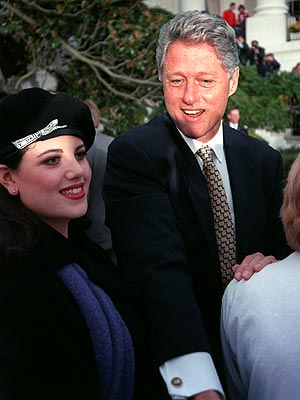
Rand Paul has been popping up here, there and everywhere in the US media recently, reminding us of all the sins from Bill Clinton’s two presidential terms and suggesting that Clinton’s actions from the late 1990s somehow represent a current-day Democratic Party war on women in 2014.

The whole thing is a fairly transparent effort by Rand Paul, a principled and capable first term senator, to increase his popularity with the wary social conservatives from the base of his party and (as a convenient bonus) to tarnish Hillary Clinton’s image a little in the event that she decides to run for president in 2017. I said as much as far back as 27 January:

Senator Paul is absolutely right to call out Bill Clinton’s behaviour for what it was – an abuse of his presidential power and symptomatic of a predatory attitude toward women. What makes this different from what the Republican Party has been doing, however, is the fact that the Lewinsky affair was a private indiscretion, and the harm done to women took place in the course of interpersonal relationships between those people directly involved. The Republican Party, on the other hand, has sought to push for legislative outcomes – around contraception, abortion and equal pay to name a few – that would impact all women in the United States. Private action vs. public legislative action. False equivalence.

Others said the same, and this should have been case closed. But Politico, knowing a click-generating story when they see one, happily takes the bait with a full-length feature by Liza Mundy in their magazine:

Like it or not, we’re having a national flashback to the 1990s—replete with images of thong underwear near the Oval Office, semen-stained blue dresses and all manner of sordid details we thought we’d outgrown. These nostalgic tidbits come to us courtesy of Kentucky Senator Rand Paul, the possible 2016 presidential contender who, anticipating a matchup against Hillary Clinton, has lately been determined to remind America what happened the last time the Clintons occupied the White House. In a series of recent interviews, Paul has resurrected the Monica Lewinsky scandal, which first surfaced in sensational fashion in 1998, when the president was accused of having an affair, of sorts, with the 20-year-old White House intern.

Paul, to his credit, hasn’t dawdled on the lurid details—rather he’s framed the discussion as a matter largely of workplace behavior, challenging Democrats’ self-image as the party friendly to women. “If they want to be credible in saying they defend women’s rights in the workplace,” Paul said in an interview last week, Democrats should “disown” Bill Clinton, whom Paul considers “a predator, a sexual predator, basically.”

Like it or not? We could all have avoided the flashback if Politico had chosen not to play along by devoting a whole feature to achieving Rand Paul’s ends, but then Politico are not known for taking the high road.

Given the fact that the reanimation of the Lewinsky scandal is just part of a grand plan by Rand Paul to curry favour with the socially conservative base of the Republican Party, surely he could have picked a better issue to make his own personal cause? After all half of the congressional party has been guilty of similar indiscretions at one time or another – the only thing separating their actions from Clinton’s being their proximity from the Oval Office at the time they were committed. If Rand Paul hopes to make himself look good by contrast, it will be fellow GOPers against whom the contrast is drawn just as much as it is Bill Clinton. And those guilty Republicans – the likes of Newt Gingrich, for example – may not take kindly to a Rand Paul campaign whose main platform is a repudiation of the very actions that made them notorious.

But on closer examination, it appears that Rand Paul has few other options given his need to improve his standing with social conservatives without alienating his support from the younger, more libertarian wing of the party. The Atlantic sums it up well:

Given that one of his key selling points in the GOP primary will be his (relative) support among younger Americans, Paul can’t exactly crusade against gay marriage or the legalization of pot. Bashing Bill Clinton provides a politically safer way to champion moralism. It certainly helped George W. Bush, who in 2000 won Christian right votes, despite playing down social issues, because he played up his personal, anti-Clintonian religious and moral code. Paul seems to be attempting something similar, telling Maureen Dowd, “In my small town, we would disassociate, we would in some ways socially shun, somebody that had an inappropriate affair with someone’s daughter or with a babysitter or something like that.”

This is right on the money. Rand Paul is generally principled in his libertarianism and has few outlets with which he can appeal to socially conservative voters, many of whom grant an exception for big government when it comes to forcing people to conform to their moral code. There is no point in Rand Paul launching a crusade against gay marriage – it would sound false coming from his lips, and besides, that ground is doggedly occupied by Rick Santorum and (less plausibly) Newt Gingrich, Rudy Giuliani et al. The same can be said for the issue of marijuana legalisation, where a U-turn would do harm to his younger base.

The one area where Rand Paul can really show his moral “uprightness” – since his libertarianism does not allow him to force his beliefs on others through law – is by recalling tawdry behaviour from a past Democratic president.

If this is done carefully, Paul may reap rewards. By emphasising Bill Clinton’s predatory attitude toward women, he also effectively criticises many of his Republican peers and rivals without having to go on the record as having explicitly done so.

The danger, as I have previously pointed out, will come about if Rand Paul persists in trying to create a narrative of a Democratic “war on women” comparable to that waged by the bulk of the Republican Party. The electorate is more than capable of distinguishing the difference between the private actions of an individual (Bill Clinton’s affairs and womanising behaviour) and the concerted legislative efforts of an entire political party to attack the rights of half the population.

There are certain former and likely future Republican presidential candidates  – think Cain, Bachmann, Palin, Perry and Santorum – who can run and maintain their popular support on a platform of deliberate, even joyful ignorance, and not suffer as a result. Rand Paul is not a member of this group. His popularity rests more on principles and reason, and on people who admire these things in a politician. Continuing his efforts to equate a presidential sexual indiscretion from the 1990s with the general policy platform of his party will begin to test their patience.

By all means, talk about the persecution of Christians abroad and the moral shortcomings of the forty-second president of the United States if you want to. They are real, legitimate issues and there are real, indisputable facts to back them up, even if some of them do date back to 1998. But to go any further in an attempt to court social conservatives – a volatile and unpredictable part of the Republican party – is dangerous for a libertarian.

There is only so much common ground that a libertarian can find with a social conservative. And if the libertarian knows what is good for him, he stops trying once he has found and exploited it.

Spare A Thought For Those Who Spy On Us

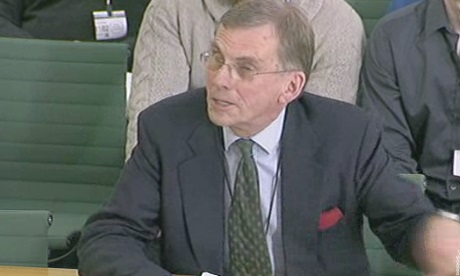
Today saw a rare moment of insight into the workings of Britain’s intelligence services and the mindset of those who lead them. It was but a fleeting glimpse, though – provided by a former employee, summoned to give evidence to the Home Affairs Committee in Parliament.

Unrepentant.
Unrepentant.

The Guardian provides a concise summary of former GCHQ chief Sir David Omand’s testimony, but the real showstopper is this question, posed by Conservative MP Michael Ellis, and the response he receives from Sir David:

Q: Have the unauthorised leaks have a negative effect on morale?

Omand says that his impression, from the outside, is that it has been a bitter blow.

There have been concerns about reputation.

And they have been accused of breaking the law. They have been accused of using the US as a backdoor, to circumvent UK law. Omand says he does not think that is true.

There has been an impact on families too, he says.

And he suggests there has been an impact on recruitment. Would parents encourage their children to join an organisation accused of acting like this.

In other words, as far as David Omand is concerned, the problem is not that the all-powerful British security agencies have been collecting bulk data on the personal communications of British citizens without reasonable suspicion of criminal intent. No, the real outrage is the fact that in protesting the draconian steps taken in the name of our safety (but without our knowledge or consent), having found out about them, we have hurt the feelings of the people who have actually been doing the spying. Never mind the right to privacy – the fragile egos of our intelligence analysts are apparently at stake.

Also of interest is Omand’s opinion on whistleblowing in general, as revealed in his response to a question from Labour MP Paul Flynn:

Q: Don’t we need whistleblowers?

Omand says he supports the free press. In a well-regulated society, you don’t need whistleblowers.

So there we have it. If society is well regulated – meaning, as far as I can tell, if the elites are free to do whatever they think needs to be done under a secret gentlemen’s agreement, and the public are willing to be docile and credulous and to relinquish any expectations of oversight or checks on power – then there would be no need for whistleblowers such as Edward Snowden.

And in a sense, Sir David Omand is right. A “well-regulated” society such as this would not need whistleblowers, because it would have sacrificed so much of its integrity and worth that there would be nothing left for an honourable whistleblower to defend.

This Parliamentary performance by the former head of GCHQ provides a very revealing insight into the self-entitled mind of our political and national security elites. In their worldview, not only are they perfectly entitled to treat the average citizen with suspicion and intercept their personal communications at will, but they should also be allowed to do so with total impunity, and without ever being made to feel the slightest bit bad about their actions, either through having their clandestine work revealed by a whistleblower, or by reading a negative newspaper editorials on the subject in the aftermath.

Omand is essentially telling us that our first thought as members of the public, when confronted with proof of massive government surveillance by whistleblowers such as Edward Snowden, should not be for ourselves, the people whom the security services supposedly exist to protect and serve, but rather for the sensitive feelings of the GCHQ operatives and their political masters.

If that strikes you as being slightly ludicrous, that’s good, because it should.

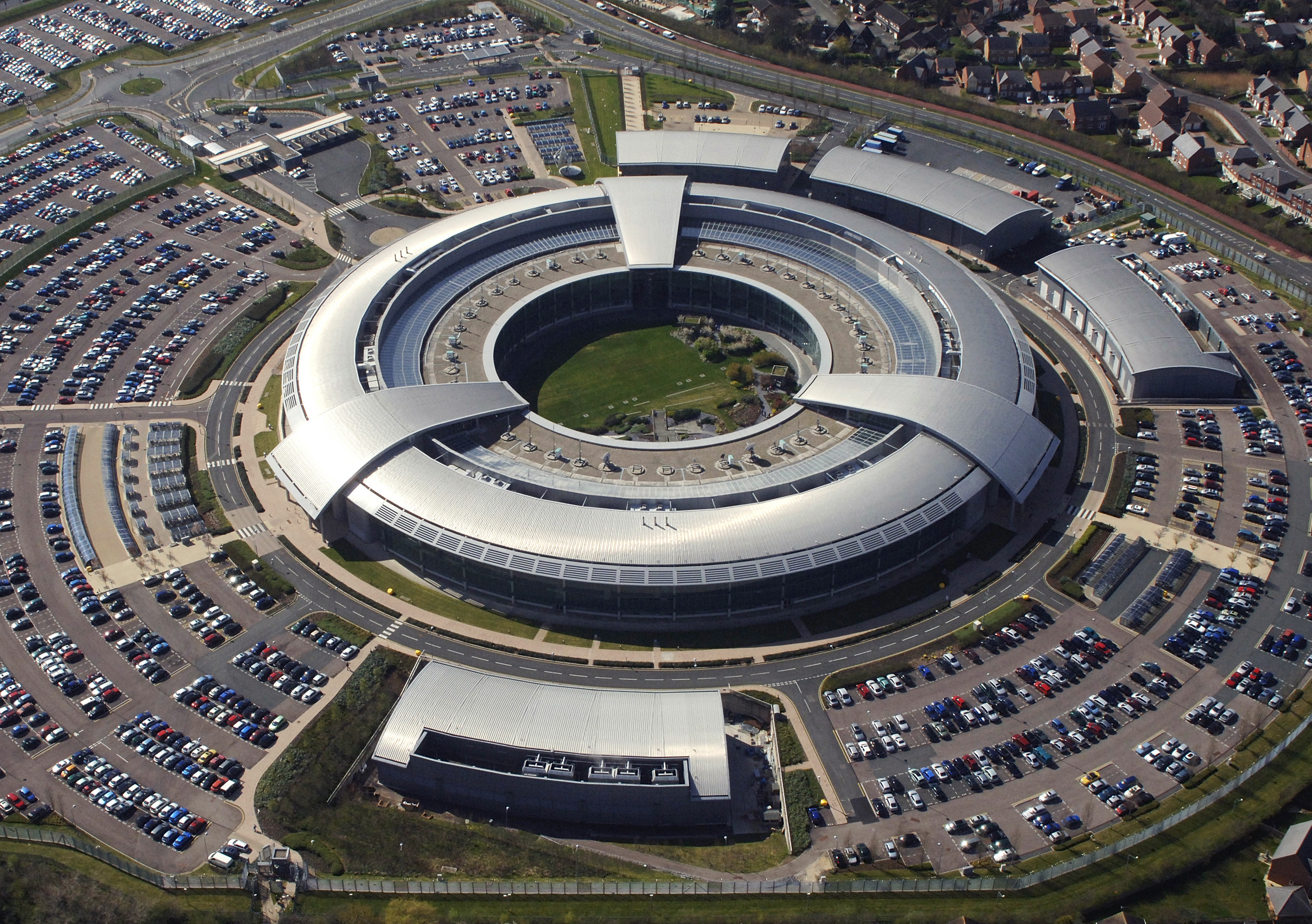
A fearsome building, apparently filled with very sensitive souls.


The impact of the Snowden revelations on morale within GCHQ should not be our overriding concern at this time. The organisation has been flagrantly violating the privacy of fellow British citizens – who should not be their target – unknown and unopposed, and a certain dose of guilt and shame for having done so is probably quite appropriate.

Of course, ultimate responsibility for the actions of the intelligence services rests with the government and the elected politicians who sanctioned the draconian use of surveillance practices without ever seeking the consent of the people. It is true that people working for GCHQ and the intelligence services are given orders and must carry those orders out as part of the job, and I also appreciate the power of organisational or institutional loyalty, and the corrosive effects of groupthink, both of which may play a part in allowing intelligence agency operatives to justify some of the actions that they take. But this does not absolve them of all responsibility.

Yes, the buck stops with the Prime Minister and the Home Secretary, but good men and women at all levels within the hierarchy who knew of what was taking place should have stood up and said something. The sad fact is that were it not for a disgruntled and outraged American citizen blowing the whistle and releasing incriminating documents to the media, the British public would still be blissfully unaware of what has been taking place.

So where is this well-regulated society of which Omand speaks? In Britain, it clearly does not exist, as The Guardian’s summary of another of his responses makes clear:

Omand says a whistleblower has to have exhausted his other options. Edward Snowden could have gone to his employers, or to Congress. Imagine if he had walked into Congress, flanked by the editor of the Guardian, saying you have been lied to. He could have achieved his objectives, without having had to take more than 50,000 documents.

Is it not striking that when pressed to come up with an alternative to releasing sensitive intelligence documents to the media, the only alternative scenario to whistleblowing offered by Omand occurs in the context of the US government, and not the British?

Firstly, it is somewhat ludicrous to suggest that Edward Snowden could have followed this course of action. There were those in Congress, after all, who were aware of the NSA’s activities but who felt bound not to talk about them. And with unrepentant national security fanatics such as Peter King and Mike Rogers in the House, Snowden would likely have been disappeared before he had finished uttering his first sentence.

And secondly, how does Omand picture the same scenario playing out in the United Kingdom? Clearly not well, as he doesn’t expand upon the scenario during his testimony. So the concerned GCHQ analyst walks into Parliament flanked by Alan Rusbridger of the Guardian, and tells MPs that they had been lied to. What happens next? How, in any way, would that analyst’s objectives of raising awareness of the malpractice be accomplished? It wouldn’t.

Whistleblowing actions of the type carried out by Edward Snowden are sadly necessary, because it is simply not enough to flag misbehaviour by the national security complex to elected representatives in Parliament or Congress. In the US Congress there are a sufficient number of cheerleaders for Bush-era, PATRIOT Act-style security that the whistleblower could almost certainly expect immediate reprisal and persecution, and in the case of the British Parliament, there sadly exists a lazy general consensus that the security services should be left in peace to do whatever they think is reasonable to keep us safe.

In neither country, Britain or America, is there a plausible scenario where a concerned citizen could approach elected politicians with evidence of wrongdoing by the state and expect that their personal privacy and liberty to be respected and guaranteed in the aftermath. We know this because time and again, we see the majority of public officials (with a significant but outnumbered minority of brave dissenters) closing ranks to defend the intelligence agencies and the status quo. Therefore, the only way to bring a halt to these practices is by releasing information into the public sphere – which, it should be acknowledged, has been done in a very measured and sensitive way by Snowden, and is certainly no indiscriminate data dump – to increase public awareness and concern.

It would have been foolish to expect the former head of GCHQ to offer anything other than a full-throated defence of the work that he and his agency were so deeply involved in for so long. And so, in that sense, we learned nothing new from Sir David’s testimony to the Home Affairs committee today. There will be no immediate change of policy and no deathbed confessions of wrongdoing from anyone in power just yet.

And yet there was progress today. As well as the softball questions lobbed by sympathetic MPs with a similarly authoritarian outlook, Sir David Omand also had to face some tough and awkward questions. Even in centralised, deferential Britain, there are some MPs willing to do their job and represent the interests of their constituents.

Take this small ray of hope and combine it with Ed Miliband’s curious new-found interest in ensuring that the intelligence agencies receive more thorough public scrutiny and oversight, and you have the makings of what now passes for a good week for civil liberties and citizen privacy in 21st century Britain.

The Day We Fight Back

thedaywefightback


Sometimes help comes from the most unlikely places. That was certainly the case today when Ed Miliband used his speech at the Hugo Young memorial lecture to call for major changes to the oversight of Britain’s intelligence and security agencies.

The Guardian reports:

A major overhaul of the oversight of Britain’s intelligence agencies, which could lead to an opposition politician chairing parliament’s intelligence and security committee and reform of the intelligence commissioners, needs to be introduced, Ed Miliband has said.

The Labour leader praised Barack Obama for starting an “important debate” in the US – after the White House appointed a panel in the wake of the Edward Snowden leaks – and called for a similar debate in Britain.

In some of his most extensive comments on the NSA leaks, Miliband told a Guardian audience that reforming the oversight of GCHQ, MI5 and MI6 was “definitely” part of his campaign to challenge “unaccountable power”.

Though the details remain sketchy, it appears that Miliband envisions quite a far-reaching review, looking not just at the methods used by the security services but also the degree to which the agencies are funded, the scope of their responsibilities and the granting of a more formal role in oversight to the main opposition party:

Miliband made clear that his challenge to “unaccountable power” would include Britain’s intelligence agencies as he said that reform should focus on two areas. These are parliament’s all party intelligence and security committee, which is always chaired by a senior MP from the governing party, and the commissioners who oversee the intelligence agencies.

The Labour leader said: “I already believe, and this is what my Labour colleagues have been saying, that there are clearly changes that are going to need to be made in relation to the intelligence and security committee and the oversight it provides.

“That is everything from the resources they have at their disposal, who chairs the committee and whether it should be somebody from the government party or the opposition party, their power to compel witnesses – a range of issues.

While this may warm the heart of many a weary libertarian, it must be noted that Miliband has barely scratched the surface in terms of confronting the growth of the British national security apparatus – after all, even miracles have their limits.

Miliband praises US President Barack Obama for starting what he calls an “important debate” but neglects to mention that Obama would have quite happily allowed the NSA to continue to violate the privacy of US and world citizens in secrecy and in perpetuity, and that he is actively seeking to extradite the person who really started the debate – Edward Snowden – back to America to face charges of treason. Thus restated in the proper context, Obama’s carefully cultivated philosopher-king image begins to lose some of its sheen, as does Miliband’s boyish admiration of him.

It should also be noted that Miliband sees the answer to concerns about privacy and civil liberties very much in terms of incremental changes to the existing framework, and certainly not in creating cast-iron rules about powers that the government should rightly have and those which should be reserved by the people.  In particular, he sees the fact of ministerial oversight and sign-off of interception requests by the security agencies as a good thing and a solid check on power, rather than the rubber stamp that it really is:

On the ministerial oversight of interception, he said: “It is worth saying also that there is in this country … ministerial sign off when intercept and so on takes place. That is a very, very important safeguard. I do believe the intelligence services do important work. But I absolutely endorse the idea that there are important issues of liberty and liberty is an important part of Labour’s agenda.”

Perhaps Miliband (or indeed David Cameron or Theresa May) would care to set out a scenario – any scenario at all – where the British intelligence services might approach the government to get sign-off for a communication intercept on a surveillance target and actually be rebuffed by a skeptical minister. It simply would never happen.

Elected politicians, weighing the likely fallout of two different courses of action, are almost always going to follow the path that chips away at civil liberties by approving the intercept request rather than defending privacy and denying the request on grounds of insufficient evidence, and later being implicated in a security failure. Decisions on the authorisation of communications intercepts should rest with the judiciary, not the executive.

It is certainly true that public opinion in Britain has not swelled with outrage at the revelations of NSA and GCHQ collaboration in collecting and viewing private communications data with no reason for suspicion and no warrant.

And so Miliband’s contribution to the British debate on privacy and (remarkably) constraints on the power of the state – a very muted, anaemic debate compared to that now taking place in many other countries – is welcome, and very important. In America, politicians from both main parties and of all temperaments have spoken out in condemnation of secret government surveillance, raising public awareness and, in some cases, making continued support for these draconian surveillance measures an electoral liability. Meanwhile, the British political establishment has largely closed ranks in defence of the national security complex, and against the people.

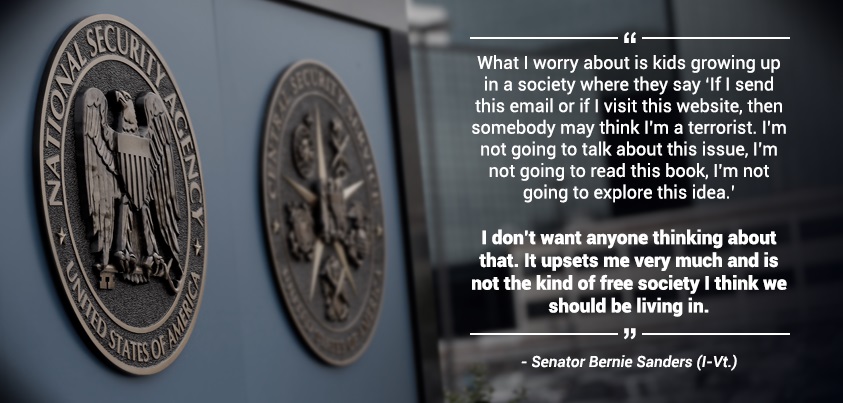
berniesandersNSA

Contrast this quote from the independent Vermont Senator, Bernie Sanders, with Prime Minister David Cameron’s dismissive and aloof response to concerns about the practices of MI5, MI6 and GCHQ:

“We have very good rules in this country. If a telephone call is going to be listened in to, that has to be signed off by the Home Secretary personally. There are very good safeguards in place,” Cameron told ITV’s The Agenda. “You get asked, ‘What are the rules’? I’m satisfied we have pretty strong safeguards. I thought part of the reaction to the The Guardian story was – big surprise, spies learn to spy…it’s to help keep us safe.”

Does the fact that Ed Miliband took the first tentative step in support of civil liberties and dared to suggest the state should not be all-powerful over us mean that the torch has been passed to a new generation of leaders on the issue? Of course not. Miliband seems to place his complete faith in the power of the state to accomplish a whole range of other matters relating to the personal and private lives of the British people, and it is far from certain a this early stage that he is not simply using his Hugo Young lecture to score a few cheap political points with no intention of pursuing the matter any further.

But for perhaps the first time in his senior political career, Miliband spoke out in favour of the private citizen over the government, when the issue of government surveillance has been met with nothing more than dismissal and condescension by Number 10 Downing Street and the rest of the government. And for that action, he must be given some credit.

Today, February 11th 2014, has been labelled The Day We Fight Back against mass surveillance. Numerous websites are carrying links to the organisation, which is supported by more than 360 organisations in 70 countries, and which plans to petition lawmakers in these countries to take action on the serious issue of government surveillance and constitutional overreach.

The Day We Fight Back has been well-marked in the United States, with many prominent politicians adding their voices to the chorus of protest. In the UK, on the other hand, there has been a deadly silence. The focus of the British news media and the political class remains fixed on the issues of flooding in southern England, with elected politicians falling over themselves to be seen in photo opportunities surveying the damage and taking decisive action. Taking any kind of action in support of our right to privacy and freedom from government oversight is far down the list of priorities, where it even features at all.

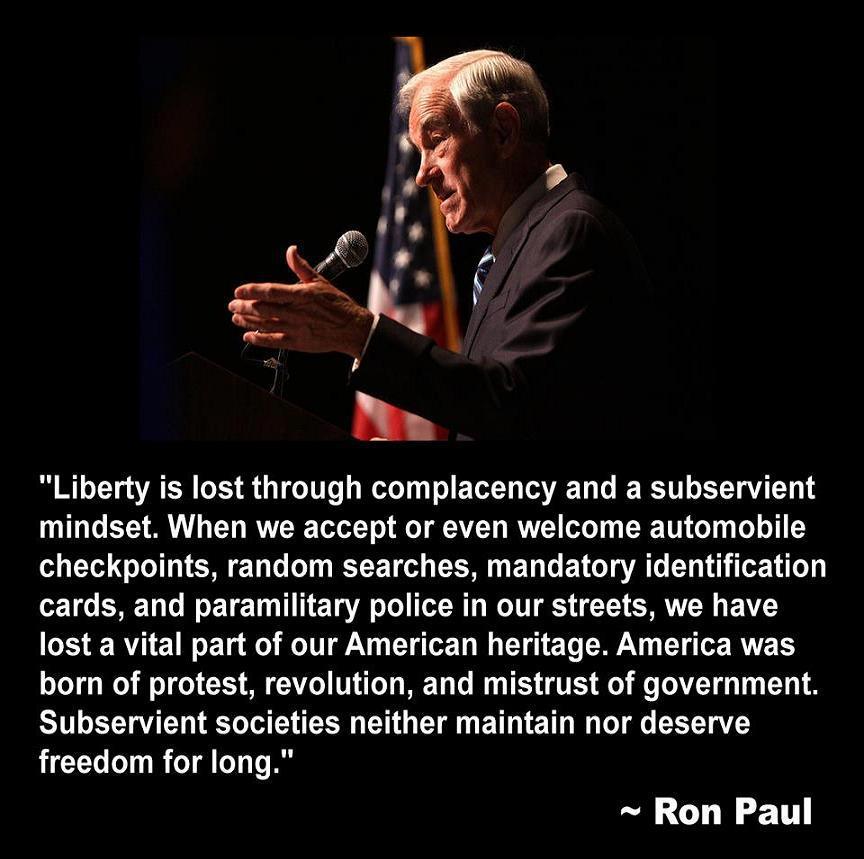
Former Texas Congressman Ron Paul is not right about everything, but his warning about the loss of liberty, echoing Franklin, is pertinent and timeless:

ronpaulwarning

People in Britain who truly appreciate the importance of the right to privacy and the need to place constraints of any kind on government seem to be few and far between, and consequently we must look for allies in unlikely corners.

Ed Miliband’s is certainly the very unlikeliest of corners. But perhaps the Labour leader’s taking a stand for civil liberties will shame others – those who should have been holding this issue aloft all along, and warning of the dangers of an omniscient, omnipotent government – into finally doing the same.


Concerned readers can visit The Day We Fight Back website and add their name to a petition here.

Edward Snowden And The Assault On Journalism

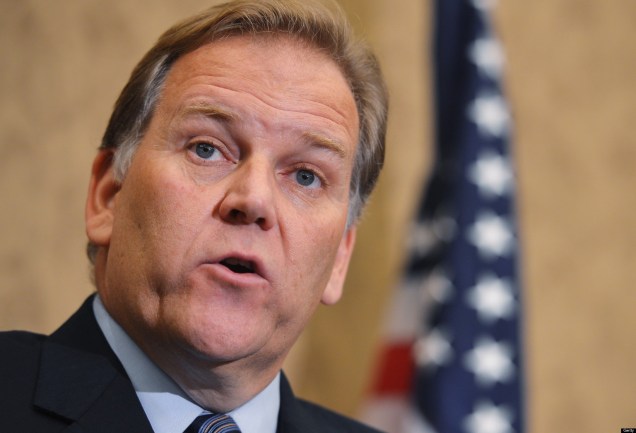
Mike Rogers - basically, Peter King, part 2.


The pig squeals ever louder. Embarrassed at having been caught red-handed secretly violating the US constitution’s prohibitions on unreasonable search and outraged that their power to do what they like without oversight should ever be called into question, those at the heart of the national security apparatus and their apologists in Congress are lashing out. And in their fury and blind fear of being exposed, they are no longer restricting their attacks to the arch-whistleblower, Edward Snowden himself, but are now expanding their campaign to target those journalists who dare to report and lay bare the abuses of power that Snowden revealed.

Representative Mike Rogers, the chairman of the House Intelligence Committee, has become the latest to join the fray, casting doubt on the motives of journalist Glenn Greenwald who worked with Snowden to bring the NSA’s clandestine public surveillance activities into the light of day. The Guardian reports:

Congressman Mike Rogers, chairman of the House intelligence committee, suggested Greenwald was a “thief” after he worked with news organizations who paid for stories based on the documents.

“For personal gain, he’s now selling his access to information, that’s how they’re terming it … A thief selling stolen material is a thief,” Politico quoted Rogers as saying after a committee hearing on Tuesday. Rogers said his source for the information was “other nations’ press services”.

If, by “selling his access to information”, Rogers means “charging a standard rate to write articles for publications based on his investigative journalism” then I suppose the accusation is spot-on. But of course, it could also be leveled just as easily at any other freelance reporter in the country, and is therefore completely meaningless.

Mike Rogers seems to think that the appropriate mode of behaviour on stumbling upon evidence of criminal activity and abuse of public trust by the government and making it public is to enter into some saintlike – almost socialist, shall we say – stance whereby any future commentary or writing about that subject is then given away for free to all and sundry. Only then, according to the Mike Rogers doctrine, would one avoid the charge of profiting from stolen material.

Rogers is apparently unfamiliar with the work of Bob Woodward, perhaps the most high-profile American investigative reporter in living memory and someone who conducted journalism that was equally damaging to people in power but which never raised public speculation that he should be charged with a crime, a point which Greenwald also notes in a recent interview with Vice Magazine:


Of course, Greenwald does not let Mike Roger’s slanderous accusation that he is profiting from the sale of stolen goods go unchallenged, as The Guardian, his former employer, reports:

Greenwald said that the claim was foolish, unfounded, and designed to intimidate journalists. “The main value in bandying about theories of prosecuting journalists is the hope that it will bolster the climate of fear for journalism,” he tweeted Tuesday.

But Mike Rogers was not the only one to go after Greenwald. James Clapper, the Director of National Intelligence – whose principal accomplishment in office has been to sit in front of Congress and lie to them with a straight face about the extent to which the government monitored the communications of US citizens – also decided to use the terminology of crime and policework when discussing journalists who either worked directly with Snowden or dared to publish information that came from him:

James Clapper, the director of national intelligence, has issued a blistering condemnation of Edward Snowden, calling the surveillance disclosures published by the Guardian and other news outlets a “perfect storm” that would endanger American lives.

Testifying before a rare and unusually raucous public session of the Senate intelligence committee that saw yet another evolution in the Obama administration’s defense of bulk domestic phone records collection, Clapper called on “Snowden and his accomplices” to return the documents the former National Security Agency contractor took, in order to minimize what he called the “profound damage that his disclosures have caused and continued to cause”.

This is a strange development indeed, publicly promoting the idea that a journalist doing their job and reporting government secrets that they themselves did not steal, but which were given to them by a third party informant, is somehow committing a crime. The use of the word “accomplices” by James Clappers says everything that you need to know about his point of view on the leaks, and the contempt in which he holds the American public who are now starting to realise the extent to which their government has been acting in secret.

Even the Director of the FBI got in on the act:

FBI director James Comey said that a reporter “hawking stolen jewelry” was a crime, but it was “harder to say” journalism based off the Snowden leaks was criminal, since such a determination had “first amendment implications.”

This one is a real hoot. Director Comey makes very clear with his choice of words that he would love nothing more than to designate Glenn Greenwald’s (and others who publish information embarrassing to the national security elites) actions a crime, but that he is prevented from doing so because of “first amendment implications”. Note that he does not speak clearly and admit that to do so would be a flagrant breach of the Constitution – no, rather there would merely be “implications”, constitutional hurdles and awkward challenges to be overcome on the road to fulfilling his ultimate goal, namely criminalising free speech.

While the administration of George W. Bush long ago did away with any claim by the Republican Party to basic competence on national security issues, the GOP are by no means alone in their inadequacy – many Democrats seem only too keen to join the false prognosticators and the “mission accomplished” cheerleaders in their continuing efforts to sound tough on every issue of security while speaking absolutely no sense at all. Clapper and Comey, it must be remembered, are appointees of President Obama.

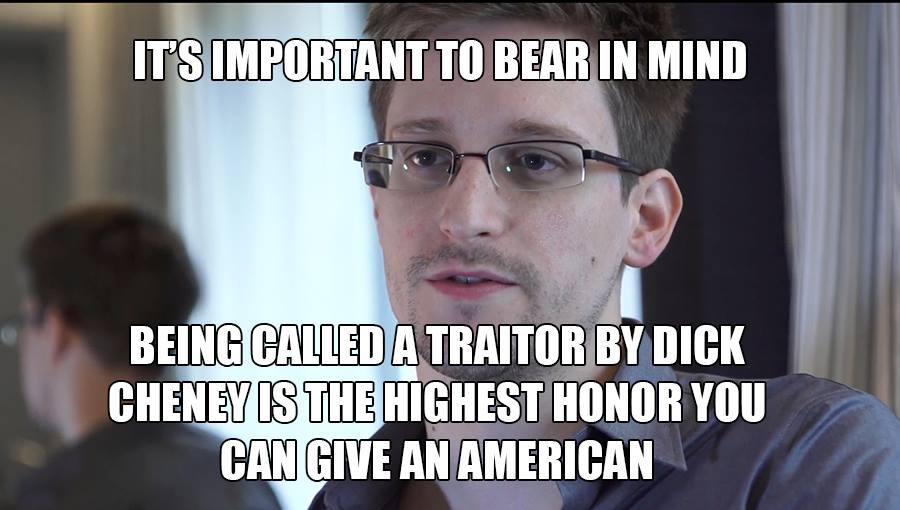
When it comes to those people – be they Republican or Democrat – whose first instinct in any scenario is to defend the government and preserve its power over that of the people – I can only take them as seriously as does this meme that has been doing the rounds:

cheneysnowden


An enemy of Dick Cheney’s may not automatically be a friend of mine. But it gets you a good hefty proportion of the way there.


Edward Snowden speaks: US blackout of interview

Highly worth reading and watching, reporting about Edward Snowden’s recent interview for German television, courtesy of Jonathan Turley’s blog. This interview has received little coverage in the UK or US media.

jonathanturley's avatarJONATHAN TURLEY

By Charlton Stanley, Weekend Contributor

NSA logo smallLast Sunday, former NSA contractor and whistleblower Edward Snowden was interviewed for the German television network ARD.  The interview was big news in Germany and much of the world in both print and broadcast media. However, the interview appears to have been blocked intentionally by US government authorities. In fact, the media in the US appears to have gone to ‘radio silence’ about it. It has been posted on YouTube several times, but is taken down almost immediately.  The video site Vimeo has it embedded, but as I write this, Vimeo is under a DDoS attack.  LiveLeak also has it, and that video is embedded in this report by Jay Syrmopoulos for  Ben Swann’s news page.

Mr. Snowden spoke candidly in a thirty-minute English language interview with the reporter from ARD.

View original post 186 more words