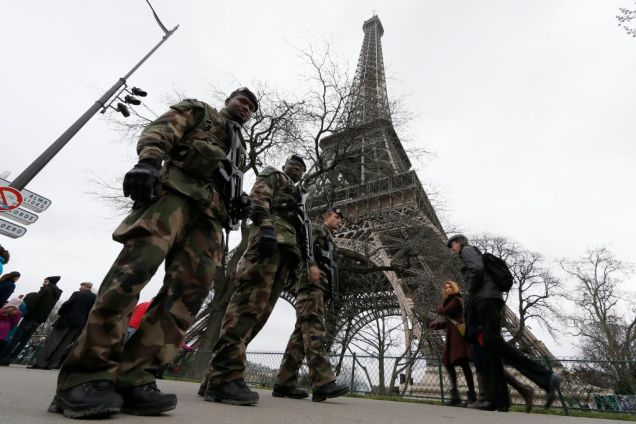
The Daily Toast: After Paris, Andrew Neil’s Bravura Anti-Islamist Speech

Three cheers to Andrew Neil for his bravura speech praising Western enlightenment values in comparison with murderous “Islamist scumbags” – and their sleazy apologists on the British Left

It’s fair to say that this blog has not always been the biggest fan of Andrew Neil, or what he has done with the BBC’s flagship political television output.

But I have only admiration for his opening monologue on today’s Daily Politics, responding to last week’s terrorist attacks in Paris. It’s worth transcribing Neil’s speech in its entirety:

Welcome to This Week. A week in which a bunch of loser jihadists slaughtered a hundred and fifty-two innocents in Paris to prove the future belongs to them rather than the civilisation like France.

Well, I can’t say that I fancy their chances. France: the country of Descartes, Boulez, Monet, Satre, Rousseau, Camou, Renoir, Berlioz, Cézanne, Gauguin, Hugo, Voltaire, Matisse, Debussy, Ravel, Saint-Saëns, Bizet, Satie, Pasteur, Molière, Franck, Zola, Balzac, Blanc, cutting edge science, world class medicine, fearsome security forces, nuclear power, Coco Chanel, Château Lafite, coq  au vin, Daft Punk, Zizou Zidane, Juliette Binoche, liberté, égalité, fraternité and creme brûlée.

Versus what? Beheadings, crucifixions, amputations, slavery, mass murder, medieval squalor, a death cult barbarity that would shame the Middle Ages. Well, IS, or Da’esh, or ISIS, or ISIL, or whatever name you’re going by, I’m sticking with IS – as in Islamist Scumbags.

I think the outcome is pretty clear to everybody but you: whatever atrocities you are currently capable of committing, you will lose. In a thousand years’ time, Paris – that glorious city of lights – will still be shining bright, as will every other city like it, while you will be as dust, along with a ragbag of fascists, Nazis and Stalinists who have previously dared to challenge democracy. And failed.

What a marvellous, stirring speech in defence of Western civilisation. Between Andrew Neil and John Oliver, here we have all the response we need to those who preach an ideology of hatred, ignorance and death.

If only more of our political and civic leaders had the self-confidence and moral fibre to speak like Neil (Oliver would probably be going too far) – and not just in the aftermath of a major terrorist attack on a European capital – perhaps we would not be facing such a crisis of confidence in Western and British values.

And that crisis of confidence is unfortunately summed up in some of the responses to Neil’s speech on Twitter:

Andrew Neil - Twitter Response 1

Andrew Neil - Twitter Response 2

Andrew Neil - Twitter Response 3

Through an insatiable desire to signal their virtue, flaunt their multiculturalist credentials and deliberately misinterpret those who dare to criticise the Islamists – but never Muslims in general – there are some on the Left who will only ever see bad in the West, and a plucky underdog in the murderous fanatics who bring death to innocent people in Paris, Madrid, New York and London.

These people are despicable. If our civilisation does ever collapse, it will be entirely thanks to their self-flagellating, virtue-signalling, moralising vacuity – not the Islamists, whose brief time strutting around the world stage will perish just like all of the failed ideologies that came before it.

A big toast to Andrew Neil for a full throated and very welcome defence of Western enlightenment and civilisation in the face of primitive Islamist barbarism.

And shame on each and every one of the virtue-signalling, West-hating, terror-appeasing, amoral leftists who chose to attack the speech on social media to flaunt their warped “tolerance” credentials.

They and the murderous Islamists fully deserve one another.

© HAROLD DAVIS

Agree with this article? Violently disagree? Scroll down to leave a comment.

Follow Semi-Partisan Politics on TwitterFacebook and Medium.

The Daily Smackdown: Jeremy Corbyn’s Non-Clarification On ‘Shoot To Kill’

Jeremy Corbyn - Paris Attacks - Terrorism - Appeasement

Why is it so hard for Jeremy Corbyn to say that the police should kill terrorists in the process of committing a massacre?

Sensing the storm that was about to break over the Labour Party following his catastrophically weak  response to a simple question on the merits of shooting terrorists in the act of attacking innocent civilians, Jeremy Corbyn reluctantly scrambled to contain the damage.

Yesterday, on Corbyn’s Facebook page, the Labour leader took the opportunity to scold everyone for supposedly misinterpreting his remarks:

I am therefore disappointed that comments I made yesterday in regard to a “shoot to kill” policy have been taken out of context [..]

Nonetheless, I would like to clarify my position. As we have seen in the recent past, there are clear dangers to us all in any kind of shoot to kill policy. And we must ensure that terrorist attacks are not used to undermine the very freedoms and legal protections we are determined to defend.

But of course I support the use of whatever proportionate and strictly necessary force is required to save life in response to attacks of the kind we saw in Paris.

Here, Corbyn is trying to pull off a classic bait-and-switch. Yes, of course we must ensure that terrorist attacks are not exploited as an excuse to clamp down further on already-threatened civil liberties – this blog has consistently said the same thing, and did so again following the Paris attacks.

But that’s a side issue. People were not angry with Corbyn because he was taking a plucky stance in defence of civil liberties, they were simply incredulous that the Leader of the Opposition – when presented with a golden plated opportunity to come out on the side of human decency and rebut some of the criticism that he is soft on terror – point blank refused to countenance the shooting of armed terrorist gunmen actively engaged in committing a massacre.

Even in his so-called clarification, Jeremy Corbyn remains unable to force the words “kill” and “terrorist” from his lips in the same sentence, giving only the bland statement that he supports “proportionate and strictly necessary force”. This might be sufficient coming from another politician, but the trouble is that in Corbyn’s case, the public strongly suspects that his idea of a “proportionate and necessary” response to a terrorist massacre might mean sitting down with a cup of tea and talking about our feelings rather than eliminating a clear and present threat to the British public.

Look: nobody expects Jeremy Corbyn to be the man in the SWAT flak jacket kicking down doors, throwing flash-bang grenades and pulling the trigger in these situations. If Corbyn wants to follow his absolutist pacifism in his own private life, that’s fine. But it is not okay for the Leader of the Opposition, the holder of an important official constitutional position in our national life, to take such a fundamentalist stance when the security of our country and our citizens is at stake.

When the man seeking to become Britain’s next prime minister can’t even bring himself to utter the words “kill” and “terrorist” in the same sentence, it naturally raises questions as to what possible group of people – which vitally important constituent base – he is desperate to avoid offending by giving a more full-throated response. And as this blog noted yesterday, sadly there is only one plausible answer: the people Corbyn is unwilling to offend, is even willing to take a political hit in order to avoid offending, are those people who think that maybe Paris and the West had it coming on Friday the thirteenth.

But even putting this distasteful fact aside, Corbyn needs to learn that not every crisis or event needs to be a teaching moment for the British people in the ways of pacifism and non-violence. When Laura Kuenssberg asked Jeremy Corbyn yesterday if he would be happy for the police to take down an active terrorist, the answer should have been a simple “yes, of course”. Case closed.

But instead, the Labour leader – and the army of online Corbyn fanboys and fangirls blindly backing him up – decided instead to quibble sanctimoniously about whether “happy” was the right choice of word, bring up misleading comparisons like the mistaken shooting of Jean Charles de Menezes when no terrorist attack was underway, and generally refute the premise of the question.

That’s the kind of behaviour that would just about be tolerable from a smarmy sixth-former. It’s the kind of behaviour that has become eye-rollingly predictable from a far-left backbencher. But it is most definitely not the kind of behaviour acceptable from somebody who plans to stand before the British people and ask them to make him prime minister.

Jeremy Corbyn - Paris Attacks - Terrorism - BBC Interview

Agree with this article? Violently disagree? Scroll down to leave a comment.

Follow Semi-Partisan Politics on TwitterFacebook and Medium.

Jeremy Corbyn’s Paris Attack Response Proves He Is Unfit To Lead

Jeremy Corbyn - Paris Attacks - Terrorism - French Flag - Tricolour

Jeremy Corbyn refused to say that he would order the police to kill active terrorist gunmen if the Paris attacks were to be repeated in London. Anyone unable to see this stark issue in clear moral terms is unfit to lead the Labour Party, let alone their country

Jeremy Corbyn was asked a very straightforward question today.

While giving an interview to the BBC about the terrorist attacks in Paris, the Labour leader was asked:

“If you were prime minister, would you be happy to order people – police or military – to shoot to kill on Britain’s streets?”

To be clear: this wasn’t about armed robbers, car thieves or crazy people with knives – it was specifically about a future terrorist attack like the bloodbath in Paris on 13 November.

And the Leader of the Opposition – our alternative prime minister in waiting – responded:

“I’m not happy with a shoot to kill policy in general. I think that is quite dangerous, and I think can often be counterproductive. I think you have to have security that prevents people from firing off weapons where you can. There are various degrees of doing things as we know, but the idea you end up with a war on the streets is not a good thing. Surely you have to work to try and prevent these things happening, that’s got to be the priority”.

So that’s a no, then. If armed terrorists killed innocent Londoners having dinner at a restaurant before going on to commit a massacre at a West End theatre, authorising the use of lethal force to subdue the terrorist attack and save the victims would be “counterproductive”.

If a politician equivocates or dodges a simple question, it is usually because they know that giving an honest answer or revealing their true thoughts on a subject will offend or alienate a critical voter bloc, special interest group or audience.

When David Cameron refuses to explicitly say that he might campaign for Brexit if he does not get the concessions he wants from his EU renegotiation, it is because he wants to appear tough to eurosceptics while desperately trying to avoid scaring pro-European Tories and his EU partners.

And when Chuka Umunna says that he supports the junior doctors but opposes their planned strike action, he is willing to endure looking ridiculous on national television is because he is determined to suck up both to NHS workers who want to strike and to his constituents, who do not want to see their health service disrupted. It’s Boris Johnson’s policy on cake all over again.

So what group of people could Jeremy Corbyn possibly be so desperate to avoid offending that he point-blank refused to say that the British police should shoot to kill any hypothetical terrorist gunmen on the rampage in London?

Exactly who is Corbyn trying to appease or placate by twisting himself in such rhetorical knots and avoiding giving the answer that 95% of the British public want and expect to hear? There can only be one answer. And it is a sickening one.

Jeremy Corbyn can’t publicly say that he would definitely order British police to kill armed terrorist gunmen in the middle of carrying out an attack because the people he is desperate to avoid offending – the constituency he is trying to court but cannot do so out in the open – are either those who might themselves one day decide to go on the rampage with a Kalashnikov on Oxford Street, or those who would cheer them on from the couch. Just like his Shadow Chancellor John McDonnell could never find a bad word to say about the IRA, because they were secretly his constituency.

I’ve spent most of the afternoon and evening since that interview in a state of incredulity, trying to think of another possible reason for Corbyn’s long-winded evasion, and I have come up short. There is no other explanation. Jeremy Corbyn’s core constituency – the ones who must never be questioned, insulted or offended – are the people who watched Death shroud the City of Light last weekend while cheering with glee.

I was wrong. I supported Jeremy Corbyn in the Labour leadership contest after a navel-gazing general election campaign focused almost exclusively on domestic policy and lacking any compelling vision for Britain’s future. In that context, it seemed that having a major party leader planted firmly outside the stale, centrist political consensus could only be a good thing.

I hoped that a left wing true-believer at the head of the Labour Party might force David Cameron’s Coke Zero Conservative government to rediscover its ideological backbone and make a real dent in the bloated British state. It was a noble dream, even though I caveated my endorsement of Corbyn at the time by pointing out that Corbyn’s foreign and defence policies were utterly wrong:

For all that Jeremy Corbyn has done to breathe life into a stale political scene, his foreign policy positions are indefensible and often dangerous. Where there should be simplicity – like abhorring the murder of British soldiers by terrorists – Corbyn sees great moral complexity. And where there is genuine complexity – like tackling extremism and radicalisation in modern Britain – Corbyn sees simple solutions which demand nothing of those most likely to forsake their British freedoms and take up arms against us.

But Corbyn’s foreign and security policies are not just wrong – they are downright dangerous. Never mind the sixth-form naivety behind his desire for unilateral (and unreciprocated) British nuclear disarmament. Never mind his desire to run down the Armed Forces to a degree that would make David Cameron look like a neoconservative defence hawk. Jeremy Corbyn cannot even look the British people in the eye and tell them that he would authorise the use of deadly force to save them from an ongoing terrorist attack. Because he would much rather negotiate with the gunmen instead.

There’s nothing to say in defence of that sentiment, of that ludicrous, naive stance. It blows any and all arguments in favour of Jeremy Corbyn’s leadership – and there are some, despite what those who have been against him from day one may say – clean out of the water. It embarrasses and shames those of us who supported Corbyn hoping that an unapologetically left wing voice at the top level of British politics might reinvigorate the domestic debate. And it should make us all very, very angry.

This blog strongly disagrees with Dan Hodges’ call for more government surveillance in the wake of the Paris attacks, but he is dead right in his assessment of the political reality now faced by the Labour Party.

Neither [Jeremy Corbyn or John McDonnell] actively supports terrorism. But their world view, their instincts and their need to appease a constituency that views Isil and “Western imperialism” as different sides of the same coin means that were they ever called on to confront the terrorists practically, they would falter. Reduced surveillance. Reduced global anti-terror cooperation. No airstrikes against Isil in Syria or Iraq. No drone strikes anywhere. Direct Stop The War input into UK security policy.

We have heard a lot from Labour MPs about the difficulties of finding a way of removing Jeremy Corbyn. Tough. They will have to find a way.

Because if they don’t, then it’s not just Corbyn and the terror appeasers who will pay the price. Every member of the shadow cabinet, every Labour MP and every Labour activist will find themselves tainted by the Tory charge that Labour cannot be trusted to keep this country safe. And they will be tainted with it because it will be true.

Nearly every politician can count some unsavoury groups or individuals among their supporters and core constituents, be it Big Tobacco, Big Pharma, media conglomerates, the firearms industy (in America) or others. And to some degree that’s the cost of doing business in our jaded political world – it shouldn’t happen, but it is very difficult to stamp out without draconian campaign finance reform.

It’s bad enough for a politician to legislate in favour of a certain industry when they receive campaign contributions from that group, essentially allowing our democracy to be bought and sold to the highest bidder. But it is even more of an outrage for a senior politician to advocate extreme pacifist policies toward aggressors when that politician already has a reputation for channelling the narrative of the group that most stands to benefit from a weak Britain.

The only public figure who might reasonably suggest – if taken literally – that we should turn the other cheek as we are being mown down in a hail of automatic weapons fire is that other, more famous pacifist and JC – Jesus Christ. But while Jeremy Corbyn’s election as leader of the Labour Party was many things, the second coming it certainly was not.

The Lord is allowed take an absolutist position on violence, and we should be inspired by His words as far as we can practically follow them. But Jeremy Corbyn – and British politicians in general – operate not in the spiritual realm, but rather the temporal world. They have a duty to preserve our country and protect our citizens – those of all faiths and none – above everything else.

Jeremy Corbyn is not a rabble-rousing backbencher any more. He is the Leader of the Opposition, and one of the most high profile politicians in the country. And therefore when he says that he is “not happy” with a shoot first policy when it comes to terrorist gunmen, we must take him at his word.

And then, once our shock has abated, we should immediately stop taking seriously anything else that Corbyn and his party have to say on foreign and security policy.

Jeremy Corbyn - Paris Attacks - Terrorism - BBC Interview

Agree with this article? Violently disagree? Scroll down to leave a comment.

Follow Semi-Partisan Politics on TwitterFacebook and Medium.

The Daily Toast: Don’t Exploit The Paris Attacks To Increase Surveillance

Surveillance State - Britain - UK - Paris Attacks

Demands for more government surveillance in response to the Paris terror attacks are crass, opportunistic and pointless

It’s very rare for this blog to agree with a Guardian editorial, but the newspaper’s stance on the proper response to the latest terrorist atrocity in Paris contains a lot of sense*.

For a start, there is none of the Western self-flagellation that grips too much of the Corbynite Left, and the absence of this equivocation is refreshing in itself (but then ever since their decision to back Yvette Cooper over Jeremy Corbyn in the Labour leadership election, the Guardian’s left wing idealism has seemed more affected than deeply held).

And on the need to avoid using the Paris attacks as permission to ratchet up the surveillance state, the Guardian is absolutely correct:

In Britain, there will be some who see Theresa May’s new investigatory powers bill in a more urgent light after Paris. But unless and until the evidence shows that bulk surveillance would have made a difference in that dreadful scenario, the argument remains where it was. And our starting point is still that mass surveillance of all of us is neither necessary nor effective.

When the intelligence agencies are looking for a needle in a haystack, they shouldn’t be adding more hay. When they need to spy on an individual or group, they should seek – and they will usually get – the legal warrant to do so. And, in case it needs repeating, European societies do not defend their values when they turn on their Muslim fellow citizens – on the contrary, they violate those values.

This is exactly right, and a welcome counternote to the blind panic currently spilling from the keyboards of other commentators such as Dan Hodges. While one can understand individuals – particularly those actually caught up in the attacks – being led by emotion and willingly sacrificing everything for the false promise of greater security, those people who make public policy or influence public opinion should be more careful with their thoughts and words.

As the Guardian rightly points out, it is for the intelligence services (and their willing cheerleaders in the media) to conclusively prove that harvesting more bulk data would have prevented the Paris attacks from happening. If they really want to shift the status quo and treat every citizen as guilty until proving innocent by keeping a record of their communications, they must prove that the lack of this data is what allowed the eight attackers to slip through the net. And they can prove no such thing, because even if some of their communications were swept up in bulk collection along with everyone else’s, they cannot prove – or even plausibly claim – that they would have known to look for that data in the giant haystack of data.

The problem with our current national security state is not that it lacks sufficient powers over us, but that we lack sufficient power over it. Citing “national security concerns” now seems to be enough to win the argument for more surveillance on its own, and the intelligence services have grown both lazy and entitled, expecting governments to grant their every request even when they fail to construct a convincing case for them. Just as President Eisenhower presciently warned of the military-industrial complex, so we must be wary of the national security state – which has now become so big that it has taken on a life of its own, with priorities and ambitions that go beyond their original, limited remit.

This would be bad enough if it worked, but the awkward truth is that we will never achieve the perfectly secure state. Realising this, we must understand that responding to every new barbaric terrorist attack by ratcheting up the same surveillance state which failed to prevent it represents a colossal failure of imagination on our part. Glenn Greenwald likes to make the comparison with road safety – we do not insist on draconian new road safety legislation such as a 20mph speed limit every time we see a road fatality, because we accept that a degree of risk comes with the freedom to drive.

As this blog commented after the Charlie Hebdo massacre, warning of the dangers of government overreaction:

The harms that would be inflicted in order to achieve absolute safety are the very same harms that David Cameron intends to inflict upon Britain in his panicked, servile submission to the demands of the national security and intelligence chiefs. The only way to achieve absolute safety is through absolute surveillance – and zero privacy. Stepping out onto a London street totally certain in the knowledge that you will come to no harm would require us to become North Korea.

Ultimately, the only way to make us safer is to reduce the number of people living among us or dwelling overseas who wish to rain death and destruction upon us. That does not – repeat, does not – mean appeasing them, admitting that they have a point, or accepting the legitimacy of their sick and evil ideology. But it does mean accepting some fundamental truths that we prefer to overlook in our righteous fury, as I pointed out after Charlie Hebdo.

Those who think that the way to prevent the next attack is by granting government yet more power to spy on our actions and regulate what we say would apparently be content to live in a society where a small, nihilistic minority hate us and wish us harm, but whose attempts to kill us are always thwarted by an omnipotent security and intelligence apparatus. I do not wish to live in such a state, and nor do I think that such a scenario should be our highest aspiration. We can do better than that.

In the shocked aftermath of these reprehensible terrorist attacks in Paris, some would have the authorities start to construct their very own North Korea right here in England’s green and pleasant land. They are motivated by an understandable fear, but our country will not be best served by acting on their gut instinct. Even when the advocates of the surveillance state mean well, we must oppose them.

* That’s not to say that the Guardian gets everything right. Determined to push their pro-EU agenda at all times, the article keeps banging on about “European values” as though our common revulsion at the killing and maiming of innocent people in Paris somehow means that the national cultures of Britain, France, Portugal, Greece and Poland are more or less identical, and ripe for further political integration. This much is nonsense, but does not detract from the overall thrust of the piece.

President Dwight Eisenhower - Military Industrial Complex

Agree with this article? Violently disagree? Scroll down to leave a comment.

Follow Semi-Partisan Politics on TwitterFacebook and Medium.

Paris Terror Attacks: More Government Surveillance Is Not The Answer

The surveillance state did not prevent Madrid, the 7/7 London bombings, Ottawa, Charlie Hebdo or the 13 November Paris attacks. Ramping it up yet further will not guarantee our safety either – but giving the intelligence services and their media apologists everything that they want will undoubtedly erode our freedom and change our way of life for the worse

In the early hours of 14 November, in the immediate aftermath of the appalling  and barbaric terrorist attacks in Paris, this blog wearily pointed out the well-worn sequence of events which would inevitably follow:

Day 0: Expressions of shock, sorrow, anger and solidarity

Day +1: Insistence that now is a time for mourning, not asking difficult questions about how or why the atrocities were committed

Day +1, later: The first difficult questions are asked, particularly of the government and security services

Day +2: The intelligence services dust off their wishlist of draconian new powers, and strongly hint that if only they already had these powers, the attack could have been avoided

Day +3: The official narrative is established – “we will defeat this terror by giving our intelligence services the tools they need, and making radical or hateful speech illegal”

So far, things are running like clockwork. We are certainly very good at the sorrow and solidarity phase of our response. Facebook timelines have been a sea of people updating their profile pictures to display the French tricolour (and, to a lesser extent, the inevitable virtue-signalling pedants inexplicably criticising them for doing so). Day +1 followed the normal pattern.

Day +2 is when we usually hear the first whispers of criticism about the intelligence services, when the identities of some of the attackers are revealed and it turns out that in many cases, they were operating under our noses undetected for some time. This is just starting to happen now – though it is being drowned out somewhat by criticism of Europe’s muddled borders and asylum policy, as it was reported that one of the attackers had a Syrian passport and entered Europe in Greece as a refugee.

And while it is slightly too early for the intelligence services themselves to come out and start agitating for new powers, this has not stopped some of their media cheerleaders from getting the ball rolling. We are officially still in that interregnum period after an attack when it is considered unseemly or inappropriate to have a real discussion about why the attacks happened, but there is an exception to this rule when it comes to demanding more surveillance powers for the state.

And climbing through this loophole today is Dan Hodges, writing before he thinks and letting his fear cloud any judgement or sense of proportion:

If we are serious in our expression of sympathy and solidarity, if we are serious about confronting those men who lined up the disabled patrons of the Bataclan and then gunned them down, then we must act. We must expand the same collective energy we utilise proclaiming “Je suis Paris” demanding concrete action. Or at least, not demanding inaction.

In the coming weeks the government’s surveillance bill will be passing through the Commons. If we truly believe in standing in solidarity with Paris, we must let it pass. We must demand it passes.

I’m surprised – I didn’t think we would see these calls for more unchecked government surveillance until the start of the new week. But hats off to Dan Hodges – by publicly freaking out in his newspaper column and calling for the Investigatory Powers Bill to be passed, he has opened the door for Theresa May, David Cameron and a parade of GCHQ ex-chiefs to hit the TV studios and make the same demands.

Of course, what Dan fails to do is explain how new government surveillance powers a) would have prevented the Paris attacks of 13 November, or b) might realistically prevent any such attack in future. And if you pushed him, I doubt that he could explain the scope of current surveillance laws in any detail, or describe the ways that the British security services currently do or do not make use of those powers.

Dan is (understandably) frightened following the Paris attacks. And when people are scared it is natural to demand more security, to insist that the authorities wrap us all in cotton wool, kill the Bad People, do anything to alleviate the gut-wrenching fear that next time it might be the concert hall that we attend, or our local neighbourhood restaurant in the line of fire. And that’s quite understandable from the perspective of a private individual, only concerned for their own immediate safety.

But coming from one of the most prominent, respected political commentators in the country, it is downright irresponsible. Everyone is entitled to have their own private freakout behind closed doors when civilisation is shaken – as Paris was – by Islamist barbarism. But what is unacceptable is taking to your keyboard whilst you are in that fearful state, and using your national profile to give the government carte blanche to do whatever it likes in the name of national security.
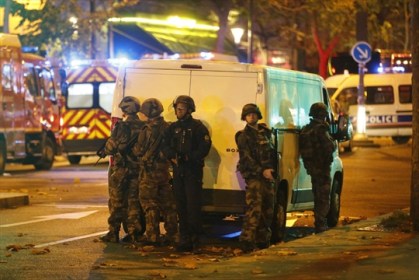
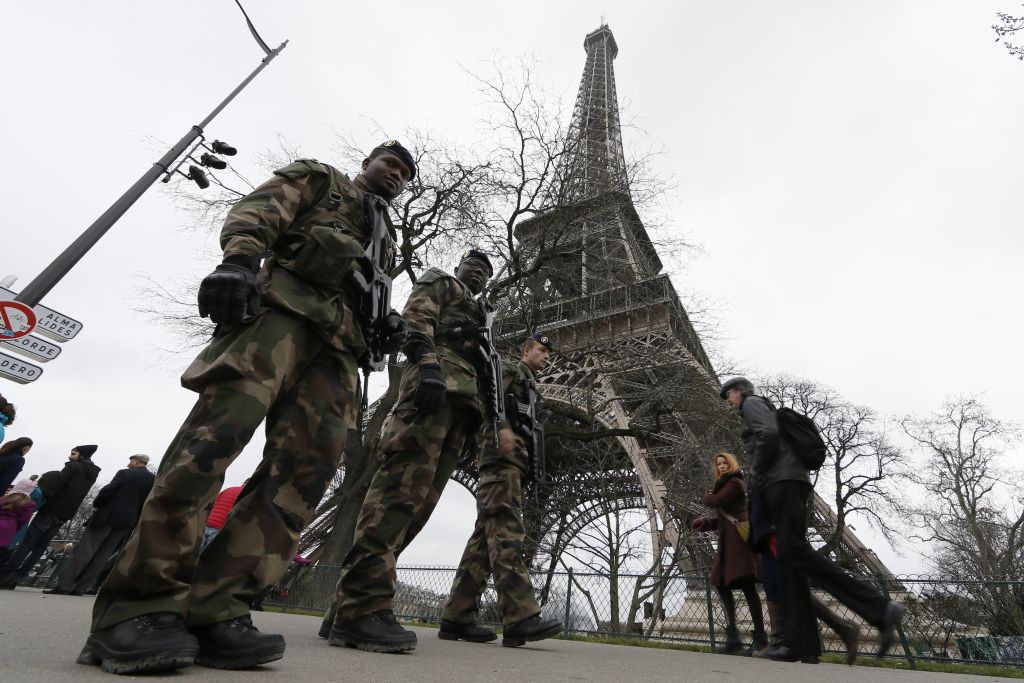
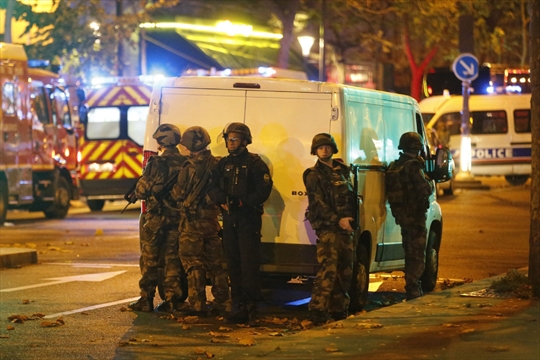
Paris Attacks - Military

Clamouring for the government to pass the snooper’s charter (the Investigatory Powers Bill) is not a wise and considered response to the Paris attacks, and neither is it a moral one – particularly when you cannot point to a single measure in the bill which would have prevented the horrific carnage we witnessed on Friday.

Spiked magazine sums up the illiberal measures contained in the bill:

The draft of the bill, published last Wednesday, sets out new and draconian powers allowing the security services to monitor, access and store our online communications data: IT and comms companies would be required to store information on the websites we visit for up to 12 months, and release them to the state when required; intelligence agencies would be given legal authority to hack into communications and bulk-harvest metadata; and the ability of companies like Apple and Google to encrypt individuals’ messages – putting their content beyond the reach of themselves and the spooks – will be severely curtailed.

Home secretary Theresa May has been quick to talk down the measures. She insists that the data retrieved from your web history is no more than a ‘shopping list’ of the sites you visit, rather than individual pages – a fine and utterly meaningless distinction. And while there has been much talk of the ‘safeguards’ guaranteed by the IPB, with judicial commissioners required to approve requests for interception warrants and wire taps, these are little more than formalities. Judges will only be able to reject Home Office requests on the principles of judicial review; as backbench Tory MP David Davis pointed out, ‘This is not the judge checking the evidence, it is the judge checking that the correct procedure has been followed’.

If Dan Hodges had ‘smoking gun’ evidence that the eight Paris attackers and their network of accomplices made extensive use of unbreakable encryption to plan their crime, or that the intelligence services always suspected the attackers but were constrained by law from keeping them under closer surveillance, then he would have the beginnings of an argument.

But Hodges has no such evidence. Instead, he wants to use the deaths of scores of innocent people to empower the government to keep us all under surveillance, all the time. He makes no proposal as to how the security services might pick out the terrorist needles in this new haystack of intelligence were they to gain access to it, and no idea of the trade-offs between combing through the communications of the entire citizenry rather than focusing on known threats.

Worse still, he is so unconcerned with the potential consequences for privacy and freedom that he doesn’t even bother to address them in his article. And still Dan Hodges feels qualified to tell civil liberties defenders that they are wrong, and to clamour for more government intrusion in our lives.

Clamouring for Parliament to pass the snooper’s charter two days after a horrific terrorist attack in Paris isn’t brave or level-headed – it is a response borne of fear. When we are afraid, our time horizon shrinks to zero and we are concerned only with avoiding immediate danger. If we believe we are in imminent danger of being shot or blown up, we would likely hand over a great deal of our future freedom to avoid that fate. But this instinct – which may be essential for an animal in the wild – is entirely inappropriate for citizens living in a modern democracy.
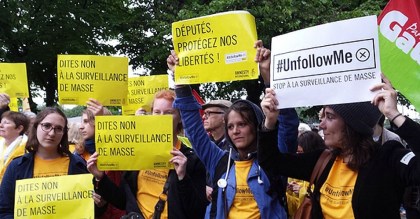
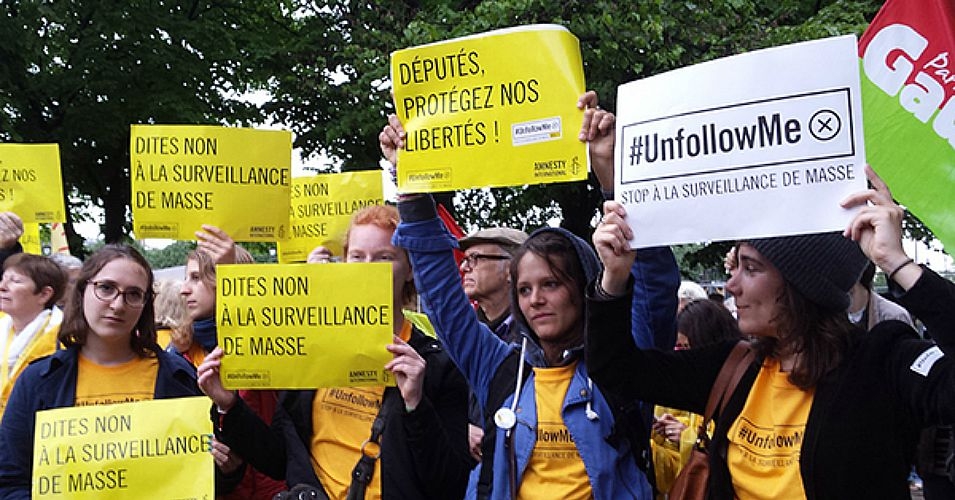
France - Mass Surveillance - Protest

When making laws and empowering the machinery of state, we need to consider not just the threats of today and the people who will wield those powers today, but also what threats may exist tomorrow and who will wield those powers when David Cameron, Theresa May and Jeremy Corbyn are no more than names in a history book. We have a duty to our children and descendants to think about the type of country and world we want them to inhabit when we shape the laws of today.

Unfortunately, ramping up the surveillance state at the expense of the right to privacy and civil liberties fails both tests – it does not provide a convincing response to the threats of tomorrow, and it takes no account of who might try to wield those powers for their own ends in the future.

Terrorists are smart – when attacking the secure West, rarely do they try the same strategy twice. Thus, since 11 September 2001 we have gone from airplane hijackers armed with not much more than boxcutters to shoe bombs, liquid bombs and surface-to-air missiles. Our own intelligence services, to whom Dan Hodges wants to grant sweeping new powers, are usually one step behind. Thus, although the guardians of our safety were never smart enough to think of these risks before they were tried by terrorists, we are still constrained in the liquids we can take on airplanes, and have our shoes checked for explosives before we fly. In fact, modern airport security theatre as a whole reads like a “lessons learned” list of all the cock-ups and clangers of forty years of intelligence failures, with almost no discernible foresight or forward thinking.

So it will be with any new surveillance measures. Technology changes so rapidly that any law passed today will almost certainly be obsolete in a decade, while terrorists will immediately adapt and stop using monitored channels. Human ingenuity will always defeat the clunking fist of government, because it always does. So granting the government the power to monitor who we talk to, go through our emails and hack our smartphones will only infringe on the freedoms of the law-abiding; the terrorists will simply find new technologies or revert to tried-and-tested analogue techniques.

As for the leaders of tomorrow, the thought of a future Prime Minister Theresa May is frightening enough. But what is to say that in a couple of decades, if we do not properly grapple with the scourge of terrorism or in the wake of a future economic crisis, a far more extreme politician may come to power? And if they do, how glad they will be that our present government – cheered on by people like Dan Hodges – passed laws like the Investigatory Powers Bill, granting the state the tools and the legal cover to do as they please.

Again: having these fears and wanting government to provide safety is a perfectly understandable instinctive reaction to terrorist horror, coming from a private citizen. But government will happily assume new powers forever if they are freely offered up by the people, and so newspaper columnists should know better than to provide intellectual and emotional cover in the wake of an atrocity.

I admire Dan Hodges enormously as a writer and commentator on left-wing politics, but these latest irresponsible comments – invoking the image of massacred disabled concertgoers at a Paris theatre to cheerlead for the expansion of the surveillance state – cannot go unchallenged.
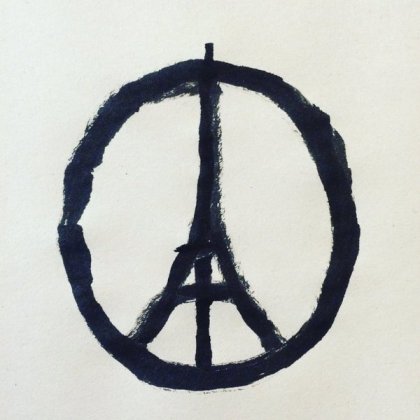
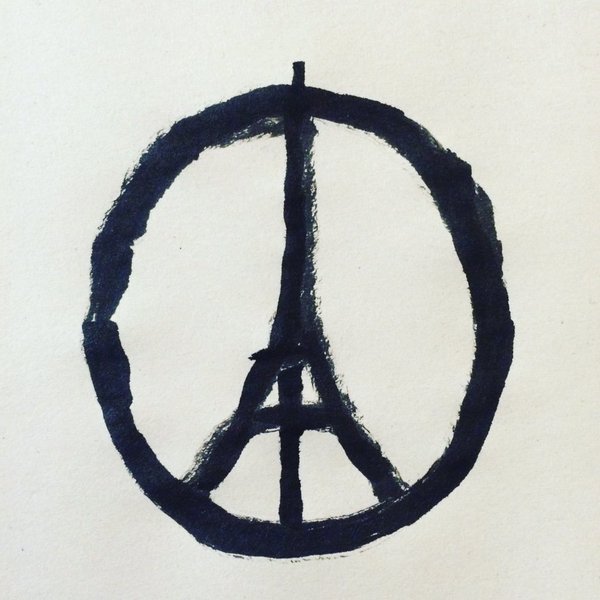
Jean Jullien - Peace for Paris - Paris Attacks

Bottom Image: Peace for Paris, by Jean Jullien

Agree with this article? Violently disagree? Scroll down to leave a comment.

Follow Semi-Partisan Politics on TwitterFacebook and Medium.