We Are All Cats Now

No, you are not a cat simply because you “identify” as one. And we should all be wary of where the rise of the Politics of Identity is leading us

When future aliens discover the ruins of human civilisation and wonder what set our demise in motion, they will likely identify the period through which we are now living – the time where we finally became so arrogant that we believed we could bend objective reality to our will, physically becoming something simply because we mentally “identified” as that particular object or state of being. They will say that we sowed the seeds of our destruction when we abandoned reason and put our faith in verbal alchemy.

A story is going viral today (see video above) which would be hilarious if it wasn’t so terrifying. It involves Nano, a twenty year-old woman from Norway who identifies as a cat, having come to this “realisation” when she was sixteen and apparently indulged in her belief by friends, family and psychologists alike.

The Telegraph reports, totally deadpan:

The young woman shows off her cat characteristics by wearing fake ears and an artificial tail. She communicates by meowing.

“I realised I was a cat when I was 16 when doctors and psychologists found out what was “the thing” with me. Under my birth there was a genetic defect,” she explains in the video.

[..] The cat woman wears a pair of pink fluffy paws with which to groom herself, and feels especially like doing so when she is in contact with water.

When asked if she was born as the wrong species, she said: “Yes, born in the wrong species.”

But terrifying it is, because stories like this are no longer so far-fetched, and Nano’s claims are not so unreasonable – at least not according to the insistent logic of modern day identity culture, which makes each one of us the little tin-pot god of our own reality, able to pick up and discard identities as core as gender or even species, in some cases on a whim.

And this is not the first such case. Just last month in Canada, a 52 year old formerly married father of seven revealed to the world that he no longer identified as a man, but rather as a six year old girl called Stefonknee.

The Daily Mail reported at the time:

Stefonknee (pronounced ‘Stef-on-knee’) Wolscht, 52, of Toronto, says she realized she was transgender – rather that simply a cross-dresser – at age 46, and split from her wife, Maria, after she told her husband to ‘stop being trans or leave’.

Now, Stefonknee lives with friends who she calls her ‘adoptive mommy and daddy’ as a six-year-old girl, dressing in children’s clothing and spending her time playing and coloring with her adoptive parents’ grandchildren.

Stefonknee says her ‘adoptive’ family, which consists of an older couple and their children and young grandchildren, are completely accepting of her identifying as a little girl.

She says she’s living as a six-year-old girl because it’s something she could never do when was in grade school.

‘I can’t deny I was married. I can’t deny I have children,’ she says in the video. ‘But I’ve moved forward now and I’ve gone back to being a child. I don’t want to be an adult right now.’

She’s moved forward, so that’s fine, then. Good for Stefonknee. Never mind her abandoned wife or seven young children who are doubtless hurt, confused and humiliated by what their father is doing. Stefonknee just doesn’t have time for all of that adult stuff right now, so she is going to put on a gingham dress and regress to a pre-pubescent age, until she gets tired of that and wants to try something different.

This is pure narcissism, plain and simple. He didn’t want to be an adult anymore, so he clicked his fingers and became a six year old girl instead? How are we to unpack this? Are we to accept his Wolscht’s statement that she is now female, since transgender acceptance is now (rightly, I believe) much more widely accepted and tolerated?

But if we do so – if we accept Wolscht’s statement that she is now female – do we not also then have to accept her insistence that she has also turned the clock back and become six years old again?

Stefonknee Wolscht - Identity Politics

The ludicrous thing here is that Wolscht’s own identity is floating, as she freely admits later in the article:

She says she previously lived as an eight-year-old girl, until the couple’s granddaughter asked her to be the younger sister instead.

‘A year ago I was eight and she was seven. And she said to me: “I want you to be the little sister, so I’ll be nine.” I said: “Well, I don’t mind going to six.” So I’ve been six ever since.’

So according to this jaw-dropping reasoning, our identity is not even fixed and core to ourselves (if unmoored from reality). Now, our identity is a commodity which can be haggled over and traded. And if winning the friendship of a young girl means that a formerly 52 year old man has to downgrade from being an 8 year old to a 6 year old girl, that’s absolutely fine, apparently. Who are we to judge in any of this?

Never mind the callousness of a father of seven doing such a thing to his own children, putting them through this ordeal in pursuit of an identity which he openly admits is free-floating and liable to change again in future anyway. That’s bad enough. But how are we all – individuals, employers (the six year old girl apparently has a job driving a slow plough in winter) or government agencies – supposed to relate to somebody who decides that they “identify” as a different age and gender?

If Stefonknee is really six years old she should be in school, and the local authority should by current laws be hounding her adoptive “parents” to ensure that she is receiving a proper education. But would the identity culture cheerleaders seriously propose sending what was once a 52-year-old man to primary school with young children? Surely, under today’s logic they have to?

Stefonknee has identified as a young girl, and therefore she must be treated like one in every way. Anything less – such as homeschooling – would be discrimination against 6-year-old girls who happen to have the bodies of 52-year-old men. The kind of women who are harmed by a performance of the Vagina Monologues.

Meanwhile, Stefonknee’s employer when she drives the snow plough in winter will need to be hauled before the court and prosecuted for infringing on child labour laws. The courts would probably take a very dim view indeed of any business hiring a young girl to operate heavy machinery, and since justice must be blind, Stefonknee’s carefree decision to become a little girl should put her employer’s livelihood and liberty in grave jeopardy.

It’s easy to laugh at these scenarios, but they are going to come up more and more frequently if – as will inevitably happen when stories like this gain traction – more people are tempted to follow in the dangerous footsteps of Wolscht, or the somewhat less threatening (but no less absurd) paw prints of Nano the Norwegian cat woman.

For what is to say that Nano and Wolscht are not the “new normal”? The people being hounded and “No Platformed” for their old-fashioned views on transgender issues are guilty only of holding thoughts which were incredibly mainstream just a couple of decades ago, yet in that short space of time they have been completely overtaken by received wisdom and the new orthodoxy of intolerant tolerance. What is to say that in thirty years’ time, those who question a person’s ability to discard their entire life and “become” a cat or a young child are considered as bigoted as today’s “transphobic” holdouts?

Nobody can say that this is unlikely to happen. The world has changed so much in just a few decades, and promises to change even more in the coming years. Social attitudes have changed enormously in this time – what is to say that the warm, fuzzy embrace of unquestioning tolerance and affirmation will not expand to embrace people like Nano and Wolscht by 2050?

In 2050, maybe the future version of Eddie Redmayne will be starring in a movie, not just playing a male-to-female transsexual person (how boring that will be by then) but turning in another Oscar-winning performance for his sensitive portrayal of the pioneering early 21st century woman who identified as a cat, or the brave Canadian man who threw away his family in pursuit of his new identity as a pre-pubescent girl.

But that’s fine. Since we seem intent on burying our heads in the sand and denying that there is anything wrong with our new Politics of Identity, by that time our Prime Minister will probably identify as a Beagle, the Home Secretary will be a barn owl except on Tuesdays, and the Chancellor of the Exchequer will be a goldfish who looks suspiciously like George Osborne’s grown-up kid wearing a wetsuit, Number 11 Downing Street having been converted into a walk-in aquarium in deference to their “mental safety”.

And Nona the Norwegian cat woman will be the very least of our problems.
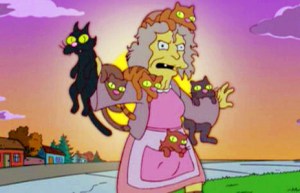
 

Crazy Cat Lady - The Simpsons

Agree with this article? Violently disagree? Scroll down to leave a comment.

Follow Semi-Partisan Politics on TwitterFacebook and Medium.

Taking Advantage Of The EEA To Ensure A Soft Landing After Brexit

All the benefits of Brexit without the risk of a “hard landing”

Could Britain avail itself of our existing EEA membership to continue trading with EU member states as part of the single market while leaving the EUs’ explicitly political organisation and structures? In a word, yes.

Ben Kelly sets out the process by which this would work – and the many advantages of this transitional step – in an ongoing series over at Conservatives for Liberty.

And in the video above, Dr. Richard North of eureferendum.com discusses the solution in detail, in an interview for Icelandic TV.

Up-to-the-minute information and commentary here.

Download Flexcit here.

European Parliament

Agree with this article? Violently disagree? Scroll down to leave a comment.

Follow Semi-Partisan Politics on TwitterFacebook and Medium.

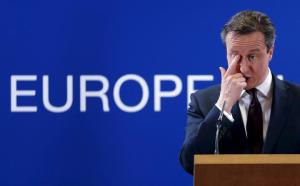
No, Mr. Cameron – This Is Not “Your Referendum”

As far as David Cameron is concerned, the coming EU referendum is nothing more than his personal plaything, an event to be moved about and manipulated as he pleases in order to achieve the “right” result

One throwaway line in the prime minister’s speech to the World Economic Forum in Davos yesterday captured at a stroke the sheer arrogance and duplicity behind the government’s approach to the EU referendum.

From the Independent’s summary of the speech:

David Cameron has told an audience at Davos that he would walk away from a Brussels summit in February if an agreement can not be reached on the UK’s EU Referendum.

“I want to put that to people in a referendum and campaign to keep people in the European Union. If there’s a good deal, we’ll take it. But if there’s not a good deal, I’m not going to hurry, I can hold my referendum any time until 2017,” Cameron said.

“My referendum”. Not Britain’s referendum. Not the public’s referendum. His referendum. David Cameron’s personal referendum.

Strangely, that might actually be the most honest thing that David Cameron has ever said on the subject of Europe and the coming EU referendum. Because given the fact that this cosmetic “renegotiation” has been taking place behind closed doors, with no formal demands and without any input from the British people themselves, the only fingerprints to be found on the whole rotten affair are indeed those of David Cameron and his ministers.

It is becoming increasingly clear to me (not that there was every any doubt) that this referendum will not be a fair fight – in fact, that it will be about as far away from a fair fight as it is possible to be. Just as Russia holding elections does not make that country a democracy, so the fact that the British people are being offered a Remain/Leave vote on the EU question does not mean that the outcome will be in any way legitimate.

It is possible to go through the rote motions of democracy, but do so without observing the spirit of democracy. And when that happens, neither side has cause for happiness with the outcome. If the Remain side win the referendum, their victory will be hollow, having been won on the back of a campaign built on fearmongering, outright deception and tactical manoeuvring by the government. And if (as currently seems probable) the Leave side loses the referendum, the issue will be far from settled. Many Leave campaigners, having been so blatantly cheated, will continue to rail against the European Union and do everything possible to raise awareness of its flaws and undermine the creaking structure from within. I certainly will.

The continued speculation over when exactly “David Cameron’s referendum” will take place is tedious and dispiriting. It should not be considered naive to hope for a prime minister – a leader – who sets out to do the work of the people, representing them and fighting for their priorities and interests in an honest, transparent manner. But in David Cameron we have a prime minister who gives every appearance of negotiating with the British people (or at least manipulating them) on behalf of the European Union, rather than the other way around.

All of this takes place between David Cameron’s repeated assurances to the European media that he feels “deeply European” from the “bottom of his heart” – either forgetting that in the year 2016 it is not possible to say something while abroad without it instantly filtering back home, or simply no longer caring about enraging eurosceptics by flaunting his own passionately pro-EU position.

Fine. Be that as it may. David Cameron was never a eurosceptic or a supporter of the Brexit cause, and at this point nobody expects anything else from him. But having so obviously sought to stack the deck in order to achieve his desired outcome from the referendum, the prime minister has no right to expect us to shut up and accept a future “Remain” vote when he has interfered with the process and undermined democracy at every turn.

David Cameron - European Union

Agree with this article? Violently disagree? Scroll down to leave a comment.

Follow Semi-Partisan Politics on TwitterFacebook and Medium.

Small Minds Discuss People: The Media’s Coverage Of The EU Referendum

Boris Johnson - Theresa May - EU Referendum - Brexit - Conservative Party

The EU referendum is about the British people, not the Westminster game of thrones

Another day brings another tiresome round of court gossip about which Conservative ministers might potentially campaign for Britain to leave the European Union in the coming referendum.

This time the breathless gossip is reported in Guido Fawkes:

A co-conspirator tucking into his ravioli in Westminster’s Quirinale restaurant looked up to see Theresa May and Liam Fox settling down to lunch. An hour earlier Fox had asked the Home Secretary for assurances over the government’s line on Russia, so you can bet that was on the menu. Though the main topic for discussion will almost certainly have been Europe.

There has been speculation that May has been meeting with leading Eurosceptics as she keeps her options open ahead of the referendum. Where better for Dr Fox to lobby her to lead the Out campaign than one of the pricier Italian restaurants in SW1? 

While the Evening Standard gushes about Boris Johnson:

What vexes the fledgling campaign to stay in the EU is the prospective behaviour of Boris Johnson and Theresa May: in the words of one Westminster insider, “they are the only players who could change the weather”.

True enough. Boris has the popular appeal to make the Out campaign blossom with optimism and good cheer, ridding it at a stroke of its negative, wintry disposition. May, on the other hand, would bring the authority of a great office of state to the Brexit campaign. Both politicians are taken seriously within the Tory tribe as prospective successors to Cameron. Small wonder that their every move is being scrutinised so closely.

Seasoned Boris-watchers (or Bozzologists) admit that his behaviour is presently inscrutable. Those I have spoken to incline — just — to the view that he will decide eventually to stick with the In camp, though without much conviction.

Before going on to say of Theresa May:

In 2010 May was startled to be given such a senior brief. Since then she has become incrementally persuaded that she has what it takes to succeed Cameron. Like Boris, she knows her leadership prospects are intimately entangled with her conduct in the EU referendum. But if she is serious about taking on the boys for the top job, she should give the Out camp a wide berth.

As Michael Heseltine used to say as he prepared his challenge to Margaret Thatcher, most contenders only have one bullet in the chamber. If May aligns herself with the Out movement, she will be handing the gun to others and inviting them to do as they please with her accrued political capital. So if her head has indeed been turned by the flattery of the Brexit crew, it should be turned back — and fast.

Because we all know that the really important thing in this referendum is not the profound and historic choice that the British people will make about how we wish to be governed in the twenty-first century, but rather the salacious court gossip over which cabinet ministers and wannabe future Tory leaders will risk their bright young (or not-so-young) careers by allying themselves with the Brexit cause.

Never mind that awkward S-word, sovereignty. That’s boring. Never mind a detailed and difficult discussion about the realities of global governance. That would require research. Proving the adage that great minds discuss ideas, average minds discuss events and small minds discuss people, most of the British media is happy to talk about people and the petty personalities involved in the public debate, to the near total exclusion of everything else.

If you want serious, granular analysis and argument on either side of the referendum debate, there is no point looking in the pages of the Times, the Telegraph, the Guardian, the Spectator or any other publication claiming prestige. All you will find there are thinly veiled press releases from one or other of the groups squabbling for lead designation, or worryingly naive editorials from household name commentators who sound suspiciously like they have done no independent research of their own. Very unimpressive.

No, for serious analysis you have to turn to the blogosphere, and sites like eureferendum.com and Leave HQ on the Brexit side, or Hugo Dixon on the Remain side. And the difference is like walking from a junior school classroom to a tutorial room at Oxford or Cambridge. Absent are the mindless platitudes and stale (often long-ago disproven) talking points that are so often repeated on television and in the broadsheets, and in their place are references to the real, murky world of global regulation – a world which, once discovered, proves that the EU is not the “top table” as europhiles blithely claim, but also that an orderly Brexit would not lead to an instant “bonfire of the regulations” as some on the Leave side stubbornly insist.

Some eurosceptics and Brexiteers would say I am wasting my time by even bothering to mention low-grade newspaper gossip such as the Boris Johnson vs Theresa May game of thrones. And they have a good point, to a degree. This referendum is about the British people and what they think is best, not what government ministers, opposition politicians or establishment media figures may want. Fair enough.

But you can’t just look at these shenanigans in isolation. Is the coming Brexit referendum the most important thing to happen politically in a generation? Yes, absolutely. But that does not mean that we should focus on the referendum outcome to the extent that we ignore the failings and misdeeds of the political class who were here before the referendum became a reality and will (sadly) be here long after it is but a footnote in history.

There is the future stewardship of the country to think about. And I want Britain’s future political leaders to be (so far as possible) principled people with the courage of their convictions. If they claimed to hold a certain view on an important issue like Britain’s membership of the European Union to get elected, they should then follow that through once in office.

Consequently, this blog will be taking a very dim view indeed of any Conservative politician who wrapped themselves in the cloak of euroscepticism to win selection, only to run loyally to David Cameron’s heels like an obedient dog and campaign for a “Remain” vote when it really counts.

This debate should be about ideas first and foremost. That is where this blog will focus. However – and maybe this a sign that I lack a great mind – I for one will certainly remember those people who put their personal careers ahead of their commitment to democracy when it comes to this existential referendum.

EU Democracy - Brexit

Agree with this article? Violently disagree? Scroll down to leave a comment.

Follow Semi-Partisan Politics on TwitterFacebook and Medium.

Lost In The Media’s EU Referendum Coverage: Any Mention Of Democracy

EU Referendum - Brexit - Democracy

The media’s fixation with personality politics and the petty ups and downs of individual political careers distracts us from the only thing that matters when it comes to the EU referendum – the future of our democracy

The Times’ Red Box briefing email today leads with more sneering commentary about the supposed shortcomings of the broader anti-EU, pro-democracy Leave campaign:

Maybe it’s a stunt to show how difficult it is to work together for the greater good, thus undermining a key argument for staying in the European Union.

Or maybe the campaigns to leave the EU are a total bloody shambles.

While Remain was pumping out letters to ten million homes yesterday, the Outers were out to get each other. Again.

The briefing continues:

The infighting is also causing another problem: who would want to join this rabble?

Lord Lawson, the former chancellor, has suggested that a senior cabinet minister will eventually lead the Out campaign, though refused at the weekend to say who that might be.

There are suggestions that Chris Grayling and Theresa Villiers are not high profile enough, and the likes of Michael Gove will fall in line and support the PM.

Which leaves Iain Duncan Smith, a former Tory leader who remains popular in some parts of the party and has long argued against staying in the EU.

Yet he too has history with Cummings, who was his director of strategy during his ill-fated leadership before quitting and later declaring: ” Mr Duncan Smith is incompetent, would be a worse prime minister than Tony Blair, and must be replaced.”

Because of course that is the most important question in this whole debate – whose reputation and political prospects will be most enhanced or damaged by the stance they take on the future of British political governance.

What ambitious, self-respecting politician would want to associate their glittering career with the grubby and laughable concepts of national sovereignty and democracy? Which of the petty, superficial personalities who pass for statesmen today will win a coveted promotion, and which will find their career progression halted because they pick the wrong horse in this race? The sheer superficiality of the media’s EU referendum debate coverage absolutely beggars belief.

Is there currently a lot of unseemly (to outward appearances) infighting among the eurosceptic, pro-Brexit crowd? Yes. But a lot of this is necessary fighting. Though our first instinct may be to separate the squabbling factions with cries of “can’t we all just get along?”, in actual fact this fighting serves an important purpose.

Many people and organisations who purportedly oppose the European Union are actually either ambivalent about leaving, or busy spewing out contradictory and uninformed messages which will ultimately harm the Leave campaign and provide the Remain side with plentiful campaign fodder. This harms the Brexit cause, and so must be confronted and dealt with if the Leave campaign is to win the referendum.

Vote Leave in particular is filled to the brim with people who don’t actually want Britain to leave the European Union, but simply want the government to use a “leave” vote as a bargaining chip to extract concessions from Brussels. Meanwhile, UKIP and others are often guilty of promoting an overly simplistic view of Brexit, conjuring a fantasyland where Britain quits the EU on Day 1, bans all immigration on Day 2, and holds a big Bonfire of the Regulations on Day 3.

None of these things are possible, nor even desirable. And pretending that they are achievable reflects badly on the entire Brexit movement. And so while it may appear unseemly to outsiders and the half-interested media, it is essential that eurosceptics have these essential debates now, while relatively few people are watching, so that we go into the campaign with the message that carries the greatest chance of success.

As Ben Kelly points out over at The Sceptic Isle:

[..] it is impossible for everyone to agree and therefore impossible to have one unifiedLeave campaign. The Remain campaign is entirely based on disseminating fear, uncertainty and doubt amongst the populace and propagating myths about Brexit. Thus, as a movement Remain is easy to unify; Europhiles are unified in their duplicity, unjust smugness, their lack of faith in democracy and their inability to stop clinging to an archaic ideology and an ideal that is redundant and bad for Britain.

The debate over leaving the EU is more nuanced and therefore necessarily divided; this makes the europhiles positively gleeful because they see it as an advantage. It isn’t. Those of us who want to leave the EU are now involved in a great competition, a battle of ideas, over how exactly we achieve Brexit both in terms of convincing the public, winning the referendum, and the plan for what we should do with our independence.

Remember, this referendum is the europhiles’ to lose. They have the government on their side, nearly the entire political establishment, the European Union itself and the lion’s share of the funding. They also have the most powerful advantage of all – the incorrect perception, fuelled by the media, that this referendum is a contest between staying in the EU as it is now (the “safe” status quo), and taking some deathly plunge into the unknown. Both of these axioms are utterly wrong, but they are widely believed and toxic to the Brexit cause.

Of course, in reality there is no status quo when it comes to the European Union. The EU is but a process, set in motion half a century ago, whose end destination is a single European state. And frankly, I am getting tired of pointing this out when the EU’s founding fathers and today’s euro-federalists have repeatedly said so in their own words.

At this point, it is for the pro-EU campaigners to explain why a humble organisation that supposedly only wants to promote free trade and co-operation requires a parliament, a judiciary, a flag and an anthem in order to accomplish these basic tasks. It is most certainly not for me to continually explain why the person pointing a gun in our face and demanding that we hand over our cash is in fact a mugger, and not a kind-hearted charity collector.

But it is hard to promote any kind of message about democracy, governance or anything else when all of the oxygen in the debate is sucked up and wasted on breathless speculation about whose careers will be helped or hindered by their eventual stance on the Brexit question.

I couldn’t care less whether Boris Johnson biding his time is a smart move in terms of his Tory leadership ambitions, or whether the likes of Theresa May and Sajid Javid are wise to lie low and obey David Cameron’s command for eurosceptics to keep quiet while his pro-EU ministers are given free reign to sing endless hymns of praise to Brussels. It doesn’t interest me. The only abundantly clear thing is the fact that none of the supposed Conservative eurosceptics truly care about safeguarding our democracy and sovereignty, because if they did they would be promoting Brexit for all they are worth rather than weighing up the options and deciding whether campaigning for Brexit might hurt their careers.

I know it is hard for the legacy media to remain focused on issues rather than personalities for any length of time, but given the gravity of this particular debate – and its profound, far-reaching consequences for how the British people will be governed in ten, twenty, thirty years’ time – it would be nice to see more than the usual token effort.

The current gossipy, high school style fixation with personality politics and the petty ups and downs of individual reputations and political careers is more toxic than all of the Remain campaign’s lies, distortions and evasions put together. For it distracts us from the only thing that matters in this referendum: democracy, and whether we surrender it out of fear, or stand and fight for it.

Britain - UK - European Union - Referendum - Brexit - Punishment Beating

Agree with this article? Violently disagree? Scroll down to leave a comment.

Follow Semi-Partisan Politics on TwitterFacebook and Medium.