Why Does Britain No Longer Care Much About Refugees?

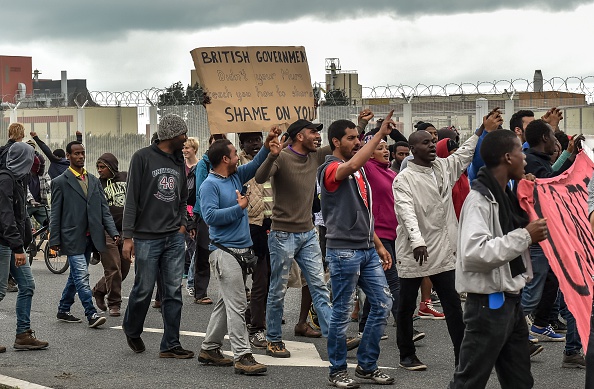
FRANCE-EUROPE-MIGRANTS-GANGS-BRITAIN-POLICE

Rather than reflexively blaming the hard-hearted British people for failing to welcome more refugees from Syria, our political elites should acknowledge their part in making a more generous humanitarian response a political impossibility

Dan Hodges has a reflective and rather wistful column in yesterday’s Telegraph, in which he says that people who pride themselves on their progressive values must accept that they have lost the argument, and that Britain will not make a more meaningful contribution in terms of accepting a number of Syrian asylum seekers more in line with many of our European neighbours.

Hodges writes:

There is no longer an argument to be had about whether or not significant numbers of refugees should be admitted to the UK. The pendulum of empathy – which swung briefly following thepublication of photos of little Alan Kurdi lying motionless on that Turkish beach – has swung back. The clashes at the Hungarian-Serbian border. The Paris attacks. Cologne. They are shaping public opinion now. And it will not be reshaped.

[..] There is no longer any point in expending energy on morally comforting tokenism. The argument about whether to accept 3,000 refugee children from Europe, or whether to accept them from camps within region, is as relevant to the crisis we – or more importantly, they – are facing as debating whether to accept 3,000 refugee children from Mars. According to the latest figures from the UNHCR, there are 4,597,436 registered Syrian refugees. 39 per cent of them are under the age of 11. A further 13 per cent are between the ages of 12 and 17. To continue to use the children of Syria in a proxy argument over our willingness to “do our bit” is not an exercise in compassion but an exercise in grotesque self-indulgence.

There is also no longer any point attempting to delude ourselves the solution to the Syrian refugee crisis can be found in Europe. Yes, we have the resources to provide sanctuary. But we do not have the political will to provide sanctuary. Actually, blaming the politicians on this one is a cop out. We do not have the public will to provide sanctuary.

Hodges is right that there is simply no longer any public will to take in poor, tired, huddled masses trying to escape from civil war and the particularly murderous theocracy of ISIS. And his notion of a “pendulum of empathy” is powerful and accurate way of describing what has happened to public opinion here.

But why is this the case? Why has the pendulum swung so hard away from generosity and toward selfishness? While Dan Hodges’ piece is eminently pragmatic in its acknowledgement of failure and suggestions for a feasible way forward, it fails to ask why we are where we are – why British hearts are so hardened to the idea of welcoming many thousands more refugees.

I would make a couple of suggestions:

1. The line between refugee and economic migrant has become almost impossibly blurred in our globalised age of jet travel and smartphones. People living in benighted parts of the world know better than ever just how good we have it in prosperous countries like Britain, and it is easier than ever before (though still perilous for some) for many to travel here – and ever more tempting compared to the life of hardship and drudgery facing them at home if they stay.

But where do you possibly draw the line between economic migrant and refugee? If being in a country engaged in civil war is sufficient qualification then all 22 million Syrian citizens would be entitled to refuge in Europe, and those of other countries too. But this would be quite unfeasible. Besides the impossibility of emptying a country of its every last non-combatant whenever hostilities break out, it ignores the vital agency that at lease some of these citizens must have in fighting for their own freedoms and liberties.

So if not all citizens, how do you choose among those who have risked their lives to reach safety, often with little or no paperwork or proof that they have a particular fear of persecution or harm to distinguish them from any other.

I simply don’t see a way that any such process can be anything other than arbitrary, endlessly bureaucratic and cruel. Add to this the fact that accepting people blindly on a first-come, first-served basis is untenable and creates serious potential national security issues, and the current paralysis is quite understandable, if no less frustrating.

2. Britain has accepted hundreds of thousands of new arrivals through legal immigration routes, particularly from some of the A10 countries which joined the European Union in 2004. And we did so while any talk about the potential impact that this relatively huge wave of immigration might have on community cohesion, housing or public services was instantly dismissed by scornful elites as xenophobic tub thumping at best, or outright racism at worse.

Prior to the rise of UKIP as a legitimate, non-extreme outlet for these concerns, nobody in the establishment was talking about this issue, and the ground was ceded to the likes of the extremist BNP. There was effectively a conspiracy of silence and intimidation against those who questioned the extent of immigration into Britain, with those in power doing nothing to respond meaningfully to public concerns partly because the political class were fortunate enough to belong to the group which disproportionately benefits from immigration and sees only its positive aspects, while other less fortunate people – often those without university degrees and less economic security – were far more likely to feel the negative consequences.

You don’t have to be an opponent of immigration to abhor the undemocratic way that these transformational changes were foisted on Britain by stealth, and without a thought of engaging with the people to consult their views. Indeed, this blog greatly favours immigration, but believes that the negative consequences are real, and can only be mitigated if the process of deciding immigration policy is open, transparent and democratic. But Britain’s immigration policy is none of these things, and one of the consequences of an aloof, disengaged and elitist policy is always going to be massive popular resentment and opposition to those same policies.

Therefore, if we are looking to cast blame or understand why Britain is behaving so apparently harshly in the face of this current humanitarian disaster, should we not first look to the historic cheerleaders of unlimited immigration – the pro EU fanatics, New Labour architects, those who held national power in the 2000s and the virtue-signalling middle class clerisy who flaunted their enlightened credentials by attacking anybody who expressed doubt about what was happening?

Now people will say that it is unfair to conflate immigration and asylum, as the two are quite separate things. And they would be correct – they are separate, and it is unfair. But both economic migration and taking in asylum seekers involve adding to the population and increasing the burden on services and infrastructure which cannot greatly expand to match demand in the short to medium term. And when you sorely abuse the public’s willingness to accommodate one influx of people, they are naturally far more guarded and hostile when it comes to the next, different influx.

If Britain did not have a completely open door to all regional immigration – unheard of in any major country outside Europe – could we have managed the influx of people wanting to work and settle here in a more planned and measured way, and with a modicum of democratic consent from the people? Arguably, yes.

And if Britain had not seen 1.4 million economic migrants settle here from EU accession countries within just the last fifteen years, would there be more willingness now to accept many more refugees in desperate need? Again, arguably, yes.

At least Dan Hodges and the progressive Left would now have had a much clearer grievance if Britain then still failed to admit a larger number of refugees. They would be able to accuse the government and the country of barely concealed racism, and of acting selfishly when nothing had been asked of them before, and do so with real justification.

But we do not live in that alternate reality. We live in the real world, where Dan Hodges and the europhiles got everything they wanted year after year, with Britain’s borders fully open and anyone who complained swiftly painted as a xenophobic Little Englander and banished from respectable society.

And so in 2016, unfortunately it is the desperate refugees – rather than the virtue-signalling progressive Left – who are now paying the price of this arrogant folly.
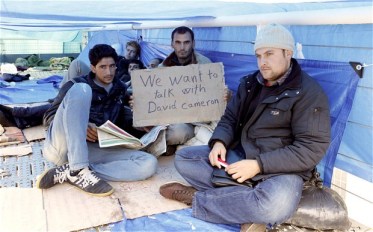
 

Refugees - Calais

Agree with this article? Violently disagree? Scroll down to leave a comment.

Follow Semi-Partisan Politics on TwitterFacebook and Medium.

The Daily Toast: The Right Reasons For Britain To Bomb ISIS In Syria

Britain - Airstrikes - ISIS - Islamic State - Syria - David Cameron - Francois Hollande

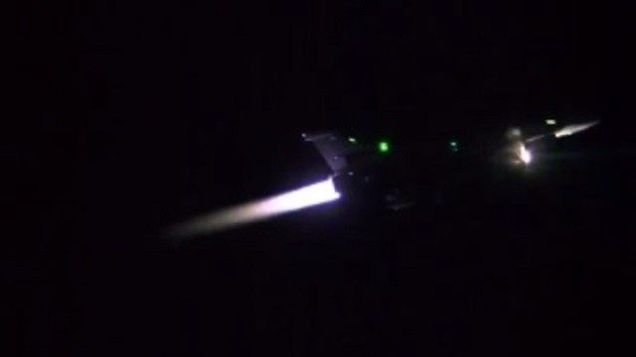
Building the case for military action against ISIS in Syria solely on the proposition that it will make us safer at home is over-optimistic, unprovable and damaging to the other, less alarmist (but stronger) arguments in favour of intervention

In his Telegraph piece today, Fraser Nelson understands that airstrikes and other military action against ISIS in Syria are nothing like a magic bullet method of keeping us safe from terrorist attacks, but that they are nonetheless the right thing to do.

Nelson goes on to echo this blog’s concern that building a case for military intervention in Syria based solely (or even primarily) on the overly-optimistic proposition that it will make the streets of London safer will only undermine the other, better reasons for attacking ISIS:

This is a political mission more than a military one. For years, Britain has been haemorrhaging influence in Washington – diplomats there have been shocked to hear France being mentioned as America’s most reliable European partner. Our absence from the Syria campaign stands out – and sends worrying signals about our reliability as a partner. With our troop numbers being cut back, we need partnerships. And this means stepping up to join alliances when the time comes.

This is harder for the Prime Minister to explain. It’s fairly easy to talk in terms of Britain bombing Isil into submission before sending in a 70,000-strong army. It’s harder to admit that bombing hasn’t really worked, and that that army doesn’t really exist and that a better strategy is needed. But if we want a chance of influencing that strategy, we need to join the US-led coalition.

The best case for intervention in Syria yesterday was made not by any minister but by Bob Stewart, a former colonel and now a Tory MP. He had been talking to senior officers in France, he said, and they told him that the country feels attacked and would very much appreciate the support of its closest ally. So it’s time, he said, for a “highly potent gesture” to let our allies see that we’re fully behind them. It’s a less dramatic case for war, but it’s more credible. And far more likely to give the Prime Minister the parliamentary vote that he so badly needs.

Obviously Britain cannot base the decision of whether or not to intervene militarily in another country solely on the affect our participation (or non-participation) will have on the esteem of our friends and allies. There must also be both a legitimate and compelling reason for intervention and a reasonable chance of a satisfactory outcome in order to justify such a grave decision. And though it is very hazy, on balance Britain probably can make a positive contribution if we work with our allies toward a clearly agreed strategy.

But Fraser Nelson is right – equally important in this debate is the way that Britain views its own role on the world stage, and (I would add) the degree to which we continue to live in the fearful shadow of the second Iraq war.

Britain has indeed become an “unreliable ally” over the past few years, not just because of the previous vote against military action in Syria but because of the degradation of our armed forces by a nominally conservative government with messed up priorities. We pared back the army by a magnitude of thousands of experienced, veteran soldiers. We greatly weakened the RAF with cutbacks. And we decommissioned our existing aircraft carriers years before the new ships come on stream, seriously weakening our ability to project force in distant places.

Those brutal cutbacks sent a message. They reeked of a country which had lost faith in its values, its power, its effectiveness and its ability to robustly defend both our allies and our own vital national interest. They spoke to a country which has lost its way, led by politicians more interested in being seen as competent technocrats administering decent public services than fighting evil or changing the world for the better.

Hopefully that shameful time is now finally coming to an end.

The time has come for the British government to show as much commitment to fighting evil and supporting our allies as it does to ramping up the autocratic surveillance state in the dubious name of national security. The time has come to wield the stick abroad where necessary once again, and ease up on the draconian policies which have come to typify our national security response at home.

But first and foremost – as this blog argued yesterday – the time has come for Britain to get up off the mat post-Iraq, and reassert our place in the world. The conflicts of the first decade of this century – with their weak justification and unclear objectives – must not colour our present day judgement to the extend that we freeze in indecision when decisive action and engagement with our allies is needed.

And while nobody can truthfully promise that striking ISIS in Syria will significantly reduce the terrorist threat in Britain, we can say with reasonable certainty that dithering and failing to act against the murderous death cult responsible for attacking our good ally France – slaughtering scores of innocent people in Paris – will help consign Britain to the ranks of middling, introspective and insignificant nations at the mercy of world events rather than shaping them.

This nuanced argument is much harder to make than simplistic pledges about keeping us safe from terror, especially when trying to build support for military action in a cynical and war-weary country. But it is the right argument.

As Fraser Nelson argues – and this blog concurs – it is far better to be upfront about the real motivations for intervention, and trust the British people to understand that it is in all of our interests to ensure that Britain continues to be taken seriously as a major player on the world stage.

Britain - Airstrikes - ISIS - Islamic State - Syria - RAF


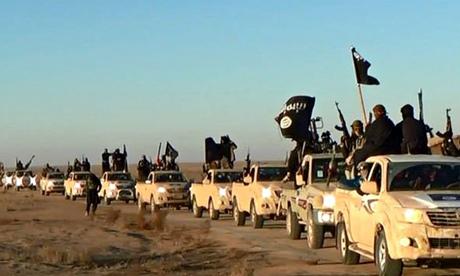
ISIS Convoy Syria

Agree with this article? Violently disagree? Scroll down to leave a comment.

Follow Semi-Partisan Politics on TwitterFacebook and Medium.

Should We Bomb ISIS In Syria?

ISIS Syria - France Airstrikes - Paris Attacks

When considering whether Britain should join airstrikes against ISIS in Syria, listen to anyone except those people preaching certainties

Should Britain join the group of countries launching airstrikes against ISIS in Syria?

On balance, yes. But not in the hope or expectation of “keeping us safe from terror”, which is the justification currently being touted by the government. And only as part of a broader strategy, a serious international military campaign and a real commitment to the people of Syria, who are caught in the middle of a ghastly civil war and – in the case of those stranded in ISIS territory – subjugated by one of the most barbaric, theocratic death cults in the history of the world.

I don’t advocate the use of force lightly. This blog rarely ventures onto topics of foreign policy, and for good reason – I’m far from an expert, and unlike some others I am not willing to confidently parrot the opinions of other people out of partisan loyalty or ideological entrenchment.

Today I re-read “I Was Wrong” by Andrew Sullivan, my favourite writer and blogger – sadly now retired from daily blogging. Sullivan was one of the loudest drum-beaters for the second Iraq war, and made the gradual transition from neoconservative warmonger to fierce Bush critic as he realised the gravity of his error – America and Britain’s catastrophic mistake. “I Was Wrong” is a collection of Sullivan’s blog posts from 2001-2008, charting that awful realisation.

I wanted to re-read Sullivan because I wanted to be sure that supporting military action in Syria was in no way a fear or anger-based reaction to recent acts of terror, to the Paris attacks – or the fear of a similar attack in Britain. And it is not. After 9/11, many people were willing to blindly lash out, and were too quick to put their faith in leaders who they mistakenly trusted to identify the real threats and the correct targets. Sullivan himself bravely admitted that he fell prey to this tendency. But in the year 2015, the shock of Islamist terror striking Western cities is no longer what it once was. And we are all more cynical and jaded, both about what our leaders tell us, and what we are capable of accomplishing when we decide to intervene in another country. In short: this is not Iraq all over again.

Today, David Cameron made the case for British military action against ISIS in Syria. The Telegraph sums up David Cameron’s 7-point plan:

  1. Protect the UK at home by maintaining robust counter-terrorism capabilities
  2. Generate negotiations on a political settlement, while preserving the   moderate opposition
  3. Help deliver a government in Syria that can credibly represent all of the Syrian people
  4. Degrade and ultimately defeat Isil, through Coalition military and wider action
  5. Continue leading role in humanitarian support and forestall further migratory flows towards Europe
  6. Support stabilisation already underway in Iraq and plan for post-conflict  reconstruction in Syria
  7. Work in close partnership with allies across the Middle East to mitigate the impact of Isil and other violent extremist groups

There are valid and compelling arguments for military action against ISIS in Syria, but this seven point plan does a poor job of making the case.

Point 1 is immediately ludicrous. Yes, there is the possibility that Syrian refugees may find their way across the continent of Europe to our shores, where they then go on to commit a terrorist atrocity. But we should be far more concerned about that stubborn rump of alienated British Muslims who already live among us and carry our passports, but feel no connection with or fidelity to our country. The 7/7 bombings in London proved definitively that we are perfectly capable of incubating our own terrorists in this country, with no need to import them.

David Cameron’s claim that Syria airstrikes will “protect the UK at home” should be treated extremely sceptically, because there is no compelling evidence that destroying the current overseas rallying point for Islamist extremism will do anything to tamp the fires of extremism within our own borders.

Points 2 and 3 sound suspiciously like nation-building. And again, no matter how accurate the RAF’s Brimstone guided missiles may be, they are not nimble enough to bring sworn enemies to the negotiating table or forge the beginnings of a political settlement. Regrettably, Britain and America have a weak track record when it comes to nation-building. And we can hardly be said to have learned the full lessons of Iraq when the publication of the Chilcot Report is shamefully delayed so as to allow those who come in for criticism the opportunity to airbrush their mistakes and imperfections from the public record.

Points 6 and 7 have a moderate chance of success at best. But with the exception of Israel, it is by no means certain that Britain’s so-called allies in the Middle East remotely share our objectives. Some of them actively fund and give succour to the same extremists who threaten us. The War on Terror has driven the United Kingdom into the arms of that repressive, barbaric kingdom, Saudi Arabia – a medieval land where lashings, crucifixions and beheadings are still deployed against blasphemers, and where many a terrorist ideology has been incubated.

In an ideal world, Britain would have nothing to do with the whole benighted region, diplomatically, until they achieve democracy and freedom on their own – but since necessity forces us to suck up to Saudi Arabia and other such Utopias in exchange for morsels of intelligence about the very same terrorist plots that they tacitly support, we will likely continue to make more enemies than friends in the Middle East.

Only points 4 and 5 of Cameron’s list are realistically achievable. Yes, we can degrade and defeat ISIS as an organisation. If Britain, America, France and other powers are determined then we can rain down fire on enough ministries, military posts, safe houses and supply routes that ISIS lose the majority of their territory and cease to be a potent regional presence. Clearly ground troops will be required to do the work that drones and missiles cannot, but whether the 70,000 potential Free Syrian Army fighters will be of sufficient number or quality to do the job without outside reinforcement is uncertain.

But the radicalised Muslims who flocked to the ISIS banner will not awaken as if from a trance the moment that David Cameron and François Hollande land on the flight deck of the Charles de Gaulle to declare “mission accomplished”. They will not suddenly see the light and re-embrace Western enlightenment values. They will simply cast around for the next group to join. And be assured, another group will come to fill the vacuum – just as ISIS is eclipsing Al Qaeda, and Al Qaeda eclipsed its jihadist predecessors.

None of these flaws in David Cameron’s 7-point plan for successful action in Syria are reason enough to reject military action. But they do show that bombing alone will not be enough – while the West may not have the appetite to pour in the blood, effort and money required to finish the job.

ISIS Convoy Syria

So when it comes to weighing the decision about whether to bomb Syria, beware of anyone offering cast-iron certainty on either side of the argument – be it Momentum and Stop the War on the left, or David Cameron and the hawks on the right.

For the truth – once the ideological blinkers and two-dimensional worldviews are stripped away – is that this decision is an impossibly close call, and one in which the absence of counterfactuals means that we will likely never know for certain whether we were right to intervene or not.

All that we can say for certain is that it is not the binary question of Yes/No which will make a success or failure of Western policy in Syria. What matters is not the decision about whether to bomb or not to bomb, but rather how the military action unfolds if it is authorised, what our tactics are, and how it fits into a broader plan to defeat the Islamist threat.

The military question itself is relatively straightforward in all of this. If we really wanted to defeat ISIS specifically as an organisation and wannabe state, the Western powers and their allies – working closely with the Free Syrian Army and others – are physically more than capable of doing so, if we put our minds to it.

But that does nothing to solve the broader jihadist threat. Where once we feared groups like Islamic Jihad, now we fear Al Qaeda and ISIS. And tomorrow, when ISIS is gone, we will tremble at the thought of some other bronze age group based in another unstable country, wreaking chaos with twenty-first century technology. The recent history of our efforts to defeat Islamist extremism can best be described as Terrorist Whack-a-Mole. You hit one organisation and another pops its head up somewhere else.

So don’t support bombing ISIS in Syria because it will help to keep us safe from terror attacks, because it won’t. In the short to medium term it will make no difference at all. A bomb next month in Leicester Square will not condemn the decision any more than another year without a major terrorist attack on British soil will vindicate the decision to begin striking ISIS in Syria. And beware opportunists who suggest otherwise.

The only real criteria which should be met in order to support military action in Syria are:

  1. Reasonable cause to hope that such action will materially defeat ISIS
  2. Fewer civilians expected to be killed or radicalised as a result of such action than would be the case without further intervention
  3. Confidence that the vacuum left by ISIS will not be filled with something even worse

Above all, this must be an humanitarian mission. In order to get public buy-in it will almost inevitably be couched in the language of “keeping us safe” in Britain – or fighting them over there so that we don’t have to fight them on the streets of London, as Matthew Hancock said this evening on Question Time (perhaps unwittingly channelling President Bush). But this is an unrealistic promise, one which sets the target for success so high that it will inevitably be missed. Even total victory in Syria will not end the Islamist threat, which is just as potent within Europe’s borders as it is in the Middle East. And we can hardly bomb Brussels or the slums around Paris.

A humanitarian mission is something achievable – if we work very, very hard, we can probably get ourselves to a place where we can say with some confidence that fewer people were killed, maimed or brainwashed than would have been the case had we done nothing. That’s likely to be as good as it gets – but those are the messy realities of our world.

That may not be enough for some, who either oppose military action because it is not the magic bullet for ending Islamist extremism or support it believing that it will. Both viewpoints allow perfection to become the enemy of the good – or the tolerable. There is no perfect solution on the table.

The anti-war Left need to drag themselves out of the shadow of Iraq and remember that Britain has a proud history of previous military and humanitarian interventions around the world which were right and justified and successful. And they must realise that there can be no negotiation with ISIS, and no realistic diplomatic solution in Syria until a military victory is won.

The terrorism-thumping Right need to appreciate that decimating ISIS militarily will in itself do nothing to defeat the ideology behind it – and in fact, any military action may exacerbate that aspect of the problem. Therefore, Britain should not take another step toward further armed involvement in Syria until something resembling a long-term plan is agreed between all of the major powers currently intervening in the region.

And both sides must remember that this is not Iraq all over again. The “something must be done” brigade are not leading us down an obviously wrong path as they did after 9/11 – we know precisely what is currently happening in Syria, and we are in no danger of precipitating a bloody Iraq-style civil war through our actions, because one is already bubbling along quite nicely without us.

Lastly, both sides should remember the best traditions of Britain as a force for good in the world. We remain one of the great economic and military powers of the world, with unique capabilities that we could bring to bear against ISIS. The mistake of Iraq must not allow us to abrogate our responsibility to project our power in defence of liberty and freedom where there is a compelling case to do so.

It’s time Britain got up off the mat after Iraq, and started fulfilling our responsibilities to the world once again.

David Cameron

Agree with this article? Violently disagree? Scroll down to leave a comment.

Follow Semi-Partisan Politics on TwitterFacebook and Medium.

Chinese State Visit: This Fawning Spectacle Is No Nixon In China Moment

Richard Nixon and Henry Kissinger are hardly role models. But unlike David Cameron and George Osborne, at least they had the self-respect to meet the Chinese leader on equal terms

Iain Martin thinks that Chinese President Xi Jinping’s state visit to Britain marks the beginning of the downfall of George Osborne, who has assiduously courted and flattered his way back into the Chinese government’s good graces:

Of course we have to trade with China, and it is going to be especially vital for the City of London, but do we have to be quite so shameless and pathetic about it? Osborne is the architect of the UK’s China policy, and has made sure that everyone knows it. Now, the optics of this state visit, as viewed on television news, look increasingly like a national humiliation.

It’s hard to disagree with that assessment, and to feel a mounting sense of shame at Britain’s determinedly mercantilist foreign policy. It may reap financial and political rewards, but craven spectacles such as this gravely undermine Britain’s role as a world leader.

It is all the more galling because it is so unnecessary. No disrespect intended to Spain’s westward neighbour, but Britain is not Portugal. We are not, thankfully, some middle-ranking economic and military power. Our armed forces may be worryingly pared back and our workforce’s productivity frustratingly low, but Britain is still one of the few indispensable nations. Though we have been introspective and full of self doubt of late, our fundamentals – world leading firms, popular culture, arts and music, legal system and democracy – are among the most popular and most envied in the world.

None of this is to say that we should not have welcomed Xi Jinping to Britain – we are right to do so. It is absolutely in our interests to forge and maintain good diplomatic relations with China. But we should not allow ourselves to be seduced or intimidated by China’s new economic and geopolitical clout. Continued Chinese growth – and the ongoing stability of their autocratic, dictatorial regime – depends on maintaining friendly relationships with key countries like Britain. Neither country can much afford to freeze the other out for the long term.

The problem is not the Chinese – it’s us. It is the attitude of some of our politicians and their friends in the media, who seem too eager to buy into the pessimistic narrative of British decline and waning relevance. Listening to some of them, one would almost think that we were back in the dark, pre-Thatcher days of the 1970s all over again.

Back in 1972, when Britain truly was floundering in the economic doldrums, riven by industrial strife and a failed post-war consensus while the United States grappled with problems of their own, President Richard Nixon travelled to Beijing to “reset” America’s relations with China in far more tense and unpredictable circumstances than those which bring Xi Jinping to London this week.

As a general rule, it’s best to avoid the examples set by Richard Nixon and Henry Kissinger. But on this one particular  occasion, our political and media class might take a useful lesson in terms of how they conduct themselves.

Richard Nixon - Zhou Enlai - Nixon In China

Xi Jinping - State Visit - Britain

Music: “Cheers” chorus from the opera “Nixon in China” by John Adams

Agree with this article? Violently disagree? Scroll down to leave a comment.

Follow Semi-Partisan Politics on TwitterFacebook and Medium.

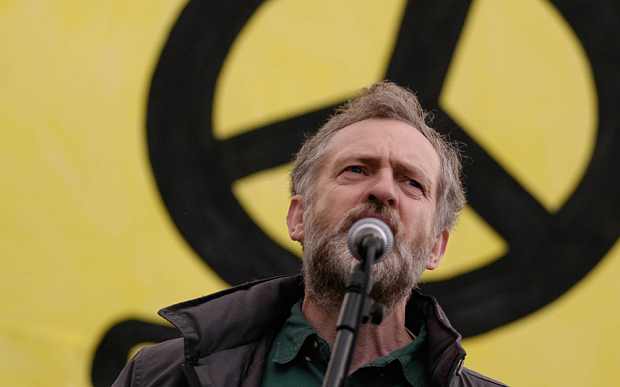
Can Jeremy Corbyn Redeem Himself On Tackling Extremism?

Jeremy Corbyn - Foreign Policy - Appeasement

Can Jeremy Corbyn rehabilitate his two-dimensional, anti-British foreign policy worldview?

Jeremy Corbyn’s red-blooded socialist domestic policies are generally flawed and counterproductive, but we can forgive him for that because he represents a legitimate strand of political thought that for too long has been marginalised and shut out of the political conversation in favour of the quisling, centre-left socialism of the likes of Ed Miliband.

What is much harder to forgive, however, are some of Jeremy Corbyn’s stances on foreign policy, where he has frequently espoused views and shared platforms with people of highly questionable character and motive. Whether it’s concerning Northern Ireland, Israel/Palestine or the Iraq war, too often Jeremy Corbyn’s public positions have drifted across the line separating conscientious objection from something much worse.

But now that Jeremy Corbyn is the leader of Her Majesty’s Opposition and burdened with one of the formal offices of state, what chance is there that reason, patriotism and propriety might assert themselves to moderate his well-known public stances?

Jonathan Russell, political liaison officer at the Quilliam anti-extremism think-tank, remarkably sees cause for hope:

Continue reading