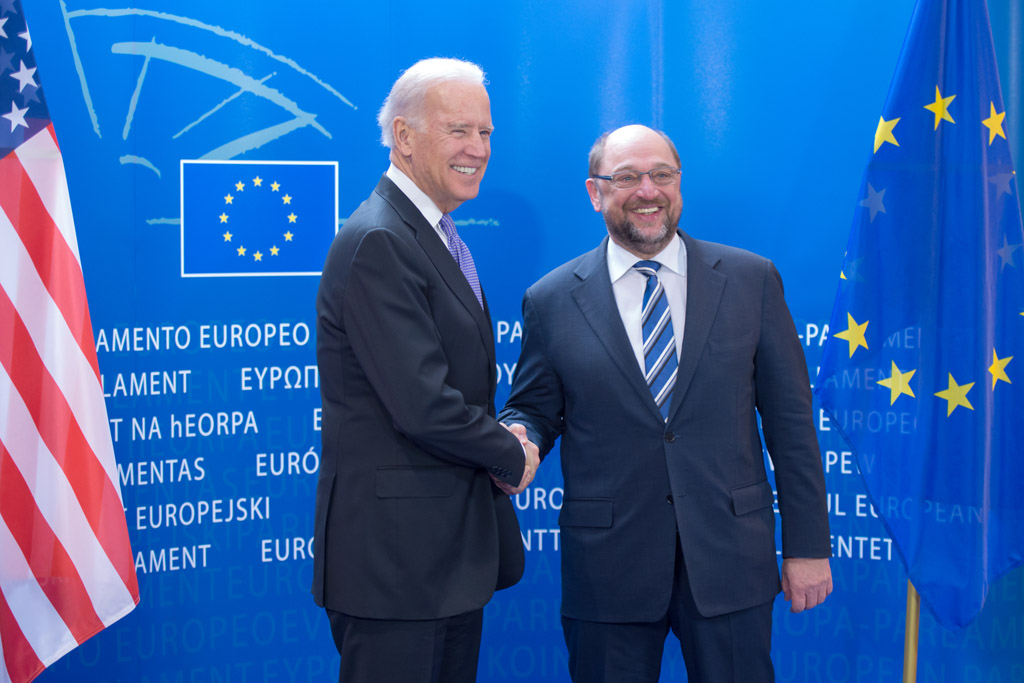
“I appreciate that it is not easy to explain to people back home why we need to cooperate more closely at European level in such a sensitive field as defence and security policy. Protecting its citizens has traditionally been a key task of the nation State and therefore also one of the foundations of its legitimacy. But we cannot close our eyes to reality: the world has changed and we are existentially connected to that world. Nowadays we can only defend our citizens jointly” – Martin Schulz, 2013
Here’s a good rule of thumb: the more powerful and undemocratic the institution, the better it becomes at using weaponised public relations tools in order to present a softer, friendlier, less threatening – and entirely false – picture of themselves.
Thus the President of the European Parliament, Martin Schulz, spent Monday morning hosting a laid back online live-chat on Facebook, in which he fielded carefully-screened softball questions from members of the public. And sneaking back onto the radar during that live-chat today was the prospect of a common European foreign policy, and a European army to enforce it.
From the EU’s own press release today:
To questions concerning the recent proposal on a common European army, Schulz replied “we need a common foreign and security policy”, explaining that combined military capacities would be a way of reducing military spending in a time when “money is certainly needed elsewhere”.
Meanwhile, others in the European Parliament are making rumblings about moving toward “permanent structural co-operation” – meaning there will be no way back once the EU starts taking major steps as an independent actor on the world stage:



 Semi-Partisan Politics