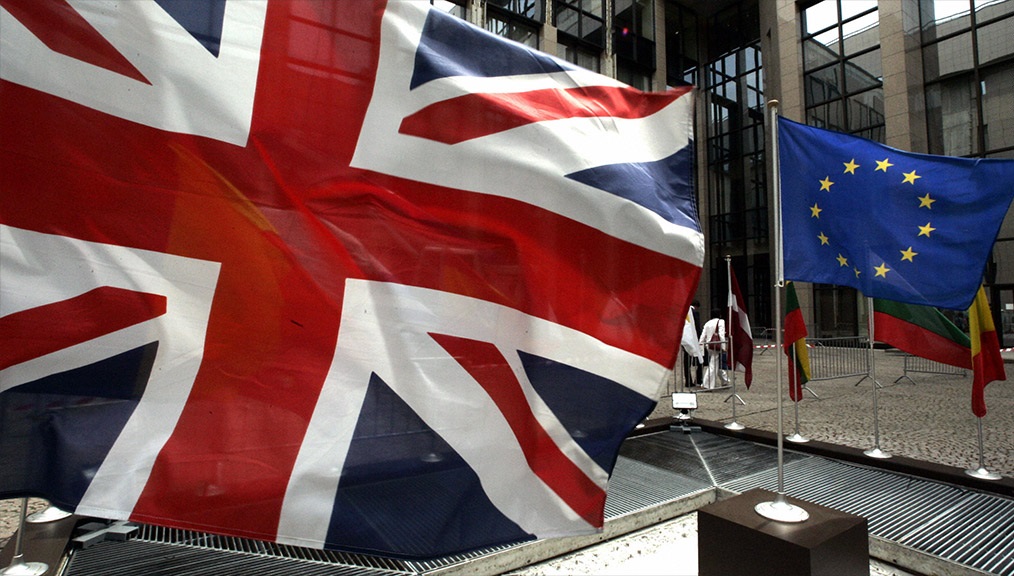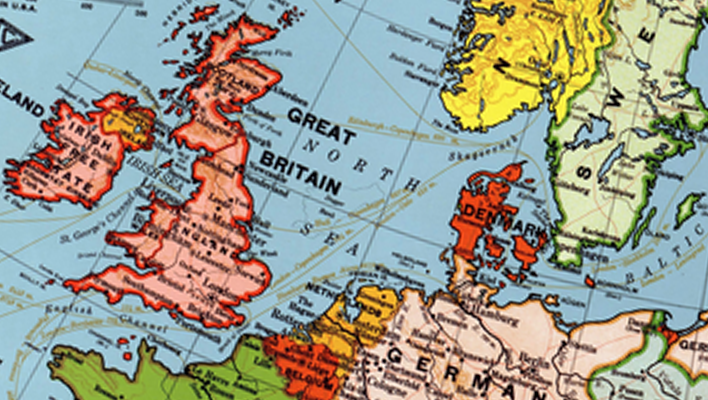
Britain’s Strong Tradition Of Liberty Trumps Enforced European Unity

Britain Europe History 3

More good sense emanating from Reimagining Europe, the Church of England’s contribution to the EU referendum debate, this time courtesy of Adrian Hilton of the Archbishop Cranmer blog:

No-one seems to have much memory any more of the centuries of incremental British liberty, stability and fraternity which preceded these past few decades of European equality, bureaucracy and oligarchy. The pebbles of 1973 and 1975 grind down the cornerstones of 1215, 1534, 1628, 1679, 1689, 1701, 1706, 1829, 1928… I could go on, but few of these dates resonate any longer against the incremental attrition of ‘ever closer union’ couched beneath ‘unity in diversity’, in which cultural difference and historic detachment must be subsumed to an overarching judicial-political construct by which our national freedoms and individual unfreedoms are now defined.

Very true. And Hilton’s conclusion is also spot on:

Now we are to decide our European destiny again by referendum, but this time we must be told the truth: we either leave to pursue a future that is contiguous with our past, or we stay to be absorbed into a United States of Europe, which is already being rolled out as “economic governance” – just ask the peoples of Greece, Ireland, Spain, Italy and Portugal. The “democratic deficit” cannot be fixed: the whole project was designed at its inception to bypass the capricious and unenlightened will of the people. Democracy is an inconvenience: the epistocracy knows best.

We were lied to. Sorry to be so blunt, but that’s the history. If my parents and grandparents had been told back in 1975 that their voting to remain in the EEC would eventually mean that a market trader would be arrested for selling a pound of bananas, or a young student could be carted off to a Greek jail and deprived on his ancient rights of Habeas Corpus and trial by jury, they’d have voted to leave. And that’s what I’ll be doing, whatever honest, sincere or cast-iron guarantees they decide to give.

Continue reading

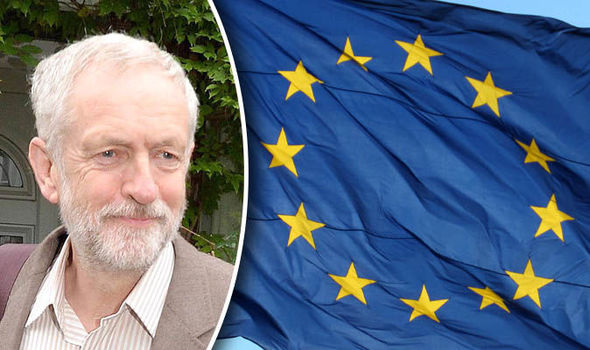
Jeremy Corbyn Capitulates On The EU, Betraying Left Wing Eurosceptics

Jeremy Corbyn - EU - European Union - Brexit - EU Referendum

Is Jeremy Corbyn’s capitulation on Europe a sign of things to come?

We all know that Jeremy Corbyn is a eurosceptic at heart. He voted for Britain to leave the European Community in the 1975 referendum for precisely the same reason he remains sceptical of it now – Corbyn recognises that remote and anti-democratic institutions in Brussels and Strasbourg make it impossible for Britain to pursue her own sovereign policies.

Of course, in Corbyn’s case, the EU stands in the way of creating a true socialist state, a People’s State of Great Britain with levels of regulation, social legislation and economic protectionism that even Brussels rightly rejects. Corbyn’s euroscepticism is thus very different from a conservative or libertarian’s euroscepticism, but it still comes down to sovereignty at the end of the day – whether Britain should be free to pursue her own interests, or subordinate our national interest to the “greater good” of European unity and harmonisation.

Since the general election and the summer escalation of the Greek economic crisis, there has been an encouraging increase in left-wing euroscepticism, with prominent thinkers and voices finally starting to accept that the EU might not have the interests of all its individual member states at heart. It has been encouraging to watch these green shoots of euroscepticism grow on the Left, as more people came to realise that this anti-democratic anachronism from the 1950s is perhaps not the solution to the challenges of the twenty-first century.

But all of this welcome progress came to a screeching halt yesterday when Jeremy Corbyn announced an abject and humiliating climbdown in his eurosceptic stance, no doubt forced by self-entitled members of his restive shadow cabinet:

Continue reading

The Great European Migrant Crisis, And The EU’s Failure Of Morality

Europe Asylum Immigration Crisis Boats

It should not have taken images of a drowned three year old boy lying face down in the sand on a Turkish beach for politicians and commentators to finally declare that “something must be done” about Europe’s migration crisis

Shame on us. It should not have taken pictures of Aylan Kurdi‘s lifeless body splashed across the front pages of the world’s newspapers to force the British government into a strategic rethink about how we tackle Europe’s great migration crisis and work with other countries to offer a just and humane response to this ongoing tragedy.

But nobody can say that it has not made a difference. Only yesterday, David Cameron was insisting that nothing “can be achieved simply by taking more and more refugees”, proposing instead to solve the crisis by simply ushering in world peace. Today, the Prime Minister announced that Britain will take thousands more Syrian refugees, insisting “we will do more, we are doing more”. What a fine, principled leader we have, daring to do the moral thing only after being emboldened by shifting public sentiment.

But this dithering in the face of human suffering and clear moral imperative is not new – it has been going on for months and years. Only last month, an Afghan military interpreter who served in Helmand with the Parachute Regiment was executed by the Taliban after being denied refuge by the UK government, despite pleas from senior military figures for the government to remember our moral obligation to our friends in danger overseas.

Prior to his death, the Telegraph reported:

Britain will have “blood on its hands” if Afghan interpreters are killed by the Taliban, the former head of the army has warned. Lord Dannatt said that the nation has a “debt of honour” and a “moral obligation” towards those who served alongside British forces.

It comes amid mounting controversy over the government’s refusal to allow Afghan interpreters to return to Britain, including one who worked as a translator for David Cameron.

Behold the sheer perversity of Britain’s approach to immigration and asylum – two separate issues, but conflated together and both woefully mishandled by successive governments of both parties.

Continue reading

The EU “Renegotiation” Is An Attempt To Deceive You

EU Renegotiation - Brexit - European Union

By Ben Kelly, blogger and editor of The Sceptic Isle.

If you are one of those many people who consider themselves to be a “Eurosceptic” and lean heavily towards the “no” (for “Brexit”) vote yet still believe in the so-called re-negotiation – because “it’s worth a try”, you never know what we might get, we’re in a strong position to win back powers, et cetera – then please stop. Stop wasting time, and wake up.

If you are against our membership of the European Union on principle then the possibility of “winning” some minor cosmetic changes to our relationship should not give you cause for doubt. You need to focus on arguing for secession, now.

The renegotiation is a pretence conducted by avid europhiles with the sole intention of shutting down this debate and sealing the United Kingdom’s fate as a permanent part of the political union, destined for deeper integration. The evidence for this plain to see, and eurosceptic Conservative Party members and MPs should not allow the party leadership to get away with its insultingly transparent charade.

The image being portrayed is that of our government locked in a “renegotiation” with other EU members; with all the arguments, banging on the table and defiance that this entails. Please don’t fall for this, David Cameron is not a born again eurosceptic. None of that is happening, it is all nonsense, complete make believe; at best it is elaborate political theatre.

Continue reading

Why Can’t We Raise The Quality Of The Debate On Europe?

EU UK Britain Flags

The stakes could not be higher for our country, and yet the debate about Britain’s place in Europe takes place in a febrile atmosphere where blinkered partisanship and confected outrage on social media draws a larger audience than reasoned argument. No wonder we are incapable of disagreeing with honour when it comes to our place in the EU

Why can’t we disagree well on Europe?

That is the question posed by Justin Welby, Archbishop of Canterbury, in a thought-provoking intervention posted at Reimagining Europe, a new Church of England blog examining Britain’s place in Europe and the world from a Christian perspective.

In his piece ‘Learning to disagree well on Europe’, Welby writes:

People will say that we should not take the risk of leaving, others that it is less of a risk than staying. There will be talk of national sovereignty, of national confidence, of repatriation of laws, or being bound by European laws over which we have no control. The only certainty is that there will be much heat, probably slightly less light, but that it is a hugely important decision, with thoughtful and committed people, including Christians, on both sides.

But what about those in the UK for whom our membership, or withdrawal, from the Union, is not a major question, those for whom the needs and responsibilities of each day take precedence, and mention of political debates such as this leave them cold?

[..] How can we revitalise ideas such as sovereignty and subsidiarity – ideals formed out of Christian faith whose political dimensions capture their meaning only in part – and help encourage a clearly values-based approach to Britain’s future relationship with the EU; one that includes, but does not end with, economic and political perspectives?

All worthy questions. And in the spirit of making a constructive response, I would offer two main reasons that the quality of the debate has been – and is likely to remain – so desperately low.

First, the stakes of the debate are so high: we are not talking about tweaks to the tax code or welfare system which can be easily undone by a future administration, this decision will shape the future of our country, and the way in which the whole world responds to the challenges of globalisation. And secondly, the quality of our political discourse in general is driven by the internet and social media, democratising in their way but also a megaphone for those with the loudest and most outrageous opinions to seize control of the narrative.

Continue reading