The Daily Toast: Tony Blair On Labour’s Future In The Age of Corbyn

Tony Blair - Labour Leadership - Jeremy Corbyn - Annihilation

The Labour Left may dismiss him as a Red Tory war criminal, but Tony Blair raises some awkward questions about what Labour stands for in the Age of Corbyn

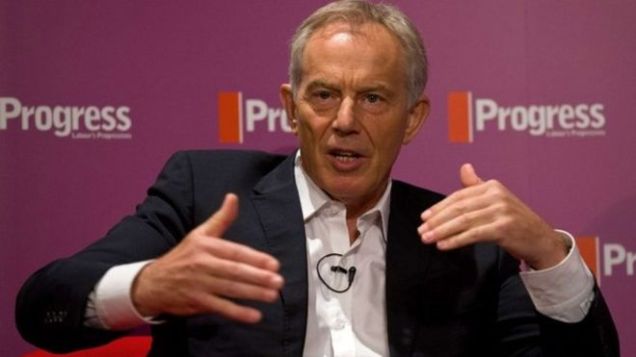
In the Christmas special edition of The Spectator, Tony Blair offers a typically self-aggrandising but (to the Corbynite Left) infuriatingly perceptive take on the challenges facing Labour, and why the emboldened hard Left are not equal to the task before them.

Defending New Labour’s record in government between 1997-2010, Tony Blair writes:

In a society in which fewer and fewer people thought of themselves as traditional working class, we needed to build a new coalition between the aspirant up and coming and the poorest and most disadvantaged. For the task of winning power, the emphasis on the values of community, society, family, compassion and social justice was highly effective.

But for the task of governing, we had to do more than proclaim our values, we had to have the courage and creativity to apply them anew to a changing world and make what counted what worked rather than defending interests or tradition.

That’s the rub: what does Labour stand for in a society where fewer and fewer people  think of themselves as being working class, or attach any real meaning or identity to that label? And specifically, what does the Corbynite Left of the party stand for in this new reality?

Blair points to an uncomfortable truth for Labour. Because few people, other than the Owen Jones romantic Left, still obsess about class. And though economic inequality is very much a real thing, many of us share common tastes in popular culture to an extent which was simply not the case in the 1920s or even the 1950s.

What does social class even mean when thousands of one-percenters listen to the same pop music and partake of traditionally working class interests such as football, and the technological revolution has given the masses the same access to entertainment, culture and travel destinations as the very wealthy? Does class mean anything at all in 2015, besides being a shorthand way to describe a person’s accent? Arguably not.

So what has replaced the issue of class in our public discourse? The answer, of course, is the new obsession with equality. Nebulous and never clearly defined, the Left harp on about equality without ever explaining whether they are referring to equality of opportunity or equality of outcome. But as a crude generalisation, one could say that centrist Labour strives (however badly) for equality of opportunity, while the Corbynite Left dream of a word of total, enforced equality of outcome.

What unites these two warring factions within Labour is the fact that neither side have the first clue about how to use public policy to translate their vision into reality. Centrist Labour is intellectually dead and hasn’t had an original idea since Tony Blair left office, but the rot became particularly bad during the Ed Miliband era. Miliband’s speeches were full of meaningless platitudes and waffle about creating a “fair” Britain, but shockingly free of specific policies or strategies to reshape the country accordingly.

And the emboldened Left are full of spittle-flecked condemnation of the Evil Tories, not to mention the endless, preening virtue-signalling which has become their hallmark. But they offer no solutions either, just a 24/7 Twitter stream of criticism of Tory policy. Want to know what the Corbynites want to do with taxes or welfare? Good luck finding out. Most of them don’t have a clue, and the few that do know won’t say because they know that their real vision for Britain would be hugely unpalatable to the general electorate.

The danger for Labour in failing to stand for an election-winning coalition of voters – as they did when they represented a cohesive working class in the twentieth century – is that others will define Labour to the electorate, and not in a flattering way.

Already, the Conservatives are pushing the message that Labour are the party of welfare, entitlement and anybody who is a net “taker” from society. And what can Labour possibly say to counter this claim, when they can always be found popping up on television to denounce spending cuts without announcing anything amounting to a cohesive plan of their own?

Blair closes his Spectator piece by warning:

Right now we’re in danger of not asking the right questions never mind failing to get the right answers. All of it is about applying values with an open mind; not boasting of our values as a way of avoiding the hard thinking the changing world insists upon.

Unfortunately, even the anti-Corbyn elements of the Labour Party seem utterly unable to grasp this fundamental truth. And too often, it seems that all Labour know how to do is hate the Tories and boast about their own values, rather than identifying solid policies to put them into practice.

Consider how the recent vote on military action in Syria descended into a mudslinging sideshow, with the Corbynite left accusing anyone who disagreed with their pacifist stance of being an Evil Tory warmonger. Or the way that the Labour Party rode to battle against the tax credit changes, the welfare cap and the NHS junior doctors pay dispute, enthusiastically taking up arms against the Conservatives without uttering a word about how they would address very real problems of concern to many British voters.

On these issues and more, Labour currently propose no solutions. While military intervention in Syria may well fail or lead to a worse outcome, no alternative has been clearly outlined – assuming that airy talk about negotiating with ISIS is not to be taken seriously. Ask ten Labour MPs (including the shadow cabinet) what the party proposes to do about welfare or the NHS and you are likely to get fifteen different answers.

In his article, Tony Blair repeatedly argues against focusing on ideology:

Infrastructure, housing, social exclusion – all these challenges require more modernising and less ideological thinking.

But this is misleading. Strong viable governments only come about when there is a coherency and consistency of ideology which informs the policies offered to the electorate. It’s no good just coming up with a basket of pragmatic policies – people rightly see this for what it is: electoral opportunism.

Labour need to pick an ideology, whether it is that of their leader, that of Tony Blair or that of the incoherent band of uncharismatic centrists who currently pass for party heavyweights. And then they need to show the public that real, tangible policies for government can flow through the party, shaped and informed by those ideals. Labour’s credibility is currently so low that opportunistic opposition to individual Conservative policies will deliver them nothing at the ballot box. An alternative platform for government is what’s needed.

And that takes us back to the opening question: who does Labour actually represent in the Age of Corbyn and his sulky centrist antagonists, when nearly everybody with an aspirational bone in their body is abandoning the party?
Jeremy Corbyn - Labour Party - Andrew Marr Show - BBC

Agree with this article? Violently disagree? Scroll down to leave a comment.

Follow Semi-Partisan Politics on TwitterFacebook and Medium.

The Daily Toast: Alex Massie Calls Out Britain’s Growing Illiberal Streak

Ban Donald Trump Petition

The pathetic petition to ban Donald Trump from entering Britain – for the high crime of being an idiot – reveals a festering illiberal sickness at the heart of our nation

Are we really that country? Are we really that petty, authoritarian, second rate destination that bans foreigners whom we accuse of endangering the “health and morals of the nation”?

Yes. Increasingly, regrettably, yes we are. Donald Trump will escape the travel ban which many on the virtue-signalling Left are desperate to impose by virtue of who he is, the fact that he has no plans to come here anyway, and the diplomatic impossibility of thus spurning a US presidential candidate, even an unlikely one. But others before him have not escaped Britain’s growing intolerance of intolerance.

Comedians such as Dieudonné M’bala M’bala have been banned from visiting Britain to perform their racist comedy routines. Bloggers like Pamela Geller have been banned from entering the UK because their pungent and unpleasant political views have been deemed to be “not conducive to the public good”.

So we are already that country, no matter whether or not Theresa May decides to put Donald Trump’s name on her little list. We are already that country which has lost so much faith in our British, Western and democratic values that we now see unpleasant or inflammatory speech as something which will harm our already-fragile society.

The wretched story even made it to Prime Minister’s Questions. The fevered ramblings of that reality TV star turned presidential candidate were actually raised by an MP in the House of Commons, and George Osborne (standing in for David Cameron) was asked to intervene to protect us from the Big Bad Man. Serious journalists debated whether or not a ban was appropriate, when they could have been writing about something, anything else.

There’s certainly nothing like a swaggering, ignorant Republican presidential candidate to bring out the angry, authoritarian cheerleader in Dan Hodges:

What we have just witnessed is not just another attention-seeking rant from a Republican hopeful who is trying to secure definition in a crowded primary field. What Trump has done is effectively call for a race war.

[..] One of the most popular TV shows in the US at the moment is an alternative history drama called The Man In The High Castle. It is set in a world in which the Allies lost the second world war, and America lives under a fascist dictatorship.

Donald Trump wants to be the man in the high castle. Ban him. Ban him now.

But this is far from an uncommon reaction. The Independent earnestly argued exactly the same point – that Donald Trump’s views were not simply factually incorrect and misguided views to be challenged and debated, but potentially “harmful” words of such power that their speaker must be forcibly kept at bay and prevented from corrupting the impressionable minds of the British public.

Fortunately, there are dissenters. This blog weighed in when the Donald Trump story first broke, making the case that the illiberal instincts of the outraged Left are just as harmful as the nonsense spouted by Trump.

And now Alex Massie has an excellent piece in CapX, taking square aim at the “fatheaded nincompoops” more interested in signalling their virtue and parading their ignorance of the free society than defeating the actual ideas espoused by Trump.

Massie writes, sarcastically:

If we ban something, you see, that something will disappear. Even better, by banning ugly speech we will be able to demonstrate our moral superiority. And, when push comes to shove, that’s what matters most. Smugness warms the soul like nothing else this winter and every place must be a “safe space”.

And so it is. Imprisoned by the dogmatic belief that all cultures and values are inherently equal, none superior to any other, all that some parts of the Left can now do is squeal with protest when anyone does anything to hurt someone else’s feelings.

Massie continues, making reference to the parallel “controversy” surrounding champion boxer Tyson Fury whose nomination for Sports Personality of the Year is causing hysteria because of his unreconstructed views on gender roles and sexuality:

Repeat after me: there is no right not to be offended. But if we must be outraged let us be more outraged by those who seek to stymy and prohibit speech than by those whose speech the censors would have us suppress.

I deplore Donald Trump and have little admiration for the cut of Tyson Fury’s jib but, damn it, I’ll defend their right to be objectionable – and even repellent – if the alternative is siding with those who instinctively react to disagreeable opinions by seeking to suppress them. These people pose a vastly greater threat to liberalism and public decency than the people they deplore themselves.

These arguments over Trump and Fury might seem trivial but they are minor manifestations of a much larger issue. Remember January? Remember “Charlie Hebdo”? Remember all the pious declarations of sympathy and support and solidarity? Remember how politicians discovered that free speech might actually be something worth defending? Remember “Je suis Charlie”?

[..] Trump and Fury do not, in themselves, matter very much. But the reaction to their speech does matter. It is always depressing to discover that there are vastly fewer liberals in this country than you might wish there to be. But that discovery should no longer surprise us.

One can hope that the growing number of signatories to the Ban Donald Trump petition are drawn entirely from the ranks of virtue-signalling left-wing keyboard warriors, and are thus entirely unrepresentative of the British people as a whole.

One can tenuously hope that some of those who say that they want to ban Donald Trump are simply registering their strong disagreement with his latest inflammatory comments, and that they don’t really mean it when they call for a person to be banned from entering this country on account of their political views

One can even hope that the angry petitioners are outnumbered by a greater silent majority of Britons who don’t see Britain’s current, shameful track record of banning controversial people from entering our country as a marvellous precedent which should be extended to Donald Trump, simply because he’s an exceedingly offensive ass.

One can hope.

But I’m not sure any more. Perhaps it’s entirely a function of following the daily news cycle too closely and attaching too much weight to the petty storms and crusades of social media. Perhaps Britain isn’t really becoming a more sanctimoniously self-satisfied and intolerant place, populated by beady-eyed, brittle-egoed adult babies whose first reaction to encountering dissenting or unpleasant opinions is to screech indignantly for the authorities to have them banned.

Perhaps.

But it’s hard to feel much hope after reading much of the Donald Trump coverage in Britain over the past couple of days.

Donald Trump Hat - Make America Great Again

From next week, I’ll be in Texas and Ireland to celebrate Christmas and the New Year respectively. Blog updates will continue, but at a reduced frequency until normal service resumes in January.

Many thanks to everyone for reading, sharing, commenting, debating and contributing.

Agree with this article? Violently disagree? Scroll down to leave a comment.

Follow Semi-Partisan Politics on TwitterFacebook and Medium.

The Daily Toast: Glenn Greenwald On Succeeding In Journalism

Glenn Greenwald


Glenn Greenwald gives an interview to Dillon Baker in The Freelancer, and offers his thoughts on succeeding in online journalism:

I think the most important thing is to avoid being a generalist. Don’t be willing to write about every single topic, because no person can be well-versed in every topic. If you write about stuff in which you are not well-versed and you don’t really have expertise, you’re just going to turn out mediocre product. And that’s going to affect how you’re perceived in the long run.

It’s so critical to figure out what you’re really passionately interested in. Because there’s a market for everything. There’s a huge Internet out there. Topics that seem really obscure can definitely, if you do it the right way, generate enough attention and interest to sustain you, and maybe even push you beyond that. It’s critical to just pick a few topics of which you have a great deal of passion, and develop genuine expertise in those so that what you’re producing can’t be found anywhere else except with you.

Wise words, which this blog will continue to strive to observe. This blog has long admired Glenn Greenwald for the passion and urgency behind his writing, and his principled stance against the secret surveillance state.

So what is the purpose of this blog?

Semi-Partisan Politics will continue to campaign – loudly and unapologetically – for the following goals and ideals:


Brexit: freedom from the European Union

Democracy and national sovereignty

Constitutional reform and a federal UK

Separation of church and state

Smaller, smarter government

Free speech, without restriction

Fighting timid centrism on the Right

Fighting empty virtue-signalling on the Left


If you agree with these objectives and have enjoyed this blog’s coverage over the past year, please do consider using the PayPal tip jar to make a small contribution:


Any donations will 1) be an ego boost, and 2) help me to do more original reporting, like the successful live blog of this year’s UKIP annual conference.

But most of all, please continue to click, like and share those articles that you enjoy with your family and friends. My loyal readers help keep me fighting the good fight.


Follow Semi-Partisan Politics on TwitterFacebook and Medium.

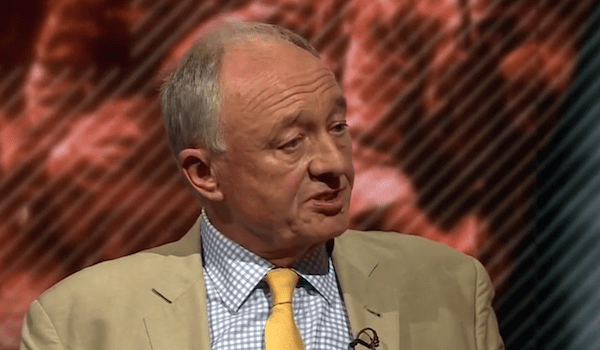
The Daily Toast: Ken Livingstone, Mental Health And The New Politics

Ken Livingstone.png

Ken Livingstone’s attack on Kevan Jones’ depression is typical of the hard activist Left. They are happy to use the poor, the sick and other minorities as cynical campaign props, but hate it when they dare to speak for themselves

Today’s Daily Toast goes to James Kirkup for his furious, relentless evisceration of Ken Livingstone in the Telegraph.

Some context: When Red Ken was unexpectedly appointed to co-lead the Labour Party’s upcoming defence policy review (bringing his open minded attitude toward vital questions like Trident renewal), the Labour MP Kevan Jones – who had previously spoken out in a parliamentary debate, attempting to reduce the stigma of mental illness by revealing his own struggles – raised political concerns about whether Livingstone was the right person for the job.

And in response to Kevan Jones airing his political concerns, Livingstone responded with an extraordinarily personal attack:

Mr Livingstone told the Mirror: “I think he might need some psychiatric help. He’s obviously very depressed and disturbed.

“He should pop off and see his GP before he makes these offensive comments.”

So this is the New Politics that we were promised with the Jeremy Corbyn era – more of the same coarse, unbecoming personal insults that we have always had.

It’s no surprise. Because many on the Left see themselves as the only virtuous people in town – the sole custodians of the nation’s morals – they think that somehow it “doesn’t count” when they say rude, aggressive, condescending, racist or sexist things. They believe are allowed to get away with it because they spend their careers policing the debate and controlling the language, casting out anyone else who says or thinks the wrong thing. Just like a corrupt cop might consider themselves above the law, so the egotistical leftist believes that they have carte blanche to cross any of the lines that they draw to constrain the rest of us.

All of which makes Kirkup’s takedown of Livingstone so satisfying – and worthy of the Daily Toast:

I believe in civilised debate and generally try to avoid throwing around personal abuse when writing about politics. But there’s no way of being polite or restrained about this. Ken Livingstone’s words are vile, a poisonous act that would leave him consumed by shame if he had a shred of decency.

Yet he’s standing by those comments. He told the London Evening Standard: “It doesn’t matter what disorders he’s got, he doesn’t have the right to be rude … to be constantly undermining Jeremy Corbyn.”

This is utterly hateful. Mr Livingstone he hasn’t just grotesquely insulted Mr Jones, denigrating his suffering and his bravery, he has sent a brutal message to anyone else who suffers mental illness: stay quiet or you’re fair game.

Even if he wasn’t part of a leadership team that had so piously promised a nicer, kinder politics and to embrace open political debate, Mr Livingstone’s behaviour would be disgusting. The staggering hypocrisy involved just compounds his disgrace.

And if Mr Corbyn does not act quickly and firmly, by dropping Ken Livingstone into the deep dark hole of political obscurity where cockroaches like him belong, he deserves to share every bit of that disgrace.

Ken Livingstone was eventually forced to apologise for his behaviour, but was unable to stay contrite and was soon walking back his apology with justifications and angry asides to journalists.

The Labour Party – and the British Left in general – can’t have it both ways. They can’t spend half the time prancing around pretending to be high-minded emissaries of the New Politics, holding hands and singing Kumbaya, and then spend the other half acting like vicious thugs, smearing people because of their mental health conditions or whipping their activists up into a Tory-hating, phlegm-lobbing rage. It’s time to pick a side.

And yet Ken Livingstone is perfectly entitled to say mean or ignorant things about his fellow MPs in public if he chooses. That much is a fundamental free speech issue, so let’s see no talk about Parliament needing to be a “safe space” where coddled MPs need to be praised and affirmed at all times.

However, the question here is not one of free speech, but one of hypocrisy. Ken Livingstone and much of the virtue-signalling Left love to use the mentally ill, the poor and other groups as cynical campaign props, showering them with ostentatious sympathy in order to make themselves look good and pick up votes. But as soon as one of those same people becomes a threat – whether it’s a former welfare recipient questioning the welfare state or a fellow MP simply raising a political objection – suddenly the tribal thuggishness comes out and the Left’s feigned concern for the disadvantaged is revealed as the sham that it is.

That’s the real story here. Yes, Ken Livingstone’s behaviour was boorish and inexcusable, but he’s a left wing bruiser and unlikely to change his ways any time soon. But this incident was just the most high profile recent example of behaviour that is not uncommon on the Left: behind the friendly faces, the talk of inclusivity and a new, kinder politics, too often there lurks a hardened, egotistical ideologue who always responds to criticism by lashing out.

So by all means let’s haul Red Ken over the coals – certainly Corbyn should publicly condemn Livingstone if the Labour Party’s newfound passion for mental health is to be taken seriously – but let’s not pretend that this incident is anything other than standard behaviour from a certain segment of the activist Left.

Agree with this article? Violently disagree? Scroll down to leave a comment.

Follow Semi-Partisan Politics on TwitterFacebook and Medium.

The Daily Toast: Don’t Exploit The Paris Attacks To Increase Surveillance

Surveillance State - Britain - UK - Paris Attacks

Demands for more government surveillance in response to the Paris terror attacks are crass, opportunistic and pointless

It’s very rare for this blog to agree with a Guardian editorial, but the newspaper’s stance on the proper response to the latest terrorist atrocity in Paris contains a lot of sense*.

For a start, there is none of the Western self-flagellation that grips too much of the Corbynite Left, and the absence of this equivocation is refreshing in itself (but then ever since their decision to back Yvette Cooper over Jeremy Corbyn in the Labour leadership election, the Guardian’s left wing idealism has seemed more affected than deeply held).

And on the need to avoid using the Paris attacks as permission to ratchet up the surveillance state, the Guardian is absolutely correct:

In Britain, there will be some who see Theresa May’s new investigatory powers bill in a more urgent light after Paris. But unless and until the evidence shows that bulk surveillance would have made a difference in that dreadful scenario, the argument remains where it was. And our starting point is still that mass surveillance of all of us is neither necessary nor effective.

When the intelligence agencies are looking for a needle in a haystack, they shouldn’t be adding more hay. When they need to spy on an individual or group, they should seek – and they will usually get – the legal warrant to do so. And, in case it needs repeating, European societies do not defend their values when they turn on their Muslim fellow citizens – on the contrary, they violate those values.

This is exactly right, and a welcome counternote to the blind panic currently spilling from the keyboards of other commentators such as Dan Hodges. While one can understand individuals – particularly those actually caught up in the attacks – being led by emotion and willingly sacrificing everything for the false promise of greater security, those people who make public policy or influence public opinion should be more careful with their thoughts and words.

As the Guardian rightly points out, it is for the intelligence services (and their willing cheerleaders in the media) to conclusively prove that harvesting more bulk data would have prevented the Paris attacks from happening. If they really want to shift the status quo and treat every citizen as guilty until proving innocent by keeping a record of their communications, they must prove that the lack of this data is what allowed the eight attackers to slip through the net. And they can prove no such thing, because even if some of their communications were swept up in bulk collection along with everyone else’s, they cannot prove – or even plausibly claim – that they would have known to look for that data in the giant haystack of data.

The problem with our current national security state is not that it lacks sufficient powers over us, but that we lack sufficient power over it. Citing “national security concerns” now seems to be enough to win the argument for more surveillance on its own, and the intelligence services have grown both lazy and entitled, expecting governments to grant their every request even when they fail to construct a convincing case for them. Just as President Eisenhower presciently warned of the military-industrial complex, so we must be wary of the national security state – which has now become so big that it has taken on a life of its own, with priorities and ambitions that go beyond their original, limited remit.

This would be bad enough if it worked, but the awkward truth is that we will never achieve the perfectly secure state. Realising this, we must understand that responding to every new barbaric terrorist attack by ratcheting up the same surveillance state which failed to prevent it represents a colossal failure of imagination on our part. Glenn Greenwald likes to make the comparison with road safety – we do not insist on draconian new road safety legislation such as a 20mph speed limit every time we see a road fatality, because we accept that a degree of risk comes with the freedom to drive.

As this blog commented after the Charlie Hebdo massacre, warning of the dangers of government overreaction:

The harms that would be inflicted in order to achieve absolute safety are the very same harms that David Cameron intends to inflict upon Britain in his panicked, servile submission to the demands of the national security and intelligence chiefs. The only way to achieve absolute safety is through absolute surveillance – and zero privacy. Stepping out onto a London street totally certain in the knowledge that you will come to no harm would require us to become North Korea.

Ultimately, the only way to make us safer is to reduce the number of people living among us or dwelling overseas who wish to rain death and destruction upon us. That does not – repeat, does not – mean appeasing them, admitting that they have a point, or accepting the legitimacy of their sick and evil ideology. But it does mean accepting some fundamental truths that we prefer to overlook in our righteous fury, as I pointed out after Charlie Hebdo.

Those who think that the way to prevent the next attack is by granting government yet more power to spy on our actions and regulate what we say would apparently be content to live in a society where a small, nihilistic minority hate us and wish us harm, but whose attempts to kill us are always thwarted by an omnipotent security and intelligence apparatus. I do not wish to live in such a state, and nor do I think that such a scenario should be our highest aspiration. We can do better than that.

In the shocked aftermath of these reprehensible terrorist attacks in Paris, some would have the authorities start to construct their very own North Korea right here in England’s green and pleasant land. They are motivated by an understandable fear, but our country will not be best served by acting on their gut instinct. Even when the advocates of the surveillance state mean well, we must oppose them.

* That’s not to say that the Guardian gets everything right. Determined to push their pro-EU agenda at all times, the article keeps banging on about “European values” as though our common revulsion at the killing and maiming of innocent people in Paris somehow means that the national cultures of Britain, France, Portugal, Greece and Poland are more or less identical, and ripe for further political integration. This much is nonsense, but does not detract from the overall thrust of the piece.

President Dwight Eisenhower - Military Industrial Complex

Agree with this article? Violently disagree? Scroll down to leave a comment.

Follow Semi-Partisan Politics on TwitterFacebook and Medium.