Britain And The Church Of England Must File For Divorce

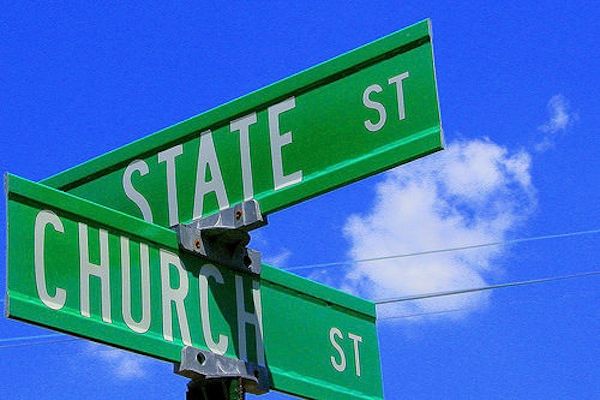
Church v State

One of the aspects of British life that this blog finds hardest to tolerate and justify – aside from our lack of a written constitution, the complete absence of checks on Parliamentary power, our deference to government authority and the eternally unrealistic expectations heaped upon the England football team – is the fact that in the year 2014, our supposedly liberal democracy maintains the absurdity that is an established church (and de facto national religion).

The notion that Britain is a Christian nation has been a laughable, if ubiquitous proposition for many years now. To arrive at the conclusion that the UK is a Christian land, one has to redefine Christianity not as a religion, a set of beliefs, teachings or practices, but rather as some woolly abstract incorporating cherry-picked elements of history, patriotism, nationalism, whiteness, tradition, middle class anxiety and fear of change. The rather more trustworthy indicators such as weekly church attendancechanging census data and the public’s knowledge of basic Christian tenets point stubbornly and persistently in the opposite direction.

David Cameron, always more comfortable on the woollier side of a debate, naturally favoured the abstract markers of Britain as a “Christian” nation when he made his recent intervention, a rare instance of a senior politician addressing matters of faith which also conveniently eclipsed the ongoing media coverage of his incompetent handling of the Maria Miller expenses scandal.

First comes Cameron’s woolliness:

In an article in the Church Times ahead of Easter Sunday, Mr Cameron acknowledged that he is a “bit vague” on the “more difficult parts of faith” but said he has “deep respect” for the national role of the Church.

He said: “I am a member of the Church of England, and, I suspect, a rather classic one: not that regular in attendance, and a bit vague on some of the more difficult parts of the faith.

And then the pivot toward the bold assertion that despite the fact that Cameron is a religious zealot by today’s standards, “vague faith” such as this on the part of a dwindling segment of the population can be extrapolated to mean broad national consent for the primacy of one religion and denomination over all others:

He said: “I believe we should be more confident about our status as a Christian country, more ambitious about expanding the role of faith-based organisations, and, frankly, more evangelical about a faith that compels us to get out there and make a difference to people’s lives.

But the emphasis really is on the word ‘dwindling’. The Rt Rev Graham James, Bishop of Norwich, inadvertently gives the game away when he seeks to explain what he claims are “heartening” church attendance figures:

These figures are a welcome reminder of the work and service undertaken by the Church of England annually – 1,000 couples married, 2,600 baptisms celebrated and over 3,000 funerals conducted every week of the year.

The fact that there were 400 more departures than additions to the ranks of the faithful in his diocese may have failed to set off alarm bells in the head of the Bishop of Norwich, but for the more numerate reader it does illustrate rather starkly the problem faced by the wider church.

Once it has been explained that 2,600 minus 3,000 equals a net loss of 400, the Rt Rev Graham James (and the Church of England as a whole) must concede the fact that a higher number of Christian funerals than baptisms represents a real and existential threat, or else they are essentially admitting that the sacraments of the church are no real way to measure the faith of the people, and that they therefore no longer matter. An admission of the latter seems unlikely.

The response of many – both to the decline in church attendance and in attempts to loosen the Church of England’s disproportionate grip on the levers of power – has been to rail against the damage of that destructive group known as the “militant atheists”, those shadowy PC paramilitaries who fight the War On Christmas and dare to suggest that claiming religious objection does not exempt a person from their contract of employment or license to do business. The Daily Mail leads the charge from this side:

The truth is that there is a new breed of militant atheists who are capable of being as unreasoning as the most bone-headed creationist. Their intolerance is a strange mirror reflection of the bigotry of religious extremists.

‘Intolerance’ here is given the broad definition of the perpetual victim, an insult hurled by those who suddenly find themselves losing their ability to impose their values and lifestyle choices on everyone else.

According to this school of thought, it is bone-headedly ignorant to see anything wrong in the fact that our Head of State has a constitutional duty to defend one faith above all others, or that twenty-six members of that one faith alone are entitled to sit in the upper house of the British Parliament and participate in our lawmaking.

Neither do the traditionalist defenders agree on when, if at all, Britain might no longer be considered a Christian country. Would it be when more people regularly attend another faith or denomination’s services? If so, that ship has already sailed and Britain should once again be pledging fealty to Rome and the Holy See. Or perhaps the moment of severance can be declared when a majority of people no longer agree with Church teaching on matters such as gay marriage or equality for women? But again, that moment has been passed. More likely, their answer would be “never”, simply because they will it to be so.

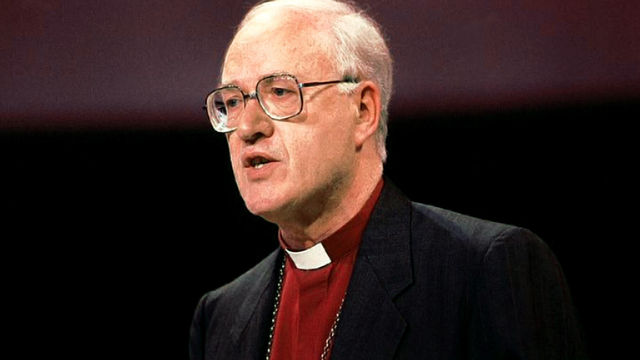
Parliament and the Church - divorce is needed to save both institutions
Parliament and the Church – divorce is needed to save both institutions


None of this means that Christianity has lost its place as the predominant religion in Britain – indeed, this is one thing clearly supported by the 2011 census data. It is certainly true that among people expressing a religious affiliation, the vast majority identify as Christians. But there is a huge gulf between acknowledging this fact and deciding that British laws and the British system of government itself should continue to be organised around and influenced by the teachings of a religion that most people only identify with on a nominal, cultural basis.

And it is on this this basis that the Deputy Prime Minister, Nick Clegg, joined the debate with a proposal to disestablish the Church of England, in order to prevent any more unnecessary harm coming either to that church or to the rest of us.

The Guardian reports:

Nick Clegg has said the church and state should be separated, a view he has expressed before but one that is likely to gain fresh currency after David Cameron described Britain as a Christian country.

Clegg, an atheist, said he would like to see the disestablishment of the Church of England, which would lead to the Queen’s removal as the head of the church.

“In the long run it would be better for the church and better for people of faith, and better for Anglicans, if the church and the state were over time to stand on their own two separate feet,” the deputy prime minister said on his LBC radio phone-in show. He said he did not think this would happen overnight.

Heads will surely explode at The Daily Mail, and the likes of Cristina Odone will stay up late into the night to pen angry rebuttals, but in fact here is a very sensible proposal that would help to keep the church out of some of the more hot-button political and social debates affecting the country as a whole, while going a few steps toward establishing a more sane, comprehensible constitution for the United Kingdom.

Indeed, many of the reasons given by apologists for why the UK is a Christian country are symptoms of an established church, not justifications for continuing to tolerate one – artefacts such as the Queen’s role as the head of the church, or the presence of the Lords Spiritual in the House of Lords, for example. But this is akin to claiming that an Egyptian mummy is a living, breathing human being – sure, the body parts are in the right place (just as the constitutional elements are in place for a British theocracy) but the heart does not beat, the blood does not flow and the brain does not think like a living person.

Nick Clegg goes on to claim that the Church of England would “thrive” if disestablishment were to occur, and this may well be the case. At present, the Church has to walk a tightrope with doctrine on one side and popular opinion on the other, making it appear weak and indecisive, and pleasing to no one. Unshackled from the state, however, the church could continue to discriminate against gays and women (or more hopefully recognise their equality) without dragging the rest of the country into the debate.

Naturally, David Cameron disagrees:

Mr Cameron said: “I think our arrangements work well in this country. We are a Christian country, we have an established church,” adding that disestablishment was “a long term Liberal idea but it is not a Conservative one.” 

This is conservatism of the bad kind, the reflexive hanging on to tradition not because the alternative is untried and the status quo works well, but simply out of a reluctance to rock the boat, upset the party base or start a real, informed debate. Cameron believes that the current constitutional arrangement “works well”, but take this with a pinch of salt – he also believes that parliamentary oversight of the security services works very well indeed, though it transpired that they were undertaking far more extensive and intrusive surveillance than the public had ever been aware of or given their consent.

The New Statesman naturally comes down on the side of disestablishment, and they come armed with the words of the most recent former Archbishop of Canterbury:

Religious believers who oppose such a move should look to the US, where faith has flourished alongside the country’s secular constitution. Indeed, in an interview with the New Statesman in 2008, the then Archbishop of Canterbury, Rowan Williams, (who went on to famously guest-edit the magazine) suggested that the church might benefit from such a move: “I can see that it’s by no means the end of the world if the establishment disappears. The strength of it is that the last vestiges of state sanction disappeared, so when you took a vote at the Welsh synod, it didn’t have to be nodded through by parliament afterwards. There is a certain integrity to that.”

What Rowan Williams delicately calls a “certain integrity” is actually just plain old democracy, properly executed, with each citizen having a voice and no powerful interests able to sway policy based on their own narrow interests. Both church and state can make decisions in their own interests without running to each other for contentious debate or rubber-stamp approval.

The British people, usually so quick to voice their distaste for money in politics and big donations from wealthy individuals, corporations or trades union, should ponder this simple fact: of all the business moguls, special interest groups and union barons jostling to influence British government policy in their favour, only one organisation is powerful enough to boast twenty-six loyal, paid representatives ready to do its bidding in the upper house of the British Parliament. Britain’s 100 biggest employers, ten largest unions and her wealthiest people combined do not have the lobbying and legislative clout of the Church of England, an organisation that commands a weekly attendance of just 1.8% of the UK’s population.

To say all of these things does not imply a hostility of any kind to religion and faith-based organisations, despite the misleading accusations of the traditionalists; regular readers will know that this blogger is a practicing (if somewhat Cameron-vague) Catholic. Indeed, disestablishment of the Church of England, combined with a loosening of the government’s hand on all matters of faith, can only benefit religious organisations, schools, charities and initiatives through the plurality that would immediately be created.

But even if disestablishment would cause difficulty or a degree of harm to the church, that alone is not a sufficient reason to preserve the status quo. It is not the business of government to pick winners and losers, to favour some more than others, and institutions (corporate or otherwise) who rely on state aid of any kind tend to fail regardless in the longer term.

Christianity – and the Church of England – have formed a huge part of who we are as a country, influencing our laws, culture, art and traditions. We should be very grateful for this – just ask anyone who suffers or whose life prospects are narrowed or extinguished under a modern day Muslim theocracy. But we should not be content merely to be better than Iran or Saudi Arabia – the time has come to do away with an established state church entirely.

In the year 2014, it is time to finally remove the theological shackles from the British constitution, and to take the state church off life support so it may live and breathe unaided. Committed Christians and Church of England members should have the confidence in their faith and institutions to accept, if not actively welcome, this change.

The Morning After In Arizona

Andrew Sullivan’s reflections on the vetoing of SB1062 by the Arizona Governor, Jan Brewer. We are in agreement, with one significant exception – Andrew sees no issue with discrimination against gays (or any other minority or class of individuals) in the private realm, only the public realm where government is an actor. While I admire his magnanimity in being willing to shrug off the hate and intolerance of certain fundamentalists, I cannot agree that this is the right approach. It is all very well to favour “maximal liberty”, but taken to its (logical, not extreme) conclusion, this would open the door for arbitrary refusal of service to anyone on the grounds of anything masquerading as religious conscience.

Andrew Sullivan's avatarThe Dish

[Re-posted from earlier today]

Here’s the money quote from Jan Brewer’s veto statement last night:

Senate Bill 1062 does not address a specific and present concern related to religious liberty in Arizona. I have not heard of one example in Arizona where a business owner’s religious liberty has been violated … Religious liberty is a core American and Arizona value, so is non-discrimination.

As I’ve mulled this over and over, I have a few straggling thoughts. Against the bill: it had two terrible features. The first was the breadth of the religious liberty invoked. The real innovation in Arizona was the extension of religious liberty claims against other citizens, rather than against the government itself. That’s a big leap, and trivializes religious liberty in some ways. No individual can coerce, even with a lawsuit, the way the government can. The second is the environment in which this bill was…

View original post 369 more words

A Better Way To Approach The Welfare Debate

lordcarey


Sometimes it takes the return of the grizzled, world-weary veteran, called out of retirement one last time, to show the flailing stars of today exactly how it should be done, and to save the day.

So it was when George Carey, the former Archbishop of Canterbury, spoke out in a newspaper column, castigating his fellow bishops for their naive and fumbled entry into the British welfare reform debate.

The Daily Mail reports:

Last night, Lord Carey of Clifton said that it was too simplistic to blame the recent welfare cuts for the rising use of food banks and bishops are doing the Church no favours by entering the debate.

He said such opposition to reducing the welfare bill was ‘Canute-like’ and reflected an ‘overt left-right politicisation of Church versus government’.

The former Archbishop of Canterbury said Anglicans and Catholics share outrage at the rising levels of hunger among the most disadvantaged and that the welfare state has reached ‘gargantuan’ proportions.

Lord Carey continues:

‘All three political parties acknowledge the need for reductions to welfare spending, wastage and fraud in the system and have all talked about the dangers of welfare dependency and the need to get people into work.

‘They are not agreed on precisely where the axe should fall, but the Churches should beware of the dangers of blithely defending a gargantuan welfare budget that every serious politician would cut as a matter of economic common sense.’

This really hits the nail on the head. Reading or watching the initial intervention in the debate by Catholic Cardinal Vincent Nichols, and the follow-up letter by the Church of England bishops, one got the overwhelming sense that the key figures had not done their homework. So shallow was the level of understanding, and so absent was any sense of historical context or detailed knowledge of government policy, that the bishops may just as well have been standing at the gates of Number 10 Downing Street waving “Down With This Sort Of Thing” placards.

A strong sense that Lord Carey was embarrassed by the incompetence of his successors’ handling of what is a complex and fraught issue pervades his column.

But most heartening of all is this acknowledgement – albeit from a former rather than a current religious leader – that the problems in our society will continue for just as long as we continue to look exclusively to government to solve our problems and address human suffering rather than looking to ourselves:

Lord Carey said: ‘They are right in describing a serious problem but only partially correct in their analysis.

‘It is much too simplistic to blame these problems on cutbacks to welfare and failures in the benefits system, whether it be payment delays or punitive sanctions.

He added that the welfare system is being ‘asked to replace kinship and neighbourliness’ and is ‘never going to pass muster as the ideal vehicle to deliver aid to those in greatest need when they most need it.

This is precisely the problem. Faced with a situation where millions of people are dependent on various kinds of welfare and often kept down through a series of perverse incentives, the bishops did not stop to consider how they as leaders and their church as a community could step in and provide positive solutions. Rather, they wrung their hands and passed the ball to the government, a shameful abdication of responsibility.

It is not the Church’s job to simply take note of suffering and pass it on to the government for review – indeed, while it is clearly not in the interests of the people for whom they supposedly advocate, neither is it in their own, more narrow interests. As I wrote last year:

… perhaps it is directly because the state plays such a large part in everything that we do, from cradle to grave, that the church to which [we belong] is withering and shrinking by the year.

To a great extent, aside from the divine aspect, has the British welfare state not done away with the purpose of church, of knowing your neighbour, of being part of a community, altogether?

Telegraph columnist Cristina Odone, with whom this blog has had precious little to agree on of late, is also full of praise for Lord Carey’s mature intervention in the debate. Her distillation of Carey’s message is worth reading:

Poverty, he argues, is not caused by Coalition cuts but by multiple factors including the fragility of the family, which results in too many relying on the state. Strong kinship, a helpful community: today’s disadvantaged Briton can no longer depend on either. Stop entering the political fray, he tells his colleagues, but look beyond Left and Right to see the real tragedy of a culture that has lost its way.

Odone’s overall assessment of the debate on welfare reform, and what church leaders need to do in order to regain the right to be taken seriously on the issue, is also excellent:

Dr Carey instead is speaking sensibly and calmly from the sidelines: the analysis is more complex than you’ve allowed for, he chides his colleagues; you’re doing yourselves and our Churches a disservice by blaming the status quo on an unpopular government. Until you can offer either a true analysis of the root causes or a real alternative to the government’s proposed reform, keep schtum.

As Odone makes clear, and as this blog has previously acknowledged, the church has a potentially valuable, even critical role to play in shaping the debate. But they can only do this by temporarily stepping back from the limelight and reading up on the subject a little.

More urgent even than enrolling in Civics and Economics 101, though, our church leaders need to think about the best role of religious organisations in solving the problems of poverty, blight and human misery that they have identified. The fact that their first response was simply to flag the problem to the government and move on is deeply discouraging. Is their vision for the church really nothing more than to observe and report social phenomena to the ‘proper authorities’?

And yet there is hope. The former Archbishop of Canterbury spoke a powerful truth to today’s ecumenical leaders. They may not like being publicly admonished by their predecessor, but if they strive for wisdom they will listen and adapt.

In this important debate, which is ostensibly about welfare reform but in reality touches on everything that governs how we relate to and care for each other, George Carey – twelve years after leaving office – is offering the church a pathway away from irrelevance.

It’s time to follow the leader one last time.

Triangulating On Gay Rights

gayweddingcake


A surprising piece today from Andrew Sullivan, in which he distances himself from certain aspects of the opposition to the anti-gay discriminatory legislation currently working its way through the usual-suspect state legislatures.

Sullivan, gradually sensing victory in his long struggle and seeking (perhaps overly so) to be magnanimous in the face of it, writes:

The truth is: we’re winning this argument. We’ve made the compelling moral case that gay citizens should be treated no differently by their government than straight citizens. And the world has shifted dramatically in our direction. Inevitably, many fundamentalist Christians and Orthodox Jews and many Muslims feel threatened and bewildered by such change and feel that it inchoately affects their religious convictions. I think they’re mistaken – but we’re not talking logic here. We’re talking religious conviction. My view is that in a free and live-and-let-live society, we should give them space. As long as our government is not discriminating against us, we should be tolerant of prejudice as long as it does not truly hurt us. And finding another florist may be a bother, and even upsetting, as one reader expressed so well. But we can surely handle it. And should.

I have read and re-read this paragraph multiple times, and this argument both surprises and concerns me. Boiled down to its essence, it is frankly disturbing – in essence, Sullivan is saying that discrimination in the private sector should be allowed and that a blind eye should be turned, and that we only have real cause for concern if gays (or presumably other minorities) face discrimination at the hands of the government.

Sullivan is also willing to play along with the fairly innocuous example of the gay couple approaching a florist to cater their wedding. It may well be the case that such a couple, spurned by one business, will be able to find an alternative provider in their town. But equally, it may not. There may be only one business of its kind in the vicinity, or there may not be the time or money to go on a Nativity-style trek through town trying to find a spare room at the inn.

More seriously, the business in question may be more important than providing flowers for a social occasion. What if it is accounting services? Or social care? A funeral home? Or medicine? Would it be permissible to deny services to gay or lesbian couples in one of these fields? If so, which ones? And what would be the logic behind such a consideration?

Sullivan’s desire to reach out to the viscerally anti-gay hold-outs in society (and if your beliefs prompt you to deny service to someone based on them, they are visceral) comes at the expense of the logic of his own argument. Sullivan remains fully cognisant of the danger of using religious freedom arguments to permit discrimination:

But the wording of the bills in question – from Kansas to Arizona – is a veritable, icy piste for widespread religious discrimination. And that’s for an obvious reason. If legislatures were to craft bills specifically allowing discrimination only in the case of services for weddings for gay couples, as Erickson says he wants, it would seem not only bizarre but obviously unconstitutional – clearly targeting a named minority for legal discrimination. So they had to broaden it, and in broadening it, came careening into their own double standards. Allow a religious exemption for interacting with gays, and you beg the question: why not other types of sinners? If the principle is not violating sincere religious belief, then discriminating against the divorced or those who use contraception would naturally follow.

This awareness only makes Sullivan’s desire to reach an accord with those who want to enshrine discrimination in law all the more bizarre. Sullivan seems to want to have it both ways – to point out the impossibility of the “religious freedom” bills, while also holding out an undeserved olive branch to the fundamentalists and proclaiming his unwillingness to force them to stop discriminating.

Sometimes it is appealing to float serenely above the fray and call for moderation and respect. Most of the time, it is probably the right course of action. But sometimes it is not.

The people currently trying to enshrine anti-gay discrimination into law want nothing more than to hoodwink the public into fretting about an imaginary future where beleaguered mom-and-pop businesses are forced at shotgun to commit acts in violation of their religious beliefs, acts that risk sending them straight to the pits of hell.

They want to recast the ignorant, the hateful and the prejudiced in the role of the plucky underdog hero, humbly attempting to live their simple lives according to their God-fearing values, but being thwarted and dictated to by the arrogant metropolitan elites. This image is sensationalist and false.

And the last thing that these cynical people deserve is the sympathy and respect of Andrew Sullivan or anyone else who has fought so hard to end discrimination.

Stop Building Palaces While The People Suffer

newarkarchdiocese

At a time when the Catholic and Anglican churches on either side of the Atlantic have been parading their advocacy on behalf of the poor and the powerless, they might have bothered to put their own houses in order first. But, once again, through acts of bad timing and breathtaking bad taste, they have shot themselves in the foot.

In the UK, a Conservative MP hit back at the twenty-seven Church of England bishops who signed an open letter condemning the British government’s welfare reforms and labeling them “punitive”. Charlotte Leslie MP rightly pointed out that the church has considerable assets of its own that it could deploy in service of the poor before it becomes necessary to start badgering the government to redistribute more income between private individuals:

They say charity starts at home. Lambeth Palace [the official London residence of the Archbishop of Canterbury] is a rather nice home.

If you are invited to a reception there, you pad up richly carpeted stairs, along corridors of gold-framed paintings, before being treated to quails eggs with a delicate celery salt dip, and freely flowing wine. It’s rather a long way away from the local churches with crumbling roofs, serving damp biscuits and coffee in cracked mugs after the service.

One can’t help but think that this luxurious, and historic Palace might not be put to better use, more in line with the New Testament , if it was rented out to those who would pay dearly for such luxury, and the operation of the Church of England were to decamp to an industrial estate, outside Slough.

Just think of the number of church roofs that could be repaired from the income, and indeed the number of hungry people who could be fed.

The church’s ill-advised foray into campaigning for the Labour Party is encountering much-deserved resistance because the views of twenty-seven relatively coddled bishops with little recent experience of real life are not in tune with the sentiments of the people, and because they displayed a fundamental misunderstanding of the government’s own policy and its application.

Not very impressive from a large faith organisation seeking to influence the public debate.

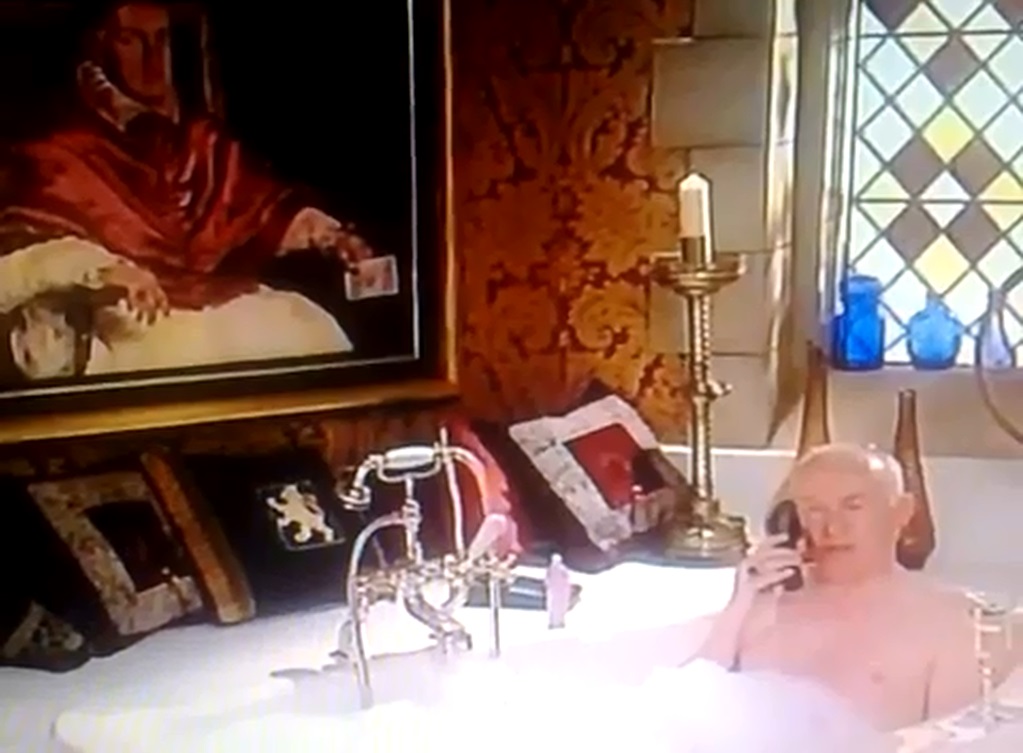
Father Ted's Bishop Brennan - not a role model for the Church leadership
Father Ted’s Bishop Brennan – not a role model for the Church leadership


Meanwhile, the New York Times reports on the attempts by the Archdiocese of Newark to lavish over $500,000 on upgrades to a residence for the bishop – not his primary residence, but his separate vacation home:

John J. Myers, the archbishop of the Newark Archdiocese, comes to this vacation home on many weekends. The 4,500-square-foot home has a handsome amoeba-shaped swimming pool out back. And as he’s 72, and retirement beckons in two years, he has renovations in mind. A small army of workers are framing a 3,000-square-foot addition.

This new wing will have an indoor exercise pool, three fireplaces and an elevator. The Star-Ledger of Newark has noted that the half-million-dollar tab for this wing does not include architects’ fees or furnishings.

The expansion of the bishop’s vacation home will be funded by the sale of other properties owned by the archdiocese, they claim, as though this detail somehow makes the outrage more palatable. It does not. Either the sold buildings served an important purpose for the archdiocese which was suddenly ripped away in order to provide a little more luxury for the bishop, or they were unused and deserved to be sold so that the equity can be released in service of the church’s core mission.

A just reward for a job well done?


Neither is the lucky beneficiary, Archbishop John J. Myers, a particularly lovable figure whose flock would be particularly thrilled to see treated in so generous a way:

So many leaders of the church have served it so badly for so many decades that it’s hard to keep track of their maledictions. Archbishop Myers provides one-stop shopping. He is known to insist on being addressed as “Your Grace.” And his self-regard is matched by his refusal to apologize for more or less anything.

It was revealed last year that a priest seemed to have broken his legally binding agreement with Bergen County prosecutors to never again work unsupervised with children or to minister to them so long as he remained a priest. When next found, he was involved with a youth ministry in the Newark Archdiocese.

Parishioners in Oradell, N.J., also discovered that the archdiocese had allowed a priest accused of sexual abuse to live in their parish’s rectory. A furor arose, and last summer the archbishop sat down and wrote an open letter to his flock. He conceded not a stumble. Those who claim, he wrote, that he and the church had not protected children were “simply evil, wrong, immoral and seemingly focused on their own self-aggrandizement.”

It is hard to see how frittering away scarce diocesan resources in order to build an MTV Crib-style McMansion for a mediocre bishop on the verge of retirement constitutes good stewardship of the church finances. And it is equally regrettable that given opportunity after opportunity to rehabilitate its battered image and start practicing humility and restraint, the hierarchy of the American Catholic church is unable to do so, and – worse still – feels no need to do so.

The church seeks to add its voice to important political debates on both sides of the Atlantic – concerning freedom of religion and abortion in America, and on welfare reform in Britain. In both countries, church leaders seek to portray themselves as spokespeople for the poor, the voiceless and the powerless.

This message would be slightly more credible if church leaders could somehow find it within themselves to stop building swanky palace extensions for their hedonistic bishops.


Image – a palace fit for a mediocre, hypocritical bishop. The new extension being built at the vacation home of Newark Archbishop John J. Myers.