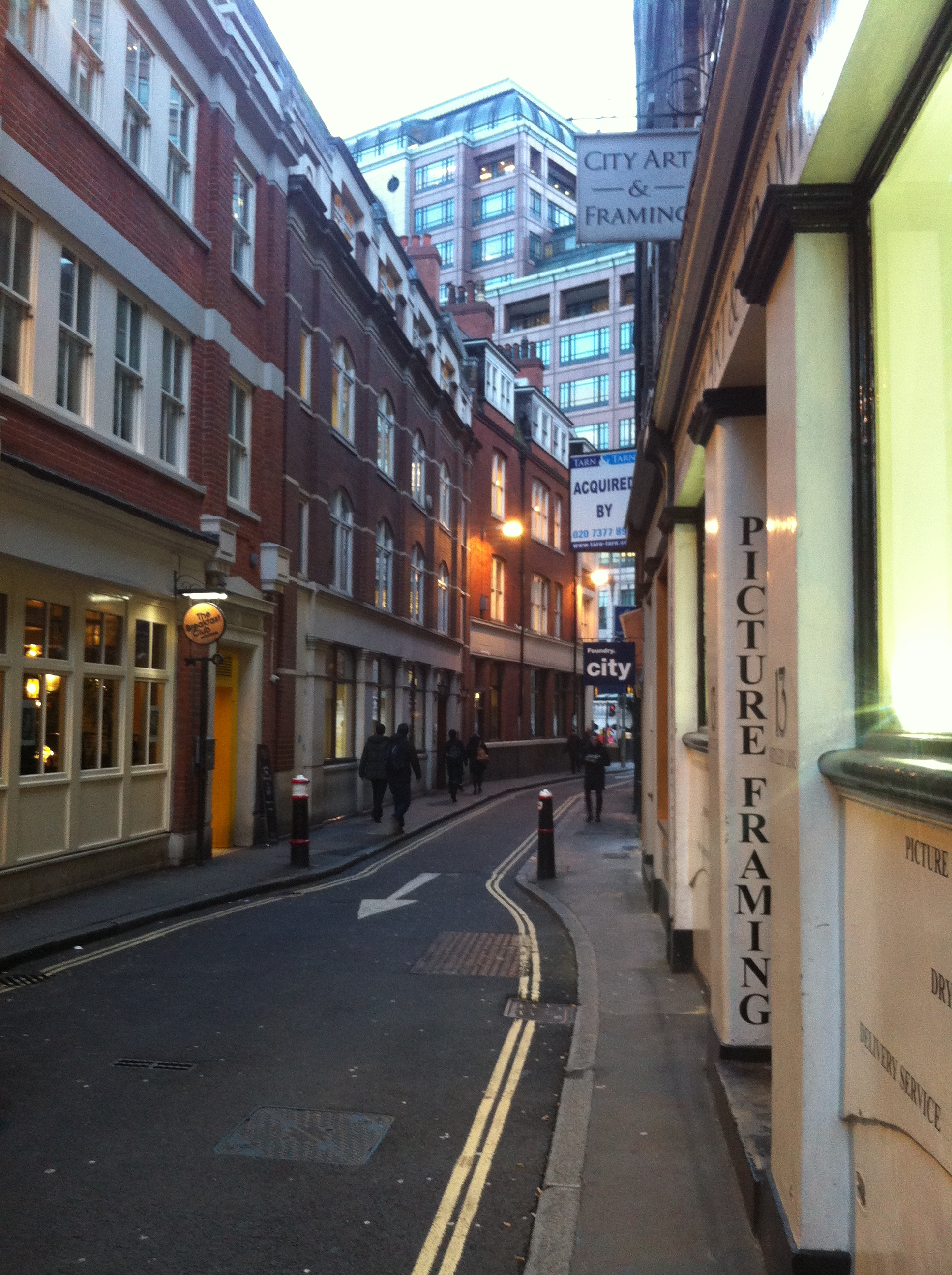
Artillery Lane, London
Artillery Lane, London


At a time when the Catholic and Anglican churches on either side of the Atlantic have been parading their advocacy on behalf of the poor and the powerless, they might have bothered to put their own houses in order first. But, once again, through acts of bad timing and breathtaking bad taste, they have shot themselves in the foot.
In the UK, a Conservative MP hit back at the twenty-seven Church of England bishops who signed an open letter condemning the British government’s welfare reforms and labeling them “punitive”. Charlotte Leslie MP rightly pointed out that the church has considerable assets of its own that it could deploy in service of the poor before it becomes necessary to start badgering the government to redistribute more income between private individuals:
They say charity starts at home. Lambeth Palace [the official London residence of the Archbishop of Canterbury] is a rather nice home.
If you are invited to a reception there, you pad up richly carpeted stairs, along corridors of gold-framed paintings, before being treated to quails eggs with a delicate celery salt dip, and freely flowing wine. It’s rather a long way away from the local churches with crumbling roofs, serving damp biscuits and coffee in cracked mugs after the service.
One can’t help but think that this luxurious, and historic Palace might not be put to better use, more in line with the New Testament , if it was rented out to those who would pay dearly for such luxury, and the operation of the Church of England were to decamp to an industrial estate, outside Slough.
Just think of the number of church roofs that could be repaired from the income, and indeed the number of hungry people who could be fed.
The church’s ill-advised foray into campaigning for the Labour Party is encountering much-deserved resistance because the views of twenty-seven relatively coddled bishops with little recent experience of real life are not in tune with the sentiments of the people, and because they displayed a fundamental misunderstanding of the government’s own policy and its application.
Not very impressive from a large faith organisation seeking to influence the public debate.

Meanwhile, the New York Times reports on the attempts by the Archdiocese of Newark to lavish over $500,000 on upgrades to a residence for the bishop – not his primary residence, but his separate vacation home:
John J. Myers, the archbishop of the Newark Archdiocese, comes to this vacation home on many weekends. The 4,500-square-foot home has a handsome amoeba-shaped swimming pool out back. And as he’s 72, and retirement beckons in two years, he has renovations in mind. A small army of workers are framing a 3,000-square-foot addition.
This new wing will have an indoor exercise pool, three fireplaces and an elevator. The Star-Ledger of Newark has noted that the half-million-dollar tab for this wing does not include architects’ fees or furnishings.
The expansion of the bishop’s vacation home will be funded by the sale of other properties owned by the archdiocese, they claim, as though this detail somehow makes the outrage more palatable. It does not. Either the sold buildings served an important purpose for the archdiocese which was suddenly ripped away in order to provide a little more luxury for the bishop, or they were unused and deserved to be sold so that the equity can be released in service of the church’s core mission.

Neither is the lucky beneficiary, Archbishop John J. Myers, a particularly lovable figure whose flock would be particularly thrilled to see treated in so generous a way:
So many leaders of the church have served it so badly for so many decades that it’s hard to keep track of their maledictions. Archbishop Myers provides one-stop shopping. He is known to insist on being addressed as “Your Grace.” And his self-regard is matched by his refusal to apologize for more or less anything.
It was revealed last year that a priest seemed to have broken his legally binding agreement with Bergen County prosecutors to never again work unsupervised with children or to minister to them so long as he remained a priest. When next found, he was involved with a youth ministry in the Newark Archdiocese.
Parishioners in Oradell, N.J., also discovered that the archdiocese had allowed a priest accused of sexual abuse to live in their parish’s rectory. A furor arose, and last summer the archbishop sat down and wrote an open letter to his flock. He conceded not a stumble. Those who claim, he wrote, that he and the church had not protected children were “simply evil, wrong, immoral and seemingly focused on their own self-aggrandizement.”
It is hard to see how frittering away scarce diocesan resources in order to build an MTV Crib-style McMansion for a mediocre bishop on the verge of retirement constitutes good stewardship of the church finances. And it is equally regrettable that given opportunity after opportunity to rehabilitate its battered image and start practicing humility and restraint, the hierarchy of the American Catholic church is unable to do so, and – worse still – feels no need to do so.
The church seeks to add its voice to important political debates on both sides of the Atlantic – concerning freedom of religion and abortion in America, and on welfare reform in Britain. In both countries, church leaders seek to portray themselves as spokespeople for the poor, the voiceless and the powerless.
This message would be slightly more credible if church leaders could somehow find it within themselves to stop building swanky palace extensions for their hedonistic bishops.


Brick Lane, London

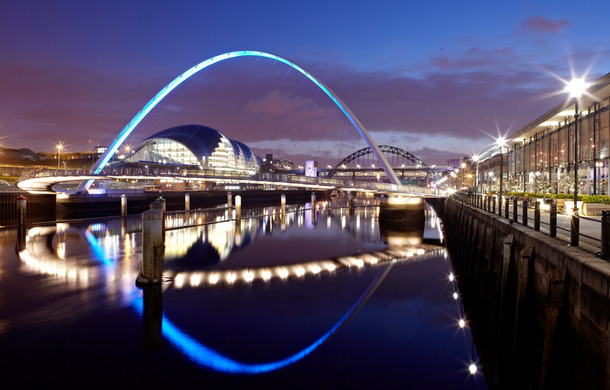
London may be the centre of the universe, but that is no longer any reason for the British government to ignore the provinces and our other major cities.
Thus far, recognition of this important fact has come mostly from London envy and the desire to drag the capital city down a peg or two – not a very sensible policy as far as the national interest is concerned. But the debate is gradually coming to be seen in terms of helping the UK’s other cities to grow and to prosper. In essence, the debate is moving away from a Labour-style “let’s drag everyone down to the same mediocre parity” argument and towards a “let’s create opportunities for innovation and growth and see what happens” proposal. This is most welcome.
The economist Jim O’Neill, writing in The Telegraph, has half of a good idea when he proposes merging northern cities and devolving fiscal powers to them in order to spur economic growth:
After considerable discussion, and for primarily practical reasons, we settled on what we are describing as the 15 largest “metro regions”. This is not to downplay the importance of other cities, towns or villages, but to emphasise – as many experts have concluded – that it is the largest urban areas that usually generate the most economic activity. We need to concentrate our efforts there; evidence from other countries shows that the biggest urban areas matter most when it comes to unleashing a step-change in national economic activity.
In this context, I raised a delicate topic with the last of three panels: namely whether the Greater Manchester area is, in fact, big enough. If you look at a list of the world’s largest cities by population size, you have to go a long way down from London before any other UK city appears. Some argue that in the absence of another city with anything like the population and diversity of London then attempts to boost growth, however smart, won’t lead to much.
This is good stuff. Greater Manchester is certainly prime for devolution of fiscal powers under a unitary authority and an elected mayor, along the lines of London. Manchester is a large, globally recognised city. Granting it more power to alter local taxes, services and policies would be a great example of localism at work.
This blog has long advocated wholesale constitutional reform for the United Kingdom, in which England would gain its own Assembly to debate matters relating to England only, and powers of taxation and policymaking would be equalised between the assemblies of the four home nations under the UK Parliament.
Basing this new English assembly in one of the great northern cities would be a boon to the host city and would help to reduce the London-centricity of political and media focus in the UK without taking anything away from London, which remains the goose that lays the golden egg.
Unfortunately, after proposing the devolution of powers to major cities, O’Neill follows a somewhat different train of thought and his economist brain takes charge to the detriment of what was otherwise an intriguing proposal:
In the spirit of trying to keep an open mind, I quizzed the group further. What did they think of the notion of “ManPool”, where Liverpool and Manchester might bring together their populations and resources to create a “supercity” in the north? Many Telegraph readers might be familiar with the depth of history between Liverpool and Manchester, even if they are not followers of a team from either city. Football allegiances aside, the reaction I received made it pretty clear the prospect was highly unlikely from an administrative perspective.
Sometimes, things that make perfect sense when viewed on a chart or an Excel spreadsheet are self-evidently ludicrous when you consider the human beings that the numbers represent.
While devolution of greater powers to the UK’s major cities is to be welcomed, the power must be devolved to recognised levels. People know what Manchester is, and at a push they could get behind the idea of the Greater Manchester conurbation. The same can probably be said for Birmingham. But ‘Manpool’ or the West Midlands Conurbation are places that exist only in the minds of civil servants and economists.
This is where a politician’s mind is required in addition to that of an economist. Great cities need more than the perfect mix of investment, local skills and natural resources. There is an element of civic identity, the fact that being a Londoner or a Mancunian or a Brummie is a clearly identifiable term and means something, which must be considered as well as the cold hard calculations as to what makes an ‘optimal’ self-governing urban unit.
Unfortunately, this fact seems lost on O’Neill, who takes his consolidation proposal to even more objectionable extremes:
One could easily apply the same logic to other cities close to each other, such as Derby and Nottingham, or Newcastle and Sunderland.
Following this logic to its ultimate conclusion, we would be better off if we treated the entire United Kingdom as one giant conurbation, a single vast city-state. The UK could devolve power to itself, and under unified authority it would enjoy better coordination of projects and higher economic growth. This is clearly preposterous.
Nonetheless, Jim O’Neill has proposed half of a good idea. The UK’s major cities need to strengthen their individual identities and improve their economic vibrancy. Devolving more power to them could only be a good thing, if only the seemingly inbuilt British resistance to variety and fear of the dreaded ‘postcode lottery’ could be overcome.
But rather than wasting fruitless hours in committee trying to come up with a catchy, memorable name for the new NorIpsCamWich Urban Region, let’s just use those handy city names conveniently handed down to us by history and actually recognised by the people who live in them.
After all, there’s no point in creating extra work.


 Semi-Partisan Politics