Why George Osborne’s 2015 Budget Was Such A Big Disappointment

BRITAIN-BBC-MEDIA-STRIKE


Budget 2015 was yet another let-down for fiscal conservatives and opponents of big government, not that this beleaguered group have come to expect any better after five years of Conservative-LibDem coalition rule.

The fact that the Tories are actually happy that the media is reporting that government will “only” shrink back to 2000-era levels (when New Labour ruled the roost) is definitive proof that Britain is not still in thrall to Thatcherism and pro-market conservatism, as some left wing commentators suggest, but rather is clinging petulantly and fearfully to Gordon Brown-style Big Government largesse.

This blog has little sympathy with a modern Conservative Party too afraid to forcefully make the case for small government and lower public spending, and will continue to criticise David Cameron and George Osborne for their timidity in this regard for as long as they remain in office. But the Conservative Party does not operate in a vacuum, and should not bear all of the blame.

When in government, Conservatives have to deal with a public that is used to big government, collectivism and intrusive state involvement in almost every aspects of their lives. Britain never had the pioneering, fiercely independent spirit that characterises America, and the modern institutions that emerged from the post-war consensus (the welfare state and National Health Service) only shifted our political centre of gravity further to the left.

Thus, the BBC’s Robert Peston can ask with a straight face, when analysing George Osborne’s 2015 Budget (emphasis added):

Continue reading

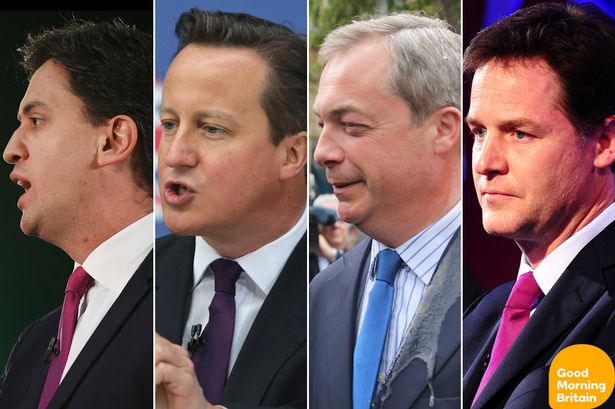
Conservative Media Demeans Itself By Calling Cameron’s Debate Critics ‘Totalitarian’

General Election 2015 Leaders Debate Cameron Miliband Totalitarian


The new political week picks up exactly where last week left off, with much of the right-wing press waging a furious rearguard effort to distract attention from David Cameron’s cowardly attempt to scupper the televised leaders’ debates.

The Telegraph in particular is hitting back at the near-universal condemnation of the Prime Minister with nearly the same intensity with which they defended themselves against ex-columnist Peter Oborne’s devastating accusations of compromised editorial standards relating to the newspaper’s coverage of HSBC, an important advertiser.

But now some in the Tory-friendly media have outdone themselves, accusing those who criticise David Cameron’s weaselling out of the television debates and who want to see such debates permanently enshrined in the British political calendar of harbouring “totalitarian” instincts.

Graeme Archer writes in his latest Telegraph column:

Continue reading

Why Is The Conservative Press Excusing Cameron’s Debate Cowardice?

David Cameron Leaders Debate General Election 2015


The Prime Minister of the United Kingdom, a supposed Conservative, is so terrified of debating Labour’s ineffectual leader that he is refusing to take part in planned televised leaders’ debates ahead of the general election. But rather than excoriating David Cameron for refusing to articulate conservative, small government principles to a national audience, the Tory-friendly press is squandering its credibility defending him. Why?

You can work out the party allegiance of any British newspaper simply by observing its coverage of David Cameron’s craven refusal to give the people what they want, a series of televised pre-election debates featuring the Prime Minister and the leaders of various other parties.

But while British newspapers have a dubious tradition of naked partisanship, not remotely confined to the editorial section, it is disheartening to view the speed with which much of the Conservative-friendly press has been willing to throw the national interest and the health of our democracy out the window in the attempt to shore up David Cameron’s indefensible position.

The Telegraph is the worst offender, clearly not the least bit chastened after having been caught red-handed in the process of dismantling the “Chinese wall” between their commercial and editorial operations in their desperation to keep scandal-plagued HSBC’s advertising account.

Leading with an article about the BBC’s “institutional arrogance”, the Telegraph managed to turn David Cameron’s months of manoeuvrings and evasions into a story about failings within the British media:

Continue reading

Cameron’s Cowardice Is A Betrayal Of British Conservatism

2015 general election britain leaders debate


David Cameron and the Conservative campaign team believe that their record in government and 2015 manifesto will not withstand the scrutiny of a televised debate with  Ed Miliband. If they have so little faith in the appeal of conservative policies, why should we have faith in them?

When your estimated share of the vote hovers around the mid thirties and the opinion polls predict another hung parliament, a serious political party at ease with itself simply cannot afford to be risk averse. And yet that is precisely what both Ed Miliband and David Cameron are doing – the former by pursuing his 35% core vote strategy and the Prime Minister by throwing up as many obstacles as possible between himself and the prospect of taking part in the televised leaders’ debates.

The Guardian shows with one pertinent example why the debates, though a new tradition in British politics, have become an important part of our democratic process:

There is a broader and important point about the accountability of politicians. Tony Blair, ever the showman, held monthly press conferences in an attempt to explain himself. Sometimes, if the timing was right, these events were a very difficult hour for the prime minister. Gordon Brown broadly continued the tradition. Cameron abolished them. He remains available for the occasional newspaper interview with a friendly proprietor and, at conference time, finds time for a 20-minute breakfast inquisition. But his favourite forum is Good Morning Britain, a revealing discussion with a woman’s magazine about his cooking prowess or three questions on regional radio interspersed with a Barry Manilow song.

And Janet Daley, writing in The Telegraph, explains why Cameron’s latest dodge may be a political miscalculation:

Continue reading

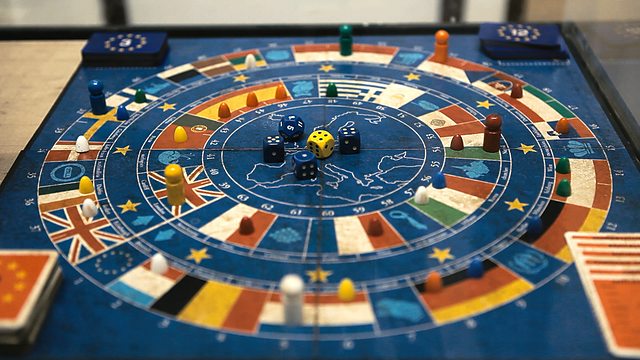
Review: The Great European Disaster Movie, BBC Four

The Great European Disaster Movie BBC EU UKIP bias 2


Imagine that you are a young child in an alternate universe, a future world in which the European Union has been disbanded amid popular uprising and economic depression.

Then imagine that you are circling Berlin in an airplane suffering a technical emergency, while Angus Deayton (of all people) sits next to you and bores you to tears with dull morsels of selectively-remembered EU trivia, interspersed with told-you-so left wing laments about how everything would have been so much better if only his generation had spent more time loving the European Union.

Even the most happy-go-lucky child would be willing that aircraft into a terminal nosedive and sweet oblivion after an hour of such torture. I certainly was, after just ten minutes watching The Great European Disaster Movie on BBC Four last night.

The Telegraph says that the rare elements of truth contained in the film were completely overshadowed by the condescending delivery:

Continue reading