Jeremy Corbyn, Owen Jones And The Thin-Skinned Labour Commentariat

Dan Hodges - Owen Jones - Labour Party

A campaigning journalist or opinion writer must write according to their conscience, without a second thought for whether it helps or hurts their own party in the short term

Owen Jones is angry that his attempts to make sympathetic, reasoned critiques of Jeremy Corbyn’s Labour Party are attracting the same levels of vitriol and hatred that those of us on the Right experience every day.

In his Guardian column yesterday, Jones complains:

I have several criticisms of the Labour leadership, held in good faith and constructive in approach. Because I want the left to succeed – otherwise, what’s the point? The need to build coalitions of middle- and low-income people; to reach out beyond the converted; to have a credible, coherent economic alternative; to rebut smears of being hostile to the country; and so on.

But when voiced, the right will use these as evidence that “even the left is losing faith”. Some on the left will see such suggestions and criticisms as playing into the hands of an aggressive media campaign regarding anything but blind loyalty as treachery. The isolated sympathetic commentators end up almost duty-bound to stay in line.

Such is the unrelenting nature of the media attack, any balanced discussion of the Corbyn leadership risks being shut down. That the media can be so dominated by one opinion – and so aggressive about it – is a damning indictment of the so-called free press. I’m an opinion writer: my opinions appear in the opinion section. But the media is swollen with opinion writers, and in too many cases their work ends up in the news section. A constructive critique of the Labour leadership is still needed for its own sake if nothing else. It is, however, an almost impossible task.

Meanwhile, Dan Hodges – a commentator with absolutely no concern about the potential impact of his words on the short term prospects of the Labour Party – has cancelled his direct debit and cut up his membership card (again) in no small part because of the vicious response to his opinions from the Corbynite Left.

In announcing his decision to quit Labour again, Hodges writes:

I’m done. Yesterday I cancelled my direct debit to the Labour Party. “Why don’t you just sod off and join the Tories”, Jeremy Corbyn’s supporters regularly ask anyone who dares to challenge their rancid world view.

I won’t be joining the Tories. But I am sodding off.

What’s a left wing polemicist to do if they find themselves disagreeing with the direction of the Labour Party in the Age of Corbyn?

It’s funny. Many of us on the right are well used to being called Evil Tories or labelled as heartless, uncaring monsters utterly lacking in all compassion – not because we don’t want to help the poor and disadvantaged, but simply because we don’t believe that endless, uncapped government spending is the best solution.

We are used to mainstream media outlets – heck, even the current Chancellor of the Exchequer himself – unquestioningly accepting and repeating the notion that conservatism is only about helping the wealthy, rather than the many. And when we are not being actively spat on or jostled in the street because of our political opinions, we are still used to being reviled, and our ideas not given a fair shake. And as a result, we have developed superior reasoning abilities, reserves of fortitude and patience, and very thick skins.

The left-wing commentariat utterly lack these qualities. For years they have marinated in the sanctimonious belief that their side has a monopoly on truth, compassion and decency. And since Labour lost power in 2010, it has been the easiest job in the world for them to sit on the sidelines throwing stones at the Conservative government.

(I’ll make an exception here for Dan Hodges, who correctly called Ed Miliband’s vacillating uselessness from the very beginning, and correctly predicted that he would lead the party to electoral ruin. And for his Cassandra-like efforts, he is now a pariah figure in the party he loves, with the small consolation of being David Cameron’s favourite columnist).

But to say that the left wing commentariat have had trouble adapting to the new reality under the leadership of Jeremy Corbyn is a huge understatement. Because now, more than ever, the Labour Party has devolved into warring factions and bitter rivalries. And all of them – MPs, writers and activists alike – are now treating each other with the same contempt and raw hatred that they previously reserved for “Tory Scum” like me.

And it turns out that the Left can dish it out, but can’t take it.

Owen Jones in particular seems to be struggling with the fact that writing critically about tactical errors by the Corbyn leadership is not generating a warmer and more receptive response:

I have several criticisms of the Labour leadership, held in good faith and constructive in approach. Because I want the left to succeed – otherwise, what’s the point? The need to build coalitions of middle- and low-income people; to reach out beyond the converted; to have a credible, coherent economic alternative; to rebut smears of being hostile to the country; and so on.

But when voiced, the right will use these as evidence that “even the left is losing faith”. Some on the left will see such suggestions and criticisms as playing into the hands of an aggressive media campaign regarding anything but blind loyalty as treachery. The isolated sympathetic commentators end up almost duty-bound to stay in line.

And when Dan Hodges found himself implacably opposed to the current direction of his party – with his anti-Corbyn positions being received even more coolly than his tirades against Ed Miliband – he simply upped and left.

One might suggest that Owen Jones & company could learn a thing or two from this site. I’m a natural conservative supporter, though I reluctantly voted UKIP in 2015 out of frustration with the pro-EU consensus, in solidarity with good people like Douglas Carswell who went out on a limb in pursuance of their ideals, and because my local constituency fielded a dithering left-wing Wet Tory candidate. And I made clear that the Conservative Party did not deserve my vote because in every important area – national sovereignty, rolling back the state, fiscal policy, civil liberties and more – they were quite simply not behaving like a conservative party.

This blog is the exact right-wing mirror image of left-wing commentators like Dan Hodges: a natural supporter of my party, but with complete contempt for the current leadership (Cameron and Osborne) and a strong desire to see the Tories move in a more conservatarian direction. Dan Hodges can’t bring himself to remain within the Labour Party while its leadership refuses to countenance military action against the middle age barbarians of ISIS. I can’t bring myself to give money to the Tories so long as their leadership remains slavishly pro-EU and believes that the British people can be distracted from the gradual loss of their sovereignty and democracy by manufactured “table-thumping rows” and a sham renegotiation with Brussels. Or when they field a Conservative In Name Only parliamentary candidate who rails against the “bedroom tax” and thinks that we should do away with our independent nuclear deterrent.

I get a lot of stick for my views. I’m universally hated by the Left (and recently discovered a Tumblr page full of foul-mouthed invective about yours truly), and can hardly get deeply involved in Conservative politics when I disagree so fundamentally and vehemently with the centrist wet rag of a leader who just delivered a resounding general election victory only in the total absence of a viable Labour prime minister in waiting.

But that’s my lot in life, and I accept it. I’ve been called every name under the sun on Facebook and Twitter, earned the opprobrium of friends and acquaintances, and written lots of mean things about my own party, taking them to task for their failure to advance conservative policies while in power. But the one thing I have never done is pull a punch or moderate a sincerely held opinion because of the friends I might lose or the immediate electoral damage I might do to the political party I used to call home.

Love him or hate him, Jeremy Corbyn remained a Labour Party member through all of the long wilderness years of Blairism, years which must have seemed to Corbyn like an unbearable compromise with flawed Tory-lite policies. Ridicule and obscurity were his crosses to bear, and he bore them patiently until quite unexpectedly his fortunes changed.

For many of the left-wing commentariat, however, just a few short months out of power and favour within the Labour movement is apparently already taking a psychological toll on people more used to calling the Tories “evil” and sitting back to soak up the lazy applause than being tarred with the same brush and called Red Tories themselves.

I have no sympathy for any of them. Jeremy Corbyn sits atop the Labour Party because of the wretched job that the centrists and their establishment buddies did in making a convincing public case for moderate Labour. And on the flip side, I accept my share of blame for the Conservative Party’s current directionless, centrist malaise – I should have done more and worked harder in my own small way to keep the party true to Thatcher’s legacy, and fought harder against the Cameron project. Sadly I only began writing in 2012, when it was far too late anyway.

But if nothing else, perhaps now that major and influential left-wing commentators like Owen Jones have been on the receiving end of the same kind of foaming-at-the-mouth left wing demagoguery that libertarians and conservatives receive every day, they will refrain from indulging in it themselves.

Of course, that would require that they stop feeling sorry for themselves long enough to recognise the pattern staring them in the face.

Jeremy Corbyn - Paris Attacks - Terrorism - Appeasement

Agree with this article? Violently disagree? Scroll down to leave a comment.

Follow Semi-Partisan Politics on TwitterFacebook and Medium.

Gay or Straight, The Robert Dyas Christmas TV Ad Is Cheap and Cynical


Don’t praise Robert Dyas for their awkward, virtue-signalling Christmas television commercial. Condemn them for exploiting the hard-won civil rights accomplishments of others for monetary gain

If any further proof was needed that tolerance and equal rights have morphed from being simply the right thing to do into just another opportunity for ostentatious virtue-signalling, you need look no further than the bizarre Christmas television commercial recently released by Robert Dyas.

In the ridiculous TV advert – a parody of a 2009 satirical video by Rhett and Link – various Robert Dyas staff members are shown confessing their sexuality before going on to plug completely unrelated products stocked by the retailer.

(The original video showed black and white employees explaining how the products in their furniture shop were suitable for both black and white customers).

From the Telegraph:

The minute-long film, described as “the weirdest Christmas advert ever”, shows men and women declaring whether they are straight, gay or bisexual while describing unrelated products in the store.

In the clip filmed in one of the chain’s branches, a member of staff introduced himself by saying: “Hi, my name’s Marcus, I work at Robert Dyas, and I’m gay.”

Before showing off a large inflatable yellow Minion toy, he adds: “I like going out with my friends and playing volleyball. I also like showing our gay and straight customers a funky range of our Christmas gifts.

[..] The confusing advert then comes to a close with a shot of staff members and customers standing at the shop’s counter, and announcing in unison: “Robert Dyas – where gays and straights can buy drills and much, much more”.

Like all clever television adverts, this was clearly designed to be controversial and to generate discussion which would expand Robert Dyas’ marketing reach well beyond the number of people who will ever see the commercial on television. And as with the creepy John Lewis “Moon Hitler” commercial, also released this year, much of the weirdness is intended to get people talking – so mission accomplished.

But in this case it is worth taking the bait, because the message of the Robert Dyas commercial is symptomatic of a wider trend sweeping Anglo-American society, whereby it is no longer enough to quietly practice the principles of tolerance and non-discrimination in one’s own life, but rather we are continually encouraged to make ostentatious public displays of conformity with the new enlightened PC dogma.

Of course people of any sexual orientation should be treated with respect and dignity at all times, including people either working for or shopping at large chain retailers. But since when did it become the job of hardware shops to start preaching about social issues? How does the spectacle of individual staff members inexplicably revealing their sexuality help to advance equal rights? And what of those customers of traditional (or bigoted, depending on your view) beliefs, who do not agree with the message? Are they worthy of no respect, or magnanimity in the face of now-inevitable ideological defeat?

The Robert Dyas affair is not dissimilar to a similar action taken by Starbucks in the United States following the shooting of unarmed black teenager Michael Brown in Ferguson, Missouri. Following that tragic death, Starbucks became possessed by the idea that they were going to make a meaningful contribution to race relations in America, and encouraged their baristas to “start a conversation about race” with customers while serving them in store.

In other words, Starbucks decided that it was no longer enough for private citizens to be non-racist themselves, and engage in whatever activism or campaigning on the issue that their hearts dictated in their roles as private citizens. Now, Starbucks – that beacon of moral enlightenment – would “help them along” by prompting them with guilt-tripping conversation openers about white privilege.

Quite how initiating a serious conversation about Ta-Nehisi Coates’ “The Case for Reparations” with a bleary-eyed morning commuter might meaningfully help the country was never fully explained. And no sooner was the proposal announced in a blaze of sanctimonious publicity than it was then quietly dropped in the face of public scepticism and mockery.

The Robert Dyas affair is much the same – an ostentatious display of “right on” progressivism from a corporate retailer, who rather than being lauded for their enlightened position on civil rights should be condemned for co-opting the still serious issue of discrimination against gay people and exploiting it in service of their viral Christmas marketing campaign.

Of course Robert Dyas has the right to say anything they like in their television commercials – that much is an issue of free speech which should be protected and defended at all times. But not every PC pronouncement is made for the “right” reasons, and we should be smart enough to see through the virtue signalling of the social justice warriors and the cynicism of the business interests, which are more about self aggrandisement or monetary gain than advancing important social issues.

Real social change – positive or negative – comes from the ballot box, the picket line, the popular culture, the academy and the hearts and minds of private citizens.

Real social change does not come from the marketing department of Robert Dyas or their advertising agency – though thanks to their cynical marketing they do stand to reap financial rewards from the hard-won accomplishments of others.

UPDATE – 14 December: As the sharp-eyed commentator below points out, the Robert Dyas video is a parody of a 2009 satirical internet commercial by Rhett and Link, which is very similar – except that gay and straight are replaced by black and white. Top of the piece is now updated to make this clear, though I don’t think this necessarily changes the validity of my argument. Robert Dyas still chose to make and release the parody, and their motivations were still likely to be as described, half viral quirkiness and half virtue signalling – only now we can add unoriginality to the list of faults.

Robert Dyas have yet to comment on the video.

Robert Dyas - Christmas TV Advert - Gay

Agree with this article? Violently disagree? Scroll down to leave a comment.

Follow Semi-Partisan Politics on TwitterFacebook and Medium.

The Hysterical Left Don’t Know The Meaning Of Human Rights

Human Rights - Disabled Protest 2

In their rage against the Evil Tories, activists are in danger of expanding the definition of “human rights” so far that the term loses all meaning

Last month, a ruling was handed down by a High Court judge. It barely received a ripple of attention in the media at the time, but it has potentially profound implications for our country and the ability of our elected governments to make policy.

In a stunning act of judicial activism masquerading as enlightened compassion, Justice Collins held that by implementing the welfare cap pledged in their manifesto, the Conservative government is actively discriminating against disabled people who might rely on the help of carers – other people – hit by the benefit cap.

The Guardian reports:

The welfare secretary, Iain Duncan Smith, unlawfully discriminated against disabled people by failing to exempt their carers from the benefit cap, a high court judge has ruled.

Mr Justice Collins said the government’s decision to apply the cap to full-time carers for adult relatives had created serious financial hardship for them, forced many to give up caring for loved ones, and loaded extra costs on to the NHS and care services.

The benefit cap, which limits working-age unemployed people to £500 a week in benefits, was introduced by the government on the basis that it sent a strong message to so-called workless families that they had to try harder to get a job.

The court ruled that the two carers who brought the case – and who were caring for upwards of 35 hours a week – were effectively in work even though they were in receipt of benefits, and therefore should be exempt from the cap.

Clearly the government should not have used the word “workless” and referred instead to “families without employment”. Of course caring for someone with illness or disability is work, though not employment. But a failure of semantics is hardly sufficient reason to overturn a flagship government policy, as Justice Collins seems to advocate:

Collins ruled that by applying the cap to unpaid family carers the secretary of state had unlawfully discriminated against seriously disabled people, because it meant they would no longer receive care from a trusted family member or relation.

He said: “For many it matters deeply that they are cared for by a family member. Thus there is adverse treatment since, although care can be provided by others, the loss of a trusted carer can be devastating”.

This ruling is but one small part of a wider programme of judicial activism which has seen the government found by our own Supreme Court to be in breach of international human rights obligations, has seen Britain investigated by the United Nations on the ludicrous suspicion of institutional domestic human rights abuses, and which establishes a truly terrible precedent in law. With this ruling, the government can theoretically be held liable for violating the human rights of Person A simply by enacting a policy that adversely impacts Person B.

Thus our so-called human rights now extend to the people around us, and a harm inflicted on any one of them is a harm inflicted on us. Not only is every citizen already surrounded by an ever-expanding protective bubble of their own “human rights” (including such imaginary leaps as the right of foreign criminals to a “family life” while serving a prison sentence), now that bubble theoretically extends to anybody associated with them in a caring capacity.

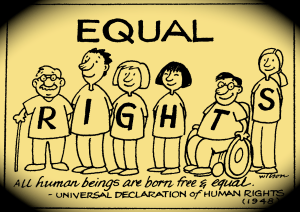
Let’s be clear – making somebody worse off financially is not a breach of their human rights, let alone the human rights of somebody else for whom they act as carer. It may be bad policy. It may be mean spirited. It may be short sighted or have any number of other flaws as a piece of social policy. But to call it a breach of a person’s human rights is an extraordinary over-stepping of the mark. Discrimination means treating somebody differently because of an inherent characteristic, but activists are now crying “discrimination!” when the government fails to treat people sufficiently differently.

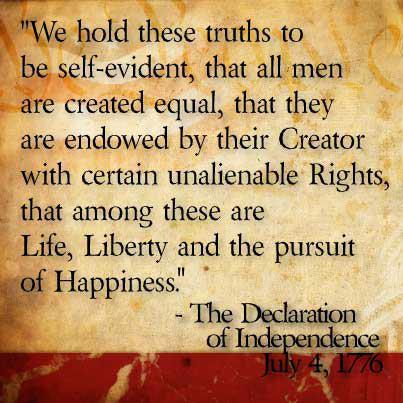
These attempts by the Left to weaponise the issue of human rights must be fiercely resisted. If human rights are to mean anything, they must be primal, sacrosanct and indivisible. It is hard to express those universal rights any better than the signatories of the US Declaration of Independence, who referred to “life, liberty and the pursuit of happiness”. Life and liberty in particular are crystal clear, and the state should have no power to infringe upon these rights except in the gravest of circumstances (usually as punishment after being found guilty of committing a crime).

Human Rights - Life Liberty Pursuit of Happiness - 2

But the American founding fathers were also quite clear that there is no human right to be happy, or to live a carefree, comfortable life. There is only the right to pursue happiness. This properly reflects the fact that one person’s idea of happiness may be quite different to another’s, and that proper government becomes impossible when the state is continually forced to adjudicate between competing claims of infringement on happiness.

Indeed, the difficulty comes when activists and pandering politicians try to drill down from these lofty principles in a control-freakish attempt to ensure equality of outcome for all. We are all different, and require different social and environmental factors in order to be happy and free.

For some people, their inability to express certain outdated or bigoted views for fear of police harassment or prosecution is a gross infringement on their liberty to hold and express personal thoughts and beliefs. But for other sensitive souls, the mere possibility that they might encounter such unpalatable opinions in the real world – and the belief that unpleasant words heard are somehow comparable to physical harm inflicted – infringes on their own happiness and liberty.

This puts the government in the impossible situation of having to pick winners. Does one person’s human right to live life offence-free trump another’s right to freely express their own thoughts? Does the right of some people to enjoy new public infrastructure trump another’s right to peaceably enjoy their own property without having it seized, built over or spoiled? Does the right of a foreign criminal to maintain links with their UK-based family trump society’s right to deport foreign nationals convicted of a crime on the grounds of cost and public safety?

We live in an imperfect world and so long as we maintain our current expansionist view of human rights, such tough calls will always exist, regardless of who holds power. The best that any government can do – to avoid becoming bogged down in endless competing claims for favouritism – is to remain as neutral as possible and stick to enforcing only the most core human rights.

And let us remember that it is quite possible to establish various additional rights and principles to protect the vulnerable – enshrined either in law or through codes of practice – without elevating every single claim to the level of an “human right”.

For example, as a society, we may well want to establish a duty on large businesses or government departments to spare no expense in accommodating the accessibility requirements of the severely disabled. But if an organisation happens to fall short of the required standards, is it really right that they are sued according to the same laws that govern torture, detention without charge or war crimes?

Consider the London Underground, the world’s oldest underground metro system. Because of its age, the vast majority of the Tube network does not conform to modern accessibility standards, and could not quickly be brought up to standard without exorbitant, prohibitive cost. Of course this is hugely unfair to those with mobility impairments, as they are unable to avail themselves of the full range of London transport options. But to call it an infringement of their human rights is wildly excessive, and something of an insult to the millions of people living in more benighted parts of the world whose fundamental rights to life, liberty and the pursuit of happiness are routinely trampled.

In the information age, and with the growth of social media, it is easier than ever to identify businesses, organisations and government agencies which fall short of their responsibility to provide accessible services for all, and to apply pressure on them to raise their performance. One trending Twitter hashtag, coined in outrage at the insensitivity of an organisation, now has the potential to achieve more far-reaching change than any judgement handed down in Strasbourg.

Human Rights - Disability 2

But we absolutely can not continue to abide the corrosive idea that government policies should be struck down if they impact differently on different citizens. Because nearly every government policy will, by definition, impact different groups in different ways.

Spending more money on roads penalises those who walk or use public transport. Spending more money on pensions penalises those people of working age who will inevitably receive a less generous settlement when they retire. Spending more money on education penalises those currently in retirement. Enacting tougher prison sentences for criminals penalises people from disadvantaged socioeconomic backgrounds who are more likely to end up in court. Government funding of research into cures for disease A penalises sufferers of disease B.

Where does it end? By clinging to the notion that individual government policies must never be disadvantageous to anybody, ever, we render ourselves ungovernable. We descend from being a cohesive society into a splintered and warring coalition of special interest groups, each jealously guarding their own perks and privileges at the expense of all others.

Government spending disproportionately benefits those who are not economically self sufficient. That much is obvious and unavoidable – rich people either do not or cannot claim the benefits on which poor people rely. And the fact that wealthier citizens support their less fortunate compatriots with their taxes is part of the social compact we make in order to maintain our inclusive society.

But to suggest that cutting government spending infringes on the “human rights” of the recipients is utterly abhorrent, even immoral, because it effectively enshrines a formal, limitless claim on the labour and earnings of the economically productive by the non-productive. It says that by refusing to fund government services with ever increasing taxes until the wishes of every welfare recipient are fully satisfied is to violate their human rights, to effectively inhabit the same low category as torturers and dictators.

Human Rights - North Korea - Kim Jong Un

It’s hard to know who comes out of this whole sorry affair looking worse – the disability rights activists, who have somehow managed to turn what should be a principled and laudable campaign into a grubby and petulant sulk, or the United Nations, which once again debases and undermines itself by treating the United Kingdom – of all countries – like some kind of rogue state.

It is perfectly possible to disagree with this Conservative government calmly and rationally. It is perfectly possible to advance the case that government spending restraint, the “bedroom tax” and welfare reforms are bad policy. But to claim that they infringe anyone’s human rights is a grotesque exaggeration that should be laughed out of town, not treated seriously and earnestly investigated by the UN.

Life, liberty and the pursuit of happiness: these inalienable, indivisible rights have served us well for centuries – and not only in the United States of America. Generations of campaigners before us were able to argue for (and win) the abolition of slavery, universal suffrage and civil rights protection with reference to these noble aims. And they would be appalled at the modern-day assertion that we should obsess over whether each and every government spending decision has been carefully calibrated to benefit us personally, rightly viewing this as a condescending attack on our liberty and autonomy as free citizens.

If human rights are to mean anything at all, we must stop trying to invoke them every time the government does something with which we disagree, or whenever we have a less than wholly successful interaction with a business or government agency. Human rights violations are real. Even today, while puffed up social justice warriors in the UK write furious screeds accusing Iain Duncan Smith of human rights abuses, people in other countries are being imprisoned, tortured, spied upon, maimed and executed. Babies with entirely survivable conditions and disabilities are being killed, or aborted before they are even born.

If we really cannot find a way to discuss the human consequences of shrinking the state without resorting to shrieking about supposed human rights abuses then truly, we are suffering from a grievous failure of empathy and imagination as a country.

And that’s the real crime.

UN Declaration of Human Rights - United Nations

Agree with this article? Violently disagree? Scroll down to leave a comment.

Follow Semi-Partisan Politics on TwitterFacebook and Medium.

The Daily Toast: Glenn Greenwald On Succeeding In Journalism

Glenn Greenwald


Glenn Greenwald gives an interview to Dillon Baker in The Freelancer, and offers his thoughts on succeeding in online journalism:

I think the most important thing is to avoid being a generalist. Don’t be willing to write about every single topic, because no person can be well-versed in every topic. If you write about stuff in which you are not well-versed and you don’t really have expertise, you’re just going to turn out mediocre product. And that’s going to affect how you’re perceived in the long run.

It’s so critical to figure out what you’re really passionately interested in. Because there’s a market for everything. There’s a huge Internet out there. Topics that seem really obscure can definitely, if you do it the right way, generate enough attention and interest to sustain you, and maybe even push you beyond that. It’s critical to just pick a few topics of which you have a great deal of passion, and develop genuine expertise in those so that what you’re producing can’t be found anywhere else except with you.

Wise words, which this blog will continue to strive to observe. This blog has long admired Glenn Greenwald for the passion and urgency behind his writing, and his principled stance against the secret surveillance state.

So what is the purpose of this blog?

Semi-Partisan Politics will continue to campaign – loudly and unapologetically – for the following goals and ideals:


Brexit: freedom from the European Union

Democracy and national sovereignty

Constitutional reform and a federal UK

Separation of church and state

Smaller, smarter government

Free speech, without restriction

Fighting timid centrism on the Right

Fighting empty virtue-signalling on the Left


If you agree with these objectives and have enjoyed this blog’s coverage over the past year, please do consider using the PayPal tip jar to make a small contribution:


Any donations will 1) be an ego boost, and 2) help me to do more original reporting, like the successful live blog of this year’s UKIP annual conference.

But most of all, please continue to click, like and share those articles that you enjoy with your family and friends. My loyal readers help keep me fighting the good fight.


Follow Semi-Partisan Politics on TwitterFacebook and Medium.

Yoga Banned: Cultural Appropriation Zealots Are Creating A New Apartheid

Cultural Appropriation - Can I Wear A Bindi

Today’s virtue-signalling, totalitarian student activists will stop at nothing to let everyone know just how enlightened and considerate they think they are, and how backward and oppressive they consider the rest of us to be

If you haven’t heard the term “cultural appropriation” before, you can expect to hear it a lot over the next few years. And if you have the misfortune of living anywhere near a university campus, you may even hear it shouted in your face by a raucous student protester, high on their own self-importance.

In fact, even if you’re not committing the modern day sin of cultural appropriation right now, you are almost certainly guilty of doing it at some point over the past twenty-four hours. Go and do your penance now. I’ll wait.

Cultural appropriation is the latest verbal weapon used by virtue-signalling lefty student activists – snivelling Millennial egotists who arrived at university only to find the worst oppression and discrimination already vanquished by previous generations, and who are now desperately casting around for a new cause to justify their Chinese-manufactured Che Guevara t-shirts.

Let’s put it like this: are you a white person who likes rap music, or who (heaven forfend) listens to music by white rappers from Eminem to Iggy Azelea? Then you’re a white supremacist cultural appropriator. By appreciating or assimilating something from outside of your own ethnic community, you have plundered the culture of your downtrodden minority friends and neighbours, making light of their most sacred and noble traditions for your own carefree amusement. Didn’t realise that’s what you were doing? Doesn’t matter, you’re still guilty.

Or maybe you really fell in love with Thai cuisine when you were on that round-the-world trip, and now you love to cook Thai-inspired meals at home, with your non-Thai hands, in your non-Thai kitchen, for your non-Thai friends. That’s cultural appropriation too. Shame on you. If you are a white American you should subsist entirely on cheeseburgers, barbecue and other culturally appropriate fare. God help you if you’re a Cockney but not mad for jellied eels.

Stay away from that lasagne if you’re from Idaho or Utah – can’t you see how eating pasta belittles and marginalises Italian Americans? And as for ordering Kung Pao chicken from your favourite Chinese takeout, why don’t you just start reading aloud from Mein Kampf in the town square, you nasty little fascist? Clearly you have no feeling for the mental safety of Asian Americans, who might feel mocked and excluded by your thoughtless foodcrime.

You get the idea. Before doing anything, first get out your Hierarchy of Privilege and remind yourself exactly where you fit on the Spectrum of Oppression. White and male? Tough luck, you can sample only from those other white, male cultural pursuits. Black, disabled and of undefined gender and sexuality? Then the world is your oyster – at least in the surreal world of academia.

Cultural Appropriation - Fourth Wave Feminism.jpg


And now the Stepford Students are coming to take away your Yoga classes, because chances are you aren’t from India – and therefore you are guilty of the cultural appropriation of Indian culture.

From Brendan O’Neill’s weary report in The Spectator:

Just when you thought uptight, fun-dodging, thought-policing millennials couldn’t get any worse, they go and brand yoga as racist. Apparently, when white people bend themselves bonkers while humming or thinking happy-clappy thoughts, they’re not only being self-punishing saps: they are also ‘culturally appropriating’ a practice that has ‘roots in Indian culture’.

That’s according to student leaders at the University of Ottawa, who put pressure on a yoga teacher at the uni’s Centre for Students with Disabilities to call off her yoga classes. She was told ‘there are cultural issues of implication involved in the practice’. In these people’s minds, in which the Offence-Seeking Antenna is forever turned to High, a white person doing yoga is not that different to a white person donning blackface and singing ‘Mammy’.

O’Neill goes on to point out:

The PC rage against cultural appropriation is ultimately a demand for cultural segregation, for black people, white people, Latinos, gay people, women and every other racial, gender or sexual group to stick with their own culture and people and not allow themselves to be diluted by outsiders.

Gay men have been condemned by the National Union of Students for ‘appropriating black female culture’. Barmy NUS officials think it’s the height of racism for a gay guy to talk about having an ‘inner black woman’. The irony being that it’s hard to think of anything more racist, or at least racially divisive, than the ideology of cultural appropriation: its obsession with cultural purity echoes some of the darkest political movements of the twentieth century.

It’s easy to dismiss these incidents as merely a case of a few activists getting a bit too carried away, or going a bit too far. But incidents such as these are happening more  and more often, on both sides of the Atlantic.

Whether it is British students shutting down a debate about abortion and trying to get Germaine Greer banned from campus, or pampered Yale students insisting that the point of university is not to learn but rather to feel warm and snuggly, these stories are becoming more extreme, more frequent and ever more ludicrous to the uninitiated.

This is in large part because the authorities – university chancellors, society presidents and anyone else called upon to be an auxiliary parent to these toddlers-with-diplomas – too often reward this hysterical behaviour by apologising for offending the Stepford Students and giving in to every one of their tyrannical demands. Which then encourages the next crop of baby-faced tyrants to make even more outrageous demands in the name of creating a “safe space”.

With their accusations of “cultural appropriation” and unquestioning embrace of the politics of identity, these student activists are starting to create a New Apartheid – on their university campuses and in their hermetically sealed social circles of likeminded social justice warriors. Their overriding concern with protecting the “purity” of various minority cultures resembles nothing so much as the anti-miscegenation laws of the last century. And all of this they do without a hint of irony.

These students are nothing so much as High Priests of the Politics of Identity. Like other clergy before them, they derive their power from claiming the exclusive ability to speak on behalf of their secular god and telling the rest of us what we must believe and say. But in place of stoning or crucifixion being the penalty for blasphemy we now have new, modern shamings carried out on social media.

In a famous scene from Aaron Sorkin’s show The Newsroom, the lead character described the American Tea Party – with their intolerance of dissent and insistence on ideological purity – as being like an American Taliban. But I wonder if the real progressive Taliban can’t actually be found on our university campuses, in our student union bars and in the front row of your nearest anti-austerity rally, shouting “Tory Scum!” at terrified old ladies.

If we let these fragile young tyrants win, we will eventually all be ghettoised, forced to keep strictly to our own “communities” (community being defined strictly by racial or religious criteria) and only allowed to engage with other people in the controlled environment of “safe spaces“, where our speech and behaviour is micromanaged to ensure that we do not “trigger” anybody else with the problematic “microaggression” of our mere presence.

Yes, there is a dangerous radicalisation process taking place on our university campuses today. But deluded young radicals are not only rallying to the black flag of ISIS – we should also mark those who drink so deep from the well of Social Justice that they would make us all slaves to their cause.


Yoga - Cultural Appropriation

Top Image: Northmont Surge

Middle Image: 4th Wave Feminism

Agree with this article? Violently disagree? Scroll down to leave a comment.

Follow Semi-Partisan Politics on TwitterFacebook and Medium.