Music For The Day

Some restorative Bach for Sunday afternoon

The late, great Glenn Gould dissects one of my favourite fugues from the Well-Tempered Clavier, Fugue no. 9 from Book II.

As Glenn Gould says, at the conclusion of his discussion with biographer Bruno Monsaingeon:

It’s rudimentary material, but it makes for one of the most gloriously fulfilled codas he [Bach] ever wrote, I think.

True. Unlike the brisk and rather superficial version of this fugue in Gould’s complete recording of the WTC, here he takes it at a funereal pace, allowing each voice to truly sing on its own. The slow, steady accumulative effect of Bach’s ingeniously weaved, achingly unresolved theme makes the incredible catharsis of the final coda all the greater.

Here is the complete performance:


Glenn Gould

Follow Semi-Partisan Politics on TwitterFacebook and Medium.

Brexit Will Not Cure The Cancer Of Authoritarianism In Our Society

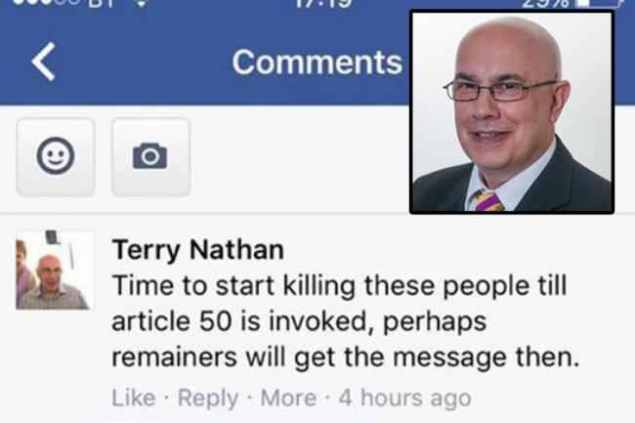
Terence Nathan - UKIP - Facebook

Death to Remainers!

Imagine for a second just how much safer our communities might be if local police forces spent half as much time patrolling the streets and engaged in community outreach as they do scouring Twitter for “offensive” speech.

Imagine just how much more responsive and well resourced our public services might be if local councils took complaints about potholes and vandalism nearly as seriously as they seek to persecute idiots for airing their half-baked opinions online.

Well, you can snap out of that reverie:

An investigation has been launched after a Ukip councillor made comments on Facebook suggesting those who voted Remain in the EU referendum should be killed.

The comments appeared on Terence Nathan’s Facebook page, councillor for Cray Valley West in Bromley, on Tuesday night.

The post, written in response to a news article referring to legal efforts against the Brexit vote, mentions Article 50 of the Lisbon Treaty, which when triggered would initiate the UK’s departure from the EU.

Mr Nathan wrote: “Time to start killing these people till article 50 is invoked”, adding “perhaps remainers will get the message then.”

After another Facebook user raised concern over Mr Nathan’s rhetoric, he replied in a second comment: “Not threatening anyone, no need for threats just a bullet.”

Mr Nathan has since apologised for the comments saying: “My comments were only intended to be taken with a pinch of salt.”

The Independent article concludes ominously:

Police and council officials have said they are looking into the remarks.

A Bromley Council spokesman said: “The Council has launched an investigation into the alleged comments made but it would not be appropriate to comment further at this stage.”

Bromley Metropolitan Police Service said: “Police in Bromley are aware of comments apparently posted online by a Bromley Councillor. Enquiries into this matter are ongoing.”

Is it not enough for Mr. Nathan to have made a complete fool of himself for all the world to see, and torpedoed whatever hopes he may have entertained promotion within UKIP or higher political office? Is it not enough that society’s natural self-righting mechanisms saw the man challenged and upbraided by other people exercising their own free speech to oppose him?

Must we really now assign some bored police constable and dreary office bureaucrat to sift through his Facebook profile, looking for further nonexistent evidence of a dastardly plot for Mr. Nathan to slaughter his way through the electoral register? Do we really need to be that pinch-paced, authoritarian society?

What possible good does this serve?

“But Jo Cox!”, I already hear some insufferable idiot screeching in protest.

No. Mentally disturbed people who snap and kill innocent bystanders almost by definition do not casually announce their intention to do so on social media beforehand. And though I don’t have statistics to hand, I would bet the house that a single police officer can prevent more human harm in one year on the beat than they would scouring social media and arresting every single cretin who voices a generic, non-targeted violent opinion.

Of course Mr. Nathan was being stupid when he called for Remainers to be killed until the British government invokes Article 50 of the Lisbon Treaty. But why can’t we leave it at that? Who actually benefits from bringing the fearsome correctional power of the state crashing down on somebody just for being an idiot? Isn’t being the kind of intellectually tepid individual who jokes about killing people online punishment enough?

Sadly not. Britain is fast becoming an authoritarian hellhole populated by an army of thin-skinned victims-in-waiting who leap at the chance to criminalise those who disagree with them, and ruled by an activist big government which is eager, proactive even, in taking their side.

How utterly depressing.


Greater Glasgow Police - THINK - Social Media - Police State - Free Speech

Support Semi-Partisan Politics with a one-time or recurring donation:

Agree with this article? Violently disagree? Scroll down to leave a comment.

Follow Semi-Partisan Politics on TwitterFacebook and Medium.

Many People In Britain Deserve Sympathy. Labour’s Centrist MPs Do Not.

The sycophantic Westminster media identify and empathise much more with Labour’s centrist MPs than the ordinary people who make up the party membership. And it shows.

In a rather nauseating review of Theresa May’s first outing in Prime Minister’s Questions, The Spectator’s Steerpike column gushes with sympathy for the rebellious Labour centrist MPs perched behind (and around) Jeremy Corbyn:

In recent weeks, Jeremy Corbyn’s popularity has hit a new low with the Parliamentary Labour Party. Things are so bad that he is unable to assemble a full Shadow Cabinet — instead having to assign some people with more than one position.

So, it was an interesting move of the Labour leader to bring up job insecurity and difficult bosses at today’s PMQs. Corbyn suggested that Theresa May had much work to do when it came to making employment rights fairer. Alas, the Prime Minister was unimpressed with Corbyn’s complaints. Channeling her inner Thatcher, May went on to suggest that it was he who was the guilty one when it came to inequality in the work place.

The Spectator goes on to quote the new prime minister’s (admittedly very effective) withering putdown of Corbyn:

‘I’m interested that he refers to the situation of some workers who might have some job insecurity and potentially unscrupulous bosses. I suspect that there are many members on the opposition benches who might be familiar with an unscrupulous boss.

A boss who doesn’t listen to his workers. A boss who requires some of his workers to double some of their workload. Maybe even a boss who exploits the rules to further his own career. Remind him of anybody?’

This is all part of a dismally familiar effort in the Westminster media to paint Labour’s rebellious centrist MPs as the wronged and oppressed group, and Corbyn as their unlikely tormentor in chief (when if anything it is clearly the other way around).

The Spectator – and they are far from alone – expect our hearts to brim over with sympathy for the poor Labour centrists whose ineptitude made Jeremy Corbyn’s rise possible in the first place, and who now stomp around Westminster mutinously, trying to destroy the mirror which Jeremy Corbyn holds up to their faces, showing them their own vacuity.

This is a fawning, sycophantic attitude which screams “screw the people and the Labour Party membership! What really matters are the hurt feelings and stymied career aspirations of 230 members of the Westminster political class, people who didn’t go to Oxbridge, secure prize political internships and shimmy their way up the greasy pole only to find their dreams of a Cabinet career dashed because their party is locked out of power for a generation.”

That’s not to say that Corbyn is some kind of faultless, saintly figure. Far from it. But while his ideology may have been plucked unreformed from the 1970s, it is at least coherent and sincerely felt. The same cannot be said for the restive cohort of centrists who are so busy trying to find an “electable” alternative that policy and passion and principle barely register at all.

Post-Brexit, it seems to be fashionable for well-connected journalists, commentators and intellectuals to publicly muse about the possible reasons for the anti-establishment rage simmering at the surface of British politics. Why oh why have the British people stopped listening to the expert opinion of their betters in the Establishment, goes the frequent cry. Why have the people lost faith in the political class?

Hint to the Spectator: journalists openly fretting about the mental welfare of supposedly poor, downtrodden centrist Labour MPs rather than the genuinely poor and downtrodden squeezed middle and working classes goes a long way toward explaining this impenetrable riddle.


Jeremy Corbyn - PMQs

Support Semi-Partisan Politics with a one-time or recurring donation:

Agree with this article? Violently disagree? Scroll down to leave a comment.

Follow Semi-Partisan Politics on TwitterFacebook and Medium.

The Church Of England’s Tantrum Over The EU Referendum Result Is Insulting To Brexit-Supporting Christians

Bishop Robert Innes - EU Referendum - Remain - Brexit - European Union - Christianity

Nearly a month after Britain’s historic vote to leave the European Union, swathes of the Church’s leadership are stuck in furious denial

This blog had very little time for the Revd. Dr. Robert Innes, the Church of England’s Bishop of Europe, before the EU referendum and Britain’s shocking, wonderful decision to leave the EU. But it has even less time for his incessant, self-pitying (and democracy-loathing) moaning in the weeks since that historic vote.

The Archbishop Cranmer blog reports:

“Let me be clear,” said the Rt Rev’d Dr Robert Innes, Bishop of Europe, as he addressed the General Synod of the Church of England. “From my European perspective, this Referendum and its result represent a sad loss of national vocation; an abject failure of political leadership; and a squandering of the birthright of our young people.” And Synod applauded their Euro-prophet for a full 10 seconds, seemingly oblivious to the fact that lay Anglicans voted for Brexit in their droves (and by a majority). “Britain seems to be a country anxious to build fences,” he added, before reminding the people of God that his task as a bishop is to build bridges. Not to the wider world, it seems. Or even to the 22 nations of Europe which aren’t in the European Union, which includes the supremest bridge Pontifex himself, all neatly fenced off in Vatican City State. But Dr Innes’ task as a bishop is to build bridges to the other nations of the European Union, and without political union he is seemingly bereft and hindered from doing so.

Cranmer goes on to highlight Bishop Innes’ complete and utter disregard and disdain for the pro-Brexit opinions of many lay Christians:

The Bishop of Europe acknowledges that some in his Diocese were pleased with the Referendum result, but he doesn’t tell their stories. They are sidelined, disdained and ignored: they don’t quite fit the Bishop’s narrative of shame, anger and deep sadness. “One older man in Paris said to me: ‘I have never been so ashamed of my country.’ A lady in Geneva said to me: ‘I have found it hard to stop being angry.’” There’s no apprehension of joy, liberty, hope or optimism: no awareness of the abundance of bridges we can now build into the whole world. For the Bishop of Europe, British identity and national vocation were wrapped up in ever closer political union: there is no refuge or strength to be found in Brexit.

Christians who voted to leave the EU did so for a variety of reasons, and none of them is worthy of less consideration than the shame of the old man in Paris or the anger of the lady in Geneva. Do we not also seek to cooperate and fellowship with other churches in Europe? Do we not pray to avoid harm and relieve suffering? Are we any less concerned with human rights, the common good or injustice? Are we incapable of loyalty to brotherhood and respect for authority? Is our ethic simply one of nationalistic purity, individualism and xenophobia?

[..] Is there not an echo in our historic national vocation of looking out to the seas and saving Europe from herself? Rather than being an abject failure of political leadership, might Brexit not represent a noble and commendable success? Instead of squandering the birthright of our young people, might we not just have preserved their ancient rights and liberties as freeborn Britons?

One wonders exactly how long the British political and cultural establishment – of which the Church of England is a firm member – can go on being openly, seethingly contemptuous and angry at the British people without finding themselves on the receiving end of an eventual backlash which will make Donald Trump seem the epitome of polite restraint.

The way which those people of privilege and wealth (such as bishops, newspaper columnists and politicians) have conducted themselves since the EU referendum, staggering around the political landscape rending their garments and gnashing their teeth in despair at the prospect of being separated even an inch from their beloved European Union, is enough to induce nausea. It is particularly offensive when such arrogant and self-pitying emotions burst forth from people who fatuously claim to care about the whole of society while reserving a particular duty of care to exactly the type of disenfranchised, economically suffering people who voted for Brexit in their droves.

It is almost enough to make one pine for the days when the establishment merely ignored the concerns, priorities, hopes and dreams of ordinary people as the elite ravenously pursued their own interests. To a poor Christian, it was likely enough of an insult and stretching of Christ’s teaching to be ministered to by a disinterested bishop who lives in a mansion and sits in the House of Lords while they have to trudge five miles to the food bank. Now, as punishment for daring to vote for Brexit, now they must endure the same gulf in circumstances while also being harangued and accused of small-minded racism by some pampered upper middle class oik who uses the collection plate offerings of thousands of other economically struggling Christians to ride the Eurostar first class to “build bridges” with Europe while the social fabric of his own country continues to crumble.

How, one wonders, does the Church of England expect to survive when too few of its bishops follow the example set by Mark Rylands, Bishop of Shrewsbury, who approached the EU question fairly and with the interests of the world’s poorest at heart rather than the interests of Britain’s ruling elites, and determined that Brexit was best for British democracy and for the world’s poor?

How does the Church of England expect to survive when the face it presents to the nation (and its own congregations) too often resembles the contemptuous face of Bishop Robert Innes, horrified by the great unwashed in all their uneducated xenophobia, and the democratic decision they made to leave the European Union?

Quo usque tandem abutere, episcopus, fides nostra?


Christianity - Europe - EU - Brexit

Support Semi-Partisan Politics with a one-time or recurring donation:

Agree with this article? Violently disagree? Scroll down to leave a comment.

Follow Semi-Partisan Politics on TwitterFacebook and Medium.

Why MPs Must Vote To Renew Trident

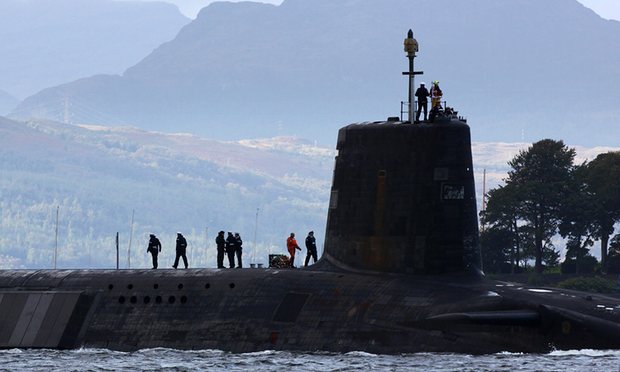
Vanguard class submarine - Royal Navy

This is no time for woolly idealism or virtue-signalling. Britain’s independent nuclear deterrent must be renewed if Britain is to maintain its status as one of the world’s pre-eminent nations

Tulip Siddiq, the MP for the London – Hampstead & Kilburn constituency and my local MP, sent an email last week encouraging appealing for her constituents to send their views on the renewal of Trident, which Parliament is debating today.

And fair credit to Tulip Siddiq for doing so, rather than simply voting based on any prior ideological views she may have held on the subject. This was the email she sent:

As you will be aware, on Monday 18th July next week MPs will be voting on the renewal of Britain’s Trident nuclear missiles system.

I am deeply disappointed that the Government has rushed through this measure without the chance for proper debate. We are set to have just a day’s debate in Parliament over a spending commitment that will cost billions of pounds throughout its lifetime, and I would have hoped for the chance for much better scrutiny. We still do not have the wording of the motion which we are expected to vote upon.

Nevertheless, I am duty-bound to vote on this issue, and in just a matter of days I will have a momentous decision to make as your local representative. As with the vote on Syria last year I am keen to hear the views of all local residents – on both sides of the debate – ahead of this important vote.

As residents who have written to me about this in the past will know, I have consistently queried the cost-effectiveness of the Government’s plans and raised testing questions with Ministers about the options for renewal.

Given the pressure on our public services and the bleak economic outlook ahead, I think it is vital that Labour redoubles its efforts to scrutinise every penny of public spending and balance our security needs with our country’s other priorities.

I think that you – local taxpayers in this constituency – are best-placed to advise me on how you feel this money should be spent. Just as I did with Syria late last year, I will take the time to look through every comment I receive on this issue ahead of the vote, and you can expect me to respond comprehensively setting out my position in due course.

And here is my response to Siddiq:

Dear Tulip,

Parliament must vote to authorise the renewal of our nuclear deterrent as a matter of the utmost importance. Contrary to the claims of those who favour unilateral disarmament that Trident is an expensive white elephant which we never use, in fact we use our nuclear deterrent every single day, at great benefit to our nation.

Trident benefits Britain in the following ways:

1. Planting the sure knowledge in the mind of rulers of hostile regimes that a nuclear or otherwise catastrophic attack on Britain will be met with a full nuclear response – a deterrent which served us through the Cold War and which nobody should vote to scrap at a time when we can barely guess what threats we will face in 5-10 years time, let alone the medium to long terms

2. Our nuclear deterrent gives Britain a seat at the geopolitical “top tables” and underpins our seat on the P5 of the UN Security Council. The priority of every government (and every MP) must surely be to ensure that Britain’s voice and influence is projected as powerfully and clearly as possible in the world. Scrapping or downgrading our nuclear deterrent would put our permanent seat on the Security Council at risk, immediately making Britain less relevant in world affairs. This will directly harm our interests because, frankly, being a consequential player in the UN helps Britain in a myriad of tangible and intangible ways touching diplomacy, trade and military alliances.

3. Unilateral disarmament by Britain will do absolutely nothing to prompt a sudden outburst of peace or a change in the attitude of Russia and China, the non-allied nuclear powers. Vladimir Putin and Xi Jinping would take unilateral disarmament by the UK, put it in the bank and give nothing in return. CND activists and Green campaigners would effectively be virtue signalling their moral purity while Britain’s security and national interest were jeopardised.

4. Britain’s insatiable public services will swallow any money diverted from Trident and then still ask for more, with little money actually reaching the front lines and no great increase in performance metrics over the long term. One could throw billions of pounds more that the NHS and other public services, and newspaper headlines will still talk about how they are perpetually “in crisis”. In fact, throwing more money at public services only serves to paper over the cracks, delaying the eventual reckoning which we need to have regarding the NHS, pensions and other services. Is it really worth killing our nuclear deterrent, deliberately maiming our stature on the world stage just to feed the public services bureaucracy with the extra 0.2% of government spending which the Trident renewal will cost over its lifetime?

I hope that you will consider these points as you consider your approaching vote, and I look forward to your response.

Interestingly, the Conservative candidate defeated by Tulip Siddiq in the 2015 general election was a wishy-washy, vague Coke Zero Conservative who disagreed with the “bedroom tax” and who wanted to scrap Britain’s nuclear deterrent altogether. Shamelessly adopting these left-wing positions did not help him much.

As a “rising star” of the Labour Party and with one eye doubtless fixed on her future political ambitions it will be interesting to see which way Siddiq decides to vote this evening.


Trident Nuclear Submarine - Faslane Naval Base

Top Image: Guardian

Support Semi-Partisan Politics with a one-time or recurring donation:

Agree with this article? Violently disagree? Scroll down to leave a comment.

Follow Semi-Partisan Politics on TwitterFacebook and Medium.