Politicising The Supreme Court: A More Liberal SCOTUS Is Nothing To Celebrate

Jeffrey Toobin in The New Yorker salivates at the prospect of a President Hillary Clinton loading the Supreme Court with a bunch of zealous, ideological progressives:

For the first time in decades, there is now a realistic chance that the Supreme Court will become an engine of progressive change rather than an obstacle to it. “Liberals in the academy are now devising constitutional theories with an eye on the composition of the Court,” Justin Driver said. The hopes for a liberal Court will begin—or, just as certainly, end—with the results on Election Day.

Of course there have been times when conservative Republicans have bent the spirit or the letter of the law in pursuit of their own obsessions – cracking down too restrictively on voting rights stands as an obvious, shameful example. But liberal excitement about getting to stamp their mark on the makeup of the Supreme Court seems to extend far beyond merely righting these examples of conservative overreach:

The liberal wish list expands rapidly from there—limited only by the imaginations of law professors, advocates, and the Justices themselves. One possibility is that the Court might recognize a constitutional right to counsel in civil cases. (Currently, only criminal defendants are guaranteed legal representation.) In criminal law, the Court might adopt the idea, which Sotomayor has suggested, that the Constitution forbids incarcerating individuals who are too poor to pay fines. Several scholars have proposed a constitutional right to education, which might force increased funding for poor districts, or, even more speculatively, a right to a living wage.

These goals range from the worthy (no longer imprisoning people who are so poor that they have no prospect of paying large court fines) through the interesting-but-unworkable, all the way to the downright authoritarian and unconstitutional (a federal “living wage”).

But while the Supreme Court is the third and equal branch of government, activists on all sides of the political spectrum are playing with fire when they seek to co-opt the court to be an “engine of progressive change” (or resistance to that change) where they cannot muster popular support to achieve their goals through Congress or, if necessary, amend the Constitution.

The Supreme Court has long been politicised, and American democracy has suffered as a result. And while it may be wishful thinking that the tit-for-tat partisan drama will come to an end any time soon, liberals in particular should be careful. For their side is already ascendant or even victorious on many fronts in the culture war. Social changes which would have been unthinkable three decades ago are now a tangible reality – often a positive thing, sometimes less so. Seeking to gain the last 10% of their social objectives by turning the screws on American conservatives through the Supreme Court will only foster resentment and sow division.

Perhaps liberals genuinely don’t care. Perhaps they are fine with the idea of achieving their goals by circumventing the political process and pushing their “living constitution” interpretations to the limit of coherency. But there will be a backlash, just as there are always consequences when political elites of any stripe push stubbornly ahead with their agendas while forgetting to bring the country with them.
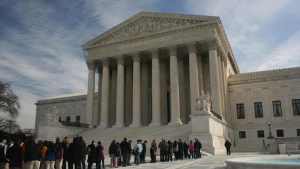
 

US Supreme Court

Support Semi-Partisan Politics with a one-time or recurring donation:

Agree with this article? Violently disagree? Scroll down to leave a comment.

Follow Semi-Partisan Politics on TwitterFacebook and Medium.

UK Supreme Court Strikes Down The SNP’s Unlawful Named Person Scheme

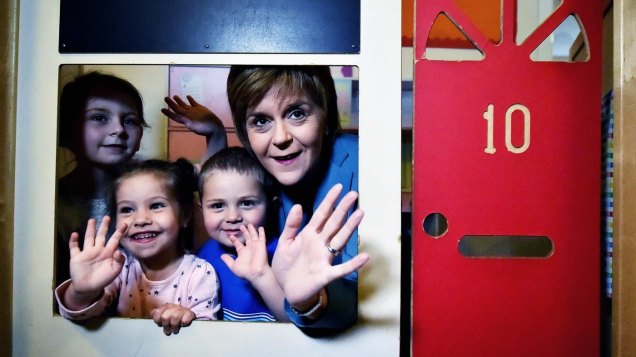
Nicola Sturgeon - SNP - Named Person Scheme - Supreme Court

The UK Supreme Court slaps down the SNP-led Scottish Government’s assault on privacy and individual liberty manifested in the evil Named Person scheme, citing the creeping threat of totalitarianism

Good news from the UK Supreme Court today, which has made an important decision in favour of civil liberties and privacy by ruling the SNP government’s insidious “Named Person” child-monitoring scheme unlawful, giving Holyrood no recourse to further appeal.

Specifically the Supreme Court struck down provisions which allowed the sharing of sensitive data about Scottish children between agencies, which the court held to be in breach of the right to privacy and a family life under Article 8 of the European Convention on Human Rights.

The court further held that several of the provisions for data sharing in the Children and Young People (Scotland) Act 2014 were beyond the legislative competence of the Scottish Government – in other words that Nicola Sturgeon’s nationalist government has been getting far too big for its boots, and should perhaps focus on trying to deliver better governance for Scotland instead of greedily seeking to acquire ever more power over its own citizens.

What is most encouraging about this ruling – besides Nicola Sturgeon being put firmly back in her box, of course – is the strong, uncompromising language used by the justices in their decision.

From the judgment:

Individual differences are the product of the interplay between the individual person and his upbringing and environment. Different upbringings produce different people. The first thing that a totalitarian regime tries to do is to get at the children, to distance them from the subversive, varied influences of their families, and indoctrinate them in their rulers’ view of the world. Within limits, families must be left to bring up their children in their own way.

The justices then go on to quote the late US supreme court justice James Clark McReynolds, who held in Pierce v Society of Sisters:

“The fundamental theory of liberty upon which all governments in this Union repose excludes any general power of the state to standardize its children by forcing them to accept instruction from public teachers only. The child is not the mere creature of the state; those who nurture him and direct his destiny have the right, coupled with the high duty, to recognize and prepare him for additional obligations.”

The child is not the mere creature of the state – a universal truth, but one seemingly forgotten by the Scottish National Party in their paranoid desire to centralise and monitor everything that takes place north of the border.

This is a remarkable tirade against totalitarianism and in favour of individual liberty, and can only be seen as a stunning repudiation of the SNP’s entire suffocating, infantilising attitude towards their own citizens. To warn about the slippery slope toward totalitarianism in such an clear way only serves to underscore just how illiberal – and vastly disconnected from the welfare of the child – the Named Person scheme really is.

What is even more remarkable is that such a start warning against totalitarian instincts came not from a mainstream elected politician, but from unelected judges. In its short history, the UK Supreme Court’s judgments have not exactly set the world on fire or shifted numerous copies of approving books in the way that one might pore over the dissents of Ruth Bader Ginsburg or the late Antonin Scalia. That mild-mannered UK supreme court justices are mentioning totalitarianism and quoting McReynolds at all is proof that we are in trouble.

In their reporting, the British press has been making much of the fact that the ruling later goes on to call the Children and Young People (Scotland) Act 2014 “unquestionably benign”. In their article, the BBC makes no mention of these pointed references to totalitarianism in the judgment, immediately revealing the corporation’s bias and reluctance to report properly on stories which are critical of the authoritarian leftist Scottish government.

But as it was with the shock Brexit vote in the EU referendum, once again the media’s barely concealed support for infantilising, authoritarian Big Government policies has been overridden. In this case, the supreme court has spoken (though how much better it would have been had the Supreme Court been able to strike down the Named Person Act with reference to a British Bill of Rights or constitution rather than the expansionist ECHR).

As this blog noted when the Named Person scheme was last being debated prior to the 2016 Holyrood elections:

Whether any given Scottish person wants their top layer of government to reside in Holyrood or Westminster, surely anybody should agree that the bottom layer of government should not intrude deep into the family unit in the way that the Named Person Scheme does.

[..] This is the SNP at work in government. A hectoring, overbearing movement which seeks to centralise everything they can touch, from the state monitoring of children to the police and fire services – with deadly consequences, in the latter cases.

Today, a blow has been struck against the insidious ratchet effect underway in Britain, leading inexorably to a larger and more interfering state. We should be grateful to the Supreme Court for their decision, and to The Christian Institute and other appellants for fighting the case.

But it should not fall to an unelected judiciary to make the bold and uncompromising case for individual liberty. Ruth Davidson did a magnificent job opposing the Named Person scheme on behalf of the Scottish Tories, but we need more politicians across the board who are willing to stand up for liberty and who possess the imagination to conceive of a world where government is not the answer to every single problem.

The Supreme Court did us proud today. It is about time for more of our elected politicians to do the same.


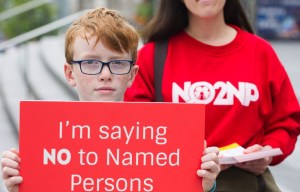
No2NP protest

Top Image: CapX

– 

Agree with this article? Violently disagree? Scroll down to leave a comment.

Follow Semi-Partisan Politics on TwitterFacebook and Medium.

Brexit Will Not Cure The Cancer Of Authoritarianism In Our Society

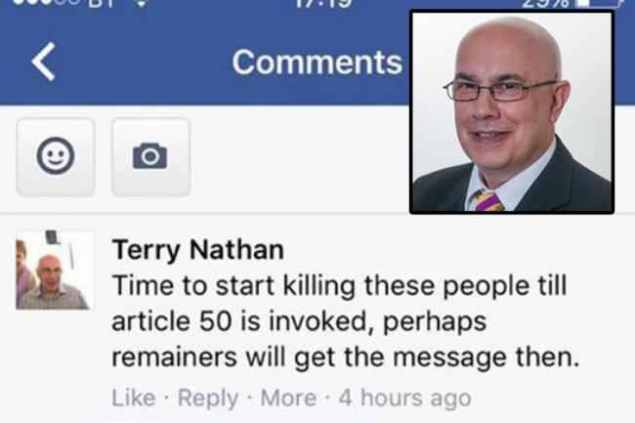
Terence Nathan - UKIP - Facebook

Death to Remainers!

Imagine for a second just how much safer our communities might be if local police forces spent half as much time patrolling the streets and engaged in community outreach as they do scouring Twitter for “offensive” speech.

Imagine just how much more responsive and well resourced our public services might be if local councils took complaints about potholes and vandalism nearly as seriously as they seek to persecute idiots for airing their half-baked opinions online.

Well, you can snap out of that reverie:

An investigation has been launched after a Ukip councillor made comments on Facebook suggesting those who voted Remain in the EU referendum should be killed.

The comments appeared on Terence Nathan’s Facebook page, councillor for Cray Valley West in Bromley, on Tuesday night.

The post, written in response to a news article referring to legal efforts against the Brexit vote, mentions Article 50 of the Lisbon Treaty, which when triggered would initiate the UK’s departure from the EU.

Mr Nathan wrote: “Time to start killing these people till article 50 is invoked”, adding “perhaps remainers will get the message then.”

After another Facebook user raised concern over Mr Nathan’s rhetoric, he replied in a second comment: “Not threatening anyone, no need for threats just a bullet.”

Mr Nathan has since apologised for the comments saying: “My comments were only intended to be taken with a pinch of salt.”

The Independent article concludes ominously:

Police and council officials have said they are looking into the remarks.

A Bromley Council spokesman said: “The Council has launched an investigation into the alleged comments made but it would not be appropriate to comment further at this stage.”

Bromley Metropolitan Police Service said: “Police in Bromley are aware of comments apparently posted online by a Bromley Councillor. Enquiries into this matter are ongoing.”

Is it not enough for Mr. Nathan to have made a complete fool of himself for all the world to see, and torpedoed whatever hopes he may have entertained promotion within UKIP or higher political office? Is it not enough that society’s natural self-righting mechanisms saw the man challenged and upbraided by other people exercising their own free speech to oppose him?

Must we really now assign some bored police constable and dreary office bureaucrat to sift through his Facebook profile, looking for further nonexistent evidence of a dastardly plot for Mr. Nathan to slaughter his way through the electoral register? Do we really need to be that pinch-paced, authoritarian society?

What possible good does this serve?

“But Jo Cox!”, I already hear some insufferable idiot screeching in protest.

No. Mentally disturbed people who snap and kill innocent bystanders almost by definition do not casually announce their intention to do so on social media beforehand. And though I don’t have statistics to hand, I would bet the house that a single police officer can prevent more human harm in one year on the beat than they would scouring social media and arresting every single cretin who voices a generic, non-targeted violent opinion.

Of course Mr. Nathan was being stupid when he called for Remainers to be killed until the British government invokes Article 50 of the Lisbon Treaty. But why can’t we leave it at that? Who actually benefits from bringing the fearsome correctional power of the state crashing down on somebody just for being an idiot? Isn’t being the kind of intellectually tepid individual who jokes about killing people online punishment enough?

Sadly not. Britain is fast becoming an authoritarian hellhole populated by an army of thin-skinned victims-in-waiting who leap at the chance to criminalise those who disagree with them, and ruled by an activist big government which is eager, proactive even, in taking their side.

How utterly depressing.


Greater Glasgow Police - THINK - Social Media - Police State - Free Speech

Support Semi-Partisan Politics with a one-time or recurring donation:

Agree with this article? Violently disagree? Scroll down to leave a comment.

Follow Semi-Partisan Politics on TwitterFacebook and Medium.

Attention, Thought Criminals: Glasgow Police Have You In Their Sights

Greater Glasgow Police - THINK - Social Media - Police State - Free Speech

Glasgow Police’s conception of public safety is plain old fashioned tyranny

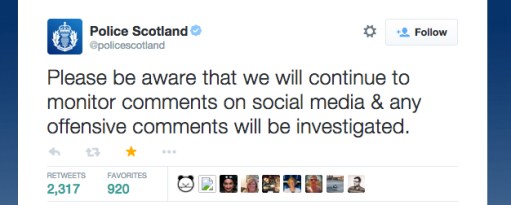
Imagine the kind of dystopian police state you would have to inhabit for it to be normal for the authorities to routinely warn citizens to be careful about what they think or say, on pain of criminal prosecution and potential incarceration.

Well, you don’t have to imagine, because Police Scotland and the Greater Glasgow Police are busy constructing their own tribute to North Korea right here in the UK.

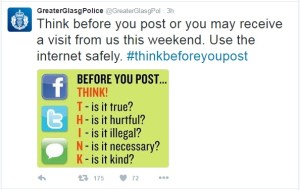
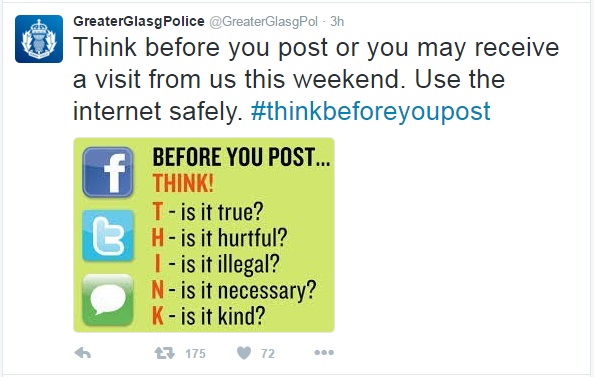
The tweet shown above was posted on twitter by the Greater Glasgow Police – unironically – this afternoon, along with the menacing hashtag #thinkbeforeyoupost.

Apparently before offering up our thoughts to the internet, whether they be on politics, cooking or sport, we are to ask ourselves whether what we are posting is True, Hurtful, Illegal, Necessary or Kind. The clear implication is that if our speech fails the THINK test, some snarling Scottish police officer will turn up on our doorstep to drag us away, much as the London Metropolitan Police did with Matthew Doyle last weekend.

This is something of a scope increase for the police, to put it mildly. Where once they largely confined themselves to preventing and solving crime, apparently having since eliminated all actual crime in our society (…) and finding themselves at a loose end, they are now eager to swoop in and punish speech which passes Britains’ already draconian hate speech laws but which happens to be arbitrarily perceived by others as hurtful, unnecessary or unkind.

Let’s call a spade a spade: this is tyranny. When an enforcement arm of the state can post jocular messages on social media warning citizens to be on their best, blandest and most inoffensive behaviour on pain of arrest, we do not live in a free society any more. And it is time that more of us acknowledged this, so that we can get on with the task of rolling it back and re-establishing our corroded right to freedom of expression.

Alex Massie thunders:

Whatever next? The monitoring of conversations in public houses? Why not? Twitter and Facebook, after all, are merely digital, virtual, gathering places. As the wags on social media have put it today, Thur’s been a Tweet and Detective Chief Inspector Taggart is on the case.

Beneath the necessary and hopefully hurtful mockery, however, lurks an important point. One that relates to something more than police stupidity and over-reach and instead asks an important question about the value placed on speech in contemporary Britain. The answer to that, as this and a score of other dismal examples demonstrate, cannot cheer any liberal-minded citizen. Such is the temper of the times, however, in which we live. Nothing good will come of any of this but you’d need to be a heroic optimist to think it will get any better any time soon.

What a country; what a time to be alive.

All very good points. If social media is fair game for the thought police, why not the local pub, too? What restraint should there be, besides time and resources, on blanket surveillance of everyone all the time in the pre-emptive battle against speech crime?

When will people finally start waking up to the sheer illiberality and the authoritarian nature of contemporary society?

When will people finally realise that weaponised offence-taking and the Cult of Identity Politics do not create a Utopian paradise of peace and harmony, that in behaving this way we are only driving bad ideas underground to fester and grow while punishing those who dare to think differently?

When will people get that having the state act as an overbearing, always-watching surrogate parent figure, monitoring our behaviour and punishing those who do no more than hurt our feelings, is creating a weak-minded and unresilient population who are unable to handle slights and setbacks without running to an external authority figure for redress?

In a healthy society, the author of that tweet by Greater Glasgow Police would have broken the law by using their position to threaten the right of the people to freedom of expression – a liberty which would be guaranteed in a written constitution enshrining our fundamental rights to life, liberty and the pursuit of happiness.

But we do not live in a healthy society, the police are free to do as they please without censure and there is no written constitution guaranteeing our liberties. Instead, we have a “make it up as you go along” constitution and form of government with a strong tendency to attempt to solve the immediate problem in front of it by taking power away from the people to act in their own interests and vesting those same powers in the state.

We are approaching the point where some kind of rebellion against this censorious, bullying, tyrannical behaviour by the police must be mounted – perhaps some kind of co-ordinated mass action whereby everyone tweets something “offensive”, gets a partner to report them to the police and vice-versa, the idea being to gum up the workings of the police and criminal justice system until the whole rotten edifice collapses in upon itself.

Semi-Partisan Politics is in very rebellious mood right now.


Police Scotland

Agree with this article? Violently disagree? Scroll down to leave a comment.

Follow Semi-Partisan Politics on TwitterFacebook and Medium.

No Prosecution For Matthew Doyle, But Free Speech Is Still Diminished

Matthew Doyle - Facebook - Twitter - Brussels Attacks - Muslim Woman - Arrest - Free Speech - Police

No trial for Islamophobic tweeter Matthew Doyle, but the mere fact of his arrest has served to further chill freedom of thought and speech in Britain

Vindication for “mealy-mouthed” tweeter Matthew Doyle, who will not be prosecuted for inciting racial hatred with silly social media messages after the police realised that they vastly overstepped their authority by arresting a man for speechcrime without first consulting with the Crown Prosecution Service.

The Guardian reports:

Charges against a man accused of posting tweets likely to stir up racial hatred have been dropped, Scotland Yard has said.

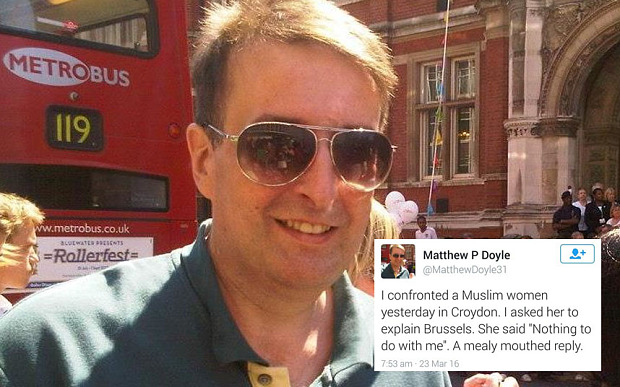
Police charged Matthew Doyle, 46, with a public order offence on Friday amid allegations that he tweeted about confronting a Muslim woman to ask her to “explain Brussels”.

But officers admitted later the same day that the Crown Prosecution Service (CPS) disagreed with their decision, adding that they did not have the legal power to bring the charges in the first place.

A statement released by police in the early hours of Friday morning said Doyle had been “charged under section 19 of the Public Order Act 1986; publishing or distributing written material which is threatening, abusive or insulting, likely or intended to stir up racial hatred”.

[..] But, late on Friday night, the Metropolitan police released a second statement saying that Doyle was “no longer charged with the offence and will not be appearing at court”.

It said: “Police may not make charging decisions on offences under Section 19 of the Public Order Act. There will be further consultation with CPS.”

So Doyle escapes on a technicality, the police (ever eager to respond to busybody public complaints about alleged thoughtcrime but much slower to respond when real crime occurs and your house is burgled) having brazenly overstepped their authority.

No doubt this is a relief for Matthew Doyle, whose initial tweet suggesting that all Muslims bear responsibility for the Brussels attacks, and subsequent inflammatory defence of that tweet, saw his life briefly put on hold and his flat ransacked by the police in their search for “evidence”.

But is this a victory for free speech?

Absolutely not. The fact that these draconian hate speech laws are on the statue book in the first place is an intolerable, long-standing affront to free speech in Britain. And the fact that the Metropolitan Police in London were able to drag a man from his home and hold him in jail when they did not have the authority to do so without suffering any kind of consequence whatsoever – there is certainly no talk of disciplining the officer(s) involved – is despicable too.

We must understand that the battle for free speech is won or lost at the margins. That often means defending the rights of people with truly heinous opinions on all manner of subjects to express themselves, while abhorring what they actually say. In this case, Matthew Doyle is hardly the world’s number one villain. He tweeted something particularly stupid about Muslims in the aftermath of the terrorist attack in Brussels, but he was light years away from cheering on such attacks himself (as many others do), or urging reprisals on all Muslims for what the Brussels terrorists did.

Under no reasonable definition of the word did Doyle “incite” anything at all, except in the minds of those joyless thought police who hold such a low view of humanity that they constantly fret that the public are mindless lemmings liable to being whipped up into a violent mob if they ever encounter a slightly controversial ideas. No, Doyle’s only crime was to be ignorant, and to broadcast that ignorance on social media.

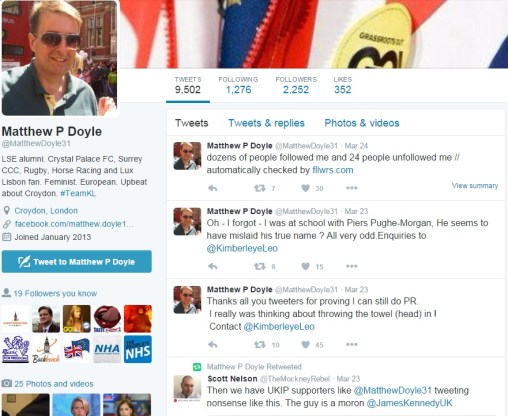
Look at Doyle’s Twitter account page now, a full five days after his arrest and release. There is nothing new. Doyle has effectively been silenced, stopped from expressing his sincerely held opinions – opinions which he is fully entitled to hold, no matter how silly or wrong they may be – after the full weight of the criminal justice system came crashing down on his head one sunny afternoon:

Matthew Doyle - Twitter Timeline - 28 March

The online disappearance of a man who was until now a fairly prolific Twitter user is quite poignant. It shows a case of public idiocy being responded to not with rebuttal, debate, correction and forgiveness, but rather with vengeful mob justice backed by the power of the state. It shows a free voice, however ignoble it may have been in this case, being frightened into silence.

Prior to his arrest, Matthew Doyle was more than happy to interact and debate with the army of online critics who mocked and argued with him. That is how free speech is supposed to work. Bad ideas are drawn out into the open, debated, dissected and discarded. Maybe Doyle would never have changed his views in response to his Twitter critics, but others observing the dialogue unfold may have done. And in any case, it added to the infinite tapestry of our social discourse.

Following his release, there are no new tweets. Any future opportunity for learning, debate or correction has been lost. And all because some moralising busybodies with nothing better to do thought that the best response to seeing something they disliked on the internet was to report it to the police. And because the police, who prefer to sit at desks scouring Twitter looking for thoughtcrime rather than getting out and tackling real crime, leapt at the opportunity to show their PC tolerance by arresting a man for his beliefs.

You don’t need to throw people in prison to create a chilly, hostile environment for free speech and free thought – although there are plenty of people languishing in British prisons simply for saying, writing, posting or singing the “wrong” things, “offensive” things.

You can suppress free speech in a society just as effectively by the threat of public shaming, harassment by the police and potential prosecution under draconian but arbitrarily applied laws. And in the case of Matthew Doyle, the message has been received loud and clear:

Think the wrong thoughts or write the wrong thing on social media, and we will come for you. We are watching you, all the time. Give offence to anyone, intentionally or not, and they have the right to make a criminal complaint about your speech. And in response, the police will come to your house in the middle of the night, bundle you into the back of a police van, take you away and leave you to fester in a jail cell for a day before grudgingly releasing you. Your arrest will be made public, and your reputation will be forever stained as the person whose ideas and opinions were so heinous that they got in trouble with the law. Good luck with the rest of your life and career.

This is Britain. In the year 2016. And this is what now happens to people who say the wrong thing or express an unpopular idea in public or on social media.

And you dare to boast that we live in a liberal, tolerant country which respects human rights and free speech?


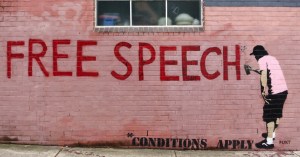
Free Speech - Conditions Apply - Graffiti

Agree with this article? Violently disagree? Scroll down to leave a comment.

Follow Semi-Partisan Politics on TwitterFacebook and Medium.