The O.J. Simpson Effect And Donald Trump’s Die-Hard Supporters

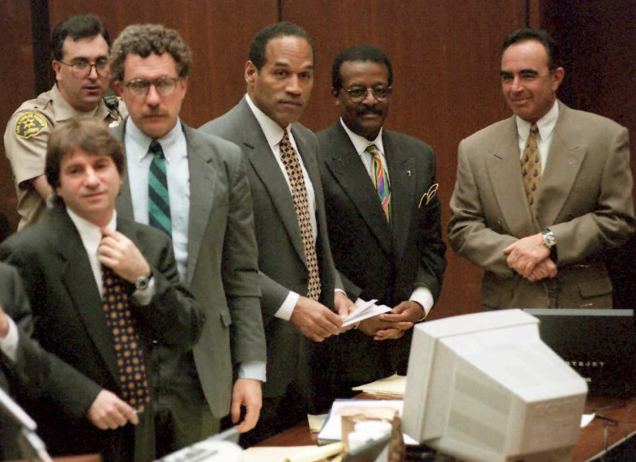
O.J. Simpson (C) and members of his defense team s

Examining the phenomenon of voters who will never reconsider their support for President Trump no matter what he does in office, Andrew Sullivan raises a valid comparison but misses the broader point

I broadly agree with Andrew Sullivan’s assessment of Donald Trump’s presidency thus far (i.e. that it has been a disaster characterised by one self-inflicted crisis after another), while Sullivan’s account of the last week also paints an accurate portrait of a man completely out of his depth:

The White House is barely functioning; legislation is completely stalled; next week’s trip abroad will have everyone watching from behind a couch; the FBI and CIA are reeling; there’s almost no one in the State Department; no presidential due diligence is applied to military actions; the president only reads memos when his name is mentioned in them; a not-too-smart and apparently mute 35-year-old son-in-law is supposed to solve every problem in the country and world; and the press secretary is hiding in the bushes. No one has any confidence that the president couldn’t throw us into a war or a constitutional crisis at a moment’s notice. Nothing this scary has happened in my lifetime.

Sullivan then goes on to ponder why it is that Trump’s devoted base shows no real sign of re-evaluating or revoking their support for the president, and comes up with an interesting analogy:

In some ways, I think the best analogy for Trump is O.J. Simpson. Even if we all know he’s guilty as sin, even if his own supporters see the flimflam behind the claptrap, even if the evidence is staring us in the face, he’ll never lose his core support. For 35 percent of the country, he’ll never be guiltier than the system he’s challenging. The best we can hope for is a Democratic House in 2018 and a grinding, grueling attempt to minimize the already enormous harm Trump has done in the meantime. We can pursue that outcome while hoping our cold civil war doesn’t get hot — because this is beginning to feel like the 1850s.

I was too young (and living in the wrong country) to really understand what was happening or the critical context during the trial of O.J. Simpson in 1995, but I have just finished re-watching the excellent FX television dramatisation “The People vs O.J. Simpson” and the longform ESPN documentary “O.J.: Made in America” – and it seems clear to me that Andrew Sullivan is missing the key lesson from the OJ trial as it pertains to public policy.

Sullivan picks up on the obvious point – that O.J. Simpson was clearly guilty, and that even many of those who proclaimed his innocence actually knew, in their heart of hearts, that the man committed the murders of Nicole Brown and Ron Goldman. So yes, if one wants to keep things superficial then we can join Sullivan in marvelling at the ability of foolish Trump supporters to similarly cast facts and reason aside, motivated by base emotion.

But the real lesson to be learned from the O.J. Simpson case is that no justice system (and by extension, no democracy) can function as it should when there is so much unresolved injustice – real or perceived – within the same system. The OJ murder case took place in the wake of the Rodney King beating and subsequent riots, which themselves took place after years of institutionalised racism within the Los Angeles Police Department. The decision to acquit O.J. Simpson was far more payback for countless previous cases of denied justice than a fair verdict based on the evidence presented at trial. Now, one can rail endlessly against the jury and their decision-making process, but it will do nothing to prevent similar unjust verdicts potentially being reached again in future.

This should be particularly worrying for all of us at the present time, with the Cult of Social Justice and Identity Politics in such ascendancy. With many on the political Left actively seeking to fracture society into competing special interest groups arranged into an intersectional hierarchy of victimhood – a phenomenon which has now escaped the university campus and is beginning to infect the corporate world and other institutions – there has perhaps never been a time when so many have had things so good yet felt so persecuted and oppressed despite their good fortune (just look at any college campus protest).

How will the justice system continue to function in the world of Social Justice, when advancing the interest of one’s own narrowly-defined identity group may increasingly trump the universal need for justice? When even science is forced to bend the knee to progressive gender theory (see Bill Nye the Science Guy’s promotion of Otherkin and forced orgies) what hope can there be for rationality in anything?

Andrew Sullivan is a conservative – or at least he still nominally “identifies” as a conservative. And one characteristic of conservatives is that we generally seek to engage with human beings and the world as they are, rather than as we would like them to be. Unlike the Utopian Left (who have repeatedly flirted with communism, furiously ignoring the fact that such a system inevitably results in tyrannical dictatorship), the Right tend to understand that government and economic policy must work with human nature, not against it. That’s why the Right embraces capitalism – because capitalism harnesses our natural desire for success and monetary reward (the profit motive), and feeds that desire into a system which – to the extent that it is allowed to do its job unimpeded – creates far more prosperity and material abundance for far more people than any other economic system known to man.

With a conservative’s acceptance of human nature, Sullivan should therefore understand that when any given group of people find themselves on the receiving end of perceived injustice for long enough, reason tends to go out the window to a certain degree and people become susceptible to more emotional rather than rational arguments. That’s largely why the O.J. Simpson jury voted to acquit, despite the overwhelming evidence indicating that he was guilty. That’s partly (but not exclusively) why African Americans vote Democrat in such overwhelming numbers, despite the fact that successive Democratic administrations and Congresses have delivered mixed results for them at best. And just to acknowledge that “my own side” are equally vulnerable to this aspect of human nature, it is also partly why a majority of Britons – those with less formal education and those lacking the skills required to prosper in today’s globalised economy – voted against the political elite in favour of Brexit.

You can rail against this human nature all you want – and Andrew Sullivan, having identified that the “O.J. Simpson Factor” is in play appears willing simply to do that – but if you actually want to achieve a different outcome then it is necessary to acknowledge this aspect of human nature and work with it, rather than against it. And in the case of Donald Trump, this will necessarily involve America’s elites actually having to to atone for their manifold failures, which are responsible for giving us President Trump in the first place.

Editor of The American Conservative, Robert Merry, sums it up perfectly:

When a man as uncouth and reckless as Trump becomes president by running against the nation’s elites, it’s a strong signal that the elites are the problem. We’re talking here about the elites of both parties. Think of those who gave the country Hillary Clinton as the Democratic presidential nominee—a woman who sought to avoid accountability as secretary of state by employing a private email server, contrary to propriety and good sense; who attached herself to a vast nonprofit “good works” institution that actually was a corrupt political machine designed to get the Clintons back into the White House while making them rich; who ran for president, and almost won, without addressing the fundamental problems of the nation and while denigrating large numbers of frustrated and beleaguered Americans as “deplorables.” The unseemliness in all this was out in plain sight for everyone to see, and yet Democratic elites blithely went about the task of awarding her the nomination, even to the point of employing underhanded techniques to thwart an upstart challenger who was connecting more effectively with Democratic voters.

At least Republican elites resisted the emergence of Trump for as long as they could. Some even attacked him vociferously. But, unlike in the Democratic Party, the Republican candidate who most effectively captured the underlying sentiment of GOP voters ended up with the nomination. The Republican elites had to give way. Why? Because Republican voters fundamentally favor vulgar, ill-mannered, tawdry politicians? No, because the elite-generated society of America had become so bad in their view that they turned to the man who most clamorously rebelled against it.

These two paragraphs alone do not really do Merry’s piece justice, and I encourage people to read the whole thing, together with Rod Dreher’s follow-up piece.

There seems to exist within the American political and media elite a belief that it will be possible to force Donald Trump from office, either through impeachment, 25th Amendment remedies or coerced resignation, and then simply resume governing in the style to which they are accustomed. This is ludicrous. Donald Trump’s supporters will not take the thwarting of their democratic choice lying down. Trump may be all but guaranteed to fail these people, even if he serves a full two terms as president, but for the Washington elite to effectively engineer a coup against Trump for mere incompetence (smoking gun evidence of direct Russian collusion is another matter, of course) would be to set the social fabric of America, already smouldering, on fire.

In order to put an end to civil unrest and prevent more miscarriages of justice like the O.J. Simpson verdict, the LAPD had to admit to some of their past failings and go through a fairly tortured process to ensure that bad practices and individuals were weeded out of the force. The Christopher Commission (formed in 1991 after the Rodney King beating, but whose effects had not fully taken hold by the time of the OJ murders) was a significant part of this process.

But right now, much of the American elite and political establishment believe that no similar process of atonement and change is necessary. They believe that because Trump is so bad, so unprecedented, that they can agitate for his removal and pick up running the country right where they left off without undergoing any kind of positive reform. And frankly, that notion is absurd.

If one wishes to ensure that the American people never again elect as president somebody with the character, temperament and personal history as Donald Trump, then one must tackle some of the root causes of Trump’s victory. And no, I don’t mean Russian hacking, though Russian influence may have played some as-yet unspecified part.

Rather, the political elite must finally show a degree of empathy for those people whose boats have been submerged rather than lifted by the rising tide of globalisation, and those who hold political, social and religious views which differ from progressive orthodoxy and suddenly find themselves ostracised and labelled “deplorable” as a result. But more than merely paying lip service to these issues, the Washington elite must devise tangible and realistic policies to help these struggling voter constituencies, and demonstrate a plausible commitment to following through with those policies. Only then – if the political elite are willing to take this harsh medicine – can some of the poison finally be drained from American politics.

But Andrew Sullivan doesn’t quite seem to have gotten to this point, still stuck in the phase of scratching his head wondering how Trump’s voter base can possibly be so stupid. This phase is unhelpful, and becomes actively damaging the longer it persists. Nobody behaves entirely rationally all the time, and the phenomenon is by no means restricted to Trump supporters – after all, there is no rationality to be found in that stubborn clique who persist in believing that Hillary Clinton was a wonderful presidential candidate, or those who feel that the European Union is an unquestionably beneficient organisation. We all have our blind spots.

But expecting the country to spurn Trump and accept a return to leadership by the same elites who have presided over such American carnage (yes) in forgotten and unloved parts of the country is to demand that those who have the least make all the accommodations and do all the sacrificing while those who tend to have more are asked to do nothing, give nothing and change nothing.

Donald Trump’s presidency is lurching toward failure, but thus far the dethroned American political elite have done nothing to rehabilitate their standing in the public’s eye; nor have most of them even acknowledged the need to do so.

OJ Simpson had a rock-solid core of support inside the jury room and outside the courtroom for a very clear, identifiable reason which had to be acknowledged and grudgingly tackled by the police and criminal justice system before the racial divide in Los Angeles could even begin to heal. The American political elite are deluding themselves if they believe that they can return to power, normality and stability without going through a similar reckoning of their own.
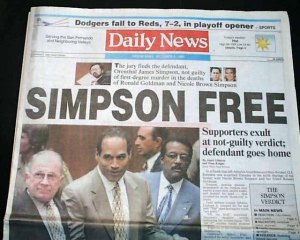
 

OJ Simpson verdict acquittal - Daily News headline

Support Semi-Partisan Politics with a one-time or recurring donation:

Agree with this article? Violently disagree? Scroll down to leave a comment.

Follow Semi-Partisan Politics on TwitterFacebook and Medium.

Article 50 Appeal: How Can The British People Respect A Remote And Opaque Judiciary They Do Not Understand?

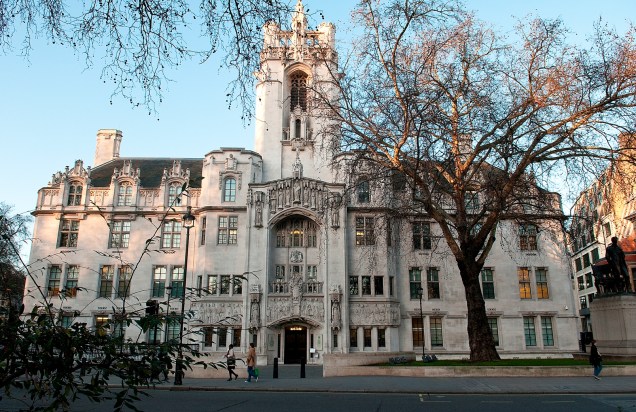
uk-supreme-court-brexit-article-50-ruling-challenge-parliament-mps

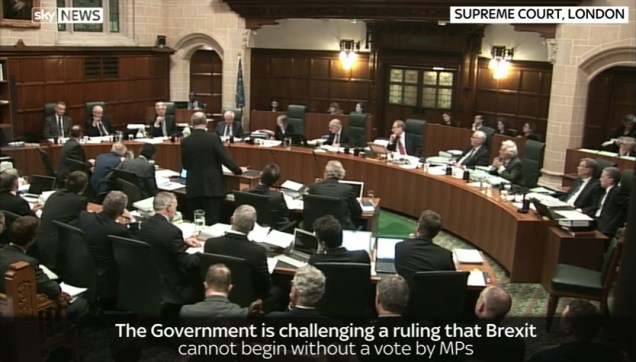
The nation’s eyes were fixed today on the UK Supreme Court as it hears the government’s appeal to overturn a High Court ruling that ministers cannot trigger Article 50 and begin the formal Brexit process without first winning a vote of MPs in parliament. But the arcane, complex and remote British judicial system makes it almost impossible for even informed citizens to follow proceedings or judge the validity of the court’s eventual findings for themselves

Unlike the much more famous United States Supreme Court, the UK Supreme Court is televised – anybody can log onto the court’s website and watch cases being heard via live webcast, including the momentous case currently before the court, in which the government is appealing a High Court ruling that ministers cannot trigger Article 50 of the Lisbon Treaty to formally begin the Brexit process without first gaining the assent of MPs in a parliamentary vote.

And so today the British news channels spent large parts of the day simply broadcasting the goings-on in Court room 1, where the appeal is being heard. Anybody with a passing interest was able to tune in and watch for themselves as the government’s legal team, led by the Attorney General, made their case to the eleven justices (incidentally the first time that all eleven had sat together for the same case).

And yet despite this wall-to-wall media coverage, I doubt that more than a fraction of those who watched any of the proceedings really understood what was happening, or could place the appeal and the arguments being made in the context of Britain’s judicial system and how it fits into our system of government. I include myself in that group of confused onlookers. And if citizens do not understand the basic workings of one of the three branches of government, how are they to know whether the decisions reached are just and legitimate? And how are they to confer their own legitimacy of acceptance upon those institutions?

If a case about mass surveillance makes it to the US Supreme Court, many Americans will automatically recognise that this concerns the Fourth Amendment (forbidding unreasonable searches and seizures of property by government). They may not know much more than that, but the fact that America has a written constitution gives even ill-educated citizens a basic frame of reference when discussing newsworthy legal matters, while a fundamental education in civics teaches them that a president or Congress cannot simply override the rulings of the Supreme Court if they find them inconvenient – and that trying to sidestep the court by amending the Constitution is prohibitively difficult, thus forming one of the famous “checks and balances” in the American system of government.

Contrast this basic civic awareness in America with the dire state of affairs in Britain. Although I do not have an opinion poll to back me up, I would be surprised if one third of British citizens knew that we even had a Supreme Court (it was only founded in 2009, taking over from the previous Law Lords), let alone the names of a single one of its justices.

(Incidentally, the PC Left and rabid practitioners of identity politics are missing a trick here – ten of the eleven current justices of the UK Supreme Court are old white men, with the remaining justice an old white woman. Are these people really the most qualified for the job, or did they get their positions through the chumocracy and establishment connections? Why is there no public confirmation process, to give democratic oversight to the selection of new justices, as there is in America? And yet how many times has the UK Supreme Court been picketed by angry Social Justice Warriors demanding gender and ethnic balance on the court? Never.)

I will be honest and start by admitting that prior to the EU referendum campaign this year, I could only name one justice of the UK Supreme Court – Lord Neuberger, the court’s president. And that’s awful. I write about politics and UK current affairs every day and consume several hours of news on television, the internet and social media besides, but I could only name one person on the bench of the UK Supreme Court. I could speak for hours about the US Supreme Court, its current and past justices and many of the famous cases it has decided, but not so for the Supreme Court of my own country. And if I can’t rattle off a handful of facts and names together with a brief commentary on their respective legal and ideological outlooks, how many people are actually able to do so?

How many laymen – people without a direct professional or personal interest in the workings or judgements of the court – actually do know who sits on the UK’s Supreme Court? How many could explain at a high level how the judicial system works, with the division between civil and criminal court, the work done by solicitors and barristers, and the hierarchy of trial and appellate courts? Or the difference between the Scottish system and that of England and Wales? All that I currently know, I learned from an Introduction to Business Law course while studying at university – there were no civics lessons in the 1990s National Curriculum while I was at school. And many others will not have even received this basic primer.

But how are we to fulfil our potential as informed and engaged citizens when we fail to understand how one of the three major branches of government works? Most people have a passable grasp of the executive and the legislature, even if they don’t recognise the Government and the Houses of Parliament using those terms. But I very much doubt that one adult in twenty could explain the fundamentals of our legal system, let alone the many layered intricacies.

But flip it around. Why would we know how our legal system works, or recognise the major personalities in the British legal scene? And why should we bother to take the time to educate ourselves?

People in America know the names and ideological leanings of the justices on their Supreme Court for a number of reasons. For a start, they take their civics a little bit more seriously on that side of the Atlantic – something that we could learn from.

But more than that, the American legal system is far more responsive to the citizenry than the British system is to us. One major difference is that many local judges are elected. Now, this may or may not be a good idea – and having watched a number of local races for positions on the bench, I have my grave doubts as to the wisdom of elected judges. But you can’t deny that you are likely to feel much closer to the legal system if you have a direct say in who gets to don the black robes.

Even more important is the fact that unlike we Brits, Americans have a written constitution to act as a common frame of reference when talking about legal matters. Even half-educated Americans will talk about whether something is “constitutional” or not, and apply this test to all manner of public policy debates, from government surveillance to gay marriage. This is important, because it gets people thinking beyond the mere fact of whether they agree or disagree with a particular law, and toward the broader question of exactly why the law in question is good or bad. That’s not to say the ensuing debate cannot still be ignorant and intemperate – it often is – but at least everyone is able to take part in the debate along the same parameters.

Consider the Edward Snowden leaks, when one whistleblower’s actions laid bare the extent of secret government surveillance in Britain, America and the other “Five Eyes” countries. In America, the people – outraged at this secret, systemic violation of their privacy – were able to haul officials in front of congressional committees and debate the legality of the government’s actions with reference to the Fourth Amendment, which prohibits unreasonable searches and seizures of property. And in due course, the American government had to make a number of concessions and restrict its surveillance activity. In Britain, by contrast, we had David Cameron and Theresa May pompously telling us that they respect the “tradition of liberty” but are basically going to do whatever they want. And what recourse had we to stop them? None.

Then there is the central role which the US Supreme Court often plays in matters of great social importance in America. In Britain, Parliament’s “elected dictatorship” is the Alpha and the Omega for nearly all significant decisions made in this country – the government can pass or repeal any law almost at will and with no reference to any higher text or law, so long as it can muster the votes in the House of Commons. The courts then simply apply what has been handed down by Parliament, which is sovereign. Refreshingly, this is not so in the United States.

Consider just some of the most famous cases – household names, even to those of us living in Britain. Dred ScottCitizens United. Roe vs Wade. Brown vs Board of Education. We may know next to nothing about American current affairs, but we know that these relate to slavery, campaign finance, abortion and racial segregation. Because in America, the president is not the only person who matters in politics. Nor are the leaders of Congress. The third branch of government matters equally, and how the Supreme Court chooses which cases to hear and applies their interpretation of the Constitution to those cases constitutes a vital check and balance in the American system.

Can you name a comparably important British legal case? They do exist – the Al Rawi case, for example, with its implications for the legality of secret hearings, or Nicklinson vs Ministry of Justice, which confirmed the current illegality of voluntary euthanasia, or the “right to die”. But few people know about these cases or why they are important, because the British legal system is so much more remote and unaccountable to the people.

Finally, there is the question of sovereignty. The United States Supreme Court is the final arbiter of what is and is not constitutional, and therefore applicable to American citizens. It cannot be shunted aside by an impatient government if it holds up or overturns key legislation, and nor can it be undermined from the outside – the court determines for itself which cases it will hear, and a majority decision made by five out of nine Supreme Court justices will then bind the government and lower courts. This goes against everything that the current British establishment – who are only too happy to wreck every institution and overturn any tradition in pursuit of their short term goals – stands for.

But crucially, the US Supreme Court is also not subordinate to any external or foreign body. By contrast, until Brexit is completed, the UK Supreme Court is treaty-bound to defer to the decisions of the Court of Justice of the European Union (CJEU), and must interpret all UK legislation not through the lens of compatibility with a British constitution, but rather to ensure its compliance with EU law and the European Convention of Human Rights.

This begs the question why we as a country do not trust ourselves enough to be the final arbiter of important issues affecting our society. Are we naturally more corrupt, untrustworthy or barbarous than our European neighbours, and in need of constant judicial restraint by our moral betters on the continent? Whatever the answer, the inescapable truth is that legal subjugation to an external, supranational body is the antithesis of national democracy.

So to recap, there exist a number of deficits between the American and UK legal systems in terms of ensuring citizen understanding and engagement with the judicial branch of government, namely:

1. A weaker sense of civic duty and engagement in Britain

2. Greater democratic distance between the people and the legal system in Britain, compared to America

3. Lack of a written British constitution as a common frame of reference when discussing legal matters

4. A much clearer link between decisions made in the US Supreme Court with American social policy

5. Lack of sovereignty: the American legal system is sovereign and subordinate to no external body, unlike the British legal system which (for now) remains subordinate to EU law

But in 2016, in the wake of the Brexit vote and with a key court case relating to the government’s execution of the referendum mandate to leave the EU having reached the Supreme Court, there is simply no good argument for continuing to abide such a remote, elitist and unaccountable legal system as we suffer in Britain. None. Especially when other countries, including our closest ally, have demonstrated a far better approach.

And anybody tempted to sniff haughtily at the American system, with their elected lower court judges and Scopes Monkey Trial culture wars should remember that however passionate and unseemly the public discourse can sometimes be across the Atlantic, this is only because more American people are actually engaged citizens with a moderate grasp of how their country actually works, and therefore confident enough to participate in that process. We should be so lucky to have a system as simple, accessible and easy to explain as they have in the United States.

And it should be a source of great shame to us that our journalists, politicians and private citizens often know more about another country’s legal system through watching Hollywood movies or Law & Order than they do about our own.

Right now, the American public is fixated on the issue of who President-elect Donald Trump will nominate to fill the Supreme Court seat left vacant by the late Antonin Scalia – a first rate mind and writer of opinions and dissents which are accessible and entertaining even to laymen like myself. Americans care about who takes up the ninth seat on their Supreme Court, because unlike Britain, their legal system is clearly more than a plaything of the establishment or a rubber stamp for the government of the day.

The ninth justice of the US Supreme Court may well end up casting crucial swing votes in important matters of human governance in the next decades, such as the right to bear arms in self defence, the right to privacy and the right to free speech. And these decisions could well have tangible, real-world consequences for the 330 million people who live under the court’s jurisdiction.

Elevating the people and the institutions into the public consciousness is not crass sensationalism, as some may charge. On the contrary, focusing on the personalities helps to elevate the issues to a place of prominence in our public discourse, which is exactly what we should be doing here if our own elites were not so busy trying to hide from public accountability anywhere they can scurry – be it behind the black veil of EU lawmaking in Brussels or the bewigged, dusty obscurity of the British legal system.

It will be ironic if it takes a bitter legal dispute over a referendum fought partly over the principle of restoring the supremacy of British laws to force Britain to finally take a proper, critical look at our currently impenetrable legal system. But public interest in legal matters peaks only very rarely, and so those of us who want to see real legal and constitutional reform have a slim opportunity – but also an obligation – to make our case.

For as things stand, a constitution and legal system in force over 3,000 miles and an ocean apart often feels more familiar – and less remote – than our own.

As things stand, the highest court in our country is hearing arguments and preparing to make a decision concerning the most significant political change to come to Britain since the Second World War, yet for most of us, the judges and lawyers may just as well be speaking in Klingon for all that we will learn from the proceedings.

And a legal system which is made deliberately opaque and inaccessible by definition can neither claim legitimacy nor deliver justice, on the Article 50 appeal or anything else.


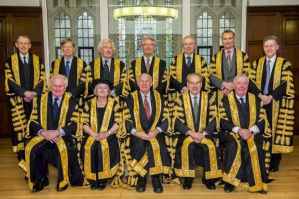
Supreme Court Justices - United Kingdom

Support Semi-Partisan Politics with a one-time or recurring donation:

Agree with this article? Violently disagree? Scroll down to leave a comment.

Follow Semi-Partisan Politics on TwitterFacebook and Medium.

Brexit, Public Protest And The Judiciary

uk-supreme-court

No, criticising legal rulings is not fascism

Right now the internet is bubbling with a lot of nonsense about the role of the British judiciary as relates to Brexit, and though I have my head full of US election news ahead of tomorrow night’s Semi-Partisan live blog, there are a couple of pieces of egregious stupidity which need slapping down.

Today, of course, Nigel Farage made headlines by announcing his intention to lead a march of 100,000 people on the Supreme Court in an effort to demonstrate the public’s supposed strength of feeling about ramming Brexit through without any Parliamentary scrutiny.

From the Telegraph:

Nigel Farage is planning to lead a 100,000-strong march to the Supreme Court to coincide with the start of the Government’s attempt to stop peers and MPs delaying Brexit.

The march, organised by the anti-European Union campaign Leave.EU, will end with a rally in Parliament Square within sight of the court building where judges will be hearing the appeal.

The campaign group is planning to “crowd fund” £100,000 from its supporters to pay for barristers to represent Leave supporters in the court action.

This will mean that the anti-EU supporters will have their own barristers in the legal action, who can challenge claims made by Remain supporters and even the Government.

[..] A spokesman for the organisers said that Mr Farage and Leave.EU millionaire backers Arron Banks and Richard Tice had “secured support from thousands of Leave voters” for the march and legal action.

The march will most likely take place on December 5, which is expected to be the first day of the hearing. The Supreme Court has cleared four days for the hearing which will be streamed live on the internet.

As this blog recently laid out, I am fairly relaxed about the High Court case and the coming appeal to the Supreme Court. If David Cameron’s utterly useless government had a) planned the referendum properly, and b) considered the possibility of Leave winning then all of this might have been spelled out clearly at the time of the referendum, as it should have been.

That being said, MPs are aware of the hellfire which would rightly rain down on them if they seriously attempted to subvert the referendum result; if they now want to give their cosmetic blessing to a high-level instruction to the government to invoke Article 50 then they are welcome to go ahead.

Of course, some people inevitably then take it too far. UKIP leadership candidate Suzanne Evans quickly took to the airwaves making incoherent comments about the need to exercise “democratic controls” (whatever that means) over the judiciary.

From the BBC:

Ms Evans told BBC Radio 4’s Today programme there were likely to be “protests and demonstrations”, but added that these would be peaceful.

She added: “I have a concern that Article 50 is not intended to facilitate nation states leaving the European Union. I think it’s there to frustrate them.”

Ms Evans said she thought the legal process could “water down Brexit”.

She added: “I think it’s amusing that the very same people who say it’s all about parliamentary sovereignty have, for the last 48 years, been trying to undermine parliamentary sovereignty”.

Ms Evans said: “I think there’s a debate to be had about whether or not judges are subject to some kind of democratic control.”

She did not want to undermine “their judicial independence”, but added: “I suppose that in this case, we have had a situation where we have judges committed to stay in the European Union…

“I’m questioning the legitimacy of this particular case. We know that the legal profession threw a collective hissy fit when we voted to leave.”

This is just incoherent garbage. “Democratic controls” could mean anything from moving towards a system where many judges are elected (as in many American states) toward some kind of constitutional fix to prevent judges from ruling to delay or impede the government from carrying out the instructions from this or any future referenda.

At no point does Suzanne Evans articulate what kind of controls she has in mind, which naturally plays into the hands of tremulous Remainers who are lightning-quick to portray any intemperate or ill-considered language from Brexiteers as a sign of the oncoming fascist apocalypse wrought by Brexit.

From the Huffington Post:

Her comments were branded “irresponsible”. by Labour’s shadow Brexit secretary Keir Starmer. “Some of us have worked in countries where judges do as governments tell them and we know that is highly corrosive of the rule of law and democracy,” he told Today.

Starmer said the High Court had simply “upheld the rule of law” by deciding the prime minister did not have the power to trigger Article 50 without a parliamentary vote. “It’s a slippery slope,” he said of Evans’ comments. “Principle is really important here. The rule of law really matters. It underpins this country.”

However Evans said she had not been talking about judges being subject to elections, but instead “pre-appointment and confirmation hearings” and “scrutiny by select committees”.

Typically, hysterical and bitter Remoaners like Coke Zero Conservative Anna Soubry led the way with her cries of “fascism!”:

However, many pro-EU commentators, in their sudden high-minded support for the independence of the judiciary, seem to be suggesting that any form of protest directed at judges or the courts is absolutely unacceptable and fascistic, whatever the reason.

LBC’s notoriously and stridently europhile presenter James O’Brien ripped into the protest, essentially declaring that it is wrong to protest legal decisions and rulings:

Today James gave his reaction to the march and it’s safe to say he wasn’t impressed: “We’re post-truth now…what’s Mr Farage doing? Having a little march to the Supreme Court to complain about British judges enacting British laws in British courts.

“Truly we are down the rabbit hole!”

James continued: “He says to remind people what they voted for. I appreciate your core support is a little bit flaky pal, but I don’t think anyone’s forgotten what they voted for.

“It’s quite incredible. Yet we’re all still standing alongside, going: ‘Oh, I wonder why this is happening.’

“I’m not wondering why this is happening. I know why this is happening. Same reason it’s happened throughout history. You take angry people who feel like they’re not getting a fair deal, give them a false target for their fury and just sit back and watch the whole place burn down.”

Presumably O’Brien feels similarly sickened when crowds of people assemble in front of the United States Supreme Court to protest in favour of socially progressive outcomes, like striking down the Defence of Marriage Act (DOMA). Except we all know that O’Brien would have no problem with such protests. Demonstrating about legal cases is abhorrent and intimidating when Nasty Brexiteers do it, with their thuggish and populist ways, but absolutely fine when the people march under a rainbow flag or advocate for a progressive cause.

But some of the most thin-skinned people of all are those within the legal profession, who apparently feel under assault by Brexiteers and parts of the media in the wake of the High Court decision.

From the Guardian:

The justice secretary, Liz Truss, is embroiled in an extraordinary row with the country’s barristers, after she was accused by the Bar Council of not fulfilling her role as “the conscience of the government”.

Truss has failed to condemn vitriolic attacks on the three judges who last week ruled that parliament must be given a vote before Britain triggers article 50, launching the Brexit process.

Chantal-Aimée Doerries QC, the chairman of the Bar, the representative body for barristers in England and Wales, told the Observer that the cabinet minister had a duty to uphold the rule of law. “[Her job] is sometimes called the conscience of the government and one would expect her to speak out on something like this,” she said.

The high court ruling on Thursday, which the government has said it will appeal, unleashed a torrent of personal abuse directed at the judiciary, with one prominent cabinet member claiming the judges’ decision was “unacceptable”.

Under huge pressure to defend the independence of Britain’s judges, Truss – who is also lord chancellor – issued a terse statement on Saturday, observing: “The independence of the judiciary is the foundation upon which our rule of law is built and our judiciary is rightly respected the world over for its independence and impartiality.”

What more do these wobbly-lipped victims want? The High Court made a decision, and various citizens together with certain press outlets exercised their free speech rights to criticise that decision in loud and forceful terms. Did anybody attempt to physically or mentally coerce the judges who made the ruling? No. Has anybody hatched a plan to neuter the judiciary’s ability to rule in future such cases? No. So what, exactly, does the Bar Council want? Apparently they want to be exempt from criticism. And to elevate the judiciary into such an exalted position would be truly frightening and totalitarian.

If the Bar Council, assorted other members of the judiciary and a coterie of Remainers expect Liz Truss to stop the Big Bad Scary Media from uttering opinions about the validity of legal decisions or the motivations of the people who make them then they really have taken leave of their senses, as well as any conception of the role of a free press in a democracy.

All in all, many Remainers seem to be taking leave of their senses. Those people who never gave the judiciary a second thought but who are now lionising it simply because they delivered a verdict which seems to frustrate some Brexiteers need to realise that the judiciary is not always high-minded and impartial.

The BBC reports that Lord Judge, the former Lord Chief Justice, opined that the Supreme Court should not overturn the High Court’s ruling because to do so might be *perceived* as a victory for the demonstrators:

The justice system could be undermined if a ruling that only Parliament can trigger Brexit is overturned, a former lord chief justice has said.

Lord Judge said it would be seen as a victory for pro-Brexit demonstrators should the Supreme Court reverse last week’s controversial High Court ruling.

[..] Lord Judge, who was the most senior judge in England and Wales between 2008 and 2013 and who is now a crossbench peer, told BBC Newsnight that people were entitled to protest but he was concerned about the impact the case might have on the legal system.

“People can march as much as they like,” he said.

“I don’t think it makes any difference to the judicial decision but it does make a difference to public order.

“Let’s say for the sake of argument the Supreme Court decides the High Court was wrong, it will undoubtedly be conveyed as a victory for the demonstrators.

“It won’t be but that’s what will be conveyed. And if that is conveyed, you’ve undermined the administration of justice.”

In other words, the head of the judiciary from 2008 to 2013 thinks that the Supreme Court should make a decision not based on the law, but rather on a desire to signal to unruly Brexiteers that judges cannot be pushed around. Even if there are found to be legal grounds for overturning the lower court’s decision, Lord Judge believes that the Supreme Court should allow error to go uncorrected in order to put the people in their proper place.

And yet criticising these people or displaying the slightest scepticism about their motivations and objectivity is apparently tantamount to fascism.

Give me a break.


European Union - United Kingdom - Britain - Flags

Support Semi-Partisan Politics with a one-time or recurring donation:

Agree with this article? Violently disagree? Scroll down to leave a comment.

Follow Semi-Partisan Politics on Twitter, Facebook and Medium.

On The Article 50 Ruling

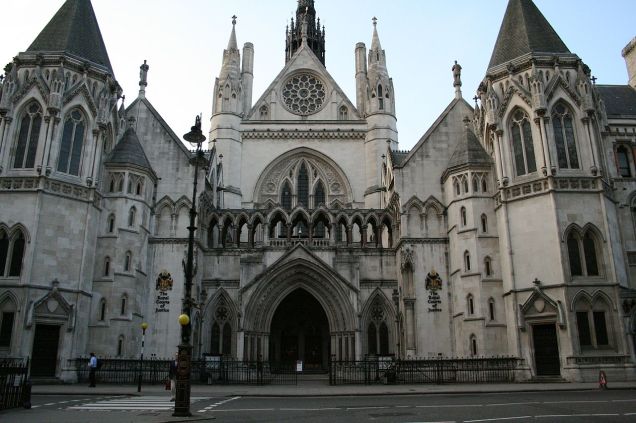
royal-courts-of-justice

Everybody calm down

So as was always a possibility, the High Court has ruled that the government does not have the authority to initiate Britain’s secession from the EU by invoking Article 50 of the Lisbon Treaty without first winning a vote in Parliament.

From the Guardian:

Parliament alone has the power to trigger Brexit by notifying Brussels of the UK’s intention to leave the European Union, the high court has ruled.

The judgment (pdf), delivered by the lord chief justice, Lord Thomas of Cwmgiedd, is likely to slow the pace of Britain’s departure from the EU and is a huge setback for Theresa May, who had insisted the government alone would decide when to trigger the process.

The lord chief justice said that “the most fundamental rule of the UK constitution is that parliament is sovereign”.

A government spokesman said ministers would appeal to the supreme court against the decision. The hearing will take place on 7-8 December.

The lord chief justice said: “The court does not accept the argument put forward by the government. There is nothing in the 1972 European Communities Act to support it. In the judgment of the court, the argument is contrary both to the language used by parliament in the 1972 act, and to the fundamental principles of the sovereignty of parliament and the absence of any entitlement on the part of the crown to change domestic law by the exercise of its prerogative powers.”

Unless overturned on appeal at the supreme court, the ruling threatens to plunge the government’s plans for Brexit into disarray as the process will have to be subject to full parliamentary control.

Starry-eyed, anti-democratic campaign group New Europeans are naturally delighted by this development, which they see as the first step toward overturning/ignoring the EU referendum result and ploughing on as though their hateful and spurned vision of a federal continental union had not just been summarily rejected at the ballot box.

Moments ago this cautiously triumphant missive from New Europeans pinged into my inbox:

This only adds to the political challenges for those of us who are determined to stop Brexit come what may.

If Theresa May decides to call an early election as a result of the legal challenges, we will find ourselves with a new parliament elected with a huge Conservative majority and a parliamentary mandate to deliver Brexit.

In this scenario, there will be no chance of a second referendum on the deal. Britain will be out of the EU in no time and there will be no way back. The best we could do would be to secure safeguards for EU citizens already here and Brits in Europe through our campaigning in Brussels.

On the other hand, if Theresa May is able to start the negotiations and bring the deal back to the current parliament, it is plausible that she will not be able to carry a majority for her Brexit deal, particularly if it is a hard Brexit deal (as seems likely), the cost of which will be truly “titanic”.

Failure to secure a parliamentary majority on a Brexit deal will mean a new election and provides the opportunity for a second referendum on whatever deal she negotiates. That would not be a referendum like the last one on the question “Do you like migrants?”. It will be a referendum on the cost of Brexit and I predict that the public will vote over-whelmingly to stay.

There is a huge job to do if we are serious about stopping Brexit. One of the key arguments in the legal challenge must continue to be the focus of our campaigning. It is not acceptable for the government to remove the individual rights of citizens by way of a referendum.

The rights that EU citizens – and all British citizens are currently EU citizens- will lose on Brexit mean that from a legal, moral and political point of view Brexit should not be allowed to go ahead.

From a moral point of view? When will these preening, sanctimonious euro-moralists get over themselves?

Meanwhile, Pete North takes the news in his stride:

The government will appeal. I’m pretty relaxed about it to be honest. The vast majority of Tories will fall in behind May and Article 50 will pass even if it scrapes a majority. There is no question of it not being invoked. The main sticking point will be a parliamentary demand that Mrs May pursue membership of the single market which she is in all likelihood planning on doing anyway. Why they are bothering I don’t know since Mrs May can make no guarantees. If they do manage to block it by some obscure means then they are basically signing their own death warrants and I think they know this. No MP would ever be safe in public again. From an anti-establishment perspective either suits me fine. If they want to spit on Brexit then they are basically declaring open war on the public. That’s a battle they lose every time.

I’m inclined to agree. Any Remainer celebrations are premature in the extreme. Even assuming the government loses its appeal to the Supreme Court (and unlike some angry Brexiteers I do not claim to be enough of a British legal scholar to know whether or not the case deserved to win on its merits), Parliament would almost certainly not stand in the way of the referendum result, no matter the posturing of some pro-EU MPs.

I don’t really remember the Poll Tax riots toward the tail end of Thatcher’s government. I mean, I remember seeing stories about it on the news, but since I was only eight years old the political ramifications of what I was seeing rather eluded me. But despite my hazy memory, I think it is safe to say were MPs (and it would have to include many Labour MPs representing constituencies which voted to leave the EU) to vote against giving the government authority to invoke Article 50, the resulting conflagration would make the Poll Tax riots look like a summer picnic on Hampstead Heath.

Never mind the constitutional ramifications, and the bizarre state of limbo into which Britain would fall, caught between an instruction from the people to secede from the EU and the petulant demand of MPs to remain. That is nothing compared to the wave of fire and fury and civil disorder that would (rightly) be unleashed upon Parliament, the political class and those MPs responsible.

Now, in our benighted age it is true that we suffer a number of MPs of less than exceptional intelligence and ability. But even the slowest of the crop are capable of grasping that when push comes to shove, they do not want their final act on Earth to be telling the British people, including many of their own constituents, to go to hell – that we should pipe down, forget about independence from the EU and meekly listen to the instruction of our superiors.

Let the legal process unfold as it may. If putting the ball back in Parliament’s court  gives Remainers who now suddenly fetishise British parliamentary sovereignty (after having been happy to watch it relentlessly undermined through our years of EU membership) a furtive thrill, or helps to shore up their denial, then so be it.

They will find the survival instinct of the British political system is much stronger than their ongoing child’s tantrum about being parted from their beloved European Union.


European Union - United Kingdom - Britain - Flags

Top Image: Steve F E Cameron / Wikimedia Commons

Support Semi-Partisan Politics with a one-time or recurring donation:

Agree with this article? Violently disagree? Scroll down to leave a comment.

Follow Semi-Partisan Politics on Twitter, Facebook and Medium.
Constitutional Originalists Are Right To Oppose Donald Trump And Fear Him More Than Hillary Clinton

american-us-constitution

For some Constitutional Originalists, there are worse things than a potential Hillary Clinton presidency

The Weekly Standard has an interesting article by Terry Eastland, recounting a conversation with Stephen Sachs of Duke Law School, in which Sachs made the Constitutional Originalist case against Donald Trump.

Originalists – typified by the late Supreme Court Justice Antonin Scalia – are those who believe that when deciding cases or evaluating potential laws, the Constitution should be interpreted in the context of how the text was commonly understood by society at the time of writing. They are the opposite of Living Constitution advocates, who believe that the US Constitution is a “living and breathing” document which should be continually reinterpreted in line with changing moral values and societal views.

Eastland writes:

Originalists Against observes that the Constitution vests in a single person the executive power of the United States but contends that “we would not vest that power in Donald Trump,” in light of his “character, judgment, and temperament.”

Originalists Against also doubts that Trump would do as the president’s oath of office (itself in the Constitution) requires, and protect the Constitution. Trump has “shown [himself to be] indifferent or hostile to the Constitution’s basic features—including a government of limited powers, an independent judiciary, religious liberty, freedom of speech, and due process of law.”

The statement identifies several instances of this constitutionally indifferent and hostile Trump. The president must take care that the laws be faithfully executed, but Trump admires dictators as above the law. The president must hold a public trust on behalf of all Americans, but Trump courts those who would deny to others the equal protection of the laws. The president must preserve, protect, and defend the Constitution, but Trump has treated the legal system as a tool for arbitrary and discriminatory ends, especially against those who criticize him or his policies.

And Eastland summarises:

“Originalists Against also does not trust Trump to respect constitutional limits in the rest of his conduct in office, of which judicial nominations are only one part.” Here the signatories recognize that because a constitutional government is necessarily a limited government, political actors may not simply do as they wish.

Of course, none of this means that Hillary Clinton is anything like a principled Originalist herself – quite the opposite. Only at the last presidential debate against Donald Trump, when the subject of nominating Supreme Court justices was raised, Hillary Clinton immediately started waxing lyrical about the importance of selecting judges who would be partners in achieving progressive change. She sees the judiciary as wielding an explicitly political role which of course is the absolute last thing that a good Supreme Court nominee should do.

As this blog summarised the exchange at the time:

Chris Wallace’s first question is about the Supreme Court, and where both candidates “want to see the court take the country”. He follows on to ask whether they believe the Constitution is a living document or set in stone.

[..] Hillary Clinton immediately politicises the Supreme Court, saying that it should stand on the side of “the people” (meaning her leftist policies). I’m sorry, but no. The Supreme Court should stand on the side of the Constitution, not on the side of whatever basket of special interests Clinton decides to label “the people”.

Clinton sees the Supreme Court as an essential vehicle for continual, aggressive social change, far beyond anything that can be reasonably inferred from the text of the document and the original intent of the Founders. Not good.

But it is encouraging to see the Originalists Against Trump movement place fidelity to America’s fundamental governing document over narrow political interest. One cannot imagine that many of the Originalists are enthusiastic Hillary Clinton supporters, yet they seem principled enough to declare that some things matter more than the outcome of a single presidential election:

Trump says he will pick individuals with views of judging like Scalia’s to the Supreme Court and the lower courts. Advised by the Federalist Society and the Heritage Foundation, he has compiled a list of 21 prospects for the Supreme Court among whom he could choose in filling vacancies, starting with Scalia’s seat.

[..] The problem would not appear to be with any of the 21 on his list—the originalists have not doubted them—but with Trump himself, whom they do not trust to do what he says. Here again character is the concern.

Originalists Against thus are willing to accept a Clinton presidency even if that means a Clinton Court. Says the statement: “Our country’s commitment to our Constitution is not so fragile that it can be undone by a single administration or a single court. Originalism has faced setbacks before; it has recovered. Whoever wins in November, it will do so again.”

This chimes with my own thinking. I’ve been clear all along that I find this US election an unpalatable but obvious choice. In many ways Hillary Clinton represents a continuation of everything that is bland, uninspiring and statist about American politics – but she is the kind of bad that America as endured before and can endure again if necessary. Or as PJ O’Rourke recently put it, “she’s wrong within the normal parameters of wrong”.

With Donald Trump, by contrast, you just don’t know. What we do know of his policies and instincts suggest a frighteningly authoritarian mindset which doesn’t sit any more comfortably with American liberty than Hillary Clinton’s reflexive statism and faith in Big Government. And there is much that we still don’t know about Trump, like when his miraculous Damascene conversion from being a Clinton-admiring Democrat to a strident nationalist actually happened, and if it is even for real. Never mind whether Donald Trump’s policies are good or bad – at this point we don’t even know whether or not they are just a cynical act.

Ultimately, my thinking comes down to this: one should not take risks with the US Constitution. Of course it is likely that Hillary Clinton would do her best to pack the Supreme Court with as many “Living Constitution” acolytes as new vacancies permit over her four or eight years in office, which would be a mostly bad thing in terms of policy outcomes and a comprehensively bad thing in terms of the law. But I have no faith that Donald Trump remotely respects the Constitution either; in fact, I think it is far more likely that Trump would seek to override or subvert the Constitution in a fit of pique than would a machine politician like Hillary Clinton.

Originalists Against Trump seem to recognise this danger too, and no matter how much some of them may prefer the policies and attitudes currently being expressed by Donald Trump, they know better than to trade their support for the Constitution for any potential short-term political gain.

Which makes Originalists Against Trump one of the most principled and selfless actors in this entire tawdry presidential election season.


us-constitution-convention-signing

Top Image: Pixabay

Support Semi-Partisan Politics with a one-time or recurring donation:

Agree with this article? Violently disagree? Scroll down to leave a comment.

Follow Semi-Partisan Politics on TwitterFacebook and Medium.