Love Our NHS? Prove It With Your Vote In The EU Referendum, Continued

Brexit - NHS - European Union - EU Referendum - Brexit

If you are deciding how to vote in the EU referendum based on what the rival campaigns are telling you is best for the NHS, you’re doing it wrong

The stupidity and incompetence of the Vote Leave  campaign reached such desperate lows today that at this point, I can no longer really blame anyone who has not been paying much attention to the EU debate thus far if they end up voting Remain. Heck, if I hadn’t been writing about politics every day and following the debate for years, I might well do the same.

After all, why put your trust in the Leave campaign, the people proposing a departure from the status quo, when the leaders of Vote Leave are conducting their campaign with all the political aptitude of the slow sibling from a well-connected family whose parents were grasping around trying to find something productive for them to do with their lives, and gave them the fate of our country to play with.

And so today we get this much-trumpeted open letter from “more than fifty” healthcare workers, telling us that only by voting Leave can we Save Our NHS.

The letter reads:

Dear Sir,

The NHS is a great British institution that families rely on in times of need. But as it slips into financial crisis the NHS itself needs some urgent attention.

The NHS is being asked to make huge cuts at a time of rising demand. Patients are having to wait longer for treatment, hospital deficits are increasing and doctors are on strike after being told they must take a pay cut. The Government must accept responsibility for this – they have starved the NHS of necessary funding for too long.

If we Vote Leave on 23 June we will be able to spend more on our priorities like the NHS. If we put the billions that currently go to EU bureaucrats into the NHS instead it would hugely improve patient care. For example, the £350 million a week we hand to Brussels is similar to the entire yearly Cancer Drugs Fund budget.

As healthcare professionals who have worked for the NHS for years we believe that the best choice in the EU referendum is to Vote Leave on June 23rd and save the NHS.

List of signatories

Well, I suppose it’s marginally better than the ludicrous suggestion that we use the money we supposedly save to whack up a brand new fully staffed hospital every week until there are ten mega hospitals in every town and ninety percent of us are employed by the NHS.

But still, what a bunch of utter nonsense this letter (and the decision to campaign off the back of it) is. Not only does this fail the “common sense” test, it fails the “does anyone at Vote Leave have any measurable brain activity at all” test.

The NHS is one of the largest organisations in the entire world, and the fifth largest employer with over 1.7 million people on the payroll. Rounding up fifty NHS workers to put their names to a letter supporting either Brexit or the Remain campaign means absolutely nothing – one could just as easily circulate a letter and get fifty signatures from NHS employees who believe they have been abducted by aliens, demanding a massive budget appropriation to build space lasers to keep us safe.

Furthermore, it would be utterly naive to base a geopolitical and constitutional decision like Brexit on the gut feeling of a bunch of people who not only work in an entirely unrelated field, but who toil for an organisation so large and all-powerful that it positively screams “vested interest” and “deeply ingrained bias in favour of the status quo”.

Besides, a bunch of predominantly conservative politicians and activists not known for their doe-eyed devotion to the NHS suddenly going prancing around the country acting like the health service’s greatest defenders is not going to fool anyone. By a huge majority, the most committed devotees of the NHS are the same people who will unthinkingly vote to stay “in Europe” come hell or high water. Worshipping at the altar of Nye Bevan doesn’t do great things for one’s critical reasoning skills, after all.

All of this time spent repeating the risible notion that only by voting Leave can we Save Our Blessed NHS is time that could be spent – oh, I don’t know, maybe promoting a comprehensive plan for a safe Brexit with the minimum of disruption. A plan which would instantly negate 90% of David Cameron’s fear-based Remain campaign and really bring this campaign to life.

But why do that, when Matthew Elliot and Dominic Cummings are more than happy presiding over their children’s finger-painting exercise of a campaign, preaching to the already converted and singularly failing to tackle any of the counterarguments quite rightly thrown in their faces by David Cameron and Britain Stronger in Europe?

Fortunately there is another shadow Leave campaign – an underground resistance, if you will – who are intent on fighting this referendum with facts, and who understand that the public rightly expect those who advocate for Brexit to have put some thought into what Brexit should look like.

I am never more excited and hopeful for the future of this country than I am when I read their work. Please follow The Leave Alliance, share their articles and (if you are able) donate to their all-important fundraising efforts. Every pound raised helps to spread the message further.

Semi-Partisan Politics will be diverting any kind contributions made to this site to The Leave Alliance from now until the conclusion of the campaign.

 

European Union - United Kingdom - Britain - Flags

Top Image: Daily Express

Agree with this article? Violently disagree? Scroll down to leave a comment.

Follow Semi-Partisan Politics on TwitterFacebook and Medium.

The Furore Over David Cameron’s Tax Affairs Reveals Britain At Its Worst

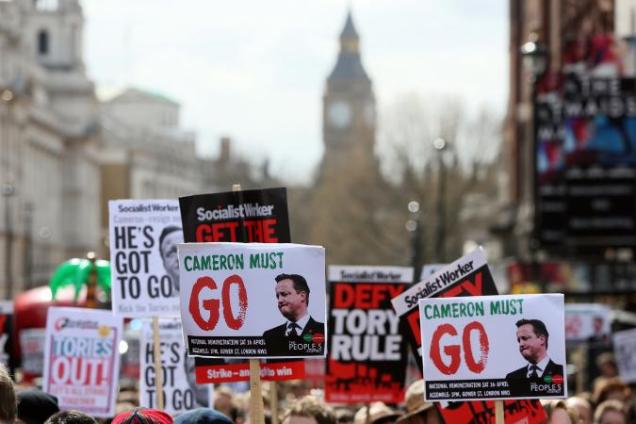
David Cameron Tax Protest - Panama Papers

Responsibly lowering his tax liability through perfectly legal means is one of the few things that David Cameron has accomplished with any real competence. If only his stewardship of British sovereignty and democracy was half as accomplished, his premiership might not be such a letdown

No, I’m not going to write about David Cameron’s tax return, because despite the sound and fury emanating from the Paul Mason, “neo-liberalism” hating Left, it is a complete non-story.

That much is outlined well enough here, here, here and here.

This blog is more than happy to discuss tax reform – preferably of the fundamental and flattening kind – but not through the lens of our national envy and hatred of wealth and success. Because this tawdry intermission in our political conversation serves only to highlight all of the flawed parts of our national psyche – particularly the disdain bordering on hatred many people feel toward wealth and success – while fading out everything that makes us great.

Of course there are privileged people in this country with wealth and resources that the poorest among us can only dream about. But every moment we waste casting envious eyes at those with more than us, bemoaning our own lot in life and viewing ourselves as part of a vast Collective of the Oppressed and Hard Done By is a moment we are not accepting the agency and responsibility we have for our own lives and decisions.

Should we be outraged that the legal, private tax affairs of an elected politician somehow set a bad example? Okay – but only if we are really willing to go down a path that ultimately will lead to witch-hunts of anybody who fails to “voluntarily” donate 90% of their income to Our Blessed NHS (genuflect).

Bear in mind, many of those shouting the loudest themselves are guilty of the same (or worse) behaviour, cynically (and hypocritically) attempting to use this story to advance their political agenda. And in terms of Cameron’s mishandling of the media story, are we really going to focus on this one particular instance and not the many other clangers? I could write a blog post every day for a year about why David Cameron is a lousy conservative and a disappointing prime minister, and still not get around to talking about his family’s mundane tax affairs.

So if you want to read a furious polemic about the Evil Tories and their inherited wealth, look elsewhere – Owen Jones and Paul Mason will take good care of you. Likewise if you want to read a simpering, fawning defence of the prime minister.

Our country faces an existential choice in the coming EU referendum while the liberal, enlightenment values which we supposedly hold dear are under attack everywhere from GCHQ to social media to the university campus.

And so long as that remains the case, this blog will focus on the things that matter, not the shiny distractions which only serve to reveal our petty biases and jealousies.


Panama Papers - Mossack Fonseca - Tax Avoidance Evasion

Top Image: Newsweek

Bottom Image: BBC

Agree with this article? Violently disagree? Scroll down to leave a comment.

Follow Semi-Partisan Politics on TwitterFacebook and Medium.

When Deciding How To Vote In The EU Referendum, Do Your Own Research – All The Information Is Out There

It is becoming fashionable among the undecideds in the EU referendum campaign to complain about the supposed lack of available facts in the debate. But they don’t want facts – they want to be spoon-fed opinions and simultaneously reassured that these answers are unbiased

There is a rather nauseating new trend among those people who have somehow not yet come to an informed opinion on whether or not Britain should vote to leave the EU, whereby they blame their inability to reach a decision on the supposed lack of available facts handed down to them from on high.

We even see this cropping up in Question Time, as the Independent reports:

With 113 days until the EU referendum – that’s more than 15 weeks away – levels of stamina among the public for the flow of information being directed at them seem to be waning.

And when the opening question of BBC’s Question Time was on how much the referedum’s outcome would depend on “which side could scare us more”, one audience member put the problem laid before the country in very clear terms.

A young man said the decision to continue or terminate the 40-year relationship all rested on wondering who could be trusted to give impartial, accurate information.

“With all this scaremongering that’s going on in the media about this, I don’t see how us as the general public can make an informed decision,” he said, prompting nods from those around him.

[..] In the light of such risks, the audience member seemed to be concerned that he was given little information with which to make a safe and long-term decision.

“It’s just all sides saying different things and you just don’t know who to believe,” he said.

Boo hoo. It’s so difficult for undecided voters today, bombarded with passionate (but often fact-free) arguments from both sides. How can they possibly be expected to vote when the government and the meejah don’t give them a clear and unambiguous signal?

The amusing thing is that the young Question Time audience member asking the question would probably have absolutely no difficulty using the internet to research a complex and technical query relating to his malfunctioning Playstation or home cinema system. He is likely adept at finding YouTube tutorials which show how to disassemble and repair household appliances, and if he has a favourite sports team, band or celebrity he can quite likely find all manner of information about them online with no difficulty at all.

But when it comes to the workings and operation of his own country and the European Union which influences so many aspects of his life, it apparently does not occur to the questioner that he can use exactly the same skills he honed researching his fantasy football team to turn up some relevant, unbiased facts about the EU. The thought simply does not compute. When it is something glitzy and fun, he is more than willing to spend five minutes consulting Google and a few hours reading through the results that his search throws up. But on “boring” matters like the governance of the EU, what the European Union might look like in the future or how Brexit might actually be accomplished, he loses focus before he can finish typing a query into the Google search bar.

Of course he is not getting unbiased information from the media. Playing the role of high-minded, neutral arbiter has not proven to be very successful for most media outlets, nearly all of which instead churn out content which plays to the gallery of their readerships. That’s life. But it does not mean that the primary information needed to reach an informed and independent opinion is unavailable. It just means forsaking Monday Night Football or the Great British Bakeoff for one night and using the internet or local library to make oneself a more informed and engaged citizen.

EU referendum blogger Pete North has by far the best response to these aggrieved undecided voters who flaunt their ignorance of the debate as though it is an injury inflicted upon them by evil external authority figures withholding “the facts”:

I watched Question Time last night. I heard that whining bovine complaint once more “I just want to be given the facts”, expecting that it’s the government’s job to spoonfeed them with information, under the assumption government can and will. Could they be any more bovine?

As it happens, the facts are available insofar as anything is ever truly a fact. On something as comprehensive as the EU there is all the information you could possibly want. And while you can say a lot of bad things about the EU, one thing we can say is that it is transparent. It publishes most of what it does, the schedules, the regulations, the meeting minutes, the agendas and the agreements. It’s all there if you can be bothered to look for it. I didn’t learn what I know by reading John f*cking Redwood.

And when it comes down to it people say they want the facts but they don’t. You can give them the facts but it’s always “tl;dr”. So they want a digest version of the facts. So you provide them with that and it tells them things they don’t want to hear – and so they stick with their ridiculous notions that either we can pull out overnight and comes the dawn of a new utopia – or on the other side the europhiles pretend the European Union IS that new utopia.

What people mostly want is to be told what to think. To have someone else make the decisions. To not let the complexity of life disturb their comforting ignorance. It’s the “I pay politicians to do the politics” attitude. THAT is how we get in these messes to begin with. Politics is too important to be delegated to these bozos and if this referendum has revealed anything it is that most of our elected representatives are intellectually subnormal and know f*ck all about nine tenths of anything.

In the end, to have a proper democracy participation requires more than just turning up to vote. It requires that you educate yourself, keep yourself informed, keep yourself up to date and find the facts for yourself – and especially that you do not rely on the media – after all our media are very much part of that political class with even less clue than the morons we elect. If you can’t be bothered to engage on that level you really do deserve everything you get from your “leaders”.

It is a lazy, naive idea that we can outsource the running of our country to elected politicians and only perk up and pay attention once every five years or so when there is a general election. As Pete North rightly says, that is how we got into this mess in the first place – people failing to hold their leaders to any kind of account, while the politicians did as they pleased.

If you want to be told what to think by the government or those in authority, don’t complain when David Cameron comes back with a one-sided, pro-EU propaganda leaflet costing the taxpayer over £9 million to produce and distribute. That’s what you get for outsourcing your decision-making processes to people with vested interests.

But at least if you do so, you are in plentiful (I won’t say good) company. Neither the official Remain or Leave campaigns are exactly brimming over with deep expertise on the workings of the European Union, in which direction the EU will travel or the logistics of achieving Brexit.

Fortunately, there are those who stopped watching television for long enough to educate themselves on this important subject. A number of them have become experts in the subject, certainly far more so than the Westminster media with its superficial grasp of the facts, all while holding down day jobs. They are the the bloggers of The Leave Alliance, and the plan they promote for leaving the European Union in a safe, orderly and non-disruptive way is called Flexcit, or the market solution.

Start with that. Or start with the European Union’s own websites – as Pete North says, much of this information is “hidden” in plain sight. Begin your search for facts in any number of places, just don’t repeat the whiny, false complaint that there is no factual information available.


Postscript: The irony is that facts and figures supporting either side are not the most important thing in this referendum, while economic projections are particularly unreliable to the point of being pure fiction. This blog contends that the EU referendum comes down to more qualitative factors like democracy, sovereignty, governance and constitutional reform, which simply cannot be calculated in an Excel spreadsheet.


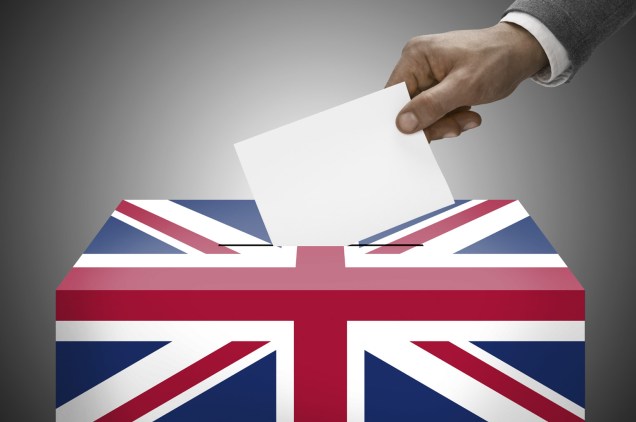
European Union - United Kingdom - Britain - Flags

Agree with this article? Violently disagree? Scroll down to leave a comment.

Follow Semi-Partisan Politics on TwitterFacebook and Medium.

William Hague’s Bizarre Critique Of Donald Trump

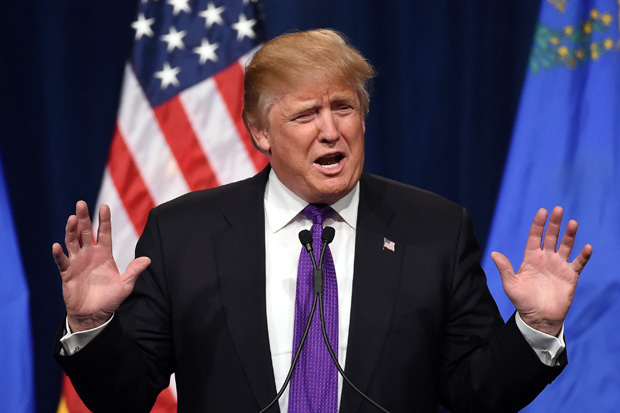
Donald Trump Hosts Nevada Caucus Night Watch Party In Las Vegas

William Hague is just the latest media personality to use Donald Trump’s presidential candidacy as an opportunity for virtue-signalling, rhetorical target practice

William Hague is getting rusty.

The former Conservative Party leader has already shredded his reputation among real conservatives through his shameful support of David Cameron and the Remain campaign. And now, added to that, his latest column on the US presidential election is written with all of the insight of someone who has been paying no attention to the American political scene for years, and is basing their hastily-written column on all of the most tired generalisations from a British television news report.

Whatever happened to the sparklingly witty and intellectually nimble political personality who could keep the House of Commons spellbound (or laughing uncontrollably) with his skills as a raconteur? Perhaps that side of William Hague is curled up in the foetal position, rocking backwards and forwards in shame and incredulity at what the europhile side is up to.

Hague begins with this remarkable statement about the main factors which should disqualify Donald Trump from becoming president of the United States:

Two characteristics make Trump fundamentally unfit to be president: his attitude to women and the way he treats rivals. The first of these, including crude and offensive remarks about female interviewers and candidates, shows deeply patronising instincts.

This isn’t just foul manners. It really matters because the way to liberate the greatest quantity of untapped talent in the 21st century is to achieve the full social, political and economic empowerment of women. Having a leader of the world’s most powerful country who shows no recognition of that cannot be a good idea.

His insulting response to rivals is another disastrous weakness in a potential global leader. The belittling of political opponents – “Lying Ted”, “Little Marco” and so on – shows no grasp of the fact that any president must work with them in Congress the minute he or she is elected. Even worse, Trump’s bullying attitude to other countries – telling Mexico it will have to pay for a wall along its border – would be utterly counterproductive and diminish the power of the USA by destroying its moral authority and crucial ability to persuade others to act.

Of all the things that Hague could have picked as Donald Trump’s disqualifying features, he chooses to virtue-signal and cite Trump’s view of women – as though Trump’s public attitude to women is any worse than, say, JFK’s attitude and behaviour were in private. Of all the things about Trump that Hague can think of, his frequent obnoxiousness is deemed the most serious.

Nothing to do with Trump having no functional knowledge of trade or foreign policy. That’s fine, according to Hague – President Trump can pick all of that stuff up on the fly. But God forbid that the next occupant of the Oval Office says off-colour, crass things about people (despite claiming to have “the best words”).

Hague even goes on to specifically mention some of Trump’s more outlandish statements on foreign and defence policy, so it is not as though he is unaware of them:

When Trump says that South Korea and Japan should have their own nuclear weapons, rather than rely on America, and that the US should stop funding Nato, what he is advocating is the collapse of the entire security architecture of the western world. But the people voting for him and such policies are telling us that they are fed up with paying for the defence of other countries who do very little to look after themselves.

[..] Trump’s other main policy with an impact on all of us is trade protectionism: he wants to impose swingeing tariffs on imports from China and Mexico, and withdraw from new trade agreements. This would be another disastrous act. It would result in widespread retaliation against American products, higher prices for consumers, and lower growth for the world. For Britain, the ninth largest exporter in the world, such policies would be very bad news indeed.

But apparently itching to provoke a trade war and undermining the security structure which has protected the West since the Cold War – with no clear plan for its replacement – is less of a disqualifying factor than Trump’s ongoing feud with Fox News anchor Megyn Kelly.

Hague’s broader point – that by supporting Donald Trump, his voters are sending an important message about longstanding, unresolved problems with the American economy – is a fair observation, though it is one which has been made by many other commentators (including this blog) for some time now and so hardly counts as original.

The awkward truth, of course, is that one of the primary drivers of the rise of populists like Donald Trump is the way that mainstream politicians have comported themselves, behaved in power and failed to govern on the platforms on which they ran for office. It is unsurprising that William Hague makes no mention of his, because he is a prime example of the kind of politician who pushes voters toward populists.

William Hague built a career and a reputation out of eurosceptic posturing. Yes, those who paid attention a little more closely could discern that Hague’s euroscepticism was not of the same nature or intensity of that of, say, Iain Duncan Smith. But Hague was nonetheless happy to hoover up eurosceptic support by making the right noises against Brussels and in favour of British sovereignty – right up until his stunning betrayal of the Brexit movement.

Similarly, the establishment Republicans now shunned and held in derision by Trump supporters also have a record of campaigning and posing one way, but acting in quite another. GOP voters have been let down in turn by cynical politicians cosying up to evangelical Christians and promising them the world, but then failing to prevent the enormous recent social changes in America. They have also been let down by the GOP’s brand of faux fiscal conservatism, which preaches the necessity of belt-tightening and cuts but often succeeds only in cutting taxes for higher-earners and exploding budget deficits.

Meanwhile, the Rick Santorum-esque wing of the Republican Party have either pretended that every American is a job-creating millionaire in waiting or talked about solidarity with the American worker while watching the American middle class getting squeezed and then decimated by the forces of globalisation without enacting a single proposal to help them make the adjustment to the new economy.

William Hague is right when he says “my experience of 30 years of elections is that when you think voters might have gone mad, they are actually trying to tell you something”. Unfortunately, what Trump voters are saying is that they are heartily sick of being lied to and peddled shiny promises of a New America which never come true.

Hague can focus on Trump’s abrasive and sometimes obnoxious personality all he wants, but it will not assauge his guilty conscience nor change the fact that his decision to support the Remain campaign in Britain’s EU referendum means that he himself has become just another flip-flopping politician of the type which feeds, not dampens, populist insurgencies like that of Donald Trump.


William Hague - Parliament

Top Image: The Spectator

Agree with this article? Violently disagree? Scroll down to leave a comment.

Follow Semi-Partisan Politics on TwitterFacebook and Medium.

The Liberal Case For ‘Leave’

EU Referendum - Brexit - Democracy

The European Union is an obsolete and rusting vessel – a dreadnought in an age of guided missile destroyers – holed beneath the waterline by the forces of globalisation

If you have not already done so, be sure to read Roland Smith’s excellent new article for the Adam Smith Institute, “The Liberal Case for Leave“.

Smith, a newly-minted Fellow of the ASI, begins with an excellent summary of the context in which Britain joined the EU in the first place – which also has the effect of showing what a vastly different country we are now than we were at the nadir of our post-war, pre-Thatcher decline:

Let’s bypass the line that says the UK electorate were sold the then EEC on a false premise. Instead let’s look at the circumstances in Britain around the time we joined the EEC and then agreed to stay as a result of the 1975 referendum.

Back then Britain was a country beset by nagging economic problems that were coming to a head: The constant stop/go policies of the post-war period that seemed to only inch us forward while the likes of Germany and Japan seemed to leap ahead; strikes; power cuts; rations even; union power; consensus politics; corporatism; and the 3-day week. Opinion favouring free markets was out on the political fringes.

On a longer view, Britain was a country in decline. Since World War II and particularly since the Suez crisis of 1956, Britain’s empire and its confidence had declined as it grappled with a new post-imperial future. The USA and the Soviet Union were the two blocs that now mattered in the world, each having their own large economic trading zone (the USA itself and Comecon).

Indeed, large and protected blocs seemed to be the future and the EEC was apparently forging a third bloc and third way between these two giants, albeit aligned to the USA.

Then there were the walls.

The most visible walls were the Berlin Wall and the Iron Curtain separating the Soviet Union from the West but there were also significant tariff “walls” between blocs, countries and trading areas. These walls not only demarcated different geographic areas, they reinforced the separateness of those areas, limited trade, and ultimately put a limit on economic progress. The tariff walls in particular defined economic blocs but also made the case for them, creating an impulse for relatively like-minded countries to club together to at least forge a level of economic freedom among themselves.

Smith rightly summarises the prevailing attitude of the time:

Being “for Europe” symbolically represented a future, outward-looking, cosmopolitan and internationalist mindset. It confirmed that you were part of the new jetset or had aspirations in that direction. It was about “getting on”.

Smith goes on to note that Britain joined the EEC just at the time when all of the old certainties which underpinned it began to show the first signs of corrosion – the decline and fall of the Soviet Union bringing an end to the necessity of regional super-blocs, and the decade of negotiations which led to the creation of the World Trade Organisation in 1995.

With the beginning of significant reductions in global tariffs and even the emergence of many new nations, the European Union – a protectionist customs union with explicit and long held aspirations for statehood – was already falling behind the times, as Smith describes:

Unseen and barely discussed in the 1990s, globalisation was beginning to eat into the logic of a political European Union at the very point it was striding towards statehood with a single euro currency.

Looking back, the EU was (and is) an old ideology in a hurry.

The event that was somewhat more attuned to freer globalised trading was the fanfare around the launch of the single market in 1992, except for the fact that it was and is tied to the EU’s political integrationist ambitions. But now, even the European single market is being rapidly eclipsed by the march of globalisation. A large and growing body of single market law is now made at global level and handed down to the EU which in turn hands it down to the member states.

The automotive industry’s standards are defined by the World Forum for the Harmonisation of Vehicle Regulations (known as WP.29) under ‘UNECE’ – a United Nations body. Food standards are defined by the ‘Codex Alimentarius’ established by the UN and the World Health Organisation. Modern labour regulations are defined by the ILO – the International Labour Organisation. Maritime regulations are defined by the International Maritime Organisation. Many energy-related regulations can be traced back to the global Kyoto accord on climate change and other international agreements.

Read the whole article. Roland Smith covers an extraordinary amount of ground in his essay, including more sense on immigration policy than you will ever hear from the official Leave and Remain campaigns.

While the EU’s furtive aspirations for statehood are misguided and abhorrent, many of the ways in which the European Union has developed were born not out of particular malice toward the sovereignty of its member states but merely as the result of being perpetually stuck in an increasingly irrelevant post-war mindset. Unlike many rent-a-copy diatribes against the EU, Smith captures this nuance well.

If we are to succeed against the odds in securing Brexit in this EU referendum, it will not be the alarmist cries about impending dictatorship or the abolition of the NHS which secure victory.

Reasonable, moderately engaged people – those with vague eurosceptic thoughts but who are minded to vote Remain because of the Fear, Uncertainty and Doubt kicked up by the government that those with vested interests in keeping things as they are – are most likely to be persuaded to Vote Leave if they are told that the EU is not necessarily the Great Satan, but rather a hopelessly outdated mid-century anachronism thrashing around and drowning in the sea of globalisation.

Given the choice, people will quickly vote with their feet when it comes to safely evacuating a foundering ship. Which is why the Remain camp are doing their utmost to portray the EU as a faithful and seaworthy vessel, albeit one in need of a lick of paint here and there.

This important article by Roland Smith – as well as outlining a bright and positive liberal vision for Brexit – also sounds a timely warning that RMS European Union has essentially been holed below the waterline by the iceberg of globalisation and is already steadily taking on water, regardless of the course it now chooses to steer.

And the fact that the lights still burn and the band plays cheerily on as the water laps ever higher around the deck is no reason for Britain to foresake the waiting lifeboat on offer.


European Union - United Kingdom - Britain - Flags

Agree with this article? Violently disagree? Scroll down to leave a comment.

Follow Semi-Partisan Politics on TwitterFacebook and Medium.