Many People In Britain Deserve Sympathy. Labour’s Centrist MPs Do Not.

The sycophantic Westminster media identify and empathise much more with Labour’s centrist MPs than the ordinary people who make up the party membership. And it shows.

In a rather nauseating review of Theresa May’s first outing in Prime Minister’s Questions, The Spectator’s Steerpike column gushes with sympathy for the rebellious Labour centrist MPs perched behind (and around) Jeremy Corbyn:

In recent weeks, Jeremy Corbyn’s popularity has hit a new low with the Parliamentary Labour Party. Things are so bad that he is unable to assemble a full Shadow Cabinet — instead having to assign some people with more than one position.

So, it was an interesting move of the Labour leader to bring up job insecurity and difficult bosses at today’s PMQs. Corbyn suggested that Theresa May had much work to do when it came to making employment rights fairer. Alas, the Prime Minister was unimpressed with Corbyn’s complaints. Channeling her inner Thatcher, May went on to suggest that it was he who was the guilty one when it came to inequality in the work place.

The Spectator goes on to quote the new prime minister’s (admittedly very effective) withering putdown of Corbyn:

‘I’m interested that he refers to the situation of some workers who might have some job insecurity and potentially unscrupulous bosses. I suspect that there are many members on the opposition benches who might be familiar with an unscrupulous boss.

A boss who doesn’t listen to his workers. A boss who requires some of his workers to double some of their workload. Maybe even a boss who exploits the rules to further his own career. Remind him of anybody?’

This is all part of a dismally familiar effort in the Westminster media to paint Labour’s rebellious centrist MPs as the wronged and oppressed group, and Corbyn as their unlikely tormentor in chief (when if anything it is clearly the other way around).

The Spectator – and they are far from alone – expect our hearts to brim over with sympathy for the poor Labour centrists whose ineptitude made Jeremy Corbyn’s rise possible in the first place, and who now stomp around Westminster mutinously, trying to destroy the mirror which Jeremy Corbyn holds up to their faces, showing them their own vacuity.

This is a fawning, sycophantic attitude which screams “screw the people and the Labour Party membership! What really matters are the hurt feelings and stymied career aspirations of 230 members of the Westminster political class, people who didn’t go to Oxbridge, secure prize political internships and shimmy their way up the greasy pole only to find their dreams of a Cabinet career dashed because their party is locked out of power for a generation.”

That’s not to say that Corbyn is some kind of faultless, saintly figure. Far from it. But while his ideology may have been plucked unreformed from the 1970s, it is at least coherent and sincerely felt. The same cannot be said for the restive cohort of centrists who are so busy trying to find an “electable” alternative that policy and passion and principle barely register at all.

Post-Brexit, it seems to be fashionable for well-connected journalists, commentators and intellectuals to publicly muse about the possible reasons for the anti-establishment rage simmering at the surface of British politics. Why oh why have the British people stopped listening to the expert opinion of their betters in the Establishment, goes the frequent cry. Why have the people lost faith in the political class?

Hint to the Spectator: journalists openly fretting about the mental welfare of supposedly poor, downtrodden centrist Labour MPs rather than the genuinely poor and downtrodden squeezed middle and working classes goes a long way toward explaining this impenetrable riddle.


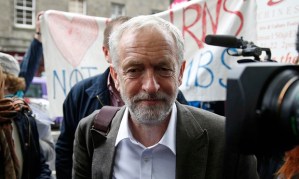
Jeremy Corbyn - PMQs

Support Semi-Partisan Politics with a one-time or recurring donation:

Agree with this article? Violently disagree? Scroll down to leave a comment.

Follow Semi-Partisan Politics on TwitterFacebook and Medium.

The Hypocrisy Of Centrist Labour’s War Against Jeremy Corbyn

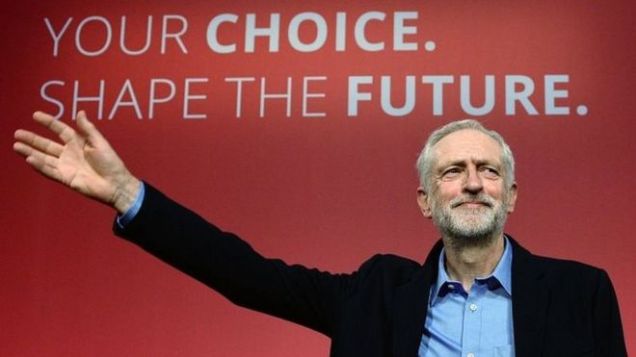
Jeremy Corbyn - Labour Party Leadership - Your Choice Shape The Future

Jeremy Corbyn wants power so that he can do something with it. His rebellious centrist MPs also want power, but are unable or unwilling to articulate what they want to do with it

For a blog with solidly conservatarian credentials such as this, Semi-Partisan Politics seems to be spending an awful lot of our time defending somebody who is about as doggedly, severely left-wing as it is possible to be.

And yet I must continue defending Jeremy Corbyn against the onslaught of outraged centrist criticism and juvenile student-union style plots to unseat him, because this blog will always choose principle over self-interested triangulation. And because most of the criticisms of Jeremy Corbyn emanating from centrist Labour reveal a lot more about their author than they wound their target.

The latest establishment type to come gunning for Corbyn is Nick Cohen, writing in The Observer:

Anyone can be against austerity and poverty, spin and the Westminster bubble, the bankers and the corporations, if there is no price to pay. Students can project their hopes on to the blank slate Corbyn offers them. Old soixante-huitards and the militants of the Thatcher era can refight the battles of their youth as painlessly as the Sealed Knot refights the Civil War. Wykehamist Marxists can stand shoulder to shoulder with exhibitionist celebrities; wild intellectuals with the justifiably furious shop stewards.

Empty leftism gave Corbyn control of the Labour party, but little else. He has the lowest popularity rating of any opposition leader in history. The public sees a political movement that doesn’t want to govern them and does not much like them either. Government necessarily involves the trade-offs the far left pretends need never trouble us. Labour’s founding constitution of 1918 said its first purpose was to establish and retain, in parliament and in the country, a political Labour party. The far left has to reject it because it can never win elections without losing its illusions.

As the opposition collapsed last week, Paul Mason insisted that Labour must be transformed from a party that seeks to govern into a “social movement”. Mason, along with Michael Gove, Boris Johnson and Milne, is part of a group of journalists who have poisoned public life by taking braggart swagger and cocksure certainties of newspaper punditry into politics. But in this instance, he was authentically reflecting “the people” or, rather, that tiny section of “the people” who pay £3 and click on a link to show they agree with him.

[..] Vacuity leads not only to political impotence but political fear. Uncomprehending hatred fills the empty space where policy should be and brings with it the threat of violence that hovers above Labour like yellow cigarette smoke in a Munich beer hall. It was thought that the killing of Jo Cox might alter the mood. But the misogyny, homophobia, antisemitism, death threats, rape threats and insane conspiracy theories against Labour MPs endure. The foul climate shows that Corbynism has sociopathic consequences. When his supporters believe that all they need do to oppose austerity, the bankers, etc, is to say they are against them, then, by definition, their opponents cannot have honest objections, only evil intentions. Like sin, they must be purged.

There is so much to unpick here that it is difficult to know where to begin. Let’s start with the stuff which we can agree on. Paul Mason and Seumas Milne are indeed nasty, toxic people and a scourge on British politics. They accrue cult-like followings based on peddling glib and superficial critiques of their targets (capitalism, conservatism, America, Britain, wealth, success or whatever else riles them up on any given day).

But for Nick Cohen to speak of the “vacuity” of the Corbynite Left is hypocritical in the extreme. The only reason that Jeremy Corbyn was able to come to power in the first place was that the mainstream, centrist Left had nothing – absolutely nothing, tumbleweeds – to say to their traditional working class base, or to those who are feeling the pinch from globalisation and a future filled with insecure, low-paying jobs.

Blairism in a time of plenty just about worked – one could simply shovel more and more people into the arms of the welfare state, declaring them unfit for work and then forgetting about them, while lavishing exorbitant sums on unreformed and terminally dysfunctional public servives like the NHS. And so long as economic growth continued at a fair clip, the day of reckoning could always be postponed, one more day, and another, and another.

But Blairite/Brownite/Milibandism simply doesn’t butter any parsnips when there is no money left. Because now you have a huge swathe of the population who have been raised to be dependent on government, even taught that such subsistence is their “human right”, up in arms because this support structure has either been ripped away from them or pared back due to more stringent means-testing or benefit freezes. And suddenly, hearing some well-heeled member of the metropolitan left-wing elite claiming to sympathise with your plight while not doing the first damn thing to change it doesn’t produce an overwhelming desire to vote for that leader (Miliband) or party.

Nick Cohen talks about the vacuity of Labour’s left-wing, but what about the centrists? These are people who, despite their continued denunciations of Corbyn and accusations that in less than year he has failed to flesh out a detailed and fully costed policy platform, haven’t come up with a single alternative policy platform of their own (just like Ed Miliband’s policy platform was a “blank sheet of paper” at this stage of his own leadership).

Surely if it is now such a crime for a Labour leader to not have a fully costed and worked out policy platform, the centrists vying to unseat Corbyn must be brimming over with whole policy suites and agendas of their own. Surely they know exactly what tax reforms they would enact, who would be punished and whose wallets would be fattened. Surely they know exactly what to do about the NHS, in more detail than simply shovelling more money at that insatiable organisation. Surely they have comprehensive plans for pensions, welfare, defence, education, trade and industry.

But we know that the centrists have none of those things. When Angela Eagle hit the TV studios last weekend to launch her leadership challenge, she failed to name a single area of policy disagreement with Jeremy Corbyn, despite being asked numerous times. Owen Smith was marginally better when he launched his own campaign a couple of days ago, but hardly came out of the starting blocks with his pre-printed manifesto ready to go. Why? If Jeremy Corbyn’s leadership is so ideologically extreme, surely it should be the easiest thing in the world to highlight just a few clear examples where an Eagle/Smith led party would chart a different, more centrist course?

The fact that they do not is damning evidence that the centrists are every bit as vacuous as they accuse Corbyn of being. They, too, want to pretend that endlessly bountiful public services can be funded at no cost to anyone through the munificence of the magical money tree. They too want to make every citizen’s passing whim their immediate and sacred “human right”. They too plan to worship at the sacred altar of the NHS, singing endless hymns of praise to St. Aneurin Bevan of Tredegar without doing a damn thing to improve health outcomes for Britons.

Therefore, what we are now witnessing from Labour’s disgruntled centrists (and their media mouthpieces like Nick Cohen) is not some earnest, pragmatic criticism that Corbyn is failing to grapple with the real issues facing the country. No. It is simply an aggrieved and self-entitled howl of anguish that somebody other than them is getting a turn at calling the shots.

Given time, Jeremy Corbyn will undoubtedly come out with a manifesto just like every other party leader has done before him. This blog will doubtless disagree with nearly all of it. It will probably involve re-nationalisation of flagship industries like rail and energy, massive tax hikes on the wealthy and cuts for the poorest, massive injections of borrowed money into public services and infrastructure on the spurious grounds that such investment will “pay for itself”, the immediate cooling of the special relationship with the United States and much more power to the trades union. We may even see strengthened rights to strike and a greater emphasis on national collective bargaining as John McDonnell goes all out to recreate the 1970s.

Such a manifesto will, it hardly needs to be said, not win Labour a general election against anybody, least of all a Conservative Party which continues to hew shamefully to the centre under the leadership of Theresa May. But it will at least be ideologically coherent, even as it is scorned.

What will the centrists’ alternative Labour manifesto contain? We don’t know, because they haven’t told us yet. And why haven’t they told us the kind of policies which they will advocate? Because their focus groups haven’t told them yet. And because their PR people haven’t worked out quite how the likes of Angela Eagle and Owen Smith can best continue advocating for the unacceptable status quo while making it sound like they are being fearsome, revolutionary reformers and champions of the poor.

The day that this blog will give the time of day to some self-entitled, born to rule centrist from Labour’s metropolitan middle class clerisy is the day which they come packing a serious, heavyweight alternative policy agenda which amounts to more than Cameron/May centrism with an added dash of sanctimonious waffle about equality and fairness.

Until then, and so long as the current Labour leadership stands for demonstrably different values and policies to the stale centrism which has led us to this present cul de sac (and no matter how much this blog may disagree with those values), this blog remains planted in Jeremy Corbyn’s corner.


Jeremy Corbyn - PMQs

Top Image: BBC

Support Semi-Partisan Politics with a one-time or recurring donation:

Agree with this article? Violently disagree? Scroll down to leave a comment.

Follow Semi-Partisan Politics on TwitterFacebook and Medium.

The Church Of England’s Tantrum Over The EU Referendum Result Is Insulting To Brexit-Supporting Christians

Bishop Robert Innes - EU Referendum - Remain - Brexit - European Union - Christianity

Nearly a month after Britain’s historic vote to leave the European Union, swathes of the Church’s leadership are stuck in furious denial

This blog had very little time for the Revd. Dr. Robert Innes, the Church of England’s Bishop of Europe, before the EU referendum and Britain’s shocking, wonderful decision to leave the EU. But it has even less time for his incessant, self-pitying (and democracy-loathing) moaning in the weeks since that historic vote.

The Archbishop Cranmer blog reports:

“Let me be clear,” said the Rt Rev’d Dr Robert Innes, Bishop of Europe, as he addressed the General Synod of the Church of England. “From my European perspective, this Referendum and its result represent a sad loss of national vocation; an abject failure of political leadership; and a squandering of the birthright of our young people.” And Synod applauded their Euro-prophet for a full 10 seconds, seemingly oblivious to the fact that lay Anglicans voted for Brexit in their droves (and by a majority). “Britain seems to be a country anxious to build fences,” he added, before reminding the people of God that his task as a bishop is to build bridges. Not to the wider world, it seems. Or even to the 22 nations of Europe which aren’t in the European Union, which includes the supremest bridge Pontifex himself, all neatly fenced off in Vatican City State. But Dr Innes’ task as a bishop is to build bridges to the other nations of the European Union, and without political union he is seemingly bereft and hindered from doing so.

Cranmer goes on to highlight Bishop Innes’ complete and utter disregard and disdain for the pro-Brexit opinions of many lay Christians:

The Bishop of Europe acknowledges that some in his Diocese were pleased with the Referendum result, but he doesn’t tell their stories. They are sidelined, disdained and ignored: they don’t quite fit the Bishop’s narrative of shame, anger and deep sadness. “One older man in Paris said to me: ‘I have never been so ashamed of my country.’ A lady in Geneva said to me: ‘I have found it hard to stop being angry.’” There’s no apprehension of joy, liberty, hope or optimism: no awareness of the abundance of bridges we can now build into the whole world. For the Bishop of Europe, British identity and national vocation were wrapped up in ever closer political union: there is no refuge or strength to be found in Brexit.

Christians who voted to leave the EU did so for a variety of reasons, and none of them is worthy of less consideration than the shame of the old man in Paris or the anger of the lady in Geneva. Do we not also seek to cooperate and fellowship with other churches in Europe? Do we not pray to avoid harm and relieve suffering? Are we any less concerned with human rights, the common good or injustice? Are we incapable of loyalty to brotherhood and respect for authority? Is our ethic simply one of nationalistic purity, individualism and xenophobia?

[..] Is there not an echo in our historic national vocation of looking out to the seas and saving Europe from herself? Rather than being an abject failure of political leadership, might Brexit not represent a noble and commendable success? Instead of squandering the birthright of our young people, might we not just have preserved their ancient rights and liberties as freeborn Britons?

One wonders exactly how long the British political and cultural establishment – of which the Church of England is a firm member – can go on being openly, seethingly contemptuous and angry at the British people without finding themselves on the receiving end of an eventual backlash which will make Donald Trump seem the epitome of polite restraint.

The way which those people of privilege and wealth (such as bishops, newspaper columnists and politicians) have conducted themselves since the EU referendum, staggering around the political landscape rending their garments and gnashing their teeth in despair at the prospect of being separated even an inch from their beloved European Union, is enough to induce nausea. It is particularly offensive when such arrogant and self-pitying emotions burst forth from people who fatuously claim to care about the whole of society while reserving a particular duty of care to exactly the type of disenfranchised, economically suffering people who voted for Brexit in their droves.

It is almost enough to make one pine for the days when the establishment merely ignored the concerns, priorities, hopes and dreams of ordinary people as the elite ravenously pursued their own interests. To a poor Christian, it was likely enough of an insult and stretching of Christ’s teaching to be ministered to by a disinterested bishop who lives in a mansion and sits in the House of Lords while they have to trudge five miles to the food bank. Now, as punishment for daring to vote for Brexit, now they must endure the same gulf in circumstances while also being harangued and accused of small-minded racism by some pampered upper middle class oik who uses the collection plate offerings of thousands of other economically struggling Christians to ride the Eurostar first class to “build bridges” with Europe while the social fabric of his own country continues to crumble.

How, one wonders, does the Church of England expect to survive when too few of its bishops follow the example set by Mark Rylands, Bishop of Shrewsbury, who approached the EU question fairly and with the interests of the world’s poorest at heart rather than the interests of Britain’s ruling elites, and determined that Brexit was best for British democracy and for the world’s poor?

How does the Church of England expect to survive when the face it presents to the nation (and its own congregations) too often resembles the contemptuous face of Bishop Robert Innes, horrified by the great unwashed in all their uneducated xenophobia, and the democratic decision they made to leave the European Union?

Quo usque tandem abutere, episcopus, fides nostra?


Christianity - Europe - EU - Brexit

Support Semi-Partisan Politics with a one-time or recurring donation:

Agree with this article? Violently disagree? Scroll down to leave a comment.

Follow Semi-Partisan Politics on TwitterFacebook and Medium.

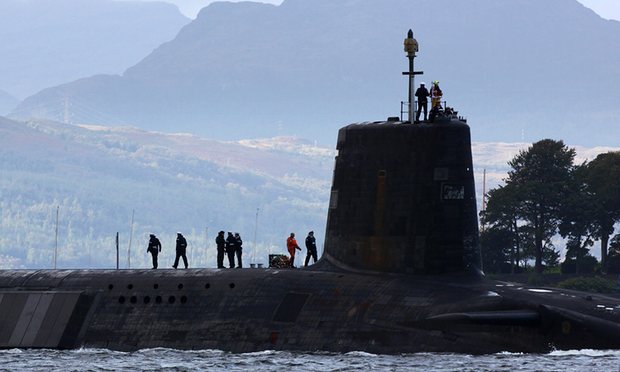
Why MPs Must Vote To Renew Trident

Vanguard class submarine - Royal Navy

This is no time for woolly idealism or virtue-signalling. Britain’s independent nuclear deterrent must be renewed if Britain is to maintain its status as one of the world’s pre-eminent nations

Tulip Siddiq, the MP for the London – Hampstead & Kilburn constituency and my local MP, sent an email last week encouraging appealing for her constituents to send their views on the renewal of Trident, which Parliament is debating today.

And fair credit to Tulip Siddiq for doing so, rather than simply voting based on any prior ideological views she may have held on the subject. This was the email she sent:

As you will be aware, on Monday 18th July next week MPs will be voting on the renewal of Britain’s Trident nuclear missiles system.

I am deeply disappointed that the Government has rushed through this measure without the chance for proper debate. We are set to have just a day’s debate in Parliament over a spending commitment that will cost billions of pounds throughout its lifetime, and I would have hoped for the chance for much better scrutiny. We still do not have the wording of the motion which we are expected to vote upon.

Nevertheless, I am duty-bound to vote on this issue, and in just a matter of days I will have a momentous decision to make as your local representative. As with the vote on Syria last year I am keen to hear the views of all local residents – on both sides of the debate – ahead of this important vote.

As residents who have written to me about this in the past will know, I have consistently queried the cost-effectiveness of the Government’s plans and raised testing questions with Ministers about the options for renewal.

Given the pressure on our public services and the bleak economic outlook ahead, I think it is vital that Labour redoubles its efforts to scrutinise every penny of public spending and balance our security needs with our country’s other priorities.

I think that you – local taxpayers in this constituency – are best-placed to advise me on how you feel this money should be spent. Just as I did with Syria late last year, I will take the time to look through every comment I receive on this issue ahead of the vote, and you can expect me to respond comprehensively setting out my position in due course.

And here is my response to Siddiq:

Dear Tulip,

Parliament must vote to authorise the renewal of our nuclear deterrent as a matter of the utmost importance. Contrary to the claims of those who favour unilateral disarmament that Trident is an expensive white elephant which we never use, in fact we use our nuclear deterrent every single day, at great benefit to our nation.

Trident benefits Britain in the following ways:

1. Planting the sure knowledge in the mind of rulers of hostile regimes that a nuclear or otherwise catastrophic attack on Britain will be met with a full nuclear response – a deterrent which served us through the Cold War and which nobody should vote to scrap at a time when we can barely guess what threats we will face in 5-10 years time, let alone the medium to long terms

2. Our nuclear deterrent gives Britain a seat at the geopolitical “top tables” and underpins our seat on the P5 of the UN Security Council. The priority of every government (and every MP) must surely be to ensure that Britain’s voice and influence is projected as powerfully and clearly as possible in the world. Scrapping or downgrading our nuclear deterrent would put our permanent seat on the Security Council at risk, immediately making Britain less relevant in world affairs. This will directly harm our interests because, frankly, being a consequential player in the UN helps Britain in a myriad of tangible and intangible ways touching diplomacy, trade and military alliances.

3. Unilateral disarmament by Britain will do absolutely nothing to prompt a sudden outburst of peace or a change in the attitude of Russia and China, the non-allied nuclear powers. Vladimir Putin and Xi Jinping would take unilateral disarmament by the UK, put it in the bank and give nothing in return. CND activists and Green campaigners would effectively be virtue signalling their moral purity while Britain’s security and national interest were jeopardised.

4. Britain’s insatiable public services will swallow any money diverted from Trident and then still ask for more, with little money actually reaching the front lines and no great increase in performance metrics over the long term. One could throw billions of pounds more that the NHS and other public services, and newspaper headlines will still talk about how they are perpetually “in crisis”. In fact, throwing more money at public services only serves to paper over the cracks, delaying the eventual reckoning which we need to have regarding the NHS, pensions and other services. Is it really worth killing our nuclear deterrent, deliberately maiming our stature on the world stage just to feed the public services bureaucracy with the extra 0.2% of government spending which the Trident renewal will cost over its lifetime?

I hope that you will consider these points as you consider your approaching vote, and I look forward to your response.

Interestingly, the Conservative candidate defeated by Tulip Siddiq in the 2015 general election was a wishy-washy, vague Coke Zero Conservative who disagreed with the “bedroom tax” and who wanted to scrap Britain’s nuclear deterrent altogether. Shamelessly adopting these left-wing positions did not help him much.

As a “rising star” of the Labour Party and with one eye doubtless fixed on her future political ambitions it will be interesting to see which way Siddiq decides to vote this evening.


Trident Nuclear Submarine - Faslane Naval Base

Top Image: Guardian

Support Semi-Partisan Politics with a one-time or recurring donation:

Agree with this article? Violently disagree? Scroll down to leave a comment.

Follow Semi-Partisan Politics on TwitterFacebook and Medium.

Jeremy Corbyn, His Place Confirmed On The Leadership Ballot Paper, Declares War On The Centrists

Jeremy Corbyn taunts centrist Labour MPs with a subtle repudiation of Neil Kinnock’s 1985 party conference speech denouncing Militant Tendency

After avoiding a party stitch-up to prevent him from automatically going forward into the Labour leadership ballot, Jeremy Corbyn and his supporters have been taking something of a victory lap.

The Labour NEC’s decision prompted the valedictory video shown above, hosted on the official Jeremy Corbyn YouTube channel and promoted on the Labour leader’s social media accounts.

In the video, Corbyn concludes his remarks:

Our party is determined that the next government will meet the needs of all of the people of this country. That will invest in health, in housing, in education, in jobs, in infrastructure.

The next government will be a Labour government – a Labour government– committed to ending the injustice and inequality that exists in Britain today.

My emphasis in bold.

I highlight this phrase because I do not believe it was accidental. In fact, I believe it was a direct and very deliberate reference to former party leader Neil Kinnock’s 1985 speech to the Labour Party conference, in which Kinnock (in a bid to make his party more electable) denounced the far-left Liverpool city council and the Militant tendency wing of the party.

Here’s what Kinnock said in 1985:

I’ll tell you what happens with impossible promises.  You start with far-fetched resolutions.  They are then pickled into a rigid dogma, a code, and you go through the years sticking to that, outdated, misplaced, irrelevant to the real needs, and you end up in the grotesque chaos of a Labour council – a Labour council – hiring taxis to scuttle round a city handing out redundancy notices to its own workers.

Jeremy Corbyn’s choice of repetition (“a Labour government – a Labour government”) in his address today is, I am certain, not coincidental. On the contrary, it is a direct reference to Neil Kinnock’s speech and a repudiation of Neil Kinnock’s work in the 1980s to drag the Labour Party closer to the political centre (Corbyn himself was part of an effort to depose Neil Kinnock from the leadership in 1988).

By flagrantly co-opting Kinnock’s turn of phrase, Corbyn is defiantly stamping his own authority on the Labour Party. Corbyn is making clear that he is the Labour Party now, for all intents and purposes, and that the party of Kinnock, Smith, Blair, Brown and Miliband has passed away.

Anybody entertaining any lingering wistful belief that Jeremy Corbyn will “do the right thing” and slink away “for the good of the party”, letting the centrists resume their rule without a fight, should now abandon all hope.

This is Jeremy Corbyn’s party now. And he is here to stay.


Neil Kinnock’s 1985 party conference speech – highlight:


Jeremy Corbyn - Labour Leadership Election - Victory Nears

Support Semi-Partisan Politics with a one-time or recurring donation:

Agree with this article? Violently disagree? Scroll down to leave a comment.

Follow Semi-Partisan Politics on TwitterFacebook and Medium.