More Christian Brexit Hysteria From The Anglican Church

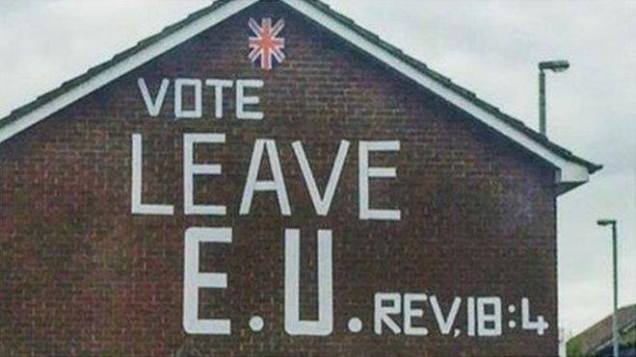
Brexit - Christianity - House mural - Revelation Chapter 18 verse 4 - EU Referendum

To believe that Brexit is the greatest threat to Britain’s Christian heritage and values is profoundly misguided

The people over at Reimagining Europe are at it again.

The Rt. Revd. Dr. Gregory Cameron, Bishop of St Asaph, is concerned that Britain may be about to throw it’s European-given Christian heritage out with the EU bathwater. One might consider it strange that he considers Brexit to be the existential threat to British Christianity rather than, say, increasing secularisation or the aggressive attacks by the Cult of Social Justice and Identity Politics on what were once traditional Christian family values, but such is the way of things these days within the Churches of England and Wales.

Bishop Cameron writes:

In spite of the fact that the Bible has more to say about the distribution of wealth, social justice and the welfare of nations than ever it does about eternal life, Christianity and religion have gently been tidied away by many to the sidelines of political life. To ask therefore about a “Christian Brexit” might provoke the response “Why should there even be talk of such a thing?” While fear of religious extremism may have fuelled the leave vote, Brexit is trumpeted as a clinical economic exercise, perhaps with a little national pride thrown in but free from ideological fancy. So many might wonder why would religion get mixed up in it?

In fact, Christian philosophy is something woven into the very fabric of British society.  It undergirds many of our attitudes and values, even if the rationales have become obscure, and the foundations repudiated by many.  Christianity came to us from the continent, and bound us to the continent, whether it was the mission of Pope Gregory to the Angles on the cusp of the seventh century, or the repudiation of one sort of Europe (the Catholic) in order to embrace another (the Protestant) in the sixteenth.  Even if we’ve chosen to renounce the politics of European integration, this doesn’t imply a rejection of a shared European culture – which is just as well given that most of British culture derives from a classical and Christian European past.  Could there even be a Britain without Christendom, the Angevin Empire, and the struggles for the European soul played out in the Napoleonic and World War conflicts?

It’s great that somebody is now asking these questions. I’m just astonished that the good bishop has identified Brexit as the greatest threat to this cultural heritage, rather than any of the other far more pressing issues. Of course Britain would not exist in anything like it’s current form without Christendom. Why does that mean that Britain should have voted to remain in a supranational political union beset with so many problems and unloved by so many?

And of course renouncing the EU’s explicitly political union and integrationist purpose does not mean that we reject our “shared European culture”. Given that Bishop Cameron understands that these are two different things, one wonders why he is concerned that rejecting one would even endanger the other.

More:

So which Christian values do I wish to see thrive in a Britain set apart?  One of the worst aspects of the Brexit vote, much commented upon, was the permission unintentionally given for xenophobia.  Too many immigrants (even to the third or fourth generation) are now made to feel unwelcome; too many folk have been given licence to be rude or violent.  I want to see a Britain which affirms our human connectness and the fundamental attitudes of respect and hospitality.  We need a people centred Brexit, which respects the individual choices and irrevocable commitments that immigrants and ex pats have made about their futures in the expectation of a border free Europe which is now slipping away from us.

I’ll have to take the bishop’s word for this. I have many friends and acquaintances in parts of the country condescendingly referred to by elites as “Brexitland“, but I myself live in cosmopolitan London, where Brexiteers and not “immigrants” are the scorned and endangered species. And while I do not question the veracity of media reports of xenophobic and racist incidents in the wake of the EU referendum campaign, from my own experience of strongly pro-Brexit places such as Stoke-on-Trent or my hometown of Harlow, neither have I witnessed anything like the wave of supposed anti-immigrant sentiment which the left-wing, pro-EU media insist is taking place.

Furthermore, if third and fourth generation immigrants are being made to feel unwelcome, clearly this is an issue which extends far beyond Brexit and Britain’s place in the European Union. As with the disastrous start to Donald Trump’s presidency in America, there is a tendency to blame every bad thing that happens in Britain on Brexit rather than seek to intelligently separate those factors which existed prior to the referendum and need addressing separately, and those which are legitimately connected with Britain leaving the EU.

The bishop then waxes lyrical about the “irrevocable commitments that immigrants and ex pats have made about their futures”. I’m sorry, but I have to take issue with this. The ultimate expression of making an irrevocable commitment to a new country that you want to call home is to become a citizen of that country. When my wife and I eventually move back to the United States, I eagerly look forward to the day when I receive my US citizenship as it will be an acknowledgement of the commitment I am making to that great country. Why should it be any different for somebody who intends to permanently settle and build their new life in Britain?

While EU citizens have been bribed for several decades with promises of a “borderless world” – while politicians have simultaneously kept silent about the damage done by undermining the nation state through the EU project – there is in fact nothing abnormal about expecting people to take that final oath of loyalty and allegiance before fully accepting them as a fellow countryman. You don’t prove your commitment to small-L liberal, British values simply by turning up, getting a job and starting a life here. An immigrant’s commitment to their new country should be more than the sum of the taxes that they pay and the personal enjoyment that they and their families receive as a result of making the move. To paraphrase John F. Kennedy, citizenship is about asking what you can do for your (new) country, not just what your (new) country can do for you.

More:

I want to see a Britain which reasserts its care for the weakest in its own society and in the citizenry of the world; which is committed to international development and international exchange.  We need a culture which is open to and accepting of heterogeneity.  In such a future, “British” should not stand in contradiction to “European”, but incorporate an international spirit: a continuing commitment to lowering barriers and not raising them.

Now this is just generic leftist pablum. Do we not already have an extensive welfare state? Do we not already lead the world by (wrongly, in my opinion) devoting an extraordinary fixed percentage of our GDP to inefficient, government-administered international aid? “British” does not stand in contradiction to “European”. But rather than becoming interchangeable, as EU integration ultimately demands, in future

Of course we should remain an open and tolerant society, but a culture which is “open to and accepting of heterogeneity” to an unlimited degree is a culture which refuses to assert its own values, fails to properly assimilate new immigrants and which fosters breeding grounds for unimaginable, unforgivable horrors like the sexual abuse epidemic in Rotherham, or the infant mortality rate as a result of consanguineous relationships in the London Borough of Redbridge. One might expect a Church of Wales bishop to be at least as equally concerned with these social problems as with the feelings of immigrants who felt perfectly happy in Britain until the Brexit vote but who now apparently feel besieged and despised, but apparently this is too much to ask.

More:

Brexit may not be a spiritual or religious enterprise, but we do have to defend the best aspects of our national life to build a future of which to be proud.  All the churches, including the Church in Wales, have to engage vigorously in the public debate about Brexit and our society as advocates of a Christian vision of social inclusion and people centred politics.

No. The trouble is that the Church has been lustily involved in the Brexit debate all through the referendum campaign and now it’s aftermath, but in an incredibly one-sided manner. Almost to the last person (with a few honourable exceptions) the bishops and clergy have come down hard on the side of remaining in the EU, often argued by clerics with a tissue paper-thin understanding of the issues at hand but a burning desire to signal their progressive virtue.

Has Bishop Cameron ever stopped to consider how an ordinary, decent, Brexit-supporting person might feel when confronted with the Anglican church’s institutional metro-leftism and scornful opinion of Brexiteers? Has he stopped to think what effect the Archbishops of Canterbury and York might have on the Brexit-supporting faithful when they so transparently agitate in favour of remaining in the European Union, and cast aspersions on the morals of those who dared to take a different position?

The bishop’s article concludes:

In challenging times of change it falls to us to demonstrate what loving our neighbours really means.

Yes, it does. Bishop Cameron might like to reflect on how he lives out those values in his own ministry, with particular regard to how he engages with the sincere beliefs of those within his own Welsh diocese who voted in good conscience for Brexit, are now looking forward in a spirit of optimism to its enactment, and are perhaps hoping for some pastoral encouragement (rather than despairing forgiveness) as they do so.

Because if this article is any guide, he has a long journey ahead of him.
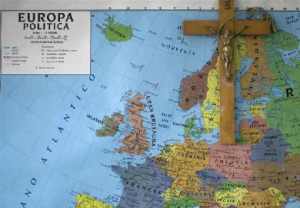


christianity-europe-eu-brexit-3

Support Semi-Partisan Politics with a one-time or recurring donation:

Agree with this article? Violently disagree? Scroll down to leave a comment.

Follow Semi-Partisan Politics on TwitterFacebook and Medium.

Left Wing Self-Awareness Award, Part 1

Samuel Hooper - Left Wing Self-Awareness Award - British Politics - Socialists

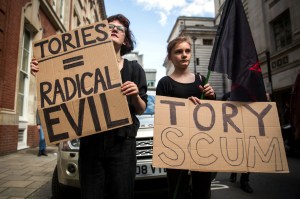
An award to honour the courageous few on the British Left who have come to realise that blindly screaming “Tory Scum!” at half the country might not be the surest path to victory, and who instead risk life and limb (or at least their careers) to propose speaking to conservatives as though they are human beings

Credit where credit is due to Peter Ormerod, who foresees the British Left’s imminent collision with reality on June 8, writing in the Guardian:

It seems many on the liberal left are determined to repeat the mistakes of the 2015 general election, the EU referendum and the US presidential race. There is a widespread failure – perhaps even a refusal – to understand the reasons May and the Conservative party are so popular. Until we try to do so, we will always lose.

We will break this cycle only by condemning less and understanding more. If the appeal of May’s Tory party eludes us, we surely need first to appreciate that we are relatively unusual, and then try and see what all those others see. This is not to say that they are right and we are wrong, or to ditch any of our principles; only that May evidently represents something that huge numbers of people in our country want, and that it is worth our while to analyse that and take it seriously.

Only then can we win back the people whose support we need. This is something the New Labour project, for all its flaws, understood: we must meet people where they are, not where we would like them to be. Only then can we take them with us. It just takes some emotional imagination on our part. And this brings us to the heart of our problem.

For all our supposed touchy-feeliness, many on the liberal left seem to forget that elections are fought not only on the grounds of reason but also on the battlefields of emotion. It should be obvious that responding with snark and hostility to people with whom we disagree just raises defences and entrenches beliefs: after all, we know how we react when we are mocked and insulted. But we should also have learned by now that facts in themselves are often unpersuasive too. If we have not grasped this from experience, then there is plenty of scientific research to make that clear. We can recite statistic after statistic, pointing to failing after failing, and they’ll just bounce off our intended target because Theresa May gives them a sense of confidence that Jeremy Corbyn does not. You can win a hundred arguments and change not a single mind.

This is also good, on the role of the media in influencing public opinion – one of this blog’s pet peeves:

We can believe that these millions of people are wrong, but we cannot say they are stupid. Nor are they all zombies, or all brainwashed, or all unenlightened. And it’s not enough to blame “the media”, either: newspapers are commercial operations and if the public mood changes, the media often changes with it. This was the case in 1997 and continues to be the case today: it is why, say, the political position of the Scottish Sun may differ from that of its English counterpart. It would obviously be naive to underestimate the extent to which some newspapers shape public opinion, but these publications would not exist if they failed to reflect it.

Peter Ormerod’s conclusion? Listen more, judge less. Meet the people where they are, not where the Left would like them to be. Dare to imagine that a political disagreement may be borne not out of a catastrophic moral failure on the part of the other person, but from a legitimate different perspective on life, one worth exploring and understanding if not necessarily accepting.

One can still quibble with parts of Ormerod’s article – despite the general thrust being correct, he still manages to accuse conservative-leaning voters of irrationality in the opening paragraph. But to focus on likely rhetorical slips like this would be churlish, particularly when so few others on the British Left – either among the political leadership, the commentariat or the grassroots – are willing to be so introspective or make such a concession.

Ormerod admits that it will take a “concerted effort” from his ideological colleagues to “lay off the sneering”, and right now I’m just not sure that the appetite is there. Certainly not before the general election on June 8. For better or worse, the two main parties will butt heads on election day more or less screaming their current war cries – “strong and stable leadership!” from the Conservatives, and something about the Evil Tories being worse than Hitler from the Left. The only question remaining is precisely how many voters this petulant strategy will manage to alienate by polling day.

There will then doubtless be a period following Theresa May’s victory – as there was when David Cameron vanquished Ed Miliband in 2015, breaking the hearts of many a Tumblr Milifandom blogger – when the red mist descends even deeper over the British Left. We will hear about how the stupid working classes voted against their own interests for Goebbels to be prime minister, and for the government to wage a deliberate holocaust of the sick, the disabled and the otherwise perpetually “vulnerable” (a term which the British Left have conveniently extended to cover over half the country).

But every such outburst is only a further step taken in the wrong direction; one which must be re-trodden when the fever cools, the temper abates and the Left finally decides that they want to make up with the British people rather than continue to bitterly rage at them.

As things stand, though, every angry leftist outburst on Twitter, every snarky and sanctimonious meme shared on Facebook, every slanderous anti-conservative status proudly shared, every “Tories are vermin” t-shirt proudly worn around the streets of London, every weepy Huffington Post article about how some precious little “citizen of the world” can no longer bear to look at the parents who raised and sacrificed for them simply because they dared to vote for Brexit – all of this must be paid for in a lump.

Peter Ormerod is one of the few to sense the impending crash before it takes place. Perhaps, before long, he will be joined by others.


Bankers Toffs And Tory Scum - General Election 2015 - London Protests - Downing Street

Support Semi-Partisan Politics with a one-time or recurring donation:

Agree with this article? Violently disagree? Scroll down to leave a comment.

Follow Semi-Partisan Politics on TwitterFacebook and Medium.

The British Left’s Cunning Plan To Reach Working Class Voters: Insult Them

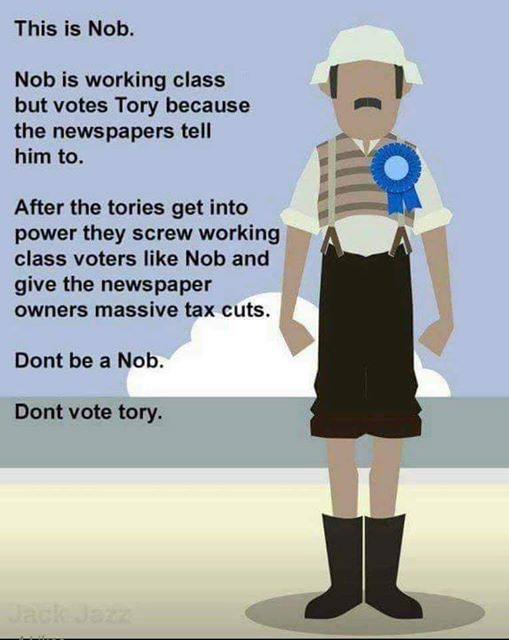
Dont be a Nob - Dont vote Tory - Working Class - Leftist sanctimony arrogance

How can the British Left appeal to working class voters turned off by socialist paternalism and attracted by conservative messages of patriotism, freedom and self-sufficiency? Maybe a really sanctimonious internet meme will do the trick.

This internet meme – currently being widely circulated on Facebook and other social media by self-satisfied young lefties who think that twenty minutes spent reading HuffPost on the tube every day makes them a political guru – really does have it all.

First it has the crude pictorial stereotype of a “typical working class person” (but actually something far more akin to a Monty Python character), standing there in his workman’s garb all ready for an honest day’s labour ploughing the fields, making widgets in a factory or going down the mines – you know, the kind of jobs that people who work for creative agencies in Shoreditch think that people in Harlow or Stoke perform when they are not claiming their much-deserved benefits.

Then we have the arrogant, sanctimonious assertion that the poor fellow votes Tory only because the “newspapers tell him to”. This, of course, is in direct contrast to the enlightened sharers of the meme, who are naturally very highly intelligent, quizzical yet cynical souls who patiently weigh up every data source and review every policy position, judging every argument based on its merits before miraculously finding themselves in total agreement with whatever the Guardian, the Huffington Post or so-called comedian Marcus Brigstock happens to be telling them.

Next, we get the assertion that the Evil Tor-ees “screw working class voters” once they get into government, simply because they dare to treat the British public like autonomous human beings who might prefer it if the government got out of their way and treated them like capable adults rather than perpetual lifelong victims to be coddled and cared for by the state from cradle to grave.

And finally, of course, we get the culmination of the hilarious “word play” by which such working class voters who dare to shun their rightful masters and defenders (the parties of the Left) are labelled “Nobs”.

Honestly, it is hard to believe how a meme like this could possibly fail to deliver 100 percent of the working class vote to Jeremy Corbyn’s harmonious and very in-touch Labour Party, Tim Farron’s pinch-faced “Citizen of the World” LibDems, Caroline Lucas’s human progress-hating Greens and Nicola Sturgeon’s authoritarian, incompetent SNP.

But just for some fun, below is a more honest version of the meme, describing the kind of person who proudly shares it on their Facebook timeline – presumably in the hope of persuading the kind of working class person whose intellect they scorn, whose political viewpoints they despise and whose company they would never keep in a million years:


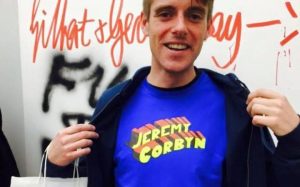
Jeremy Corbyn - Hipster - Middle Class Left Wing

This is Pretentious, Virtue-Signalling Douchewad. Douchewad shares glib and overwrought anti-conservative memes on social media because their unquestioning discipleship of the Guardian and HuffPost has convinced them that anybody from the “working class” who doesn’t buy into the Left’s collectivist, non-contributory welfare supporting, NHS-worshipping, success-punishing agenda must have been brainwashed by the Evil Murdoch Press into voting against their own interests for the Evil Tor-ees.

It never occurs to Douchewad that said working classes might value self-sufficiency, personal resilience and individual opportunity (with a welfare state that acts as a safety net rather than a comfort blanket) over the chance to be the lifelong, helpless and perpetually dependent sympathy project for some Social Studies or PPE-educated leftist who prances around acting like the champion of the striving classes right up until until such people dare to offer political opinions of their own (cough, Brexit).

Don’t be a Douchewad.

Actually, go for it. Be a Douchewad. Vote Labour, Green, SNP or LibDem while broadcasting to the world about what an enlightened, compassionate, woke person you are, unlike those monstrous Tories. At this point you are literally doing Theresa May’s job for her.

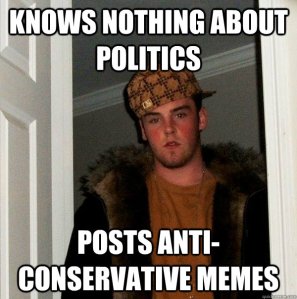
Knows nothing about politics - posts anti conservative memes

Support Semi-Partisan Politics with a one-time or recurring donation:

Agree with this article? Violently disagree? Scroll down to leave a comment.

Follow Semi-Partisan Politics on TwitterFacebook and Medium.

Did The Russians Just Hack Our NHS?

NHS Cyber Attack Crisis - Russian Hacking Foreign Power Question

Our NHS is under attack – and not by the Evil Tories, for once!

Newspaper and television news networks are now reporting a major cyber attack targeting NHS England hospitals – apparently all systems are down and an emergency has been declared to initiate backup/recovery processes.

From the Guardian:

A number of hospitals have been hit by a large scale cyber attack, NHS England has confirmed.

Hospitals across the country appear to have been simultaneously hit by a bug in their IT systems, leading to many diverting emergency patients. NHS England said it was aware of the problem and would release more details soon.

Meanwhile doctors have been posting on Twitter about what has been happening to their systems.

A screen grab of a instant message conversation circulated by one doctor says: “So our hospital is down … We got a message saying your computers are now under their control and pay a certain amount of money. And now everything is gone.”

This is obviously potentially very serious, with possible impacts on patient care – apparently local NHS hospitals are reverting to pen and paper, while tweeting that patients should avoid going to A&E.

Was this a coordinated attack by a foreign power, or is it simply the case of a dozy NHS office admin clicking a dodgy link in an email and falling prey to a traditional money-grubbing scam?

(The answer is almost certainly the latter – this time. NHS Digital itself has confirmed that the generic ransomware attack was not specifically targeted at the health service, as a number of other organisations in multiple regions and sectors are affected; so the outraged NHS priests and priestesses on Twitter calling for the execution or maiming of these hackers can probably stand down now).

But since politicians and armchair pundits have been quick to blame Russia for everything else that hasn’t gone their way lately, I’m sure that Vladimir Putin’s name will be put forward as the man behind this craven attack on Our Blessed NHS.

But Putin should be careful – while Britain and the international community will apparently sit on our hands and dither while he invades Ukraine and drags his country ever further backward toward nationalist authoritarianism, provoking a fight with the NHS might be a step too far.

Even Jeremy Corbyn’s Labour Party election manifesto reserves the right to use nuclear weapons, with great cautionin extremis. Well, since the National Health Service is the closest thing we now have to a religion in secular Britain, attacking Our Blessed NHS may be the one hostile act by a foreign power that could still rouse half the country to press the red “launch” button and fire off some Trident missiles.

But when the dust settles, it may be worth considering that yet another drawback of having a monolithic national healthcare system serving all 65 million people in Britain is that it represents a singular target for mischief-makers and hostile foreign powers alike.

Presumably GCHQ and other agencies are constantly on the case protecting Britain’s national energy grid and other core infrastructure. But as a country have we been so busy singing endless hymns of praise to “Our NHS” that we neglected to realise that it has also potentially become our national security Achilles heel?

At this grave time, let us all repeat the Pledge of Allegiance to Aneurin Bevan’s glorious creation, our country’s pride and joy:

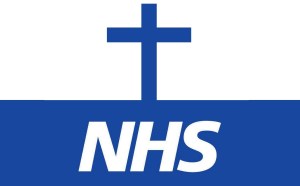
I pledge allegiance to the logo of Our #NHS
The envy of the world
One health system, indivisible
With increasingly poor healthcare outcomes for all

And when NHS England has fixed the problem and we have all made ourselves feel good by cheering on the saintly people who work in the world’s fifth largest bureaucracy, maybe we can have a sensible conversation about breaking up the NHS monopoly – for the good of all patients and, apparently, our national security too.


NHS Logo - Cross - National Religion - Worship - Idolatry

Support Semi-Partisan Politics with a one-time or recurring donation:

Agree with this article? Violently disagree? Scroll down to leave a comment.

Follow Semi-Partisan Politics on TwitterFacebook and Medium.

No, Brexit Is Not The Fault Of The Evil British Tabloids

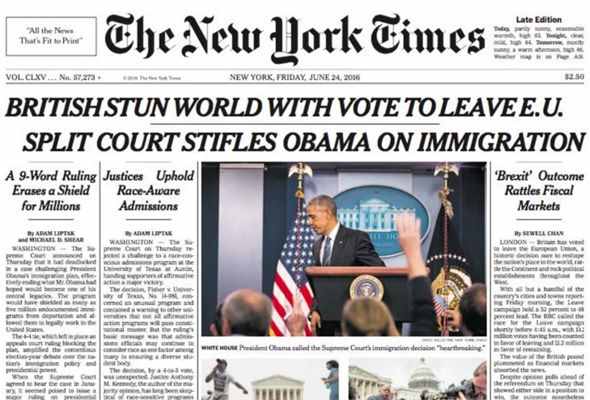
New York Times - Brexit Headline - EU Referendum - British stun world with vote to leave EU

The fearless and forensic New York Times continue their penetrating post-mortem investigation into the causes of Brexit. This week’s scapegoat – the Evil British Tabloid Press

Fresh from speculating about how the impact of Brexit on London will equal the fall of Babylon in terms of destruction and woe, the New York Times is back with another self-exonerating tonic for the global metro-left, reassuring them that Britain’s imminent departure from the European Union in no way reflects a serious failing on their part, but instead is entirely the result of sinister machinations by evil outside forces.

In the crosshairs this week: Britain’s tabloid press, led by The Sun newspaper, everybody’s favourite bogeyman. The strong implication of the New York Times article is that Britain’s tabloids are powerful and nefarious, exerting great sway over the political leanings of their simple-minded, provincial readers. The natural inference is that it is a worrying phenomenon when Evil Tabloids “influence” their gullible readers in a populist direction, but entirely laudable and unremarkable when the prestige media – outlets like the New York Times and the Guardian – serve their wise readers up with a consistent globalist, elitist worldview.

One can imagine the tone and content of the piece – sanctimonious, condescending and displaying a stunning lack of self-awareness – without even reading a word, but below are a few choice quotes:

In Britain after the so-called Brexit vote, the power of the tabloids is evident. Their circulations may be falling and their reputations tarnished by a series of phone-hacking scandals. But as the country prepares to cut ties with the European Union after a noisy and sometimes nasty campaign, top politicians court the tabloids and fear their wrath. Broadcasters follow where they lead, if not in tone then in topic.

Of course, when the Times talks about a “sometimes nasty campaign”, they are alluding exclusively to supposedly nativist and anti-immigration rhetoric, and not the hatred and contempt frequently pored on people who campaigned and voted in good conscience for Brexit. This becomes clear through all of the campaign incidents cited in the article, culminating in an attempt to link the murder of Jo Cox MP directly to pro-Brexit rhetoric.

More:

Their readers, many of them over 50, working class and outside London, look strikingly like the voters who were crucial to the outcome of last year’s referendum on membership in the European Union. It is these citizens of Brexitland the tabloids purport to represent from the heart of enemy territory: Housed in palatial dwellings in some of London’s most expensive neighborhoods, they see themselves as Middle England’s embassies in London.

In the campaign leading up to a snap election on June 8, most tabloids can be counted on to act as the zealous guardians of Brexit and as a cheering section for the Conservative government of Prime Minister Theresa May — even though the city that houses them voted the other way.

This is actually true. And the reason that many of the tabloids are bastions of working class populism surrounded by a sea of metro-leftism is that these are national newspapers, not city-specific or regional publications.

One has to take issue with the Times’ reference to “Brexitland” though, as if despite representing a majority of voters, Brexit supporters are somehow strange and exotic creatures whose behaviour requires analysis and interpretation by the prestige media – which, of course, is exactly how the New York Times sees them.

A more worthy article would turn the gaze back toward “Remainland” or “Europeland” and seek to understand how 48 percent of the country managed to drift away and treat the concerns, fears and aspirations of the 52 percent with such complete indifference. But this is the New York Times, and they have no interest in turning a forensic gaze on people like their own reporters, editors and readers – the “good people” whose behaviour needs no explanation or introspective analysis.

The article then takes a divergence to discuss Boris Johnson, even though the Foreign Secretary’s execrable journalistic career was spent at supposedly prestige broadsheets, not tabloids:

In the marble-and-glass lobby of the 17-story News Building, home to Mr. Murdoch’s British media empire, there is a small plaque that commemorates the building’s 2014 opening by Boris Johnson, then the mayor of London and now the British foreign secretary.

Mr. Johnson, wild-haired and witty, became a chief architect of Brexit when, four months before the referendum, he threw his weight behind a cause until then most closely associated with the populist U.K. Independence Party. But his main contribution to Brexit may go back more than two decades.

A correspondent in Brussels for The Daily Telegraph in the early 1990s, Mr. Johnson was credited by fellow reporters with pioneering the euroskeptic coverage of the European Union that has since become the default setting for much of the British press. With little regard for the truth — he was previously fired by The Times of London for making up a quote — Mr. Johnson wrote about a Europe scheming to impose standard condom sizes and ban his country’s beloved prawn-cocktail-flavored chips (both untrue).

“Boris invented fake news,” said Martin Fletcher, a former foreign editor of The Times, who was in Brussels shortly after Mr. Johnson. “He turned euroskepticism into an art form that every news editor in London came to expect.”

Ah, so the reason for bringing up Boris Johnson in an article supposedly about tabloid journalism was in order to shoehorn “fake news” into the discussion. Well, while nobody would seriously defend the quality of Johnson’s Europe reporting for either the Times of London or the Telegraph, these stories were primarily consumed by broadsheet-reading elites, not the oafish, Sun-reading working classes held in such contempt by the New York Times. And it should be noted that whatever the failings of the British newspaper media with regard to Brexit – and they are many – serious journalists like the Telegraph’s Christopher Booker have contributed consistently powerful analysis and criticism of the EU, shedding far more light than heat (unlike Johnson).

Besides, as this blog has previously discussed, focusing exclusively on “fake news”, much of which is so obviously hysterical and false as to be unbelievable to all but the most swivel-eyed of social media sharers, ignores the far more pernicious impact of ideologically skewed mainstream news, which is read by elites and decision-makers, often actually driving the political debate.

The example I always return to is the fact that nearly all prestige American news outlets have stopped referring to illegal immigrants as such, referring to them euphemistically as “undocumented” or “unauthorised” immigrants instead. Similarly, when an American politician seeks to crack down on illegal immigration they are nearly always described as being antagonistic toward the “immigrant community”, suggesting a deep-seated conservative antipathy toward all immigrants, making them seem far more extreme than they really are.

This linguistic trickery, common throughout the American mainstream media, seriously impacts the way that people view the subject of immigration. Read about Donald Trump’s hostility to “immigrants” often enough and you could be forgiven for thinking that the American president is actively plotting the deportation of law-abiding, visa or green card-holding immigrants, when this is simply not the case. American news outlets know that they are misleading their readers and viewers by stoking these alarming fears but do so anyway, purely in order to push a certain political outcome (acceptance and normalisation of illegal immigration).

All of this should be borne in mind when the New York Times article goes on to discuss tabloid treatment of immigration in the Brexit debate:

Britain makes many of its own laws, of course. But it is an interesting choice of example. A more obvious one might have been immigration.

Research by a former Times journalist, Liz Gerard, showed that tabloids pounded the immigration issue, with at least 30 hostile front-page splashes in The Daily Mail in the six months leading up to the referendum, and 15 in The Sun. The headlines — “Britain’s Wide Open Borders” The Daily Mail shouted — often tended toward histrionic. The Sun insinuated that child refugees arriving in Britain were lying about their ages and should have dental X-rays.

“Tell Us the Tooth,” the headline read.

A week earlier, I had met Kelvin MacKenzie, a former Sun editor and a columnist who was subsequently suspended for referring to a mixed-race soccer star as a “gorilla.” He said that the paper still reflected the “beating heart of Britain,” and that Brexit was won on immigration “by a thousand miles.”

Has the British tabloid media focused heavily on immigration, and often covered the subject in a crass and obnoxious way? Yes, of course – both news reporting, editorial lines and political commentary in the tabloids have been troubling at times. But one must remember that left to their own devices, the prestige media would hardly cover the issue at all. Newspapers like the high-minded Guardian have zero sympathy for those who object to uncontrolled mass immigration, and even more supposedly conservative outlets like the Times or Financial Times would happily ignore the subject altogether were it not for the tabloids keeping the issue on the national agenda. One cannot examine the sins of the tabloid press while pretending that the prestige press is somehow faultless.

Or can we?

Well, the New York Times certainly seems capable of obsessing about the mote in their British cousin’s eye while ignoring the beam in their own. As far as the New York Times is concerned, Brexit is purely the result of rabble-rousing tabloids (with an assist from glib superficial coverage in the prestige conservative press) whipping up xenophobic feelings among their working class readership. According to this self-exonerating narrative, Brexit has absolutely nothing to do with the prestige media failing to hold politicians to account for progressively signing away sovereignty and governing competencies to a barely accountable supranational government, or helping to make a nuanced conversation about immigration impossible.

No, instead we are expected to believe that the earnest saints of the prestige media and their establishment readers and cheerleaders are totally blameless. We are expected to close our minds to the possibility that more people might have heeded some of (say) the Guardian or the New Statesman’s more accurate concerns and reporting during the EU referendum if those publications had not conducted themselves for years in such a screechingly, stridently blinkered pro-EU manner.

And even now, after the New York Times managed to cocoon its own readership in such a self-reinforcing ideological bubble that almost none of them saw Donald Trump as a potential threat to their world order, in examining Brexit America’s newspaper of record is unable to question whether producing news and commentary almost entirely of the elites, by the elites and for the elites might not be the smartest way to approach journalism.

For God’s sake, New York Times, wake up. Turn your concerned gaze around 180 degrees and question the assumptions, biases and blind spots in your own reporting. Stop worrying about the evil tabloid press and its hold over the impressionable British working class mind for two seconds, and spend at least a moment considering how your own prestige journalism has unhelpfully perpetuated and reinforced failing globalist shibboleths for years, leading to these harsh instances of political correction in domestic and world affairs.

Because if the unexpected election of Donald Trump and the vote for Brexit (different though the two phenomena are) have taught us anything, it’s that blue-collar, working-class folks are far from being the only people who can be plausibly accused of being brainwashed by the news media that they consume.


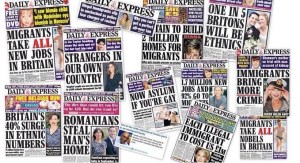
Brexit - Daily Express Headlines - immigration

Support Semi-Partisan Politics with a one-time or recurring donation:

Agree with this article? Violently disagree? Scroll down to leave a comment.

Follow Semi-Partisan Politics on TwitterFacebook and Medium.