The Named Person Scheme Is Proof That The SNP Does Not Believe In Liberty

Opposing the SNP’s draconian Named Person Scheme is a smart, principled move for the Scottish Tories

By making the Scottish Conservative Party’s opposition to the totalitarian Named Person Scheme a centre-piece of their Holyrood election campaign, once again Ruth Davidson is distinguishing herself as one of the only sane and vaguely liberty-loving politicians in the whole of Scotland.

The Telegraph reports:

Ruth Davidson has said that scrapping the SNP’s plan to assign every child a state guardian has become the most urgent Holyrood election priority for Scottish voters with nine days of campaigning left and grandparents are leading the charge against it.

In an interview with the Telegraph, she said many families were unaware of the Named Person scheme when the election campaign started a month ago but it is now the issue on the doorstep that inflames the most passion and outrage – even more so than independence.

She said that grandparents are particularly furious that their sons and daughters are being subjected to “state snoopers”, when they were not, and pledged the Scottish Tories would immediately demand the scheme be brought back before parliament if they succeed in becoming the main opposition party.

They have every right to be furious. Whether any given Scottish person wants their top layer of government to reside in Holyrood or Westminster, surely anybody should agree that the bottom layer of government should not intrude deep into the family unit in the way that the Named Person Scheme does.

Nicola Sturgeon is busily trying to spin the suggestion that this is a purely voluntary scheme, which utterly fails the common sense test – why have a scheme supposedly designed to protect children from the most broken and dysfunctional families, when only well behaved (and rather too obedient) families would ever voluntarily sign up? For there to be any point at all to the legislation, it has to be universal and compulsory.

As Ruth Davidson points out in the exchange shown in the video above, the Scottish Conservatives tabled an amendment to the original bill trying to seek an opt-out for parents, but were overridden by the SNP.

Key quote:

Ruth Davidson: Can I remind the chamber that the Scottish Conservatives laid specific amendments to the bill allowing parents to opt out of the Named Person Scheme, and those amendments were voted down by her party, and shouted down by her minister who said such state guardians were to be a universal service.

Every child, from birth to eighteen, with a Named Person attached. A Named Person with access to private and sensitive information, all recorded in a database, and able to be accessed without the consent or even the knowledge of the parents in some cases.

If the Named Person Scheme is truly voluntary, why fight so hard to defeat a motion establishing a parental opt-out? The answer, of course, is that the scheme being rolled out this year is not voluntary in the slightest.

It appears that Sturgeon is playing fast and loose with the truth, portraying the fact that parents can choose not to engage with their child’s Named Person as being the same thing as not having a Named Person assigned in the first place. But of course these are two very different things. Even if a parent rightly chooses not to engage with this overbearing arm of the state, the Named Person is still there, working away in the background, able to view all manner of sensitive data and information about the child with no recourse for the parents.

This is the SNP at work in government. A hectoring, overbearing movement which seeks to centralise everything they can touch, from the state monitoring of children to the police and fire services – with deadly consequences, in the latter cases.

Heading into the Holyrood elections, Scottish voters need to understand that there is nothing pro-liberty about supporting the Scottish National Party. While Nicola Sturgeon and the SNP may hold out the carrot of independence from Westminster, the only change which Scottish people will feel in their daily lives is an emboldened, empowered independent Scottish government taking even more powers away from the individual and vesting them in the SNP’s monolithic nanny state.

The Named Person Scheme is a shot across the bows. There could well be far worse to come from the SNP.


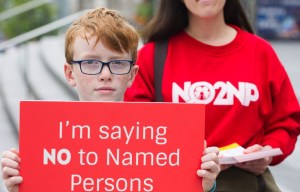
No2NP protest

Agree with this article? Violently disagree? Scroll down to leave a comment.

Follow Semi-Partisan Politics on TwitterFacebook and Medium.

An Anti-Immigration Brexit Campaign Is Doomed To Failure

Michael Gove - EU Referendum - Vote Leave - Immigration

Ben Kelly of Conservatives for Liberty and The Sceptic Isle has an excellent new piece explaining why a Leave campaign focused on immigration is both depressingly regressive and doomed to failure.

Kelly’s warning is in response to Michael Gove’s latest contribution to the Vote Leave campaign, as reported today by ITV:

Michael Gove has warned the UK faces a migration “free for all” unless it leaves the EU, as the Leave camp moved to exploit an admission from the Government that EU free movement of labour rules make it harder to curb immigration.

The Justice Secretary insisted potential new members of the EU posed a “direct and serious threat” to public services such as the NHS, and social harmony.

He said five countries “due to join the European Union” – Albania, Macedonia, Montenegro, Serbia and Turkey – which he warned would mean Britain’s public services would not be left in a “strong position”.

Writing from the perspective of The Leave Alliance (an independent grassroots movement for Brexit supported by this blog) which advocates exiting the EU’s political union and using EFTA/EEA membership to maintain access to the single market, Kelly writes:

A recent ComRes poll that asked the question “what is the most important issue in your decision on the EU Referendum?” was illuminating. 47% said the economy was the most important factor, with immigration trailing on 24%. So the belief that it doesn’t matter that the Leave campaign loses the economic argument because they can win on immigration is bunkum.

First and foremost, people will vote according the economic risk. That is why we propose an EEA based solution; it de-risks Brexit, secures the economy and gives us a soft landing. That is stage one of the secession process, a safe platform to build on. This is the key to winning the referendum and thereby restoring democracy and self-governance in the United Kingdom. In any case, it will likely be the only offer on the table for Article 50 negotiations and is the likely government course of action.

Although the EFTA/EEA solution puts on hold changes to freedom of movement it crucially protects our Single Market participation and thereby neutralises the economic uncertainty surrounding Brexit. In the long term we can make the case for reforms to freedom of movement, but pending such reform there is plenty of scope for improving the management of our borders with a coordinated set of policies designed to address push/pull factors. We would also gain the option of activating the “emergency brake” provision in the EEA Agreement as a temporary safeguard measure against exceedingly high net migration numbers.

Many who unrealistically seek a clean break Brexit and want everything at once will see this position as sub-optimal, but the alternative – pulling out of the EU’s freedom of movement provisions – would lose us access to the Single Market.  Without continued access to the Single Market, we cannot win the referendum because we lose the economic argument.

Those who insist on ending freedom of movement and imposing strict new immigration controls on Day 1 are letting their own “perfect scenario” be the enemy of the good. The type of Brexit necessary to deliver what Vote Leave are promising inevitably means losing access to the single market, membership of which is contingent on adopting free movement of people. This creates a degree of economic uncertainty which is gleefully seized upon by the Remain campaign and makes it virtually impossible for Leave to win the referendum.

By contrast, exiting to an EFTA/EEA holding pattern allows Britain to extricate herself from political union with the EU while maintaining the stability in the economic sphere which is necessary to reassure the 47% of voters for whom this will be the deciding factor. Further changes to immigration policy can then follow according to the democratic will of the British people, subject to various economic and political constraints.

It should be pointed out, too, that the accession of the next group of EU candidate countries – Albania, Macedonia, Montenegro, Serbia and Turkey – could be more than a decade away from joining, and in Turkey’s case this may well not happen at all. This gives plenty of time for Britain to secure freedom from political union, and then flex our independent policy levers to address push and pull factors as Kelly advocates.

Kelly concludes:

Stepping back into the EEA means leaving political and judicial union safely.  From that position of security and strength a world of opportunity opens up. Over time we can take advantage of regaining control over a vast swathes of policy making and review the statute books. Gradually we can move towards a more bespoke “British model” of relations with the EU and form a coalition to push for necessary reforms.

Disastrously, this is seemingly unacceptable to a number of inflexible and uncompromising Eurosceptics who reject freedom of movement and the Single Market and are therefore actively adding to the perceived uncertainty of Brexit. Regressive Euroscepticism, which is unwilling to compromise and refuses to acknowledge that freedom of movement actually has many great positives, is a disease that will lead only to abject failure.

We need an optimistic message and a positive, liberal vision. The ability to move freely across Europe is hugely beneficial in so many ways and a great many Britons enjoy those benefits and will fear losing their rights.  EEA immigration has been good for this country in many clear and measurable ways, economically and socially, and this absolutely has to be said.

An independent Britain must be a positive, diverse and liberal country with an open economy; this is the key to our cultural and social dynamism and how we can make a great success of Brexit. Leave cannot possibly win with a regressive vision that contradicts this. An anti-immigration campaign arguing for the abolition of freedom of movement and the loss of Single Market access is guaranteed to lose, and the failure will be richly deserved.

The New Statesman’s political editor George Eaton is also devastatingly accurate with his take on Vote Leave’s pivot back to immigration:

Britain’s high immigration rate is undeniably of concern to many voters. The boast that EU withdrawal would exempt the UK from free movement (though Norway and Switzerland show it may not) is perhaps the best card the Brexiters have to play. But it may not deliver victory. The Remain campaign speaks of a “plateau” beyond which Leave cannot advance. There are millions of people whose priority is reducing immigration – just not enough for the outers to win. The issue is to them what the NHS was to Ed Miliband’s Labour – a strategic comfort blanket.

[..] The more the Brexiters play the migration card, the greater the risk that they animate their core voters while alienating others. It was for this reason that Vote Leave resolved to run an optimistic campaign, non-centred on immigration. Gove’s rhetorical escalation shows that they are struggling to abide by this vow.

In raising the salience of immigration, Leave is playing to its strengths. Until it is able to neutralise its weaknesses, that will remain a displacement activity.

Continuing to place this uncompromising immigration message front and centre in the Leave campaign is the quickest and surest way to a 45-55 defeat on June 23. The only ones not to realise this seem to be the official Leave campaign, who are more interested in covering their blushes and resetting the agenda after having their flimsy economic case taken apart last week by a gleeful Remain campaign.

Any campaign aimed at motivating core supporters at the expense of alienating swing voters (by preventing the adoption of a plan which would ease their economic concerns) is not helpful at this stage. Persisting with exactly the same unfocused, populist message which helped to secure the referendum will not also help to win it, and telling the UKIP contingent exactly what they want to hear rather than challenging them to think more strategically and longer-term could well be looked back on as the single biggest failure of the campaign.


European Union - United Kingdom - Britain - Flags

Top Image: Independent

Agree with this article? Violently disagree? Scroll down to leave a comment.

Follow Semi-Partisan Politics on TwitterFacebook and Medium.

Sargon Of Akkad On Social Justice

Popular YouTube political/cultural vlogger Sargon of Akkad is the (infinitely more popular) video equivalent of this blog in seeking to sound the alarm as universities and students’ unions fall under the spell of the Cult of Identity Politics.

Readers who do not already do so should consider following his YouTube channel.

At present, Sargon of Akkad (real name Carl Benjamin) is drumming up support for a petition to end social justice courses being taught as legitimate academic subjects at university. Those who are interested can sign it here.

In the video shown above, Benjamin makes an entertaining (and cathartic) case that the social justice / identity politics community is little more than a cult, the majority of whose complaints bear little resemblance to reality and whose philosophy is not deserving of the official imprimatur of the academy.


Safe Space Notice - 2

Agree with this article? Violently disagree? Scroll down to leave a comment.

Follow Semi-Partisan Politics on TwitterFacebook and Medium.

Responding To The Junior Doctors’ Strike

An inspiring (if unattainable) example from across the Atlantic

How to respond to a national walkout by government employees who perform a critical job for a large organisation, and who cynically advance their demands for more money under the false banner of concern for public safety?

Ronald Reagan offers us one blueprint, from back in that dim and distant time when both Britain and America were blessed with leaders who (for their various faults and blind spots) were not afraid to lead, and to take bold and decisive action when necessary.

This is the speech Reagan gave in August 1981 when PATCO, the American air traffic controllers union, called an illegal strike (federal workers being prohibited from striking under the Taft-Hartley Act) demanding, among other things, a 32-hour work week:

This morning at 7 AM the union representing those who man America’s air traffic control facilities called a strike. This was the culmination of 7 months of negotiations between the Federal Aviation Administration and the union. At one point in these negotiations agreement was reached and signed by both sides, granting a $40 million increase in salaries and benefits. This is twice what other government employees can expect. It was granted in recognition of the difficulties inherent in the work these people perform. Now, however, the union demands are 17 times what had been agreed to – $681 million. This would impose a tax burden on their fellow citizens which is unacceptable.

I would like to thank the supervisors and controllers who are on the job today, helping to get the nation’s air system operating safely. In the New York area, for example, four supervisors were scheduled to report for work, and 17 additionally volunteered. At National Airport a traffic controller told a newsperson he had resigned from the union and reported to work because, “How can I ask my kids to obey the law if I don’t?” This is a great tribute to America.

Let me make one thing plain. I respect the right of workers in the private sector to strike. Indeed, as president of my own union, I led the first strike ever called by that union. I guess I’m maybe the first one to ever hold this office who is a lifetime member of an AFL – CIO union. But we cannot compare labor-management relations in the private sector with government. Government cannot close down the assembly line. It has to provide without interruption the protective services which are government’s reason for being.

It was in recognition of this that the Congress passed a law forbidding strikes by government employees against the public safety. Let me read the solemn oath taken by each of these employees, a sworn affidavit, when they accepted their jobs: “I am not participating in any strike against the Government of the United States or any agency thereof, and I will not so participate while an employee of the Government of the United States or any agency thereof.”

It is for this reason that I must tell those who fail to report for duty this morning they are in violation of the law, and if they do not report for work within 48 hours, they have forfeited their jobs and will be terminated.

Obviously such a feat could not be repeated by the British government in its dealings with striking NHS staff – though the case for banning strikes by national public sector workers becomes more compelling by the day.

But if repeating Reagan’s actions are not possible for political and logistical reasons (firing 11,000 air traffic controllers is much easier than firing 55,000 junior doctors, not to mention the fact that the junior doctors are operating within the current law), at least we might hope that the government will act in the spirit of Reagan. And in the spirit of Reagan, the government should refuse to give any further ground to striking public sector workers who are willing to cynically jeopardise public health in a dispute which now rests primarily on the question of Saturday payand is certainly nothing to do with patient safety or the continued existence of the NHS.

This blog firmly believes that the NHS model is broken and than a system conceived in the 1940s is barely adequate to the demands of the 2010s, and will be hopelessly inadequate to the demands of the 2040s. If we are to persist with a public option, then there is no reason why healthcare should continue to be provided by a monolithic government organisation, the fifth largest employer in the entire world (with all the baggage, internal politics and resistance to change which that stunning fact implies).

There is no good reason why we cannot look closely at the healthcare systems of countries such as France, Germany, Japan or Canada and redesign our system accordingly – if only we could rediscover our sense of national ambition and shed our increasingly unwarranted pride in the NHS. We could even still call the new healthcare system “the NHS” if our cult-like attachment to the brand really runs so deep.

The time is long overdue for Britain to have that national conversation, endlessly kicked down the road by politicians terrified of upsetting nervous voters and governments which have proved constitutionally incapable of daring mighty things. But first we need to overcome this peculiar, anachronistic industrial dispute – one which belongs more comfortably in 1976 than 2016 – and end the junior doctors’ strike, by imposing the current contract offered if necessary.

And in that effort, let the spirit of Ronald Reagan guide Jeremy Hunt.


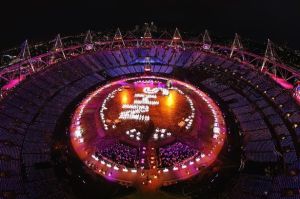
NHS Worship - London Olympic Games 1

Agree with this article? Violently disagree? Scroll down to leave a comment.

Follow Semi-Partisan Politics on TwitterFacebook and Medium.

The Immaturity And Cynicism Of The NHS Junior Doctors’ Dispute

Junior Doctors Strike - NHS - National Health Service - Vigil

The junior doctors lost the moral high ground when they decided to portray a debate about pay and conditions as a high-minded effort to “save the NHS”

James Kirkup has a great piece in the Telegraph in which he charges that the junior doctors’ dispute has reached an impasse not because of government intransigence but because many junior doctors are arguing an inherently political case from a position of naivety and political inexperience, and so will not concede the validity of any opinions other than their own.

Read the whole thing. But it is worth noting these excerpts in particular:

Some of this is about basic competence. The doctors and their leaders have done a very poor job of explaining why they are striking, offering a range of confused and changing justifications. Many doctors seem unaware of the position taken in negotiations on their behalf by their trade union (short summary: if the Government had agreed to pay more for Saturday working, the BMA would have settled and there’d be no strikes) and believe their strike is not about money.

This in itself is quite damning. All the high-minded talk about patient safety and “tired doctors making mistakes” suddenly begins to look a wee bit cynical when it turns out that the BMA would have taken the deal if only there was more money on offer. Was the extra pay all going to be spent on Pro Plus and Red Bull? Unlikely.

But this is the really interesting point:

Yet the doctors’ failure of understanding goes beyond tactics into something more fundamental, an unwillingness or perhaps just an inability to appreciate that politics is about reconciling the diverse interests and desires, that no one gets things all their own way.

Simply they don’t understand the conflict they’re in. Many, engaged in politics for the first time, cannot understand why the Government will not do exactly as they want; for them it’s unthinkable that others would not accept the doctors’ word on how to fund and structure the NHS as final. Any course of action but theirs is not just unacceptable but immoral.

As for those on the other side of this dispute, there is apparently no possibility that their motives could be honourable. Throughout this dispute I’ve not yet seen a junior doctor admit even the possibility that Jeremy Hunt, NHS Employers, David Dalton, Bruce Keogh or any of the main players on the employer side might also be acting in good faith, doing things they believe necessary and in the public interest.

Instead, Mr Hunt and his officials are routinely accused of venality and self-interest, and worse. I keep a little file of choice emails and tweets from doctors. It contains evidence of members of the profession making statements in public forums that Mr Hunt is psychopathic or suffering from various other clinical conditions. (There were also a number of homophobic slurs aimed at Mr Hunt, but that was a senior consultant, not a junior.) I can only conclude that the doctors concerned are so convinced of their own righteousness that they cannot admit that those who take a contrary view are anything but immoral.

Here we have Labour’s self-righteousness syndrome all over again, but this time the patient is not a political party but a large and vocal special interest group within the public sector. Just as was the case with those convinced that the Tories are evil vampires and that Ed Miliband was heading for victory in last year’s general election, so the junior doctors and their supporters seem convinced that the government is motivated purely out of malice, and that they are unambiguously in the right. And we all know what happened on May 7th.

Kirkup continues:

Other doctors display an almost touching lack of insight into how some aspects of their own working lives (a job for life, steep pay progression, huge pensions) are simply unobtainable dreams for most workers, even those who also got good A-levels and spent years studying at good universities.  One junior doctor (again, I won’t name him) last week reprimanded me for writing about doctors’ £1 million pension pots on the grounds that the retirement such funds deliver is “comfortable” but “not extravagant”.

Likewise the tendency to overlook (or simply not know) the fact that many of their problems (antisocial hours, weekend working, growing workloads and static or falling workforces) are common to many other professions and trades, many of whom do not enjoy the same benefits as doctors.

What the junior doctors (and those who support them) fail to understand is that nearly every public sector industrial action is fought on the grounds of public safety while really being about something else. Relatively well paid people (compared to the average wage) walking off the job in a dispute about money and working hours does not elicit as much public sympathy as casting themselves as the only people willing to take on the government on a grave matter of public safety, so simple self-interest dictates that any union (including the BMA and junior doctors) will emphasise the latter over the former.

Consider: how many striking junior doctors living in London would have tutted with frustration during the last tube strike called by the RMT, and fumed to their friends that tube drivers are incredibly well paid, should be grateful for what they have and get back to work, Night Tube be damned? The RMT’s dispute was based in large part on safety concerns, just like the junior doctors. Are the tube drivers lying while the junior doctors are telling the truth? Is there something inherently more virtuous in a doctor than a train driver?

This, too, is worrying:

Spare a thought here for the impact this outlook has on the doctors themselves.  Having become so utterly convinced of the rightness of their cause, many suffer genuine distress when their cause meets resistance or challenge.  Some, sadly, are not robust enough to encounter such pressures without experiencing genuine harm. That harm should weigh heavily on the consciences of the BMA leaders who have encouraged young and politically-inexperienced people to seek out confrontation in the harsh arena of public debate.

This rings alarm bells, because it is the same way that we now speak of Safe Space-dwelling students, grown adults who by adopting a toxic ideology have come to see themselves as perpetually vulnerable victims in constant need of protection from higher authorities. One could take this sentence – “some, sadly, are not robust enough to encounter such pressures without experiencing genuine harm” – and apply it equally to those wobbly-lipped students who are now killing academic freedom and free speech on our university campuses.

In fact, we may now be witnessing the first major conflict between the Safe Space generation (many junior doctors have only recently graduated university) and the realities of the labour market and public sector wage restraint – only everything is made doubly toxic because the dispute involves the one subject about which almost no Briton is capable of thinking rationally: the NHS.

This blog contends that the mere fact that national collective bargaining is still making headlines in 2016 rather than 1976 shows that Thatcher’s work is far from finished, and that if we were not still lumbered with a national health service we would not be facing the prospect of an all-out national walkout by healthcare professionals. After all, nothing about public healthcare mandates that it must be provided through a monolithic state-owned organisation, despite the best efforts of NHS apologists to pretend that our options are the status quo or the American system.

Maybe the doctors holding candles in an overwrought silent vigil for the NHS (see cover picture) are entirely genuine. Maybe they have convinced themselves that this dispute really is purely about patient safety and “saving the NHS”, and nothing more. But the junior doctors can no longer plausibly claim that this is about patient safety, or “saving the NHS”, because we now know that these are side issues brought cynically into the debate by the BMA and credulous activists in a well worn attempt to drum up public support.

This does not mean that each one of the Conservative government’s intended reforms are sensible. The idea of a 24-hour NHS is more slogan than policy, while statistics about weekend deaths have been cynically misrepresented – that much we can concede to the BMA. But when your pay dispute is with one of the largest organisations in the world, and by far the largest employer in Britain, then everyone who pays for that service gets to have a say, including (or even especially) a government elected partly on a manifesto to make changes to that health service, whether or not those changes happen to be smart. By taking the public coin the NHS is inherently political, and those working for it cannot complain when those outside the organisation seek to wield their own influence.

And from a purely tactical standpoint, James Kirkup is right – the junior doctors and their representatives in the BMA have bungled this dispute badly. With their overwrought, hysterical claims that a new national contract will somehow be the end of the NHS when it turned out that the final sticking point in the negotiations was over nothing more noble than Saturday pay, their credibility is squandered. And neither they nor their supporters should not escape censure for their part in what is to come.
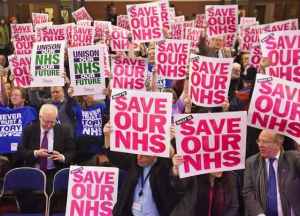
 

Save Our NHS

Top Image: Guardian

Agree with this article? Violently disagree? Scroll down to leave a comment.

Follow Semi-Partisan Politics on TwitterFacebook and Medium.