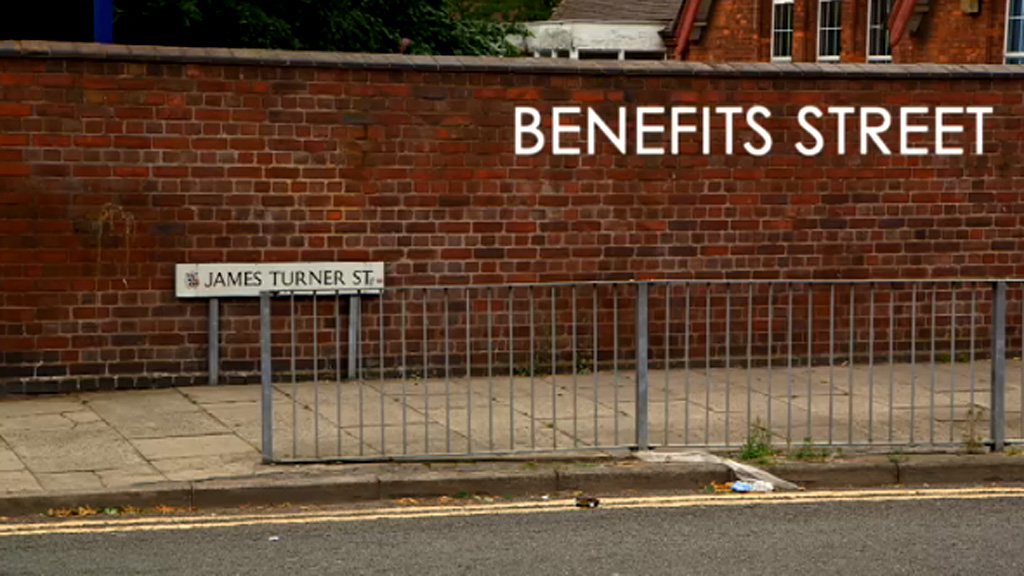
Meet Britain’s Compassionate, Homicidal Welfare System

Benefits Street - Welfare Trap - Britain


If you are even moderately well-off and suddenly fall on hard times, Britain’s universal welfare system isn’t like landing in a safety net – it’s more like smacking into a concrete floor from a fifty-foot drop.


People generally talk about the British welfare state as some kind of benign presence, maybe in need of a tweak here or there but basically something of which we can be justifiably proud – Britain’s post-war gift to humanity.

This story makes us feel good, so naturally most of us swallow it unquestioningly, nodding along when the NHS is worshipped in a theatrical Mass during the London Olympic Games opening ceremony, or when Just Another Identikit Politician drones on about the importance of “triple-locking” pensioner benefits.

Sadly, it’s all nonsense. The universal welfare state and its organising principle of non-contributory benefits has proven to be one of the greatest self-inflicted evils we have ever wrought in this country, a vast conveyor belt of human misery leading to an incessant grinding machine in which the lives and dreams of countless thousands of our fellow citizens are destroyed each year, while nearly everyone turns and looks the other way.

Usually it’s good when government does not discriminate. Justice, for example, should certainly be blind, as the old saying goes. But when it comes to social security, we choose to regard our welfare system as a “safety net”. Yet any fisherman knows that different nets are needed for different environments, and likewise a one-size-fits-all safety net for citizens experiencing unemployment or hard times simply won’t catch everybody. Some will slip through entirely and crash to the ground, while others will become ensnared and trapped forever. In other words, when it comes to welfare we should actually want the government to actively discriminate.

Continue reading

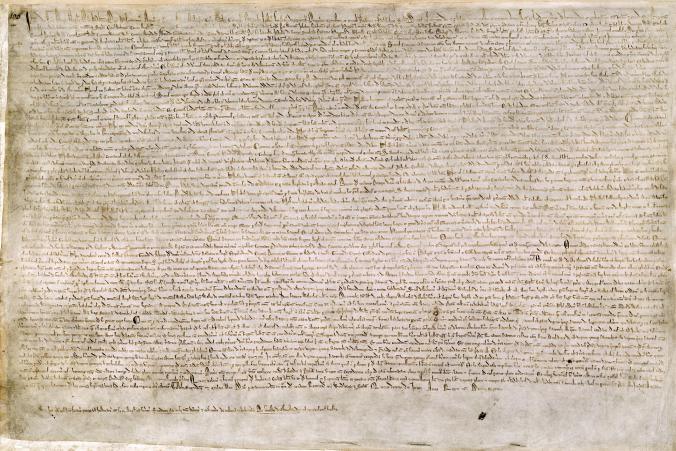
800 Years Of Magna Carta: Still Worth Celebrating, After All These Years

Magna Carta - 800 Years Anniversary - Human Rights - Freedom - Liberty - Britain - England


By Ben Kelly, blogger and editor of The Sceptic Isle.

15 June 2015 marks 800 years since a rather famous charter was agreed by the unpopular King John at Runnymede, under pressure from a group of rebellious barons who had backed his failed war against the French and now sought to constrain him.

The severely weakened king had no choice but to bear witness to the sealing of what many now perceive as one of the world’s most important documents. It has become iconic, but it has its detractors. It is a favourite pastime of dry historians and politically motivated lawyers to pick the myth apart and express their disdain for the reverence shown to the old document.

It is quite true that we tend now to view it through rose tinted glasses after much historical revisionism and the creation of a national myth around the event.

The details of the actual event and the passage of the charter into law are often oversimplified or caricatured. The date which we will this year mark, and the document we celebrate, is revered in part because of the manner in which it has been used by those with a political agenda.

Continue reading

If Barack Obama Likes The EU So Much, America Can Take Britain’s Place

Barack Obama - EU - Britain - Brexit


The harshest critics of President Obama like to complain that the 44th president of the United States does not believe in American exceptionalism.

But today Barack Obama proved these fears to be unfounded – he does indeed believe that America is different and better than all the other countries of the world. And he did so by using an intervention at the G7 summit in Germany to pointedly suggest that a diplomatic settlement which the United States would never accept for itself (membership of a supernational body with sovereignty over the US government) is perfectly good enough for Britain, America’s closest ally.

From the Huffington Post:

Mr Obama’s comments came as he met Prime Minister David Cameron for talks in the margins of the G7 summit of world leaders in Schloss Elmau, Germany.

They are the strongest indication yet that Washington wants a Yes vote in the referendum which Mr Cameron has promised by the end of 2017 on whether Britain should stay in the EU.

Greeting Mr Cameron at the start of the bilateral talks, Mr Obama said the US-UK relationship remains strong, telling reporters: “We have no closer partner around the world on a whole host of issues.”

And he added: “I would note that one of the great values of having the United Kingdom in the European Union is its leadership and strength on a whole host of global challenges, so we very much are looking forward to the United Kingdom staying part of the European Union because we think its influence is positive not just for Europe, but also for the world.”

It should be noted that by making these pro-European interventions, President Obama is only repeating the longstanding American diplomatic position, which is that Britain should remain part of the European Union, come hell or high water.

Unfortunately, both hell and high water are now nearly upon us thanks to the suffocating economic and political embrace of the Old World, and it is high time we stopped giving any weight or consideration to American entreaties for us to do what is most convenient and beneficial for their own foreign policy over and above what is best for Britain. The United States would certainly like for Britain to remain in the European Union. But don’t take this as a sign of some overriding concern for the future of the UK’s economy or the health of our democracy – far from it.

Continue reading

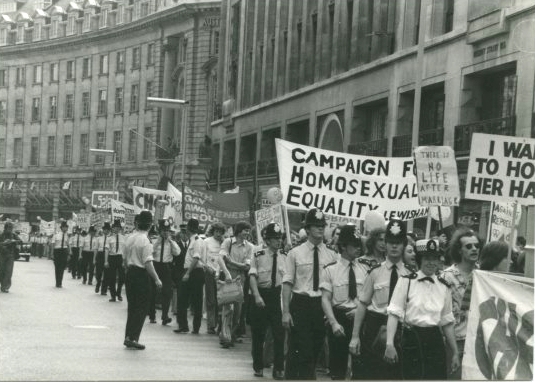
The Soft Bigotry Of The Left: UKIP Banned From London Gay Pride March

Pride In London - UKIP banned - Gay Pride March - 40 Year Pride Anniversary


When is it right and proper to ban a group of people from participating in what has traditionally been an inclusionary and proudly non-partisan public event?

The answer, according to the organisers of the Pride in London gay pride parade, is when those innocent people just happen to be affiliated to UKIP, the pariah party among Britain’s political class.

There had been rumblings that this might happen for a few days now. When it was discovered that an LGBT delegation from UKIP planned to join the march, thousands of virtue-signalling left-wing keyboard warriors took to the internet in self-righteous fury, signing a petition to have LGBT UKIP members and other sympathetic Ukippers purged from the event.

The online petition (change.org petitions now being the preferred medium for the new middle class clerisy to purge opposing thought from the public sphere) raged:

Nigel Farage, leader of UKIP, clearly does not support the values of acceptance that Pride promotes, and UKIP is an inherently homophobic, transphobic, xenophobic, racist and misogynistic political party.

UKIP’s inclusion in Pride has already caused public outcry and many have stated they would feel unhappy and unsafe to have a UKIP group included in Pride 2015’s march, being that they are from an organisation that inherently does not support the values of acceptance and inclusion that Pride promotes.

To their partial credit, the organisers did not back down immediately. But now it seems that the anti-UKIP heat became too much for the Pride in London organisers to withstand. So great is the level of hostility and opprobrium showered on Ukippers – as well as on those others perceived to be going too easy on Nigel Farage’s party – that the banning of UKIP from the parade was sadly inevitable.

Continue reading

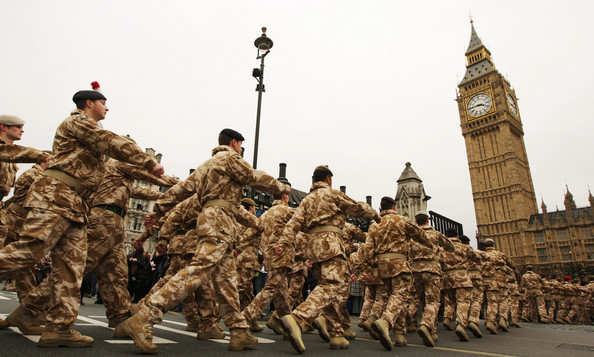
Where Are Our Priorities? Tory Defence Cuts Are Dangerous And Unnecessary

Troops Westminster Parliament


Ministry of Defence ordered to find £1 billion of further cost savings from the defence budget while OFGEM gives £500 million to power companies to make electrical power lines look prettier

Government has no more fundamental duty than the protection of the realm from threats foreign and domestic. But while David Cameron’s Conservative majority government is quick to take action against domestic threats (eagerly spending money and passing laws which undermine our fundamental freedoms and civil liberties in the process), it is worryingly weak when it comes to keeping Britain well equipped to deal with foreign dangers.

In just the latest manifestation of Tory disdain for defence issues, no sooner had the Conservatives secured their surprising general election victory than George Osborne sent an edict to the MoD demanding that they find another £1 billion of cost savings from an already pared back and insufficient budget.

Isabel Hardman, writing in The Spectator, remarks:

Even though the prospect of Britain failing to meet that Nato target is upsetting Washington, and even though it is something that agitates Tory backbenchers, and even though one Labour leadership candidate (Liz Kendall) has said they would stick to 2 per cent, this is unlikely to cause as big a row in Westminster as perhaps it should.

For starters, the Opposition is still officially not endorsing the 2 per cent target. For another thing, one of the best-briefed proponents of the Tories keeping their commitments, Rory Stewart, is no longer chair of the Defence Select Committee and is now a minister. And for another thing, Tory MPs are trying their best currently to behave rather than pick fights. Even if they did, a rebellion organised by a backbencher would number a few dozen at the most and would unlikely to be joined by Labour unless Liz Kendall wins the party leadership. There will be criticism from the sidelines, but few are expecting any sort of real trouble that is troublesome for the government.

Of course, this is only if you measure trouble as being purely confined to the walls of the Palace of Westminster, rather than the sort of trouble the armed forces may be required to deal with but just with even further reduced capabilities, but there we go.

Continue reading