Rolling Back Surveillance – What’s The Catch?


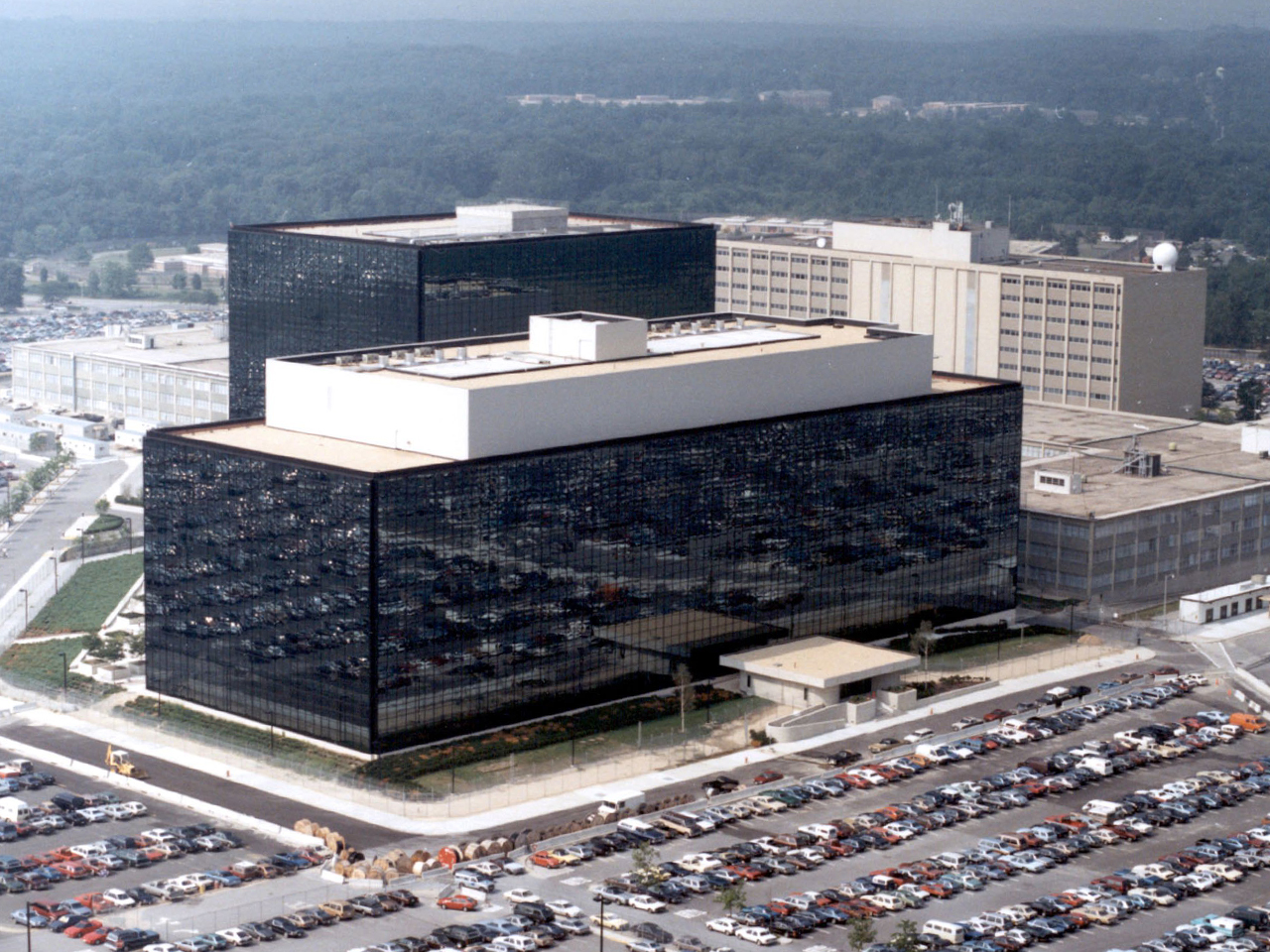
Supporters of ending the practice of bulk data collection by the NSA and enacting safeguards on requesting permission to monitor the communications of private citizens have found a very unexpected ally in Democratic congressman Dutch Ruppersberger, the NSA’s hometown representative and one of the agency’s key supporters.

The Guardian reports:

This week, the top Democrat on the House intelligence committee, Congressman Dutch Ruppersberger, who represents the Maryland district home to the NSA’s Fort Meade headquarters, came out in favor of a remedy for the controversial surveillance.

Ruppersberger, in interviews with the Washington Post, National Journal and Politico, said he was working to craft a proposal that would require court orders for government requests for Americans’ phone records – perhaps on an individual basis – from the telephone companies, without requiring the companies to expand retention of their customer records beyond current practice.

This has rightly aroused suspicion from some civil libertarians – partly because Ruppersberger admits that elements of his proposal still remain to be “worked out” (read: emasculated before coming up for a vote) and partly because Ruppersberger’s track record on standing up to his district’s largest employer is predictably weak.

Others, however, seem to take his proposal in good faith:

On the other hand, sources said, Ruppersberger’s evolving position represents what one called a “huge step forward” toward an outright end to bulk domestic metadata collection. Ruppersberger’s credibility with the NSA might also be an asset for such an effort.

I’m sceptical. Though any politician turning away from embracing the unchallenged omniscience of the intelligence services is a good thing, we should avoid ascribing too many noble motivations to those who do so. This can be difficult, given the serious way in which such lawmakers are suddenly discussing the issue. Here, Ruppersberger could pass for a concerned member of the ACLU were it not for his voting record and numerous other public statements to the contrary:

“I believe that the Foreign Intelligence Surveillance Act must be reformed. We must improve the American public’s confidence in, and perception of, our national security programs, by increasing transparency, strengthening oversight, and safeguarding civil liberties,” Ruppersberger said.

“I also believe that any proposal to reform the Foreign Intelligence Surveillance Act must preserve critical intelligence tools that protect our country and its allies.  I am concerned with any approach that would eliminate this important intelligence tool and make the country more vulnerable to terrorist attacks, without providing a workable alternative.”

Ruppersberger’s decision and newfound concern about civil liberties could well be no more than what Glenn Greenwald has called the ‘Angela Merkel’ effect – a term used to describe a phenomenon where a public civil liberty infringement is tolerated quite happily by a public official until they realise that they too have become victims (in Merkel’s case, she was largely silent on the fact that the NSA had been intercepting the communications of German citizens but incandescent with rage that her own private communications might also have been monitored).

Senator Dianne Feinstein of California also falls into this category – long an NSA apologist and advocate for massive secret public surveillance, but suddenly up in arms when the work of her own committee was monitored by the CIA. While it would be nice to believe that a dyed-in-the-wool surveillance hawk such as Feinstein has undergone some kind of road-to-Damascus style conversion to the cause of privacy rights, sadly the greater likelihood is that hypocrisy and political calculation played the larger part in her Senate floor outburst.

Not everyone is convinced

The likelihood is that the most hawkish, reflexively pro-surveillance lawmakers realise that the political sands have shifted beneath their feet, and have deemed it wise to be seen giving a little ground now to avoid complete defeat in the future.

In Ruppersberger’s case, that defeat would be epitomised by the passing of the rival USA Freedom Act, sponsored by Wisconsin Rep. Jim Sensenbrenner, which goes further in setting stricter standards for collecting communications data on individuals, standards that would need to pass a certain burden of evidence in order to gain a court order:

With the details still undetermined in Ruppersberger’s proposal, it is difficult to know how far the new effort would go in requiring court-ordered individual suspicion to access phone records, as well as requiring a specific “relevance” connection to an ongoing terrorism investigation, as required in the Patriot Act and the proposed USA Freedom Act – without which, privacy advocates argue, would leave the door open to dubious searches of government records.

While the gradual conversion – or defensive rearguard action – of politicians like Dutch Ruppersberger and Dianne Feinstein can be cautiously welcomed, the public should never forget that that if these people had their way, we would not be having a national conversation about government surveillance and civil liberties at all.

National security fanatics from both parties have lined up to condemn Edward Snowden for whistleblowing and making the public aware of what the government had been doing, going so far as to call him a traitor and make up all manner of ludicrous unproven assertions to cast doubt on his moral integrity.

If the Ruppersbergers and Feinsteins had their way, the American political debate would continue to bounce back and forth between Obamacare, Benghazi and 2016 speculation because we simply would not know about bulk data collection, the PRISM program, back door access into the servers of our most commonly used internet applications or any of the other “protective measures” that the government felt the need to take without glancing at the Constitution or mentioning what they were doing to the people.

So by all means, let us welcome those genuine converts to the cause of civil liberties. But let’s hold off on the ticker-tape parade in their honour just a little while, until their motives become clearer with time.

UPDATE – 15/03/2014: Whatever the limitations of the debate on surveillance may be in the United States, let us be grateful at least that a debate is taking place at all. In the United Kingdom, by contrast, there has been no apology or sign of contrition from David Cameron, no real admission that the British government had overstepped the mark, and certainly no real political movement underway to start properly overseeing the British security services.

On Barraco Barner

gemmaworrall


It began with a simple tweet.

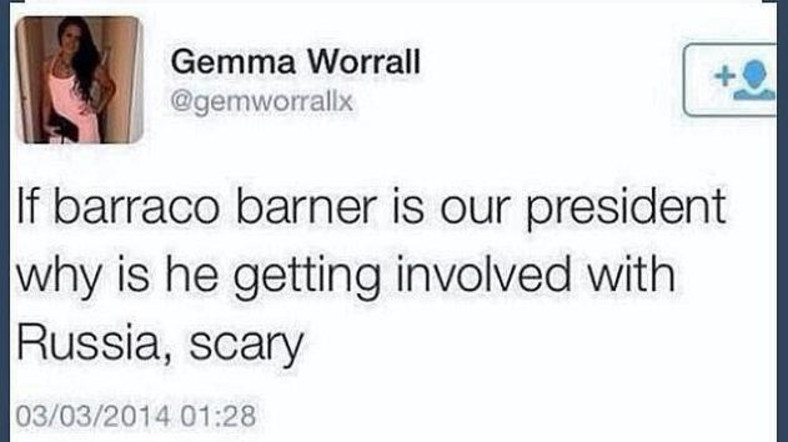
Gemma Worrall, a 20-year-old receptionist from Blackpool, picked the wrong day to start following the news. She became confused while watching a television report on the geopolitical chess game underway between Russia, Ukraine and the West, and by sharing her own two cents on Twitter she did more to tarnish the image of British education in a mere second than a whole years worth of falling national examination results could ever do on their own.

Misunderstanding President Barack Obama’s job specification (and grotesquely, if comically, mangling his name), she posed the rhetorical question:

If barraco barner is our president why is he getting involved with Russia, scary

We can all count the ways that this is embarrassing, cringeworthy, depressing. Failing to grasp that Barack Obama is not “our” president. Getting Obama’s name so terribly wrong (a Damn You Autocorrect fail for the ages, if her excuse is to be believed). Not understanding that in carrying out their duties as heads of state or government, leaders “get involved” with other countries as a matter of course. Et cetera.

The ridicule was predictable, and it came. Seven thousand retweets, numerous mean-spirited comments and the usual smattering of death threats from the trolls. This was unfortunate and unseemly, particularly because the author of the offending tweet seems to have no malice about her at all, unlike many of her detractors.

There was no need for the more hateful reactions to the beautician’s blunder, nor even for the snide and scornful ones, because in truth, there is a little bit of Gemma Worrall in us all.

Take the Daily Mail for instance, one of many national newspapers to jump on their story. They and their readers may look down at Worrall for her geopolitical ignorance, but in the same article they feel it necessary to gently explain to their geriatric readership what it is to ‘hashtag’ or ‘retweet’ a statement on Twitter:

Within just 12 hours, her comment had been retweeted (where people send on your tweet for others to read again) almost 7,000 times and screenshots of her words were appearing on television news programmes as far afield as Australia, Canada and America.

A solid argument could probably be made (though not proposed by this blog) that it is actually far more useful to know the intricacies of social media and the workings of smartphones than it is to be up to speed on world leaders and foreign policy, especially given the degree to which technical and IT savvy have become such important prerequisites for employment and the equal degree to which foreign policy is conducted on behalf of us all by those who presume to know best but never deign to ask our opinions.

Rather more concerning is the low esteem in which the supposedly patriotic Daily Mail clearly holds our country in relation to the United States:

It’s a corker of a gaffe by anyone’s standards. Making the most powerful man in the world sound more like the fizzy vitamin supplement Berocca is one thing. Demoting him to leader of the UK is quite another.

Maybe Paul Dacre can order the Daily Mail to publish its definitive ranking of countries so that we can see just how much of a ‘demotion’ it is to go from President of the United States to Prime Minister of the United Kingdom. It is rather astonishing that a major British daily newspaper should hold such an inferiority complex, previously hidden and apparently deeply suppressed, with regard to another country. But this revealing morsel of information and potential area for debate will also no doubt be lost amid the swell of outrage at Gemma Worrall’s personal ignorance – an ignorance from which none of us are entirely free.

Grace Dent, writing in The Independent, hammers home this fact and points out (albeit somewhat condescendingly) that while it is extremely hard to monetise a good layman’s knowledge of geopolitics, Worrall quite probably has other more practical skills that will stand her in much better stead throughout life:

Gemma has a skill. Gemma will most probably have a thorough understanding of Shellac nail procedures and skin exfoliation. She’ll probably know how to remove excess upper-lip hair, push back cuticles and spray a Fantasy tan without missing elbows or staining knees. So, yes, Gemma seemingly can’t spell Barack Obama. But she will always be in employment.

Meanwhile, the clever person with an arts BA Hons 2.2 who can spell Angela Merkel first time without googling it will be sat at home writing petulant blogs to David Cameron about why the Government hasn’t furnished them with a job as a medieval art curator. We deride the differently skilled and slap down the not quite as sharp, but the country’s cogs turn via the energies of people not quite as bookish as you.

While Dent probably cuts Worrall a little too much slack (inferring in their article that her principle error was the misspelling of ‘Barack Obama’ and not her ignorance of the leadership of her own country), there is surely some degree of truth to her conclusion:

As access to the internet makes many of us feel cleverer, more connected, more omniscient, more infallible, it’s tempting to write off all the people “left behind”.

All those little unthinking people without university degrees who shape our nails, or clean our houses, or mend our toilets, or rewire our kitchens, and can’t even spell a president’s name without messing it up.

But the fact is, they might not know where Ukraine is, and they might not know why Germany doesn’t favour sanctions against Russia, but when the lights go out in your house, they know where the fuse box is and which wires to fiddle with to mend it. And right at that moment that’s a damn sight less stupid than you.

Dent labours the point, but it is an important one. Knowledge and skill come in many forms, and it is quite unreasonable to expect everyone’s spheres of knowledge to coincide with our own – though a basic level of fundamental civics awareness really should not be reaching for the stars.

Fraser Nelson, writing in The Spectator, makes a similar point, but while his critique of the Westminster set is dead-on, his excusing of fundamental ignorance is not:

The Spectator’s great coalition of readers include those who think poetry is more important than politics.  Those who buy us just for Jeremy Clarke and cartoons  are certainly getting their money’s worth (just £1 a week, by the way, sign up here).

If you decide that life’s too short to follow the Westminster tragicomedy, it emphatically does not make you stupid. The societies which tend to make a fuss about the bloke in power tend to be the societies in which you don’t want like to live. The freer the country, the less the need to know who is running the government. That’s why Ms Worrall’s tweet can be seen a sign of something going right, rather than wrong, in Britain today.

But what should be of infinitely more concern to everyone than how many minutes of national and international news Gemma Worrall consumes every evening after she finishes work is the fact that a young woman with a seemingly solid and respectable school education has seemingly emerged from twelve years of compulsory education with next to no knowledge of how her own country operates and is governed.

The Daily Mail informs us that Worrall is not stupid on paper, and has the qualifications to back it up:

While Gemma might not be signing up for Mensa any day soon, she’s certainly no Jade Goody. Softly spoken and articulate, she was educated at a local Catholic school and insists that she has 17 GCSEs — an extraordinary number, as most people obtain 11 at most — in subjects including English, Business Studies, Religious Education, Textiles, Technology and Media Studies, all with passes of grade C and above. She also says she has two A-levels, in Travel and Tourism.

Worrall is educated to A-level standard, and yet she is sorely in need of the type of introductory civics lesson that an American child might reasonably expect to receive by the age of eight. And this blogger has extensive personal anecdotal evidence that Worrall is far from alone in her want for basic knowledge.

How is it possible to gain numerous GCSEs (even if the reported figure of seventeen turns out to be inaccurate) and A-Levels and not pick up some civics knowledge along the way?

More pressingly, perhaps especially today with the need to assimilate immigrants and their children, why is civics – the nuts and bolts of British society, citizenship, law and government – not one of the very few mandatory and inescapable classes for all British children?

Michael Gove, Ed Balls, Alan Johnson, Ruth Kelly, Charles Clarke, Estelle Morris, David Blunkett, Gillian Shephard, John Patten and Kenneth Clarke: please stand up. Would you care to explain yourselves?

On Dissent In The Mainstream Media

Not in Abby Martin's name
Not in Abby Martin’s name


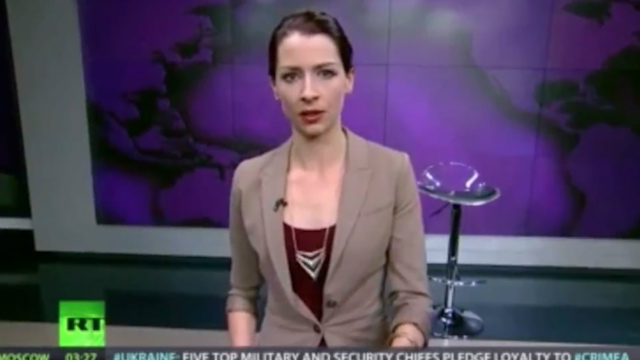
Glenn Greenwald, now writing for The Intercept, makes a very good point about journalistic integrity in the context of the ongoing Russian invasion and occupation of Crimea.

In the midst of this developing story, one of the anchors at Russia Today, the Kremlin-funded English-language news channel presenting a Russian perspective on the world, made news of her own by denouncing Russia’s actions at the end of her segment. The clip is available to view here:


The money quote is this:

I can’t stress enough how strongly I am against any state intervention in a sovereign nation’s affairs. What Russia did is wrong. I admittedly don’t know as much as I should about Ukraine’s history or the cultural dynamics of the region, but what I do know is that military intervention is never the answer. And I will not sit here and apologise or defend military aggression.

Greenwald wonders aloud how so many of those voices condemning Russia for invading a sovereign country can do so with a straight face when they themselves agitated for, or were apologists for the US-led war in Iraq:

Enthusiastic supporters of a wide range of other U.S. interventions in sovereign states, both past and present and in and out of government, are equally righteous in their newfound contempt for invasions – when done by Russia. Secretary of State John Kerry – who stood on the Senate floor in 2002 and voted to authorize the invasion of Iraq because “Saddam Hussein [is] sitting in Baghdad with an arsenal of weapons of mass destruction” and there is “little doubt that Saddam Hussein wants to retain his arsenal of weapons of mass destruction” – told Face the Nation on Sunday: “You just don’t in the 21st Century behave in 19th Century fashion by invading another country on completely trumped-up pretext.” The supremely sycophantic Face the Nation host Bob Schieffer – as he demanded to know how Russia would be punished – never once bothered Kerry (or his other Iraq-war-advocating guests, including Defense Secretary Chuck Hagel and Washington Post columnist David Ignatius) by asking about any of that unpleasantness (is it hard at all for you to sermonize against invasions of sovereign countries given, you know, how often you yourself support them?)

This is just as true for the press as it is for television talking heads or armchair generals. As Greenwald shows by quoting the example of CBS’s Bob Schieffer, the implicit assumption in many questions asked by television news hosts in America (and indeed in Britain) is that the invasion is unprecedented, wrong and contrary to international law. And while the invasion is indeed all of these things, this same level of proper journalistic scepticism was mysteriously missing when we were the aggressor.

Indeed, those few brave American media personalities who did speak out against the impending invasion of Iraq, and who dared to question the legitimacy of the Bush Administration’s every unconstitutional action, soon found themselves banished to the western journalistic equivalent of Siberia. Well known journalists or personalities such as MSNBC’s Phil Donohue and Ashleigh Banfield certainly felt the consequences, as Greenwald points out in an addendum to his piece:

Both Donahue and Arnett were fired because of their opposition to the U.S. war. Arnett was fired instantly by NBC after he made critical comments about the war effort on Iraqi television, while a memo from MSNBC executives made clear they were firing Donahue despite his show being the network’s highest-rated program because he would be “a difficult public face for NBC in a time of war”.

During that same time, MSNBC’s rising star Ashleigh Banfield was demoted and then fired after she delivered a stinging rebuke of misleading pro-war TV coverage by U.S. outlets, while Jessica Yellin, at MSNBC during the time of the war, admitted in 2008 that “the press corps was under enormous pressure from corporate executives, frankly, to make sure that this was a war that was presented in a way that was consistent with the patriotic fever in the nation and the president’s high approval ratings” and that executives would change stories to make them more pro-war.

While it is too soon to determine the medium-longer term impact of Abby Martin’s words on her career at RT, the contrast between this act of journalistic independence on a news channel so close to the Kremlin and the recent history of the American (and British) news media is sobering and discomforting. Though the post-PATRIOT Act consensus is finally starting to fray given the recent NSA scandals and revelations, at a crucial period in American history significant dissent or journalistic scepticism was almost entirely absent from the domestic press.

That is not to say that press freedom in America/Britain and Russia are in any way comparable – despite a worrying background noise of increasing official encroachments, regulation and intimidation, the press is far more free in America than in Russia, and any sane journalist would wish to operate in the former climate rather than the latter.

But while infinitely preferable to homogenised Russian state propaganda, western media has shown itself capable of being bullied into self-censorship on occasions, be it the panicked urge to appear ‘acceptably’ pro-war and support the policies of George W. Bush in 2003 or the far more recent insidious suggestion by David Gregory in 2013 that journalists who report on leaked classified information should consider themselves co-conspirators.

As always, before climbing atop the highest parapet and waving the Stars and Stripes or the Union Jack, we would do well to re-examine our own recent, tarnished history – be it our history of military intervention abroad or journalistic coverage of those adventures.

Doing so will not make Russia’s egregious actions in Crimea any more palatable or legitimate, but it will at least allow us to look Russia in the eye as we denounce them.

Who Really Wants A Free Press?

MapRSF


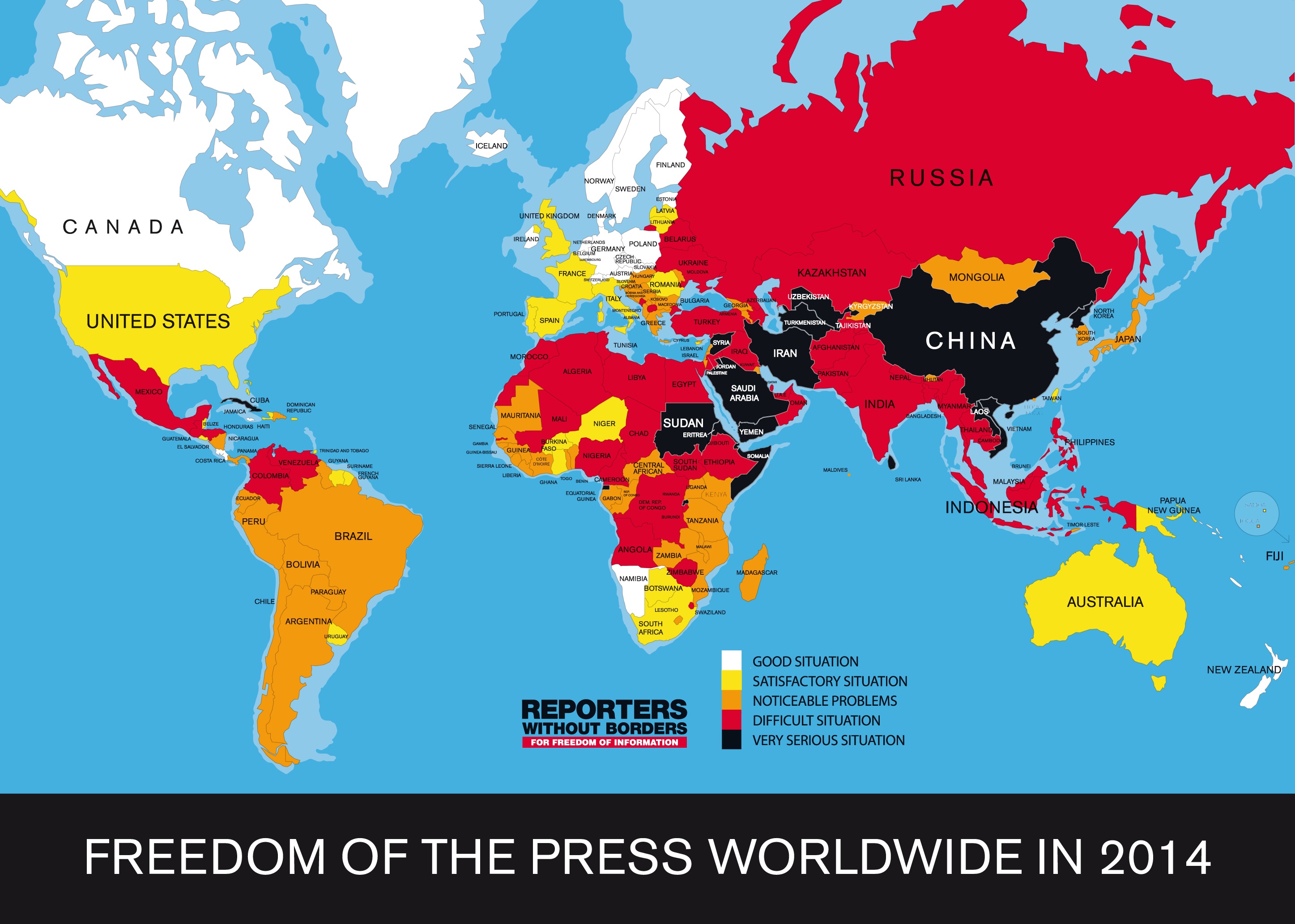
The United Kingdom has fallen from 29th to 33rd in the world in the World Press Freedoms Index 2014.

The report, compiled annually by Reporters Without Borders (RSF) is scrupulous in methodology and incorporates both qualitative and quantitative data. And for a country like Britain, which likes nothing more than to strut around the world proclaiming its comparative virtues, it makes for some dismal reading.

RSF’s summary of Britain is dominated by the British government’s chilling and bullying treatment of the Guardian newspaper as it sought to suppress the publication of information based on the NSA leaks by Edward Snowden, as well as the fallout from the Leveson Enquiry into the press behaviour and the prospect for further stultifying regulation of the industry:

In the United Kingdom, the government sent officials to The Guardian’s basement to supervise destruction of the newspaper’s computer hard disks containing information from whistleblower Edward Snowden about the practices of GCHQ, Britain’s signals intelligence agency. Shortly thereafter, the partner of Glenn Greenwald, the former Guardian star reporter who had worked closely with Snowden, was held at Heathrow Airport for nine hours under the Terrorism Act. By identifying journalism with terrorism with such disturbing ease, the UK authorities are following one of the most widespread practices of authoritarian regimes. Against this backdrop, civil society could only be alarmed by a Royal Charter for regulating the press. Adopted in response to the outcry about the News of the World tabloid’s scandalous phone hacking, its impact on freedom of information in the UK will be assessed in the next index.

Britain isn’t always called out by name, but there can be little doubt which European country was the intended target of this particularly barbed comment:

These developments showed that, while freedom of information has an excellent legal framework and is exercised in a relatively satisfactory manner overall in the European Union, it is put to a severe test in some member countries including those that most pride themselves on respecting civil liberties.

How true this is. Britain has long been (and has long considered itself) a stalwart defender of free speech, but the recent thuggish attempt to use anti-terrorism laws to detain a relative of a journalist and to threaten a national newspaper with closure unless it destroyed information which had the potential to embarrass the government are more worthy of Vladimir Putin’s Russia than the land of Magna Carta.

The New York Times, on the other hand, looks at the same report and seems to take succour from it, which is very surprising given the fact that their journalists have worked so closely with their beleaguered colleagues at The Guardian.

Their editorial board is celebrating the 50th anniversary of the landmark New York Times vs. Sullivan case, which set the bar for winning libel or defamation claims much higher than in Europe and thus created a bulwark protecting press freedom in the United States. This excerpt from the majority opinion in that case should be mandatory reading for all British politicians and those involved in public life, who are often all too keen to clamp down on free speech at the first sign of discord:

The Supreme Court voted unanimously to overturn that verdict. The country’s founders believed, Justice William Brennan Jr. wrote, quoting an earlier decision, “that public discussion is a political duty, and that this should be a fundamental principle of the American government.” Such discussion, he added, must be “uninhibited, robust, and wide-open,” and “may well include vehement, caustic, and sometimes unpleasantly sharp attacks on government and public officials.”

While the New York Times is absolutely right to recall and celebrate this landmark victory – libel laws in many other countries, especially Britain, are far too plaintiff-friendly – they seem all too willing to ignore the negative actions that have chipped away at this victory in the intervening half century, the various acts of craven self-censorship or collusion with imperial government overreach or the undermining of factfinding by the ongoing war on whistleblowers.

This selective amnesia leads to the following self-congratulatory pronouncement by the Times editorial board:

Still, American press freedoms rank among the broadest in the world. Citizens and media organizations in countries from China to India to Britain do not enjoy the same protections. In many parts of the world, journalists are censored, harassed, imprisoned and worse, simply for doing their jobs and challenging or criticizing government officials. In this area of the law, at least, the United States remains a laudable example.

The only problem with this statement? The United States ranks thirteen places behind the United Kingdom, at 46th in the world.

Fortunately for the New York Times and the reputation of the American press, the RSF world press freedom index does not take quality of journalism into account, only the ability of the journalist to practice their trade freely – otherwise they could have found themselves docked another few positions for that howler of an America-must-be-best presumption.

The truth is that neither Britain or America have anything to be proud of faced with this latest report. In an ideal world, David Cameron and Barack Obama would be held to account and hauled over the coals for presiding over such a poor performance. A backbench MP looking to bolster his or her civil liberties credentials could do worse than to ask the prime minister to defend or account for his government’s performance on press freedom at Prime Minister’s Questions this coming Wednesday.

But regrettably, a place in the mid-low 30s ranking is exactly where David Cameron, Barack Obama and many of those in power in Britain and America want their respective countries to sit. It allows for a press that is boisterous and noisy in all of the areas that don’t really matter (and so showing every outward appearance of being free), but that meekly tows the line when it comes to critical issues such as national security, civil liberties and holding those in power to account for their actions.

We in Britain or America may not think of countries such as Finland, Norway, Luxembourg or Liechtenstein as shining role models to emulate, if indeed we ever think about them at all. But in some key aspects, it is they who now carry the torch for freedom of speech and the free press, not the traditional Anglo-American partnership who held it aloft so dutifully for so long.

The Morning After In Arizona

Andrew Sullivan’s reflections on the vetoing of SB1062 by the Arizona Governor, Jan Brewer. We are in agreement, with one significant exception – Andrew sees no issue with discrimination against gays (or any other minority or class of individuals) in the private realm, only the public realm where government is an actor. While I admire his magnanimity in being willing to shrug off the hate and intolerance of certain fundamentalists, I cannot agree that this is the right approach. It is all very well to favour “maximal liberty”, but taken to its (logical, not extreme) conclusion, this would open the door for arbitrary refusal of service to anyone on the grounds of anything masquerading as religious conscience.

Andrew Sullivan's avatarThe Dish

[Re-posted from earlier today]

Here’s the money quote from Jan Brewer’s veto statement last night:

Senate Bill 1062 does not address a specific and present concern related to religious liberty in Arizona. I have not heard of one example in Arizona where a business owner’s religious liberty has been violated … Religious liberty is a core American and Arizona value, so is non-discrimination.

As I’ve mulled this over and over, I have a few straggling thoughts. Against the bill: it had two terrible features. The first was the breadth of the religious liberty invoked. The real innovation in Arizona was the extension of religious liberty claims against other citizens, rather than against the government itself. That’s a big leap, and trivializes religious liberty in some ways. No individual can coerce, even with a lawsuit, the way the government can. The second is the environment in which this bill was…

View original post 369 more words