It is currently 29 degrees Celcius (84 Fahrenheit) on Christmas Eve in McAllen, Texas, and I am starting to regret not packing more shorts and t-shirts, as well as failing to remember to pack my sunglasses for the fifth consecutive year.
Christmas in the Rio Grande Valley is very different to the Christmases I knew growing up on the Hertfordshire-Essex border in southeast England, but it comes with its own unique and wonderful traditions – waiting in line with half the town to collect a delicious order of tamales from Delia’s, taking in a movie on the afternoon of Christmas Day, driving around to look at the most opulently decorated houses and streets, and of course attending bilingual English/Spanish Mass (complete with Mariachi music) at the local Catholic church or at the Basilica of Our Lady of San Juan del Valle.
And of course there are the many unifying factors too, common to Christmas in Britain and America – coming together as a family, sharing a Christmas meal (including a smoked turkey over here), opening presents, making the day extra special for the children.
While I enjoy celebrating with my wife’s family here in the Rio Grande Valley of Texas I also think of my dear family back home in England, including those who are sadly no longer with us but who had such a formative influence on me – particularly my grandparents and an aunt who did so much to make each Christmas special.
And of course I think of all of you, my growing family of readers on this blog. We agree, we argue, we (mostly) remain civil while passionately arguing our cases, we educate one another – or at least, you all educate me. I have a long reading list of new books and academic papers suggested by many of you which I hope to read in 2017 and a forthcoming New Year’s Resolution to read as many of them as possible, and hopefully reflect back a fraction of this distilled wisdom in the future pages of this blog.
To all those who are celebrating this weekend, I wish you a very Merry Christmas.
–
Support Semi-Partisan Politics with a one-time or recurring donation:
–
Agree with this article? Violently disagree? Scroll down to leave a comment.
Right now, Britain needs a leader, not a placeholder – Theresa May needs to step up and set some ambitious national goals, or else be swept aside to make room for a real conservative leader
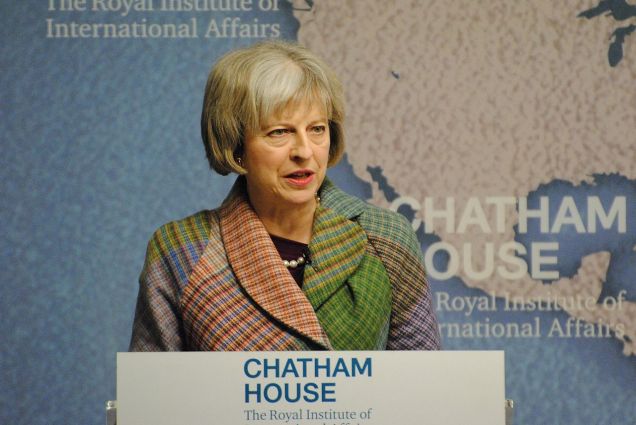
Theresa May is proving as Prime Minister that she is no Margaret Thatcher, a former Thatcherite minister has said, because she is not “seizing the initiative”.
David Mellor, who served under Baroness Thatcher for three years, said “the description of Theresa May as the new Margaret Thatcher is as wide of the mark as it could possibly be”.
Mr Mellor urged Mrs May to call a general election next year and win a larger House of Commons majority. The Tories have a consistently strong polling lead over Labour.
Mr Mellor was a minister in Lady Thatcher’s last government in four departments from 1987 to her resignation in November 1990.
He said Mrs May had shown herself “infirm of purpose”, most recently over the Christmas strikes at post offices, Southern Rail and Heathrow airport, where action will take place later this week.
He told Sky News’ Murnaghan: “When I was a minister for four years she treated me with even more disrespect than my mother did, but Margaret Thatcher knew what she wanted do and did it.
“I don’t think Theresa May knows what she wants to do. Her advisers appear to be the ones that create the headlines. I think she is sitting there and she is infirm of purpose, and she needs to seize the initiative.
“The main initiative she needs to seize is to have an election and get herself a mandate.”
This blog has never joined the calls for an early general election, not least because the laudable idea of having fixed term parliaments is rather undermined if we suspend the rule on the first occasion it becomes politically inconvenient. But if triggering a general election is what it takes to force Theresa May to really think about what kind of prime minister she wants to be (and hopefully give the British people a clue as well) then maybe we should just get on with it. Because right now Britain is idling in neutral at a time when we should be setting a firm course and all striving to pull in the same direction.
The underlying problem is that having succeeded to the office of prime minister unexpectedly in the most turbulent of times (in the wake of David Cameron’s resignation and Andrea Leadsom’s surprise departure from the following Conservative Party leadership contest), Theresa May evidently took office without ever having clearly thought about what it is that she wanted to achieve through her leadership of Britain (the recent Sunday Times interview is heavy on temperament and almost completely lacking in vision).
What’s worrying is that Theresa May’s government has passed the Investigatory Powers Act 2016, dynamite for privacy and civil liberties, and is still toying with the idea of enforcing section 40 of the Crime and Courts Act and Part 2 of the Leveson Report, further curtailing freedom of the press. It is not just that we do not know enough about Theresa May’s agenda for Britain – what little we do no should give small government conservatives everywhere cause for concern.
Contrast this to the last great transformative Conservative prime minister, Margaret Thatcher, who had four years behind her as Leader of the Opposition in which to solidify her worldview and flesh it out with policy (notably from the Stepping Stones Report and Centre for Policy Studies think tank) before taking office. By the time Thatcher entered 10 Downing Street in May 1979, she had not only diagnosed Britain’s ailments but formed a fairly clear idea of how she intended to tackle them, even though the road ahead was inevitably marked by missteps and challenges.
Theresa May appears to have no such plan. If she has a burning ambition to change Britain from an X type of country to a Y type of country then she is keeping her cards very close to her chest, for there is no evidence of such a goal. All we have is her reputation of flinty-eyed authoritarianism and aversion to publicity, earned during six years at the Home Office, a grammar school fetish and some woolly words about focusing her government’s attention on helping the JAMs (people who are Just About Managing).
The danger, therefore, is that with Brexit on her plate, a populist rebellion afoot in the country and challenges abroad, Theresa May’s government will become so preoccupied with fighting fires and engaging in daily damage control that the big picture vision never emerges at all. Mellor is right to say that most of the useful tidbits of information about the government’s intentions have come not from the prime minister but from public spats between rival cabinet members. And who can be surprised that such turf wars are underway when there is no clear drumbeat emanating from Number 10?
Of course, Theresa May is by no means the first politician to reach 10 Downing Street without a plan for what to do in government. Gordon Brown famously spent so long plotting his own ascension and the downfall of Tony Blair that he cut a uniquely uninspired and uninspiring figure among world leaders, at least until the global financial crisis breathed some fire into his belly (even if his “solution” was hiking the top income tax rate up to an immoral 50 percent).
There are times when a bland and uninspiring individual, a technocrat, is the right leader for the moment – primarily when times are good and the key imperative is not to rock the boat. This scenario does not describe Britain in 2016. Brexit may be foremost of our challenges, but there are others, too. And from Theresa May’s cautious and unambitious start in office, it is difficult to see how she – and we – are to best confront them.
–
Support Semi-Partisan Politics with a one-time or recurring donation:
–
Agree with this article? Violently disagree? Scroll down to leave a comment.
Doesn’t this testimonial from a disaffected California liberal really speak volumes about just how far the American Left is going to lose friends and alienate people?
So I was raised a secular liberal. My college professors were secular liberals. During my journalism phase, my newspaper colleagues were secular liberals. My law school professors and peers were – in the vast majority – secular liberals. Almost everyone at my corporate law firm was a secular liberal. My California neighbors and friends are secular liberals, as are my colleagues. My mother, siblings, and their spouses are all secular liberals.
By all rights, I should be a member in good standing of their tribe, “liking” their Facebook posts and joining their candlelight vigils against the evil Trump Administration. But November 8 and its aftermath revealed to me that I am just so tired of these people. I can’t be like them, and I don’t want my kids turning into them.
I am tired of their undisguised contempt for tens of millions of Americans, with no effort to temper their response to the election with humility or empathy.
I am tired of their unexamined snobbery and condescension.
I am tired of their name-calling and virtue-signaling as signs of supposedly high intelligence.
I am tired of their trendiness, jumping on every left-liberal bandwagon that comes along (transgender activism, anyone?) and then acting like anyone not on board is an idiot/hater.
I am tired of their shallowness. It’s hard to have a deep conversation with people who are obsessed with moving their kids’ pawns across the board (grades, sports, college, grad school, career) and, in their spare time, entertaining themselves and taking great vacations.
I am tired of their acceptance of vulgarity and sarcastic irreverence as the cultural ocean in which their kids swim. I like pop culture as much as the next person, but people who would never raise their kids on junk food seem to think nothing of letting then wallow in cultural junk, exposed to nothing ennobling, aspirational, or even earnest.
I am tired of watching them raise clueless kids (see above) who go off to college and within months are convinced they live in a rapey, racist patriarchy; “Make America Great Again” is hate speech; and Black Lives Matter agitators are their brothers-in-arms against White Privilege. If my kids are like that at nineteen, I’ll feel I’ve seriously failed them as a parent. Yet the general sentiment seems to be these are good, liberal kids who may have gotten a bit carried away.
I am tired of their lack of interest in any form of serious morality or self-betterment. These are decent, responsible people, many compassionate by temperament. Yet they seem two-dimensional, as if they believe that being a nice, well-socialized person who holds the correct political views is all there is, and there is nothing else to talk about. Isn’t there, though?
I am tired of being bored and exasperated by everybody. I feel like I have read this book a thousand times, and there are no surprises in it. Down with Trump! Trans Lives Matter! Climate deniers are destroying the planet! No cake, we’re gluten-free!
These are good people in a lot of ways. But there has got to be a better tribe.
It must be disturbing to “wake up” like this and realise that you are no longer fully in communion with your tribe, so kudos to Rod Dreher’s reader for putting into words something that cannot be easy to admit. With the wounds of the 2016 presidential election still raw, many on the American Left have little time for doubters, and admitting a heresy such as this would likely be met not with understanding (let alone introspection) but rather with intolerance and fury.
The scene that comes to my mind is from the film American History X, where protagonist Derek Vinyard, serving a jail sentence for the racist-motivated murder of a black car thief, realises the flaws of his white supremacist worldview while in prison and is then utterly unable to engage with that community – his only source of friendship and support – after his release. Eventually, Vinyard confronts the group’s leader and explicitly rejects their racist ideology, at which point they chase him out of their camp.
Increasingly, one has to either buy the whole regressive leftist agenda or none of it at all. Because it is couched in such explicitly moral terms, with any departure from orthodoxy seen as a moral failure, to question just one aspect of the worldview – the identity politics, the environmentalism, the statist paternalism – is to make oneself persona non grata within that community. Imagine the pain of realising that you no longer believe every article in the leftist gospel, and then being faced either with the prospect of admitting your heresy and being actively shunned by family, friends and colleagues, or else keeping your opposition quiet and living a lie.
The American Left has, with too few exceptions, given up on trying to win by persuasion, seeking instead to achieve victory by shaming and bullying dissenters into a sullen, resentful silence. That approach is no longer working and delivering benefits, to the extent that it ever did. When people like Rod Dreher’s reader are leaving the tribe in disgust at the sanctimonious echo chamber of questionable values then clearly something has gone wrong.
None of this is to say that American conservatism is in fine fettle – clearly not, as this blog has repeatedly warned. The fact that Republicans have closed ranks behind a profoundly authoritarian and un-conservative President-elect Donald Trump is evidence of the challenge faced by small-C conservatives in trying to maintain their influence and steer the Trump presidency away from endless pitfalls.
But it is the slow-burning revolution on the Left (particularly the growing elitism and the lethal embrace of identity politics) which fed the populist Right to the extent that Donald Trump won the White House. And until the American Left learns to moderate its many excesses and accept ideological diversity together with all the other kinds of diversity they champion, they will continue to alienate crucial allies and accelerate their march into irrelevance.
–
Support Semi-Partisan Politics with a one-time or recurring donation:
–
Agree with this article? Violently disagree? Scroll down to leave a comment.
Well okay, way down at the southern tip of Texas, a few miles from the Mexican border, to be more precise.
I’m off to Texas to spend the Christmas and New Year celebrations with my American family. Blogging will continue (I hope to resurrect the Postcards from America series started last year and have the chance to write a few more reflective pieces) but will be at a slightly slower tempo, with occasional hiatuses on those days when we are either travelling or making merry.
I am currently seeking recommendations for good places to eat in Austin, Houston and Las Vegas – if you have any inspired ideas, please do get in touch!
Many thanks as always for reading, commenting, cheering and arguing with me here at Semi-Partisan Politics. Stay tuned!
–
Support Semi-Partisan Politics with a one-time or recurring donation:
–
Agree with this article? Violently disagree? Scroll down to leave a comment.
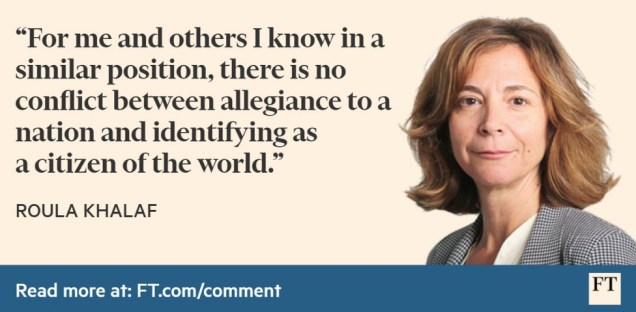
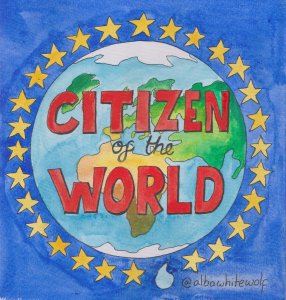
Most self-described citizens of the world are actually no such thing. They might enjoy the company of very similar people in increasingly similar global cities, but they probably couldn’t think of a single thing to say to somebody of different socio-economic status from a smaller town twenty miles down the road
Pete North explains perhaps better than anyone exactly why those people who style themselves as liberal “citizens of the world” are often no such thing – neither tremendously liberal, nor engaged citizens of anywhere, in any meaningful respect.
In the end there is nothing especially virtuous about people who are well travelled and outward looking. A society needs all stripes to function. We need people to work the routine jobs and then we need a fluid workforce not tied down with responsibilities. Moreover, having dealt with more well pampered HR people than a person ever should, one thing I have noticed is that travel does not necessarily broaden the mind.
If you take an incurious person and lavish travel upon them you are wasting your money. Some of the most shallow, snobby and fatuous people I know would consider themselves liberal citizens of the world. Such people have no concept of what it is to be building or maintaining something with a long term plan. They latch on to the fashionable and socially convenient worldview that the EU is the manifestation of liberal values but it little more than virtue signalling.
And develops his argument:
What I find is that the broader your horizons, the harder it is to fit in wherever you go, and so there remains a polarisation between the settled and the travelled. It is then no surprise that there is an obvious demographic divide and opinion is split between the ages.
In this, the remain side of the Brexit debate seem keen to pour over these demographic studies to pathologise the leave vote, and consequently delegitimise it, as though you need to be of a particular set for your opinion to hold any worth. Democracy is lost on such people. The whole point of democracy is one person; one vote, where we take a sample of opinion and move together on the basis of compromise.
In something as binary as EU membership though there is only winner takes all. There is no third option on the ballot so we move with the majoritarian view which is to leave. For whatever reasons they voted for, they did so in accordance with their own views based on their own choices. Their worldviews are formed by what they see and hear in the media, but also in the street and in the workplace. They are the best judges of what is important to them. To suggest that choosing a more conservative lifestyle means you are not qualified to make such an estimation is to invite the very sentiment behind the leave vote.
What these people know better than anyone is that the frivolous and rootless people telling them how to vote are no better than anybody. I imagine the working classes would like nothing more than to live a more adventurous life but they don’t because they can’t afford it. It’s then a bit rich to tell them that the EU brings them freedom of movement and prosperity.
Earlier this year Theresa May said “If you believe you are a citizen of the world, you’re a citizen of nowhere. You don’t understand what citizenship means”. I smiled when I heard that. Nothing quite so succinctly demolishes the flimsy worldview that believing in the borderless homogenised EU, along with all the pompous garb that goes with it, is somehow enlightenment. May recognises that being a citizen is more than holding outwardly liberal views. It means making a contribution – to be part of something.
It takes no particular talent to drift through life going place to place – and in so doing all you’re likely to meet is others who have made the same choices or enjoy an extraordinary privilege. Far from broadening the mind it merely reinforces a particular mindset which is never exposed to the values of the settled community. It’s why self-styled “citizens of the world” have no self-awareness and do not for a moment appreciate just how naff they sound to everybody else.
In my experience, self-described citizens of the world have tended to describe their outlook in terms of what they get from the bargain rather than what they contribute to the equation. They call themselves citizens if the world because being so affords them opportunities and privileges – the chance to travel, network and do business. Very few people speak of being citizens of the world because of what they give back in terms of charity, cultural richness or human knowledge, yet all of the people that I would consider to be true citizens of the world – people like Leonard Bernstein or Ernest Hemingway – fall into this latter, rarer category.
What does it really mean to be a modern day “citizen of the world”, anyway, besides having a determinedly self-regarding outlook? Most of those who claim the title – either members of the ruling class or young hipsters whining that their futures and European identities have been somehow ripped away from them – are from the big cities, London most prominently. But to a large extent, many world cities are so alike in culture that one can negotiate and skip between them fairly easily, even with a language barrier.
London has Starbucks, museums, galleries, bars and hipsters. So do Paris, Berlin, Copenhagen, Rome, Warsaw, Manchester, and everywhere else in Europe. In our interconnected world, large global cities are if not interchangeable then at least often share a common culture and vibe.
So you can successfully get smashed in Lisbon, Dublin, Stockholm and Munich? Congratulations, Mr. Citizen of the World. What do you want, a medal? Now go try to strike up a conversation with someone from your own country but from a different social class or region. Try going for a night out in Harlow or Wolverhampton or Preston. Your non-prescription hipster spectacles and quirky denim dungarees might buy you immediate entry to the trendy coffee shops of Amsterdam or the bars of Barcelona, but they’ll get you nowhere in Stoke-on-Trent.
And increasingly this is what it comes down to. We have a broad class of people with access to (and the desire to be part of) this emerging global tribe based in the top cities, and a class of people either cut off from this world or with little desire to participate in it. Now, we should certainly use economic policy to lift those who want to live more global lives into a position where they can do so, and avoid the urge to persecute or condescend to those who do not. But in general, we could all do with a bit less smugness and sanctimony from the Citizen of Starbucks Brigade.
For a start, the vast, vast majority of these people are such poor citizens of their own countries that they would feel adrift and culture-shocked, as though in a foreign land, if you lifted them from their home city and moved them to a smaller town thirty miles down the road. This is not some elite band of super-enlightened, non-judgmental, globally-minded, culturally-aware aesthetes, eager to experience new things. This is a pampered, cosseted tribe of relatively well-off millennials, many of whom are in thrall to the divisive Cult of Social Justice and Identity Politics, who barely understand their own compatriots yet arrogantly believe they are ready to be unleashed upon the world.
There is nothing particularly noble or praiseworthy about overcoming a language barrier to work and make friends with other people just like you who happen to live in other countries – which describes the vast majority of those people now tearfully painting the EU flag on their cheeks at anti-Brexit demonstrations and angrily declaring themselves “citizens of the world”.
Want to do something more challenging and actually worthy of praise? Try earning a reputation as somebody with friendships that span ages, social classes and other demographic indicators. Try living up to the ideal set by Rudyard Kipling:
If you can talk with crowds and keep your virtue,
Or walk with Kings—nor lose the common touch
And if you do so, you might not necessarily become a Man, my son. But at least you won’t be just another insufferable, identikit, cookie-cutter individual who conspicuously supports the European Union – despite barely comprehending what it really is – purely as a means of signalling your virtue to your insufferable, identikit, cookie-cutter fellow citizens of the world.