


Nuevo Progreso, Tamaulipas, Mexico
Nuevo Progreso, Tamaulipas, Mexico

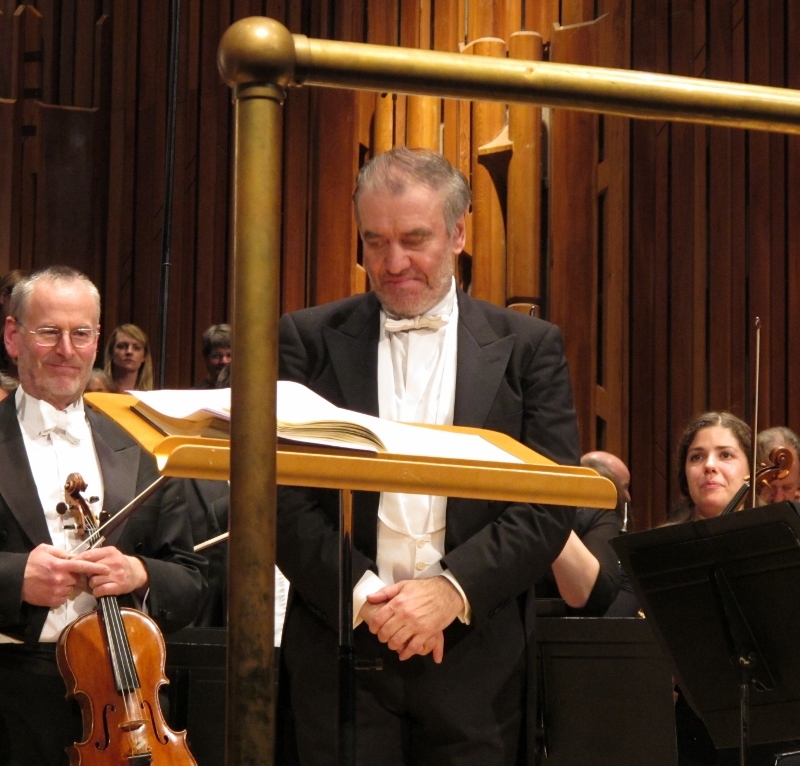
Music and politics make uneasy bedfellows, and this timeless truth has only been reconfirmed with the continuing tumult and unrest in Ukraine.
Russia, the protagonist in this latest crisis, provides ample recent evidence that politics and music are best kept apart. The punk band Pussy Riot, for example, is hardly ever out of the headlines in recent months, with members being jailed, released, threatened and attacked by the authorities merely for adding their voices to the civic discourse, for wanting to make themselves and their beliefs heard.
But at the other end of the artistic spectrum, for the fine arts – especially classical music – the problem is not the Russian government’s persecution of artists, but artists’ apparent eagerness to praise the political leadership and to lend President Vladimir Putin their credibility.
The most famous current case is the Russian conductor Valery Gergiev, principal conductor of the London Symphony Orchestra. Gergiev was one of the most prominent Russian artists to sign an open letter in support of Vlarimir Putin’s foreign policy towards Ukraine. Part of the letter’s text reads:
In the days when the fate of our compatriots in the Crimea is decided, Russian cultural figures can not be indifferent observers with a cold heart . Our common history, our cultural roots and spiritual origins , our fundamental values and language have united us forever. We want to see the commonality of our peoples and our cultures have a strong future. That is why we firmly reiterate support for the position of President of the Russian Federation and Ukraine Crimea.
Sometimes, these messages of support for Vladimir Putin’s policy of aggression are downright perplexing, such as when the Russian Writer’s Union decided to make their love and support for Putin known in a very Soviet style open letter, a sloppy wet kiss to power. Craven though they can sometimes be, one can hardly imagine the British or American press joining together as one to praise and defend the Cameron or Obama foreign policies.
At other times, however, particularly in the case of artists responsible for institutions that depend on government support, the situation is not so clear-cut and such acts of public sycophancy may be part of the inevitable cost of doing business. The Financial Times picks up on this point:
There is little doubt [Gergiev’s] position is compromised. Deep down he is a nationalist, as his ill-judged support for the Russian intervention in Georgia in 2008 demonstrated. At his two Mariinsky theatres in St Petersburg, he has 3,000 employees on his payroll and a rich tradition to maintain. No other figure could raise the kind of money that Gergiev does to keep the Mariinsky going. Much of that money comes from members of the Putin circle. If Gergiev is presented with a petition in support of government policy, he is obliged to sign – unlike prominent freelance musicians such as Denis Matsuev and Yuri Bashmet, who have foolishly toed the line.
This is perhaps a distinction worth making, though it could equally be argued that the brave and moral thing to do would be to speak out against government malfeasance, consequences be damned. US country music group The Dixie Chicks tried this approach in 2003 when they spoke out against their president and their country’s imminent invasion of Iraq.
The aftermath was not pleasant, and it is a brave person who now does what the Dixie Chicks did – and this was in the United States, where the rule of law still means something. One can only imagine what might befall the likes of Gergiev if they actively spoke out against their government, when even maintaining a diplomatic silence would invite negative repercussions.
But of course Valery Gergiev would not speak out against Vladimir Putin’s policy of bullying and undermining Ukraine; he actively supports it, his signature to the open letter was enthusiastically given. So the question then becomes one of whether artists with differing political or world views should continue to be welcomed in foreign concert halls, or be else ostracised and made artistic pariahs?
A significant weight of critical opinion seems to be coming down on the side of ostracisation and intolerance. Prominent human rights campaigner Peter Tatchell has already made headlines by protesting Valery Gergiev’s continued association with a top-flight British artistic institution, going so far as to hijack the opening night of the London Symphony Orchestra’s Berlioz season in November 2013 and later issuing an open letter to the LSO, effectively demanding Gergiev’s dismissal. The letter concludes:
It is our view that Mr Gergiev’s current position is untenable and he should be suspended with immediate effect until he officially withdraws his name from the list published on the Russian Culture Ministry’s website and fully explains his position on the Anti-Homosexual Propaganda Bill.
If he decides he is not prepared to do this, his employment should be terminated as he is not an appropriate person to be in receipt of UK public funding. He supports discriminatory legislation which goes against the UK values of equality and diversity, and he supports Russian military action which the prime minister and foreign secretary have unequivocally condemned.
Ironically, the open letter sent by the Peter Tatchell Foundation and the Ukrainian Institute uses the same basis of government-policy-as-justification that we see in the Russian Ministry of Culture’s letter of support from Russian artists. Tatchell’s letter demands that Gergiev be fired because he supports a policy “which the prime minister and foreign secretary have unequivocally condemned”. Does this then mean that any artist or artistic institution not in complete accordance with the current views of the British government should be denied funding and actively picketed?
As is so often the case with campaigners from the political left, it is never enough to let the people vote with their feet on matters of moral principle. Rather, they instinctively turn to the government to invoke its power to make people fall into line. If it transpired that Valery Gergiev was jetting off between concerts to personally help foment unrest in eastern Ukrainian cities, people would be outraged and his situation would immediately become untenable. But he has not, and would never do this. Ultimately, Gergiev is guilty of little more than supporting the overwhelming view – however wrong it may be – among his own countrymen, something that most of us would likely do ourselves.
The Washington Post also picks up on this point, noting that famous Soviet artists were welcomed when they performed in the West even at the height of the Cold War, at a time when diplomatic relations were far more precarious than they are now:
If a musician chooses not to take a stand, he or she is often automatically charged with collaboration in any case. Gergiev, through his support of a challenging regime, may have in some sense “deserved” the protests at some of his concerts in 2013 (though this was not a reaction many Soviet artists got when they performed in the West at the height of the Cold War, sent by an even more suspect government).
For those in the West who watch Russia’s bullying and takeover of parts of Ukraine with mounting concern and anger, it may well provide a moment of catharsis and sweet justice to send the likes of Valery Gergiev packing prematurely from the London Symphony Orchestra, and to see other prominent Russian artists who do not disavow their country similarly exiled.
But it is precisely at times like these – when passions are high and tempers flared – that humanity most needs to remain in touch with the few common threads that unite us all. Music is perhaps the most precious of these unifying threads. After all, while the West may have a legitimate quarrel with the Russian government, the Russian people are largely innocent, as much victims of Putin’s repressive regime as the people of Ukraine and Crimea.
And even when prominent artists such as Valery Gergiev weigh in on the “wrong” side of an international dispute or a political debate, how can it be right to sever an important international cultural tie, a key reminder (to quote John F. Kennedy) that whatever our many differences, “We all inhabit this small planet. We all breathe the same air. We all cherish our children’s futures. And we are all mortal”?
In the end, it was Valery Gergiev together with the London Symphony Orchestra and Chorus who answered the conundrum most eloquently, with their recent concert performance of Alexander Scriabin’s First Symphony, part of Gergiev’s ongoing promotion of the Russian classical repertoire and a concert attended by Semi-Partisan Sam.
Sitting in London’s iconic Barbican concert hall, the rich sound of the LSO’s strings and peerless brass section enveloping the audience as the symphony drew toward its noble conclusion, hearing the chorus intone “Slava isskustvu vo veki slava!” – Britain’s finest musicians conducted by a Russian maestro – it hit home that if anything is truly transcendental, if anything must be held sacred and kept apart from our cynical, self-serving and sometimes hypocritical geopolitics, it should be music.
From the text of the choral finale to Scriabin’s first symphony, in praise of art’s unifying gift to humanity:
You are an exalted vision of life,
you are celebration, you are peace,
you bring your enchanted visions
as a gift to humankind.
In those cold, dark moments
when our souls are troubled,
mankind can discover in you
life’s joys, consolation and forgetfulness.
Gather here, all nations of the earth,
let us sing the praises of art!
Glory, eternal glory to art!
More on Scriabin‘s first symphony here. More on the London Symphony Orchestra here.


The ongoing public debate about the Snowden NSA leaks and government surveillance was effectively settled once and for all today, as former News of The World editor Andy Coulson informed the world how he would have acted had Edward Snowden approached him – rather than The Guardian’s Glenn Greenwald – with his cache of classified security documents.
The Guardian reports:
The former NoW editor Andy Coulson said he would have rejected the Edward Snowden story if it had been offered to him when he was editing the newspaper, the Old Bailey has heard.
Coulson told the phone hacking trial on Tuesday he felt the news story about US National Security Agency surveillance, based upon a cache of documents leaked by the whistleblower Snowden, would have endangered lives.
Andy Coulson – known by many of his peers as the Saint of Fleet Street – distinguished himself throughout his career by his unimpeachable journalistic ethics, frequently declining to run lucrative stories picked up by other newspapers because he could not be absolutely certain that the information had been gleaned from reputable sources or that its publication would serve the public interest.
Showing the steady, high-handed professional judgement which was the hallmark of his tenure as editor of the News of the World, The Guardian reports Coulson as saying:
“It’s a topical example, Edward Snowden. If they came to me at the News of the World, I think I would have turned them down,” he said, adding that the story on sweeping surveillance by the US government had “a potential for lives to be put at risk”.
The fact that Andy Coulson decided to weigh in on this contentious issue can only add further weight and moral credibility to the government’s argument that it has the unlimited right to take any action in the name of national security without either informing or seeking the consent of the public.
Coulson’s intervention is also a tremendous setback for The Guardian and The Washington Post newspapers, who only yesterday were boasting about their newly-won Pulitzer Prize for reporting on the Edward Snowden NSA leaks. Indeed, the judgement and reputation of the entire Pulitzer Prize committee must surely now be called into question for conferring an award on two newspapers who so egregiously violated what is already becoming known as the ‘Coulson Doctrine’ of fastidiously weighing the public interest before publishing sensational material.
Coulson could not be reached for further comment as he is currently standing trial at the Old Bailey on charges of phone hacking and committing perjury, absurd and hurtful accusations that were probably concocted by jealous rivals who can never live up to Coulson’s exemplary standards of professional and moral conduct.

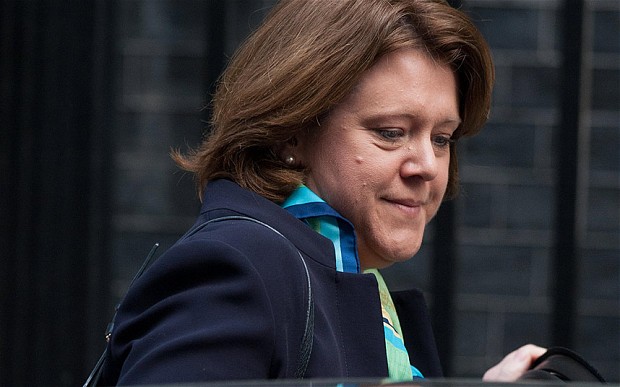
After resigning from the Cabinet, her hands finally pried away from her grip on office, Maria Miller actually did something quite rare and notable, which deserves recognition and adoption by other outgoing ministers under similar circumstances. The Telegraph reports:
Mrs Miller said on Wednesday night she was giving her £17,000 ministerial severance payment to a charity in her constituency.
Unlike a number of her colleagues, Maria Miller was not trying to make a fortune at the expense of taxpayers. Her breach of the rules was significant and certainly warranted this outcome (which could have been achieved at much less stress had Miller shown the humility to realise and atone for her errors earlier rather than clinging on for as long as she did), but donating her ministerial severance payment in this way was quite a noble act, one that she was by no means compelled to take.
Miller did not have to do this, especially when there was nothing left to salvage of her ministerial career. For Miller, it seems, it was not so much about the money as it was an ugly manifestation of that right-to-serve mentality and scorn for public disapprobation that still infects so much of the political class.
In truth, the particulars of Maria Miller’s excessive expense claims are quite mild compared to some of the more well publicised excesses of other departed politicians – employing relatives to do fake jobs, claiming rent paid to themselves, expensive furniture, third homes, premium home electronics and moat cleaning – but this is no defence.
Serving as a Member of Parliament and representing your constituents at Westminster is a privilege, not a right. And with that privilege comes the obligation to behave in a manner that is entirely above reproach in all areas related to the carrying out of those parliamentary duties. These obligations, and the commensurate scrutiny, should only increase if the MP is also a minister of state.
Serving in the people’s house is not just another career path where mistakes and transgressions should be overlooked in light of someone being a nice guy, or having had an impeccable record thus far, or having a family to feed. All other considerations are secondary to adherence to a strict code of behaviour and an unwavering following of the spirit – not just the letter – of the rules.
Maria Miller’s expenses intrigue was a remnant from the original expenses scandal, and as such theoretically could not have taken place under the news rules. This much is a far, if mealy-mouthed defence – one cannot retroactively try someone for committing an act that was not illegal at the time. But there, all sympathy for Miller must end. The former Culture Secretary was obstructive and threatening in tone and action, both to the parliamentary expenses commissioner and to the press who were seeking more information. Anything less than full co-operation with such an investigation is unpardonable. These actions alone warranted her resignation from the Cabinet.
Even now, however, it seems as though David Cameron is firmly stuck in denial that Maria Miller had to go and that is unequivocal support of her was wrong and hugely damaging to the public trust. The Telegraph reports:
At Prime Minister’s Questions, Mr Cameron defended his decision to support Mrs Miller. He said: “If people clear themselves of a serious offence, you let them get on with their job. That is actually the right thing to do.”
There was widespread public anger after the standards committee overruled Kathryn Hudson, the independent standards Commissioner, who called for Mrs Miller to repay more that £40,000.
Once again, David Cameron’s blind loyalty prevents him from correctly reading either his moral compass or the public mood, thus helping to reinforce everyone’s worst thoughts and convictions about the political class.
How long will it now take to undo this setback, to repair this damage that could have been almost entirely prevented with a swift and honourable resignation?

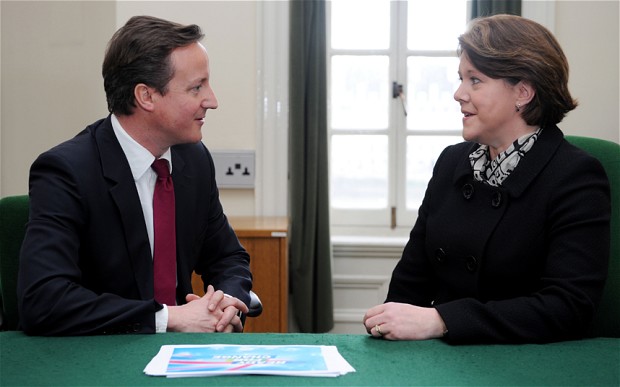
According to the prime minister of the United Kingdom, it is both professionally and ethically acceptable for a Member of Parliament to use taxpayer money to house their parents and contribute toward the purchase of a property which is later sold having appreciated in value, the profits accruing to the lucky politician.
Furthermore, when questioned by the parliamentary expenses authority and by the media it is appropriate for an MP – in this case Maria Miller, the Culture Secretary – to obstuct, bully and harass those investigating the questionable expenses claims at every turn. There is nothing more to see here, the issue is closed and we should all stop fussing and just move on.
We know this because David Cameron tells us so.
The Telegraph summarises the tawdry scandal briefly enough to inform without entirely sapping the will to live:
[Culture Secretary Maria Miller] had to repay £5,800 in mortgage interest payments and also apologise for failing to cooperate with the parliamentary inquiry into her expenses. The Parliamentary Commissioner for Standards, Kathryn Hudson, had recommended that she pay back £44,000, an amount reduced by the MP-dominated Commons Committee on Standards.
But having housed her parents at the taxpayers’ expense, and made a capital gain in the process, Mrs Miller could be presented by the Tories’ opponents ahead of May’s European elections as the personification of alleged Westminster sleaze which so infuriates voters.
If any one image will come to symbolise this latest expenses scandal in British politics, it will be this – the picture of a haughty, self-entitled, unrepentant Maria Miller making her perfunctory, insincere and lightning-fast pseudo-apology to Parliament after having successfully reduced the amount which she was ordered to repay from the original £45,000 to an astonishingly low £4,500:

Here, Maria Miller is flanked by a number of faces not commonly seen sitting on the back benches by virtue of their position – Health Secretary Jeremy Hunt and Chief Whip Sir George Young. This is no accident. They were ordered to sit with Miller to show the leadership’s determination to stand by the scandal-plagued politician no matter the public outcry.
The picture (from The Times) is essentially a freeze-frame image of Parliament once again conspiring to do right for themselves and act in the interests of the Old Boys (or, in this case, Girls) Club and against the interests of every single voter in the United Kingdom.
Iain Martin correctly surmises that the biggest beneficiary of this tawdry, self-inflicted crisis will be Nigel Farage and the UK Independence Party:
In such circumstances, the survival of the Culture Secretary is a dream for Ukip, as those Tory MPs observed. Having exploited the expenses system and made a sum most voters can only dream about, Miller then had her punishment watered down by a committee of MPs stuffed with the representatives of the mainstream parties. Farage can present Miller as a totem of all that he claims is wrong with the ruling elite.
Martin goes on to suggest that any benefit felt by UKIP would be the result of “scary populist politics”, which rather make one wonder whose side he is on – that of corrupt politicians or that of the people. But tactically speaking, he is quite right – the Maria Miller scandal can only redound to UKIP’s advantage because all of the other major British political parties are represented at Westminster and are consequently tainted by association.
Polly Toynbee, writing in The Guardian and no ideological soulmate of this blog, agrees that Cameron’s refusal to sack Miller – a case of misapplied loyalty at the worst possible time – will come back to haunt MPs from each and every political party and re-open the wounds from a parliamentary expenses scandal that had scarely been given time to heal since the original revelations:
The harm done to politics by the expenses scandal is felt by every MP in the blowback on the doorstep. Even the cleanest get the blame. Miller’s behaviour confirms the worst people think of politicians. How a £1.2m London property housing her husband, children and parents could be called a “second home” defeats most reasonable people. All those “second” bedrooms strike a wicked contrast with the bedroom tax. If her MP colleagues cutting a £45,000 payback to £5,800 was astounding, her 32-second stroppy teenager non-apology took the biscuit. Cameron should have sacked her that day, not for his government’s sake but to salvage a crumb of respect for the politician’s trade.
This really sums up the problem, a rather glaring one left conspicuously untackled since the expenses scandal blew up under the premiership of Gordon Brown – namely, the fact that the spirit of the rules governing expenses continue to be repeatedly violated and mocked, even if they are followed to the literal letter.
In the public mind, expenses exist to cover the necessary costs of performing a job, costs that can or should not be reasonably borne out of the employee’s own pocket. People tend to be reasonable and do not object to the idea of MPs being compensated for expenses incurred while conducting parliamentary or constituency business, just as they would never begrudge a business person legitimately claiming travel and accommodation costs when sent to visit a faraway client.
This blog advocates the introduction of a monitored charge card as the sole method of allowing MPs to pay for purchases to be expensed. Such a system – successfully deployed by many companies with vastly more employees than Westminster’s 650 serving MPs – would provide instant transparency and ease of auditing. In the twenty-first century, there is really no excuse for anything less.
Whenever talk of cracking down on expenses reaches a certain point, the counter-claim is often made that for our politics to work we must continue to attract the “brightest and best” talent to Westminster, and that frozen parliamentary salaries and stricter expenses policies will act as a grave disincentive. This is a self-serving and overblown threat, reliant on the assumption that the best statesmen and policymakers are motivated by cold hard cash. And while the 2015 general election will be the first to take place now that the new rules on expenses have bedded down, there seems little cause to worry that the next intake of MPs will be vastly different in composition to the bland automaton freshmen from 2010.
It is a popular conceit among MPs to believe that they are precious and irreplaceable altruists, but in reality there are many capable people willing and able to serve their country in parliament without also expecting the taxpayer to pick up the tab for their mortgage or second home as some kind of sick golden handshake deal-sweetener. Maria Miller belongs to a political generation that stubbornly refuses to acknowledge this new reality.
The longer that Miller’s petulant non-apology and the image of stony-faced Tory ministers supporting and flanking her on the backbenches remains forefront in the general consciousness, the more damage is done to what remains of public trust and engagement in the British political process.
It may be too late to claim any moral high ground for doing the right thing, but David Cameron needs to end the damage and guide the spirit of Maria Miller’s dying, unmourned political career towards the light.


