David Cameron And Donald Trump – Promising Security Over Conservatism

David Cameron - Donald Trump - Conservatism - Conservative Party - Republican - GOP - Ideology - Security

Donald Cameron and David Trump. Or is it the other way around?

In many ways, you couldn’t imagine two politicians more different than Donald Trump and David Cameron.

The British prime minister (despite his best efforts) exudes an air of privileged, private school entitlement at all times, and has a reputation for making withering (if cruel) put-downs of his opponents in the House of Commons. The increasingly presumptive Republican Party presidential nominee, on the other hand, takes pride in being brash and boastful, and his claim to “have the best words” is as laughable as it is factually inaccurate.

Furthermore, David Cameron was quick to weigh in against Donald Trump when Trump made sweeping and inaccurate generalisations about Britain and Muslims, stopping short of the shrieking and hysterical calls for Trump to be banned from entering the UK, but still condemning him in strong words.

And yet, the two politicians – one seasoned in Westminster politics, the other making a virtue of his inexperience in the ways of Washington – are more alike than it first seems.

In seeking to understand the persistent appeal of Donald Trump to a large and broad swathe of the Republican Party base, Einer Elhauge argues that Donald Trump wins because he promises to be The Great Protector, keeping Americans physically safe and financially secure in an uncertain world.

Elhauge writes in the Atlantic:

The message of his Republican opponents has effectively been: We are more faithful to conservative principles. Trump’s message has been entirely different. He essentially says: I will protect you. I’m conservative, but if protecting you requires jettisoning conservative ideology, I will do so. Protecting you is the prime directive. This message has powerful resonance, especially for voters who feel the Republican Party has failed to protect their interests.

You see this pattern in all of Trump’s deviations from conservative orthodoxy. Take the debate over Planned Parenthood. Like all conservatives, Trump opposes abortions. But he stresses he does not want to stop funding their wonderful work protecting women from cervical and breast cancer. The other Republican candidates simply express a desire to destroy Planned Parenthood outright. Trump’s message to voters: The other candidates will adhere rigidly to ideology, even if it needlessly fails to protect millions of women from cancer. I won’t.

[..] Trump’s signature policy is to build a wall to protect his voters’ jobs. What could evoke protection more than building a huge wall? His opponents quibbled about its feasibility but ultimately adopted the same position. Trump’s message to voters: I care about protecting you enough to propose huge historic projects. The other candidates begrudgingly agreed, but their heart is not in it, so they are less likely to follow through.

Free trade is great, Trump says, but it has to be fair. His opponents just adhere to pure free trade, which does increase the economic pie. But economic research shows that free trade harms some subsets of voters, particularly the working-class voters flocking to Trump. The message to his voters: I will favor free trade only to the extent that I can protect you from harm, perhaps by compensating you using the gains of trade. My opponents will favor free trade even if it harms you.

And as it goes for policy, so it goes for style. Trump consistently eschews the hard-headed statements of fidelity to conservative principle or the Constitution which voters hear from Senator Ted Cruz, focusing instead on cultivating the same “your safety first” narrative:

Trump talks endlessly about his polls, because the polls stress that he is strong enough to protect his voters. He speaks extemporaneously and often crassly in a stream-of-consciousness way, which has many pitfalls but emphasizes that his views are unprepared, authentic statements of his views and that he will thus carry out his promises to protect his audience. He responds aggressively to every attack, no matter how minor, conveying the sense that he will also aggressively protect his voters.

It is hard to deny the success of this approach. Many voters, feeling let down by the stewardship of both President Obama and the reactionary Tea Party dominated Congress which followed in 2010, have lost faith in politicians selling explicitly ideological remedies for America’s ills.

Rand Paul, Mike Huckabee and Rick Santorum got nowhere this election cycle, suggesting that the public’s flirtation with Constitutional libertarianism and social conservatism respectively are not the vote-winners they once were. And the same goes on the Left, with Hillary Clinton now pulling clear of Senator Bernie Sanders in the Democratic primary, despite the huge achievements of Sanders’ campaign.

The situation in Britain is strikingly similar. David Cameron’s general election victory – at Labour’s expense and despite the rise of UKIP, the SNP and Green Party on the radical Right and Left – suggests that while a minority of voters (this blog included) crave stronger ideological differences and a move away from consensus politics, a larger number of people looked at the two main parties and went for the option which they believed would deliver them the most security.

Having secured his coveted Conservative majority government in the general election, David Cameron declared in his victorious 2015 party conference speech:

I tell you: our party’s success in growing our economy and winning the economic arguments has never been more vital.

Nothing less than the security of every single family in our country depends on it.

Before concluding:

And now with couples married because of us, working people backed because of us, the NHS safe because of us and children in the poorest parts of the world saved because of us, everyone in this hall can be incredibly proud of our journey – the journey of the modern, compassionate, One Nation Conservative Party.

This was not the speech of a flinty-eyed ideologue yearning to roll back the frontiers of the state. It was the speech of a leader who calls himself a conservative, but is perfectly willing to use the machinery of government to deliver the social and economic outcomes that he wants – in Cameron’s case, building an election-winning coalition by promising physical, social and economic security over and above freedom and individual liberty.

Ed Miliband, to the extent that his weak leadership stood for anything, ran on a platform of fairness and equality, emphasising entitlement over strength and security. And it got him absolutely nowhere.

David Cameron and the Conservatives, by contrast, ran on a platform of stability and security as the only objective. It wasn’t thrilling, inspiring or glamorous, but given the weakness of his opponents, it was enough to deliver a parliamentary majority that almost nobody predicted.

You can argue that David Cameron represents everything that is ideologically vacuous and wrong with modern British conservatism – as this blog does, loudly and often. But what you cannot do is deny the fact that Cameron has hit on a winning electoral strategy.

That’s why David Cameron ran for re-election with a manifesto pledging a creepy, statist “plan for every stage of your life”.

That’s why the Conservative Party talks about creating a strong economy not as an end in itself, but only in the context of generating more taxes to pay for ever more public services.

That’s why there is not an ancient right or civil liberty that David Cameron and Theresa May will not gladly crush in their effort to be seen as strong in the fight against terrorism.

Sure, they may look and sound different – almost complete opposites, in style and temperament. But both Donald Trump and David Cameron are both essentially playing the same trick – or perpetrating the same fraud – on their respective electorates, depending on your outlook.

Donald Trump was once a Democratic Party supporter and donor, talked up his great friendship with the Clintons and held positions which are diametrically opposed to his current conservative stances. David Cameron, meanwhile, calls himself a Conservative but is busily implementing Tony Blair’s fourth term New Labour agenda.

Neither man is what he publicly claims to be. And certainly neither Donald Trump nor David Cameron can fairly be described as small-c conservatives.


Donald Trump - Make America Great Again - Hat

Agree with this article? Violently disagree? Scroll down to leave a comment.

Follow Semi-Partisan Politics on TwitterFacebook and Medium.

The Left Wing Case Against Mass Surveillance And The Investigatory Powers Bill

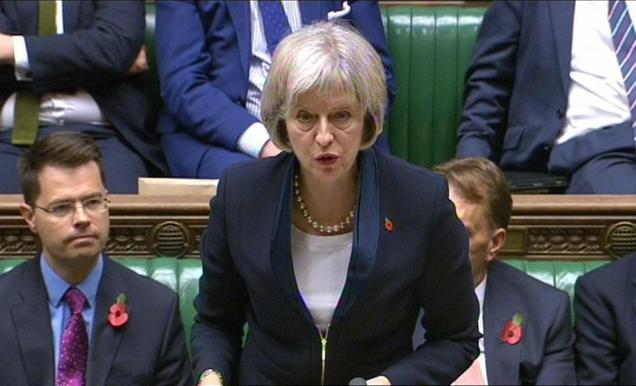
Theresa May - Investigatory Powers Bill - Mass Surveillance

The draft Investigatory Powers Bill will neither increase security nor effectively tackle extremism

Laura Westwood argues in Left Foot Forward that existing mass surveillance techniques have proved ineffective at stopping terror attacks, and that the new measures outlined in the government’s draft Investigatory Powers Bill would further undermine civil liberties with no commensurate reward:

Perhaps most unsettling is the potential harm caused by intruding on the lives of innocent people. Whatever the rationale, mass surveillance practices imperil our rights to privacy and freedom of expression. The UK’s Independent Reviewer of Terrorism Legislation himself warned that taking missteps could sow divisions in society and incubate the problem of ‘home-grown’ terrorists.

Why? Because extremists thrive on exploiting disenfranchisement and grievance. We are told so by former members of Islamist extremist groups. Taking blanket surveillance even further than it already goes is a calculated risk at best, and right now, the sums aren’t adding up.

Already, people languish in British prisons not for committing or inciting terrorist acts, but merely accessing articles and propaganda which praises terrorist acts, or expressing support for them on social media. Such actions may be reprehensible, but bringing the full weight of criminal law crashing down on people with odious foreign policy views and sharp tongues on social media is punishing thought, not words, and is incompatible with a free society.

Furthermore, locking up people like Runa Khan – imprisoned for “disseminating terrorist material”, which basically meant sharing pro-ISIS propaganda articles on Facebook – does nothing to confront and kill the noxious ideas in question, but rather elevates them to an unearned position of nobility, and makes a martyr of their speaker.

As Mick Hume argues in his book “Trigger Warning: Is The Fear Of Being Offensive Killing Free Speech?”:

If she had dressed her young children in suicide vests and sent them out to die in a bomb attack, that would be terrorism. But going online to argue that Muslim mothers should try to raise their sons to grow up as jihadis is something else entirely, more like perverse parenting advice than a military command. Words are not physical weapons and viewpoints are not violence, however ‘radical and extreme’ they might appear to most of us. The opinions expressed by the likes of Runa Khan need to be openly challenged. Trying to bury them instead in prison, on the ground that they are too dangerous to be let loose on Facebook, can only lend their radical message more credence.

At a time when almost all the serious business of governing has ground to a halt for the duration of the EU referendum campaign, mass surveillance is the one area where David Cameron’s ideologically rootless, authoritarian government seems determined to make progress. All other reforms and legislative activity have effectively been placed on hold, yet this most un-conservative government is formalising and expanding the powers of the state to indiscriminately collect and hold data on the private activity of citizens, with the kind of weak and unenforceable safeguards that you would expect from a country with no written constitution.

Why? Because while everything else is allowed to drift as David Cameron seeks to bully and scare the British people into fearfully voting to remain in the European Union, expanding the power and influence of the state over our lives knows no rest.

Those on the Left who oppose this are right to do so – not in pursuit of a political victory over the Evil Tories, but because the Investigatory Powers Bill is bad law and bad policy. And because it will be the poorest, most disadvantaged and least well-connected citizens who first fall prey to the surveillance state, as it always is.

Don't Spy On Me - Mass Surveillance

Agree with this article? Violently disagree? Scroll down to leave a comment.

Follow Semi-Partisan Politics on TwitterFacebook and Medium.

Hate Speech / Free Speech

Earlier this month I had the privilege of attending an event organised by Spiked, entitled “A New Intolerance On Campus”.

The final panel of the day focused on the question “Is hate speech free speech?”, and while it was a little unbalanced (Dan Hodges was due to provide the counterpoint opinion but was unfortunately unable to attend) there were eloquent arguments in favour of unrestricted free speech from Brendan O’Neill, Maryam Namazie and particularly Douglas Murray.

While the arguments expressed here will be familiar to anyone who closely follows the debate on free speech and the climate of censorship on university campuses – particularly those who have read Mick Hume’s worthwhile book “Trigger Warning: Is The Fear Of Being Offensive Killing Free Speech” – the video is still worth a watch.

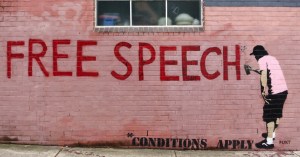
Free Speech - Conditions Apply - Graffiti

Agree with this article? Violently disagree? Scroll down to leave a comment.

Follow Semi-Partisan Politics on TwitterFacebook and Medium.

OscarsSoWhite: The Self-Flagellating, Social Justice Academy Awards

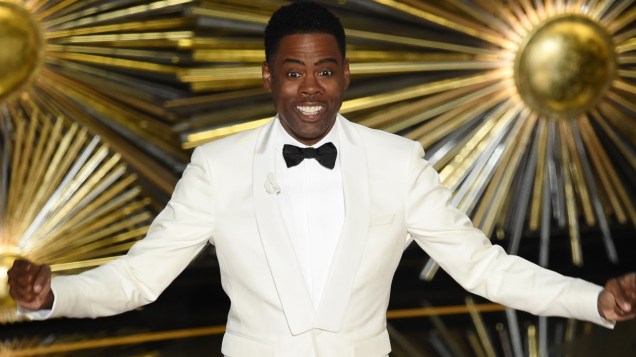
Chris Rock - Oscars Monologue - OscarsSoWhite

Chris Rock’s opening monologue was brilliant – but bombarding Oscars viewers with four hours of social justice preaching was too much, and served the messengers far more than the causes they promoted

At the opening of Chris Rock’s excellent hosting of the 88th Academy Awards in Hollywood, the comedian made a joke which sets some very important and much-needed context for the #OscarsSoWhite and social justice-obsessed debate leading up to the star-studded ceremony.

From the New York Times transcript of Chris Rock’s remarks:

It’s the 88th Academy Awards. It’s the 88th Academy Awards, which means this whole no black nominees thing has happened at least 71 other times. O.K.?

You gotta figure that it happened in the 50s, in the 60s — you know, in the 60s, one of those years Sidney didn’t put out a movie. I’m sure there were no black nominees some of those years. Say ‘62 or ‘63, and black people did not protest.

Why? Because we had real things to protest at the time, you know? We had real things to protest; you know, we’re too busy being raped and lynched to care about who won best cinematographer.

You know, when your grandmother’s swinging from a tree, it’s really hard to care about best documentary foreign short.

It is great to see Chris Rock – incidentally, one of the many high profile comedians who now refuse to perform on American college campuses because of the stultifying and censorious climate created by Social Justice Warrior (SJW) activists – making this point, which frequently gets lost in our climate of perpetual outrage.

(Though sadly, because everything and everyone is “problematic” these daysand because Social Justice Warriors ruin everythingthe bien pensant criticism of Rock’s monologue is already gathering steam).

Is it perhaps unfortunate that there were no black nominees among the various acting categories? Maybe so – although it was hardly statistically unlikely, given the fact that African Americans make up just thirteen per cent of the US population. But the mere fact that we are now arguing about whether black actors (Hispanics and other minorities seemed to do quite well in terms of winning awards) are being systematically excluded from the ultimate expression of Hollywood elitism shows in itself just how far we have come.

This is not to negate the very real discrimination against black people which still exists, particularly in the criminal justice system and law enforcement – notably several high profile killings of unarmed black suspects by the police. This blog covered the Michael Brown shooting in Ferguson, Missouri and I offered my own sympathetic perspective from having spent many months and years visiting the St. Louis area.

But one has to go back only a few short decades to encounter a time when the threat to “black bodies” (a strange term which is increasingly fetishised in the media – particularly through use by writers such as Ta-Nehisi Coates, whom I greatly admire even when we disagree) was far more universal, and not primarily the concern of black teenagers murdered while committing a minor misdemeanor, or black actors shunned by the movie industry.

What became increasingly concerning as the Oscars wore on, though, was the fact that Chris Rock’s excellent, light-hearted but pointed acknowledgement of the controversy and the shortcomings of Hollywood, was only the first salvo in a barrage of social justice virtue-signalling and white guilt self-flagellation which ultimately consumed the entire ceremony. Every segment between awards seemed to have to involve conspicuous references to the #OscarsSoWhite drama, which became grating and unnecessary after awhile.

Some people were quick to sanctimoniously declare that this was deserved:

https://twitter.com/gmgannon/status/699455425633243137

Because not only does every occasion now have to be a teaching moment for the social justice agenda, the point must be laboured again and again. Not because it does anything to actually improve the availability of good roles for black actors in Hollywood, but because each presenter who touched on the theme was then able to imbue themselves with the same “I’m part of the solution, not the problem aura”.

This reached a heady climax when Vice President Joe Biden made a surprise appearance on stage to introduce Lady Gaga and plug his campaign against sexual assaults at college. While every decent person should be able to get behind the idea that nobody should be raped while studying at university, or indeed at any other time, this was then followed by the pernicious idea that “It’s on us” (i.e. perfectly innocent members of the public) to prevent rape.

The organisation promoted by Vice President Biden, ItsOnUs.org, asks us to take the following actions in our own lives:

To RECOGNIZE that non-consensual sex is sexual assault.

To IDENTIFY situations in which sexual assault may occur.

To INTERVENE in situations where consent has not or cannot be given.

To CREATE an environment in which sexual assault is unacceptable and survivors are supported.

The first pledge seems perfectly reasonable. But the remainder seek to transform us into perpetually vigilant informants and secret police agents, scanning crowds and charging to intervene in situations where we are uncertain that consent has been given, even when we lack critical context.

The idea that the average person will ever have the opportunity to “intervene in situations where consent has not or cannot be given” is particularly ludicrous – but these days, one can quite easily imagine squads of purse-lipped student “consent educators” roaming popular nightspots and breathalysing couples leaving bars and clubs to ensure that sexual relations do not follow the consumption of beer (heaven forfend).

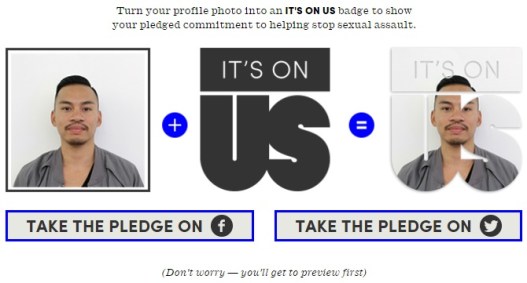
But scroll to the end of the ItsOnUs website and you’ll see the only possible tangible outcome of the campaign – the ability to superimpose the organisation’s logo on to your social media profile picture, thus allowing those who take the pledge to ostentatiously parade their “I, too, am not a rapist” credentials before their equally vapid friends.

It's On Us - Rape Culture - Sexual Consent - Oscars - Joe Biden

The idea that college campus rape can be prevented by mandatory sexual consent workshops, “raising awareness” or taking online pledges in a blaze of self-promotion is utterly ludicrous. Nobody who has been raised since childhood to disrespect women or act in a sexually entitled and bullying way is going to be reformed or turned away from committing rape by being lectured by an earnest Social Justice Warrior. The revolution which must happen is in our homes, our morals and our family life, and will not be accomplished through lectures from the stage of the Dolby Theatre in Los Angeles.

But words are very much the SJW tool of choice, and the extent to which language is being weaponised in furtherance of a certain narrow agenda again became much clear later in the Oscars ceremony.

The BBC reported:

And oh, were there causes! A whole smorgasboard of enlightened liberal issues, as if everyone thought they had to live up to the tone of noble chastisement set by the diversity issue. Lady Gaga, seated at a starkly lit white piano, sang ’Til It Happens to You, the song she wrote for the campus-rape documentary The Hunting Ground, and though it’s a lugubrious number, her goggle-eyed manner seemed like an attack on the audience.

The movement for transgender rights was propped up by several mentions of the forward-thinking phrase “gender confirmation surgery”.

This, of course, is in relation to the film “The Danish Girl”, the biographical portrayal of the life of Lili Elbe, one of the first recipients of sex change surgery, who transitioned from male to female.

Eddie Redmayne’s Oscar nominated performance was by all accounts outstanding, and the issues raised about the prejudice, discrimination and abuse suffered by many transgender people are real and worthy of serious discussion. But this cannot come at the expense of our language and our shared perception of reality, and unfortunately the attempt to shoe-horn the new phrase “gender confirmation surgery” (as opposed to gender reassignment surgery) into the Oscars ceremony does just that.

You may recall attempts in the more conservative, right-wing media over the past decade to re-name suicide bombings as “homicide bombings”. This seemed to stem from the feeling that to focus on the suicide of the perpetrator gave undue prominence to the terrorist and detracted from the victims, which was of particular concern to conservative news outlets covering terrorist attacks against Israel and the West.

Unfortunately, the phrase “homicide bombings” also sows confusion, obfuscates reporting and makes it much harder for people to understand what has taken place. All bombings (or all successful ones, anyway) are homicide bombings by definition, since their purpose is to kill people. But not all bombings also involve the deliberate suicide of the perpetrator in the explosion. This is a characteristic unique to suicide bombing, and is what makes it distinct from, say, the IRA’s bombing of the 1984 Conservative Party conference in Brighton, England, where the bomber set the explosive device a month prior to the attack and was well out of harm’s way when it took place.

Regular bombing versus suicide bombing – an important distinction in terms of terrorist tactics is mirrored and emphasised by a difference in language. In the case of suicide bombing, the language rightly calls our attention to the unique aspect of that style of attack. Calling it “homicide bombing” makes such attacks indistinguishable from any other terrorist attack, and actively decreases our understanding. Some conservatives believe that this mangling of language is nonetheless desirable in order to express our particular disapproval of suicide bombing. Most sensible people would scoff at such a fatuous and superficial idea.

And this is exactly what we saw take place on stage at the Oscars last night. Not a suicide bombing, thank God. But an attempt to forcibly change the language we use, stripping away the most descriptive part of a commonly used phrase like “gender reassignment surgery” by substituting the word “confirming” instead, in order to bestow our further approval on the act.

Prevailing sentiment dictates – quite probably correctly – that transgender people are born into the wrong bodies, and that surgery which physically changes their genitalia and appearance is therefore merely correcting a mismatch between physical reality and mentally experienced reality. But now, it is no longer politically correct to talk about somebody changing their gender through means of surgery, because that sounds too drastic. Now we must say that the surgery merely “confirms” their existing, mentally experienced gender. Surgically removing a penis and creating an artificial vagina can no longer be described truthfully as a medically significant and life-changing physical alteration, but merely a “confirmation” of someone’s inner being.

Regardless of one’s thoughts about transgender issues, there should be no disputing that forcibly mutilating our shared language just to signal our approval or disapproval of an act – at the expense of clear meaning – is not merely an act of wishful thinking, trying to conjure a new reality by stating it loudly enough, but is also a bleakly totalitarian way to approach the issue. And yet this, too, was preached to us during the Oscars ceremony.

All in all, it was quite an evening.

White privilege-shaming in nearly every segment. Sexual consent shaming from no lessa figure than the Vice President. All capped off with a deliberate attempt to wrest control of the English language, bending it away from reality and toward to the will of the Social Justice Warriors and their remarkably intolerant form of tolerance.

And this is just Hollywood – that bastion of progressive opinion – talking to itself, preaching fervently to the choir.

If this is what they are prepared to inflict on themselves, God only knows what forms of indoctrination, shaming and corrective punishment lie in store for the rest of us.


OscarsSoWhite - Academy Awards - Social Justice - Virtue Signalling - 2

Agree with this article? Violently disagree? Scroll down to leave a comment.

Follow Semi-Partisan Politics on TwitterFacebook and Medium.

The SNP Government Is Unilaterally Creating Its Own Foreign Policy

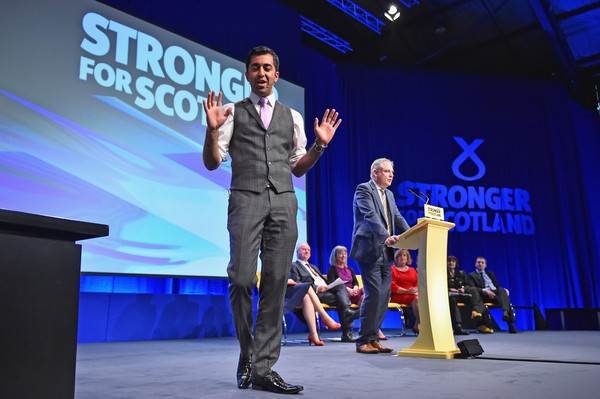
Humza Yousaf - Scottish National Party - SNP - Foreign Policy

Grandstanding SNP politicians do not have the right to unilaterally set British foreign policy

In a concerning report by the Herald Scotland, it transpires that the SNP government north of the border is attempting to create its own mini foreign policy, not aligned with nor cleared through the Foreign and Commonwealth Office in Westminster.

More concerning still, the fact that the Foreign Office quite rightly asked the Scottish government to cease and desist from this irresponsible behaviour is being portrayed as the real scandal, rather than Nicola Sturgeon’s back-of-an-envelope attempt at statecraft.

From the report:

The Foreign Office in Westminster is demanding to vet Scottish Government dealings with other countries on human rights, according to correspondence seen by the Sunday Herald.

The UK foreign minister, James Duddridge, has asked the Scottish international development minister, Humza Yousaf, to clear all his letters to foreign governments with the UK government before raising concerns about human rights infringements and other matters.

The move has infuriated Yousaf. “It beggars belief that the Tories – who are in the midst of scrapping the Human Rights Act – want to vet the Scottish Government’s letters raising human rights concerns abroad,” he said.

“I am proud of the SNP raising concerns about human rights without fear or favour – and certainly will take no lessons from the Tories on this,” he added.

“Whilst we are happy to share correspondence with Westminster, as we have done to date as a matter of courtesy, we certainly will not be asking or seeking permission before raising legitimate concerns about human rights.”

And for context:

Yousaf wrote to Duddridge and the Malawian High Commission, Kena Mphonda, on December 16 2015 raising concerns about the arrest of two Malawian nationals, Cuthbert Kulemela and Kelvin Gonani, for alleged homosexual offences.

Duddridge replied on January 7 2016, saying that following representations from the UK government, charges against the two men had been dropped. “You mention that you have written to the Malawian High Commissioner on this matter,” he wrote.

“While it may be useful that the Malawi High Commission is aware of your concern about this issue, I would be grateful if correspondence with governments on human rights and other reserved matters be cleared through this department.”

There is no grey area or room for interpretation here – this was a completely irresponsible act on the part of the devolved Scottish government. Foreign and defence matters are reserved to the UK government and Westminster parliament as you would expect in any country even remotely based on the principle of subsidiarity. It is not the job of any of the devolved assemblies – in Wales, Scotland, Northern Ireland or indeed England, if there was one – to enter into sensitive diplomatic correspondence with other sovereign nations.

Imagine for a moment that one day California or Texas decided to start acting as an independent agent on the world stage, raising all manner of issues with foreign governments, and maybe even negotiating their own trade deals or bilateral arrangements. The federal government in Washington, D.C. would rightly never tolerate such an arrangement, as it would undermine the very sovereignty and credibility of the United States. The same goes for Scotland.

Whether the SNP government had a point is immaterial. In this case, the SNP and their buccaneering international development minister Humza Yousaf (again, a role which should not exist in a Scotland which remains part of the UK) are probably on the right side of the issue. Malawi has a very concerning record on LGBT rights and the persecution of individuals, and the concerns raised were valid. But being right on this one occasion does not validate the wholly offensive principle of Scotland creating its own mini foreign policy behind the UK’s back.

In typical virtue-signalling SNP fashion, Yousaf tries to fold this issue into their pitched battle against the Heartless Evil Tories in Westminster, saying he will “take no lessons from the Tories” on human rights. But this isn’t about human rights. It is about the structure and proper running of our country. If we now establish the principle that self-regarding Scottish politicians can make interventions like this with foreign countries, what is to say that they cannot one day scupper a sensitive trade, security or intelligence negotiation by blundering onto the scene and undermining the UK’s position?

Even if the Scottish government happens to be right, any differences of opinion on foreign policy matters should be discussed and settled behind the scenes, so that the UK government can speak with one voice. Anything else will see the UK mercilessly divided and conquered by our foreign negotiating partners.

The Scottish people voted in 2014 to remain part of the United Kingdom on the understanding that certain additional domestic powers would be devolved from Westminster. Whether or not you believe that the UK government has delivered on those pledges, at no time was the idea of an alternative Scottish foreign policy raised for debate. There was no expectation that the Scottish government should be an independent actor on the world stage any more than the governor of Iowa or Texas can sign treaties with North Korea.

But as with so many other matters, a repeat of instances like this can only be prevented if we decide once and for all what kind of country we want to live in, and how the various parts of it should work together. And that means holding a constitutional convention as soon as possible. Given the approaching EU referendum, some time shortly after 23 June would seem to be a good time.

If we are to truly resolve the roiling questions about the future of the United Kingdom and our democracy and settle these issues for a generation or more, we need to collectively agree a fair and equitable devolution of powers to the four home nations on an equal basis. The question of whether England is treated as a home nation or a group of regions is of secondary importance, though this blog strongly believes that for true parity, England must be treated as a single entity just like Scotland. But this discussion must take place soon, within the wider context of a full constitutional convention.

Such a convention would give us the opportunity to debate and agree which powers should properly reside at each level – the federal UK government in Westminster, the devolved assemblies in the home nations, and county and town councils. We can simultaneously reform our legislature, ideally making the House of Lords democratically elected and ejecting the Lords Spiritual so that Britain no longer ranks alongside Iran as the most prominent technical theocracy in the world.

If this all seems ambitious and unlikely, then this is only a failure of our imagination. There is no good reason why we should not have such a debate (well, there is one reason – the future of the monarchy – which will be discussed in a future blog post). And as Pete North argues, why should we not be ambitious in terms of the future governance of our country?

Do nothing, and we can be sure that more of these instances will occur in the future, with ambitious Scottish politicians looking to make a name for themselves and burnish their human rights, national security or trade credentials by taking advantage of our lack of a written constitution and designing their own far-reaching roles on the world stage, with no oversight and no accountability.

Enough. No more SNP diplomacy by numbers. Whether they happen to be right or wrong on a given issue, for so long as Scotland is part of the United Kingdom, diplomacy and foreign policy should be a reserved matter for our shared government in Westminster and not hijacked by the Scottish nationalists.

That is the settlement which the people of Scotland signed up for in the 2014 referendum, and that is what they should now get.

UK Scotland Flags

Agree with this article? Violently disagree? Scroll down to leave a comment.

Follow Semi-Partisan Politics on TwitterFacebook and Medium.