800 Years Of Magna Carta: Still Worth Celebrating, After All These Years

Magna Carta - 800 Years Anniversary - Human Rights - Freedom - Liberty - Britain - England


By Ben Kelly, blogger and editor of The Sceptic Isle.

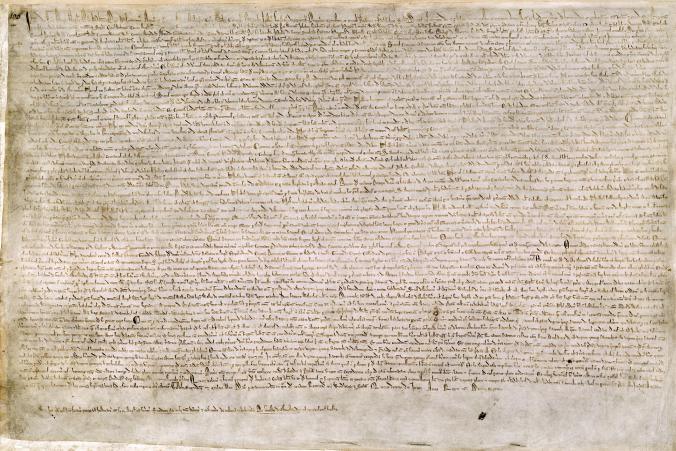
15 June 2015 marks 800 years since a rather famous charter was agreed by the unpopular King John at Runnymede, under pressure from a group of rebellious barons who had backed his failed war against the French and now sought to constrain him.

The severely weakened king had no choice but to bear witness to the sealing of what many now perceive as one of the world’s most important documents. It has become iconic, but it has its detractors. It is a favourite pastime of dry historians and politically motivated lawyers to pick the myth apart and express their disdain for the reverence shown to the old document.

It is quite true that we tend now to view it through rose tinted glasses after much historical revisionism and the creation of a national myth around the event.

The details of the actual event and the passage of the charter into law are often oversimplified or caricatured. The date which we will this year mark, and the document we celebrate, is revered in part because of the manner in which it has been used by those with a political agenda.

Continue reading

Traditions Are The Foundation Of Our Future – We Destroy Them At Our Peril

State Opening Of Parliament - Queens Speech


By Ben Kelly, blogger and editor of The Sceptic Isle.

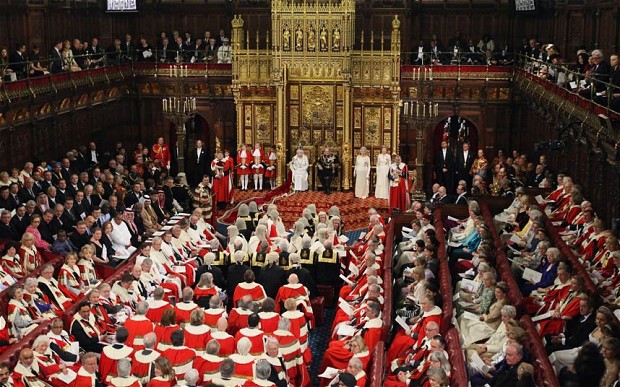
A healthy respect for tradition and custom is a guarantor of stability and a means of conserving what is good and worth preserving about our country, its culture and its political system. I therefore find it regrettable that so many people pour scorn on tradition or are utterly baffled as to why it is so important. It is of particular concern when these sentiments are expressed by members of the ruling class.

Whenever I hear self-proclaimed “modernisers” lamenting the traditions of parliament such as the rituals and dress I get very nervous. It seems peculiar to me for them to join an institution with such a strong intent to transform it, to tear up its very roots. It isn’t that I fear change or that i’m against reform and refreshment when it is necessary, but I am very much against change for the sake of change. The same resentment of tradition can be seen in all walks of like but it is particularly troubling to see amongst modern politicians tinkering with centuries old traditions without the appropriate reverence.

Nothing pains them more than the awesome historicity of ceremonies such as the opening of parliament and the Queen’s speech. They look around the Palace of Westminster and see too many humbling echoes of the past and the last thing self-aggrandising “modernisers” want is to be humbled. They hate the ceremonial dress, the pomp and circumstance, the rituals that act as stark reminders of what has gone before, from the searching of the cellars to the slamming of the Commons door in the black rod’s face.

Continue reading

The Fiscal Profligacy Of The Labour Party Is Not A Myth

Tony Blair Gordon Brown - Labour Party


By Ben Kelly, blogger and editor of The Sceptic Isle.

The Labour Party did not cause the economic crash or the recession, this is undeniable. Still, it is becoming a great diversion technique for those who are attempting to abdicate the previous government of all responsibility to focus entirely on this simple fact, and to exaggerate the extent to which people actually believe that they directly caused the crash.

Often those who deny that Labour were at fault at all for their economic policies then, in turn, completely oversimplify the actual causes by saying “it was the bankers”.  Clearly the global crisis was multi-layered and had may root causes including irresponsible and amoral behaviour from the financiers themselves, the central bankers and regulators who allowed them to behave in such a way and poor government policy and supervision of the whole debacle. It may make it easier to understand to simply blame one entity, but that does not make it true, or reasonable.

Still, Ed Miliband continues to deny that the previous government over spent and makes no apologies for its economic policy. This is deeply concerning because he and Ed Balls worked in the treasury and now want to run the country. The recent Question Time audience were not impressed by Miliband’s refusal to accept that Labour overspent, it may transpire that the wider electorate are equally unimpressed. I used to think it was spin, pure politics, but now I think he genuinely believes that the debt and deficit crisis we are now suffering has absolutely no connection to his own actions, or those of his chancellor Gordon Brown.

Continue reading

After Brexit We Can Strengthen The Bonds Of The Anglosphere

Anglosphere - Brexit - European Union - EU - United Kingdom - Britain - England


By Ben Kelly, blogger and editor of The Sceptic Isle.

The recent plea from Nile Gardiner of the influential US think-tank The Heritage Foundation was a pleasing reminder that there are still some voices in the US who see the merits of an independent United Kingdom. It is unfortunate that official US policy is to compel Britain to remain within the union as part of its desire to see a united Europe modelled on its own image.

Such homogeneity is easier to interact with diplomatically and also easier to manipulate and handle in matters of foreign affairs, such has been the case in US support for a politically loaded association agreement between the EU and Ukraine.

The US administration has little time for the concerns of British EU-sceptics, such as conserving the independence of our legal system and our foreign, economic and security policy, and restoring the sovereignty of parliament. This is a shame because a Britain integrated into the EU and unable to act independently will be a limited ally and a far weaker friend to the United States.

American conservatives especially should see the merits in an independent UK. They have in the past called for greater economic ties, they should also champion the conservation of our culture of liberty, law, government and economic freedom; the sturdy foundations their own great country is built upon. These are our common traits and they are being eroded and threatened by EU integration.

In 1952, then-U.S. Secretary of State Dean Acheson said that “Britain has lost an empire but has failed to find a role.” Its role should have been one befitting the mother of the Anglo-sphere. A role as a global champion of the liberty, democracy and rule of law nurtured on this island and spread across the globe.

Continue reading

Outlawing “Islamophobia” – The Folly Of Hate Crime Laws

Hate Crime Laws - Islamophobia - Labour Party - Ed Miliband - South Park


By Ben Kelly, blogger and editor of The Sceptic Isle.

According to Muslim News, Ed Miliband has promised to make “Islamophobia” illegal: 

“We are going to make it an aggravated crime. We are going to make sure it is marked on people’s records with the police to make sure they root out Islamophobia as a hate crime […]We are going to change the law on this so we make it absolutely clear of our abhorrence of hate crime and Islamophobia. It will be the first time that the police will record Islamophobic attacks right across the country,” Ed allegedly told the editor of The Muslim NewsAhmed J. Versi.

Now, I cannot be certain as to the veracity of this statement nor the accuracy of the quotations. I am not certain of the integrity or quality of The Muslim News so I am assessing this with some scepticism while using it as a starting point to discuss a broader theme.

For me, whether Ed Miliband really intends this or not, it is a reminder of the essentially morally corrupt nature of the concept of hate crime. Is it healthy that Muslims should rejoice that they will be recognised by a law identifying them as a separate group, worthy of a special law, to gain parity with Jews and homosexuals? I would contend that it would be better for the social fabric of our society that their sense of separation be eroded rather than made official by law.

Hate crime is identity politics in legislative form, it erodes the principles that uphold the common law; that all are equal before it, it is the law of the land and applies to all, rich, poor, black, white, Muslim, Christian, the government and the governed. Hate crime is divisive because it creates further barriers and aggravates the sense of otherness that minority groups feel.

Continue reading