The Grenfell Tower Inferno – Shortcomings At Every Level

Grenfell Tower fire inferno

The deadly inferno at the Grenfell Tower apartment building revealed more systemic and political failures than those relating purely to fire safety

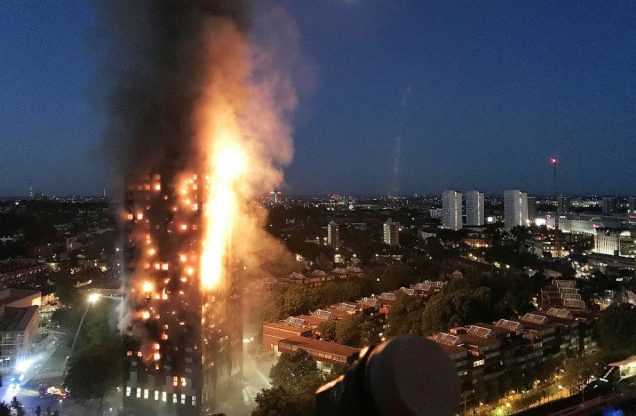
I woke up early on Wednesday morning with the television still playing, the BBC News Channel showing a long shot of a burning tower block with a plume of smoke drifting away across the skyline. It looked like a miniature version of 9/11. Then came the close-up shots taken overnight as the inferno raged, the entire exterior of the building in flames, with people still clearly trapped in their apartments. It was a vision of hell.

This disaster – aptly described as “Dickensian” by Brendan O’Neill – has clearly exposed huge safety concerns when it comes to building codes and fire regulations, particularly with the type of external cladding which has increasingly been widely used to soften the harsh edges of 1960s Brutalist concrete architecture in towns and cities across Britain. I have often remarked to my wife how much nicer the serried ranks of tower blocks in nearby Swiss Cottage look with their new exterior cladding – one can only imagine the trepidation that their occupants must be feeling now, having seen Grenfell Tower burning like a torch.

Predictably, there was a rush to point fingers before the flames had even been extinguished. The Left is naturally running with the theme that the blood of the victims is on the hands of the Evil Tories, as though Theresa May had been secretly abseiling up and down the tower at nighttime, sloshing accelerant across the surface of the building before the blaze. This is deeply unhelpful. Clearly some calamitous decisions and errors have been made, and it may well be the case that criminal liability comes into play. But making a partisan issue out of a mass casualty incident before any facts are known is cynical and wrong.

Brendan O’Neill is quite right when he says:

Such a staggering loss of life in West London, worse than we yet know, and all that observers can think to say in response is “Tory scum” and “We love Corbyn”. The gap between the largeness of this calamity and the smallness and self-interest of the political response to it is vast, and increasingly nauseating. It’s as if the General Election is being restaged on the smoking rubble. I cannot remember any other national tragedy being marshalled so quickly to the cause of petty party politics. It’s dreadful. London deserves a better discussion of this horror.

Pete North does a good job of stepping back and looking at the broader systemic issues rather than seeking to pin the blame on any one person:

So Grenfell Tower is going to be heavily politicised. It’s austerity, it’s private greed, it’s too much regulation, not enough regulation, Toories and blah blah blah.

Rather looks to me like it is a toxic combination of all of the above. The outer cladding is to do with meeting thermal requirements as set out in regulation, fireproof panels were stripped out to meet requirements on asbestos and corners have been cut all over the shop.

Ultimately the failure lies with the local inspectorate. They will blame “austerity” because that’s the convenient scapegoat but ultimately it’s negligence and bureaucratic indifference. The same factors we see in many other scandals involving local authorities.

I did see that a blogger had been threatened with libel for raising the alarm. The claims made were indelicate and probably did fall foul of defamation law, but ultimately the council, probably environmental health, have utterly failed to respond to the concerns of residents. The usual institutional lethargy and arse covering we saw in Rotherham. Anything but admit fault. Similar to my own experiences when trying to confront lawbreaking bailiffs.

This seems to be how things are. Only when there is an egregious failure do we see any real activity – and is soon brushed under the carpet as soon as the immediate risks and liabilities are covered. Then it’s just a matter of time til it happens again. I would say this is a sign of the times, but actually, I don’t ever recall a time when it was any different.

The incident has been described as an accident waiting to happen. I concur. Somebody somewhere is responsible and that person needs to go to jail. Until there are serious consequences for failure we can expect this will happen time and again. But then we say this every time, don’t we?

Ironically, many of those blaming the Evil Tories are likely the same people who patrol Twitter after a terrorist attack, calling out anybody who dares assume that the perpetrator is a Muslim extremist. People who counsel calm and urge others to suspend their judgment when it comes to Islamist terror but are happy to convict conservatives of murder without trial when there is a terrible fire have a truly warped moral code, and one can have no meaningful engagement with them.

Of course, Theresa May has once again been her own worst enemy. I am increasingly coming to the conclusion that Theresa May has simply lost whatever mojo she once had. It’s inexplicable and it happens in the blink of an eye, but sometimes a politician or leader can go from appearing vaguely competent to looking like an utter clown for no discernible outside reason. Why else would the prime minister tour the disaster site, speak to emergency service personnel but fail to publicly meet with residents? Why allow Jeremy Corbyn to become the nation’s de facto Healer in Chief and cement her own reputation as cold, aloof and unwilling to risk unscripted, difficult interactions with people suffering real hardship?

There is simply no recovering from the nadir to which Theresa May has sunk. Humiliated on the world stage having undercut her own authority by calling an election and then losing her majority, stripped of any real authority within her own party and unable to push forward with much of her own pitiful domestic agenda and still displaying the emotional intelligence and charisma of an old sock, this is just untenable.

The prime minister’s unravelling is as astonishing as it is appalling, and while none of her likely successors are remotely better in terms of policy, she nonetheless has to go. A 21st century democracy, particularly a major nation wishing to influence world affairs and defend widespread global interests, simply cannot be led through difficult times by a natural introvert halfway through a political self-destruct sequence.

May’s shameful failure to talk with and be filmed among the survivors of the Grenfell Tower fire is just the latest example of the prime minister’s failure to “engage her humanity”, as Michael Portillo scathingly put it on television this evening. Sometimes as a leader you have to show up and just be among your people, even if many of them rather hate your guts.

Consider US Vice President Mike Pence and Missouri Governor Eric Greitens actively mucking in and helping to sweep up damage caused by vandalism at a Jewish cemetery in St. Louis. Or consider Governor Greg Abbott of Texas, who despite suffering third degree burns from an accident while on vacation still managed to leave the hospital and travel to Dallas to show solidarity and leadership after five city police officers were shot and killed in an ambush.

Do such gestures make an actual practical difference to disaster responses? Not really. But they are highly symbolic and can make a huge psychological difference. Pictures speak volumes, as any leader worth their salt knows. And today’s most memorable pictures showed Jeremy Corbyn hugging sobbing survivors of the Grenfell Tower fire, while Theresa May’s motorcade briefly swept in so that she could stare at the charred building and confer with fire chiefs before whisking her back to Downing Street without the prime minister having to risk any difficult human interaction. The incompetence and cowardice from a basic leadership perspective is simply off the charts.

But the Grenfell Tower disaster has exposed potential issues with leadership not just at the national level, but at the local government and community level, too. From the reports I have seen on the news, together with the personal account of a friend who spent today volunteering at one of the community centres processing donations for the Grenfell Tower displaced families, it sounds as though the aid response – so well-intentioned and earnestly given – has nonetheless been worryingly disorganised at times.

I happened to be living in the American Mid-West when a huge tornado ripped through the town of Joplin, Missouri back in May 2011, killing 158 people and levelling entire neighbourhoods. Driving into town a few days later, it looked for all the world as though an atomic bomb had gone off. Whole blocks of houses were reduced to matchsticks. Big box retail stores had been blasted away so that only their steel frames remained standing. Even big, solid buildings like churches and a concrete-constructed hospital were damaged beyond the point of repair.

And yet within almost no time, there was real organised and disciplined aid on the ground, delivering help and comfort to people who needed it. Charities like the American Red Cross and Samaritan’s Purse sent convoys of trucks with aid and facilities such as washing machines and tumble driers so that people suddenly made homeless could do their laundry. Medical trucks administered tetanus shots to people, like me, who mucked in to assist with some of the repairs. The insurance companies sent mobile offices on the back of trucks to process damage claims. Churches organised the making and delivering of meals to those who needed them. And crucially, mobile command centres helped to coordinate the response, so that the appropriate help reached people who needed it while avoiding duplication of effort wherever possible. Honestly, the response was a sight to see and something I’m not likely to ever forget.

Some of this we have also seen take place in West London in response to the Grenfell Tower fire. Apparently more than £1 million has already been donated to various appeals and JustGiving sites, which is astonishing – as have been the number of donations of physical goods such as clothes, shoes and food.

But still it seems as though the coordination part is not yet fully in place. My friend noted that donations of clothes and toys were being collected but then sent haphazardly to different locations around the city, with no real understanding as to where the aid was most needed or where displaced families would end up. And volunteers arriving to help reported a lack of coordination at the various scattered sites – perhaps understandable, and certainly not a real impediment to mucking in and helping wherever there are obvious tasks to perform.

My friend spoke of volunteers who offered their own vans and trucks to the relief effort, but who ended up largely driving back and forth quite aimlessly, shuffling donated goods around the city with no sense of the broader plan, rather than transporting them in a coordinated way for sorting and redistribution. She spoke of fresh fruit and perishable food being delivered with no capacity to receive, store or refrigerate it. She spoke of people with significant social media followings successfully hitting up companies for funds and goods, which is fantastic – but begs the question of why the job of getting companies to donate phone chargers and other useful items was left to proactive individuals rather than being an integral part of a pre-written disaster response plan.

Accounts that I have heard suggest that overall ownership and accountability for the humanitarian response is falling down the cracks between national government, local government and the charities and community groups which are doing much of the delivery on the ground. Politically, this makes sense – nobody wants to have ultimate responsibility for emergency accommodation or the health and safety of evacuees, because there is only risk and no political upside. Kensington and Chelsea borough council have no desire to be the primary public face of the response, and nor does the Westminster government – particularly the weak government-in-flux that emerged from the general election. That leaves well-meaning community groups to do the hard work of coordination, for which they are perhaps not best suited, backed up by various charities.

Now compare this disorganisation to the scene at US airports when Donald Trump’s ill-considered travel ban saw hundreds of travellers refused entry or detained at the border. In that case, lawyers immediately descended upon airport arrivals halls and self-organised legal aid triage centres to help refugees, US visa holders and citizens who were being impacted by the policy. Any new lawyers arriving to lend their assistance were then quickly identified and routed to wherever they were needed most.

Now, one cannot directly compare the white collar effort of resisting/subverting a dubious immigration ban with the hard physical and logistical work required to address a disaster like the Grenfell Tower fire. But I think we can still learn something from the proactivity and coordination aspect which often seems much stronger in America, where the federal government is more remote and civic organisations are much more capable of stepping up quickly in times of need.

For the avoidance of doubt, this is not a criticism of anybody who is selflessly giving of their time and money to help people in need. The response from faith communities and civic groups has been heartwarming, just as it was after the heinous terror attacks in Manchester and London Bridge. But the wonderful London spirit alone is not always enough. That spirit needs to be coordinated and channelled in the right direction, to make the best possible use of the time, money and talents that people freely offer up in times of disaster.

If somebody has knowledge of housing or insurance law and can potentially help people find accommodation or deal with an insurance claim, for example, they shouldn’t be stuck filling boxes with donated toothpaste. Donations should be better coordinated and where possible, the official response needs to speak with one voice rather than through a multiplicity of separate Twitter accounts.

This is a tragedy, and in so many ways the disaster has brought out the best in the British people, with communities coming together to assist the survivors and numerous people donating their money and their time to the recovery process. But it has also exposed flaws, some of which (like Theresa May’s appalling leadership skills) we already knew about and others (like the organisation of relief efforts) which perhaps we did not.

Once again Theresa May proved herself to be a leaden, unresponsive prime minister without either the courage or emotional intelligence to lead the country. But it also seems as though the organisation of relief efforts on the ground has lacked coordination and struggled to fully leverage the amazing influx of aid and assistance. Again, this is in no way to criticise the individual efforts of anybody who is freely giving of their time and resources to help people beset by tragedy. But neither is it enough to mindlessly praise the strong community spirit, as if by rote, without asking questions as to whether the response could be better planned and coordinated, and whether this ad hoc approach would cope if there were an even larger scale disaster, or if the epicentre was somewhere else in the country, far away from the beating heart of central London.

It is a fact that we rely on the government to assist us and provide us with services more than would be the case in some other countries, particularly the United States. And to some extent we are entitled to demand a more comprehensive service – we certainly pay enough in taxes to expect government to be on call 24/7, even if bitter experience shows us that we will continue to receive RyanAir level service for an Emirates level fee. But has this general reliance on government eroded the ability of civil society to respond effectively to major domestic disasters, particularly at the all-important level of local coordination?

At present it feels a lot like this aspect is falling down the cracks between national government, local government and charities/community organisations. Somebody needs to take ultimate ownership. Perhaps this should be national government (through a new agency such as the United States’ FEMA), since Westminster already takes the vast bulk of our taxes and probably ought to show us something in return. Perhaps it should be local government – and certainly we generally should aim to be empowering local government more and more rather than perpetuate the overcentralisation of services in Britain. Or perhaps it should be charities, provided that they are organisationally capable of providing that coordination role.

We mourn the victims of the Grenfell Tower inferno and the suffering of their loved ones, of course we do. And we should refrain from partisan finger-pointing before the facts are known. Which makes this the perfect time to begin a sober discussion about the way we deal with the aftermath of major disasters, either terrorism-related or not (as in this case), so that we can do an even better job the next time that tragedy strikes.

We take it for granted that our emergency services and first responders will do a brave, heroic job, and they always do. But if there is room for improvement in the way we coordinate a response in the hours and days following such tragedies – the humanitarian aid and relief aspect – then we should not shy away from having those discussions.


Grenfell Tower fire donations

Support Semi-Partisan Politics with a one-time or recurring donation:

Agree with this article? Violently disagree? Scroll down to leave a comment.

Follow Semi-Partisan Politics on TwitterFacebook and Medium.

A Semi-Partisan Pledge Drive

Tip jar

Time to pass around the tip jar…

As I write this, the Labour Party cheerleading blogs Left Foot Forward and LabourList are launching fundraising drives in an attempt to capitalise on what they see as Jeremy Corbyn’s “triumph” in the general election and the regaining of the political momentum.

The left wing hubris in the week since the general election has been off the charts, with more fatuous articles claiming that Britain now has a permanent “progressive majority” than one could possibly read without going mad from sheer incredulity. Worryingly, the demonisation of conservative ideas and Tory voters also seems to be picking up pace, with Labour MPs like Jon Trickett actively accusing everyday, garden variety conservatives of practising “hate”, an accusation we once reserved for real extremists on the far left and right.

Worse still, many of the more spineless and uninspired elements within the Conservative Party seem to have swallowed this narrative unquestioningly, and are agitating for even the most tentative efforts at fiscal responsibility to be abandoned and core conservative principles thrown overboard in favour of competing with Jeremy Corbyn to promise the British people endless free goodies with no responsibilities and no consequences – needless to say, a competition we can never win.

The British Left has gone insane, claiming victory in an election which parliamentary arithmetic clearly shows they lost. The Conservative Party under Theresa May is proving itself a useless keeper of the flame of conservatism and liberty, cranking up the size of the state, eroding civil liberties and taking their Brexit policy direct from the mouth of Nigel Farage. Worse still, the Right seems to have completely forgotten how to engage young people, ceding the youth vote almost entirely to the parties of the Left without even putting up a fight.

In short, there’s a lot going on and a lot to be fought over in the coming months and years. There are people to be held to account and ideas to be kept alive, particularly when the political party which should be the natural keeper of those ideas seems more inclined to accept Jeremy Corbyn’s hard-left framing of the political and economic debate.

I haven’t done a pledge drive on this blog thus far in 2017, mostly because my blogging output was significantly reduced in the early months of the year, and it didn’t seem fair to ask for donations while cranking out less of the product. However, you’ll notice that the pace of blogging has now picked up once again.

And so, the time has come… to ask regular readers who get value from this blog and from my writing to drop any spare change you may have into my virtual PayPal tip jar.


As always, I want to make absolutely clear that my regular contributors and generous occasional benefactors are specifically exempt from this request – you guys are already tapped out, and I would not dream of asking any more from you.

However, if you have recently discovered and enjoyed this blog, or perhaps been a long-time reader but didn’t realise that this blog is supported by generous reader donations, your support would be greatly appreciated.


You may have noticed some changes on the blog lately. On election day, June 8, we launched a new blog theme. Partially at Pete North’s suggestion, I made the change because the old theme was beginning to show its age and the grey text was difficult to read. Hopefully everyone will find the new theme more modern, streamlined and easy to navigate. However, if you have any issues then please do let me know.

I wrote last year about my hope that 2017 would be the year of the independent political blog. It is happening – slower than I would like, but unmistakably happening nonetheless. Many of the intelligent think pieces and best bits of commentary are now published on Medium, or on WordPress or Blogspot blogs, by people who would struggle to gain the attention of the BBC or the prestige media. And the ideas about Brexit pioneered by independent researchers like Dr. Richard North at eureferendum.com and championed by Pete North are now finally forcing their way into the mainstream conversation, albeit often in plagiarised and unattributed form.

The point is that we can influence the national conversation when we want to, particularly when independent writers and campaigners work together in a concerted effort. This is something that both the hard and soft Left have known for years – they have read their Saul Alinsky. We on the right, or elsewhere on the political spectrum, are still scurrying to catch up.

As Pete North rightly says in a recent piece, there is a political revolution underway in this country. While Brexit may not deliver any clear economic benefits in the short and medium term, the disruption that leaving the EU is causing to our political elite and frameworks for governance is ultimately a necessary thing. They are no longer fit for purpose. This had to happen eventually.

But with only a few honourable exceptions, most mainstream commentators and much of the media have not yet broken out of the old paradigm. Overwhelmingly pro-EU, overwhelmingly metro-leftist and secretly (or sometimes openly) incredulous and baffled by people who think differently, their deep-seated biases and preconceptions warp their reporting and colour their coverage all the time, in hundreds of small ways which add up to one enormous cumulative effect.

As I recently wrote, the fake news actually worth worrying about is not the obviously false and hysterical stories about Hillary Clinton being a demon or other such nonsense, but rather the soft bias of the mainstream media, because of the way that prestige news reflects and moulds the worldview of key decision-makers in this country. One weepy Guardian article about Brexit meaning the end of cooperation with Europe, sincerely believed by people with proximity to power, does more real-world damage than a thousand angry Facebook memes about the EUSSR precisely because the Guardian article is credulously swallowed by people who then make consequential decisions based on their prejudice.

Even if you still find value in the mainstream media (and I certainly do – for all the low grade nonsense there are still some diamonds in the rough, and somebody has to hire reporters to go out and be primary newsgatherers) I hope it is now clear that the BBC, the national newspapers, their online personas and internet giants like HuffPost and Buzzfeed are not enough on their own. We also need independent media to keep politicians and the media honest, or at least hold them to account for their failures and evasions.

Long story short: you need independent political writers, and we need you. Now more than ever.

Any donation you can make to this blog – large or small, one-off or recurring – will be most gratefully received, and will aid in the fight.

Thank you.


Political Blogging 2

Support Semi-Partisan Politics with a one-time or recurring donation:

Agree with this article? Violently disagree? Scroll down to leave a comment.

Follow Semi-Partisan Politics on TwitterFacebook and Medium.

British Conservatives And The Youth Vote, Ctd.

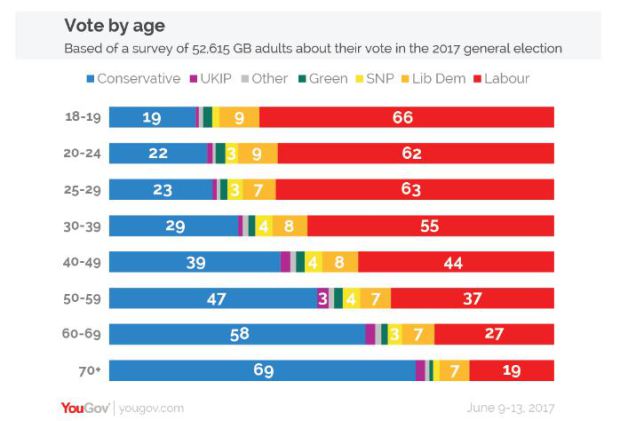
YouGov vote by age chart - general election 2017

Through their arrogance and sheer incompetence, the Tories have turned an entire generation away from conservative politics. But the solution is not to go marching off to the socialist Left

It doesn’t have to be like this.

It doesn’t have to be the case that people under 30 years of age vote so overwhelmingly for the parties of the Left, predominantly the Labour Party, while the Conservatives manage to sweep up barely a fifth of the youth vote.

The Tories have shot themselves in the foot by failing to court the youth vote or even speak to their concerns, the result of unbridled arrogance and sheer political incompetence. But the situation is not irreversible, if the right action is taken quickly. Unfortunately, the Tories – hopeless keepers of the conservative flame – look set to learn all of the wrong lessons.

I discussed this on my election night live blog and then again in this separate piece, but since that time several other commentators have jumped into the fray with their own takes, and it’s worth seeing what they have to say.

Former cabinet minister (sacked by Theresa May in her Weakness Reshuffle) and Harlow MP Robert Halfon won a lot of plaudits before the election for being one of few Tories to understand the need to reach out once more to the aspirational working class, and again after the election for criticising the Tories’ lack of vision going into the campaign.

From the Guardian:

Robert Halfon, who lost his frontbench role as minister for skills on Tuesday, said the Conservative party was “on death row” and had failed to offer a positive vision to voters.

The Harlow MP was scathing about the election campaign in which the prime minister lost her Commons majority, saying the Tories did not have a message to rival Labour’s promise to stand up “for the many not the few”.

Writing in the Sun, he said: “The Conservative party is on death row. Unless we reform our values, our membership offering and our party infrastructure, we face defeat at the next election – and potentially years of opposition.

“If we don’t change it wouldn’t matter if we had Alexander the Great or the Archangel Gabriel as leader. We face the wilderness.”

In an attack aimed at the Tory hierarchy – and campaign guru Sir Lynton Crosby – Halfon said: “Our election campaign portrayed us as a party devoid of values. ‘Strong and stable’ is hardly a battle cry. I cannot remember a time in the campaign when the Conservatives attempted to explain what we are really about: the party of the ladder, of aspiration and of opportunity.

“We let ourselves be perceived primarily as the party of ‘austerity’, failing entirely to campaign on our record of a strong economy or strong employment.

“Virtually nothing was said on the NHS or schools or the caring professions that work within them. Instead we created fear among pensioners, and threatened to take away school meals, handing a gift to our opponents. Is it any wonder that the Conservatives did not get a majority?”

Yes and no. Halfon is absolutely right to criticise the Tory campaign for its lack of a positive vision of any kind, let alone a coherent, recognisably conservative vision. But the specific targets of Halfon’s ire are all wrong. To follow his advice, the Tories should have engaged in a race with the Labour Party to shower praise and money on an unreformed NHS, wittered on endlessly about public services and exacerbated Britain’s corrosive culture of universal benefits, where everyone becomes accustomed to receiving handouts from the state regardless of their wealth or individual circumstances (see free school meals, the winter fuel allowance, child benefit and so on).

At least the Cameron/Osborne government, ideologically woolly as it was, made a token strike against universal benefits culture with their child benefit cap. Robert Halfon now sees support for giving benefits to people who don’t need them as the price of political survival. If this is true then there may as well not be a Conservative Party at all, because the Labour socialists will have won the war.

Here’s Nicholas Mazzei, writing in Conservative Home:

“Yeah I did; he was gonna write off my student loan. Come on!”

These were the words of a 25-year-old voter who text me early this morning, who had always voted Conservative and, up until the campaign began 5 weeks ago, was anti-Corbyn.

If you want to understand why the youth vote surged for Corbyn, I want you to read that line and look at the offer the Conservatives have made to the youth of Britain from our own manifesto. From this 25-year old’s own words, “the Conservatives have done nothing to reach out to those under-35”.

Now while most us would agree that the promises of wiping out debts and free university education by Labour were dangerous, unaffordable policies, we need to remember that the youth of the UK have been lumped with endless debts, rising costs in homes and education, and lower potential of earnings.

Much like in the US election, where voters turned out for Trump’s pro-employment message, youth voters in the UK turned out for a party which actually addressed their concerns.

Again, the problem is accurately diagnosed. The suite of Conservative Party policies, such as they were, did very little to even acknowledge the concerns of young people in a cosmetic way, let alone meaningfully address them. The Tories had no plan to encourage the building of sufficient houses to tackle the housing crisis because the status quo works just fine for their older core vote, thankyouverymuch. They remain obstinately committed to the most stubbornly self-harming form of Brexit possible, for absolutely no good reason, when most young people are sceptical of Brexit altogether.

And as icing on the cake, Theresa May and her lacklustre team preached a parsimonious message of fiscal restraint as a regrettable necessity – willingly accepting Labour’s framing of the economic debate! – rather than even attempting to sing the virtues of freedom, liberty and a smaller state dedicated to helping people in real need rather than a large state parcelling out insufficient morsels of assistance to everybody regardless of need.

Theresa May’s team seemingly forgot that people don’t become more conservative as they get older automatically or without some prompting, and that if the Tories continually screw somebody over through their formative years, young adulthood and early middle age then they won’t magically become Tory voters when they get their first grey hair. People become more conservative as they get older because historically, sensible government policy has allowed them to become greater and greater stakeholders in society, largely through property and equity ownership. Cut off millions of young people from this ladder to prosperity and security, and the conveyor belt which gradually moves people from political Left to Right as they age will come grinding to a halt. We see this in the YouGov poll. where the Tories now only overtake Labour among those aged over 50.

But while Mazzei effectively diagnoses the problem, his solutions also seem to involve lurching to the Left:

The UK has the highest average tuition fees in the world, second only to the USA (which is at around £5300 a year compared to £6,000 in the UK). We cannot lump all this debt on to young people. Education in general needs more investment and should be protected at all costs.

No. Why should somebody without a university degree subsidise the education (and future higher earning potential) of somebody who wants a free degree? While tuition fees at some American schools are horrendously expensive and poor value for money, UK fees are much cheaper, to the extent that they still often do not even cover the full cost of tuition. They are by no means outrageous, and those unwilling to make the investment in themselves are under no obligation to attend university. If anything, the presence of tuition fees clamps down on the number of pointless degrees in non-subjects being taken by students. Lower or remove tuition fees and we will likely see an explosion in gender studies and other pointless social justice-related pseudo-courses.

The unnamed government minister who spoke scathingly to the Telegraph about the Tory election campaign hits closer to the truth:

The Conservative Party has become “too shallow” and needs a “re-invigoration of political thought” that can draw young people to the party, a minister has said.

The MP warned that the Tory election campaign had relied on “poxy little slogans” to attract the youth vote and failed to counter Jeremy Corbyn’s offer of “free money” in the form of state-funded university tuition and other hand-outs.

The minister told The Telegraph: “You’ve got to persuade a new generation of people of what’s what. We never even tried, so Corbyn just came in and basically bribed people to vote for him with other people’s money that doesn’t even exist.”

[..] The minister said: “It’s all about political education and argument. The problem with the whole campaign is that it was about politics and politicians. “Everything is too shallow. Politicians have all got their experience but they lose if they forget to re-educate a new generation. You’ve got to persuade a new generation of people of what’s what.

“This is about political persuasion and think tanks and all that stuff.”

Another MP said the party had failed to properly engage younger votes on social media, where many users were instead targeted with videos attacking Mr Corbyn.

“Frankly the party has done very, very little to engage with young people,” he said. “We have made no real effort to garner support, even on social media, which is where everybody gets their news and views these days.

Yes, a thousand times yes. The case for conservatism has to keep being made for each new generation. The very presence of Jeremy Corbyn as the leader of the Labour Party should have been a huge wake-up call to the Tories that defunct, failed ideologies do not simply slink away to die once they are exposed and defeated.

Margaret Thatcher’s government may have rescued Britain from 1970s decline, but this was before the living memory of half the electorate. Two generations have come since the Winter of Discontent, with many in the millennial generation probably unable to even explain what it was, or how the failed socialist post-war consensus brought Britain to the brink of irreversible decline.

Thus we now have a generation of young people who take relative material abundance, peace and security for granted rather than appreciating that capitalism is the source of our prosperity, not a drain on it. A pampered generation who simply don’t realise that British and Western values need to be cherished and defended (as the Second World War and Cold War taught older generations).

Ross Clark makes the same point in The Spectator:

The under 35s have never been exposed to the negative images of socialism that were familiar to older generations. Growing up in the 1970s and 1980s, to my age group socialism was inescapably associated with the failures of the Soviet bloc: it conjured images of queuing half a day for a cabbage, putting your name down on a long waiting list for the prize of a choking, belching Trabant – and of getting shot if you tried to escape. To my generation, capitalism was synonymous with freedom. But I am not sure that holds for a generation who see only large, tax-dodging corporations and bankers who wrecked the economy yet carried on skimming off vast bonuses.

Neither, when reading of Jeremy Corbyn’s renationalisation plans, do the under-35s have memories of nationalised industries in Britain in the 1970s. They don’t recall the three day week, the Winter of Discontent, dirty, late trains, or realise that the chaos on Southern Railway was once symptomatic of labour relations in huge swaths of nationalised industry. All they see are over-priced trains run by private companies which have ruthlessly exploited the private monopolies which they were granted in this, the most botched of the privatisations.

The Corbynite Left (and even Labour centrists) have been incredibly adept at presenting what are really regulatory failures or corrupt crony corporatism as failures of capitalism itself, which – as shown by the willingness of young people to vote for politicians like Bernie Sanders, Jean-Luc Melenchon and Jeremy Corbyn – has led many young people to demand that we throw the baby out with the bathwater. They sit and angrily Tweet about the evils of capitalism using handheld computing devices that only capitalism made possible, and nobody in British conservative politics seemingly has the balls to point out the absurdity to them.

The anonymous government minister is absolutely right to point out that Conservatives have an existential duty to “persuade a new generation of people of what’s what”, that showering public services with endless money and taking back state control of industry would have already happened if repeated lessons from history did not show that this approach simply never works.

The minister is right too when he says “this is about political persuasion and think tanks and all that stuff”. Yes it is. But you won’t reach young people with think tanks and white papers, and it is becoming increasingly obvious that the toxic Tory brand will not persuade them of the merits of conservatism either. That’s why we need strong new independent grassroots organisations to emerge, to promote the idea of freedom, self-sufficiency and a smaller, better-targeted state as an inherently good thing in and of itself, rather than a regretful response to recession.

As I wrote the other day:

For reasons of branding and basic administrative competence, any future small-C conservative movement hoping to gain traction with young people must be distinct from the Conservative Party, free of that residual toxicity and free to criticise the Tory party in government and in opposition when it proposes policies which either betray core values or threaten the interests of young people. A British CPAC and Young Brits for Liberty-style organisation could nurture talent of its own, outside the corrupting, nepotistic influence of the Conservative Party hierarchy, and would greatly increase their collective clout by helping or withholding support from future Tory election campaigns and individual candidacies based on policy, not party loyalty.

It is only through outside groups like this that the image of conservatism stands a chance of being rehabilitated among young people. It is only through a British version of CPAC or YAF that young conservative or agnostic students at university stand a chance against being steamrollered by the fashionable left-wing identity politics which are almost de rigeur for social acceptance and advancement.

[..] We need a strong external repository for conservative principle, capable of engaging with young people who have been continually taught that leftist progressivism = forward-thinking “compassion” while liberty, independence and self-sufficiency from government are evidence of greed and moral failure.

We particularly need to work closely with conservative organisations in the United States, which face a similar uphill struggle in overcoming a historic disinterest in the youth vote but which are now starting to have some success, generated in part by their opposition to the illiberal Cult of Social Justice and Identity Politics sweeping American university campuses, with its disregard for freedom of speech and toxic obsession with the politics of victimhood.

We should be sharing best practice back and forth with American conservative organisations as to how to build strong redoubts for conservatism in overwhelmingly leftist places, so that conservatism isn’t washed away altogether. Frankly, British conservatism is in such a parlous state that we need their help. And then, once things have stabilised, we can look to reclaim some of the ground we have lost among young voters.

Skot Covert, Co-Chairman of the College Republican National Committee in the United States, offered this advice for a young conservative revival in the United States:

Due to an extended absence on the right’s part, winning the youth vote won’t be easy and it certainly won’t happen overnight.  However, when the GOP communicates our policy positions in culturally relevant terms in the right mediums, we see progress.  This means understanding how and where young voters communicate and having a discussion on the issues most important to them.

I believe it’s also critical to understand that there is no one-size-fits-all approach to winning young voters.  My generation is diverse and vibrant.  We thrive on uniqueness and self-definition and instinctively reject the notion that we should “go with the flow”.  Crafting an effective youth outreach strategy must be developed around this understanding.

This is certainly true. People crave authenticity in a politician – somebody willing to speak extemporaneously and answer straight questions honestly without first running them through a focus group or a Comms Team. Young people especially, it seems, like an optimistic, forward-looking message rather than lashings of grim tidings delivered by a malfunctioning, cautious android like Theresa May. Who knew? That’s why young people preferred socialist firebrand Bernie Sanders to calculating, establishment Hillary Clinton. That’s why Americans elected Donald Trump as their next president.

But there is no reason why these qualities of openness and relatability cannot be vested in a politician who doesn’t hail from the hard left or the populist pseudo-right. There is no reason why a liberty-minded Conservative MP could not similarly enthuse young people with a message of individual liberty, economic freedom and the advantages (rather than the costs) of restraining the state.

Anoosh Chakelian explains in the New Statesman just how Jeremy Corbyn and Corbyn-supporting outside groups used this quality of authenticity to their advantage:

Jeremy Corbyn’s campaign focused heavily on young people – a key manifesto pledge being to scrap tuition fees. His campaign style – rallies across the country, and fewer stage-managed speeches and press conferences than Theresa May – also appealed more to this demographic.

In addition, Labour had viral news on its side. As BuzzFeed reported, pro-Corbyn articles by “alt-left” sites were shared on an enormous scale on social media. I hear that nearly 25 per cent of UK Facebook users watched a Momentum video on the website in the penultimate week of campaigning. This is a particularly effective way of reaching young people, and inspiring them to vote – something the Tories weren’t as good at.

But who in the current Conservative Party hierarchy is remotely equipped for this task? Boris Johnson is probably the most charismatic of the senior Tories, but even he could never pack a large 2000-seat theatre for a political rally the way that Jeremy Corbyn can. And of course Boris Johnson is something of a charlatan, with sky-high negative ratings and absolutely no fixed political compass.

The cold hard truth is that the Tories don’t have anybody who can match Jeremy Corbyn for charisma right now – and how depressing that is. The best we can hope for is to give some of the better backbenchers (I keep banging on about Kwasi Kwarteng and James Cleverly) some ministerial experience to groom them for a few years down the road, but rather than looking to the future, Theresa May seems to have decided to keep her cabinet stuffed full of bland non-entities with her latest reshuffle. In her infinite wisdom.

That’s why we cannot rely on the Conservative Party to save conservatism from itself. The Tory party is corrupt, inbred, nepotistic, dysfunctional and ideologically bankrupt. Right now they are seriously considering skipping after Jeremy Corbyn on a fun political jaunt even further to the hard Left. Yes, somehow the Tories squandered the opportunity to use Corbyn’s rise to move the Overton Window of British politics further to the right, and instead are doing all they can to help him shift it to the left. These people are incompetent clowns who cannot be trusted to walk with scissors, let alone safeguard the ideology and worldview which we depend on to keep us prosperous and free.

We need outside groups to pick up the burden so shamefully dropped by Theresa May and her dysfunctional party. Student organisations, business organisations, bloggers, the works. The Tory Party as it currently stands will never persuade any more young people to vote Conservative. We need outside organisations with legitimacy and untainted reputations to make the positive case for conservative, pro-market values, and then pressure the Tories to hold the line rather than fight every battle on Labour’s terms.

I repeat: do not look to the Conservative Party to successfully engineer an improvement in the youth vote. The Tories are not going to make things any easier for themselves when it comes to youth outreach, and given the level of competence exhibited by CCHQ they have the potential to make things a whole lot worse.

We few young small-C conservatives need to pick up the slack ourselves.


Jeremy Corbyn - youth vote - t shirt

Support Semi-Partisan Politics with a one-time or recurring donation:

Agree with this article? Violently disagree? Scroll down to leave a comment.

Follow Semi-Partisan Politics on TwitterFacebook and Medium.

Labour Centrists Bend The Knee To Jeremy Corbyn, Once Again

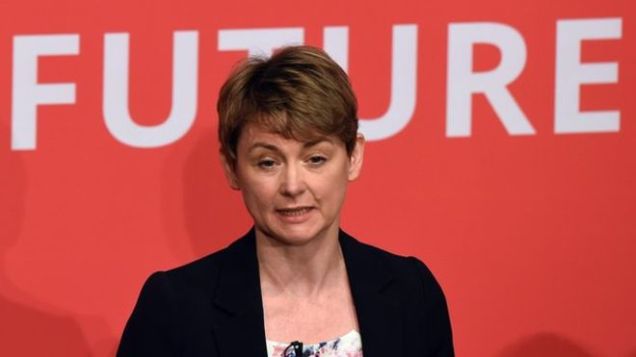
Yvette Cooper

No courage, no backbone, no vision of their own

Telegraph sketchwriter Michael Deacon reports on the rapturous reception given to Jeremy Corbyn by the Parliamentary Labour Party when he entered the Commons yesterday:

Labour MPs cheered Jeremy Corbyn.

Genuinely. They really did. And when I say Labour MPs, I don’t just mean John McDonnell, Diane Abbott and the other members of his little band of loyalists. I mean all of them. As Mr Corbyn entered the Commons for the first time since the election, his MPs rose as one and awarded their leader a delirious standing ovation. Yes, the same MPs – well, apart from the 47 new ones – who not so long ago sat in scowling silence while Mr Corbyn floundered at PMQs, and voted by four to one that he must stand down.

On and on they clapped and whooped. Beaming from ear to ear, like a Wimbledon champion greeting his adoring public, Mr Corbyn waved, shook hands, did the thumbs-up, and basked in the acclaim. On the opposite side of the House, Tory MPs – including Theresa May – stared glumly.

What a sight it was. If this is how Labour celebrate losing an election, imagine what they’d do if they actually won.

Well, well, well.

It’s almost as though I wrote something warning about the spineless Labour centrists and their yawning lack of principle a year ago, after Jeremy Corbyn saw off their pathetic, ineptly executed leadership challenge. Oh wait, I did. Twice.

And just as they did when Corbyn vanquished the hapless Owen Smith, now the Labour centrists are prostrating themselves at their leader’s feet because his big government manifesto managed to bribe sufficient voters to win Labour a handful of additional seats, if not the general election. They are jostling for position, eager to worm their way back into the the Shadow Cabinet – which many of them previously deserted or refused to join, in an effort to destabilise Corbyn – because they taste the tantalising prospect of toppling Theresa May’s government, forcing another election and creeping across the finish line as part of some “progressive alliance”.

Yvette Cooper, Chuka Umunna, Owen Smith – all of the usual suspects quickly dropped their plans to revolt against Jeremy Corbyn after what they anticipated to be an electoral wipeout, and instead took to the airwaves to praise their leader and lay the groundwork for what they clearly hope is a return to power and prominence.

Jeremy Corbyn’s hard left worldview will destroy the Labour Party, we were once told. But more than that, his policies are wrong! So said the sanctimonious Labour centrists, despite failing to clearly articulate their own centrist vision for Britain or clearly explain which parts of the Thatcherite revolution they want to keep, which ones they want to reject and which ones they simply want to pretend to oppose in order to project the right image to their base. And now they come crawling back, ready and eager to serve, all previous ideological and moral objections to Corbyn having been conveniently compartmentalised and forgotten.

The Labour centrists have no courage and no backbone. This is Jeremy Corbyn’s party now, not theirs. Labour’s 40% vote share was driven by Corbyn, not by any of the B-lister centrists who can barely inspire their own family members to the polls. If the centrists meant what they said when they wept at Jeremy Corbyn’s election as leader, resigned from his Shadow Cabinet in a huff or explicitly repudiated his leadership on the campaign doorstep, they would break away and found a new party of the centre-left. But they won’t. The prospect of power – even hard left power which not so long ago they found utterly objectionable – is simply too alluring.

This blog will make time to hear a multiplicity of political perspectives, but I have no time for people who cannot manage basic ideological consistency. And I have no time for oleaginous political swamp creatures who stab their leader in the back one day only to lay garlands of flowers at his feet the next.

Such degeneracy can be rivalled only by the rootless Conservative Party, who seem to have concluded – God help us – that the best way to bounce back from Theresa May’s disastrous election campaign is to race the Labour Party in a sprint to the political Left.


UPDATE – 14 June

Lobbyist and former Labour MP Tom Harris concurs with my assessment, and lays into the Labour centrists – particularly the so-called “big beasts”:

They were the epitome of principled opposition to a philosophy that, although alien to Labour Party traditions, was, for the time being, in control of it. They would not overtly oppose Corbyn (out of respect for his mandate, naturally), but neither would they be complicit.

Until now. Because it turns out – and who could possibly have predicted this? – that their “opposition” was not founded on principle at all. At least, not the principle we all thought.

Jeremy Corbyn stood in silence to honour IRA terrorists. He said that the homophobic, misogynist, anti-Semitic terrorists of Hamas, when they weren’t chucking trade unionists off the top of tall buildings in Gaza, were “dedicated towards… bringing about peace and social justice.”

He called for Nato to be disbanded. But it turns out that the “big beasts” had no problem with any of this, oh no – shame on you for thinking that!

Their only concern – and, to be fair, it was one that was shared by many of us – was that Corbyn just wouldn’t have an electoral appeal that would be great enough to warrant their participation on his front bench.

These are important people, after all, whose time is more precious than everyone else’s – they can’t be expected to spend their days asking parliamentary questions and leading opposition debates unless there’s the serious prospect of ministerial office at the end of it.

And now there is. After last week, there is the every chance that Jeremy Corbyn will be Prime Minister of this country, conceivably by the end of the year.

Before that earth-shattering exit poll was published at 10.00 pm last Thursday, at least a couple of those “big beasts” had already sought the support of their colleagues in anticipation of a return to the front bench, not as Shadow something or other, but as Leader of the Opposition. Labour’s 40 per cent of the vote changed all that.

Now, those of us with less political abilities and intellect than the “big beasts” might take a cautious step backwards at this point. In our naïveté we might fear that extremists who prove themselves popular are even more dangerous than extremists who are unpopular. But we would be wrong to think so.

With the sudden realisation that, contrary to expectation and logic, there are no votes to be lost in anti-Semitism or in friendship towards terrorists, the “big beasts” have made it clear that they are willing, after all, to get with the programme.

Some sore losers might harbour the hope that Corbyn will tell them to sod off and that he’s doing just fine without them, thank you very much.

But whether they return to their (as they see it) rightful place at the heart of Labour’s front bench, or whether they continue to sulk (with principle, of course) on the back benches, the term “big beast” will always be preceded by the descriptive “so called”, and will always be used with inverted commas, in order to indicate irony.

Principle has no place in British politics anymore, at least as far as the political/media elite are concerned. Pragmatism is king. And if your route back to power and influence means executing a deft 180-degree turn on supposedly inviolable principles, so be it. This is the rotten core of the Labour Party’s centrist wing.


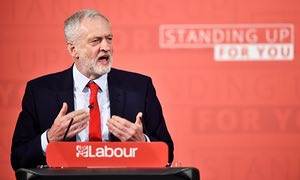
Jeremy Corbyn speech

Support Semi-Partisan Politics with a one-time or recurring donation:

Agree with this article? Violently disagree? Scroll down to leave a comment.

Follow Semi-Partisan Politics on TwitterFacebook and Medium.

General Election 2017: Tory Apocalypse / Brexit Salvation Reax

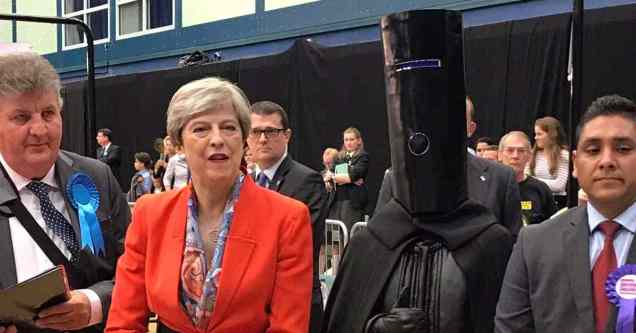
Theresa May - Lord Buckethead

A self-inflicted catastrophe for small-C conservatives with one – potentially enormous – silver lining

Who knew that Theresa May was quite so staggeringly incompetent? I mean, we all knew that she wasn’t a real conservative, at least in the best Thatcherite traditions of the party. That much was made clear from successive party conference speeches and her idiotic manifesto’s all-out assault on the libertarian or free market wing of the party.

But her years plugging away in the Home Office and quietly manoeuvring herself into the most powerful job in the country belied the fact that as prime minister, Theresa May would be revealed as little more than a puppet manipulated by her two closest aides (also both cuckoos in the conservative nest) with almost zero reliable judgment of her own.

Through her sheer campaigning ineptitude and inability to articulate a positive conservative vision (remember how this blog kept banging on about the need for one of those?), Theresa May has allowed Jeremy Corbyn’s brand of 1970’s style socialism to regain a foothold in British politics, and for this unforgivable high crime alone she needs to be sent to political Siberia with no undue delay.

But as I made clear in my election night live-blog, Jeremy Corbyn also deserves enormous credit for improving Labour’s electoral position and enthusing so many people with socialist politics. Sure, in one sense it is easy to sway people with the promise of endless free stuff, always paid for by someone else. But as I noted a couple of weeks ago, it is still necessary to overcome voter scepticism that the promised Utopian land of plenty can actually be achieved.

Jeremy Corbyn successfully made the pitch to lots of people – or at least got them to temporarily suspend their disbelief. And he did so in the context of a still-centrist Parliamentary Labour Party which hates his guts and has been trying to undermine him since before his leadership even began, not to mention a hostile television news media which only fell into something approaching balance when election campaign rules took effect, and a pro-Tory print media which pulled out all the stops to get Theresa May over the finish line. That is no small feat.

The other major factor was the youth vote. While we still don’t actually know how many young people voted or quite to what extent they broke for Jeremy Corbyn’s Labour Party, it seems clear that the promise of free university tuition – and let’s face it, just an ounce of empathy for a generation coming of age at a time when the prospect of home ownership is more distant and potential career paths more disjointed and precarious – won the support of millions of young people.

Apparently when it comes to closing time at nightclubs, young people are spontaneously breaking into the sung refrain “Oh, Jeremy Corbyn!“. The naive chant of mostly low-information voters who wear their political views more as a trendy fashion statement than a considered position? Sure. But also a demographic which Theresa May and her campaign team, in their infinite wisdom, did absolutely nothing to court.

I blogged about this in the heat of the moment on election night, and then split out my thoughts into a separate piece here. And it seems clear to me that British conservatives (I use a small C deliberately) simply cannot go on writing off the youth vote and ceding it to the parties of the Left. We have been doing so for far too long, at our peril, and now that a charismatic conviction politician (in the unlikely form of Jeremy Corbyn) has come along who can actually speak to this demographic we are totally defenceless.

And then there’s Brexit.

The one silver lining of this confused election result is that Theresa May’s stubborn insistence that “Brexit means Brexit” – by which she means that Brexit means abandoning the EEA, denying the existence of non-tariff barriers to trade, demanding a bespoke comprehensive free trade agreement within two years and threatening to walk away with no deal if the EU failed to acquiesce – may now be moderated by more sensible voices which lean toward the once-maligned “Norway Option”.

The DUP, on whose support the Conservatives must now rely to command a majority in the House of Commons and remain in government, are against a hard Brexit, as are many Tory Remainers and many small-C conservative Brexiteers across the country. While the Tory Brexit Taliban (a wonderful phrase concocted by Pete North) will kick up an almighty fuss if they sense any dilution of their maximalist approach to Brexit, suddenly it has become a lot harder to see the pathway toward that goal. Good.

Aside from these thoughts, I am still digesting the surprising election result and the potential ramifications of a new political reality with many moving parts. But below are some of the hot takes and more considered reactions which have resonated most with me in the hours since the fateful exit poll was released.

Author and blogger Paul Goldsmith rips into the Tories’ awful manifesto, the incompetence of their leadership and their small-minded, fear-based campaign:

Let’s not beat around the bush here. Theresa May’s manifesto was almost like saying ‘come on, I dare you to vote for us’. The idea that people who had worked all their lives and paid taxes and national insurance to build up a nest-egg to pass onto their children and grandchildren should run down that nest-egg to the last £100,000 to pay for care they thought was part of their social contract with the state in return for those taxes and that insurance? A return to a grammar school system that might look superficially advantageous to poorer children but with no clarity on how it wouldn’t once again abandon 75% of the population to the mental slavery of under-education? A free vote on fox hunting? A determination to insist that the ‘will of the people’ had been clearly expressed for the hardest of Brexits including withdrawal from the Single Market and customs union and immigration controls that include the preposterous 100,000 a year immigration cap?

Let’s add that to the person delivering this, it turned out, far more madcap scheme. Theresa May came across as arrogant, complacent, prickly when challenged, and downright mendacious when insisting ‘nothing had changed’ during her unprecedented manifesto u-turn on social care. Then there was the refusal to engage in TV debates. I wonder if any leader will do THAT again. Her refusal to properly involve her Cabinet in creating that manifesto left them hung out to dry when defending it, as they were reduced to constant ‘dead cat’ strategies of shouting ‘IRA’, ‘MARXIST’ and ‘TERRORIST SYMPATHIZER’ at Jeremy Corbyn, because they had so little positive to say.

Then look at what she was up against. Every night I would watch the news with Mrs G. We are not, and never will be ‘Corbynistas’, but by g-d did he look good compared to the Prime Minister. Mrs G often said it herself “every night he seems like the only person in this election who really believes what he is saying.”

This last point is particularly valid. Don’t underestimate the attraction of a political leader who (regardless of the rightness or wrongness of their policies) actually sincerely believes what they are saying, and has the courage to defend those beliefs.

When Theresa May first called this general election, I wrote a piece pondering whether Jeremy Corbyn’s likely defeat would spell the end for conviction politics altogether. How wrong I was. If anything, the Tory implosion and Corbyn’s solid showing (and the enthusiasm he has generated among many young people) have reminded us that having strong principles and the willingness to defend them can actually be attractive to voters. If only the conviction politician in this case had been on the Right rather than the Left.

Daniel Hannan, writing for the Washington Examiner, reaches for some low-hanging fruit about how young people voted for Free Stuff:

It’s true that the Conservative campaign could have been better, but that is true of every campaign in history. The prime minister, Theresa May, was criticized for calling an unnecessary election and then refusing to participate in the televised debates. But that doesn’t come close to explaining how Labour rose from 30 to 40 percent support during the campaign.

No, I’m afraid we’re down to the simplest and most depressing explanation. Quite a few voters will support any party that seems to be offering them free stuff.

Labour’s manifesto was a ridiculous list of public handouts. More money was promised for healthcare, schools, the police, public sector pay rises, pensions and free university tuition. All the extra cash was vaguely supposed to come from “big business” and “the rich.” In the event, an awful lot of people liked the sound of goodies that someone else would pay for.

The Labour vote came disproportionately from people under the age of 25, who turned out in unprecedented numbers, confounding every opinion poll. Few of voters of that generation know about the IRA bombing campaign in the 1970s and 1980s, which far surpassed today’s Islamist terror in its scale. They do not remember the Cold War. They do not even recall, except in the vaguest sense, the last Labour government which, in 2010, left Britain with a deficit higher than Greece’s.

On polling day, a Labour activist tweeted a photograph of students queuing outside a polling station. It was, she said, a sign of the political upheaval that was taking place. But my immediate thought was: “If your guy implements the socialism he wants, we’ll all have to get used to queuing.”

He’s right. The case for free markets and fiscal conservatism has to be made anew in every generation. Many of the young people who helped power Jeremy Corbyn to victory are at best dimly aware of the extent to which post-war consensus, socialist policies doomed Britain to slow and steady decline up to 1979. They didn’t experience the Winter of Discontent themselves, just as I didn’t.

But if nobody makes the case for the kind of policies which rescued Britain from near-terminal decline and which are at the root of the historic prosperity and plenty which we now enjoy, then they will take this stability and prosperity for granted, assuming that it is the baseline, the default setting. They will wrongly assume that things can only be improved by overturning conservative policies and attacking the free market, when in fact conservative economic policies and free markets underpin nearly every good thing in their lives, from the clothes they wear, the variety of food in the grocery stores where they shop to the smartphones in their hand from which they glibly re-tweet “For the many, not the few”.

Here’s Margot James, Conservative MP for Stourbridge, making a similar point in Conservative Home:

Apart from a level of debt which is unsustainable over the long term, the economy is now in good shape.  We have brought sanity to the public finances, as we promised we would. Consequently, the economy has not been to the fore when people have been deciding how to vote.  Labour have been able to latch on to this relative economic security by peddling a message that the state should provide more at every turn.

The election descended into a profligate binge over how much taxpayers’ money Labour proposed to give away: keeping the triple lock for pension increases, maintaining winter fuel payments for older people as a universal benefit, thousands more police officers (regardless whether or not they are needed, given the changing nature of crime), more money for schools, health, and social care…all this was added to the billions needed for the nationalisation of the railways and the Royal Mail. And finally, the game-changer: an end to tuition fees for higher education.

The moment I heard Labour’s policy of free university education I knew young people would turn out to vote in unprecedented numbers.  This was a policy that would deliver votes in the same way that the sale of council houses did for us during the 1980s.

At a radio hustings I took part in, we were asked what we would do for young people.  Labour was all about handouts: free higher education with no regard for how universities were to be funded, the reintroduction of housing benefit for 20 olds and an equal minimum wage.  I was a lone voice calling for improving opportunities for young people to gain skills, start businesses, and access better jobs brought about by encouraging investment.

Paul Goldsmith picked up on this point, too:

Many right-wing commentators have pointed out that all Jeremy Corbyn was doing was bribing people with other peoples’ money. One said that the election could be summed up in six words: ‘young people vote for free stuff’. Yes, there is an argument for both. But this is why it was incumbent upon Theresa May and the few people she takes advice from to present an optimistic picture of the benefits of the free market, or maybe stepped back, considered that if you keep on cutting spending per pupil in education the country will pay the price for generations, and changed course in a way that stays true to the now normal Conservative consensus that instead of spending a load of money to manage demand, money should go towards increasing productivity and supply, and demand will take care of itself.

But no. Instead we got the cowardice of fear. Fear of proper debate, fear of the demands of those on the Eurosceptic right who  will not stand for a single penny going to the EU and who insist with no justification that the world will simply dance to our tune, and fear of antagonising those who fund her party. Meanwhile, Jeremy Corbyn offered the audacity of hope, a hope that economic theory might be turned on its head, a hope that people who would be milked for money would turn it over quietly, but more importantly a hope that no-one in this rich country will live in desperation anymore.

It is astonishing, the degree to which the Conservative Party fought the election and generally structured its messaging according to the terms of the socialist Left. Restraining the growth of the state has continually been portrayed as a regrettable necessity rather than a good thing in itself. And that’s when certain ex-advisers who shall not be named (cough, Nick Timothy) were not busy advocating an even more activist role for the state altogether.

When you start speaking in the other side’s tone of voice, using their turns of phrase and echoing their agenda (Theresa May’s first act as PM was to stand on the steps of 10 Downing Street and talk about how government could help the “Just About Managing” rather than getting out of the way and lowering their tax burden) then you legitimise their arguments. If you concede that it is the job of an activist, paternalist state to help everybody by shovelling benefits in their direction and artificially limiting their choices, why would anybody vote for the Tories when Labour promise to do the job so much more enthusiastically?

Sam Bowman, of the Adam Smith Institute, is not in a forgiving mood:

The Tories did so badly in part because they did not give people a reason to vote for them; in part because they doubled down on a hard Brexit strategy; in part because they neglected and even attacked their own base. For many years they and almost everybody else have totally failed to make a broad-brush case for free markets, with the honourable exception of a few think tanks and newspaper columnists. With that in mind, why is it surprising that someone who despises markets is so popular? How good the moderate and coherent Osborne brand of social liberalism and fiscal conservatism now looks.

[..] The Tories did not offer anything to voters or to their own supporters. A free market manifesto could have energised Tory campaigners and candidates who would have had a reason to go to bat for May when she stumbled. It could have included policies that would have been popular with voters, like stamp duty and inheritance tax cuts, or ways of unlocking more infrastructure investment, that could have been sold on the doorstep as a reason to vote for them if you didn’t like them on Brexit. Fox hunting doesn’t count.

[..] Virtually no time at all was spent on the economy. What a colossal mistake. Many people’s incomes are the same in real terms as they were ten years ago, which is unprecedented. It was insane to ignore this and not to offer policies that might have boosted investment (chronically low in Britain by international standards) and people’s wages. All we got was a crude parody of continental European industrial policy, which in practice meant hectoring firms about worker representation on their boards and baseless claims about price gouging. What good is a polling lead on the economy for a right-wing party if you’re only interested in talking about business to attack it?

The Conservatives could have had a powerful and, to their base, exciting election platform. More homes, more investment, and better infrastructure could all have been delivered through smart, density-focused planning reforms, by restoring capital allowances in the corporation tax and cutting the part of business rates that falls on property investment, and by allowing local government to finance new infrastructure from private investment.

These ideas are free market to the core but are about fixing the problems that ordinary people have. Standing for free market conservatism does not mean having to be a dogmatic ideologue — something May and her team never understood.

Over on Facebook, Brendan O’Neill – who does himself no favours with his strident insistence that his is the only One True Brexit – does make some good points, first about the nature of the current Labour Party:

As more election number-crunching is carried out, it’s becoming clear that the Tories and Labour now play entirely different roles to the ones they played just 20 or 30 years ago.

The first thing that’s becoming clear is that people have overstated the extent to which Labour won over Leave voters. According to Lord Ashcroft’s exhaustive national survey, 60 per cent of Leavers voted for the Tories and only 25 per cent voted for Labour. John Curtice, the BBC’s key number-cruncher, reports that the biggest swings to the Tories were in Leave areas, while it was in “seats which voted Remain last year [that] Labour pulled off some of its best performances”. This means the Tories had huge swings in very poor areas like Boston and Skegness and working-class areas like Bolsover — which are Leave areas — while Labour made enormous gains in Hampstead, Kensington and Canterbury, which are Remain areas and / or well-off areas. The Tories made inroads with the poor, Labour made gains among the posh. This is fascinating.

More number-crunching is needed, but two things are becoming clear. 1) The idea that the Brexit issue or the Brexit divide has gone away is a fantasy. It merely takes a different form now, with Leave largely orientating around the Tories and Remain around Labour. Ashcroft says 68 per cent of Tory voters are Leavers and 64 per cent of Labour voters are Remainers. That is extraordinary. It’s the divide of our time, and we shouldn’t deny that. And 2) Labour, even led by Corbyn, is not a party of the working class. In fact it is becoming something else. It is morphing, or at least might morph, into being a party of the middle class that wants to *keep in check* working-class anger with institutions like the EU. Let that sink in. And let’s see what happens next.

And:

Okay, the wild Labour celebrations are getting weird now. Labour didn’t win. Even against grey, dull, U-turning May — the worst Tory leader of my lifetime, by far — it didn’t win. It is testament to Labour’s low ambitions that it is getting so excited about this. This is clearly a party that never expects to be in government again and must therefore welcome upward blips and handfuls of gains as the best it can get, proof it still has a pulse.

I also agree with O’Neill on the excessive celebration of the youth vote, as though their participation in the democratic process is somehow more valuable than that of older voters:

The message we’ve been bombarded with since Brexit and the Corbyn surge is that when the old vote, everything goes to shit, and the sooner these selfish, nostalgic bastards die, the better; but when the young vote, it’s all milk and honey and roses and light, and the sooner this fresh, caring generation takes over society, the better. The old are demonised, the young sacralised, giving rise to what must surely be one of the nastiest divides in our society right now. I can’t get behind the enthusiasm for the youth vote, I’m afraid, because much of it seems to me to be driven by a culture-war sense of entitlement against the apparently unfeeling, uneducated elderly. The culture war has come to the ballot box.

Now of course we should celebrate when a normally apathetic demographic group actually turns out to vote, but there is a worrying narrative building of young people, furious at having had their “futures taken away” by the selfish Leave votes of older people, finally striking back by supporting Jeremy Corbyn.

As well as being false, this is highly offensive. As though old people – many of whom sacrificed and laboured to give their EU-supporting kids the best possible chances in life – were not thinking about their children’s futures when they voted for Brexit, and as though young people – literally members of generation Me Me Me, consumerists who struggled to frame the EU referendum debate in terms other than what it meant for them and their own travel opportunities, love lives, mobile roaming charges etc. – were high-mindedly voting for the good of society and the future of our democracy. I have no time for this sanctimonious, false narrative, and it is good to see O’Neill also forcefully pushing back.

Turning to Brexit, here’s Pete North, angrily rebutting those who continue to fatuously declare that “the people” voted only for their specific, idiotic brand of Brexit:

As to the assertion that remaining in the single market is not leaving the EU, this is a zombie argument used by liars. The single market as it stands now is a collaborative venture between the EU and Efta states – and Norway etc only adopt about one in five EU rules by way of a system of co-determination – laws which we will likely have to adopt even if we left the single market – but without any means of disputing council decisions. Not least since many of them are rooted in global conventions.

I won’t go into the gory details because I will revisit these issues in the near future. The point of this post is simply to say that leavers do not get to call the shots on how we depart. They were given that opportunity over a year ago and declined the opportunity. It is therefore up to all of us to debate. Democracy is a continuum and though the decision to leave may well be sacrosanct the mode of departure still hangs in the balance and there is everything to play for.

You probably already know my views on this. There is no economic gain or utility in terms of sovereignty from leaving the single market. The main objective and the the single most important one is that we end political union with the EU and an off the shelf treaty is the fastest and safest path to that outcome. The rest can be sorted out later and revisited by way of EEA review.

There is no scenario where we don’t have to make compromises and fetishising sovereignty for its own sake is pointless since absolute sovereignty no longer exists unless you’re a regulatory superpower like China or the USA. Diverging from the existing regime brings us no efficiencies and comes at the cost of European trade. That was a tough pill to swallow for me being a long standing critic of EU regulation – but that is the reality of it nonetheless.

[..] In that regard do not let anyone tell you the debate is settled or let them interpret the result of the election for you. The question of how we leave has always been open ended and there is every reason to get involved. Plenty of people want to close down the debate by telling lies. The usual suspects. I’m not standing for it and this ain’t over til it’s over. The fight over Britain’s destiny did not end in June last year. The referendum was only the beginning and hardline leavers do not own this debate.

Meanwhile, the Telegraph columnist Christopher Booker can’t believe our good fortune in having inadvertently steered a course between two dangerous options (Corbynite socialism and Mayite Brexit illiteracy) with the electorate’s inconclusive verdict:

After a very short night, I was woken before 8am on Friday by a call from my son Nick, 5,000 miles away in India, who had been following the drama 8,000 feet up in the Himalayan foothills. “This is yet another amazing tribute,” he said, “to the unconscious political genius of the British people. They have somehow managed to steer between the Scylla of Corbyn’s suicidal economic illiteracy and the Charybdis of Mrs May’s hard Brexit.”

“She will only be able to govern with the support of 10 Northern Irish MPs who insist that we must keep a ‘frictionless border’ with Ireland and the 13 Scottish Tories who, with Ruth Davidson, are equally insistent that we must somehow remain free to trade in the single market. That is brilliant for the Union, because both Northern Ireland and Scotland are crucial to her survival.

“With all the other parties also somehow committed to staying in the European market, plus many of the less reckless Tories, that means that it will be extremely difficult for her to press on with her hard-Brexit, ‘walk away without a deal’ line. “I am now more optimistic about Britain’s future”, Nick concluded, “than I have been for a long time.” Many of my readers, I know, will be shocked, if not surprised, to hear that I agree with him.

Booker’s son is not wrong – and this is what makes the election result so bittersweet from my own perspective. Anything that moderates the nature of Brexit and injects some light rather than heat into the debate is clearly a good thing. But Theresa May has led the Conservative Party to a very bad place, perilously close to defeat, and there is no guarantee that either she or her replacement will learn the correct lessons.

The danger is that the Tories, rather than rediscovering their ideological backbone and making the case for free markets and a less activist state to the people, instead now join Labour in a full-on race to the political left, which would be devastating for conservatism as a whole as well as being a competition which the Right can simply never win. Must the price for Brexit be the shifting of the Overton window ten degrees back toward the Corbynite Left? It looks increasingly as though this may be the case.

Conservative Home’s Paul Goodman looks at the mechanics of the Conservative Party’s current predicament:

Better by far, say the wise old owls, to hang on.  An arrangement with the DUP would give the new Government a majority, they say.  There is no prospect of a no confidence vote succeeding.  And May can find shelter behind our old friend, the Fixed Terms Parliament Act.  Maybe she should see the Brexit talks through, some muse, and then depart with the thanks of a grateful nation.

Perhaps the old birds are right.  But this site is nagged by the uncomfortable feeling that they may be failing to see the wood for the trees.  May won the biggest Tory share of the vote since Margaret Thatcher, but the landslide she anticipated did not take place.  Voters seem to have mulled her refusal to level with them over social care, her reluctance to debate, her lack of ease with campaigning and engagement – and, having weighed her in the balance, found her wanting.  It is not certain that she has the flexibility and adaptability to share power with her Cabinet and Party and Parliament, as she must now do to survive.

It is all very well to take refuge behind fixed terms plus hope in the DUP.  David Cameron had a majority, and his government was crippled by rebellions.  May was at mercy of the Commons even before the election: remember the Budget and national insurance?  Conservative MPs may not yet have grasped that we face the possibility of five years of a Do Nothing Government – with all that this implies for the proper management of the country’s finances.  On paper, such an administration may be able to stagger on – at the mercy of tide and chance, with a Party leader vulnerable at any moment to a leadership challenge via letters to Graham Brady.  But in practice?

No, Theresa May needs to go now. None of the pieces I have read since that exit poll came out have convinced me otherwise, well argued though some of them are. In a sense, it doesn’t really matter that none of the likely options to replace her are any better (and Pete North forcefully explains why this is the case). The key is that the contenders could hardly be any worse, either in their zeal for a particularly destructive form of Brexit with almost no real thinking behind it, or in their dubious commitment to free markets and restraining the size of the state. And recall, May’s successor will be equally constrained in their Brexit approach by parliamentary arithmetic, so there is no need to keep May around for fear of a more hardline approach to Brexit.

Theresa May needs to go because she single-handedly destroyed her own authority, not just within her party or the country at large, but on the world stage too. These are momentous times, and with the metro-Left political elites of most countries currently scoffing at Britain for supposedly relegating ourselves from the ranks of serious countries by voting for Brexit, we need a strong, charismatic leader who is capable of going toe to toe with Emmanuel Macron, Angela Merkel and Donald Trump. Not a weak supplicant caretaker PM whose permission to continue representing us is extended only one day or one week at a time.

Perception matters, and right now Theresa May is correctly perceived as a loser with no authority. Better to make the change now, even if it means enduring five more years of aggrieved leftists who don’t understand how our system of government works (or make any effort to change it) moaning about another unelected Tory prime minister. Better to make the switch now rather than changing horses midstream in the middle of Brexit negotiations. And while whoever replaces Theresa May will probably be just as, uh, problematic from a conservative viewpoint, we should compensate by using the turmoil to finally promote some of the more Thatcherite, liberty-minded backbenchers – the likes of James Cleverly or Kwasi Kwarteng – to cabinet positions so that next time around we have a better talent pool to fish in.

The only problem is that by the time of the next general election, the Tories will have been in government (mostly in coalition / confidence and supply agreement, but also alone) for the past seven-plus years. The window for making radical changes to the way the country operates, tantalisingly opened after the Great Recession but stymied by David Cameron’s failure to win an outright majority against Gordon Brown, will have fully closed again. How many political parties or administrations can you think of which suddenly burst to life with original ideas and bold new policies 7+ years after first coming to power? Surely none. Anything radical must happen at the beginning, before the impetus wears off, steady state sets in and the people ultimately tire of the party of government and demand a change.

Regrettably, the Tories have wasted their years of potential firstly in coalition with the LibDems, then alone after the 2015 victory and now in some still-to-be-decided arrangement with the DUP, and accomplished very little save holding the EU referendum which gave us Brexit and presiding over a reduction (but not eradication) of the budget deficit. It is now quite possible that we must soon suffer through some form of left-wing government – perhaps a progressive alliance of the childlike Left, though who can now put it past Jeremy Corbyn to secure a majority of his own if May’s government falls? – before the Tories can then return once again to fix or limit the damage.

And yet in mitigation of this depressing fact, there is now a fighting chance that the new parliamentary arithmetic will see Brexit taking a more sensible, palatable and less destructive form, which is what this blog wanted all along.

Politics giveth and politics taketh away.


These are my current thoughts on the fluid post-election situation, together with some reactions from other people which have resonated with me since election night. I have quite a busy few days coming up so the blog may go a little bit quiet for the next week with only an occasional sporadic update, but normal service should be resumed by next weekend.

Stay tuned to the Twitter feed @SamHooper for more short-form ranting in the interim.


Theresa May - Downing Street speech

Support Semi-Partisan Politics with a one-time or recurring donation:

Agree with this article? Violently disagree? Scroll down to leave a comment.

Follow Semi-Partisan Politics on TwitterFacebook and Medium.