RNC 2016: Republican National Convention – Night 2 Summary

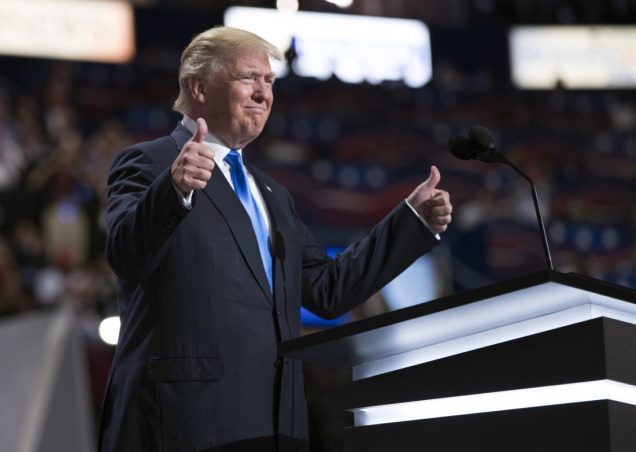
Donald Trump - RNC - Republican National Convention - Cleveland - Nomination

Donald Trump is now the Republican Party’s official presidential nominee. And there is plenty of blame to go around.

The theme of Night 2 of the Republican Party convention was “Make America Work Again”. Not that you would have noticed any great difference from Night 1, titled “Make America Safe Again”.

The speeches were the same – long diatribes against Hillary Clinton’s criminality, endless unproductive hysteria about terrorism, creeping paranoia about Iran and constant assertions from speaker after speaker that President Obama’s America is a weak cuckold of a country, being fleeced left, right and centre by enemies and allies alike.

Chris Christie was the highlight of the evening. No matter how much the New Jersey governor may have debased himself since dropping out of the presidential race himself to become Donald Trump’s first and loudest establishment cheerleader, one cannot deny the effectiveness of his prosecutorial convention speech, calling out a litany of Hillary Clinton’s transgressions and inviting delegates to pronounce her guilty or not guilty of each charge (spoiler: the Republican delegates convicted Clinton on all counts).

But that was the prime time agenda, the face that the Republican Party actually wanted to show the country. Before the eyes of America fell on them, the GOP held its state roll-call and officially confirmed Donald Trump as their 2016 presidential nominee.

While some rejoice at the ascendance of a man touting such a populist, anti-establishment agenda – and I can identify with that impulse, in part – there is no denying that this is anything other than a profound defeat for American conservatism, an even lower low than that reached by the Bush-Cheney administration with their fiscal incontinence and calamitous decision to play at nation building in the Middle East.

For Donald Trump is anything but a conservative. He has no respect for the United States Constitution, or for individual liberty – precious things to which the old Republican Party would at least pay lip service. He is an authoritarian, ideologically rootless wannabe strongman who actively scorns policy and loudly insists that all of America’s problems can be solved by simply deciding to start “winning” again. Rather than engage his brain and think about education policy or immigration, or globalisation and free trade, Trump merely promises to hire “the best people” to get the job done.

It should come as no surprise, then, that Trump apparently offered to make Ohio governor John Kasich the “most powerful” vice president in America’s history:

One day this past May, Donald Trump’s eldest son, Donald Trump Jr., reached out to a senior adviser to Gov. John Kasich of Ohio, who left the presidential race just a few weeks before. As a candidate, Kasich declared in March that Trump was “really not prepared to be president of the United States,” and the following month he took the highly unusual step of coordinating with his rival Senator Ted Cruz in an effort to deny Trump the nomination. But according to the Kasich adviser (who spoke only under the condition that he not be named), Donald Jr. wanted to make him an offer nonetheless: Did he have any interest in being the most powerful vice president in history?

When Kasich’s adviser asked how this would be the case, Donald Jr. explained that his father’s vice president would be in charge of domestic and foreign policy.

Then what, the adviser asked, would Trump be in charge of?

“Making America great again” was the casual reply.

In other words, Donald Trump cares so little about actually governing that he was willing to outsource both domestic and foreign policy – that is, the entire US presidency, bar the annual pardoning of the Thanksgiving turkey – to his VP, someone who would deal with all of the boring stuff while Trump jetted around insulting foreign heads of state and acting as America’s global brand ambassador.

This – this – is the depth to which the party of Abraham Lincoln has sunk.

But how? Daniel Larison’s painful evisceration of the rotten Republican Party says it best:

Like Rod Dreher, I see Trump’s success as proof that “the people who run [the GOP] and the institutions surrounding it failed.” They not only failed in their immediate task of preventing the nomination of a candidate that party leaders loathed, but failed repeatedly over at least the last fifteen years to govern well or even to represent the interests and concerns of most Republican voters.

Had the Bush administration not presided over multiple disasters, most of them of their own making, there would have been no opening or occasion for the repudiation of the party’s leaders that we have seen this year. Had the party served the interests of most of its voters instead of catering to the preferences of their donors and corporations, there would have been much less support for someone like Trump. Party leaders spent decades conning Republican voters with promises they knew they wouldn’t or couldn’t fulfill, and then were shocked when most of those voters turned against them. Trump is millions of Republican voters’ judgment against a party that failed them, and the fact that Trump is thoroughly unqualified for the office he seeks makes that judgment all the more damning.

While as Tucker Carlson pointed out back in January (h/t Dreher):

In the case of Trump, though, the GOP shares the blame, and not just because his fellow Republicans misdirected their ad buys or waited so long to criticize him. Trump is in part a reaction to the intellectual corruption of the Republican Party. That ought to be obvious to his critics, yet somehow it isn’t.

Consider the conservative nonprofit establishment, which seems to employ most right-of-center adults in Washington. Over the past 40 years, how much donated money have all those think tanks and foundations consumed? Billions, certainly. (Someone better at math and less prone to melancholy should probably figure out the precise number.) Has America become more conservative over that same period? Come on. Most of that cash went to self-perpetuation: Salaries, bonuses, retirement funds, medical, dental, lunches, car services, leases on high-end office space, retreats in Mexico, more fundraising. Unless you were the direct beneficiary of any of that, you’d have to consider it wasted.

Pretty embarrassing. And yet they’re not embarrassed. Many of those same overpaid, underperforming tax-exempt sinecure-holders are now demanding that Trump be stopped. Why? Because, as his critics have noted in a rising chorus of hysteria, Trump represents “an existential threat to conservatism.”

Let that sink in. Conservative voters are being scolded for supporting a candidate they consider conservative because it would be bad for conservatism? And by the way, the people doing the scolding? They’re the ones who’ve been advocating for open borders, and nation-building in countries whose populations hate us, and trade deals that eliminated jobs while enriching their donors, all while implicitly mocking the base for its worries about abortion and gay marriage and the pace of demographic change. Now they’re telling their voters to shut up and obey, and if they don’t, they’re liberal.

It turns out the GOP wasn’t simply out of touch with its voters; the party had no idea who its voters were or what they believed. For decades, party leaders and intellectuals imagined that most Republicans were broadly libertarian on economics and basically neoconservative on foreign policy. That may sound absurd now, after Trump has attacked nearly the entire Republican catechism (he savaged the Iraq War and hedge fund managers in the same debate) and been greatly rewarded for it, but that was the assumption the GOP brain trust operated under. They had no way of knowing otherwise. The only Republicans they talked to read the Wall Street Journal too.

On immigration policy, party elders were caught completely by surprise. Even canny operators like Ted Cruz didn’t appreciate the depth of voter anger on the subject. And why would they? If you live in an affluent ZIP code, it’s hard to see a downside to mass low-wage immigration. Your kids don’t go to public school. You don’t take the bus or use the emergency room for health care. No immigrant is competing for your job. (The day Hondurans start getting hired as green energy lobbyists is the day my neighbors become nativists.) Plus, you get cheap servants, and get to feel welcoming and virtuous while paying them less per hour than your kids make at a summer job on Nantucket. It’s all good.

This blog agrees: Donald Trump is the fault of every single American conservative who has been in government since the turn of the millennium. It is hard to think of any other political party which so thoroughly alienated its own base through a deliberate campaign of ignoring their interests and showering them with contempt since… since centrist Labour was blown apart by the Jeremy Corbyn revolution in Britain.

The GOP’s corrupt leadership and willingness to con their own voters (particularly by exploiting wedge social issues to little effect while pursuing the same old failed economic policies) is the reason why the Republican base turned en masse against establishment conservatism, preferring even an authoritarian strongman like Trump to another moment of their sanctimonious, self-serving rule.

This is happening. There will be no white knight to swoop in and save the day, snatching the nomination away from Donald Trump. The Republican Party have already bestowed their blessing and their nomination. And everybody who shares the same stage in Cleveland – even the good ones, like Paul Ryan – are now tainted by association with him.

And when the Republican Party is picking through the wreckage on Wednesday 9th November, there will be plenty of blame to go around.

 

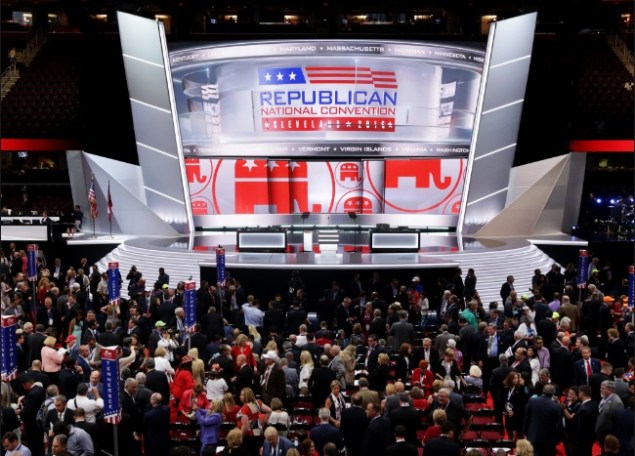
RNC - Republican National Convention - Cleveland - Quicken Loans Arena Floor

Top Image: The Intelligencer

Support Semi-Partisan Politics with a one-time or recurring donation:

Agree with this article? Violently disagree? Scroll down to leave a comment.

Follow Semi-Partisan Politics on TwitterFacebook and Medium.

Many People In Britain Deserve Sympathy. Labour’s Centrist MPs Do Not.

The sycophantic Westminster media identify and empathise much more with Labour’s centrist MPs than the ordinary people who make up the party membership. And it shows.

In a rather nauseating review of Theresa May’s first outing in Prime Minister’s Questions, The Spectator’s Steerpike column gushes with sympathy for the rebellious Labour centrist MPs perched behind (and around) Jeremy Corbyn:

In recent weeks, Jeremy Corbyn’s popularity has hit a new low with the Parliamentary Labour Party. Things are so bad that he is unable to assemble a full Shadow Cabinet — instead having to assign some people with more than one position.

So, it was an interesting move of the Labour leader to bring up job insecurity and difficult bosses at today’s PMQs. Corbyn suggested that Theresa May had much work to do when it came to making employment rights fairer. Alas, the Prime Minister was unimpressed with Corbyn’s complaints. Channeling her inner Thatcher, May went on to suggest that it was he who was the guilty one when it came to inequality in the work place.

The Spectator goes on to quote the new prime minister’s (admittedly very effective) withering putdown of Corbyn:

‘I’m interested that he refers to the situation of some workers who might have some job insecurity and potentially unscrupulous bosses. I suspect that there are many members on the opposition benches who might be familiar with an unscrupulous boss.

A boss who doesn’t listen to his workers. A boss who requires some of his workers to double some of their workload. Maybe even a boss who exploits the rules to further his own career. Remind him of anybody?’

This is all part of a dismally familiar effort in the Westminster media to paint Labour’s rebellious centrist MPs as the wronged and oppressed group, and Corbyn as their unlikely tormentor in chief (when if anything it is clearly the other way around).

The Spectator – and they are far from alone – expect our hearts to brim over with sympathy for the poor Labour centrists whose ineptitude made Jeremy Corbyn’s rise possible in the first place, and who now stomp around Westminster mutinously, trying to destroy the mirror which Jeremy Corbyn holds up to their faces, showing them their own vacuity.

This is a fawning, sycophantic attitude which screams “screw the people and the Labour Party membership! What really matters are the hurt feelings and stymied career aspirations of 230 members of the Westminster political class, people who didn’t go to Oxbridge, secure prize political internships and shimmy their way up the greasy pole only to find their dreams of a Cabinet career dashed because their party is locked out of power for a generation.”

That’s not to say that Corbyn is some kind of faultless, saintly figure. Far from it. But while his ideology may have been plucked unreformed from the 1970s, it is at least coherent and sincerely felt. The same cannot be said for the restive cohort of centrists who are so busy trying to find an “electable” alternative that policy and passion and principle barely register at all.

Post-Brexit, it seems to be fashionable for well-connected journalists, commentators and intellectuals to publicly muse about the possible reasons for the anti-establishment rage simmering at the surface of British politics. Why oh why have the British people stopped listening to the expert opinion of their betters in the Establishment, goes the frequent cry. Why have the people lost faith in the political class?

Hint to the Spectator: journalists openly fretting about the mental welfare of supposedly poor, downtrodden centrist Labour MPs rather than the genuinely poor and downtrodden squeezed middle and working classes goes a long way toward explaining this impenetrable riddle.


Jeremy Corbyn - PMQs

Support Semi-Partisan Politics with a one-time or recurring donation:

Agree with this article? Violently disagree? Scroll down to leave a comment.

Follow Semi-Partisan Politics on TwitterFacebook and Medium.

RNC 2016: Republican National Convention – Night 1 Summary

RNC - Republican National Convention - Cleveland - Quicken Loans Arena Floor

As the Republican National Convention gets underway in Cleveland, it is hard to recall a time when American conservatism has been in so parlous a condition

Andrew Sullivan (in a most welcome return to political live-blogging) captured the ugly essence of Night 1 of the Republican National Convention in Cleveland, Ohio:

Just mulling over the events tonight, there’s one obvious stand-out. I didn’t hear any specific policy proposals to tackle clearly stated public problems. It is almost as if governing, for the Republican right, is fundamentally about an attitude, rather than about experience or practicality or reasoning. The degeneracy of conservatism – its descent into literally mindless appeals to tribalism and fear and hatred – was on full display. You might also say the same about the religious right, the members of whom have eagerly embraced a racist, a nativist, a believer in war crimes, and a lover of the tyrants that conservatism once defined itself against. Their movement long lost any claim to a serious Christian conscience. But that they would so readily embrace such an unreconstructed pagan is indeed a revelation.

If you think of the conservative movement as beginning in 1964 and climaxing in the 1990s, then the era we are now in is suffering from a cancer of the mind and the soul. That the GOP has finally found a creature that can personify these urges to purge, a man for whom the word “shameless” could have been invented, a bully and a creep, a liar and cheat, a con man and wannabe tyrant, a dedicated loather of individual liberty, and an opponent of the pricelessly important conventions of liberal democracy is perhaps a fitting end.

Well, quite.

What struck me most from the first night of the Republican convention, as speaker after speaker stood and railed against President Obama, called for Hillary Clinton to be thrown in jail and led the delegates in endless chants of “USA! USA!”, was the fact that these people were all scared. Scared of the future, scared of their economic prospects, scared of Islamist terrorism, scared of national decline.

Rudy Giuliani, appearing a very shrunken figure since his glory days in the late 1990s and during 9/11, sounded like a fearful pensioner shouting at the television when he gave his barnstorming prime-time speech. Where had his America gone, he shouted, and who would keep them all safe in these dangerous times? The answer, of course, was always Donald Trump.

We know that some American conservatives have skipped the convention entirely in disgust – and who can blame them? But of those in the convention hall – or the Quicken Loans arena, to give its full title – the vast majority seem to be drinking the Kool-Aid, or have at least reluctantly reconciled themselves to the fact that Donald Trump is their presidential nominee.

Something has changed in the soul of the Republican Party. One can argue endlessly about the reasons why – this blog believes that the continued failure of Republican government to benefit the struggling middle classes, the failure of the Tea Party to make a positive difference despite its loud rhetoric together with the ill-fated adventurism of the neoconservatives, has done much to alienate working class Americans from a conservative political class who have little to offer them but shallow patriotism.

Of course, Donald Trump offers shallow patriotism too. But he is also a strongman. Where President Obama wrings his hands and attempts to explain the complexity of the world and the problems facing America – often to excess – Donald Trump offers clarity and bold, oversimplified solutions. ISIS can be defeated without putting American boots on the ground, just by America deciding to “lead” again. Semi-skilled manufacturing jobs can be repatriated to America simply by “standing up” to nefarious foreign countries like China and Mexico. And apparently, after having been ground down by two stalled wars and a financial crisis, American conservatism was sufficiently dejected and debased to pick up that message and run with it.

I came of age (and became aware of American politics) in the late 1990s, in the tail end of the Clinton presidency and into the George W. Bush era. And in that time, in books and speeches by prominent conservatives, American conservatism was clearly dedicated – in rhetoric, if not always in practice – to advancing freedom. Freedom for the individual in America, and (sometimes disastrously) freedom for people in other parts of the world.

But the Republican Party of 2016 barely talks about freedom at all. On the first night of the RNC in Cleveland, speakers and delegates gathered under a massive sign proclaiming “Make America Safe Again”. Freedom has apparently gone out the window completely – why else would Republicans nominate an authoritarian like Donald Trump, a man who expresses contempt for freedom of speech, freedom of the press, freedom of religion and human rights? And in freedom’s place comes the soothing, reassuring, beguiling promise of safety.

The America I now see through the prism of the current Republican Party – thankfully quite a distorted prism – is one where the American Dream has died for millions of people, or is at best on life support. The Republican primary voters who overwhelmingly voted to make Donald Trump their presidential nominee, and who are now gathered in Cleveland for the quadrennial party convention, were motivated by not by a sense of opportunity but by fear. Fear for their physical safety from terrorism. Fear of economic instability. Fear of relative decline.

Tim Stanley agrees:

Note: preserve. Not build more, not expand, not create – but preserve. You might argue that Trump is conservatism in its purest sense, the sense of being about conserving the best of the past. You might also argue that this represents a break from Reaganism, which is optimistic and about growing the economy to the advantage of the individual.

I’ve been a US conservative convention goer for eight years and I can tell that a change has come over them. You used to hear a lot about defending the Constitution and shrinking the government. Not so much anymore.

The people who are interested in those things are here. On Monday afternoon, God bless them, they tried to kick Trump off the ticket with a rules challenge on the convention floor. They failed and stormed off. They never had the numbers necessary to do it and the Republican establishment has reconciled itself to Trump anyway – so no dice.

And that’s the most depressing thing of all – there is no longer a major political party in the United States remotely dedicated to expanding freedom for the individual and defending against the encroachment of the state.

Lord knows that the Democrats will not be championing liberty now that they are led by Hillary Clinton and nearly entirely captured by the Cult of Social Justice and Identity Politics. For small-c conservatives, libertarian and conservatarians, this election is very much a case of pick your poison.

Andrew Sullivan is quite right to highlight the lack of any serious policy discussion on Day 1 of the convention (and if you don’t get any on the traditionally less TV-worthy opening days then you won’t get any at all). Trumpian conservatism clearly is not interested in solutions. Like their strongman hero, the Republican Party of 2016 has decided that the difficult, intractable problems of Islamist terror, deindustrialisation, global competitiveness and social mobility can be solved simply by willing them away, by “standing up to America’s enemies” and being swept along by Trump’s strong leadership.

Maybe it will take defeat in the 2016 presidential election for the Republican Party to be shocked out of its current stupor and invigorated to find a way to appeal to Trump’s broad coalition of voters with a more optimistic, pro-liberty message.

The nightmare scenario, though, is a Trump victory, which would gild this fear-based, revanchist form of conservatism with the prestige that comes with winning (never mind posing a serious threat to the American republic) and has the potential to transform Donald Trump from an unfortunate blip on the political landscape to an early 21st century Ronald Reagan.

In short, it is hard to see any grounds for hope at all going into this Republican Party convention. But this blog will continue to watch and hope for the green shoots of a future conservative revival, something better to come once this Trumpian nightmare is over.


Donald Trump Hosts Nevada Caucus Night Watch Party In Las Vegas

Support Semi-Partisan Politics with a one-time or recurring donation:

Agree with this article? Violently disagree? Scroll down to leave a comment.

Follow Semi-Partisan Politics on TwitterFacebook and Medium.

The Hypocrisy Of Centrist Labour’s War Against Jeremy Corbyn

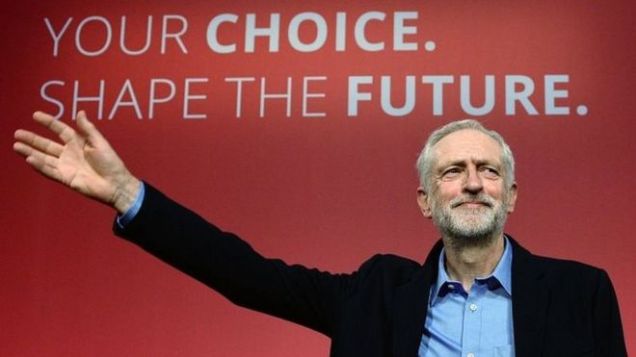
Jeremy Corbyn - Labour Party Leadership - Your Choice Shape The Future

Jeremy Corbyn wants power so that he can do something with it. His rebellious centrist MPs also want power, but are unable or unwilling to articulate what they want to do with it

For a blog with solidly conservatarian credentials such as this, Semi-Partisan Politics seems to be spending an awful lot of our time defending somebody who is about as doggedly, severely left-wing as it is possible to be.

And yet I must continue defending Jeremy Corbyn against the onslaught of outraged centrist criticism and juvenile student-union style plots to unseat him, because this blog will always choose principle over self-interested triangulation. And because most of the criticisms of Jeremy Corbyn emanating from centrist Labour reveal a lot more about their author than they wound their target.

The latest establishment type to come gunning for Corbyn is Nick Cohen, writing in The Observer:

Anyone can be against austerity and poverty, spin and the Westminster bubble, the bankers and the corporations, if there is no price to pay. Students can project their hopes on to the blank slate Corbyn offers them. Old soixante-huitards and the militants of the Thatcher era can refight the battles of their youth as painlessly as the Sealed Knot refights the Civil War. Wykehamist Marxists can stand shoulder to shoulder with exhibitionist celebrities; wild intellectuals with the justifiably furious shop stewards.

Empty leftism gave Corbyn control of the Labour party, but little else. He has the lowest popularity rating of any opposition leader in history. The public sees a political movement that doesn’t want to govern them and does not much like them either. Government necessarily involves the trade-offs the far left pretends need never trouble us. Labour’s founding constitution of 1918 said its first purpose was to establish and retain, in parliament and in the country, a political Labour party. The far left has to reject it because it can never win elections without losing its illusions.

As the opposition collapsed last week, Paul Mason insisted that Labour must be transformed from a party that seeks to govern into a “social movement”. Mason, along with Michael Gove, Boris Johnson and Milne, is part of a group of journalists who have poisoned public life by taking braggart swagger and cocksure certainties of newspaper punditry into politics. But in this instance, he was authentically reflecting “the people” or, rather, that tiny section of “the people” who pay £3 and click on a link to show they agree with him.

[..] Vacuity leads not only to political impotence but political fear. Uncomprehending hatred fills the empty space where policy should be and brings with it the threat of violence that hovers above Labour like yellow cigarette smoke in a Munich beer hall. It was thought that the killing of Jo Cox might alter the mood. But the misogyny, homophobia, antisemitism, death threats, rape threats and insane conspiracy theories against Labour MPs endure. The foul climate shows that Corbynism has sociopathic consequences. When his supporters believe that all they need do to oppose austerity, the bankers, etc, is to say they are against them, then, by definition, their opponents cannot have honest objections, only evil intentions. Like sin, they must be purged.

There is so much to unpick here that it is difficult to know where to begin. Let’s start with the stuff which we can agree on. Paul Mason and Seumas Milne are indeed nasty, toxic people and a scourge on British politics. They accrue cult-like followings based on peddling glib and superficial critiques of their targets (capitalism, conservatism, America, Britain, wealth, success or whatever else riles them up on any given day).

But for Nick Cohen to speak of the “vacuity” of the Corbynite Left is hypocritical in the extreme. The only reason that Jeremy Corbyn was able to come to power in the first place was that the mainstream, centrist Left had nothing – absolutely nothing, tumbleweeds – to say to their traditional working class base, or to those who are feeling the pinch from globalisation and a future filled with insecure, low-paying jobs.

Blairism in a time of plenty just about worked – one could simply shovel more and more people into the arms of the welfare state, declaring them unfit for work and then forgetting about them, while lavishing exorbitant sums on unreformed and terminally dysfunctional public servives like the NHS. And so long as economic growth continued at a fair clip, the day of reckoning could always be postponed, one more day, and another, and another.

But Blairite/Brownite/Milibandism simply doesn’t butter any parsnips when there is no money left. Because now you have a huge swathe of the population who have been raised to be dependent on government, even taught that such subsistence is their “human right”, up in arms because this support structure has either been ripped away from them or pared back due to more stringent means-testing or benefit freezes. And suddenly, hearing some well-heeled member of the metropolitan left-wing elite claiming to sympathise with your plight while not doing the first damn thing to change it doesn’t produce an overwhelming desire to vote for that leader (Miliband) or party.

Nick Cohen talks about the vacuity of Labour’s left-wing, but what about the centrists? These are people who, despite their continued denunciations of Corbyn and accusations that in less than year he has failed to flesh out a detailed and fully costed policy platform, haven’t come up with a single alternative policy platform of their own (just like Ed Miliband’s policy platform was a “blank sheet of paper” at this stage of his own leadership).

Surely if it is now such a crime for a Labour leader to not have a fully costed and worked out policy platform, the centrists vying to unseat Corbyn must be brimming over with whole policy suites and agendas of their own. Surely they know exactly what tax reforms they would enact, who would be punished and whose wallets would be fattened. Surely they know exactly what to do about the NHS, in more detail than simply shovelling more money at that insatiable organisation. Surely they have comprehensive plans for pensions, welfare, defence, education, trade and industry.

But we know that the centrists have none of those things. When Angela Eagle hit the TV studios last weekend to launch her leadership challenge, she failed to name a single area of policy disagreement with Jeremy Corbyn, despite being asked numerous times. Owen Smith was marginally better when he launched his own campaign a couple of days ago, but hardly came out of the starting blocks with his pre-printed manifesto ready to go. Why? If Jeremy Corbyn’s leadership is so ideologically extreme, surely it should be the easiest thing in the world to highlight just a few clear examples where an Eagle/Smith led party would chart a different, more centrist course?

The fact that they do not is damning evidence that the centrists are every bit as vacuous as they accuse Corbyn of being. They, too, want to pretend that endlessly bountiful public services can be funded at no cost to anyone through the munificence of the magical money tree. They too want to make every citizen’s passing whim their immediate and sacred “human right”. They too plan to worship at the sacred altar of the NHS, singing endless hymns of praise to St. Aneurin Bevan of Tredegar without doing a damn thing to improve health outcomes for Britons.

Therefore, what we are now witnessing from Labour’s disgruntled centrists (and their media mouthpieces like Nick Cohen) is not some earnest, pragmatic criticism that Corbyn is failing to grapple with the real issues facing the country. No. It is simply an aggrieved and self-entitled howl of anguish that somebody other than them is getting a turn at calling the shots.

Given time, Jeremy Corbyn will undoubtedly come out with a manifesto just like every other party leader has done before him. This blog will doubtless disagree with nearly all of it. It will probably involve re-nationalisation of flagship industries like rail and energy, massive tax hikes on the wealthy and cuts for the poorest, massive injections of borrowed money into public services and infrastructure on the spurious grounds that such investment will “pay for itself”, the immediate cooling of the special relationship with the United States and much more power to the trades union. We may even see strengthened rights to strike and a greater emphasis on national collective bargaining as John McDonnell goes all out to recreate the 1970s.

Such a manifesto will, it hardly needs to be said, not win Labour a general election against anybody, least of all a Conservative Party which continues to hew shamefully to the centre under the leadership of Theresa May. But it will at least be ideologically coherent, even as it is scorned.

What will the centrists’ alternative Labour manifesto contain? We don’t know, because they haven’t told us yet. And why haven’t they told us the kind of policies which they will advocate? Because their focus groups haven’t told them yet. And because their PR people haven’t worked out quite how the likes of Angela Eagle and Owen Smith can best continue advocating for the unacceptable status quo while making it sound like they are being fearsome, revolutionary reformers and champions of the poor.

The day that this blog will give the time of day to some self-entitled, born to rule centrist from Labour’s metropolitan middle class clerisy is the day which they come packing a serious, heavyweight alternative policy agenda which amounts to more than Cameron/May centrism with an added dash of sanctimonious waffle about equality and fairness.

Until then, and so long as the current Labour leadership stands for demonstrably different values and policies to the stale centrism which has led us to this present cul de sac (and no matter how much this blog may disagree with those values), this blog remains planted in Jeremy Corbyn’s corner.


Jeremy Corbyn - PMQs

Top Image: BBC

Support Semi-Partisan Politics with a one-time or recurring donation:

Agree with this article? Violently disagree? Scroll down to leave a comment.

Follow Semi-Partisan Politics on TwitterFacebook and Medium.

The Church Of England’s Tantrum Over The EU Referendum Result Is Insulting To Brexit-Supporting Christians

Bishop Robert Innes - EU Referendum - Remain - Brexit - European Union - Christianity

Nearly a month after Britain’s historic vote to leave the European Union, swathes of the Church’s leadership are stuck in furious denial

This blog had very little time for the Revd. Dr. Robert Innes, the Church of England’s Bishop of Europe, before the EU referendum and Britain’s shocking, wonderful decision to leave the EU. But it has even less time for his incessant, self-pitying (and democracy-loathing) moaning in the weeks since that historic vote.

The Archbishop Cranmer blog reports:

“Let me be clear,” said the Rt Rev’d Dr Robert Innes, Bishop of Europe, as he addressed the General Synod of the Church of England. “From my European perspective, this Referendum and its result represent a sad loss of national vocation; an abject failure of political leadership; and a squandering of the birthright of our young people.” And Synod applauded their Euro-prophet for a full 10 seconds, seemingly oblivious to the fact that lay Anglicans voted for Brexit in their droves (and by a majority). “Britain seems to be a country anxious to build fences,” he added, before reminding the people of God that his task as a bishop is to build bridges. Not to the wider world, it seems. Or even to the 22 nations of Europe which aren’t in the European Union, which includes the supremest bridge Pontifex himself, all neatly fenced off in Vatican City State. But Dr Innes’ task as a bishop is to build bridges to the other nations of the European Union, and without political union he is seemingly bereft and hindered from doing so.

Cranmer goes on to highlight Bishop Innes’ complete and utter disregard and disdain for the pro-Brexit opinions of many lay Christians:

The Bishop of Europe acknowledges that some in his Diocese were pleased with the Referendum result, but he doesn’t tell their stories. They are sidelined, disdained and ignored: they don’t quite fit the Bishop’s narrative of shame, anger and deep sadness. “One older man in Paris said to me: ‘I have never been so ashamed of my country.’ A lady in Geneva said to me: ‘I have found it hard to stop being angry.’” There’s no apprehension of joy, liberty, hope or optimism: no awareness of the abundance of bridges we can now build into the whole world. For the Bishop of Europe, British identity and national vocation were wrapped up in ever closer political union: there is no refuge or strength to be found in Brexit.

Christians who voted to leave the EU did so for a variety of reasons, and none of them is worthy of less consideration than the shame of the old man in Paris or the anger of the lady in Geneva. Do we not also seek to cooperate and fellowship with other churches in Europe? Do we not pray to avoid harm and relieve suffering? Are we any less concerned with human rights, the common good or injustice? Are we incapable of loyalty to brotherhood and respect for authority? Is our ethic simply one of nationalistic purity, individualism and xenophobia?

[..] Is there not an echo in our historic national vocation of looking out to the seas and saving Europe from herself? Rather than being an abject failure of political leadership, might Brexit not represent a noble and commendable success? Instead of squandering the birthright of our young people, might we not just have preserved their ancient rights and liberties as freeborn Britons?

One wonders exactly how long the British political and cultural establishment – of which the Church of England is a firm member – can go on being openly, seethingly contemptuous and angry at the British people without finding themselves on the receiving end of an eventual backlash which will make Donald Trump seem the epitome of polite restraint.

The way which those people of privilege and wealth (such as bishops, newspaper columnists and politicians) have conducted themselves since the EU referendum, staggering around the political landscape rending their garments and gnashing their teeth in despair at the prospect of being separated even an inch from their beloved European Union, is enough to induce nausea. It is particularly offensive when such arrogant and self-pitying emotions burst forth from people who fatuously claim to care about the whole of society while reserving a particular duty of care to exactly the type of disenfranchised, economically suffering people who voted for Brexit in their droves.

It is almost enough to make one pine for the days when the establishment merely ignored the concerns, priorities, hopes and dreams of ordinary people as the elite ravenously pursued their own interests. To a poor Christian, it was likely enough of an insult and stretching of Christ’s teaching to be ministered to by a disinterested bishop who lives in a mansion and sits in the House of Lords while they have to trudge five miles to the food bank. Now, as punishment for daring to vote for Brexit, now they must endure the same gulf in circumstances while also being harangued and accused of small-minded racism by some pampered upper middle class oik who uses the collection plate offerings of thousands of other economically struggling Christians to ride the Eurostar first class to “build bridges” with Europe while the social fabric of his own country continues to crumble.

How, one wonders, does the Church of England expect to survive when too few of its bishops follow the example set by Mark Rylands, Bishop of Shrewsbury, who approached the EU question fairly and with the interests of the world’s poorest at heart rather than the interests of Britain’s ruling elites, and determined that Brexit was best for British democracy and for the world’s poor?

How does the Church of England expect to survive when the face it presents to the nation (and its own congregations) too often resembles the contemptuous face of Bishop Robert Innes, horrified by the great unwashed in all their uneducated xenophobia, and the democratic decision they made to leave the European Union?

Quo usque tandem abutere, episcopus, fides nostra?


Christianity - Europe - EU - Brexit

Support Semi-Partisan Politics with a one-time or recurring donation:

Agree with this article? Violently disagree? Scroll down to leave a comment.

Follow Semi-Partisan Politics on TwitterFacebook and Medium.