NHS-Worship, Non-Contributory Welfare And Britain’s Idea Of Fairness

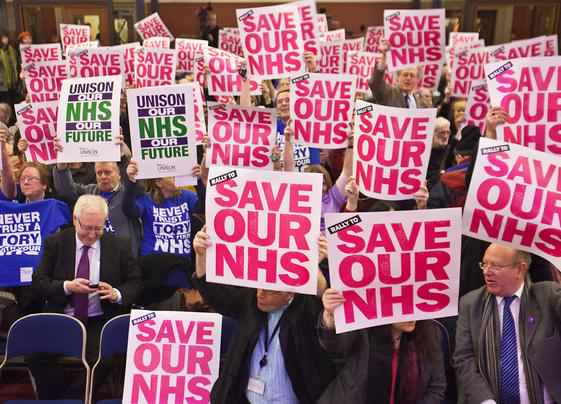
Save Our NHS

Blind devotion to our indifferent, non-contributory welfare state plus a warped definition of “fairness” are holding Britain back

The Guardian’s ongoing “This Is The NHS” series is really pushing my buttons at the moment. The newspaper is clearly particularly proud of their feature project, which makes the series’ blatant NHS hagiography and stunning lack of intellectual curiosity especially infuriating to read.

As a journalistic exercise it has been utterly contemptible, constantly telling people what they want to hear – that the NHS saves lives (as though that were not a feature of every healthcare system), that it employs many hardworking people – rather than what they need to hear in order to make an informed, dispassionate judgement about whether the UK’s unique approach to healthcare delivery is sustainable in the future.

Any and every inconvenient fact which suggests that the NHS is not in fact the “envy of the world” is immediately shot down in the series of articles – like when the Guardian quotes a professor of European public health‘s dismissal of reports criticising the NHS as being “market oriented”, as though the accusation automatically ends the argument, and as though we could not have foreseen that opinion by simply reading his job title.

For the better part of a month now we have been treated to statements such as this, comparing the NHS to other healthcare systems and – unsurprisingly – finding it to be the best in the world:

A mission statement set in 1948 for a universal service free at the point of use is under strain like never before. People are still able to see a GP free of charge – though booking an appointment is becoming harder. It will cost nothing to call out an ambulance and go through A&E, to undergo chemotherapy or major surgery. And yet about 11% of the population prefer to pay for private health insurance.

“And yet”! And yet despite having this state-provided, socialist wonder on our doorstep, an astonishing 11% of the population elect to pay for supplementary coverage. Could it possibly be because cancer outcomes in the UK are about the worst in the developed world, or because getting to see the specialist who can actually treat your condition requires going through the gatekeeping step of booking a GP appointment, often with a month-long wait before each step? No. The people who pay to go private are clearly just ungrateful, verging on insane, to want to circumvent such a benevolent system.

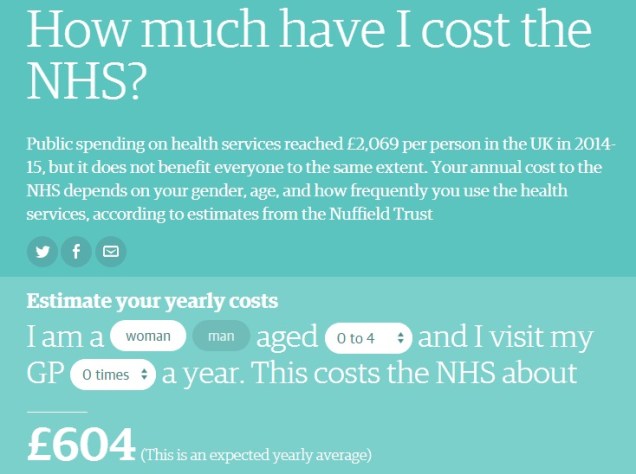
Yesterday, this saccharine coverage – and the Guardian’s publication of a parsimonious little online calculator enabling readers to calculate how much they “cost” the NHS – prompted me to write:

But of course we all know exactly why the Guardian is so eager to talk about how much we cost the state (and chide us for doing so) yet desperate to avoid talking about how much we contribute. Because to look at both sides of the equation simultaneously would be to encourage the public to ask whether they getting value for money. And it would reveal – as we now know – that the majority of us are net takers, or beneficiaries, from the system.

The Guardian’s whole anti-Tory, anti-austerity schtick is built entirely on the notion that we all contributed to our public services, and that the dastardly Evil Tories are cutting services to which we have all made substantial financial contributions. They seek to perpetuate the vague notion that we have a contributory welfare system, when in reality Britain’s welfare system is defiantly, depressingly non-contributory.

And that, right there, is the real problem.

Not the NHS itself – a flawed but well-meaning organisation filled to the brim with mostly hard working and well intentioned people – but rather, the warped view we have of the concept of “fairness” in this country, and the desperate lengths the Left will go to to stop us from thinking rationally about important issues.

In Britain, the word “fair” has been taken by the Left and forcibly redefined to mean “redistributive”. You’ll see it in public discussions of any issue from tax policy to healthcare – no policy can ever be described or promoted as being “fair” unless it takes from the privileged few and given to the “disadvantaged” many. Everything now has to be redistributive – or at least, nothing can ever move in a less redistributive direction, resulting in a one-way ratchet to ever bigger government.

Thus Gordon Brown’s decision to hike the top rate of income tax from 40% to 50% was bold, progressive and generous, while George Osborne’s decision to undo just some of that punitive and unproductive tax increase (cutting the top rate from 50% to 45%) was a corrupt, almost immoral “giveaway to millionaires”.

And thus a healthcare system based on insurance – which might see people who make unhealthy lifestyle choices pay more, rather than being subsidised by their peers – is considered unthinkably bad, while the NHS model, funded through our progressive tax system, is lauded as being inherently good and virtuous. Indeed, the only way that the NHS could be improved in the eyes of its most ardent admirers would be if wealthy people could be targeted and forced to pay arbitrary additional “NHS tributes” every time they experienced success or felt any kind of joy in their unfairly privileged lives.

And this is why it is almost impossible to imagine real reform of the NHS, the welfare state or any other major modern edifice of British public life. Because “fairness” has been corrupted from its more authentic meaning, the meaning which we might apply in any other context in life – the principle of reward being commensurate with effort, or “getting out what you put in”. And while we may still be taught The Little Red Hen as children, as adults we much prefer to virtue-signal by nodding along to the mantra that fairness means the state blindly treating everyone exactly the same.

But there is nothing “fair” about the status quo. As this blog noted last year while discussing Britain’s homicidal welfare system:

Usually it’s good when government does not discriminate. Justice, for example, should certainly be blind, as the old saying goes. But when it comes to social security, we choose to regard our welfare system as a “safety net”. Yet any fisherman knows that different nets are needed for different environments, and likewise a one-size-fits-all safety net for citizens experiencing unemployment or hard times simply won’t catch everybody. Some will slip through entirely and crash to the ground, while others will become ensnared and trapped forever. In other words, when it comes to welfare we should actually want the government to actively discriminate.

[..] The problem – and the great moral rot at the heart of the British welfare system – is that the state makes absolutely no distinction between the perfectly-fit, perfectly-able eighteen year-old who can’t quite be bothered to look for a job, and people of more nuanced and complex circumstances. Worse still, the system treats people who have worked hard for many years, often contributing enormous tax payments to the Treasury throughout their lifetimes, in exactly the same perfunctory way that it treats a person spat out of compulsory education at eighteen without the curiosity or drive to find a career.

[..] People talk about the welfare system as being a “safety net” without thinking, and for some people it may function as such tolerably well, if they ever use it at all. But for many thousands and millions of others, our universal and non-contributory system – which remarkably, despite being the product of classic Big Government, takes absolutely no account of our individual lives and circumstances – is no such thing.

If a person is born into deprived circumstances, our social safety net is far more likely to resemble deadly quicksand, seeming benign at first but quickly trapping the victim without hope, dragging them ever deeper with each desperate exertion to break free. And if they are even moderately well-off but suddenly fall on hard times, Britain’s universal welfare system certainly isn’t like landing in a soft safety net – it’s more like smacking into a concrete floor from a fifty-foot drop.

Contributory vs non-contributory. Kristian Niemietz of the IEA perfectly encapsulated the difference between these two principles in an IEA article from 2013:

The difference between a contributory and a means-tested welfare system is not just an administrative one. The two reflect completely different conceptions of fairness, and different understandings of what a welfare system should be there for.

A contributory system is based on an understanding of ‘fairness’ in the sense of ‘proportionality’, or reciprocity: the more you have paid into the common pool, the more you should be entitled to take out of it. Quid pro quo, something for something. In a means-tested system, meanwhile, fairness is understood as supporting the needy, with support being proportional to need. The more you need, the more you get, and if you don’t need support, you won’t get any.

And goes on to explain that despite originating from an utterly perverse interpretation of “fairness”, re-establishing the contributory principle is politically toxic in Britain because it would mean breaking the association – forged in the many decades since the Beveridge Report was first published – between the word “fairness” and the idea of the state treating everybody exactly alike, regardless of merit:

Due to their emphasis on proportionality, contributory systems are not, in themselves, redistributive. They are only redistributive to the extent to which they deviate from the contributory principle, which no system adheres to in an entirely pure form. But a welfare state that honours contribution cannot, at the same time, be strongly redistributive, and a welfare state that is strongly redistributive cannot, at the same time, honour contribution. In this sense, those who have recently discovered their love for the contributory principle are not telling the full story. They are right to point out that the British welfare state offers those who have worked and contributed for a long time a rough deal. But they fail to mention that this is precisely what redistribution is all about. If the welfare state has little left for those who have a paid a lot into the system, it is because all the money has already been spent on non-contributory transfers.

So unless our new contribution enthusiasts are also planning to substantially expand the welfare state – and I take it that that is not their intention – then they can only restore the contributory principle by reducing the extent of redistribution. Since nobody appears to be prepared to do that either, ‘something for something’ is hollow rhetoric. There will be no return to contributory welfare.

It seems to me that there are two potential ways to go. On one hand, we could move toward a more genuinely contributory welfare system. Under such a system, the amount of (say) unemployment benefit received would vary according to prior salary and past taxes paid, making it closer to unemployment insurance – a disbursement intended to provide a time-limited “soft landing” in the event of unforeseen job loss. Means testing would cease under such a system. And while a basic payment would be available to all citizens, those who contributed most would receive more help should they fall on hard times.

And on the other hand, we could accept that this more discerning form of “fairness” is politically toxic and unachievable, cut our losses, and focus instead on making the current bloated and inefficient system of applying for a complex array of potential benefits much more streamlined. And our best hope in this case might be to follow the lead of Finland and implement a form of Basic Income (otherwise known as negative income tax).

Basic Income offers something to both the political Left and Right. For those on the Left, the principle of universality is maintained. Everyone receives a guaranteed, flat-rate disbursement from the state every month, regardless of their wealth or income level, to be spent on essentials like food and housing or frittered away on foreign holidays as the recipient needs – or prefers. And for those on the Right, the expensive bureaucracy involved in means testing is eliminated, nobody is ever disincentivised from working, and the existence of “flat benefits” may eventually help to normalise the mirror concept of flatter taxation.

Is Basic Income “fair”? Strictly speaking, not by either of the two definitions discussed here. It is neither actively redistributive, and nor does it deliver more benefit to those who contribute the most. But despite the many criticisms of Basic Income, it is eminently pragmatic. And this itself is a huge advantage. Rather than having the Left and Right continue to shout at each other and fight each other to the awkward draw which has bequeathed us our current system, Basic Income – once bedded in – could help to depoliticise welfare and guarantee a minimum living standard for all citizens at the same time.

These are debates that we could be having in this country, if only we were able to stop patting ourselves on the back for the enlightened “compassion” of our current welfare state. These are some of the radical policy ideas that we could be debating – not as fringe intellectual arguments but as serious policy discussions.

But the debate never happens. And unless something changes, it never will. Politicians – and newspapers like the Guardian – keep us nodding along to the same tired old soundtrack about how lucky we are to have institutions like Our Blessed NHS and welfare state, and we keep on agreeing, even as they kill people.
Beveridge Report - Welfare State

Agree with this article? Violently disagree? Scroll down to leave a comment.

Follow Semi-Partisan Politics on TwitterFacebook and Medium.

National Religion Daily Penance: How Much Do YOU Cost Our NHS?

NHS - National Religion - How Much Have I Cost The NHS - Worship - Self Flagellation - Socialism

Don’t join in the Guardian’s fawning worship of the state – you don’t owe the NHS anything

If any further proof were needed that conservatives and socialists think differently and see the world in a completely different way, you need only look at the latest feature in the Guardian’s nauseating, saccharine “This Is The NHS” series, a self-flagellating little feature asking “How much have I cost the NHS?”

In this post, the Guardian takes a break from exploiting real-life stories from doctors and patients to emotionally manipulate people into blindly supporting Britain’s unique but unexceptional healthcare system, and instead invites you to plug your personal details into their online calculator so that you can find out exactly how much money Our Blessed NHS lavishes on you every year. You ungrateful wretch.

The Guardian intones:

Public spending on health services reached £2,069 per person in the UK in 2014-15, but it does not benefit everyone to the same extent. Your annual cost to the NHS depends on your gender, age, and how frequently you use the health services, according to estimates from the Nuffield Trust.

So the total cost of your healthcare increases as you consume more healthcare services. Riveting stuff. Great investigative journalism.

The calculator does throw up some interesting numbers. Interestingly, if you sit stubbornly at home and never use a single NHS service or treatment of any kind, you somehow still manage to cost the health service hundreds of pounds a year.

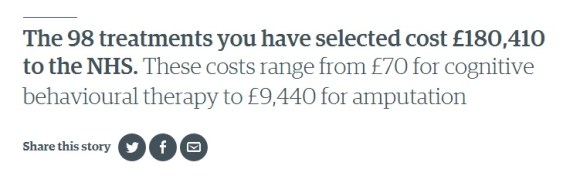
Meanwhile, at the other end of the spectrum, if you were really unfortunate and had every possible thing go wrong with you (once) in a given year, the NHS could be on the hook for as much as £180,410 – though I suspect that the calculator is holding back here, and that some patients may comfortably exceed this total without having to check every single box:

How Much Do You Cost The NHS - 3

How Much Do You Cost The NHS - 2

Also interesting is the fact that the only mention of mental health and associated problems from addiction to depression is buried deep in the “Other” section, and not given the prominence that a right-on publication like the Guardian might be expected to lavish. One can only speculate as to the reason for this sudden downplaying of mental health issues.

But the really interesting and revealing fact is that the Guardian published the article at all – and the conspicuous lack of a counterpoint piece asking how much we each contribute to the NHS (or indeed any of our other public services) every year through our taxes. Why the obsession with how much we are individually costing the state (or harming the environment with our carbon dioxide emissions, or doing any other Bad Thing) when there is no equal curiosity about how much we contribute? Looking at one side of the equation is meaningless until you also have visibility of the other.

This deliberate omission is especially galling at a time when some citizen-focused governments are now providing individual taxpayers with an itemised receipt every year, showing how much of their taxes have been spent on different areas of the budget like education, healthcare and defence. George Osborne even brought the practice to Britain, to the inevitable howls of protest (and accusations of disseminating propaganda) from the Left.

It may seem trivial, but this is a fundamental difference in mindset. Issuing a receipt showing how and where government is spending your money is an act of transparency and an acknowledgement that the government derives its legitimacy from – and can only function with the consent of – the citizenry.

Publishing a sanctimonious little online calculator so that your left-wing readership can calculate how much they cost society with every breath, on the other hand, elevates the state above all. It presupposes that we exist only at the pleasure of the government, that the state has a rightful claim on all of our possessions as well as the product of our labour, and that we should be grateful for any trivial sum that we are allowed to keep for ourselves after we have funded the Public Services behemoth.

Doing things the Guardian’s way – focusing on how much taxpayers “cost” their own government – inverts the proper power relationship between citizen and government, which should rightly be one of the state existing to serve and protect the people, not the other way around.

But of course we all know exactly why the Guardian is so eager to talk about how much we cost the state (and chide us for doing so) yet desperate to avoid talking about how much we contribute. Because to look at both sides of the equation simultaneously would be to encourage the public to ask whether they getting value for money. And it would reveal – as we now know – that the majority of us are net takers, or beneficiaries, from the system.

The Guardian’s whole anti-Tory, anti-austerity schtick is built entirely on the notion that we all contributed to our public services, and that the dastardly Evil Tories are cutting services to which we have all made substantial financial contributions. They seek to perpetuate the vague notion that we have a contributory welfare system, when in reality Britain’s welfare system is defiantly, depressingly non-contributory.

Some of us contribute vastly more to the exchequer than we will ever receive back in public services. Some of us struggle to break even. And others are on “take” mode for pretty much their entire lives – often for very justifiable reasons, but other times much less so. Most of us will fall into different categories at different stages of our lives.

But the Guardian doesn’t want people to know or think about any of this, or have access to this information. The prosperous middle-class couple on a joint six-figure income, blessed with good health and the lifestyle habits to maintain it, may well balk when they realise how much they are contributing to the NHS compared to what they receive back in a given year, or the equivalent projected lifetime figures. And they may balk again when they realise that their chain-smoking neighbour who trundles off to the doctor at the first sign of a cold contributes far less.

In short, real transparency about contributions made and benefits received would encourage a more consumer-like mindset among the people, forcing them to take responsibility and make the decisions which are best for them and for their families. And this goes against everything that the Guardian believes, because they want us to be a nation of state-dependent drones, flopping around helplessly, utterly reliant on services and/or alms disbursed by the government.

So, to recap: Itemised bills from the government for services provided to you by the state? Wonderful, brilliant idea, and a great way to remind us of everything that the beneficent nanny state does on our behalf.

Itemised receipts from the government showing the breakdown of how your tax payments are being spent? Evil propaganda designed to mislead the people and whip the lemmings up into a hysterical rage.

Glad we cleared that up.

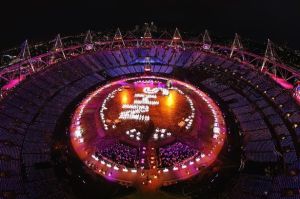
A scene from the Olympic opening ceremony celebrating the NHS

NHS Worship - London Olympic Games 1

Agree with this article? Violently disagree? Scroll down to leave a comment.

Follow Semi-Partisan Politics on TwitterFacebook and Medium.

Don’t Blame Anti-Establishment Politicians For Vile Online Abuse

Internet Troll - Cyber Online Abuse

Taking offence in the behaviour of a politician’s online supporters says a lot more about your view of that particular politician than the uniquely “hateful” nature of their fans

What do Jeremy Corbyn, Nicola Sturgeon, Bernie Sanders, Donald Trump and Nigel Farage all have in common?

Nothing to do with their political views, obviously – you would be hard pressed to imagine four more different politicians, both in terms of style and substance. But they do share something more fundamental in common: the fact that their supporters are uniquely derided as being angry and intemperate, even sexist or racist trolls, especially when compared to the supporters of their more established rivals.

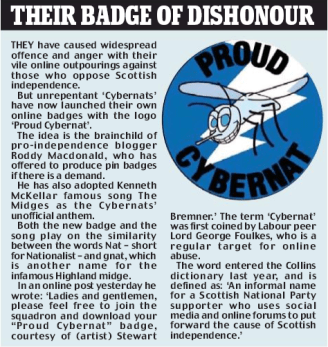
How many times have you heard a wounded, thin-skinned Westminster media type complain in hurt tones that they have received “vile online abuse” from crusading Ukippers or SNP-supporting Cybernats? And this is nearly always followed by the accusatory observation that the journalist or media star in question has never been so insulted or abused by supporters of the other mainstream parties or candidates.

You have likely seen or read this lament numerous times in one form or another. Typically, they will conclude – either explicitly or by inference – that there must be something uniquely awful and unacceptable about that particular party or candidate’s views, something which either attracts a disproportionate number of crazy people, or else makes otherwise good people behave in reprehensible ways.

Here’s the Telegraph’s James Kirkup raising an eyebrow after receiving a less than loving and nurturing response from online UKIP supporters, in a piece rather preciously titled “Why are UKIP supporters so rude and horrible?”:

A brief glance through the comments sections of the Telegraph website will show this is not an isolated incident; hostile and personal remarks are a common feature of online discussion about Ukip-related stories and columns. My email inbox tells a similar story.

I’m not alone here. There is nothing unique or special about me, no individual quality that attracts such strong feelings. All of my colleagues who cover Ukip and Mr Farage regularly receive such vitriol, and several of them get it in much larger volumes than me.

[..] I’m increasingly convinced that Ukippers are one of the political groups whose members are disproportionately likely to go in for online bile. (Scottish Nationalists are another; I haven’t had the pleasure of their electronic company for a while, but in a previous job I got to know the “cybernats” fairly well.)

Kirkup’s piece is actually fairly generous – he goes on to praise Ukippers for their passion and commitment, although it comes across in a rather condescending way.

But there is no such generosity in this farewell to the Labour Party from Barbara Ellen, who took her leave after finding herself unable to cope with the fact that her preferred centrist wing of the party finds itself temporarily out of favour for the first time in decades.

Smarting from the “howling gales” of disagreement she encountered, Ellen raged:

Still the Corbynista circus refuses to leave town, with one troubling result being that the term “moderate” is starting to look tarnished and devalued – deemed too centrist, restrained, temperate, cautious. Never mind that this describes most of Britain – or that this culture of moderate-baiting is hounding people like myself (lifelong Labour voters) out of the party. Like many in the great disenchanted Labour diaspora of 2015, I don’t feel remotely “Tory lite”, but nor do I feel that there is a place for me in this brutal and monochrome, but also silly and over-simplistic, “with us or against us” regime.

And maybe there’s a faint hope that by leaving, by voting with your feet, you’ll finally quietly reasonably (moderately!) make your voice heard. It’s a sad scary moment when “moderate” starts feeling like a insult. I’d have thought that moderates were the bricks and cement of any political party – without them, the extremes become unmoored, sucked into howling gales of their own making. The leftier-than-thou can taunt the departing “boring”, “gutless”, “Tory lite” moderates all they like. In the end, we were necessary and we’ll be missed.

The media’s hysteria about boisterous and sometimes deeply unpleasant online political discourse reached its peak with their coverage of the Jeremy Corbyn campaign, with endless finger-wagging remarks about how the actions of a few anonymous knuckle-dragging trolls supposedly make a mockery of Corbyn’s “New Politics”.

Here’s the Spectator’s Sebastian Payne rending his garments in anguish at the fact that some unhinged Corbyn fans happen to say some very unpleasant things online:

It was meant to be about open debate and discussion, consensus through dialogue. But so far, Jeremy Corbyn’s leadership of the Labour party and the arrival of the so-called New Politics has resulted in division and a lot of abuse and bad feeling. In light of last night’s vote on Syria airstrikes, Twitter and Facebook have been exploding with extraordinary levels of comments and abuse that no one, MPs or otherwise, should be subjected to.

For example, hard-left groups such as Lefty Unity, have been using Twitter to stir up agitation against the MPs they disagree with.

The article goes on to cite a tweet listing the names of Labour MPs who voted for military action in Syria, and calling for party members to deselect them. Remarkably, Payne presents this as some terrible affront to civilised behaviour rather than precisely what should happen in a democracy: MPs making decisions in public, and the public judging MPs based on those decisions. The horror!

Unfortunately, our default reaction is increasingly not just to sit back and mock the individual trolls (justified), but to then also make the lazy assumption that the internet trolls somehow speak for the wider movement or supporter base (much less justified). Everyone enjoys seeing an ignorant verbal abuser put back in their box, but we are being intellectually lazy if we then go on to believe that people like the anonymous idiot silenced by JK Rowling are representative of general UKIP or SNP opinion.

Cybernat - Online Abuse - Trolling

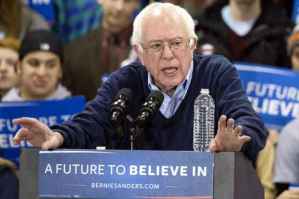
Exactly the same phenomenon can now be seen in the United States, where supporters and media cheerleaders of Democratic establishment favourite Hillary Clinton are lightning-quick to accuse their opponents of sexism, and to refer disparagingly to supporters of socialist rival Bernie Sanders – alas, a white male – as the “Bernie Bros”.

Glenn Greenwald does a superb job of debunking the myth that Bernie Sanders supporters are uniquely sexist or misogynistic among political supporters over at The Intercept, writing:

Hillary Clinton is the establishment candidate. Therefore, she has far more supporters with loud, influential media platforms than her insurgent, socialist challenger. Therefore, the people with the loudest media platforms experience lots of anger and abuse from Sanders supporters and none from Clinton supporters; why would devoted media cheerleaders of the Clinton campaign experience abuse from Clinton supporters? They wouldn’t, and they don’t. Therefore, venerating their self-centered experience as some generalized trend, they announce that Sanders supporters are uniquely abusive: because that’s what they, as die-hard Clinton media supporters, personally experience. This “Bernie Bro” narrative says a great deal about which candidate is supported by the most established journalists and says nothing unique about the character of the Sanders campaign or his supporters.

And the same blindingly obvious truth hits closer to home with the media’s reaction to – and coverage of – Jeremy Corbyn’s campaign for the Labour leadership:

This exact media theme was constantly used against Corbyn: that his supporters were uniquely abusive, vitriolic, and misogynistic. That’s because the British media almost unanimously hated Corbyn and monomaniacally devoted themselves to his defeat: So of course they never experienced abuse from supporters of his opponents but only from supporters of Corbyn. And from that personal experience, they also claimed that Corbyn supporters were uniquely misbehaved, and then turned it into such a media narrative that the Corbyn campaign finally was forced to ask for better behavior from his supporters.

Time and again we see establishment candidates and their fans in the media reaching for the smelling salts and clamouring to tell us how insulted and distressed they are, simply because something they said or wrote happened to tap into the coarsing vein of popular anger against a political establishment which grows remoter and more self-serving by the day. But we should recognise this for what it is – a cheap attempt to shut down the debate by rendering certain political ideas unthinkable or unsayable.

It is very much in the interests of centrists within Labour and the Conservative Party that people should fear policies with a genuine ideological twist to them, be they from the Right or the Left. When their entire pitch to the electorate consists of fatuous promises to be the most competent managers of our public services, as thought Britain were nothing more than a rainy island of hospitals and job centres, anything which attempts to inject some inspiration, ambition or bold thinking into our political debate is to be greatly feared, and thwarted at all costs.

Hence the continual efforts to portray Jeremy Corbyn’s left-wingery, something which would have been considered perfectly normal in 1986, as beyond the pale of acceptable thought in 2016.

Hence the sneering, virtue-signalling attacks on Ukippers, who have been shamefully portrayed by the media as a bunch of grunting, uneducated, economically “left behind” losers who wrap themselves in the Union flag because they are somehow more scared of change than a “normal” person.

Hence the apocalyptic predictions of those opposing Scottish independence, warning that Scotland would become some kind of tartan-clad North Korea if they went their own way.

Now, this blog believes that Jeremy Corbyn’s left wing policies are utterly wrong for Britain, that UKIP does have a certain unsavoury element within it, and that Scottish independence and the breakup of the United Kingdom would be a tragedy. But I don’t for a moment assume that the virtue of these ideas can be judged in any way by the behaviour of their most crude and sociopathic advocates. And nor do I attempt to suppress the expression of those ideas by linking overheated rhetoric on social media to any one particular idea, candidate or party.

All of which makes you wonder: If the establishment are so self-evidently right, if the centrist parties and politicians do indeed have a monopoly on Good and Pragmatic Ideas, and if anybody who proposes the slightest departure from the status quo is a juvenile dreamer or a tub-thumping populist, why not let the arguments speak for themselves?

If the establishment have the facts so overwhelmingly on their side, why do they not limit themselves to patiently explaining why Bernie Sanders, Jeremy Corbyn, Donald Trump and Nigel Farage are wrong on the issues? And at a time when political engagement is falling and faith in democracy ebbing, are the Corbyn critics and Farage haters really saying that they would rather people were disengaged than back a radical candidate?

This blog would argue that there is a certain nobility in all of the populist insurgencies currently roiling the political landscape in Britain and America. Whether one agrees with them or not (and there is often much to vehemently disagree with), they are at least attempting to drag us out of a stale and timid political consensus which has delivered prosperity for many but also failed too many of our fellow citizens.

Or as this blog remarked last year:

It is very easy to sit smugly on the sidelines, throwing the occasional rock and taunting those who risk hostility, ridicule and contempt as they struggle to find a way to make our politics relevant to the people. Anyone can be a stone-thrower. But it’s another thing entirely to roll up your sleeves, join the fray, pick a side or – if none of the available options appeal – propose new political solutions of your own.

Ukippers and Jeremy Corbyn supporters have often been steadfast in their political views for years, and as a result have languished in the political wilderness while those willing to bend, flatter and shapeshift their way toward focus group approval have been richly rewarded with power and success.

The “Bernie Bro” phenomenon in the United States and the centrist Labour hysterics about the antics of a few offensive people are nothing but a choreographed backlash from the establishment, whipped up by people who are happy to hijack issues like feminism and use them for their own short-term political advantage, or do anything else to disguise the yawning chasm where sincerely held convictions and beliefs should reside.

So, when you see a bunch of prominent, well-connected people feigning horror at the way in which people with whom they disagree are comporting themselves on the internet, your first thought should not be to dismiss the idea or candidate whom the obnoxious trolls support, but rather to question the real motives of the people weeping and rending their garments because they have been spoken to rudely on social media.

It may turn out that the trolls are still wrong, as well as being obnoxious and offensive. But many times, it will likely transpire that the people making the most fuss about the way that a particular candidate or party’s supporters are behaving also happen to have the most to lose in the event that those ideas gain a wider following. And their sudden desire for comity and a more respectful public discourse is cynical at best.

So what do Jeremy Corbyn, Nicola Sturgeon, Bernie Sanders, Donald Trump and Nigel Farage all have in common?

They are all flawed.

They are all willing to say things which make them wildly unpopular with large swathes of people.

Without their boldness and tenacity, few of us would still be discussing their top issues and obsessions – be it genuine socialist politics, Scottish independence, immigration or the coming EU referendum – and our politics would be left to the stale old two-party duopoly.

And none of these politicians, whatever their flaws, deserve to be judged by the online behaviour of their most angry, antisocial supporters.

Bernie Sanders - Refutes Bernie Bros

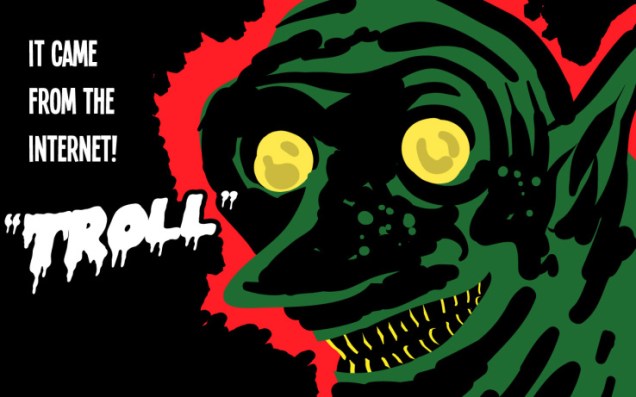
Top image: “#GamerGate is the future of troll politics”, Techcrunch.com

Agree with this article? Violently disagree? Scroll down to leave a comment.

Follow Semi-Partisan Politics on TwitterFacebook and Medium.

Bilbo Baggins Dials Back The Anti-Conservative ‘Tory Scum’ Rhetoric

Martin Freeman – the artist best known as Bilbo Baggins / Dr. Watson – now says that it is wrong to call conservatives ‘evil’. But that’s not what he was hinting before the general election…

Now that he is no longer shilling for Ed Miliband and the Labour Party, actor Martin Freeman has come over all thoughtful and introspective.

Well, everything’s relative. But in a new interview given to the pretentious Rake magazine, Freeman pontificates that it is wrong and unfair to call Tories and those with conservative political opinions “evil”.

The Spectator notes:

In an interview with The Rake, Martin Freeman — who starred in Labour’s election broadcast when Ed Miliband was leader — says it’s unfair to call all Tories ‘evil’, as the left has been responsible for more deaths in recent years.

While Rake quotes Freeman as saying:

My team — the left, generally — has been responsible for more deaths in the last century than the other team if you count Stalin, Mao, the Khmer Rouge, the Shining Path… that’s not a good team.

The left is quite at home with evil bastards, actually. Religion doesn’t have a downpayment on genocide: there are atheists, materialists and socialists who have gone on quite happily with rape and murder.

How magnanimous of Martin Freeman, placing us all (conservatives, left-wingers and genocidal maniacs alike) on the same end of the sliding scale of evil – as though there were no difference between government making an honest and sometimes flawed effort to help and work for citizens on the one hand, and deliberately terrorising and oppressing them on the other.

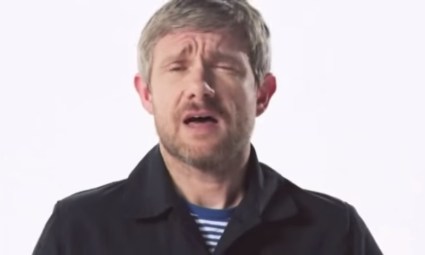
But Bilbo Baggins was not always so well disposed to people on the political Right. Only a few short months ago, Martin Freeman’s face was barking at us from our television screens with his Labour-supporting party political broadcast, part hagiography of Milibandism and part bully pulpit from which to bash the Evil Tories.

Just for fun, let’s remind ourselves of what Martin Freeman was saying about anybody who failed to appreciate the wonders of Ed Miliband before the general election. I’ll interject with some observations of my own every now and then.

It’s a choice between two completely different sets of values. A choice about what kind of country we want to live in.

Well, if by “completely different” you mean New Labour with a red rosette and New Labour with a blue rosette, then yes. The colours under which the two main parties are fighting the campaign, blue and red, are indeed very different.

Now I don’t know about you, but my values are about community, compassion, decency, that’s how I was brought up.

Won’t somebody give that saint a halo already? The man cares about decency and compassion, didn’t you hear him? And as we all know, the basic human tenets of compassion and decency can now only be found in those who espouse left-wing politics.

So yeah, I could tell you the Tories would take us on a rollercoaster of cuts while Labour will make sure the economy works for all of us, not just the privileged few – like me. But it’s not just about that.

He could tell you that the Evil Tories are the barbarians at the gate, chomping at the bit to sink their fangs into our Precious Public Services and rip them to shreds. Martin Freeman could tell you that. He could wax eloquent on the subject for days. But he’s just a humble guy like you and me; he isn’t the kind of person to sully himself with party politics. So he’ll just let you know what he would say, were he inclined to mention the Tories.

I could tell you it seems like the Tories don’t believe in the NHS, while Labour is passionate about protecting it.

Martin Freeman could tell us that the Tories hate Our Blessed NHS, but since it would be based on absolutely no evidence whatsoever – neither the declared intentions of the Conservative Party or a reasonable inference from observing their behaviour in government over the past five years – instead he will just leave the vague accusation hanging ominously in the air. Because that’s what humble, regular guys like Martin Freeman do all the time. It certainly isn’t a long-practised political smear.

I could tell you that the Tories have got sod all to offer the young, whereas Labour will invest in the next generation’s education and guarantee – that word again – apprenticeships for them.

If Martin Freeman were so uncouth as to talk politics with us, he could mention how the Evil Tories absolutely loathe the young, and yearn for a future where a failed generation of ill educated and uninspired young people sit around getting pregnant, committing crimes and claiming endless benefits. As we all know, the Tories simply love it when people fail to reach their potential as human beings and live stunted lives of despair, deprivation and grinding poverty. What can I say – it gives us a warm glow inside. And Martin Freeman could tell us all about that, if only his speech were some kind of political message.

I could tell you that Labour will put the minimum wage up to £8, and ban those ‘orrible zero hours contracts, while the Tories would presumably do more of their tax cutting for millionaires.

Bilbo could tell us this, but he doesn’t know for sure. As the inclusion of the word “presumably” indicates, Martin Freeman didn’t actually bother to do any research before standing in front of the camera to pitch for Ed Miliband. Maybe the Tories would undo some more of Gordon Brown’s spiteful and counterproductive tax hikes on the rich (tax cuts for millionaires!), or maybe they might – oh, I don’t know – introduce a national living wage of £9 per hour, even higher than Labour propose. But since he couldn’t say for certain before the election, it was probably right to assume that those Nasty Tories will keep turning the screws on the poor.

But real though all that stuff is, and important though it is if you’re young in this country or broke in this country or if you’re unwell in this country – and let’s face it, we all need the NHS at some point – or if you are just plain working hard and finding life tough, there is a choice of two paths. The bottom line is what values are we choosing. Because in the end this choice we make really does matter.

Labour: they start from the right place. Community, compassion, fairness – I think all the best things about this country. I love this country so much and I love the people in it, and I think you do too. But really, for me, there’s only one choice. And I choose Labour.

Martin Freeman loves this country and everyone in it. Everyone, that is, apart from those people who disagree with him and think that a Labour government and a prime minister Ed Miliband would have been an unmitigated disaster and an utter failure of national aspiration. Those people, Bilbo Baggins somehow isn’t quite so keen on.

So to paraphrase Martin Freeman’s sanctimonious, moralising, self-aggrandising attitude toward the nearly 50% of his fellow British citizens who voted for a more right-leaning party in 2015: “I’m not saying that all Tories are Evil Nazi Scum. They may hate the sick and yearn to destroy Our NHS. They may have no compassion, unlike we Virtuous People of the Left. They may not care about the future of our children. But they’re not evil. Heavens, no. I certainly never intended to give that impression. The Tories aren’t scum, they’re just ethically challenged.”

Conservatives should rejoice, to thus receive the benediction of Martin Freeman. They aren’t evil after all. They just hold evil values. Not proper, wholesome Labour values.

What pious, self-regarding, moralising nonsense Bilbo Baggins talks. In fact, Martin Freeman represents everything that is wrong with left-wing politics today – captivated by its own supposed virtue, yet utterly bereft of ideas for improving or transforming the country besides the same old, tired schemes to bash the rich, punish success and reward mediocrity.

And now here comes Martin Freeman once again – a diminished and discredited figure after his beloved Ed Miliband barely persuaded his own friends and family to vote Labour at the general election – attempting to worm his way back into the good graces of the public by smugly pontificating against those who took him at his word back in May, and who now hysterically accuse conservatives of being “evil”. Suddenly, calling conservatives “evil” is a terribly gauche and inappropriate thing to do.

But that’s not what you were saying back in April and May 2015, is it, Mr. Freeman? When the general election campaign was raging, you lent your voice, image and public profile to a party political broadcast designed to benefit the Labour Party and in which you made highly speculative and slanderous statements about the priorities and the very character of conservative-minded voters.

Well, Martin Freeman can keep his values, and he can stick them. The hobbit’s newfound realisation that it is wrong to demonise half the population as being greedy, avaricious and soulless monsters is tired, belated and hypocritical in the extreme – especially considering the fact that Bilbo Baggins was leading the charge against the Evil Tory Scum on national television only a few months ago.

Martin Freeman: your half-hearted, obscure non-apology is most sincerely not accepted.


Martin Freeman - Labour Party - Tory Scum - Left Wing Hate Watch

Agree with this article? Violently disagree? Scroll down to leave a comment.

Follow Semi-Partisan Politics on TwitterFacebook and Medium.

What Conservative Government? – Part 2

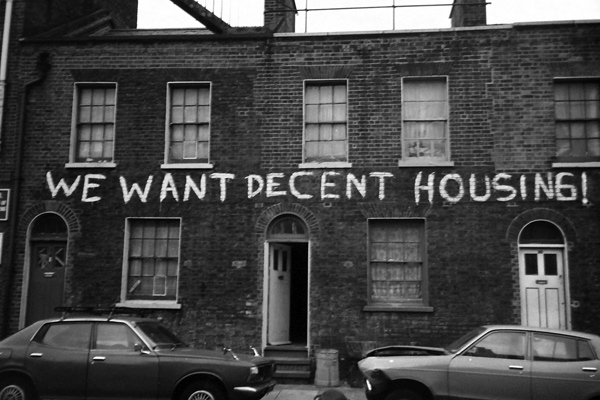
Housing Crisis

Rather than do any of the things which might actually ease the housing crisis, David Cameron’s Coke Zero Conservative government wants the state to enter the housebuilding business

When faced with the inescapable truth of the housing crisis – the fact that demand for housing is increasing faster than supply – David Cameron’s Conservative government has typically preferred to faff around with headline-chasing proposals to boost demand for the same inadequate housing stock rather than upset any of their vested interests by unleashing a real, consumer-focused supply side revolution.

But doing nothing at all in the face of a pressing national problem doesn’t look very good, and so the government has simultaneously been grasping around for eye-catching policies which give the illusion of taking serious action, while doing almost nothing to tackle the root causes.

And since this government is clearly content to pick freely from any policies ranging anywhere from the authoritarian left to the bland centre, they have come up with a doozy of a socialist idea: being unwilling to deregulate the market or meaningfully ease burdensome planning restrictions, the state will simply start commissioning new housing itself. What could possibly go wrong?

The breathless government press release informs us:

The Prime Minister will today announce that the government is to step in and directly commission thousands of new affordable homes.

In a radical new policy shift, not used on this scale since Thatcher and Heseltine started the Docklands, the government will directly commission the building of homes on publicly owned land. This will lead to quality homes built at a faster rate with smaller building firms – currently unable to take on big projects – able to get building on government sites where planning permission is already in place. The first wave of up to 13,000 will start on 4 sites outside of London in 2016 – up to 40% of which will be affordable ‘starter’ homes. This approach will also be used in at the Old Oak Common site in north west London.

A plan for every stage of your life, indeed.

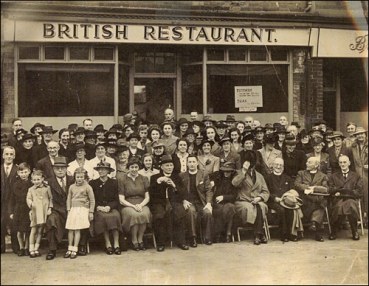
This amounts to nothing so much as a nationalised British Housing corporation – on a small scale for now, but who knows where or how far this statist adventure could lead us? Where once we had British Coal, British Steel, British Rail and even British Restaurants, now we are about to have British Housing foisted upon us – and by a supposedly conservative government, no less.

But just as nationalised, centrally planned companies like British Leyland churned out low quality, uncompetitive products that nobody wanted back in the last century, so British Housing will inevitably see the construction of more cookie-cutter, non-high-rise, low density “developments” that barely keep pace with rising demand and do nothing to tackle house prices or put the dream of home ownership within reach of more people.

But who cares? George Osborne will have another excuse to don his high-vis jacket, strap on his hard hat, and prance around a building site with his sleeves rolled up like a man of action and plausible Future Prime Minister. And that’s all that matters. Not solving real problems. Not applying the best of contemporary conservative thinking to transform Britain for the better. Just another good photo opportunity and more of the same endless, vacuous triangulation and electioneering.

Rigorous conservative thought and policymaking is capable of producing compelling answers to nearly all of the problems facing modern Britain – unemployment, housing, welfare, competitiveness and the democratic deficit. But we do not have a prime minister or a government who have any respect for conservative thought, or the principles of small government, free individuals and the free market as a force for good.

We have David Cameron, George Osborne and the bricks-and-mortar equivalent of British Rail sandwiches.


British Restaurants - Nationalisation

Agree with this article? Violently disagree? Scroll down to leave a comment.

Follow Semi-Partisan Politics on TwitterFacebook and Medium.