In A Democratic Battle Between Westminster And The EU Parliament, There Is No Contest

EU Parliament - European Union - Democratic Deficit

Democracy does not start and end with proportional representation, and claims that the EU Parliament has more democratic legitimacy than the UK Parliament in Westminster are absurd

Continuing his argument against Brexit, Paddy Briggs makes a point on his “Letter from London” blog that I have seen recur several times among pro-EU advocates – namely, that it is the British parliament which lacks democratic legitimacy, and that the EU parliament (by virtue of being elected using a more proportional system) is actually the better and more legitimate of the two.

Briggs writes:

The European Union is not as democratic as it might be but it is still more democratic than the national parliaments of some of its members – including that of Britain. We choose who will represent us in Strasbourg and Brussels (the MEPs) via a fair voting system under which every vote counts. In Britain we have an unfair voting system and even a whole Upper House that is not elected at all!

It shouldn’t be necessary to refute this particular line of argument, but I’ll do so for the record, since a clear effort is underway to turn one of the key weaknesses in the europhile armoury into an unlikely – and misleading – strength.

Democracy is not just a matter of how proportional your electoral system is. You could have the most proportional system in the world, with MEPs allocated precisely according to vote share across the European Union, and you would still be light years away from democracy. Because democracy means so much more than just allocating seats in a legislature according to the vote share of the pitifully small percentage of people who bother to take part in European elections.

And what Paddy Briggs neglects to mention is the fact that the EU has a fundamental flaw far worse than the UK Parliament lacking proportional representation. The EU parliament lacks the first half of the word “democracy ” itself – it lacks a demos.

The unavoidable truth which the EU federalists and Briggs seem desperate not to acknowledge is that most EU citizens simply do not feel European first and foremost. Therefore, any attempt at supranational governance which forms a pyramid with the EU at the top, national legislatures beneath and regional and local assemblies below that is doomed to fail, because hardly anyone recognises the legitimacy of the top layer. Subsidiarity is all very well – Briggs talks it up in his piece, and makes valid criticisms of over-centralised British government – but it is irrelevant if there was never any requirement or demand for the Brussels top layer in the first place.

You can have the best parliament in the world, but if people do not feel a part of the organisation or state which it supposedly serves then it will inevitably become nothing more than an ineffectual talking shop for the failed elites and third-tier politicians who couldn’t make it in the premier league back home. Sound familiar?

Worse still, as the unwanted process of EU integration continues, we will likely see the remaining “moderate” parties squeezed out of the EU parliament entirely, and replaced by parties which – unlike UKIP – may actually be genuinely extremist in outlook, and fully deserving of Briggs’ scorn. At that point, it will be unthinkable to include the EU parliament in the European Union’s central decision-making, and the only part of the whole machine with any claim to democratic legitimacy will be cut out of the loop entirely to prevent Golden Dawn from determining social policy for the whole of Europe.

Paddy Briggs feels like a European citizen – one of my fellow Brexiteer bloggers might well describe him as a proto-EU national just waiting for the state to hatch. And that’s fine. But Briggs is in the tiny minority, and he should have the honesty to admit as much, and recognise that his “European first” identity is not shared by most people in Britain.

One might also mention that an institution can hardly be said to be “democratic” when it is unable to propose new legislation of its own, and is in effect merely a rubber stamp for initiatives cooked up by the European Commission or accountability-dodging national heads of government – again, nothing to do with the different electoral systems in Westminster and Brussels/Strasbourg. If somebody brings me home a surprise dinner from a restaurant of their choice, picked without my knowledge or input, and I only have the choice between eating that meal or going hungry, it can hardly be said that I have freedom of choice over my diet. The same goes for the EU parliament and the legislation which oozes through it.

Briggs goes on to say:

We now have a bizarre situation where the British Government, the leadership of all our respectable political parties, virtually every one of our national institutions, the majority of our Members of Parliament, virtually every major Business (and more) acknowledge the necessity not just of remaining in the EU but in improving the effectiveness of our participation.

But you could (and should) also interpret this statement as evidence that every group with entrenched establishment power – government elites, cultural elites, corporations – is in favour of maintaining the status quo, while euroscepticism is rife among individual private citizens. Which is, of course, actually the case.

There is indeed a divide on the question of Britain’s place in the EU, but the fault line does not lie between sober-minded rational people on one side and frothing-at-the-mouth eurosceptics on the other. The line is drawn between people who currently benefit from the status quo or might potentially lose money in the event of change on one hand, and the little guy – people whose very government is being ripped away from them against their will – on the other.

It is rather disingenuous to suggest that “every one of our national institutions” is in favour of remaining in the EU as though they independently arrived at this decision through clear-headed analysis, while deliberately ignoring the fact that many of these same institutions – from the BBC to universities – also happen to receive large cash grants from Brussels (or rather, from the UK taxpayer via the Brussels pork machine).

Ultimately, the EU referendum comes down to a question of sovereignty. The S-word. Forget the trumped up trade figures on both sides, which are unverifiable and can be fought to a draw. And forget the scaremongering, too. If you truly believe that most people in the UK feel European before they feel British (and I’d love to know who you are hanging out with, if so) then by all means vote “Remain”. You may as well, since the European institutions would indeed then have more legitimacy than the UK institutions – though I would love to see you now explain the low voter turnout in EU elections.

But if you believe – correctly – that the majority of UK citizens feel British more than they feel European, then you have a responsibility to vote for Brexit, because to do otherwise would doom us to remain part of an explicitly political union whose governance is undemocratic by simple virtue of nobody believing in the EU as a legitimate, organic construct. To do anything other than vote for Brexit would be to condemn your fellow citizens to a future where our highest level of governance is at a level we do not recognise or feel a part of. And that would be truly anti-democratic.

I agree with many of Paddy’s criticisms of the current UK constitutional settlement, particularly with regard to the legislature and our unelected upper house. But it is a stretch too far to claim that the EU parliament is somehow more democratic than our own, when hardly anybody can be motivated to take part in EU elections, and even those who do would struggle to tell you the name of their MEP – certainly not the case for the Westminster parliament.

The British political system has many flaws (which is why I am attracted to the Harrogate Agenda as a sensible series of steps to improve our governance) in need of urgent remedy, but to claim that it is in any way worse than that toothless talking shop of an EU parliament is quite simply divorced from reality, cherry-picking facts in support of a tottering narrative.

I hope that on reflection Paddy Briggs will recognise some of the shortcomings in his argument, and retract his assertion that the EU parliament has greater democratic legitimacy than that of the UK parliament. I don’t for a moment begrudge Briggs his sincerely held pro-EU position, but neither will I stand by while europhiles attempt to unfairly denigrate the United Kingdom in an attempt to make their rusting, 1950s anachronism of a European superstate seem more appealing by contrast.

The EU federalist dream must stand and fight on its own merits in this referendum – and its advocates should not pursue a dishonourable victory by attempting to undermine the good standing of the United Kingdom for rhetorical gain.

European Parliament

Agree with this article? Violently disagree? Scroll down to leave a comment.

Follow Semi-Partisan Politics on TwitterFacebook and Medium.

We Know More About Antonin Scalia And The US Supreme Court Than Our Own Legal System

Supreme Court - Gay Marriage - 3

If you have ever read a John Grisham novel or watched Law & Order, you probably know more about the American legal system than the average British citizen knows about our own

When the firebrand US Supreme Court associate justice Antonin Scalia died last weekend, the news made headlines around the world, and the story was covered extensively on the television and print media here in the UK.

Legal experts and part-time America watchers (like me) all came crawling out of the woodwork to offer their analysis of what impact the Supreme Court vacancy will have on the remainder (and legacy) of President Obama’s second term, the likelihood of any Obama nominee being successfully confirmed by the Senate, and the impact of a rebalanced court on American social policy.

All of this earnest discussion and analysis, over a vacancy on a court which sits thousand of miles away, and has absolutely no jurisdiction over anyone in Britain! And yet people were interested – partly because many of us likely have a greater understanding of the American legal system and its personalities than our own.

Today, conservative American publication The National Review bemoaned the fact that a third of Americans don’t know who Justice Scalia was, according to the latest opinion polling. They seize on this fact to (rightly) condemn the disengagement of those who fail to educate themselves on important civic matters:

Strangely, the percentage of people who said they had “never heard of” Antonin Scalia increased from 29 percent in 2001 to 39 percent in 2005. Was that the Greatest Generation, who read newspapers, dying off and the Millennials, who never look up from their cell phones, entering the polling sample?

This is a free country, and you’re free to not care, and free to not pay any attention to, say, one-third and arguably our most powerful branch of government. I understand the sense that it would be a better world if we could spend more time thinking less about what government is doing about more pleasant things — food, sports, movies, home furnishings, how awesome the finale of Gravity Falls was, etc.

But if you choose to pay no attention to these things, and refuse to read anything about them, watch anything about them, or learn anything about them . . . then I’d rather you left the voting to those of us who do care.

The National Review would be shocked, then, to learn just how few citizens of America’s closest ally understand the basic tenets of their own legal system. Because although I don’t have an opinion poll to back me up, I would be surprised if one third of British citizens knew that we even had a Supreme Court, let alone the names of a single one of its justices.

(The PC Left and rabid practitioners of Identity Politics are also missing a trick – eleven of the twelve current justices of the UK Supreme Court are old white men, with the remaining justice an old white woman. Are these people really the most qualified for the job, or did they get their positions through the chumocracy and establishment connections? Why is there no public confirmation process, to give democratic oversight to the selection of new justices? And yet how many times has the UK Supreme Court been picketed by angry Social Justice Warriors demanding ethnic balance on the court?)

I will be honest and start by admitting that before writing this piece, I could only name one justice of the UK Supreme Court – Lord Neuberger, the court’s president. And that’s awful. I write about politics and UK current affairs every day and consume several hours of news on television, the internet and social media besides, but I could only name one person on the bench of the UK Supreme Court. And if I can’t rattle off a handful of names together with a brief commentary on their respective legal and ideological outlooks, how many people are actually able to do so?

How many laymen – people without a direct professional or personal interest in the workings or judgements of the court – actually do know who sits on our own version of the Supreme Court? How many could explain at a high level how the legal system works, with the division between civil and criminal court, the work done by solicitors and barristers, and the hierarchy of trial and appellate courts? Or the difference between the Scottish system and that of England and Wales? All that I currently know, I learned from an Introduction to Business Law course while studying at university – there were no civics lessons in the 1990s National Curriculum. And most others will not have even received this basic primer.

But how are we to fulfil our potential as informed and engaged citizens when we fail to understand how one of the three major branches of government works? Most people have a passable grasp of the executive and the legislature, even if they don’t recognise the Government and the Houses of Parliament using those terms. But I very much doubt that one adult in fifty could explain the fundamentals of our legal system, let alone the many layered intricacies.

UK Legal System - Judges Procession

But flip it around. Why would we know how our legal system works, or recognise the major personalities in the British legal scene? And why should we bother to take the time to educate ourselves?

People in America know the names and ideological leanings of the justices on their Supreme Court for a number of reasons. For a start, they take their civics a little bit more seriously on that side of the Atlantic – something that we could learn from.

But more than that, the American legal system is far more responsive to the citizenry than the British system is to us. One major difference is that many local judges are elected. Now, this may or may not be a good idea – and having watched a number of local races for positions on the bench, I have my grave doubts as to the wisdom of elected judges. But you can’t deny that you are likely to feel much closer to the legal system if you have a direct say in who gets to don the black robes.

Even more important is the fact that unlike we Brits, Americans have a written constitution to act as a common frame of reference when talking about legal matters. Even half-educated Americans will talk about whether something is “constitutional” or not, and apply this test to all manner of public policy debates, from government surveillance to gay marriage. This is important, because it gets people thinking beyond the mere fact of whether they agree or disagree with a particular law, and toward the broader question of exactly why the law in question is good or bad. That’s not to say the ensuing debate cannot still be ignorant and intemperate – it often is – but at least everyone is able to take part in the debate along the same parameters.

Consider the Edward Snowden leaks, when one whistleblower’s actions laid bare the extent of secret government surveillance in Britain, America and the other “Five Eyes” countries. In America, the people – outraged at this secret, systemic violation of their privacy – were able to haul officials in front of congressional committees and debate the legality of the government’s actions with reference to the Fourth Amendment, which prohibits unreasonable searches and seizures. And in due course, the American government had to make a number of concessions and restrict its surveillance activity. In Britain, by contrast, we had David Cameron pompously telling us that he respects the “tradition of liberty” but is basically going to do whatever he wants. And what recourse have we to stop him? None.

Then there is the central role which the US Supreme Court often plays in matters of great social importance in America. In Britain, Parliament’s “elected dictatorship” is the Alpha and the Omega for nearly all significant decisions made in this country – the government can pass or repeal any law almost at will and with no reference to any higher text or law, so long as it can muster the votes in the House of Commons. The courts then simply apply what has been handed down by Parliament, which is sovereign. Refreshingly, this is not so in the United States.

Consider just some of the most famous cases – household names, even to those of us living in Britain. Dred ScottCitizens United. Roe vs Wade. Brown vs Board of Education. We may know next to nothing about American current affairs, but we know that these relate to slavery, campaign finance, abortion and racial segregation. Because in America, the president is not the only person who matters. Nor are the leaders of Congress. The third branch of government matters equally, and how the Supreme Court chooses which cases to hear and applies their interpretation of the Constitution to those cases constitutes a vital check and balance in the American system.

Can you name a comparably important British case? They do exist – the Al Rawi case, for example, with its implications for the legality of secret hearings, or Nicklinson vs Ministry of Justice, which confirmed the current illegality of voluntary euthanasia, or the “right to die”. But few people know about these cases or why they are important, because the British legal system is so much more remote and unaccountable to the people.

St Louis Old Courthouse - Dred Scott Case - 2

Finally, there is the question of sovereignty. The United States Supreme Court is the final arbiter of what is and is not constitutional, and therefore applicable to American citizens. It cannot be shunted aside by an impatient government if it holds up or overturns key legislation, and nor can it be undermined from the outside – the court determines for itself which cases it will hear, and a majority decision made by five out of nine Supreme Court justices will then bind the government and lower courts. This goes against everything that the current British establishment – who are only too happy to wreck every institution and overturn any tradition in pursuit of their short term goals – stand for.

But crucially, the US Supreme Court is also not subordinate to any external or foreign body. By contrast, the UK Supreme Court is treaty-bound to defer to the decisions of the Court of Justice of the European Union (CJEU), and must interpret all UK legislation not through the lens of compatibility with a British constitution, but rather to ensure its compliance with the European Convention of Human Rights. That might sound all well and good until one realises just how broadly “human rights” have come to be defined.

And one must also ask why we as a country do not trust ourselves enough to be the final arbiter of important cases. Are we naturally more barbarous than our European neighbours, and in need of constant judicial restraint by our moral betters on the continent? Whatever the answer, the inescapable truth is that legal subjugation to an external, supranational body is the antithesis of national democracy.

So to recap, there exist a number of deficits between the American and UK legal systems in terms of ensuring citizen understanding and engagement with the judicial branch of government, namely:

1. A weaker sense of civic duty and engagement in Britain

2. Greater democratic distance between the people and the legal system in Britain, compared to America

3. Lack of a written British constitution as a common frame of reference when discussing legal matters

4. A much clearer link between decisions made in the US Supreme Court with American social policy

5. Lack of sovereignty: the American legal system is sovereign and subordinate to no external body, unlike the British legal system which is subordinate to EU law

US Supreme Court

There is no good argument for continuing to abide such a remote, elitist and unaccountable legal system as we suffer in Britain. None. And anybody tempted to sniff haughtily at the American system, with their elected lower court judges and Scopes Monkey Trial culture wars should remember that however passionate and unseemly the public discourse can sometimes be across the Atlantic, this is only because more American people are actually engaged citizens with a moderate grasp of how their country actually works. We should be so lucky to have a system as simple, accessible and easy to explain as they have in the United States.

And it should be a source of great shame to us that our journalists, politicians and private citizens often know more about another country’s legal system through watching Hollywood movies or Law & Order than they do about our own.

The American public is rightly fixated on the issue of who President Obama will nominate to fill the Supreme Court seat left vacant by the late Antonin Scalia – incidentally a first rate mind and writer of opinions and dissents which are accessible and entertaining even to laymen like myself. They care about who takes up the ninth seat on their Supreme Court, because unlike Britain, their legal system is more than a rubber stamp for the government of the day.

The ninth justice of the US Supreme Court may well end up casting crucial swing votes in important matters of human governance in the next decades, such as the right to bear arms in self defence, the right to privacy and the right to free speech. And these decisions could well have tangible, real-world consequences for the 330 million people who live under the court’s jurisdiction, as well as anybody else to whom the Constitution applies – like your First Amendment right to free speech when you go to holiday or work in America as a British citizen.

Elevating the people and the institutions into the public consciousness is not crass sensationalism, as some may charge. On the contrary, focusing on the personalities helps to elevate the issues to a place of prominence in our public discourse, which is exactly what we should be doing here if our own elites were not so busy trying to hide from public accountability anywhere they can scurry – be it behind the black veil of EU lawmaking in Brussels or the bewigged, dusty obscurity of the British legal system.

It would be ironic if it took the death of a supreme court judge in another country to force Britain to finally take a proper, critical look at our own impenetrable legal system. But public interest in legal matters peaks only very rarely, and so those of us who want to see real legal and constitutional reform have a slim opportunity – but also an obligation – to make our case.

For as things stand, a constitution and legal system in force over 3,000 miles and an ocean apart often feels more familiar – and less remote – than our own.


Supreme Court Justices - United States

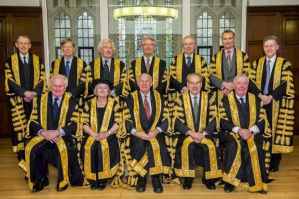
Supreme Court Justices - United Kingdom

Agree with this article? Violently disagree? Scroll down to leave a comment.

Follow Semi-Partisan Politics on TwitterFacebook and Medium.

Now Even Peter Tatchell Is A “Racist”

Moscow Gay Pride Parade Attacked

In the accusatory minds of the new PC Left, a lifetime spent fighting for LGBT and racial equality counts for nothing if one also supports the free speech rights of those who disagree

Ask anyone to write down their top twenty racists in Britain, and very few people would put Peter Tatchell anywhere on their list. After all, the man’s life has been dedicated to overcoming prejudice and fighting for racial, sexual and LGBT equality.

While others now wear their progressivism as a virtue-signalling badge of honour, something to be ostentatiously flaunted on social media, Tatchell has put his body in harms way to protest what he sees as real injustices taking place against persecuted minorities. And whether you agree with Tatchell on every single one of his causes or not, one can certainly admire the way that he has lived his public life by the credo “actions and words”.

Unless, that is, you happen to be a member of the activist student PC Left, part of that spoiled and coddled generation of today’s young people whose freedoms were won by the likes of Tatchell, and whose own meagre campaigns perch precariously on the far greater and more noble endeavours of those who came before them. They have now turned on Tatchell, accusing him – hilariously – of being both racist and “transphobic” in a blatant and supremely ungrateful move to destroy his reputation and credibility.

Tatchell himself responds in the Telegraph:

Free speech and enlightenment values are under attack in our universities. In the worthy name of defending the weak and marginalised, many student activists are now adopting the unworthy tactic of seeking to close down open debate. They want to censor people they disagree with. I am their latest victim.

This is not quite the Star Chamber, but it is the same intolerant mentality. Student leader Fran Cowling has denounced me as racist and transphobic, even though I’ve supported every anti-racist and pro-transgender campaign during my 49 years of human rights work.

Fran is the LGBT+ (lesbian, gay, bisexual, transgender) Officer of the National Union of Students (NUS). She refused to speak at an LGBT event at Canterbury Christ Church University tonight unless I was dropped from the line-up. This is a variation of the NUS “no-platform” policy; instead of blocking me from speaking, Fran is refusing to share a platform with me.

While the Guardian explains the context:

In the emails, sent to the organisers of a talk at Canterbury Christ Church University on Monday on the topic of “re-radicalising queers”, Cowling refuses an invitation to speak unless Tatchell, who has also been invited, does not attend. In the emails she cites Tatchell’s signing of an open letter in the Observer last year in support of free speech and against the growing trend of universities to “no-platform” people, such as Germaine Greer, for holding views with which they disagree.

Cowling claims the letter supports the incitement of violence against transgender people. She also made an allegation against him of racism or of using racist language. Tatchell told the Observer that the incident was yet another example of “a witch-hunting, accusatory atmosphere” symptomatic of a decline in “open debate on some university campuses”.

Because campaigning is no longer about securing freedoms and liberties for marginalised people. It is about not just holding the “correct” opinion on any given issue, but crucially also being seen to hold the correct opinion, and orchestrating various situations whereby one’s own bien pensant opinions can be shown off to greatest effect.

It is about making oneself look good by jumping on the slightest deviation from prevailing PC orthodoxy by someone else – often a friend and erstwhile ally – and seeking to destroy them with it, hysterically declaring it to be evidence of moral turpitude, even when the target is someone as respected in the field as Peter Tatchell.

Some on the PC Left, recognising that this particular smear by the NUS may stretch credibility too far, are trying to spin Tatchell’s naturally outraged reaction as yet more evidence of racism. In an eye-rollingly titled piece called “Problematic Proximities, Or why Critiques of Gay Imperialism Matter”, Sara Ahmed tries to argue:

I do want to question here how Mr Tatchell is responding to the critique.

[..] Critiques of racism are reduced and misheard as personal attacks, which is what blocks a hearing of the critique. In the end, the situation becomes re-coded as a question of individual reputation and good will: we lose the chance to attend to the politics of the original critique.

We need to reflect on what we are talking about when we are talking about racism. Racism in speech does not simply depend on the explicit articulation of ideas of racial superiority but often works given that such associations do not need to be made explicit. So for example politicians might use a qualifier ‘this is not a war against Islam’ and then use repeatedly terms like ‘Islamic terrorists’ which work to associate Islam with terror through the mere proximity of the words: the repetition of that proximity makes the association ‘essential’.

[..] It is my view that Mr Tatchell’s writings on Islam and multiculturalism repeat and reproduce many ‘problematic proximities’ between Islam and violence, and thus participate in the culture of Islamaphobia.

Ahmed is trying to advance a semi-cogent (though still wrong) argument here. She is effectively saying “Wait a minute! We may have called Peter Tatchell a racist, but it wasn’t a personal attack. Heavens, no. It was simply pointing out that some of the things that he says are problematic for us because we believe they help to reinforce negative stereotypes about religious minorities”.

This would at least have the makings of a cogent argument – that we all have good and bad within us, that we all have our own prejudices which we should seek to recognise and overcome, and that any of us might say something which might be construed as “racist”, but with no malice whatsoever.

But if this is what the NUS and Fran Cowling actually believe, why refuse to take the stage with Tatchell? If indeed their intention was not to launch a “personal attack”, why on earth refuse to admit all the good which Peter Tatchell has done for their causes, and why refuse to share a stage with him now?

The answer, of course, is that this was fully meant to be a personal attack. Vicious personal attacks conducted through social media and the press are the chief modus operandi for today’s youthful practitioners of Identity Politics, and if their self-advancement involves a.few instances of friendly fire – even the destruction of someone like Peter Tatchell – so be it.

Some people tell me that I am being too hard on the students involved; that they are well-intentioned young people simply trying to navigate difficult issues as best they can. Well I’m sorry, but I’m just not buying it. Obviously we are only talking about a minority of students here – the ones drawn to take an active role in student governance, social affairs and campus life. But these students are behaving in an utterly reprehensible way, completely without justification and to be opposed by lovers of liberty at all costs.

This is an attempted power grab, plain and simple. Just like it was at Mizzou, and Yale, and Oxford, and countless more universities every year. This is an attempted coup by an utterly coddled and spoiled generation of students who know almost nothing of hardship, deprivation or prejudice compared to their predecessors even just a few decades ago.

These tinpot student dictators arrive on campus at the age of eighteen to find most of the really hard battles already won for them – ironically, by genuinely brave radicals like Germaine Greer and Peter Tatchell. But these students must find some outlet for their youthful “idealism”, and so they latch on to the growing Politics of Identity, assimilating its intricacies and genuinely persuading themselves of its core message – that what matters is not the content of one’s character, but rather one’s arbitrary lived experience as a member of a defined and segregated subgroup.

And so rather than simply accepting that they have it rather good, even compared to their parents and grandparents, these student snowflakes go on the march. They find ever-smaller slights or “microaggressions” and protest them ever-more loudly and hysterically in an attempt to assert power over university administrations – many of which meekly submit without so much as putting up a fight.

Throw in the fact that their social hierarchy is based on a purist adherence to the Politics of Identity – with members gaining social currency for flaunting their own tolerant nature or identifying and persecuting anyone whose behaviour happens to violate one of the many invisible lines restricting our speech and behaviour – and you have a potent and deadly combination.

Viewed in this context, it is obvious that NUS LGBT officer Fran Cowling is attempting to gain a vast amount of social currency and standing from her peers by trying to take down Peter Tatchell, an A-lister in activist circles. By refusing to share a stage with him, Cowling is effectively declaring to the world that she is morally superior to Tatchell, he having failed the latest racism and transphobia tests. Thus, she can bank all of Tatchell’s personal accomplishments for herself, add the fact that unlike him she is not a “transphobe”, and Win the Game.

And that’s the rotten core of today’s student identity politics movement. A constant, bitchy, backbiting game of snakes and ladders, with one insufferable petty tyrant rising to the top of the Moral Virtue Pyramid only to be brought down by their jealous rivals, either for no reason at all, or for having unknowingly violated one of the many red lines that they themselves helped to draw across our political discourse.

I can’t say any better than Brendan O’Neill on this occasion, so I will give him the last word:

This Veruca Salt-style revolt against late 20th-century liberators, this sullen, thankless turn by radical young women, gay people and black people against those who devoted their lives to fighting for women, gay people and black people, reveals how poisonous the politics of identity has become.

Where late 20th-century warriors for civil rights basically argued for the right of people to be free and equal regardless of their gender, sexuality or race — that is, they wanted identity demoted — today’s identitarians prefer to obsess over people’s natural characteristics and sexual habits. They instinctively loathe King’s claim that character is more important than colour. They hate Greer’s insistence that women are as capable as men (and that a man can’t become a woman at the click of his fingers). They have disappeared so far up the fundament of identity politics that they bristle at any argument that smacks of universalism, which emphasises the sameness and the shared capacity for autonomy of all human beings.

They seem hellbent on reversing the social gains of the late 20th century, preferring to shove people back into the biological, racial boxes from which mankind spent so long trying to escape. It is they, not Tatchell, who are racialist (if not racist), and a threat to what most of us consider to be the decent civilisational value of treating people as people rather than as colours or genders.

Amen to that. And shame – yet more ignominious shame – on the NUS.

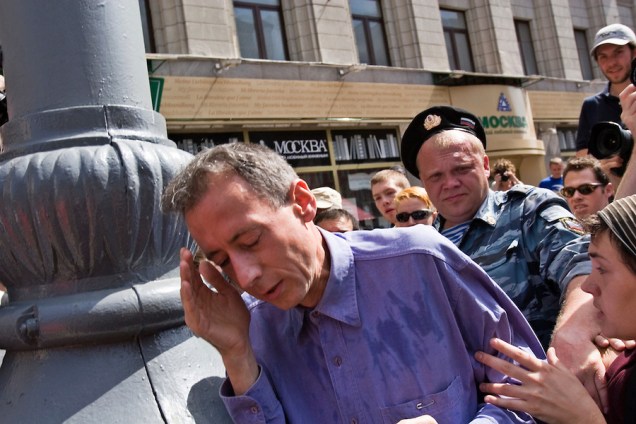
Peter Tatchell attacked

Agree with this article? Violently disagree? Scroll down to leave a comment.

Follow Semi-Partisan Politics on TwitterFacebook and Medium.

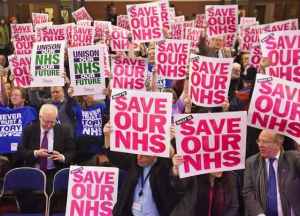
Is This The Beginning Of The End Of Britain’s NHS Idolatry?

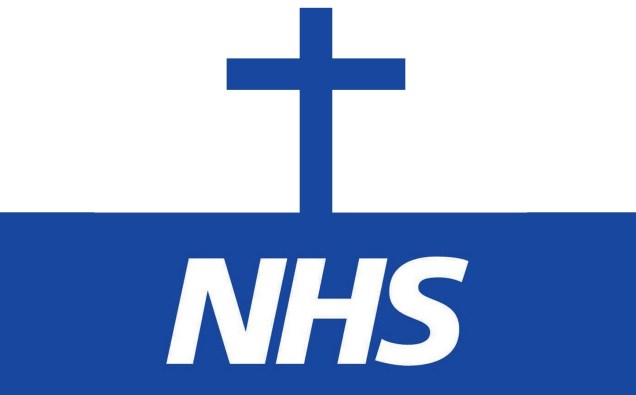
NHS Logo - Cross - National Religion - Worship - Idolatry

Are we witnessing the high water mark of mindless NHS-worship?

Regular readers will know that this blog is a constant critic of the British cult of NHS-worship. Not of the NHS specifically, but of the fawning, servile and uncritical way in which the National Health Service is viewed and debated in the public discourse.

Whether one prefers state-provided everything and harbours intense suspicion of privatisation, or yearns for the innovation and competition that the private sector (at its best) can bring, any reasonable person should be sickened by the stultifying atmosphere which has surrounded the NHS debate for decades. And yet we tolerate it, even demand it from our leaders.

It is not healthy that in this one specific area of our national life, politicians cannot make important criticisms without feeling obligated to counterbalance the truth with obsequious words of praise. And our stubborn refusal to look around the world for guiding examples of best practice in healthcare delivery has all the arrogance of American exceptionalism, in blinkered defence of something which is very far from exceptional.

At times, this blog has felt like a very lonely voice in the wilderness on the subject of our true national religion. The NHS being the supercharged third rail of British politics that it is, few mainstream commentators (and almost no serious politicians) have traditionally shown any willingness to touch the issue.

But there may now be a few encouraging signs that we have reached the high-water mark of our NHS adulation; that even the NHS’s most ardent supporters are coming to realise that making every arcane debate about healthcare policy or junior doctors’ pay a screeching matter of “Saving Our NHS” is not in their interests or those of British healthcare in general.

Simon Jenkins has a piece in the Guardian in which – shockingly, for that publication – he admits that “our adoration is killing the NHS”:

People may dislike other public services. They see the police as dodgy, train drivers as bolshy, utilities as run by crooks. But the NHS “saved my mum’s life”. So leave the doctors and nurses alone. Just give them money. Give everyone money.

Nothing dents this love. Day after day, the headlines scream of NHS woe. Last month half of all doctors said they offered a worsening service. Eleven thousand heart patients “die because of poor care”. The NHS wastes £12bn on a computer system that “does not work”. One in four hospital staff feels “harassed and bullied”. Three-quarters of them tell care quality commissioners that “patient safety is now at risk”. If the NHS is to the British, as former chancellor Lord Lawson said, “not a service but a religion”, the religion must be juju.

These are the words of someone who is frustrated (as well he should be) by the fact that our blind, unthinking adulation of the NHS – the healthcare equivalent of an ingratiating politician naming Nelson Mandela as his hero – prevents us from recognising the real and intractable flaws in the system.

Jenkins continues:

The NHS’s carapace of love has to be its biggest danger. On Wednesday it was revealed that, despite last year’s Francis report on whistleblowing, not a single sacked NHS whistleblower has been re-employed or manager reprimanded. Instead doctors are eulogised for the “daily miracle of saving lives”. This is despite the OECD reporting that they save fewer lives per head than insurance-based health services in Germany, Switzerland and the Netherlands. Britain’s record on tracing cancer is dreadful.

Doctors are in the business of saving lives. It is their job. Firefighters are not “miracle workers” for putting out fires, or teachers for getting pupils through exams. Healthcare may benefit from fear of death and disease, and we are rightly appreciative of those who relieve it. But when other professionals such as social workers or carers of the elderly fail, they are publicly excoriated. Why is the NHS immune?

Jenkins goes on to talk about the strange sense of security which comes from the “familiar NHS surgery”, with its “wartime air” and feeling of national solidarity. This is something that even I, a heathen free marketeer, have experienced and can relate to. Walk into a large NHS hospital in any of Britain’s big cities and you feel as though you have entered the belly of the beast – a vast, thrumming, living organisation of buildings, computers, machines and human beings, which functions according to its own time zone and alien protocols.

When you are sick, being enveloped in the warm embrace of this organisation – knowing that you will experience the same colour schemes, uniforms, routines and brisk bedside manner anywhere in the country – can feel quite reassuring. And because we tend to be at our most vulnerable when we encounter the NHS – when something is wrong with us, or with a loved one – we crave that reassurance.

But with the power dynamic thus skewed in favour of the state (providing healthcare) and against us (unwell, and receiving it), we have a natural tendency to be uncritically grateful for whatever service we are given, rather than subjecting it to the proper scrutiny of a consumer. Something usually has to go very, very wrong in order for us to complain.

If the NHS delivered your baby, set your broken arm, diagnosed and effectively treated your cancer or gave you a heart and lung transplant, you are likely to be well-disposed toward the NHS. You may even find yourself cheering along when populist politicians shoot for cheap applause by lavishly praising and vowing to defend it from mysterious external threats (usually in the form of the Evil Tories).

Never mind the fact that healthcare systems in developed countries around the world deliver babies, set broken limbs, treat cancer and transplant organs every day, to rich and poor people alike. The NHS Industrial Complex has been very effective in conflating “healthcare” and “the NHS” in the public mind, so that many people genuinely seem to believe that if they experienced the same medical condition as a citizen of another country, they would now be either bankrupt or dead. It is masterful propaganda, but it is most certainly not conducive to measured public debate about healthcare policy.

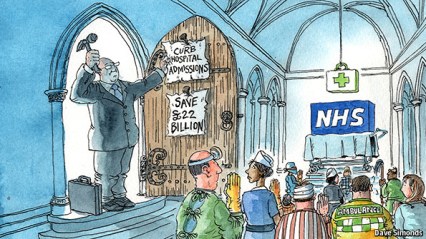
NHS - National Religion - Cartoon

This is why it is good to see the first cracks starting to appear in the massive metaphorical golden idol of St. Aneurin Bevan of Tredegar, which the British people now worship like those before us worshipped Baʿal. Most encouraging of all comes this recognition from Simon Jenkins that “free at the point of delivery” has become more of a quasi-religious chant than unquestionably wise healthcare policy:

I have never understood why so many self-inflicted “health needs”, such as sports injuries, drunkenness and overeating, should be charged to the state. Some fire brigades are charging for careless callouts. Mountain and lifeboat rescues often request “contributions”. Free at the point of delivery has long been a proud boast of the NHS. But that is policy, not papal doctrine.

The drug companies always made sure “free” did not apply to NHS prescriptions. With demand rising exponentially, supply of care must be rationed by something: if not by some form of payment and insurance, it will be by queueing and quality.Last year it emerged that more than 300,000 patients waited in ambulances for more than half an hour just to get into A&E.

It is ironic that Jenkins’ questioning article is published in the Guardian, the newspaper which has arguably done the most harm in terms of inculcating a blindly and aggressively worshipful attitude toward the health service, to the total exclusion of any of the radical thinking for which that paper claims to stand. Only last week, the Guardian concluded a month-long “celebration” of the NHS in which journalistic scepticism and intellectual curiosity were suspended and replaced with a barrage of articles telling the NHS-supporting Left everything that they want to hear. I critiqued their “This Is The NHS” series here and here.

But here we have – from an NHS supporter, and one who says “there is nothing wrong with loving the NHS” – an admission that rationing by price in some certain situations can actually be preferable to our current settlement of rationing by time and quality. This is a breakthrough indeed. If only we could also break the Left’s demand for uniformity at all costs (mediocrity for all rather than excellence for any) then we would really be getting somewhere.

I must admit that I thought things would have to get a lot worse before we finally turned a corner in our misplaced reverence for the NHS – more scandals, more falling metrics, much longer waiting times. But the current level of bipartisan NHS fervour (partly whipped up by the BMA and junior NHS doctors, who are cynically pretending that their current dispute with the government over pay and conditions is actually about patient safety or, laughably, the very survival of the NHS) is clearly proving to be too schmaltzy and blindly uncritical even for some stalwart NHS defenders.

Perhaps the shrieking of the NHS priests and priestesses is most like the closed-minded rhetoric of the Biblical creationists, who shout ever louder and demand ever more concessions to their peculiar sensibilities the more their fundamentalist beliefs are debunked and discredited, eventually pushing the embarrassed moderates away.

Perhaps we are witnessing all of this sound and fury – the constant and strictly enforced praising of the NHS model, on pain of political death – because the NHS Clerisy know that theirs is ultimately a losing fight; that the British people will not long persevere in their belief that the only possible choice is between the NHS and dying in the street of untreated TB.

Perhaps, then, there is real (if still very limited) hope for genuine healthcare reform in Britain, after all.

Save Our NHS

Middle image: Cartoon by Dave Simonds, published in The Economist

Agree with this article? Violently disagree? Scroll down to leave a comment.

Follow Semi-Partisan Politics on TwitterFacebook and Medium.

Only The Brave Now Dare Admit To Being Conservative Or Eurosceptic

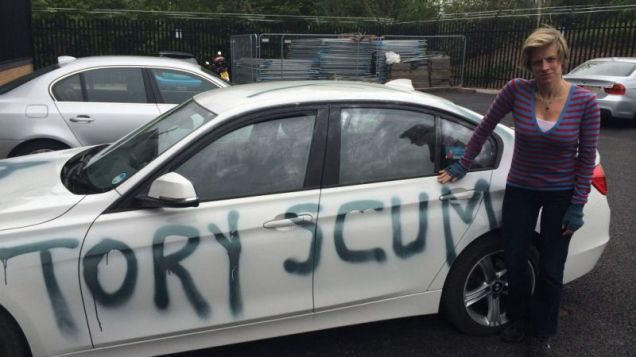
Tory Scum - Graffiti Car

When ordinary people with perfectly mainstream opinions are hesitant to express themselves for fear of being accused of racism, prejudice, stupidity or worse, our democracy is in real trouble

If you voted Conservative or UKIP at the 2015 general election, you could be forgiven for wondering where the other fifteen million people who made the same choice are currently hiding themselves. David Cameron’s leadership may be uninspiring and his government’s achievements few, but these are hardly the paranoid, dying days of the Brown government – ordinarily there should still be a level of authentic, spontaneous support to be found out and about the country.

Equally, you may wonder how on earth it was possible for Ed Miliband and Labour to have lost that election, given the fact that social media and popular culture roar their hatred of the Evil Tories louder than ever, that it is almost impossible to find kindred spirits willing to admit to voting Conservative or UKIP, and the fact that conservative policies and beliefs are routinely derided as ignorant and selfish at best, and violent and vengeful at worst.

The current political environment can be quite lonely for anybody with conservative leanings – and it makes one wonder why the people who delivered David Cameron his House of Commons majority and propelled UKIP into a remarkably strong third place are so desperate to avoid drawing attention to themselves.

There have been a couple of worrying pieces in the media this week which highlight the fact that furious open hostility toward anything vaguely conservative or eurosceptic – often emanating from a small but determined band of opposing activists – is having a chilling effect on the political discourse and preventing small-c conservatives from openly articulating their opinions.

First, the Independent carries a letter from former Labour MP Tom Harris, who only felt able to “come out” as a eurosceptic after having left elected office. Sounding as though a weight had been lifted off his shoulders, Harris writes:

I was never a fully paid-up member of the Euro team. Early signs of unsoundness manifested themselves in my outright opposition to British membership of the euro when it was first launched. The whips’ office had its eye on me after I added my signature to a letter, back in 2002, warning the then Chancellor, Gordon Brown, to resist committing to abolishing the pound. And once you’ve decided to oppose that central mechanism for the creation of a European superstate, it’s a fairly short step to being painted as “anti-EU”.

But my instinct to vote Leave (probably running at 53 to 55 per cent right now) is not something that can be confessed in polite middle-class company. Such an admission might too easily be interpreted as a dislike of foreigners or, worse, a tolerance of Nigel Farage.

[..] The question is precisely the same one we were asked in 1975: should we stay or should we go? In the meantime, if asked over dinner how I intend to vote, I’ll do the sensible thing and change the subject to the range of breads in the Marks & Spencer food hall. Or The Archers.

And follows up in the Telegraph:

As for me, I will continue to pursue this enigma known as “the normal life” by having, expressing, then rejecting various opinions. No doubt they will be variously correct, wrong, misplaced, insightful and dangerous. I may believe in all of them, some of them, or none of them.

What’s it to you?

But among Labour circles and much of the wider Left, it is simply no longer “permissible” to hold eurosceptic views, or to believe that Britain’s democracy and vital national interests would be better served by leaving an explicitly political and ever-more closely integrating union which we never realised we were joining in the first place. The Tories are perceived to be eurosceptic (even though many of them are not), and so the prevailing dogma has it that one must be pro-EU to be anti-Tory.

Aside from the few brave (and mostly decidedly retro) souls who form Labour Leave, the question of Britain’s ongoing EU membership simply is not up for discussion. And to express any doubt whatsoever about Britain playing an enthusiastic part in this European political union is seen as treachery, automatic disqualification from membership of the movement.

Look at Jeremy Corbyn’s reversal on the issue. Love or hate Corbyn, he has been willing to stand up to a mostly hostile Parliamentary Labour Party on issue after issue, from military action in Syria to the Paris attacks to the question of Trident renewal. On all of these issues, the Labour leader has proven himself willing to enrage many of his MPs by holding firm to his deeply held convictions.

But what of his eurosceptic convictions? Jeremy Corbyn has been a lifelong eurosceptic, and voted for Britain to leave the European Community in the 1975 referendum. Corbyn holds this view about as strongly as any other, and yet it was on this issue alone where he instantly capitulated to the establishment and became a pro-EU advocate. What should rightly be a non-partisan issue pertaining to sovereignty and self-determination is instead imbued with nearly the same cultural weight and quasi-religious fervour as one finds in the American culture wars. Such is the power of the Left’s infatuation with the EU.

Jeremy Corbyn - EU Referendum - 1975 - Eurosceptic

The second article of concern is this worrying testimonial from a conservative-leaning history supply teacher who found himself drummed out of the school where he taught because colleagues complained when he failed to join in their frequent denunciations of the Tory government and all things conservative.

Joe Baron writes in The Spectator:

After keeping schtum for two months, I finally challenged a colleague’s view of the Tories. ‘Why are Tory voters thick?’ I asked. ‘Is it just because they happen to disagree with you?’

‘No,’ he replied. ‘Because they voted for cuts’.

‘Perhaps they saw the cuts as necessary,’ I said. ‘Surely it’s better to make savings now, rather than keep spending money we don’t have, go bankrupt and, like the Labour government of 1976, be forced to make even deeper cuts after going cap in hand to the IMF.’

‘That’s rubbish!’ said another colleague. And so it continued, though no one actually raised their voices, until they brushed off my argument with a blasé ‘yeah, yeah, yeah’ before gesturing towards the office door as if dismissing a recalcitrant child.

If Joe Baron had been loudly and forthrightly expressing his views in favour of Ed Miliband and the Labour Party, he would have been met with a chorus of approval and the respect of his colleagues. But in choosing to defend conservative ideas like government fiscal responsibility and personal self-sufficiency, Baron chose another path. A darker path:

I was called into the head’s office and told that, after a complaint from colleagues in my department, the school would no longer require my services. So I was effectively being dismissed for holding the wrong views, though of course the head dressed it up in a different garb: it was my manner rather than my opinions. Apparently I was ‘too assertive’.

As I remember it, my interlocutors were both red-faced and angry, and more than willing to use inflammatory language. I was told, at one point, that I was unfit to teach.

Interestingly, the head of department who refused to work with me — effectively calling for my dismissal — had several weeks previously decried the cruelty of zero-hours contracts. Where was her left-wing compassion when it came to sacking me, a married man with two children to support?

I suppose I’ve only got myself to blame. For a brief moment, I deluded myself into believing that schools actually encouraged tolerance and the questioning of orthodoxies through intellectual exploration, freedom of thought and speech. How silly of me.

Both cases – Tom Harris the former MP and Joe Baron the supply teacher – are examples of the visceral, real-world retribution which is threatened (and sometimes carried out) by those on the Left against people who have committed the thought crime of being a conservative. And this climate of anti-Tory hate-mongering not only distorts our political discourse, but undermines the health of our democracy, whose proper functioning relies on people with political differences being able to speak their consciences in good faith.

My own personal experience of this phenomenon has thrown up more depressing anecdotes than I can relate here. Friends who have sat next to me on the couch shouting at the television when one smug-faced Question Time panellist (or audience member) after another have deliberately misinterpreted and sanctimoniously condemned Nigel Farage or David Cameron, but who fall fearfully silent when the inevitable anti-Tory hate mobs form around the water cooler or on social media.

Or the senior PR executive I was chatting with at a recent event for the launch of Dan Hodges’ excellent chronicle of the 2015 general election, “One Minute To Ten”, who furtively looked around and dropped her voice to a hushed whisper before confiding to me that she actually voted Conservative, picking David Cameron over Ed Miliband.

Or the look on the faces of people I speak with in my hometown of Harlow, Essex, at the precise moment when a voice in the back of their head tells them to self-censor their speech and hold back their real opinions, for fear of ridicule or attack. They may have re-elected an excellent local Conservative MP in Robert Halfon, but few are willing to proudly and publicly stand by their decision months later, away from the privacy of the polling booth.

You just don’t see this same reticence on the other side. For a political movement which makes a great performance of supposedly being the voice of the voiceless and most marginalised people in the country, left-wingers have a near monopoly in many areas of the public discourse, particularly in the arts and entertainment sectors. And there are far fewer occasions or settings where it is necessary to pause and “read the room” before confessing one’s left-wingery than there are situations where conservatives have brutally learned the wisdom of self-censorship.

The problem is that it is not just the unhinged crazies sharing misspelled memes on the internet and typing in ALL CAPS below the line on news website articles. People like that exist on all points on the political spectrum from left to right, and the misogynistic ranting of one barking CyberKipper no more represents UKIP than the conspiratorial, anti-Semitic sermons of a self-declared Corbyn supporter reflect on Labour.

No, the real problem is the softer bigotry of bien-pensant public opinion – the arrogant assumptions of the dinner party set, well-heeled professional people in the office or having dinner at Carluccio’s – the middle class clerisy, Brendan O’Neill called them. Their willingness to lazily believe and repeat hysterical left-wing smears about conservatism and to virtue-signal in front of their friends by flaunting their vague and incoherent opposition to the Evil Tory government are the problem.

And it becomes a self-fulfilling prophecy. The more that left-wingers openly flaunt their views while attacking or shunning anybody who thinks differently, the more likely they are to only ever hear ideas and opinions which chime with their own worldviews, and falsely assume that they are universal.

But it’s not true. The 2015 general election proved that there is no silent left-wing majority in Britain, and there will be no “rainbow coalition” of left-wing political parties coming together to kick the Evil Tories out of office any time soon.

In fact, the only question is how much longer the Left can continue to punch above their rhetorical weight before the British people finally tire of the sanctimonious yapping of a bunch of ideologically incoherent, virtue-signalling, anti-aspirational opportunists and the temper tantrum they are throwing in the face of a very mild and utterly unremarkable centrist government.

How much longer will the silent majority-makers of this country be willing to silence themselves, censor their speech and edit their public opinions solely to avoid the screeching disapproval of these losers?

Right now, it may be hard for some to “come out” as conservatives. But the Left are loudly and brazenly overplaying a very weak hand, and the sooner that more of us start calling them out on it, the easier it will be for more people to stand up and take pride in not being just another centre-left drone.

Iain Duncan Smith - Tory Scum - Conservative Party - Nazis

Agree with this article? Violently disagree? Scroll down to leave a comment.

Follow Semi-Partisan Politics on TwitterFacebook and Medium.