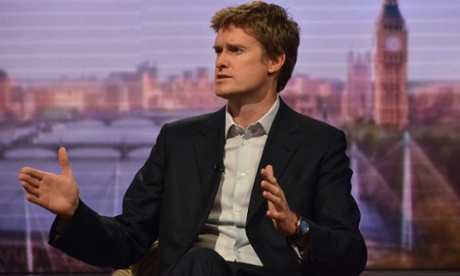
Labour’s Credibility on Education

Mea culpa, mea culpa, mea maxima culpa.


When someone in a position of power or influence makes a series of errors so calamitous, profound and grievous that they do real and lasting damage, and fails to ever acknowledge those mistakes or to make any kind of apology, one tends to disregard what they have to say on that particular topic in future. Think neo-conservatives on starting wars in the Middle East, the Labour Party on the economy and Dick Cheney on absolutely anything.

But when someone owns their past mistakes and appears to have learned from them and grown as a result, it is quite different. And so it is with the Labour Party and their approach to education policy while in opposition. Sure, they haven’t undergone a Road to Damascus conversion and mended their ways entirely – the suspicion that their preoccupation with equality of outcome lurks behind everything remains quite strong – but nonetheless I want to give credit where credit is due. And today, credit belongs to Tristram Hunt, Labour’s shadow Education Secretary.

This kudos comes on two fronts. Firstly, the Daily Mail reports that Hunt is repudiating some of Labour’s past educational priorities and actions whilst in government, in terms of pushing as many children as possible to just cross the “no longer an idiot” threshold for the benefit of statistics and league tables, but then failing to challenge them any further:

Labour created a culture of low expectations for state school pupils, Tristram Hunt, the shadow education secretary has admitted.

He said it was a ‘great crime’ that the last government had failed to pushed children more than simply aim for them to achieve a C grade at GCSE level.

He also admitted that exams had been dumbed down in recent years, saying ‘yes, there are elements of grade inflation’.

This is actually quite a significant admission from someone in the shadow cabinet, and the refreshing bravery deserves recognition. The enshrining of the “good” GCSE result as being a grade falling within the A* to C range has certainly created a perverse incentive to push as many laggardly students up into the bottom threshold whilst neglecting the needs of those who had the potential to achieve much more.

This willingness to look as past initiatives and admit mistakes in the field of education policy now makes Labour much more credible on this topic, and they have immediately stolen a march with their new proposal to license teachers in a bid to drive up professional standards. The Guardian reports:

In a sign of how Labour hopes to outflank education secretary Michael Gove on teaching standards, Hunt is to revive a plan the last government abandoned on the eve of the 2010 general election.

Teachers would have to show they are meeting the high standards and would be required to undergo training to update their skills.

Under Hunt’s plans, teachers would have their lessons assessed by other teachers in a system overseen by a new Royal College of Teaching.

As a society we often pay lip service to the importance of education and good teachers, but when it comes to standing behind that commitment, too often we have been found lacking. We claim to admire good teachers and value them, but do not compensate the best of them anywhere near adequately, and do not expect them to adhere to the professional codes of behaviour (as encapsulated by ongoing training and recertification) that are common in many other prestigious lines of work.

Indeed, Tristram Hunt goes on to make this very point:

Hunt insisted that his plans would raise the standing of the teaching profession. He said: “This is about growing the profession. This is about believing that teachers have this enormous importance. Just like lawyers and doctors, they should have the same professional standing which means relicensing themselves, which means continual professional development, which means being the best possible they can be.”

The fact that these proposals are coming from Labour and not the Tories also confers a immediate advantage in terms of winning backing from the teachers unions, which would be essential to their smooth rollout if ever the proposals became law.

And crucially, from a purely political perspective its puts the Conservatives in the awkward position of having to either reject a potentially very sensible proposal to improve educational standards, or to adopt it and face cries of plagiarism. Rather despairingly, one has to wonder why Michael Gove’s Department of Education didn’t manage to think up a policy proposal such as this on their own.
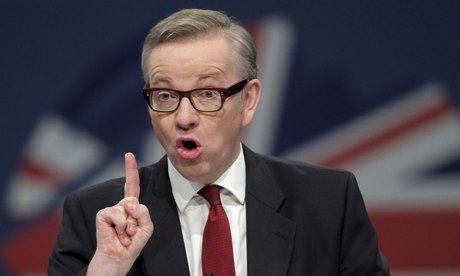
Outmanoeuvered.
Outmanoeuvred.


If Labour ever showed the wherewithal to perform a similar trick on the subject of economic stewardship – admitting their past fault for growing the state to unsustainable levels and proportions of national output, thus making the pain of the recession so much worse for those people more reliant on the government, and acknowledging that some rebalancing is not only necessary but desirable – then the Tories might really be in trouble.

But I imagine there is a greater chance of it snowing in hell than there is of Ed Balls following Tristram Hunt’s lead any time soon.

On Paternalism and Porn Filters

Liberal Democrat president Tim Farron has not been my favourite person since the Conservative/Liberal Democrat coalition government was formed in 2010. The grumpy noises emanating from the Liberal Democrat party hierarchy have all too often been agitations for more specifically left-wing policies rather than the promotion of liberal ones, and I have no truck with that. But yesterday, Mr. Farron won my agreement and earned my support.

The Daily Mail reports:

Liberal Democrats have triggered fury by vowing to overturn David Cameron’s plans for internet porn filters.

Child safety experts and MPs called the move ‘irresponsible’ and warned it would undermine attempts to protect children from hardcore pornography.

Lib Dem party president Tim Farron said the Government should enshrine the ‘digital rights of the citizen’ and halt requirement for ‘filters, lists or controls on legal material’.

Tim Farron correctly labels the government policy as “misconceived, ineffective and illiberal”. It is certainly misconceived – a majority Conservative government with a mandate to roll back the onerous size of the state has no place enacting laws that further chip away at the notion of personal responsibility. It has also been proved to be ineffective – a simple browser extension has already been released which simply bypasses the filter. And the illiberality of the policy speaks for itself.

Insidious yet inept.

The Independent quotes Farron in further detail, perfectly summing up the argument for the correct way to protect children from adult material in a liberal country:

“If the Prime Minister really wanted to protect children from inappropriate material, he’d ensure they had access to good sexual health and relationship education and give parents the help and support they need to talk to their children about this issue,” he said.

Absolutely. But the daddy-knows-best wing of the Tory party sadly sees things somewhat differently:

Party sources described the new Lib Dem approach as “disappointing”.

“Tim Farron clearly does not want to prioritise the safety of our children online or support our efforts to prevent anyone accidentally accessing illegal material,” they said.

Anyone could have seen this weak, manipulative counter-punch coming from a mile away. Anyone who believes in personal responsibility and empowering and trusting parents to act in the best interests of their children must, according to this worldview, be maniacally obsessed with pornography whilst simultaneously holding the safety of children in complete and utter contempt.

What complete and utter nonsense.

Quite.
Quite.

I invested my precious time and effort pounding the streets of my hometown campaigning for the Conservative Party in the last general election campaign in 2010, but it is policies such as this which make me roll my eyes and question whether it is worth my time and effort to do so again in 2015. The MP I campaigned with, Robert Halfon, has proven himself to be an excellent constituency MP for Harlow since that time, but the coalition government in which his party is the senior member has delivered letdown after letdown on issues of civil liberties and returning responsibility to the individual.

After thirteen years of Labour government I was desperately looking forward to a rollback of the paternalistic, controlling, pseudo-benevolent state that had grown inexorably during that time. Of course I anticipated some inevitable compromises resulting from the fact that the Conservatives had to take on the Liberal Democrats as junior partners in coalition, but I never expected to find myself cheerleading the Liberal Democrat stance over the Tory one on fundamental issues of privacy and civil liberties. And yet that is exactly where I find myself.

Of course children should be protected from harmful content on the television, the internet and other media. But that responsibility rightly rests with the parents, not the broadcasters, ISPs or the state. Every time the government steps in to protect us from any potential harms out there in the world, we are simply stifled by yet another layer of cotton wool, and given the implicit message that it’s okay to glide through life with no regard for the potential consequences of our actions. Many of us may do this at times anyway, and I certainly include myself in that criticism – but my point is that government should not be actively making the shirking of personal responsibility easier by taking on duties of care that used to sit with educated, compassionate and autonomous private citizens.

I would suggest that parents should not be leaving their children unattended to be raised by television and the internet. If parents choose to ignore all common sense and do so, and their child stumbles upon any inappropriate or distressing material as a result, rather than bleating in outrage to the government a personal reexamination of parenting abilities is required.

David Cameron might think that his government’s time is best spent peeping over our shoulders and tutting at the things we choose to watch online under the justification of “keeping our children safe”, but I can assure him that nearly four years of mystifying underperformance in No. 10 Downing Street quite clearly say otherwise.

Gordon Brown To The Rescue

He's back.
He’s back.


Just as the momentum behind the Scottish independence campaign well and truly faltered and we all started to rest easier in our expectation that the Kingdom will remain United after the people of Scotland hold their referendum later this year, Gordon Brown felt the need to re-emerge from the shadows and weigh into the debate.

I’m sure that in his mind, a person of his “stature” breaking their self-imposed political silence to speak in favour of Scotland’s continued participation in the Union would only ever be a good thing, a final coup de grâce drawing a line under the debate. Unfortunately, Brown could not resist digressing from his original point and sharing his thoughts on the purpose and ideal future structure of our United Kingdom, and in so doing he managed, in his own inimitable way, to muddy the waters and raise more questions than he resolved.

The Telegraph reports:

The Scottish Parliament should be made more powerful, Gordon Brown will say on Saturday as he urges people not to break up the Union.

In his most significant policy intervention since leaving Downing Street, the former prime minister will call for major constitutional changes which he believes could keep Scotland in the Union.

The confusion begins right away. According to the most recent polling, two thirds of Scottish people want Scotland to remain a part of the UK as we currently stand under the terms of the referendum questions. When the unionist side is already making such a convincing case and steadily holding a majority of public opinion, why come out proposing “major constitutional changes” as a deal-sweetener? Not only does it reek of panic and desperation, it is a cast-iron certainty that the constitutional changes being proposed will be of a narrow, specific and non-universal nature, designed to bribe voters but carrying with them the unintended consequence of making the architecture of the UK’s political governance even more complex and inequitable than it is today. But more on that later.

Brown rightly criticises some of the wishful thinking underpinning the SNP’s economic forecasts and predictions for a hypothetical independent Scotland:

He will say: “First, they calculate oil and gas revenues as at least £6.8  billion in 2016-2017 when all formal and independent forecasts suggest the correct figure is likely to be around £3.5 billion, leaving a £3.3 billion shortfall. To make this up requires a rise in income tax of 10p.

“Second, they have failed to calculate the cost of European Union membership without the British rebate, which Scotland would not benefit from. In consequence, Scotland’s net membership costs could be as high as £500  million that the SNP have not budgeted for.

However, it is in The Guardian’s reporting where Brown’s higher aspirations for the future of the UK are fully revealed:

Brown said Scotland would be strengthened by his proposed constitutional changes while remaining within the union. The Kirkcaldy and Cowdenbeath MP wants the Scottish parliament to be made irreversible, with “maximum devolution of powers in training, transport, health, the Crown Estates Commission and the running of elections”.

This is all well and good. As an instinctive conservative with a strong libertarian and small government streak, I strongly support devolving power to the lowest and most sensible level possible. To my mind, having Scotland make its own policy in terms of education, transport (to the degree which it can reasonably differ from the rest of the UK), healthcare and other matters is perfectly sensible. Some will doubtless bleat about the iniquities of the overly-discussed “postcode lottery”, but to me such an approach is the only right thing to do.

The problem is that Gordon Brown proposes this devolution of power only for Scotland, and only as a means of persuading reluctant Scots to swing their support behind continued membership of the UK. One gets the strong feeling that in an ideal world, Gordon Brown would like nothing more to centralise each and every one of these areas of policy and governance, and run them all from Whitehall, and that it is only through urgent necessity and the pursuit of an even more important objective (maintaining the Union) that he is willing to permit these giveaways.

But what of the other nations of the United Kingdom? Why should Scotland be free to attune her education and transport policy more closely to the needs of her citizens, but not Wales, Northern Ireland or England?

I cannot repeat often enough my firm belief that this piecemeal devolving of powers on an on-demand basis whenever one of the home nations becomes a bit restless or we have a referendum to win is damaging to the integrity of the UK, and ensures that as a country we limp on, united still (just about) but burdened ever more heavily by arcane and inexplicable rules determining which decisions get made at what level in each constituent part of the country.

I call once again for a proper constitutional convention in the UK, to decide once and for all the powers and functions that we the people should rightly and properly give to Westminster, and those which should be devolved to the four individual home nations to be exercised equally by each.

Such a convention would also allow us to determine what should be the “shared purpose of our union”, which apparently if left unaddressed, will be defined by Gordon Brown along the specious and redistributionist lines of “social justice”. The Guardian makes explicit Brown’s view of our common purpose:

He has proposed UK legislation to state the shared purpose of the union, “namely the pooling and sharing of resources for social justice”.

I’m all for having a debate about the purpose of the country, but I would much rather frame it around providing liberty and freedom for the United Kingdom’s citizens than Gordon Brown’s vision of us coming together to to pool and share our national resources. Human beings are inclined to do this anyway of their own accord, and don’t need prompting from government to get them started. And now, for some reason, I cannot purge from my mind the image of Gordon Brown sitting at a desk in front of a huge warehouse, assigning barrels of North Sea oil to each man, woman and child in the UK – every barrel filled equally to the last drop, of course.

It is kind of Gordon Brown to re-emerge from semi-retirement and deign to give a speech on the future of our country. But his long-awaited contribution is not, unfortunately, of great use to anyone. The last thing that the United Kingdom needs is more piecemeal constitutional reform while the bigger picture goes unaddressed. And I am certainly not about to sign up to a national mission statement based on all of us coming together to enact his distinctly New Labour vision of a “just” society.

Until next time, Gordon.