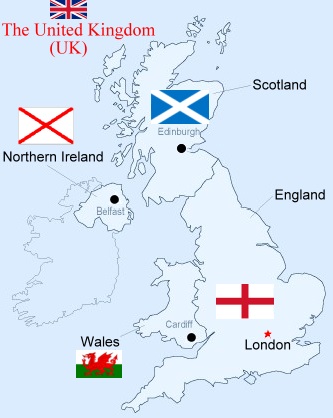
I have felt like something of a voice in the wilderness at times on this blog, advocating for equal devolution of powers from Westminster to the four home nations of the United Kingdom, to the extent that have almost questioned my sanity that something so self-evidently sensible and obvious to me should be so opaque and avant-garde an idea to almost everyone writing a newspaper column or appearing as a TV news talking head.
And so I am seizing on the words of Allister Heath with all the enthusiasm at my disposal. Apparently I am not alone after all. Addressing the question of Scottish independence and the upcoming referendum, Heath writes:
But that doesn’t mean that the status quo is right either. The UK’s constitution has been an irrational and unsustainable shambles since the Scotland Act of 1998; this can only be resolved satisfactorily if the process that started with Scottish devolution is now taken to its logical conclusion.
Following what we must hope will be a resounding “no” vote, we need to adopt a new, fully federal model for the UK inspired by the US, Canadian, Swiss and other similar systems that share power properly between the centre and autonomous provinces or states. England needs to have its own parliament, Scotland, Wales and Northern Ireland must be given greater rights and responsibilities, and all component nations of the UK need to start living within their means, raising as much tax as they spend.
This is heartening for two reasons – firstly because it validates my own thinking, but with the persuasive articulacy of someone who writes weekly columns in a national newspaper. It is absolutely right to assert that the devolution process begun in 1998 put our country into a state of limbo, but I would go further and argue that the UK’s constitution has been a shambles for many decades and indeed centuries prior to that. This tends to be the case in older countries that have eschewed revolution or invasion in recent times, but while conservatism would tend to urge an “if it ain’t broke, don’t fix it” attitude, our constitutional underpinning and the way that our country functions is of such fundamental importance that I cast the “traditionally conservative” attitude aside in favour of the reforms advocated by Heath.
Secondly, Heath’s joining the argument for a federal solution is heartening because he addresses the financial aspect in a mature and sensible way. Making the four home nations responsible for their own taxation would allow for that all-too-rare thing, variety, to take root in the UK. The four countries could experiment with setting tax rates in line with local preferences to achieve local ends, and the redistributionist pipe dreams of some of the nationalist parties (SNP, I’m looking at you) once and for all. Heath expands on this thinking, conferring upon the home nations the financial autonomy enjoyed by the states of the US plus a little bit more:
Crucially, the UK’s four component-nations should not merely have the right to spend money but also the responsibility to raise it; they would have their own tax systems, running in parallel with a much reduced UK-wide HMRC. The four nations ought to be able to cut and hike taxes, and would be under great pressure to balance their budgets. They should have the right to issue their own debt, which would not have sovereign status and would not be guaranteed by the UK.
Absolutely right. Of course there will always be a place for HMRC, because certain tax policy (such as import/export duty) must remain common to all. But giving the home nations the right to set their own tax rates on the “big ones” like income tax and corporation tax is absolutely the right thing to do. This could even present the ideal opportunity to do away once and for all with the laughable notion that National Insurance is somehow separate from income tax – let the people see what their real effective tax rate is when NI is factored in to a single tax rate and see what they think of their overall tax burden then.
The UK has suffered from a dearth of political competition for too long. At times I have really struggled to differentiate between the views of the coalition government and the Labour opposition in terms of attitude to the proper size and scope of the state. Sure, the Conservatives may talk the small government talk, but in no way have they boldly walked the walk. Four powerful national assemblies under the auspices of the Westminster parliament would allow for some real diversity in our islands, diversity of ideas and yes, diversity of outcomes.
The end result of all of this would be political settlements more closely attuned to the moods of the local electorates, and therefore more democratic in the true sense of the word. Heath fast-forwards the clock and imagines the likely power dynamics in a newly-federal UK:
In a federal UK, England would probably be run by a pro-market Tory government (or, intriguingly, a Tory-Ukip coalition) with the UK as a whole controlled by Labour, at least in the short term. We could see radical tax cuts in England and elsewhere as leaders vie to grab business. Northern Ireland, in particular, is ripe for drastic supply-side reforms to rejuvenate its economy. This new dynamic would better reflect electoral preferences and would allow rival political ideologies to be tested simultaneously in different parts of the country.
In short, this call for a federal United Kingdom is the complete antithesis to Gordon Brown’s cack-handed intervention in the Scottish independence debate (which I dissected here), in which he proposed a raft of discriminatory (to the rest of the UK) special perks and privileges to be carved out for Scotland as a bribe to their electorate in advance of the referendum. That foolish proposal has all the hallmarks of Brown – short term political manoeuvering to achieve a tactical outcome at the great expense of a broader strategic goal (the strategic goal being the more efficient and democratic governance of the UK as a whole).
The side of democracy, transparency and common-sense needs more articulate advocates, and today we can add Allister Heath to the ranks. Where he picks up, may many more soon follow.
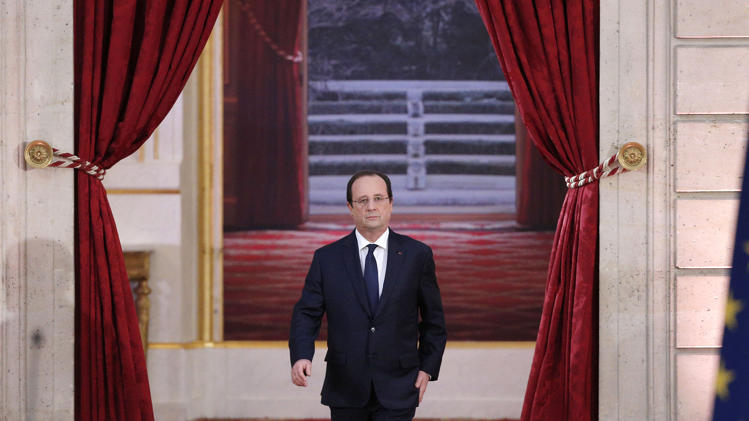
The scandal continues, and embattled French President Francois Hollande’s annual new year’s press conference did absolutely nothing to bring any closure to the saga of the early morning croissant deliveries. Hollande did not even deign to acknowledge the disrepute that he is bringing on his nation during the text of his prepared remarks, and when asked about it during open questions he shot the line of questioning down.
Asked in an exceedingly roundabout way whether Trierweiler was still the first lady, Hollande made clear his view that matters pertaining to his private life should be resolved in private, and said he would be taking no further questions on the subject (although he did promise to sort out his situation before his visit to Washington), and that was pretty much that.
There were one or two mild-mannered attempts to come at the question sideways, by asking about changes to France’s strict privacy laws, for example, and a brave bid by the Associated Press to come at it head on (“Does the president’s image matter?”). All received the same curt treatment.
The nature of the press conference revealed a couple of things to me – firstly, the huge deference shown by the local French press to their political leaders in any matters relating to personal behaviour and actions deemed to belong in the never-well-defined “private sphere”. Several commentators have already picked up on the fact that David Cameron or Barack Obama, embroiled in a similar scandal, could never have walked away from a set-piece press conference so unscathed. But what also shocked me was the unwillingness or inability of the foreign press, less beholden to the French political establishment for future favours and a good ongoing working relationship, to press home the lines of questioning. They had little to lose, but almost without exception they failed to follow up after Hollande declared the subject off-limits.
Still, if the French are content with their current arrangement whereby their politicians are free to engage in any manner of behaviour provided that it does not effect their performance in the day job, I suppose that this must be accepted, and the curiosity/outrage felt by many of us foreigners set aside. It is still my gut feeling that the supposed outrage of the French people at the invasion of Hollande’s privacy is partly a view expressed on their behalf by the elites who harbour skeletons of their own, but the polls suggesting that French attitudes toward Hollande remain unchanged are fairly conclusive.
I am glad to see that various media sources have finally started asking the question that I raised on this blog the same day that the story broke – namely, the implications for President Hollande’s security (and, by extension, the national security of the French republic) given the fact that he was taking off from the presidential palace incognito on the back of a scooter, unattended by any bodyguards during the night. As I said at the time:
Skulking around the capital city in the dark with limited protection, exposing oneself (and the secure, uninterupted governance of one’s nation) to any risk of kidnapping, physical harm, blackmailing or worse in the pursuit of a booty call, is probably not behaviour that voters would wish to see in a serving head of state. Transgressions which take place before taking office, honestly explained, atoned for and forgiven by the electorate, are one thing. Actively committing further such acts whilst in office is another matter entirely.
Three days later and the Telegraph picks up on this same concern, which if we are to have no expectations for how a head of state conducts him or herself in their private life is the only real area left for criticism.
Le Monde reported Monday that Mr Hollande had visited the apartment on the Rue du Cirque with two trusted police officers in tow and with another team providing extra security, about ten times since last autumn.
But Mr Valiela said security was so lax that the president’s bodyguards failed to spot the paparazzi who had been spying on the apartment and taking pictures of the president arriving and leaving on two occasions just before and after the start of the new year.
The security detail also apparently failed to inquire about who the flat belonged to.
Yikes. This is pretty much the worst case scenario that I had considered – the lean security team being unaware of paparazzi in the vicinity of the president, let alone any more serious threats. My point, I suppose, is that in accepting the office of president and the powers and responsibilities vested in that office, a person has a responsibility to refrain from endangering the continued exercise of those powers. I’m not suggesting for a second that the French president should follow the lead of the United States and travel around in the excessive pomp of an Obama motorcade, not for a second. But being the leader of your country and sneaking off virtually unprotected to consummate a secret relationship seems to be an either/or proposition. The two just don’t sit very well together, even leaving questions of dignity and decorum entirely aside.
The next chapter in the pointedly unquenched rumour mill is that Hollande’s alleged mistress may be pregnant, thus continuing another time-honoured French presidential tradition. The French president may come to regret his failure to tackle the stories swirling about his personal life head-on when he had the world’s full attention.







 Semi-Partisan Politics