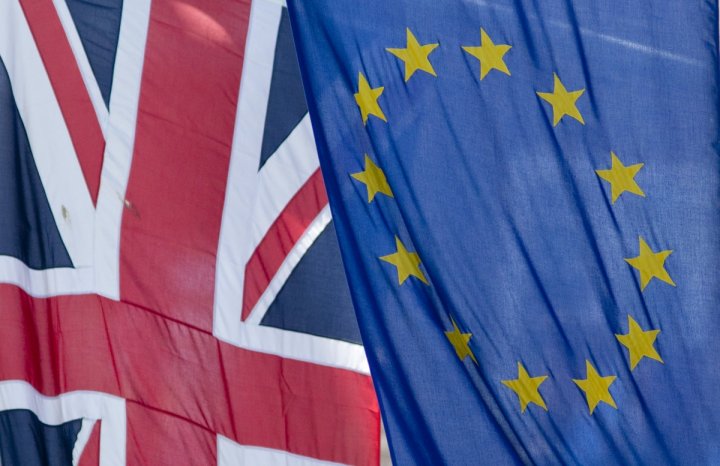
After Brexit We Can Strengthen The Bonds Of The Anglosphere

Anglosphere - Brexit - European Union - EU - United Kingdom - Britain - England


By Ben Kelly, blogger and editor of The Sceptic Isle.

The recent plea from Nile Gardiner of the influential US think-tank The Heritage Foundation was a pleasing reminder that there are still some voices in the US who see the merits of an independent United Kingdom. It is unfortunate that official US policy is to compel Britain to remain within the union as part of its desire to see a united Europe modelled on its own image.

Such homogeneity is easier to interact with diplomatically and also easier to manipulate and handle in matters of foreign affairs, such has been the case in US support for a politically loaded association agreement between the EU and Ukraine.

The US administration has little time for the concerns of British EU-sceptics, such as conserving the independence of our legal system and our foreign, economic and security policy, and restoring the sovereignty of parliament. This is a shame because a Britain integrated into the EU and unable to act independently will be a limited ally and a far weaker friend to the United States.

American conservatives especially should see the merits in an independent UK. They have in the past called for greater economic ties, they should also champion the conservation of our culture of liberty, law, government and economic freedom; the sturdy foundations their own great country is built upon. These are our common traits and they are being eroded and threatened by EU integration.

In 1952, then-U.S. Secretary of State Dean Acheson said that “Britain has lost an empire but has failed to find a role.” Its role should have been one befitting the mother of the Anglo-sphere. A role as a global champion of the liberty, democracy and rule of law nurtured on this island and spread across the globe.

Continue reading

Chuka Umunna Plays The Race Card

Chuka Umunna - UKIP- Nigel Farage - Immigration - Race Card - General Election 2015


There are few more toxic accusations in British public life than that of racism.

To be accused of racism by anyone with a high profile and a media platform is the modern day equivalent of being tarred and feathered – the allegations stick indelibly in the public memory, impossible to scrub away, while everything you do subsequently will be viewed suspiciously through that ugly, distorting prism – “he may have only said X, but we all know he really means Y, because he’s a racist”.

Consequently, decent and honourable people should be damn sure of their facts before throwing the word “racist” around – it summons visceral recollections and images of real-life prejudice, discrimination, attacks and lynchings, murders and even genocides; the Jim Crow laws in America and the spectre of Enoch Powell in Britain.

Unfortunately, Labour’s Shadow Business Secretary, Chuka Umunna, has once again demonstrated that he is neither honourable nor decent, using an interview with the Independent on Sunday as a free opportunity to throw some more mud at UKIP ahead of polling day next week:

Nigel Farage and Ukip “hate modern Britain” and have a “problem with race”, Chuka Umunna says in an interview withThe Independent on Sunday.

The shadow business secretary, whose father was born in Nigeria, responded to the Ukip leader’s description of two of Ukip’s spokesmen as “fully black” and “half black” by saying there is a “virus of racism” that runs through Mr Farage’s party. Mr Umunna added that, by contrast, a Labour government would celebrate British multiculturalism and refuse to bow to “anti-immigration sentiment”, which, he said, had been whipped up by Ukip.

Mr Umunna was speaking during a visit to the Croydon Central constituency, where Labour’s candidate Sarah Jones is hoping to overturn a Conservative majority of 2,879 currently held by Gavin Barwell. He mounted a staunch defence of the benefits of immigration to the UK, although refused to condemn the Labour Party mug that trumpeted “Controls on Immigration”.

Put simply, Chuka Umunna’s latest “smoking gun” evidence of endemic UKIP racism and prejudice consists of the fact that Nigel Farage used the terms “fully black” and “half black” when speaking about people shown in the UKIP manifesto.

Continue reading

For The Left, St. George’s Day Was A Great Chance To Mock UKIP Supporters

St Georges Day - England Flag - Patriotism - Public Holiday - Bank Holiday - UKIP


What did you do today to celebrate St. George’s Day?

If you’re like most people, quite understandably, you probably did nothing at all – after juggling work and the stress of daily life, there simply isn’t much time left in the day to celebrate the overlooked and unexciting Feast of St. George.

But of those people who did mark the day, a small but vocal minority were determined to use St. George’s Day not as a day to celebrate Englishness, England and her patron saint, but rather as an opportunity to mock and belittle those people who do try to celebrate our national heritage, and those who are proud (and brave enough) to be openly patriotic in modern Britain.

UKIP, virtually the only British political party that doesn’t view patriotism as something embarrassing or gauche (sometimes, on a good day, some Tories can still make a decent effort), called for all Britons to mark St. George’s Day by wearing a red rose, and lobbied for the day to be made into a public holiday.

From the Daily Express:

Ukip deputy leader Paul Nuttall said the gesture was needed as a way of registering protest against attempts by local councils and quangos to ignore or obliterate English identity.

“It saddens and angers me that this day marking Englishness is so low key compared to how days for the other three countries of the union are publicly celebrated,” Mr Nuttall said.

“The situation has improved over recent years but it passes by unrecognised by many English people. I have long argued that it should be a declared a Bank Holiday and I have not lost my passion for that idea.”

Ukip yesterday released a dossier of examples of public authorities attempting to ban or denigrate the England flag in recent years. They included supermarket staff and taxi drivers being ordered not to display England flags and pennants on their vehicles.

The response from the establishment was predictably scornful, sometimes verging on outright hostility.

Continue reading

Election 2015: Why Won’t David Cameron Talk More About Europe?

David Cameron - Conservative Party- Brexit - Britain and Europe - General Election 2015


We need to talk about Europe.

With Labour and the Tories deadlocked in the polls and Britain on course for a hung parliament, The Spectator asks an interesting question: in an effort to break the deadlock, why won’t David Cameron and the Conservative Party start “banging on about Europe”?

From The Speccie’s leading article:

It is hardly as if the issue of an in-out referendum has been neutralised. David Cameron, in committing himself to such a poll, seemed to be in a strong position over Ed Miliband, who has declined all pressure to follow suit. Cameron can justifiably say to anti-Europeans that a vote for him is the only way to ensure that the country has a chance to reject EU membership. For EU supporters, he is offering the chance to settle the matter of Britain’s membership for a generation to come. And for sceptics in the middle who want to be part of the EU, but a reformed one, he is promising renegotiation of Britain’s terms.

Ed Miliband’s position, by contrast, is simply one of denying the people a say on an issue which divides the country — on the basis that voters cannot be trusted with such questions. It is entirely believable, should Labour come to some sort of pact with the SNP after the election, that we will end up having two referendums on the subject of Scottish independence, with the EU question remaining unresolved. Even the pro-EU Greens want an in-out referendum on the — for them, unusually solid — grounds that the issue of Britain’s membership will be an issue until it is seen to have renewed democratic legitimacy.

The Spectator concludes:

David Cameron ought to be turning European turmoil to his electoral advantage. With Ukip at around 13 per cent, he would win a strong Conservative majority if only he could persuade a quarter of Ukip’s potential voters over to his side. Contrary to talk about the left being in advance, the conservative parties (the Tories plus Ukip) between them are registering a substantially bigger slice of the vote than in 2010.

But this is where the Spectator’s analysis falls down – the misplaced assumption that if only David Cameron talks more naturally about his personal beliefs and the Conservative Party’s official policy on the European Union, hordes of recently defected UKIP voters would return to the Tory fold.

People don’t generally support UKIP just because they want Britain to go through the democratic exercise of holding a referendum on our membership of the EU, letting the chips fall where they may. They support UKIP because of all Britain’s non-extremist political parties, Nigel Farage’s gang is the only one that unequivocally disagrees with remaining in the European Union under more or less any circumstances. Gaining popular consent may be great, but the goal is Brexit – and UKIP are the only party who are committed to that end.

From this perspective, David Cameron’s pitch to the electorate is little better than Ed Miliband’s – both say that they want to get the “best deal” for Britain in Europe (whatever that may be), but when push comes to shove, neither of them believe the EU to be a fundamentally flawed, undemocratic or threatening to British interests. If they did, we wouldn’t be talking about a referendum, Britain would secede tomorrow.

Why would UKIP’s growing ranks of supporters vote Conservative when they know that they will get a Prime Minister and government that may honour their promise to hold a referendum, but then in all likelihood campaign for Britain to remain part of the EU after the largely cosmetic “renegotiations” are complete? More to the point, why would a rational voter vote for wishy-washy feigned euroscepticism when there is another party (UKIP) and another leader (Nigel Farage) who still trusts the British people to have their say, but is actively committed to campaigning for Brexit?

UKIP supporters have generally made up their minds that the EU – with its growth-sapping regulation, control-freakish infringement on national sovereignty and persistent undermining of the nation state through common security and borders policies – is a bad thing. They may understand that the rest of the country needs a little more time to educate itself and arrive at the same conclusion, but they do not expect the party they vote for on 7 May to have to go through the same tortuous process. Ukippers want out, as soon as possible, because they believe that this would be best for the country – the clue comes in large letters on the front page of their manifesto, titled “Believe in Britain”.

So to answer the Spectator’s original question, there is a very good reason why David Cameron has not spent – and will not spend – more time in this election campaign “banging on about Europe”. True eurosceptics, especially the ones who have made the leap to UKIP, know that David Cameron’s offering of a referendum is a move intended only to placate his party’s right wing, not a promise borne of a personal desire to free Britain from the EU. Therefore, every day that David Cameron spends talking about Europe is another day he alienates the Europhiles and the politically indifferent, while winning back only a small fraction of the UKIP vote.

You can observe the deafening silence from the Conservative Party on Europe and admire David Cameron’s political radar and message discipline, or you can despair that the Prime Minister simply doesn’t see Britain’s emancipation from the European Union machine as a cause worth fighting and risking political office for. But either way, it’s no accident that the EU is the non-issue of the 2015 general election campaign.

EU Referendum: Don’t Trust The Party That Doesn’t Trust The People


What to do when the political party you support and spend every waking moment campaigning for adopts a stance which is not only breathtakingly arrogant, but which runs completely contrary to the fundamental principles of democracy and respecting the will of the people?

Well, if you’re the socialist website Left Foot Forward and the case in question is whether or not Britain should hold a referendum on leaving the European Union, you simply convince yourself that the public are dangerous idiots who can’t be trusted to know what’s best for themselves, thus justifying your benevolent left wing dictatorship.

The editors of Left Foot Forward, clearly feeling a little uneasy that their man Ed Miliband is actively campaigning on a platform of denying the British people a say on their future governance, decided to do some unofficial polling to make themselves feel better. And sure enough, it transpires that 63% of their readers are also opposed to letting the British people decide.

But the left need some reasons, however flimsy, to shore up their indefensible position, and Left Foot Forward staff writer Ruby Stockham comes armed with plenty of them:

EU-sceptic Conservatives say that the knife-edge balance of public opinion means it is undemocratic to block a referendum. There are several problems with this argument. The first is that it’s cherry picking: we do not hold referendums on most public issues. There has not been one, for example, on TTIP; there was not one on military intervention in Syria or Libya.

The reason for this is that most of the electorate do not have a deep understanding of the intricacies of these issues; to build up a full picture of the economic, social, or security benefits and disadvantages of both sides would be a full-time job. What the electorate are exposed to is the simplified bias of parties like UKIP or the Eurosceptic press, who present an easily digested one-sided argument. The government cannot decide whether or not something is democratic based on whether or not it suits their aims.

Actually, the reason that EU-sceptic conservatives want a referendum is nothing to do with the fact that the public opinion is on a “knife-edge”. It’s more to do with the fact that power has been continually given away from Westminster to Brussels, from democratic British institutions to their opaque and largely undemocratic EU counterparts, without the British people ever having granted their permission for this to happen.

The 1975 referendum doesn’t count – the British people voted to join what was then known as the European Economic Community because as its name suggested, it was presented as a matter of free trade. Since that time, “common” European policies have sprung up in all manner of areas which impact British life, and which are traditionally fall to the nation state to control. Therefore, to present the question of Britain’s continued membership of the EU as being the same as any run-of-the-mill government decision – like raising taxes or deploying the military – is an entirely misleading comparison.

Stockham then tries to suggest that the British people are too ill-informed to make an educated decision. But this would be the whole point of a referendum campaign – to educate the British people on the pros, cons and detailed implications before letting the people render their judgement. Of course it does not suit Stockham’s purpose for the British people to become more educated on the subject of Europe, because then they would realise the extent to which the common market is just a façade for the far more wide-reaching European political union which was always the end goal.

And it is certainly not the case that the public would be overtly swayed by the “simplified bias of parties like UKIP”, as Ruby Stockham so haughtily suggests. If anything, the simplified bias is all on the pro-EU side. The majority of big businesses (who are naturally risk averse) are for the status quo – funny how the opinion of big business matters to the left on the topic of Europe, but nowhere else – as are all of Britain’s political parties, besides UKIP. In terms of funding and finding suitable mouthpieces for their talking points, the pro-Europeans would have no problems whatsoever – but of course it suits Left Foot Forward’s aims to portray themselves as the underdog.

But Ruby Stockham saves her best argument against holding an EU referendum for last:

Fourthly, the European Union has over 500 million citizens. A UK exit would affect all of them. It is truly undemocratic to allow the UK minority to dictate the future for all EU citizens.

That’s right. According to Left Foot Forward, the British people are not entitled to determine their own future because to hold a referendum would infringe on the rights of people in Lisbon and Warsaw – nearly all of whom would be supremely indifferent in any case – to keep Britain tied up in an unwanted political union.

Truly, no argument is too desperate when it comes to the British political left trying to find excuses to override the will of the people.

To quote a much younger Tony Blair: Weak, weak, weak.

EU UK Flags