A Vote For Ed Miliband’s Labour Party Is A Shallow Exercise In Virtue Signalling

Labour Party - Why I'm Voting Labour - Virtue Signalling - General Election 2015


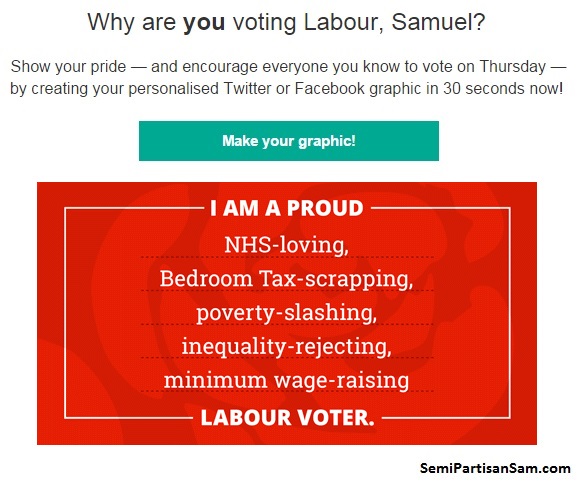
Labour’s latest pre-election gimmick, fired out to everyone on their mailing list this morning, is a customisable, fill-in-the-blanks placard, designed to be shared on social media so that the recipient can quickly and conveniently boast to their friends about just how morally superior they are for voting Team Red.

Click the link and you are taken to a page where you are invited to pick your top reasons for supporting Ed Miliband – “I’m an NHS-loving, inequality-rejecting, fair tax-demanding, Lib Dem-distrusting, Bedroom Tax-scrapping kinda guy” – in order to generate your own personalised pro-Labour profile, like some kind of ghastly political dating app.

You couldn’t ask for a better example of the vacuousness and ideological bankruptcy of the modern Labour Party.

For many activists – the regular folk who chip in small donations, put up posters and share bilge like this on social media – it’s no longer really about helping the poor and disadvantaged, and wanting to improve their lot. That worthy aim has been supplanted by a far more pressing goal: being seen (on social media, most importantly) and recognised by others as a “compassionate” and generous person – albeit generous with other peoples money.

It’s no longer about finding real lasting solutions to the housing crisis or inequality or the education gap or healthcare. It’s about being seen to be saying the “right” thing, whether  it represents a coherent, workable policy or not.

Continue reading

Russell Brand: The Endorsement


So it’s official: Russell Brand has been duped by Ed Miliband into endorsing the Labour Party for the coming general election.

Here’s the Guardian’s excited announcement:

Russell Brand has urged people in England to vote Labour, saying Ed Miliband has convinced him that “this bloke will listen to us”, days after the party leader visited him for an interview.

The comedian, who previously dismissed the idea of voting, said he had changed his mind because he believed it was important to get rid of the Conservatives from government.

In a newly released video on his The Trews YouTube channel, Brand said: “What I heard Ed Miliband say is that if we speak, he will listen. So on that basis, I think we’ve got no choice but to take decisive action to end the danger of the Conservative party.

“David Cameron might think I’m a joke but I don’t think there’s anything funny about what the Conservative party have been doing to this country and we have to stop them.”

When new first broke of Ed Miliband’s secret midnight visit to pay homage to the comedian/activist, this blog offered the following detailed commentary:

Continue reading

After Brexit We Can Strengthen The Bonds Of The Anglosphere

Anglosphere - Brexit - European Union - EU - United Kingdom - Britain - England


By Ben Kelly, blogger and editor of The Sceptic Isle.

The recent plea from Nile Gardiner of the influential US think-tank The Heritage Foundation was a pleasing reminder that there are still some voices in the US who see the merits of an independent United Kingdom. It is unfortunate that official US policy is to compel Britain to remain within the union as part of its desire to see a united Europe modelled on its own image.

Such homogeneity is easier to interact with diplomatically and also easier to manipulate and handle in matters of foreign affairs, such has been the case in US support for a politically loaded association agreement between the EU and Ukraine.

The US administration has little time for the concerns of British EU-sceptics, such as conserving the independence of our legal system and our foreign, economic and security policy, and restoring the sovereignty of parliament. This is a shame because a Britain integrated into the EU and unable to act independently will be a limited ally and a far weaker friend to the United States.

American conservatives especially should see the merits in an independent UK. They have in the past called for greater economic ties, they should also champion the conservation of our culture of liberty, law, government and economic freedom; the sturdy foundations their own great country is built upon. These are our common traits and they are being eroded and threatened by EU integration.

In 1952, then-U.S. Secretary of State Dean Acheson said that “Britain has lost an empire but has failed to find a role.” Its role should have been one befitting the mother of the Anglo-sphere. A role as a global champion of the liberty, democracy and rule of law nurtured on this island and spread across the globe.

Continue reading

Anyone, Anyone But Boris Johnson For The Conservative Party Leadership

Boris Johnson - Conservative Party - Tory Leadership - General Election 2015


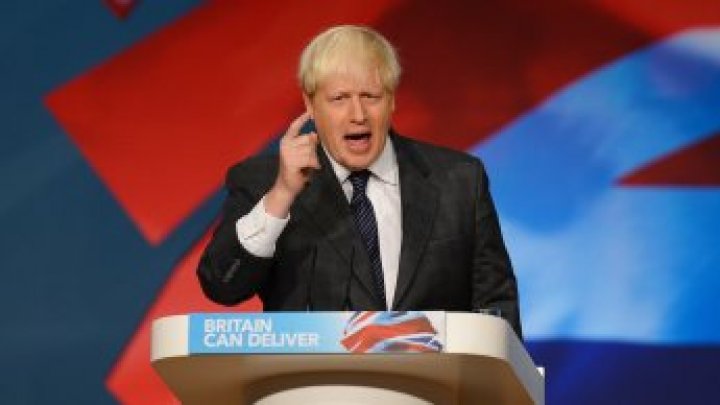
The Conservative Party of 2015 may be an ideologically confused shadow of its former self, but one instinct remains undulled: the hard-headed (some might say recklessly regicidal) way in which senior figures quietly position themselves, ready to quickly and ruthlessly dispatch their leader as soon as he or she is judged to have become an electoral liability.

Some have suggested that there are plans afoot to launch a “Keep Cameron” movement in the event that the Prime Minister fails to win the Conservatives an outright majority for two elections on the bounce, and fails to cobble together a workable coalition to keep the Tories in power. But this is extreme wishful thinking – David Cameron can barely muster the passion and commitment to conservatism to convince the British people he truly wants a second term, let alone that he has any bold new plans up his sleeve. If he struggles to show that he wants to remain Prime Minister after 7 May, he certainly will not want to return to the thankless job of being Leader of the Opposition.

And now many Tories, eager to avoid a prolonged and damaging internal power struggle should Cameron go, are agitating for the swift coronation of London Mayor and Uxbridge parliamentary candidate Boris Johnson.

To be fair to Boris Johnson, he makes a decent pitch for the job, better than most. An a new interview with The Spectator, Johnson was asked why people should vote Conservative, and gave this mini stump speech in reply:

‘If they want Britain to be a strong independent nation, if they want Britain to lead in Europe, if they want an economy which is dynamic and competitive and is based on the spirit of enterprise, then they should vote Conservative. If they believe in a culture of aspiration and achievement rather than scrounging and trying to pull people down, if they believe in levelling up rather than levelling down, they should vote Conservative. If they believe that it is wrong in principle to try to settle the problems of the economy by decapitating the tall poppies in society, they should vote Conservative.’

[…] ‘If they believe that the job of government is to nurture all the flowers in the flower beds rather than attacking some, then they should vote Conservative. That is the essential difference between us and Labour. Every single policy of Ed Miliband and his lot is precisely calibrated to divide society, to foster a sense of injury and injustice. We want to heal any sense of injury and injustice, to bring society together.’

Most of this is good stuff, red meat for true conservatives.

Continue reading

What Kind Of Politician Has To Enshrine Their Own Promises In Law?

David Cameron - Conservative Party - NI VAT Income Tax Lock - General Election 2015


“No other chancellor in the long history of the office has felt the need to pass a law in order to convince people he has the political will to implement his own Budget”George Osborne, 2009

“We will legislate in the first hundred days to make sure these taxes can’t go up” – David Cameron, 2015


What kind of politician has to promise to enshrine their campaign pledges in law?

The answer, of course, is one who cannot be trusted – one who knows that their promises are quite unachievable, but desperately wants to portray a strong belief in their viability. And this is exactly the cheap trick now played by David Cameron and George Osborne, only five years after they mocked Labour Chancellor Alastair Darling for doing the same thing.

The Spectator drily summarised the Tories’ announcement in their Election 2015 Espresso bulletin:

The Conservatives would bring in a law to block rises in VAT, income tax and national insurance for the duration of the next Parliament, David Cameron said today. ‘Why can I make this pledge? Because I’ve seen the books, I know what needs to be done,’ the Prime Minister said. And evidently what needs to be done is to have a pointless law brought in by a leader who once promised to cut red tape. ‘If you trust me, vote for me,’ Cameron says – but his promise of legislation shows that he thinks the public don’t trust him to keep to his word. 

Of course, the Conservative promise to place a legal restriction on government preventing it from raising the “big three” taxes will do no such thing. There is already a legal requirement in place committing the government to eliminating the deficit by the year 2015, and yet here we are, about to go back into the polling booths, and the deficit was not even cut in half – with the national debt continuing to soar upwards.

Will George Osborne find himself on the wrong side of a prison door for having failed to eliminate the deficit? Will the coalition cabinet all receive criminal records? Or will they or the government face civil penalties (raising the hilarious prospect of the government having to pay itself a fine for breaking its own law)? Of course not. These “laws” aren’t worth the paper that the party press releases are printed on, or the air that emanates from the Prime Minister’s mouth as he patronises the British people.

Continue reading