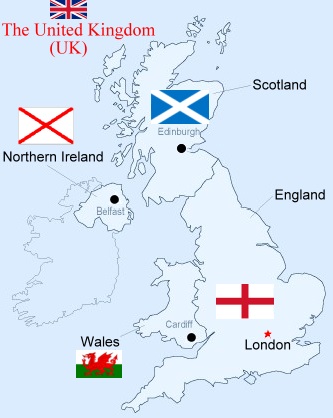
We Need A Federal United Kingdom, Not Just More Powers To Scotland


I have felt like something of a voice in the wilderness at times on this blog, advocating for equal devolution of powers from Westminster to the four home nations of the United Kingdom, to the extent that have almost questioned my sanity that something so self-evidently sensible and obvious to me should be so opaque and avant-garde an idea to almost everyone writing a newspaper column or appearing as a TV news talking head.

And so I am seizing on the words of Allister Heath with all the enthusiasm at my disposal. Apparently I am not alone after all. Addressing the question of Scottish independence and the upcoming referendum, Heath writes:

But that doesn’t mean that the status quo is right either. The UK’s constitution has been an irrational and unsustainable shambles since the Scotland Act of 1998; this can only be resolved satisfactorily if the process that started with Scottish devolution is now taken to its logical conclusion.

Following what we must hope will be a resounding “no” vote, we need to adopt a new, fully federal model for the UK inspired by the US, Canadian, Swiss and other similar systems that share power properly between the centre and autonomous provinces or states. England needs to have its own parliament, Scotland, Wales and Northern Ireland must be given greater rights and responsibilities, and all component nations of the UK need to start living within their means, raising as much tax as they spend.

This is heartening for two reasons – firstly because it validates my own thinking, but with the persuasive articulacy of someone who writes weekly columns in a national newspaper. It is absolutely right to assert that the devolution process begun in 1998 put our country into a state of limbo, but I would go further and argue that the UK’s constitution has been a shambles for many decades and indeed centuries prior to that. This tends to be the case in older countries that have eschewed revolution or invasion in recent times, but while conservatism would tend to urge an “if it ain’t broke, don’t fix it” attitude, our constitutional underpinning and the way that our country functions is of such fundamental importance that I cast the “traditionally conservative” attitude aside in favour of the reforms advocated by Heath.

Secondly, Heath’s joining the argument for a federal solution is heartening because he addresses the financial aspect in a mature and sensible way. Making the four home nations responsible for their own taxation would allow for that all-too-rare thing, variety, to take root in the UK. The four countries could experiment with setting tax rates in line with local preferences to achieve local ends, and the redistributionist pipe dreams of some of the nationalist parties (SNP, I’m looking at you) once and for all. Heath expands on this thinking, conferring upon the home nations the financial autonomy enjoyed by the states of the US plus a little bit more:

Crucially, the UK’s four component-nations should not merely have the right to spend money but also the responsibility to raise it; they would have their own tax systems, running in parallel with a much reduced UK-wide HMRC. The four nations ought to be able to cut and hike taxes, and would be under great pressure to balance their budgets. They should have the right to issue their own debt, which would not have sovereign status and would not be guaranteed by the UK.

Absolutely right. Of course there will always be a place for HMRC, because certain tax policy (such as import/export duty) must remain common to all. But giving the home nations the right to set their own tax rates on the “big ones” like income tax and corporation tax is absolutely the right thing to do. This could even present the ideal opportunity to do away once and for all with the laughable notion that National Insurance is somehow separate from income tax – let the people see what their real effective tax rate is when NI is factored in to a single tax rate and see what they think of their overall tax burden then.

The UK has suffered from a dearth of political competition for too long. At times I have really struggled to differentiate between the views of the coalition government and the Labour opposition in terms of attitude to the proper size and scope of the state. Sure, the Conservatives may talk the small government talk, but in no way have they boldly walked the walk. Four powerful national assemblies under the auspices of the Westminster parliament would allow for some real diversity in our islands, diversity of ideas and yes, diversity of outcomes.

The end result of all of this would be political settlements more closely attuned to the moods of the local electorates, and therefore more democratic in the true sense of the word. Heath fast-forwards the clock and imagines the likely power dynamics in a newly-federal UK:

In a federal UK, England would probably be run by a pro-market Tory government (or, intriguingly, a Tory-Ukip coalition) with the UK as a whole controlled by Labour, at least in the short term. We could see radical tax cuts in England and elsewhere as leaders vie to grab business. Northern Ireland, in particular, is ripe for drastic supply-side reforms to rejuvenate its economy. This new dynamic would better reflect electoral preferences and would allow rival political ideologies to be tested simultaneously in different parts of the country.

In short, this call for a federal United Kingdom is the complete antithesis to Gordon Brown’s cack-handed intervention in the Scottish independence debate (which I dissected here), in which he proposed a raft of discriminatory (to the rest of the UK) special perks and privileges to be carved out for Scotland as a bribe to their electorate in advance of the referendum. That foolish proposal has all the hallmarks of Brown – short term political manoeuvering to achieve a tactical outcome at the great expense of a broader strategic goal (the strategic goal being the more efficient and democratic governance of the UK as a whole).

The side of democracy, transparency and common-sense needs more articulate advocates, and today we can add Allister Heath to the ranks. Where he picks up, may many more soon follow.

Gordon Brown To The Rescue

He's back.
He’s back.


Just as the momentum behind the Scottish independence campaign well and truly faltered and we all started to rest easier in our expectation that the Kingdom will remain United after the people of Scotland hold their referendum later this year, Gordon Brown felt the need to re-emerge from the shadows and weigh into the debate.

I’m sure that in his mind, a person of his “stature” breaking their self-imposed political silence to speak in favour of Scotland’s continued participation in the Union would only ever be a good thing, a final coup de grâce drawing a line under the debate. Unfortunately, Brown could not resist digressing from his original point and sharing his thoughts on the purpose and ideal future structure of our United Kingdom, and in so doing he managed, in his own inimitable way, to muddy the waters and raise more questions than he resolved.

The Telegraph reports:

The Scottish Parliament should be made more powerful, Gordon Brown will say on Saturday as he urges people not to break up the Union.

In his most significant policy intervention since leaving Downing Street, the former prime minister will call for major constitutional changes which he believes could keep Scotland in the Union.

The confusion begins right away. According to the most recent polling, two thirds of Scottish people want Scotland to remain a part of the UK as we currently stand under the terms of the referendum questions. When the unionist side is already making such a convincing case and steadily holding a majority of public opinion, why come out proposing “major constitutional changes” as a deal-sweetener? Not only does it reek of panic and desperation, it is a cast-iron certainty that the constitutional changes being proposed will be of a narrow, specific and non-universal nature, designed to bribe voters but carrying with them the unintended consequence of making the architecture of the UK’s political governance even more complex and inequitable than it is today. But more on that later.

Brown rightly criticises some of the wishful thinking underpinning the SNP’s economic forecasts and predictions for a hypothetical independent Scotland:

He will say: “First, they calculate oil and gas revenues as at least £6.8  billion in 2016-2017 when all formal and independent forecasts suggest the correct figure is likely to be around £3.5 billion, leaving a £3.3 billion shortfall. To make this up requires a rise in income tax of 10p.

“Second, they have failed to calculate the cost of European Union membership without the British rebate, which Scotland would not benefit from. In consequence, Scotland’s net membership costs could be as high as £500  million that the SNP have not budgeted for.

However, it is in The Guardian’s reporting where Brown’s higher aspirations for the future of the UK are fully revealed:

Brown said Scotland would be strengthened by his proposed constitutional changes while remaining within the union. The Kirkcaldy and Cowdenbeath MP wants the Scottish parliament to be made irreversible, with “maximum devolution of powers in training, transport, health, the Crown Estates Commission and the running of elections”.

This is all well and good. As an instinctive conservative with a strong libertarian and small government streak, I strongly support devolving power to the lowest and most sensible level possible. To my mind, having Scotland make its own policy in terms of education, transport (to the degree which it can reasonably differ from the rest of the UK), healthcare and other matters is perfectly sensible. Some will doubtless bleat about the iniquities of the overly-discussed “postcode lottery”, but to me such an approach is the only right thing to do.

The problem is that Gordon Brown proposes this devolution of power only for Scotland, and only as a means of persuading reluctant Scots to swing their support behind continued membership of the UK. One gets the strong feeling that in an ideal world, Gordon Brown would like nothing more to centralise each and every one of these areas of policy and governance, and run them all from Whitehall, and that it is only through urgent necessity and the pursuit of an even more important objective (maintaining the Union) that he is willing to permit these giveaways.

But what of the other nations of the United Kingdom? Why should Scotland be free to attune her education and transport policy more closely to the needs of her citizens, but not Wales, Northern Ireland or England?

I cannot repeat often enough my firm belief that this piecemeal devolving of powers on an on-demand basis whenever one of the home nations becomes a bit restless or we have a referendum to win is damaging to the integrity of the UK, and ensures that as a country we limp on, united still (just about) but burdened ever more heavily by arcane and inexplicable rules determining which decisions get made at what level in each constituent part of the country.

I call once again for a proper constitutional convention in the UK, to decide once and for all the powers and functions that we the people should rightly and properly give to Westminster, and those which should be devolved to the four individual home nations to be exercised equally by each.

Such a convention would also allow us to determine what should be the “shared purpose of our union”, which apparently if left unaddressed, will be defined by Gordon Brown along the specious and redistributionist lines of “social justice”. The Guardian makes explicit Brown’s view of our common purpose:

He has proposed UK legislation to state the shared purpose of the union, “namely the pooling and sharing of resources for social justice”.

I’m all for having a debate about the purpose of the country, but I would much rather frame it around providing liberty and freedom for the United Kingdom’s citizens than Gordon Brown’s vision of us coming together to to pool and share our national resources. Human beings are inclined to do this anyway of their own accord, and don’t need prompting from government to get them started. And now, for some reason, I cannot purge from my mind the image of Gordon Brown sitting at a desk in front of a huge warehouse, assigning barrels of North Sea oil to each man, woman and child in the UK – every barrel filled equally to the last drop, of course.

It is kind of Gordon Brown to re-emerge from semi-retirement and deign to give a speech on the future of our country. But his long-awaited contribution is not, unfortunately, of great use to anyone. The last thing that the United Kingdom needs is more piecemeal constitutional reform while the bigger picture goes unaddressed. And I am certainly not about to sign up to a national mission statement based on all of us coming together to enact his distinctly New Labour vision of a “just” society.

Until next time, Gordon.

SEMI PARTISAN SUMMARY

CULTURE

Pamela Haag, writing at Slate, has had enough of the “mommy” prefix being applied to everything from jeans to porn to jobs to blogs. In an interesting piece, she goes on to argue that the effect of these mommy-isms is to diminish the work or activities outside motherhood that women engage in.

The Economist ponders the recent death of author Gore Vidal and laments that it marks the passing of an age when politics was less…dumbed down. Recalling Vidal’s famous televised altercation with William F. Buckley Jr., they note: “It is hard to imagine men like Vidal and Buckley, two snobbish East Coast intellectuals with lockjaw patrician accents, being invited onto prime-time television now to opine on the hot-button issues of the day. Vidal’s death earlier this week, at age 86, marks not only the loss of a provocative novelist and political thinker, but also the demise of a brand of public discourse. It seems there is no longer a place for the erudite and witty public intellectual in America. Instead of learned allusions to classical literature, public figures, including the president of the United States, are now expected to drop their G’s and speak knowledgeably about the cast of The Jersey Shore”. Indeed.


BRITISH POLITICS

NPR gazes at Britain from across the pond and raises an eyebrow at the marked uptick in explicit British patriotism that has been observed in this jubilee and Olympic year. I think that they do British national pride a disservice saying things such as: “Never before have British sports fans sung the national anthem, or flourished their (proliferating) red-white-and-blue Union flags, with such gusto. Never before have British commentators yelled so loudly at the slightest sign that their one of their countryfolk may secure a medal”. After all, national pride can be expressed in many ways, not all of which require flying a massive flag above a car dealership. But nonetheless, they do have a point. NPR go on to ponder the likely impact of this new-found patriotic expression on the forthcoming Scottish independence referendum.

A really interesting article by Damian McBride, detailing the first 24 hours of the 2007 foot-and-mouth disease outbreak in Surrey, and the then newly-appointed Prime Minister Gordon Brown’s reaction to it. Lord knows I am no fan of Gordon Brown’s – given a few seconds of silence in any social gathering I am liable to launch into my anti GB diatribe – but I must admit that he did have his good qualities (earnestness, attention to detail) as well as the bad. McBride notes: “At the end of those 24 hours, even before we were clear how serious the outbreak was, there was no question – whether you were a government official, a political journalist or a punter watching the TV – that the PM was in control of this crisis and was personally directing every aspect of how it would be dealt with.” This article humanises Brown, and reminds me that no matter my stark disagreements with him on policy, he worked very hard – albeit egotistically and misguidedly – in service to the country.


AMERICAN POLITICS

Washington “elites” are more out of touch than ever with the rest of the country, and far more tolerant of persistent mass unemployment, argues Jonathan Chait, writing in New York Magazine. For those like him, Chait writes, the great recession “…is more akin to a famine in Africa. For millions and millions of Americans, the economic crisis is the worst event of their lives. They have lost jobs, homes, health insurance, opportunities for their children, seen their skills deteriorate, and lost their sense of self-worth. But from the perspective of those in a position to alleviate their suffering, the crisis is merely a sad and distant tragedy.”

Place your bets now. Mitt Romney is beginning to meet with and “audition” the various Republican contenders to take the Vice Presidential spot on his ticket. Some options are more palatable than others, but whether Romney picks a “boring”, safe candidate or takes a risk with an unconventional bold choice will say a lot about how confident his campaign is of victory, or conversely how worried they are about their prospects and are looking for another game-changer.

Charles Krauthammer was obviously watching a different foreign trip than the one the rest of us witnessed as Romney embarked on his overseas tour. Using his Washington Post column to declare the trip an unbridled success, Krauthammer has convinced himself that Romney’s undercutting of the official US position on Jerusalem and criticism of Palestinian culture were somehow smart diplomacy. Others might argue that these actions were contrary to his earlier promises (and standard convention) to avoid criticising US policy while a presidential candidate on foreign soil, and that regardless of ones views on the Middle East peace process, it might be a good idea to avoid enraging one of the two sides before you have even won election.