Making The Rich Pay Twice

We recently saw the Labour Party make some potentially sensible proposals on education – moving to enhance the status of teachers by simultaneously licensing them and requiring them to undertake continual professional accreditation, and making it easier to fire consistently underperforming teachers and helping them transition out of the profession.

Contrast this good news of the Labour Party embracing a carrot-and-stick performance-based approach to educational reform, with this dismal, tired suggestion from Social Market Foundation. The Guardian reports the details of their latest proposal:

One proposal would see popular state schools being means tested, with the most affluent parents being charged for their children to attend top schools.

Families earning more than £80,000 a year should contribute financially, with those with an annual income above £200,000 having to pay the full price of their children’s education at the best state schools. Fees should be the same for the wealthy as those charged at independent day schools.

This “parent premium” for households earning more than £200,000 a year would generate surplus funds, a quarter of which would be retained by the school, with the rest redistributed among other state schools.

We can lump this nonsensical idea together with all of the other vengeful “clobber the rich” schemes broached by those on the left to create a fairly accurate picture of their ideal Britain. In their Ideal Britain, anyone earning much over £150,000 a year would be subject to a 50% marginal tax rate on their income. And when they reached £200,000 a year, a household wanting to send their children to a “popular state school” would have to pay a school fee in line with the fees charged by private day schools, because why the hell not?

Meaningless graphic for a nonsensical policy.

Implementing this policy would likely cause a fair bit of bemusement and anger among the evil rich fat cats being targeted, as they rightly assume that the hefty taxes that they pay entitle them to equal access to the state services that they help to fund. If, when a household has paid well over half of their income to the government once income tax, national insurance, other direct taxes and VAT are taken into account, I don’t think it is very unreasonable to assume that they have contributed enough and maybe give them a break. But not according to the Social Market Foundation. Having gone through the fiscal wringer once already, SMF sees them ripe for further punitive action, charging them for access to the good state schools that they are already paying to fund.

What next? Means testing access to NHS services? Charging for chemotherapy or kidney transplants? Where does this end?

In fact, the SMF proposal would create the bizarre and perverse financial incentive for parents to send their child to a “less good” or less popular state school so as to avoid spending up to £30,000 a year in fees. Their children might suffer as a result, but perhaps those who advocate for ideas such as this would see that as a good thing. By dragging down the progeny of the rich and successful, we create the more equal, mediocre society that they long for.

This is regressive social engineering of the worst kind, dragging down the successful and clobbering them for more money, funds which would be used for the nebulous purpose of “helping the less fortunate”. As always, the methods of taking from the rich and successful are very enthusiastically and clearly articulated, but the process by which those seized funds would be translated directly into helping the less fortunate is much more vague.

The long and short of it is this. I may greatly disagree with the current heavy tax burden, and the huge, creaking behemoth state that it funds, but I also recognise that it is the concept of everyone paying in and everyone being eligible to partake of the results that helps to create social cohesion and makes us a country rather than a bunch of economic agents who happen to live on the same island. Charging richer parents to send their children to schools that they have already paid taxes to provide – indeed, closing off access to any public services from the wealthy people who provide the lions share of the funding for them – only serves to further entrench the us vs. them atmosphere already roiling our country, but this time would give the rich some ammunition to justifiably argue their corner.

Spending on education increased from £40.6 billion in 1999 to £88.6 billion in 2014, and is estimated to rise further to £90.9 billion in 2016. If British educational standards are indeed stagnating or worsening, chronic underinvestment does not make a convincing scapegoat. Making rich people pay market rates to avail themselves of the public services that they have already funded through their taxes would no doubt fulfill many of the darker, more insidious desires of some on the left. But one thing that it would certainly not do is fix our educational problems.

On Booty Calls and Morning Croissants, Ctd. 2

Former French president Nicolas Sarkozy is now weighing in on the ongoing scandal of the presidential booty calls and morning croissants, claiming that President Hollande has made himself and the French presidency “ridiculous”.

The Telegraph reports the following quote attributed to Sarkozy by French investigative journal Le Canard:

“While everyone has the right to a private life, when one is a public figure and president, one must be careful to avoid being ridiculous,” he is quoted as scoffing.

“Well, that photo of Hollande coming out of his mistress’ place with a motorbike helmet makes Hollande look totally ridiculous. He is the ridiculous president.”

The Daily Mail gives an even less flattering report of Sarkozy’s views:

Former French president Nicolas Sarkozy views his successor Francois Hollande as a ‘ridiculous little fat man who dyes his hair’, it emerged today.

The vicious attack is reported by l’Express, the highly respected Paris news magazine whose editor is a close friend of Mr Sarkozy’s third wife, Carla Bruni.

As I see it, the bottom line is this – in three weeks, the French president has to fly to Washington, D.C. to represent his country abroad and maintain bilateral ties with a close ally. And all anyone will care about is whether Hollande might be found late at night zipping around capitol hill on the back of a scooter, looking for ladies. Even if there are non-scandal-related questions at the joint press conference, the only soundbites that will be reported will relate to the scandal back home in France. Hollande is supposed to make his country look good abroad, strengthen bilateral ties and promote France’s interests. Barring a miracle and a swift resolution to this tawdry affair, he won’t be doing that for some time to come.

The scandal is also now causing disquiet and unrest at home, as Buzzfeed reports that a man was arrested for dumping several tonnes of horse manure in front of the Palais Bourbon in protest at Hollande and the French political class in general:

Image from buzzfeed.com

And so this isn’t just an issue of invasion of privacy, or an educational tale highlighting the different attitudes toward privacy between the French and Anglo-American cultures. This is about basic competence, and the ability of a senior politician and statesman to effectively do their job. Actions taken in ones private life can impact this ability to effectively perform the job, and while the utmost respect and tact should rightly be shown to the president as he works through any problems in his personal life (as many have already argued), the most searching and uncompromising oversight should be applied to his performance in the job.

Francois Hollande has, through his own actions, rendered himself incompetent and, to some degree, incapacitated – politically, at least. This incapacity may be temporary or it may be irreversible, but either way it is self-inflicted and profound. It is down to the French people to determine how long they are willing to tolerate a leader for their failings, not in terms of their personal life but in terms of their ability to do the job.

The Green Party Goes All In

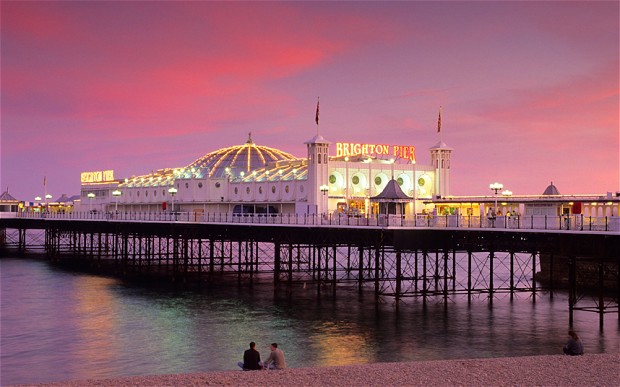
A city to watch in 2014.


Interesting news from the city of Brighton, where the UK’s only Green Party-controlled local council is planning to put the question of a significant council tax increase directly to the people who would have to pay it. At an estimated cost of £100,000, the council plans to hold a referendum to ask citizens to approve a 4.5% council tax increase which is expected to raise £2.5 million per year more than the assumed 2% increase.

Consulting the people directly is entirely the right thing to do, and is actually very much in line with Conservative party policy under the influence of Eric Pickles, the Communities Secretary. There is currently a threshold in place requiring local councils to hold a referendum to gain approval from constituents for any council tax increase of above 2%, but this has led to a rash of councils repeatedly skimming just beneath the 2% level year after year, continually cranking up the tax without having to gain the consent of the people. In fact, this has prompted some within the Conservative party to agitate for reducing the referendum threshold to increases in excess of 1.5%, a figure well below the current inflation rate.

Credit must be given to the Green Party for actually having the guts to stand behind their favoured spending plans and asking the local citizenry to sign off on them. I may vehemently degree with some of their specific goals or policies, but I will always respect a party that is willing to go directly to the electorate on an important issue over one that claims to speak for the people without having consulted them.

Of course, the referendum plan was announced with a predictable degree of sanctimony and victimhood from the Greens, as The Guardian reports:

Justifying the move, [Green Party council leader] Kitcat said: “The coalition’s cuts mean we cannot deliver the services we were elected to provide and which our consciences say we should provide. We have no choice but to seek the views of local people on funding these services through a tax increase.

“Westminster’s ideologically driven cuts to local councils are huge and relentless while demand for our services continues to grow. Vulnerable people who depend on our services are being threatened from Westminster like never before.

The Green Party leader, Natalie Bennett, ladles it on even thicker:

Bennett said: “As Greens we believe that decisions should be made closest to the people who are affected. Instead of letting Whitehall impose cuts on vulnerable people in Brighton and Hove, this announcement takes the decision to the people.

I do find it slightly ironic that the Green Party should take this opportunity to boast about their supposedly-favoured tactics of localism and direct democracy when it is quite plainly apparent that they only turned to the referendum idea out of desperation once all other avenues to fund their big-spending plans had failed to deliver.

Nonetheless, this is a broadly positive development, and it will be very interesting to see how the people of Brighton vote if the referendum does take place. A referendum would require the support or abstention of the Conservative or Labour parties, as the Greens have only minority control of the council chamber, and I would hope that both parties would gladly consent to letting the people have their say – though this is by no means certain.

Not for much longer, perhaps.


The denizens of Brighton are an interesting bunch in terms of their political leanings, having returned Caroline Lucas to Westminster as the only Green MP in Parliament, and so they can hardly be described as a bellwether city or constituency for gauging the national mood. But one thing is readily apparent: if the referendum takes place and it turns out that even left-wing Brighton isn’t willing to put up the money to fund high levels of public spending, then there will be precious little appetite to do so anywhere else.

Which would rather undermine all of the anti-austerity arguments so loudly proclaimed by the left since 2010, wouldn’t it?

Treading Water On NSA Surveillance

It appears from early reports that President Obama intends to punt on the only recommendations made by his surveillance review group that contained any real meat or hope of unpicking the harms done to the fourth amendment.

The New York Times reports:

Mr. Obama plans to increase limits on access to bulk telephone data, call for privacy safeguards for foreigners and propose the creation of a public advocate to represent privacy concerns at a secret intelligence court. But he will not endorse leaving bulk data in the custody of telecommunications firms, nor will he require court permission for all so-called national security letters seeking business records.

In short, the president is determined to continue bulk collection of communications data undeterred, but is willing to play around with the details of who stores the data (the government, the telecoms companies or some kind of shadowy third party consortium), and in a grand gesture to civil libertarians he is willing to promise to actively monitor the communications of acquaintances of acquaintances of a potential suspect, rather than the current acquaintances of acquaintances of acquaintances. This gesture slightly reduces the chance of Kevin Bacon’s communications being flagged as in some way being linked by the NSA to every terrorist in the world, but is otherwise entirely meaningless.

Amen.
Amen.

Foot-dragging, empty gestures and a continued lack of transparency or accountability from anyone involved. So far, so predictable, perhaps.

But what I find slightly more concerning is the way in which the judiciary (at the behest of Chief Justice John Roberts) is seeking to weigh in on what ultimately is a matter of policy, as the New York Times notes:

The developments came as the nation’s judiciary waded into the highly charged debate. In a letter made public on Tuesday, a judge designated by Chief Justice John G. Roberts Jr. to express the views of the judicial branch warned that some changes under consideration would have a negative “operational impact” on a secret foreign intelligence court.

Judge John D. Bates, a former chief judge of the Foreign Intelligence Surveillance Court, urged Mr. Obama and Congress not to alter the way the court is appointed or to create an independent public advocate to argue against the Justice Department in secret proceedings. Any such advocate, he wrote, should instead be appointed only when the court decided one was needed.

Of course, there need not necessarily be anything sinister about this intervention – apparently made on the grounds that it would eat up too much of the court’s time and create excessive workload if they were required to approve all FBI requests for stored bulk records – but it does seem rather odd to me, at face value, that the judiciary is more eager to weigh in on policy proposals when there is a threat to the smooth running of their working day than they are when there is a plausible argument to be made that the government is acting beyond its constitutional authority. The Times also picks up on this:

It is highly unusual for judges to weigh in on public policy debates involving the other two branches of government, but Judge Bates, the director of the Administrative Office of the United States Court, said that Chief Justice Roberts had designated him to “act as a liaison” and that he had consulted other judges.

But again, this is early reporting with the full details of Obama’s upcoming speech and the work behind it not yet made public.

One begins to wonder why President Obama sets up these review boards or commissions, other than as a cosmetic exercise to give the appearance of open-mindedness and willingness to change course. The Bowles-Simpson debt commission forged a tough but real consensus on reforms to American taxation and spending, and was high-handedly dismissed by the administration, and now it appears that the same is about to happen when another of President Obama’s talking shops is due to report back.

Just enough to annoy the Patriot Act manics and those in the national security complex, and far too little to placate civil libertarians rightly concerned about government overreach that we would never have even been made aware of were it not for the actions of Edward Snowden.

The Obama administration’s lack of anything approaching humility or transparency, even after having been caught in the act, is depressing indeed.

We Need A Federal United Kingdom, Not Just More Powers To Scotland


I have felt like something of a voice in the wilderness at times on this blog, advocating for equal devolution of powers from Westminster to the four home nations of the United Kingdom, to the extent that have almost questioned my sanity that something so self-evidently sensible and obvious to me should be so opaque and avant-garde an idea to almost everyone writing a newspaper column or appearing as a TV news talking head.

And so I am seizing on the words of Allister Heath with all the enthusiasm at my disposal. Apparently I am not alone after all. Addressing the question of Scottish independence and the upcoming referendum, Heath writes:

But that doesn’t mean that the status quo is right either. The UK’s constitution has been an irrational and unsustainable shambles since the Scotland Act of 1998; this can only be resolved satisfactorily if the process that started with Scottish devolution is now taken to its logical conclusion.

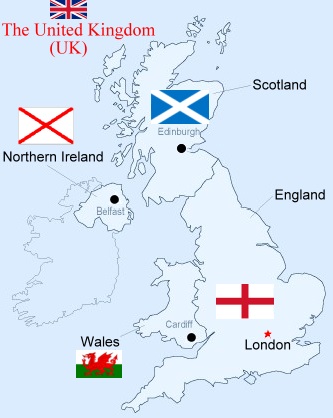
Following what we must hope will be a resounding “no” vote, we need to adopt a new, fully federal model for the UK inspired by the US, Canadian, Swiss and other similar systems that share power properly between the centre and autonomous provinces or states. England needs to have its own parliament, Scotland, Wales and Northern Ireland must be given greater rights and responsibilities, and all component nations of the UK need to start living within their means, raising as much tax as they spend.

This is heartening for two reasons – firstly because it validates my own thinking, but with the persuasive articulacy of someone who writes weekly columns in a national newspaper. It is absolutely right to assert that the devolution process begun in 1998 put our country into a state of limbo, but I would go further and argue that the UK’s constitution has been a shambles for many decades and indeed centuries prior to that. This tends to be the case in older countries that have eschewed revolution or invasion in recent times, but while conservatism would tend to urge an “if it ain’t broke, don’t fix it” attitude, our constitutional underpinning and the way that our country functions is of such fundamental importance that I cast the “traditionally conservative” attitude aside in favour of the reforms advocated by Heath.

Secondly, Heath’s joining the argument for a federal solution is heartening because he addresses the financial aspect in a mature and sensible way. Making the four home nations responsible for their own taxation would allow for that all-too-rare thing, variety, to take root in the UK. The four countries could experiment with setting tax rates in line with local preferences to achieve local ends, and the redistributionist pipe dreams of some of the nationalist parties (SNP, I’m looking at you) once and for all. Heath expands on this thinking, conferring upon the home nations the financial autonomy enjoyed by the states of the US plus a little bit more:

Crucially, the UK’s four component-nations should not merely have the right to spend money but also the responsibility to raise it; they would have their own tax systems, running in parallel with a much reduced UK-wide HMRC. The four nations ought to be able to cut and hike taxes, and would be under great pressure to balance their budgets. They should have the right to issue their own debt, which would not have sovereign status and would not be guaranteed by the UK.

Absolutely right. Of course there will always be a place for HMRC, because certain tax policy (such as import/export duty) must remain common to all. But giving the home nations the right to set their own tax rates on the “big ones” like income tax and corporation tax is absolutely the right thing to do. This could even present the ideal opportunity to do away once and for all with the laughable notion that National Insurance is somehow separate from income tax – let the people see what their real effective tax rate is when NI is factored in to a single tax rate and see what they think of their overall tax burden then.

The UK has suffered from a dearth of political competition for too long. At times I have really struggled to differentiate between the views of the coalition government and the Labour opposition in terms of attitude to the proper size and scope of the state. Sure, the Conservatives may talk the small government talk, but in no way have they boldly walked the walk. Four powerful national assemblies under the auspices of the Westminster parliament would allow for some real diversity in our islands, diversity of ideas and yes, diversity of outcomes.

The end result of all of this would be political settlements more closely attuned to the moods of the local electorates, and therefore more democratic in the true sense of the word. Heath fast-forwards the clock and imagines the likely power dynamics in a newly-federal UK:

In a federal UK, England would probably be run by a pro-market Tory government (or, intriguingly, a Tory-Ukip coalition) with the UK as a whole controlled by Labour, at least in the short term. We could see radical tax cuts in England and elsewhere as leaders vie to grab business. Northern Ireland, in particular, is ripe for drastic supply-side reforms to rejuvenate its economy. This new dynamic would better reflect electoral preferences and would allow rival political ideologies to be tested simultaneously in different parts of the country.

In short, this call for a federal United Kingdom is the complete antithesis to Gordon Brown’s cack-handed intervention in the Scottish independence debate (which I dissected here), in which he proposed a raft of discriminatory (to the rest of the UK) special perks and privileges to be carved out for Scotland as a bribe to their electorate in advance of the referendum. That foolish proposal has all the hallmarks of Brown – short term political manoeuvering to achieve a tactical outcome at the great expense of a broader strategic goal (the strategic goal being the more efficient and democratic governance of the UK as a whole).

The side of democracy, transparency and common-sense needs more articulate advocates, and today we can add Allister Heath to the ranks. Where he picks up, may many more soon follow.