The Alex Salmond Backlash Continues

When the cornerstones of your argument are based on wishful thinking, whimsy and straight-up denial, they are quickly eroded in direct proportion to the level of attention and scrutiny they receive. And so it goes for Alex Salmond, his Scottish Nationalist Party and the rest of the pro-Scottish independence movement.

What started as a seemingly serious and passionate argument in favour of localism and self-determination has – with only the first stirrings of an intervention from serious business leaders and Westminster politicians – been revealed as an illogical and fundamentally unserious argument put forward by people who lacked either the courtesy or capacity to construct a real one.

Saltires, shortbread and scotch - an appealing combination but not a convincing basis for independence
Saltires, shortbread and scotch – an appealing combination but not a convincing basis for independence


Alan Cochrane, the Telegraph’s Scotland editor, sums it all up:

In the parallel universe inhabited by the First Minister of Scotland and his separatist supporters, their campaign to break up Britain is sailing towards victory. The reality, however, is somewhat different. On Sunday, José Manuel Barroso, the president of the European Commission, fired what was but the latest in a series of well-aimed torpedoes at the SNP’s attempt to win September’s referendum on Scottish independence.

And so it is, inside the SNP’s alternate reality. To look at Alex Salmond and the rest of the pro-independence group campaign, you would scarely notice that their argument has been comprehensively derailed or even encountered the slightest bit of turbulence. Aside from the now familiar petulant accusations of bullying or intimidation, they remain all smiles, convinced that the opposition of UK political parties to sharing the pound or of the EU to admitting an independent Scotland are minor obstacles that will quickly be overcome in the aftermath of a Yes vote.

Such is the power of denial.

Salmond’s second-in-command, Deputy First Minister Nicola Sturgeon, is no better. Her response to indications that the European Union would look very dimly on the membership application of an independent Scotland? The assertion that to deny membership to the Scots would be ‘un-European’ – as though the EU were some kind of principled organisation that always dutifully followed its founding documents and operating guidelines to the letter.

She insisted the EU would not deny Scotland its right to be members of the EU since this would run counter to the principle of national self-determination – a founding principle of the EU.

Her remarks came after all three parties at Westminster said they would not allow an independent Scotland to remain in a currency union with the rest of the UK and the European commission president José Manuel Barroso said it would be difficult, if not impossible, for Scotland to join the European Union.

In pressing their ever-weakening case for separation from the United Kingdom, the nationalists are very good at putting words into the mouths of others – of course business leaders would demand that the UK government allow Scotland to continue using the pound, of course the European Union would stop everything that it’s doing to expedite Scottish accession – but ultimately find themselves being contradicted or slapped down nearly every time when those people ultimately speak for themselves.

It would be unrealistic to expect this denial to dissipate in the near future. Though the Saltires, shortbread and scotch whiskey postcard image of an independent Scotland endlessly promoted by Alex Salmond is increasingly being exposed as a farce, a tour-de-force in wishful thinking, intoxicating beliefs such as this are long-held and self-reinforcing, and do not vanish in a puff of smoke at their first exposure to reality.

But it must be disheartening for the nationalists that in response to firm UK positions on sharing the pound and strengthening EU rhetoric on Scottish accession, all Alex Salmond has in response is bluster and outrage. As Cochrane rightly notes:

But just as Mr Salmond dismissed [George Osborne and the shadow chancellor] for indulging in “bluff, bluster and bullying” over sterling, the best the nationalists could come up with yesterday in response to the head of the EU was that he was being “preposterous”.

Sound bites of this nature have become the stock-in-trade of the SNP leader, with his speech in Aberdeen yesterday littered with well-worn smart-Alex phrases about how those opposed to him had been indulging in, variously, “a destructive campaign” and were “undermining the democratic process”, “dictating from on high” and indulging in “caricatures”.

We can only expect to see more and more of this as the independence debate lurches toward its September conclusion. If Alex Salmond is not willing to articulate his Plan B, a detailed plan for how a newly independent Scotland would sustain itself and relate to the rest of the UK, to Europe and to the world – and all evidence thus far suggests that he is not able to do so – then playing the victim card is really the only option left open to him.

A pivot towards the argument/caricature of the plucky pro-independence Scotsman being bullied and browbeaten by the forces of British imperialism and big business would be entirely understandable in the waning days of the campaign, when the SNP high command finally acknowledges that all hope is lost. But to see this take place so early in the campaign is quite shocking. The nationalists can talk for Britain (or rather, for Scotland), but now they seem to be lost for words.

There are 211 days until the referendum on Scottish independence, and already it sounds as though the Yes campaign is giving voters a sneak preview of their post-defeat blame game. This is worrying for the nationalists, but should gladden the hearts of everyone who values the strength and integrity of our United Kingdom.

Alex Salmond’s Delusions of Grandeur

The referendum has not yet taken place, but already Alex Salmond seeks to dictate terms to the United Kingdom.
The referendum has not yet taken place, but already Alex Salmond seeks to dictate terms to the United Kingdom


The nationalist separatist cause espoused by the SNP and Alex Salmond has always had more basis in fairy tale and wishful thinking than in any kind of reality, and Salmond has always been among the most deluded of its proponents.

Leaving the United Kingdom yet sharing a Head of State. Leaving the United Kingdom and yet sharing the UK’s currency. Leaving the United Kingdom and expecting a warm and swift embrace from the European Union. The leader of the Scottish Nationalist Party has asserted all of these risible ideas at one time or another, and many more besides. And yet not content with already living very publicly in cloud cuckoo land, Salmond felt the need to go further still.

In the latest story to be filed away with his other preposterous ideas, Alex Salmond now imagines himself the leader of a newly independent Scotland, and deigns to dictate to the remainder of the United Kingdom the terms on which Scotland would assume a portion of the UK’s current national debt on secession.

The FT reports:

In his first major speech on independence in weeks Mr Salmond accused London-based ministers of “lecturing” the Scottish people.

Offering a “deconstruction” of Mr Osborne’s argument, Mr Salmond said: “If there is no legal basis for Scotland having a share of the public asset of the Bank of England, then there is equally no legal basis for Scotland accepting a share of the public liability of the national debt.”

One thing needs to be made absolutely clear, not just to Alex Salmond but to all supporters of Scottish independence, so that they are able to make an informed decision at the ballot box when the time comes: assuming a proportionate amount of the United Kingdom’s sovereign debt upon secession from the UK is not negotiable, and is not something that can be opted out of. Neither, crucially, is it dependent on the UK agreeing to share its currency with the newly independent country.

The Scots may choose to leave the United Kingdom, and if they are foolish enough to do so then that is now their right, to be exercised in the referendum this September. But whether an independent Scotland keeps the pound, joins the euro or – as one commentator suggests, inaugurating a new currency, the Salmond – they must assume their fair proportion of the national debt. Scotland may choose to flounce out of the United Kingdom, but it cannot walk away from sovereign debt.

Whether the Scottish people end up using euros, doubloons or monopoly money in the event of independence, they will be required to make payment to the United Kingdom for their share of the debt. George Osborne and his counterparts in the Labour and Liberal Democrat parties need to make this absolutely clear to Salmond, just as they unequivocally stood together to make clear that an independent Scotland will not share a currency with the UK.

Salmond and his allies in the “Yes to Independence” campaign may continue to throw accusations of bullying and intimidation when well-meaning people point out the impossibility of their public stances, but this should not dissuade anyone from doing so.

The goal of these continued rebuttals, of course, is not to change the mind of Salmond – he is far too gone, far beyond help. But when he makes blatantly false assertions about an independent Scotland’s ability to choose a currency other than its own, or to walk away from sovereign debt obligations, he is misleading his supporters and ensuring that the votes they may cast for Scottish independence are for a very different kind of independence than that which he promises and they have in mind.

For that reason alone – to maintain the integrity of the referendum campaign in the face of sleazy salesmanship, sleight of hand and craven dishonesty from Alex Salmond and the SNP – the media’s truth and plausibility-o-meter must remain firmly pointed at the nationalists.

Scottish Independence vs Reality

It has not been a good week for the Scottish nationalists, however they try to spin it.

First came the three-pronged scolding from each of the main Westminster parties, denying a potential future independent Scotland the possibility of a currency union with the rest of the UK, sharing the pound. And then the European Union piled on the pressure, casting serious doubt on the possibility of Scotland acceding to EU membership as a separate country.

For once they agree on something.


The overhyped emotional appeal (to some) of Scottish independence is finally running smack into the wall of cold, hard reality and common sense. This is a good thing for those people who want to preserve our Union, not just because it is heartening to see the nationalist pipe dream suffering a setback, but because it has thrown two important arguments against Scottish independence into sharper focus.

The first of these is the fact that the pro-independence movement, led by Alex Salmond and the Scottish National Party, really haven’t fleshed out any detail as to how a newly independent Scotland would engage with the rest of the world. The very first issue that would be confronted by a future Scottish Foreign Secretary would be the question of how to normalise relations with the rest of the United Kingdom and the European Union, with whom the new nation would now share a land border.

Scotland historically leans further to the left than England, and as a very small country would almost certainly want to preserve membership of the EU. But it is now clear that this will almost certainly not happen, as The Guardian reports:

It would be “difficult, if not impossible” for an independent Scotland to become a member of the European Union, the European commission president, José Manuel Barroso, has said.

The statement will be seen as a blow to the hopes of the Scottish Nationalists who claim the country would join the EU in the event of a yes vote in September’s referendum.

Barroso told the Andrew Marr Show that member states seeking to prevent their own semi-autonomous regions from seceding would almost certainly block Scotland’s membership. He said Scotland would have to apply for EU membership in the usual way.

“It will be extremely difficult to get the approval of all the other member states to have a new member coming from one member state,” he said.

This is a good point. Various other European Union member states wrestle with problems relating to semi-autonomous regions of their own. Seeing Scotland secede from the United Kingdom and accede to the EU as a separate country would set an alarming precedent for them, and the only way to send a strong message to their own restive would-be breakaway regions would be to make an example of Scotland by leaving them in the wilderness and denying them membership.

The counterargument by the SNP – that Scotland’s case is very different to that of other newly-separated countries such as Kosovo, the recognition of which has been opposed by Spain – is correct, but irrelevant. Scotland is already a part of the European Union by virtue of being part of the UK. This means that the laws, customs and processes of Scotland are already in alignment with EU norms, which would make the harmonisation process much easier, if not nonexistent. Aside from agreeing Scottish monetary contributions to the EU and rearranging Scotland’s representation in the European Parliament, there are precious few complex steps toward membership that spring to mind. Scotland as an independent nation would instinctively be much more at home within the EU than is the United Kingdom. Precisely none of which would matter once Scotland’s membership is vetoed. Fantasy – meet reality.

Given this somewhat counterintuitive reality, and given the looming deadline of the independence referendum, it is no longer sufficient for Alex Salmond and the SNP to continue to publicly stick to Plan A and assume that the European Union would welcome an independent Scotland into its fold. The Scottish people deserve to hear the fallback plan, since that is the one most likely to become reality.

Is Plan B an individually negotiated free trade agreement with the EU? A series of bilateral treaties and trade agreements with other nations? Either way, New Scotland would likely quickly realise the pitfalls of being a minnow of a country negotiating with giants. The argument sometimes falsely leveled at the UK – that we are somehow a small country incapable of punching our weight and negotiating favourable terms with other countries – actually applies to Scotland quite strikingly.

Scotland would also wrestle with Small Country Syndrome in the matter of her currency, as it has now been made abundantly clear that there is no appetite within the main UK political parties to share the pound. The BBC reports:

[Chancellor of the Exchequer George] Osborne said: “The pound isn’t an asset to be divided up between two countries after a break-up like a CD collection.

“If Scotland walks away from the UK, it walks away from the UK pound.”

He went on: “There’s no legal reason why the rest of the UK would need to share its currency with Scotland.

“So when the Nationalists say the pound is as much ours as the rest of the UK’s, are they really saying that an independent Scotland could insist that taxpayers in a nation it had just voted to leave had to continue to back the currency of this new, foreign country?”

The SNP is desperately trying to spin this refusal as an act of bullying by Westminster, but that is not the case. It is true that the announcements from the three main parties – the Conservatives, Labour and the Liberal Democrats – were coordinated, but this was for purely party political tactical purposes, and the necessity to avoid muddying the debate through separate interventions in the debate.

George Osborne summarised the reasons against allowing an independent Scotland to continue to use the pound in his Edinburgh speech. By default, a national currency should remain with the remaining bulk of a fracturing country, and not the small breakaway entity – that much is self evident. So why then should the rump of the UK agree to continue sharing the pound?

The one sole advantage is quite important and quite obvious – the fact that it would be a nightmare to have two currencies operating on what is geographically a very small island. Those living on the land border would find it especially difficult and would be beset with new currency exchange transaction costs, as would all businesses trading both north and south of the border.

The disadvantages are not so immediately tangible, but they are many, and together they outweigh the sole advantage of sharing a currency (avoiding increased transaction costs). Since the Scottish electorate sits somewhat to the left of the English on the political spectrum, it is reasonable to expect that there would be quite radically divergent economic policies operating north and south of the border soon after independence. Certainly, the SNP would favour more government spending on virtually everything that moves, and higher taxes to help pay for it all.

Whether or not you think that such an economic policy would lead to greater economic growth and prosperity – and it won’t – it must be understood that hugely divergent fiscal  and government spending policies cannot sit under a common monetary policy without causing tremendous strain. You need look no further than the comparative experiences of Greece and Germany within the eurozone for proof of this fact. If a future independent Scottish government wants to essentially pick up where Gordon Brown left off in Westminster, spending hand over fist without a care for the consequences, why should the 53 million people of England, the 3 million people of Wales and the 2 million people of Northern Ireland be on the hook as the ultimate guarantor for Holyrood’s spending spree?

It is not a case of bullying when George Osborne and his shadow counterparts refuse outright to entertain the idea of sharing the British pound with an independent Scotland. Rather, it is the only prudent and responsible decision that could be taken in protection of the best interests of the remainder of the United Kingdom.

Spending decisions made here by an independent Scotland should not be underwritten by the rest of the UK


It can be argued that both of these twin setbacks suffered by the Scottish nationalists – being denied the pound and being rebuffed by the EU – are unfair. They are certainly keen to make this argument, at every opportunity and to anybody who will listen. And they have a point. Having two currencies operating in the British Isles would be immensely awkward, and the costs to the UK of not sharing the pound with Scotland are not inconsiderable. Though the announcement made by the main Westminster parties is doubtless the correct decision, a detailed feasibility study weighing the potential risk and costs of a badly managed Scottish economy harming the remaining United Kingdom in a currency union scenario against the costs to the economy of the 5.25 million people at the top of the British Isles using a different currency would have given solid credibility to the statement.

The case of Scotland’s future EU membership can also be seen as unfair. All things being equal, it would probably be in the interests of both an independent Scotland and the EU for membership negotiations to be quick and painless, and so it is regrettable that the accession of an independent Scotland would likely be blocked by other member states. Regrettable but highly likely and easily predictable.

So in these two key aspects of the debate, the aspirations of the Scottish nationalists bump up against obstacles that can be seen as unfair. But sadly, that’s just life. It would be nice if countries like Spain would not veto an independent Scotland’s membership of the EU for domestic reasons, but they probably still would. And it would be nice (for Scotland) if the rejected rump of the United Kingdom would simply roll over and allow the seceded Scotland to continue sharing the currency of it’s southern neighbours, thus making them also share in the economic risks incurred by the socialist experiment north of the border. It might be nice, but it won’t (and we now know isn’t going to) happen.

Once the SNP’s bleating about unfairness dies down, the awkward silence will urgently demand to be filled with details of their Plan B. The SNP and the Yes to Independence crowd don’t like to talk about a Plan B because it involves grappling with the the United Kingdom and the world as they are, not as they would like them to be. But, hemmed in by George Osborne, Ed Balls, Danny Alexander and now José Manuel Barroso, they no longer have a choice in the matter.

So, Alex Salmond: What does your independent, non-EU aligned, non-sterling based Scotland look like? Paint us a word picture. More importantly, describe it in detail to the people of Scotland so that they can make an informed decision based on the facts, not on nationalist wishful thinking.

On Flirting With Social Conservatives

How many people does it take to give traction to a political story?

Two. Rand Paul, and the editor of Politico.

Not again.
Not again.

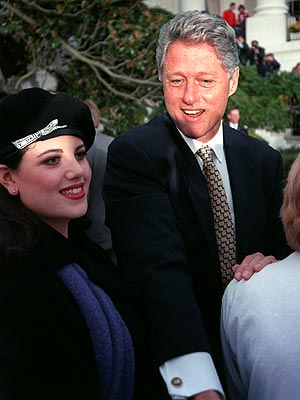
Rand Paul has been popping up here, there and everywhere in the US media recently, reminding us of all the sins from Bill Clinton’s two presidential terms and suggesting that Clinton’s actions from the late 1990s somehow represent a current-day Democratic Party war on women in 2014.

The whole thing is a fairly transparent effort by Rand Paul, a principled and capable first term senator, to increase his popularity with the wary social conservatives from the base of his party and (as a convenient bonus) to tarnish Hillary Clinton’s image a little in the event that she decides to run for president in 2017. I said as much as far back as 27 January:

Senator Paul is absolutely right to call out Bill Clinton’s behaviour for what it was – an abuse of his presidential power and symptomatic of a predatory attitude toward women. What makes this different from what the Republican Party has been doing, however, is the fact that the Lewinsky affair was a private indiscretion, and the harm done to women took place in the course of interpersonal relationships between those people directly involved. The Republican Party, on the other hand, has sought to push for legislative outcomes – around contraception, abortion and equal pay to name a few – that would impact all women in the United States. Private action vs. public legislative action. False equivalence.

Others said the same, and this should have been case closed. But Politico, knowing a click-generating story when they see one, happily takes the bait with a full-length feature by Liza Mundy in their magazine:

Like it or not, we’re having a national flashback to the 1990s—replete with images of thong underwear near the Oval Office, semen-stained blue dresses and all manner of sordid details we thought we’d outgrown. These nostalgic tidbits come to us courtesy of Kentucky Senator Rand Paul, the possible 2016 presidential contender who, anticipating a matchup against Hillary Clinton, has lately been determined to remind America what happened the last time the Clintons occupied the White House. In a series of recent interviews, Paul has resurrected the Monica Lewinsky scandal, which first surfaced in sensational fashion in 1998, when the president was accused of having an affair, of sorts, with the 20-year-old White House intern.

Paul, to his credit, hasn’t dawdled on the lurid details—rather he’s framed the discussion as a matter largely of workplace behavior, challenging Democrats’ self-image as the party friendly to women. “If they want to be credible in saying they defend women’s rights in the workplace,” Paul said in an interview last week, Democrats should “disown” Bill Clinton, whom Paul considers “a predator, a sexual predator, basically.”

Like it or not? We could all have avoided the flashback if Politico had chosen not to play along by devoting a whole feature to achieving Rand Paul’s ends, but then Politico are not known for taking the high road.

Given the fact that the reanimation of the Lewinsky scandal is just part of a grand plan by Rand Paul to curry favour with the socially conservative base of the Republican Party, surely he could have picked a better issue to make his own personal cause? After all half of the congressional party has been guilty of similar indiscretions at one time or another – the only thing separating their actions from Clinton’s being their proximity from the Oval Office at the time they were committed. If Rand Paul hopes to make himself look good by contrast, it will be fellow GOPers against whom the contrast is drawn just as much as it is Bill Clinton. And those guilty Republicans – the likes of Newt Gingrich, for example – may not take kindly to a Rand Paul campaign whose main platform is a repudiation of the very actions that made them notorious.

But on closer examination, it appears that Rand Paul has few other options given his need to improve his standing with social conservatives without alienating his support from the younger, more libertarian wing of the party. The Atlantic sums it up well:

Given that one of his key selling points in the GOP primary will be his (relative) support among younger Americans, Paul can’t exactly crusade against gay marriage or the legalization of pot. Bashing Bill Clinton provides a politically safer way to champion moralism. It certainly helped George W. Bush, who in 2000 won Christian right votes, despite playing down social issues, because he played up his personal, anti-Clintonian religious and moral code. Paul seems to be attempting something similar, telling Maureen Dowd, “In my small town, we would disassociate, we would in some ways socially shun, somebody that had an inappropriate affair with someone’s daughter or with a babysitter or something like that.”

This is right on the money. Rand Paul is generally principled in his libertarianism and has few outlets with which he can appeal to socially conservative voters, many of whom grant an exception for big government when it comes to forcing people to conform to their moral code. There is no point in Rand Paul launching a crusade against gay marriage – it would sound false coming from his lips, and besides, that ground is doggedly occupied by Rick Santorum and (less plausibly) Newt Gingrich, Rudy Giuliani et al. The same can be said for the issue of marijuana legalisation, where a U-turn would do harm to his younger base.

The one area where Rand Paul can really show his moral “uprightness” – since his libertarianism does not allow him to force his beliefs on others through law – is by recalling tawdry behaviour from a past Democratic president.

If this is done carefully, Paul may reap rewards. By emphasising Bill Clinton’s predatory attitude toward women, he also effectively criticises many of his Republican peers and rivals without having to go on the record as having explicitly done so.

The danger, as I have previously pointed out, will come about if Rand Paul persists in trying to create a narrative of a Democratic “war on women” comparable to that waged by the bulk of the Republican Party. The electorate is more than capable of distinguishing the difference between the private actions of an individual (Bill Clinton’s affairs and womanising behaviour) and the concerted legislative efforts of an entire political party to attack the rights of half the population.

There are certain former and likely future Republican presidential candidates  – think Cain, Bachmann, Palin, Perry and Santorum – who can run and maintain their popular support on a platform of deliberate, even joyful ignorance, and not suffer as a result. Rand Paul is not a member of this group. His popularity rests more on principles and reason, and on people who admire these things in a politician. Continuing his efforts to equate a presidential sexual indiscretion from the 1990s with the general policy platform of his party will begin to test their patience.

By all means, talk about the persecution of Christians abroad and the moral shortcomings of the forty-second president of the United States if you want to. They are real, legitimate issues and there are real, indisputable facts to back them up, even if some of them do date back to 1998. But to go any further in an attempt to court social conservatives – a volatile and unpredictable part of the Republican party – is dangerous for a libertarian.

There is only so much common ground that a libertarian can find with a social conservative. And if the libertarian knows what is good for him, he stops trying once he has found and exploited it.

Spare A Thought For Those Who Spy On Us

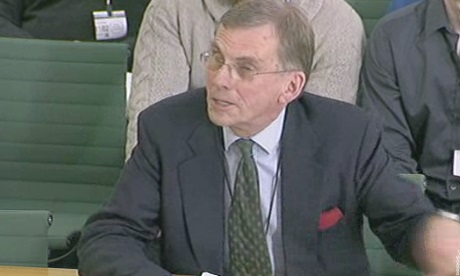
Today saw a rare moment of insight into the workings of Britain’s intelligence services and the mindset of those who lead them. It was but a fleeting glimpse, though – provided by a former employee, summoned to give evidence to the Home Affairs Committee in Parliament.

Unrepentant.
Unrepentant.

The Guardian provides a concise summary of former GCHQ chief Sir David Omand’s testimony, but the real showstopper is this question, posed by Conservative MP Michael Ellis, and the response he receives from Sir David:

Q: Have the unauthorised leaks have a negative effect on morale?

Omand says that his impression, from the outside, is that it has been a bitter blow.

There have been concerns about reputation.

And they have been accused of breaking the law. They have been accused of using the US as a backdoor, to circumvent UK law. Omand says he does not think that is true.

There has been an impact on families too, he says.

And he suggests there has been an impact on recruitment. Would parents encourage their children to join an organisation accused of acting like this.

In other words, as far as David Omand is concerned, the problem is not that the all-powerful British security agencies have been collecting bulk data on the personal communications of British citizens without reasonable suspicion of criminal intent. No, the real outrage is the fact that in protesting the draconian steps taken in the name of our safety (but without our knowledge or consent), having found out about them, we have hurt the feelings of the people who have actually been doing the spying. Never mind the right to privacy – the fragile egos of our intelligence analysts are apparently at stake.

Also of interest is Omand’s opinion on whistleblowing in general, as revealed in his response to a question from Labour MP Paul Flynn:

Q: Don’t we need whistleblowers?

Omand says he supports the free press. In a well-regulated society, you don’t need whistleblowers.

So there we have it. If society is well regulated – meaning, as far as I can tell, if the elites are free to do whatever they think needs to be done under a secret gentlemen’s agreement, and the public are willing to be docile and credulous and to relinquish any expectations of oversight or checks on power – then there would be no need for whistleblowers such as Edward Snowden.

And in a sense, Sir David Omand is right. A “well-regulated” society such as this would not need whistleblowers, because it would have sacrificed so much of its integrity and worth that there would be nothing left for an honourable whistleblower to defend.

This Parliamentary performance by the former head of GCHQ provides a very revealing insight into the self-entitled mind of our political and national security elites. In their worldview, not only are they perfectly entitled to treat the average citizen with suspicion and intercept their personal communications at will, but they should also be allowed to do so with total impunity, and without ever being made to feel the slightest bit bad about their actions, either through having their clandestine work revealed by a whistleblower, or by reading a negative newspaper editorials on the subject in the aftermath.

Omand is essentially telling us that our first thought as members of the public, when confronted with proof of massive government surveillance by whistleblowers such as Edward Snowden, should not be for ourselves, the people whom the security services supposedly exist to protect and serve, but rather for the sensitive feelings of the GCHQ operatives and their political masters.

If that strikes you as being slightly ludicrous, that’s good, because it should.

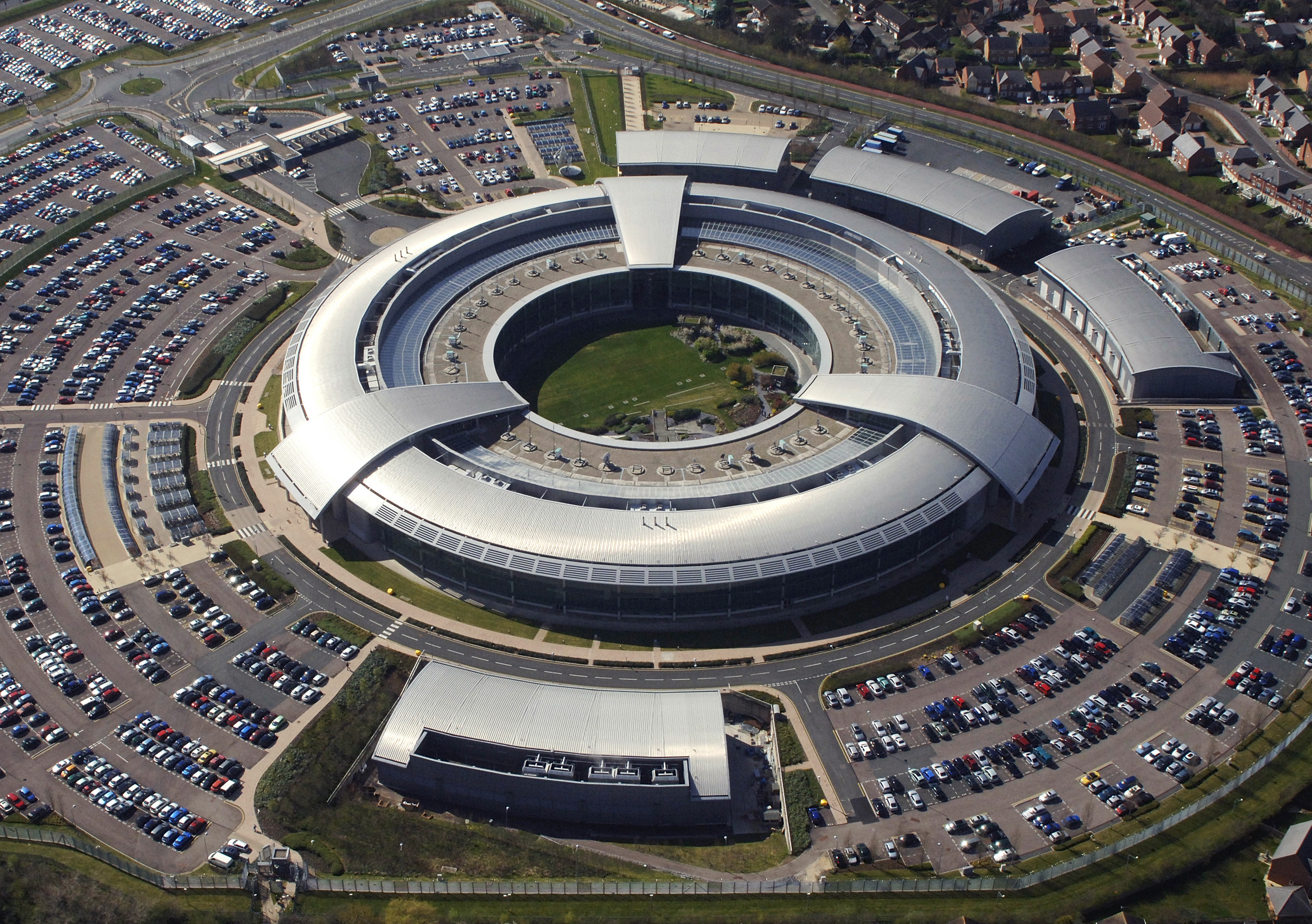
A fearsome building, apparently filled with very sensitive souls.


The impact of the Snowden revelations on morale within GCHQ should not be our overriding concern at this time. The organisation has been flagrantly violating the privacy of fellow British citizens – who should not be their target – unknown and unopposed, and a certain dose of guilt and shame for having done so is probably quite appropriate.

Of course, ultimate responsibility for the actions of the intelligence services rests with the government and the elected politicians who sanctioned the draconian use of surveillance practices without ever seeking the consent of the people. It is true that people working for GCHQ and the intelligence services are given orders and must carry those orders out as part of the job, and I also appreciate the power of organisational or institutional loyalty, and the corrosive effects of groupthink, both of which may play a part in allowing intelligence agency operatives to justify some of the actions that they take. But this does not absolve them of all responsibility.

Yes, the buck stops with the Prime Minister and the Home Secretary, but good men and women at all levels within the hierarchy who knew of what was taking place should have stood up and said something. The sad fact is that were it not for a disgruntled and outraged American citizen blowing the whistle and releasing incriminating documents to the media, the British public would still be blissfully unaware of what has been taking place.

So where is this well-regulated society of which Omand speaks? In Britain, it clearly does not exist, as The Guardian’s summary of another of his responses makes clear:

Omand says a whistleblower has to have exhausted his other options. Edward Snowden could have gone to his employers, or to Congress. Imagine if he had walked into Congress, flanked by the editor of the Guardian, saying you have been lied to. He could have achieved his objectives, without having had to take more than 50,000 documents.

Is it not striking that when pressed to come up with an alternative to releasing sensitive intelligence documents to the media, the only alternative scenario to whistleblowing offered by Omand occurs in the context of the US government, and not the British?

Firstly, it is somewhat ludicrous to suggest that Edward Snowden could have followed this course of action. There were those in Congress, after all, who were aware of the NSA’s activities but who felt bound not to talk about them. And with unrepentant national security fanatics such as Peter King and Mike Rogers in the House, Snowden would likely have been disappeared before he had finished uttering his first sentence.

And secondly, how does Omand picture the same scenario playing out in the United Kingdom? Clearly not well, as he doesn’t expand upon the scenario during his testimony. So the concerned GCHQ analyst walks into Parliament flanked by Alan Rusbridger of the Guardian, and tells MPs that they had been lied to. What happens next? How, in any way, would that analyst’s objectives of raising awareness of the malpractice be accomplished? It wouldn’t.

Whistleblowing actions of the type carried out by Edward Snowden are sadly necessary, because it is simply not enough to flag misbehaviour by the national security complex to elected representatives in Parliament or Congress. In the US Congress there are a sufficient number of cheerleaders for Bush-era, PATRIOT Act-style security that the whistleblower could almost certainly expect immediate reprisal and persecution, and in the case of the British Parliament, there sadly exists a lazy general consensus that the security services should be left in peace to do whatever they think is reasonable to keep us safe.

In neither country, Britain or America, is there a plausible scenario where a concerned citizen could approach elected politicians with evidence of wrongdoing by the state and expect that their personal privacy and liberty to be respected and guaranteed in the aftermath. We know this because time and again, we see the majority of public officials (with a significant but outnumbered minority of brave dissenters) closing ranks to defend the intelligence agencies and the status quo. Therefore, the only way to bring a halt to these practices is by releasing information into the public sphere – which, it should be acknowledged, has been done in a very measured and sensitive way by Snowden, and is certainly no indiscriminate data dump – to increase public awareness and concern.

It would have been foolish to expect the former head of GCHQ to offer anything other than a full-throated defence of the work that he and his agency were so deeply involved in for so long. And so, in that sense, we learned nothing new from Sir David’s testimony to the Home Affairs committee today. There will be no immediate change of policy and no deathbed confessions of wrongdoing from anyone in power just yet.

And yet there was progress today. As well as the softball questions lobbed by sympathetic MPs with a similarly authoritarian outlook, Sir David Omand also had to face some tough and awkward questions. Even in centralised, deferential Britain, there are some MPs willing to do their job and represent the interests of their constituents.

Take this small ray of hope and combine it with Ed Miliband’s curious new-found interest in ensuring that the intelligence agencies receive more thorough public scrutiny and oversight, and you have the makings of what now passes for a good week for civil liberties and citizen privacy in 21st century Britain.