A Merry Semi-Partisan Christmas

Political Blogging 2

Onward to 2016, with your help

2015 has been a very good year for this blog. The frequency of posts increased dramatically as we covered the general election and its aftermath, and we have kept up the pace ever since. There are now new articles nearly every day, as well as a more lively Twitter feed.

The net result has been an increase in readership of nearly 400%. This blog is still small, but a number of articles have caught the attention of influential MPs, journalists and activists. And nobody recognised or wrote about the eventual cause of Labour’s general election defeat before this blog, though many others have subsequently swooped in to take credit.

My writing is syndicated at Guerilla Policy, where I seem to be the lone conservative voice amid a sea of unabashed lefties, and I am proud to contribute regularly to the excellent campaign group Conservatives for Liberty.

Semi-Partisan Politics will continue to grow and flourish as we enter 2016, and will campaign – loudly and unapologetically – for the following goals and ideals:


Brexit: freedom from the European Union

Democracy and national sovereignty

Constitutional reform and a federal UK

Separation of church and state

Healthcare reform, not NHS worship

Smaller, smarter government

Free speech, without restriction

Fighting timid centrism on the Right

Fighting empty virtue-signalling on the Left


If you agree with these objectives and have enjoyed this blog’s coverage over the past year, please do consider using the PayPal tip jar to make a small regular contribution or a one-time donation:



Any reader donations will 1) be a personal ego boost to myself, 2) help me to do more original reporting, like the successful live blog of this year’s UKIP annual conference, and 3) help me promote this site and the work of other like-minded writers so that we can actually make a difference.

As I swiftly learned this past year, writers don’t get paid very much (unless you are Owen Jones). This blog is written in my spare time around a day job, usually between midnight and 3AM, and is available to everyone free of charge.

However, small donations from individual contributors are not only greatly appreciated, but also help to preserve independent journalism and commentary in general – so that nobody has to rely exclusively on the BBC, the Guardian or the Telegraph to understand what’s going on in our country and around the world.

If you are happy getting all of your news, analysis and commentary from the BBC or the big national newspapers, then by all means carry on. But if you value independent writing which is not beholden to any party, clique or the Westminster establishment, then please consider helping to ensure its continued existence by donating a couple of quid to the independent sites which keep you coming back for more.

But it’s not all about the money. What matters even more than that (for me) is spreading the word and sharing the message – and these days that means social media. So if you read something you like here, don’t just sit on it. Share it on Twitter or Reddit. Email it to a friend. Be that person on Facebook who posts provocative political articles on their timeline (but all things in moderation).

With the help of my informed and generous readers, 2016 will be another record-breaking year for Semi-Partisan Politics.

Many thanks to all of you, and a very Merry Christmas.

Christmas Wreath 2

Follow Semi-Partisan Politics on TwitterFacebook and Medium.

Credulous Media Swallow David Cameron’s EU Renegotiation Myths

David Cameron - Donald Tusk - EU Renegotiation - European Union - Brexit

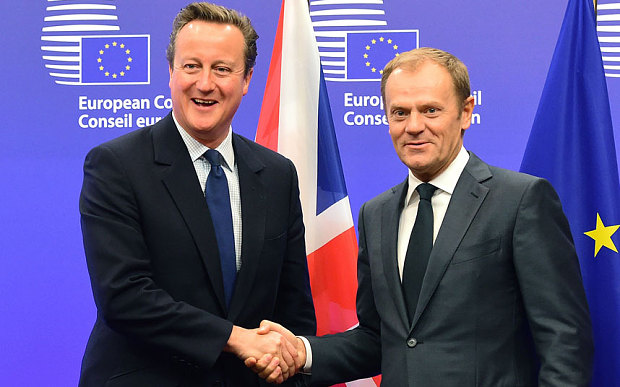
Nobody in their right mind seriously believes that David Cameron will campaign for Britain to leave the European Union. But that didn’t stop the media from earnestly reporting Number 10’s Brexit bluster

David Cameron is about as far from being a eurosceptic as a Conservative prime minister could possibly be. Sure, he was forced by the rise of UKIP into pledging a referendum on Britain’s EU membership – despite having previously stated that he didn’t think a referendum was appropriate – but this was only ever a matter of political expediency, not heartfelt desire for Brexit or deep conviction that the people should have the right to decide their own destiny.

But this has not stopped the media from willingly and credulously lapping up the latest spin emanating from Number 10 Downing Street – the risible idea that if David Cameron’s EU partners continue to treat him like the pesky kid at the adult’s table, he might seriously campaign for Brexit.

From the Telegraph:

David Cameron has privately conceded he will have to campaign to leave the European Union if he continues to be “completely ignored” by Brussels, the Daily Telegraph has learned.

[..] It has now emerged that Mr Cameron is telling senior figures in his party that he will be willing to campaign for a British exit if EU leaders do not back down over his key reform plans.

“He has said that if he is completely ignored or if they give him nothing he will campaign to leave,” the source said. “He has made that clear.”

Anybody with even one foot rooted in reality should be able to tell that this latest court gossip is nothing but spin. Having (unsurprisingly) gotten nowhere with his renegotiation efforts thus far, David Cameron needs to appear tough and resolute for the home audience. After all, it is pretty embarrassing that the leader of a global power and the world’s fifth largest economy has achieved precisely nothing, despite having embarked on a well-publicised begging tour of Europe. When begging and pleading with the Czechs for permission to change UK welfare rules yields no fruit, some kind of strong public stance is essential to preserve any kind of dignity.

And let’s be frank – the Telegraph didn’t so much “learn” that Cameron is considering campaigning for Brexit through canny investigative journalism, but rather they probably received a tip-off authorised by the Conservative Party hierarchy to place that narrative into the news cycle.

And what a successful stunt it has been. Now we are duly talking about how the prime minister feels so frustrated with the progress of his renegotiation that he is considering this drastic step, when deep down they (and most of us) know that David Cameron would sooner leave his daughter unattended in Nigel Farage’s local pub than recommend to the British people that they vote to leave the EU.

The truth, of course, is that this was always a sham renegotiation. David Cameron didn’t even bother to consult with the British people as to what they wanted out of any new settlement with Europe before jetting off to Brussels to set out his puny demands, so how could he claim to be representing the public’s real concerns?

This whole exercise has been about starting with the outcome of a “Remain” vote and then working backwards to determine the least possible number of concessions required from the EU to deliver that goal, rather than starting with a hard-headed assessment of Britain’s own national interest or public sentiment. And such a back-to-front renegotiation was never going to bear fruit.

As Mark Wallace points out in Conservative Home:

The conventional wisdom is that the Prime Minister has cut back his list of renegotiation demands in order to reach a swift agreement, in which he can claim victory and then hold an early referendum. That probably was his hope; it would certainly make political sense. Unfortunately for him, each aspect of that plan is foundering while the clock ticks down.

With every day that this supposed renegotiation goes on, Britain looks more and more like the weak supplicant nation asking its superiors for scraps from the table – and being rebuffed. This would be humiliating enough, but it is also self-reinforcing. The fact that our EU partners have already seen Cameron going cap-in-hand around the capitals of Europe begging for concessions (rather than boldly stating the UK’s national interest or presenting a radically different vision of EU membership) means that they are emboldened to give away fewer concessions when he comes knocking again.

Right now, the EU has bigger fish to fry than the Brexit question. And with immigration and terrorism top of the agenda, EU leaders feel confident in pushing our renegotiation way down the list of priorities because they know – even if our credulous media claims not to know – that David Cameron will campaign for a “Remain” vote, come what may.

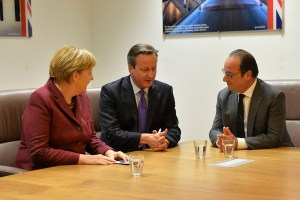
France and Germany are both diplomatically canny countries. If they suspected for a moment that their treatment of David Cameron might seriously cause him to snap and embrace the Brexit cause then they would immediately start making more conciliatory noises. Secretly they might be glad to be rid of Britain, but they know that Brexit would be a stunning, unacceptable repudiation of their vision for Europe. Thus the fact that there is no diplomatic panic in Berlin or Paris is proof that Angela Merkel and Francois Hollande know that their British counterpart remains utterly pliable and sickeningly eager to please.

David Cameron can continue to authorise leaks suggesting that he is contemplating campaigning for Brexit, if it makes him feel better when he is politely ignored by the leaders of other countries a fraction of our size and power. He can promise all the table-thumping rows in the world, too.

But the one thing he cannot do is convince those of us who see through his cheap tricks that he is a real eurosceptic, or that he would ever allow his name to go down in the history books as the man who led Britain out of the European Union.

David Cameron - Angela Merkel - Francois Hollande - EU Renegotiation - Brexit

Agree with this article? Violently disagree? Scroll down to leave a comment.

Follow Semi-Partisan Politics on TwitterFacebook and Medium.

The Daily Toast: Glenn Greenwald On Succeeding In Journalism

Glenn Greenwald


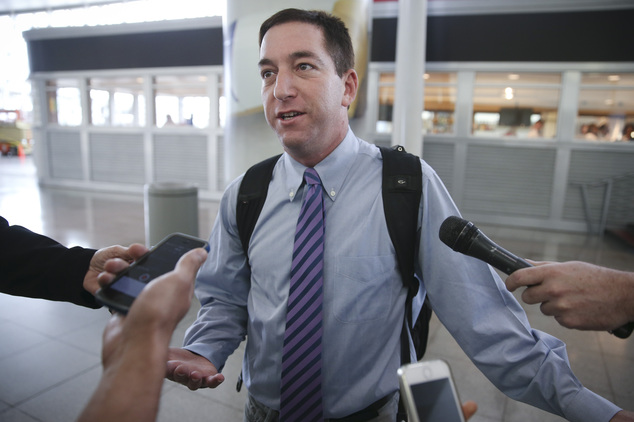
Glenn Greenwald gives an interview to Dillon Baker in The Freelancer, and offers his thoughts on succeeding in online journalism:

I think the most important thing is to avoid being a generalist. Don’t be willing to write about every single topic, because no person can be well-versed in every topic. If you write about stuff in which you are not well-versed and you don’t really have expertise, you’re just going to turn out mediocre product. And that’s going to affect how you’re perceived in the long run.

It’s so critical to figure out what you’re really passionately interested in. Because there’s a market for everything. There’s a huge Internet out there. Topics that seem really obscure can definitely, if you do it the right way, generate enough attention and interest to sustain you, and maybe even push you beyond that. It’s critical to just pick a few topics of which you have a great deal of passion, and develop genuine expertise in those so that what you’re producing can’t be found anywhere else except with you.

Wise words, which this blog will continue to strive to observe. This blog has long admired Glenn Greenwald for the passion and urgency behind his writing, and his principled stance against the secret surveillance state.

So what is the purpose of this blog?

Semi-Partisan Politics will continue to campaign – loudly and unapologetically – for the following goals and ideals:


Brexit: freedom from the European Union

Democracy and national sovereignty

Constitutional reform and a federal UK

Separation of church and state

Smaller, smarter government

Free speech, without restriction

Fighting timid centrism on the Right

Fighting empty virtue-signalling on the Left


If you agree with these objectives and have enjoyed this blog’s coverage over the past year, please do consider using the PayPal tip jar to make a small contribution:


Any donations will 1) be an ego boost, and 2) help me to do more original reporting, like the successful live blog of this year’s UKIP annual conference.

But most of all, please continue to click, like and share those articles that you enjoy with your family and friends. My loyal readers help keep me fighting the good fight.


Follow Semi-Partisan Politics on TwitterFacebook and Medium.

Quote For The Day

Hide Political Posts Facebook - Politics - SemiPartisanSam - 2


“Be yourself. Do your work. And they will find you. And serving those readers is all the reward you need.”

– Andrew Sullivan, at the time of his recent retirement from blogging.


This blog will continue to provide rigorous, semi-partisan political commentary through the remainder of the 2015 British general election campaign and beyond.

(I will be live-blogging the election results on Thursday night, here).

This blog will never serve as cheerleader for any one political party, but will continue to proudly champion the interconnected causes of personal liberty, economic freedom and national sovereignty – and give credit where credit is due to any party or politician who is willing to pick up the tarnished torch of liberty in an increasingly hostile environment.

Many thanks to all those people who include Semi-Partisan Sam in their daily internet reading – both those who have recently discovered the blog and those few who have been reading since Day 1.

John Darvall And The BBC’s Warped Approach To Editorial Impartiality

John Darvall BBC bias General Election 2015


It can’t be easy for the BBC’s news division, required by law to produce strictly non-partisan coverage while being assailed by both left and right for failing to sing their respective praises loudly enough. And while much of this criticism may be deserved, the fact remains that most BBC journalists perform a difficult and valuable job to a good standard, much of the time.

But the BBC would make life much easier for itself by taking a more consistent approach to its handling of editorial, investigative and disciplinary matters. At present there is no consistency at all, leading to the strong (and correct) perception that there is one rule for some people (and political parties), and another rule for others less favoured.

Take the case of John Darvall, a local radio presenter for BBC Bristol who was removed from his regular presenting slot because he happens to be engaged to a Conservative MP:

John Darvall, of BBC Radio Bristol’s Mid-morning programme, is being moved before the general election but says that he has had no guarantee he will be able to return.

Darvall, 48, and Charlotte Leslie, the MP for Bristol North West, met four years ago on his programme. They began dating in October and the twice-married father of four proposed on Christmas Day.

He is being moved to an afternoon show with less emphasis on news due to “heightened sensitivities” and to avoid accusations of a conflict of interest. BBC bosses said that he will be back after May. During a phone-in on the sacking of Jeremy Clarkson, Darvall suggested that he might not be back even after the election. A caller suggested that he should apply for a job on Top Gear, to which the host replied: “Trust me, I have a lot of reasons myself to be angry with the BBC at the moment. I am coming off this programme tomorrow, so I might consider something of a career departure.”

Questioned by another caller, he added: “It’s to do with the election and protecting BBC impartiality. It’s not my decision. I’m honouring what the BBC have asked me to do and I sincerely hope to be back after the general election, and the BBC have sort of said that I might possibly be, barring any unforeseen circumstances.”

In short, John Darvall was removed from his position not for something he did, something he said or even something that he thought, but rather because of who his future spouse happens to be. This harsh and career-damaging reaction by the BBC –  as taking a journalist off the political beat at election time surely is – was meted out not even for thought-crime, but in Darvall’s case for existence-crime.

Continue reading