Why Is The Right Suddenly Scared Of Jeremy Corbyn?

Jeremy Corbyn - Labour Leadership - Labour Party - Socialism


Somehow, in the space of one month, the political Right seems to have gone from #Tories4Corbyn mania to acute Corbynphobia, switching positions in direct proportion to Corbyn’s rise in the opinion polls and his proximity to clinching the Labour leadership election.

The latest to lose his nerve is Allister Heath, who writes very well and sensibly about most things, but seems to have lost both perspective and ambition in his latest piece for the Telegraph.

For in truth, small-C conservatives and believers in small government and individual liberty have very little to fear from Jeremy Corbyn becoming leader of Her Majesty’s Loyal Opposition. But the fact that notes of panic are creeping in – even among stalwarts such as Allister Heath – reveals a deeper malaise within British conservatism, one which needs to be quickly identified and rooted out.

Heath begins well enough:

Britain needs as many pro-capitalist parties as it can get. For a brief period in the mid-1990s, it had at least three: the Tories, a reformed Labour Party under Tony Blair which appeared ready to embrace markets for the first time, and the Liberal Democrats, who at the time were still pretty centrist.

It seemed as if the free-market counter-revolution of the 1970s and 1980s, combined with the collapse of the Soviet Union and Warsaw Pact, had finally killed off socialism. The choice from now on would be between a particular brand of capitalism, with varying degrees of intervention, but nobody would any longer suggest ending the economic system that has created so much wealth for humanity over the past 250 years.

So far, so true. Yes, indeed there was a large degree of consensus from the mid-1990s through the early New Labour era, and yes, this consensus broadly accepted free markets and the fact that people could become filthy rich, so long as they paid their taxes. But there was also a consensus among all parties that the European Union was a great and benevolent institution, and that we should happily cede ever more sovereignty to Brussels in the service of some “common European” good.

Continue reading

Jeremy Corbyn’s Ambition For Britain: Building A National Education Service


“What if the rise of Corbyn, a man with a political philosophy, is not an aberration, but the future?” – Douglas Carswell

For someone who is supposed to be a political dinosaur, a fossil, a cantankerous relic from a long-gone political age, Jeremy Corbyn can sure talk a lot of sense when he puts his mind to it – and when the pressure is really on.

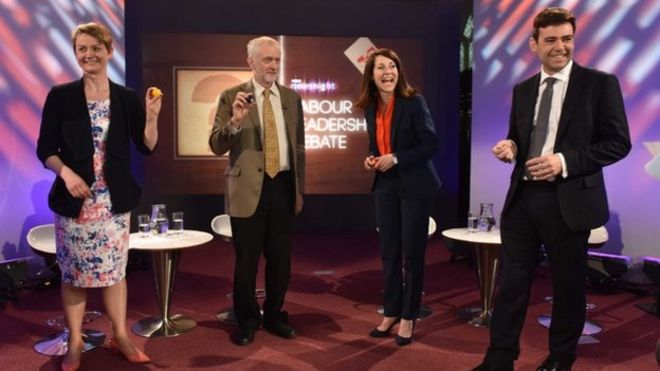
Sunday’s long set-piece interview on the Andrew Marr show (see video above) proved that Corbyn could withstand tough personal scrutiny and difficult questions designed to throw him off-balance, and not only get through the encounter intact but also managing to leave his centrist rival candidates for the Labour Party leadership looking somehow diminished and superficial.

None of this is to say that Jeremy Corbyn has the right answers – he doesn’t – or that he is the Saviour of British Politics. And none of this changes the reality of what Britain was like the last time people like Corbyn had their hands on the levers of power, back in the 1970s. But of the four people competing for the leadership of the Labour Party, Corbyn is the only one who seems to make his supporters actually feel good about their candidate and their party.

Why is this? Well, in this age of sanitised soundbite politics, you really can’t place enough of a premium on a politician who dares to say what he or she actually means, someone willing to think out loud rather than simply regurgitate pre-rehearsed talking points.

Continue reading

Stop The Anti Jeremy Corbyn Hysteria: ‘Entryism’ Is Not A Dirty Word

Entryism - Trojan Horse - Labour Leadership - Jeremy Corbyn - 2


Labour’s ruling elite are stoking up fears of ‘entryism’ as an excuse to shut Jeremy Corbyn out of the leadership contest and preserve their hegemony.

For every day that Jeremy Corbyn’s star stubbornly refuses to fade in the Labour leadership race, another Labour Party grandee seems to come crawling out of the woodwork blaming the sinister forces of ‘entryism’ for dragging the party unelectably to the left.

Commentators of every political stripe are now spitting out the term ‘entryism’ like it is a dirty word, and we are expected to hear the word and share the elite’s outrage that a political party is in danger of actually representing the people enthusiastic enough to play a part in its governance. But in fact, all the fuss about Jeremy Corbyn’s increasingly plausible leadership candidacy really proves is the absolute terror felt by the political elites when people with vibrant, non-centrist political views seek to make their voices heard.

(The formal definition of ‘entryism’ is: “a political strategy in which an organisation or state encourages its members or supporters to join another, usually larger organisation in an attempt to expand influence and expand their ideas and program.”)

So worried are the people most responsible for driving British politics into its current centrist malaise that some of them are now openly calling for the Labour leadership contest to be scrapped or deferred, until the ‘menace’ of people exercising their democratic right to vote for the leadership they want can be properly suppressed.

From The Times today:

Continue reading

Labour Leadership Candidates United By Arrogance On Europe


Anyone hoping that Labour Party’s haemorrhaging of northern votes to UKIP or the EU’s sacrifice of Greece to preserve the Euro might lead to a reconsideration of Labour’s reflexive, metropolitan pro-Europeanism must be sorely disappointed with the four candidates jostling for the honour of leading the party to defeat in 2020.

Although there is a groundswell of euroscepticism building across the country – and even though many prominent left-wingers are now calling for “Lexit”, including the ubiquitous Owen Jones – those who aspire to lead the Labour Party remain wedded to their desperate belief that the EU is somehow good for Britain.

Even as the contrary evidence mounts and public pressure for a left-wing eurosceptic political outlet grows, the Labour Leadership candidates prefer to stick to their increasingly hollow-sounding scripts, proclaiming the dubious virtues of political union and the supposed horrors that would befall Britain if we were to regain our independence.

This much became clear during the LBC radio Labour Leadership hustings, when a certain “Nigel from Kent” (yes, that one) phoned in with a question, asking the candidates whether there were any scenarios in which they could envisage campaigning for Britain to leave the EU and voting “no” in the Brexit referendum.

The responses were predictably depressing.

Continue reading

In Memoriam – Labour Party: 1900-2015

Labour Party - Labour Leadership - 2015


TRIGGER WARNING: This article is a polemic. If you are a Labour supporter who likes accusing the Tories of cruelty and moral deficiency but can’t take criticism in return; if you ostentatiously signal your own virtue by policing the public discourse for “unacceptable” words and ideas while turning a blind eye to appalling real-world actions; if you think that welfare reform is “divisive” but railing against “the bankers” (meaning anyone who works to earn a good salary) is A-OK; if you think Ed Miliband was a visionary leader, ahead of his time and ultimately just too good for this unworthy country – then read on at your own risk.

PRINCIPAL TRIGGERS: Unapologetic conservatism; belief in a higher power other than the state; schadenfreude; gloating; mockery; sarcasm; deliberate overstatement; forceful language; general failure to provide a safe and non-judgmental space for processing the 2015 general election result and the scale of Labour’s defeat.

Fair warning.


And so, not with a bang but a self-righteous whimper, Labour is collapsing from within, the party of Kier Hardie and Ramsay MacDonald publicly reducing itself to a smouldering heap of dark recrimination, bitter contempt for the electorate and tiresome more-compassionate-than-thou moral posturing.

This slow-motion, socialist car crash is utterly transfixing, especially because the man who led Labour to ruin, Ed Miliband – and many others – seriously believed he would now be prime minister of the United Kingdom, right up to the moment the exit polls dealt a deadly dose of reality. Now, it is not even certain that the party will survive to fight the 2020 election without having first splintered into warring People’s Front of Judea / Judean People’s Front factions.

Continue reading