Time To Get Angry About David Cameron’s Brexit Negotiation Trickery

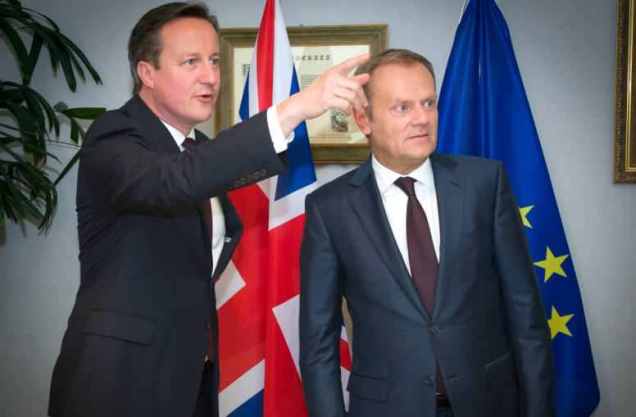
David Cameron - Donald Tusk - 2

Whether you are staunchly pro-EU or eager for Brexit, the prime minister is playing the British people for fools with his manufactured last-minute crunch talks with Donald Tusk. Do we really want to reward this kind of behaviour from our politicians?

If the conventional media narrative is to be believed (and it isn’t), David Cameron has secured a “major breakthrough” in his talks with EU leaders on our suddenly-central concern about migrants claiming benefits.

Of course, this “win” consists solely of a so-called “emergency brake” on immigration which could only be applied with the consent of other EU members. And migrants coming to Britain to supposedly claim benefits is so far down the list of things which are egregiously offensive and wrong with the European Union that the whole pantomime is laughable. But this is all that David Cameron has, and much of the media is gamely writing it up as a meaningful event.

From the Telegraph:

[European Council President] Mr Tusk had been due to publish his final offer to the UK today, but has now agreed to hold another 24 hours of talks after Mr Cameron told him that the deal on the table was “not good enough”. The Prime Minister warned Mr Tusk that Britain could vote to leave the EU unless Brussels does more to ensure that the number of foreigners coming to the UK is reduced.

[..] Last week the EU offered Mr Cameron a watered-down version of the “emergency brake” that would allow him to temporarily limit access to benefits – but only if Brussels agrees that UK public services are being strained. It was described by Eurosceptic Tories as a “bad joke” and “an insult to Britain”.

On Sunday night Mr Tusk accepted Mr Cameron’s demand that any “emergency brake” comes into force immediately. It allows Mr Cameron to reject claims that his “emergency brake” will be subject to a veto by Brussels.

Of course, this is being breathlessly talked up by Downing Street:

“It is very significant that they have conceded this,” a Downing Street source said. “They are saying that in the current circumstances, levels of migration into the UK meets the requirement for an emergency brake. It shows that this is not a theoretical brake and that it is something that will definitely happen.”

So because Donald Tusk has generously granted that the “emergency brake” may come into force straight away, we are supposed to gratefully take our crumbs from the table and forget about the fact that as with every other area that David Cameron once airily promised to reassert British sovereignty, the critical decision ultimately rests with Brussels.

What a transparently false and cosmetic exercise this all is. If Donald Tusk was prepared to release his “final offer” to the UK today and is now only delaying publication until tomorrow, no significant changes can possibly be made in that short span of time.

David Cameron may have huffed and puffed and made a great show of telling journalists that the current deal is not “good enough”, but he will secure no more from Donald Tusk. 24 hours is insufficient time for Tusk to hammer out a new deal and get sign-off from the twenty-seven other EU member states, so if anything radically different does appear tomorrow it will have been pre-agreed by the other twenty-seven and almost certainly shared with Cameron too as part of a cosmetic, scripted act of political theatre.

At this stage in the game, Donald Tusk knows what the other EU leaders are willing to concede and David Cameron knows exactly how much he can demand if he wants an agreement to be signed off in order to ram the referendum through by June (and this still seems very improbable to me). The only ones in the dark are the British public, who were never meaningfully consulted before the prime minister jetted off to air our concerns to Brussels – concerns which he never took the time to consult over or understand before embarking on his mission.

As I and many other Brexit bloggers have pointed out for some time, there is no “renegotiation” taking place, nor has there been. But if we must persist in talking in terms of a renegotiation then we should recognise that David Cameron is sitting at the same end of the bargaining table as the other EU leaders, sharing as they do a common goal of keeping Britain within the political union. We, the British people, are at the other end of the table, on our own. Nobody is arguing our case. Meanwhile, our prime minister colludes with his European colleagues to determine precisely how little they can get away with offering while still buying our acquiescence.

Of course, all of this is quite immaterial, depressing though it may be. For there is no change or concession possible which will change the European Union from being an explicitly political, tightening union whose every act and function serves to drain sovereignty and autonomy from its constituent member states and pool it in Brussels, where it can be wielded by politicians who make the Westminster political establishment look like the model of transparency and accountability.

On this point at least, Daniel Hannan is absolutely right when he writes in CapX:

Either way, the ‘row’ between David Cameron and Donald Tusk, which journalists are reporting so breathlessly, is non-existent. There is nothing to have a row about. Either Westminster is still in charge of welfare policy, in which case the PM doesn’t need anyone’s permission to change the rules; or Brussels is, in which case any alteration requires a treaty change which, as all sides now accept, won’t happen for many years.

I realise that reporters have to write something. I’m sure someone somewhere will have been interested to read that the Downing Street menu involved apple and pear crumble. But, please, guys: the whole thing is such an utter, obvious, confection. You can be pro-EU or anti-EU. There are sincere arguments both ways. But let’s not pretend that anything is changing.

But while the back-and-forth with Donald Tusk and the eventual reveal of whatever package they have already cooked up is hardly news, it is still worth reminding ourselves of the lengths to which the British prime minister will go in order to trick the British people into believing that he has radically changed the terms of our EU membership.

And it should rightly make one wonder: if David Cameron can be so manipulative when it comes to the European Union, how can we trust him on any other matter?
EU Referendum - Brexit - Democracy

Agree with this article? Violently disagree? Scroll down to leave a comment.

Follow Semi-Partisan Politics on TwitterFacebook and Medium.

Why Does Britain No Longer Care Much About Refugees?

FRANCE-EUROPE-MIGRANTS-GANGS-BRITAIN-POLICE

Rather than reflexively blaming the hard-hearted British people for failing to welcome more refugees from Syria, our political elites should acknowledge their part in making a more generous humanitarian response a political impossibility

Dan Hodges has a reflective and rather wistful column in yesterday’s Telegraph, in which he says that people who pride themselves on their progressive values must accept that they have lost the argument, and that Britain will not make a more meaningful contribution in terms of accepting a number of Syrian asylum seekers more in line with many of our European neighbours.

Hodges writes:

There is no longer an argument to be had about whether or not significant numbers of refugees should be admitted to the UK. The pendulum of empathy – which swung briefly following thepublication of photos of little Alan Kurdi lying motionless on that Turkish beach – has swung back. The clashes at the Hungarian-Serbian border. The Paris attacks. Cologne. They are shaping public opinion now. And it will not be reshaped.

[..] There is no longer any point in expending energy on morally comforting tokenism. The argument about whether to accept 3,000 refugee children from Europe, or whether to accept them from camps within region, is as relevant to the crisis we – or more importantly, they – are facing as debating whether to accept 3,000 refugee children from Mars. According to the latest figures from the UNHCR, there are 4,597,436 registered Syrian refugees. 39 per cent of them are under the age of 11. A further 13 per cent are between the ages of 12 and 17. To continue to use the children of Syria in a proxy argument over our willingness to “do our bit” is not an exercise in compassion but an exercise in grotesque self-indulgence.

There is also no longer any point attempting to delude ourselves the solution to the Syrian refugee crisis can be found in Europe. Yes, we have the resources to provide sanctuary. But we do not have the political will to provide sanctuary. Actually, blaming the politicians on this one is a cop out. We do not have the public will to provide sanctuary.

Hodges is right that there is simply no longer any public will to take in poor, tired, huddled masses trying to escape from civil war and the particularly murderous theocracy of ISIS. And his notion of a “pendulum of empathy” is powerful and accurate way of describing what has happened to public opinion here.

But why is this the case? Why has the pendulum swung so hard away from generosity and toward selfishness? While Dan Hodges’ piece is eminently pragmatic in its acknowledgement of failure and suggestions for a feasible way forward, it fails to ask why we are where we are – why British hearts are so hardened to the idea of welcoming many thousands more refugees.

I would make a couple of suggestions:

1. The line between refugee and economic migrant has become almost impossibly blurred in our globalised age of jet travel and smartphones. People living in benighted parts of the world know better than ever just how good we have it in prosperous countries like Britain, and it is easier than ever before (though still perilous for some) for many to travel here – and ever more tempting compared to the life of hardship and drudgery facing them at home if they stay.

But where do you possibly draw the line between economic migrant and refugee? If being in a country engaged in civil war is sufficient qualification then all 22 million Syrian citizens would be entitled to refuge in Europe, and those of other countries too. But this would be quite unfeasible. Besides the impossibility of emptying a country of its every last non-combatant whenever hostilities break out, it ignores the vital agency that at lease some of these citizens must have in fighting for their own freedoms and liberties.

So if not all citizens, how do you choose among those who have risked their lives to reach safety, often with little or no paperwork or proof that they have a particular fear of persecution or harm to distinguish them from any other.

I simply don’t see a way that any such process can be anything other than arbitrary, endlessly bureaucratic and cruel. Add to this the fact that accepting people blindly on a first-come, first-served basis is untenable and creates serious potential national security issues, and the current paralysis is quite understandable, if no less frustrating.

2. Britain has accepted hundreds of thousands of new arrivals through legal immigration routes, particularly from some of the A10 countries which joined the European Union in 2004. And we did so while any talk about the potential impact that this relatively huge wave of immigration might have on community cohesion, housing or public services was instantly dismissed by scornful elites as xenophobic tub thumping at best, or outright racism at worse.

Prior to the rise of UKIP as a legitimate, non-extreme outlet for these concerns, nobody in the establishment was talking about this issue, and the ground was ceded to the likes of the extremist BNP. There was effectively a conspiracy of silence and intimidation against those who questioned the extent of immigration into Britain, with those in power doing nothing to respond meaningfully to public concerns partly because the political class were fortunate enough to belong to the group which disproportionately benefits from immigration and sees only its positive aspects, while other less fortunate people – often those without university degrees and less economic security – were far more likely to feel the negative consequences.

You don’t have to be an opponent of immigration to abhor the undemocratic way that these transformational changes were foisted on Britain by stealth, and without a thought of engaging with the people to consult their views. Indeed, this blog greatly favours immigration, but believes that the negative consequences are real, and can only be mitigated if the process of deciding immigration policy is open, transparent and democratic. But Britain’s immigration policy is none of these things, and one of the consequences of an aloof, disengaged and elitist policy is always going to be massive popular resentment and opposition to those same policies.

Therefore, if we are looking to cast blame or understand why Britain is behaving so apparently harshly in the face of this current humanitarian disaster, should we not first look to the historic cheerleaders of unlimited immigration – the pro EU fanatics, New Labour architects, those who held national power in the 2000s and the virtue-signalling middle class clerisy who flaunted their enlightened credentials by attacking anybody who expressed doubt about what was happening?

Now people will say that it is unfair to conflate immigration and asylum, as the two are quite separate things. And they would be correct – they are separate, and it is unfair. But both economic migration and taking in asylum seekers involve adding to the population and increasing the burden on services and infrastructure which cannot greatly expand to match demand in the short to medium term. And when you sorely abuse the public’s willingness to accommodate one influx of people, they are naturally far more guarded and hostile when it comes to the next, different influx.

If Britain did not have a completely open door to all regional immigration – unheard of in any major country outside Europe – could we have managed the influx of people wanting to work and settle here in a more planned and measured way, and with a modicum of democratic consent from the people? Arguably, yes.

And if Britain had not seen 1.4 million economic migrants settle here from EU accession countries within just the last fifteen years, would there be more willingness now to accept many more refugees in desperate need? Again, arguably, yes.

At least Dan Hodges and the progressive Left would now have had a much clearer grievance if Britain then still failed to admit a larger number of refugees. They would be able to accuse the government and the country of barely concealed racism, and of acting selfishly when nothing had been asked of them before, and do so with real justification.

But we do not live in that alternate reality. We live in the real world, where Dan Hodges and the europhiles got everything they wanted year after year, with Britain’s borders fully open and anyone who complained swiftly painted as a xenophobic Little Englander and banished from respectable society.

And so in 2016, unfortunately it is the desperate refugees – rather than the virtue-signalling progressive Left – who are now paying the price of this arrogant folly.


Refugees - Calais

Agree with this article? Violently disagree? Scroll down to leave a comment.

Follow Semi-Partisan Politics on TwitterFacebook and Medium.

An Open Letter To UKIP Voters

Open Letter to UKIP Supporters - Brexit - Immigration

Dear UKIP Supporter,

There’s no easy way to put this, so I’ll just come right out and say it. If you truly want Britain to vote for Brexit and independence from the European Union in the coming referendum – if that is your top priority right now, as it is mine – then we need to drop our demand to scrap the free movement of people between Britain and Europe and stop calling for stricter immigration controls on people wanting to live and work here.

Before you dismiss me as some pro-European mole from the Remain campaign sent to deceive you, hear me out. I voted for UKIP in the 2015 general election after much soul-searching, because I share your disillusionment and disgust with the political establishment and three main legacy parties – all of which are pro-EU to their core, and all of which have lied to us for decades about the European project and ever-closer political union. I also have admiration and respect for Nigel Farage, without whom we would not be having this referendum at all.

But this is our last chance to save Britain from being absorbed into a European state, and I am terrified of waking up on the morning after the referendum only to find that by insisting on every single one of our demands – particularly on immigration, which is a controversial topic with strong feelings on both sides – we scare the public, lose the vote and squander our only chance of escaping from ever-closer political union.

By asking people to vote to leave the EU, we are already asking them to place a lot of trust in our shared vision for a stronger, more prosperous independent Britain. Unfortunately, many people are swayed by the Remain campaign’s pro-EU propaganda, which relentlessly tells them that Britain is too small and weak a country to succeed on its own. You and I know that to be nonsense, but we already have an uphill battle on our hands to overcome the establishment’s formidable misinformation machine. And demanding an end to the free movement of people within the European Economic Area on top of everything else is just a step too far. People are naturally risk-averse, and keeping this issue on our list of demands is one thing too many.

I know that having secured the referendum from a reluctant David Cameron, it seems like total victory is within your grasp – that you are on the verge of getting everything that you have wanted for so long. And I know that despite the difficult general election result, there are enough indicators to convince you that the tide is turning in your direction, that the entirety of UKIP’s agenda can one day be achieved.

But I implore you to remember what happened to overconfident Labour supporters at the general election. They imprisoned themselves in an ideological bubble of their own making, used social media to talk to each other rather than convincing undecided voters, were hypnotised by their partisan Twitter feeds and drew the false conclusion that the country was about to make Ed Miliband the next prime minister. Their hearts were broken on May 8. Don’t make the same mistake.

I’ve seen some of the UKIP discussion groups on Facebook and the online newspaper comments sections, and I know you have, too. Yes, there are good points made here and there, and some very honest and decent people. But there is also an obsession with immigration that borders on the fanatical. To win the Brexit referendum, we need 51% of the country to vote with us, and like it or not, too many people simply don’t consider immigration a burning issue. They do, however, think that harping on the subject too much strays very close to xenophobia, and if our movement is portrayed as racist or xenophobic in any way, then it’s game over.

Besides, is immigration itself really the problem, or is it the negative side effects of immigration which need to be tackled – the impact on schools, housing, public services and community cohesion? Because there are ways that we can address these issues other than campaigning on a platform of ending free movement and enforcing strict limits on immigration, thus scuppering any chance we have of winning the referendum.

We can look at making our welfare system work on a much more contributory basis, and we can do more to ensure that local areas feeling the greatest strain of inward migration are given significantly more money and resources to help them cope. We can invest properly in adult education, reskilling our workforce for the jobs of the future so that hardworking British people are never left behind at the mercy of cheap overseas labour. And yes, we can also have that important conversation about British values, so that everyone who lives on these islands respects the unique culture and heritage which make Britain so special. Many of the levers to help mitigate the impact of immigration are not possible under EU law, but they would be if Britain were an independent country again.

But by insisting on ending the free movement of people within the European Economic Area as part of our demands for Brexit, we are letting perfection be the enemy of the good. At the risk of using too many clichés, ending free movement is the straw which will break the camel’s back and end our dream of leaving the European Union. Why? Because there are not enough votes in an anti-immigration stance to win, and because opposing free movement loses us nearly as many votes as it gains.

By insisting on ending the free movement of people as part of Brexit, 25% of the electorate will shun us because no matter how misguided they are, they hear “immigration controls” and think “racism”. And another 25% will be very wary of us because they are young, pro-European professionals or students who like the idea of easily being able to live and work in Rome or Paris if they want to, and understandably don’t want to jeopardise their own life chances. That leaves us with no margin for error – we would have to win every single other vote out there, which is just impossible.

But if we campaign for Brexit while promising to respect the free movement of people for the time being, we take away our opponent’s greatest weapon – the false and ludicrous accusation that we are Little Englanders who want to pull up the drawbridge because we are somehow scared of Johnny Foreigner.

Truth be told, you didn’t begin supporting UKIP just so that you could talk about immigration all the time, important though it is. Like me, you recognised that something fundamental is at stake when it comes to our relationship with the EU. Are we to continue sliding down the greasy slope toward European political union, where so many key decisions are taken in Brussels that the idea of Britain as a sovereign state with unique national interests becomes a laughable absurdity? Or are we finally ready to do what every major non-European country does, and face the world as a fully engaged, globally connected and influential world power? Will we continue to be governed by laws and policies set in Brussels where we have just 1/28th of a voice, or are we mature enough to govern ourselves?

At the end of the day, it comes down to one small word – democracy.

Like me, you supported UKIP because you saw Nigel Farage standing up for democracy when it seemed like nobody else cared. And the country owes you a debt of gratitude for what you did. I know many of you have received insults, abuse and worse for daring to vote differently than your friends and family, but your courage has brought us to a place where the dream of independence from the European Union and the return of democracy to Britain are within our reach.

Having got this far, it is all too tempting to assume that the same strategy which forced David Cameron to offer the referendum in the first place will also help us win it. But this is just not so. Nigel Farage did an amazing job turning UKIP’s 3% at the 2010 general election into 13% in 2015, but that still leaves us a massive 38 percent away from winning the referendum. And you just can’t make up that kind of gap by shouting the same message with a louder voice.

Bearing this in mind, I ask you to consider that no great endeavour is won without great sacrifice, and that something major has to change if we are to win the referendum and secure freedom and democracy for our country. And at this critical juncture, like it or not, the sticking point for the electorate is immigration and the free movement of people. Accept the status quo on the free movement of people for the time being and we have a fighting chance of extricating ourselves from the tentacles of Brussels. But stubbornly insist on getting everything we want, and we will be left with absolutely nothing.

This is a difficult and unwelcome message to hear, I know. But making this one sacrifice, and taking this one leap of faith – on the understanding that as an independent country we will seek to deal robustly with the negative consequences of immigration – will put victory within our grasp.

And just think of what we gain by being more flexible on immigration:

The young first-time voter who has only ever been taught good things about the EU and immigration will no longer be scared away by our campaign, and can then be engaged with our arguments about democracy and persuaded to vote for Brexit.

The young professional couple living in Manchester or London will be forced to pick between one side which wants remote and unaccountable government in Brussels and another side which wants laws made by the people they affect. And when they no longer have to worry that their freedom to live and work in Europe is in jeopardy, they will be much more likely to side with us.

Small and large business owners who are naturally eurosceptic but fear the potential uncertainty of labour supply or harm to the economy will be free to follow their hearts and vote for Brexit, knowing that there is no risk to their livelihoods.

Meanwhile, the sneering europhiles of the Remain camp will be dumbfounded, and their campaign left in utter chaos. Their whole argument is built on lying to voters and insisting that people like us only oppose the European Union because deep down we hate foreigners and want to see a complete halt to immigration. This is a golden opportunity to show them – and the country – that they are wrong, that while we have legitimate concerns about unrestricted immigration, we support Brexit because we are on the side of democracy first and foremost.

And ultimately, it is our faith in democracy – not our policies on immigration or anything else – which is our greatest strength, and the greatest weakness of our opponents. Unlike the europhiles, we can look voters in the eye and tell them that Brexit is about trusting them to make the right decisions for themselves and for our country. The Remain campaign has nothing to say about democracy, because they distrust the British people so much that they simply don’t believe we can run our own affairs.

So there it is.

We can win this referendum and secure Britain’s future for our children and grandchildren. But nobody said that it would be easy, or that this victory would be possible without sacrifice. Therefore we must be adaptable and willing to look at plans which have a chance of winning over undecided voters while simultaneously de-risking Brexit, even if it means that we don’t get everything that we might want.

And remember: democracy is key. If we win the referendum and keep Britain from being irreversibly absorbed into a political union, we preserve our freedom to revisit any and all other agreements with the EU in future, and to stand up for our national interest. But if we allow our greed to lose us the referendum, then Britain will soon be unable leave or change the terms of our membership, even if we want to. Dropping our demands on immigration is the safest thing to do, and it is also the right thing to do.

I hope that you will consider what I have to say, and bear it in mind as we respond to demands to show our plan for Brexit. Thank you for hearing me out.

With best wishes,

Sam Hooper

British citizen, former UKIP voter, Brexit campaigner

Open Letter

Agree with this article? Violently disagree? Scroll down to leave a comment.

Follow Semi-Partisan Politics on TwitterFacebook and Medium.

The Great European Migrant Crisis, And The EU’s Failure Of Morality

Europe Asylum Immigration Crisis Boats

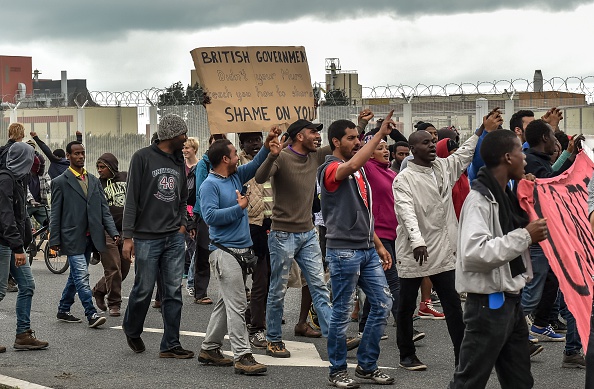
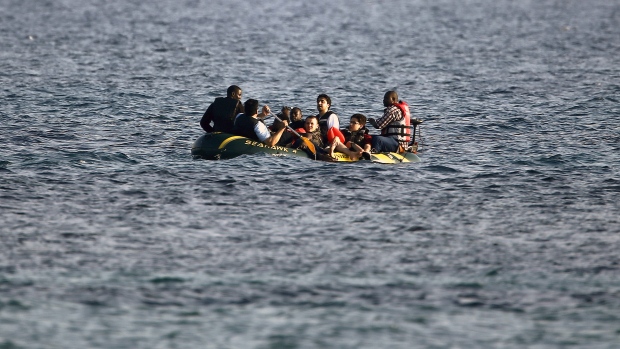
It should not have taken images of a drowned three year old boy lying face down in the sand on a Turkish beach for politicians and commentators to finally declare that “something must be done” about Europe’s migration crisis

Shame on us. It should not have taken pictures of Aylan Kurdi‘s lifeless body splashed across the front pages of the world’s newspapers to force the British government into a strategic rethink about how we tackle Europe’s great migration crisis and work with other countries to offer a just and humane response to this ongoing tragedy.

But nobody can say that it has not made a difference. Only yesterday, David Cameron was insisting that nothing “can be achieved simply by taking more and more refugees”, proposing instead to solve the crisis by simply ushering in world peace. Today, the Prime Minister announced that Britain will take thousands more Syrian refugees, insisting “we will do more, we are doing more”. What a fine, principled leader we have, daring to do the moral thing only after being emboldened by shifting public sentiment.

But this dithering in the face of human suffering and clear moral imperative is not new – it has been going on for months and years. Only last month, an Afghan military interpreter who served in Helmand with the Parachute Regiment was executed by the Taliban after being denied refuge by the UK government, despite pleas from senior military figures for the government to remember our moral obligation to our friends in danger overseas.

Prior to his death, the Telegraph reported:

Britain will have “blood on its hands” if Afghan interpreters are killed by the Taliban, the former head of the army has warned. Lord Dannatt said that the nation has a “debt of honour” and a “moral obligation” towards those who served alongside British forces.

It comes amid mounting controversy over the government’s refusal to allow Afghan interpreters to return to Britain, including one who worked as a translator for David Cameron.

Behold the sheer perversity of Britain’s approach to immigration and asylum – two separate issues, but conflated together and both woefully mishandled by successive governments of both parties.

Continue reading

Chuka Umunna Plays The Race Card

Chuka Umunna - UKIP- Nigel Farage - Immigration - Race Card - General Election 2015


There are few more toxic accusations in British public life than that of racism.

To be accused of racism by anyone with a high profile and a media platform is the modern day equivalent of being tarred and feathered – the allegations stick indelibly in the public memory, impossible to scrub away, while everything you do subsequently will be viewed suspiciously through that ugly, distorting prism – “he may have only said X, but we all know he really means Y, because he’s a racist”.

Consequently, decent and honourable people should be damn sure of their facts before throwing the word “racist” around – it summons visceral recollections and images of real-life prejudice, discrimination, attacks and lynchings, murders and even genocides; the Jim Crow laws in America and the spectre of Enoch Powell in Britain.

Unfortunately, Labour’s Shadow Business Secretary, Chuka Umunna, has once again demonstrated that he is neither honourable nor decent, using an interview with the Independent on Sunday as a free opportunity to throw some more mud at UKIP ahead of polling day next week:

Nigel Farage and Ukip “hate modern Britain” and have a “problem with race”, Chuka Umunna says in an interview withThe Independent on Sunday.

The shadow business secretary, whose father was born in Nigeria, responded to the Ukip leader’s description of two of Ukip’s spokesmen as “fully black” and “half black” by saying there is a “virus of racism” that runs through Mr Farage’s party. Mr Umunna added that, by contrast, a Labour government would celebrate British multiculturalism and refuse to bow to “anti-immigration sentiment”, which, he said, had been whipped up by Ukip.

Mr Umunna was speaking during a visit to the Croydon Central constituency, where Labour’s candidate Sarah Jones is hoping to overturn a Conservative majority of 2,879 currently held by Gavin Barwell. He mounted a staunch defence of the benefits of immigration to the UK, although refused to condemn the Labour Party mug that trumpeted “Controls on Immigration”.

Put simply, Chuka Umunna’s latest “smoking gun” evidence of endemic UKIP racism and prejudice consists of the fact that Nigel Farage used the terms “fully black” and “half black” when speaking about people shown in the UKIP manifesto.

Continue reading