In May, the Conservative Party portrayed the election as a choice between Tory competence and Labour chaos; Labour’s spending and borrowing compared to the Conservative “long term economic plan”. The electorate made their choice and the current government received a mandate to cut the budget deficit and fix the economy.
Britain is now purportedly on the path to economic sanity, but you can be forgiven for having some moments of doubt. In the year 2015, after nearly six years of “austerity”, we will still spend £70 billion over budget. Should we redefine what the word “austerity” means?
The economic madness really began when Gordon Brown and Ed Balls implemented their plans for a high tax, high spend, much enlarged state with a continental-style economy. As we know only too well, it grew completely out of control.
The current government has the opportunity to reshape the British state permanently, and when ideas are floated about “thinking the unthinkable” and slashing budgets by 40% there is a flicker of hope that they might grasp it with both hands. Sadly, there is too much evidence to the contrary to believe anything serious is really being done to end the public spending spree and return to a sensible, sustainable fiscal situation.
“No other chancellor in the long history of the office has felt the need to pass a law in order to convince people he has the political will to implement his own Budget” – George Osborne, 2009
“We will legislate in the first hundred days to make sure these taxes can’t go up” – David Cameron, 2015
What kind of politician has to promise to enshrine their campaign pledges in law?
The answer, of course, is one who cannot be trusted – one who knows that their promises are quite unachievable, but desperately wants to portray a strong belief in their viability. And this is exactly the cheap trick now played by David Cameron and George Osborne, only five years after they mocked Labour Chancellor Alastair Darling for doing the same thing.
The Spectator drily summarised the Tories’ announcement in their Election 2015 Espresso bulletin:
The Conservatives would bring in a law to block rises in VAT, income tax and national insurance for the duration of the next Parliament, David Cameron said today. ‘Why can I make this pledge? Because I’ve seen the books, I know what needs to be done,’ the Prime Minister said. And evidently what needs to be done is to have a pointless law brought in by a leader who once promised to cut red tape. ‘If you trust me, vote for me,’ Cameron says – but his promise of legislation shows that he thinks the public don’t trust him to keep to his word.
Of course, the Conservative promise to place a legal restriction on government preventing it from raising the “big three” taxes will do no such thing. There is already a legal requirement in place committing the government to eliminating the deficit by the year 2015, and yet here we are, about to go back into the polling booths, and the deficit was not even cut in half – with the national debt continuing to soar upwards.
Will George Osborne find himself on the wrong side of a prison door for having failed to eliminate the deficit? Will the coalition cabinet all receive criminal records? Or will they or the government face civil penalties (raising the hilarious prospect of the government having to pay itself a fine for breaking its own law)? Of course not. These “laws” aren’t worth the paper that the party press releases are printed on, or the air that emanates from the Prime Minister’s mouth as he patronises the British people.
The Greens are not even approaching the issue apologetically, with the tired old claim that confiscatory rates of income tax are necessary to fund public services. No, now they are suggesting that wealthy Brits should be hit with punishing rates of tax because apparently Britain’s brightest minds, shrewdest investors and most successful entrepreneurs “take too much” out of our society:
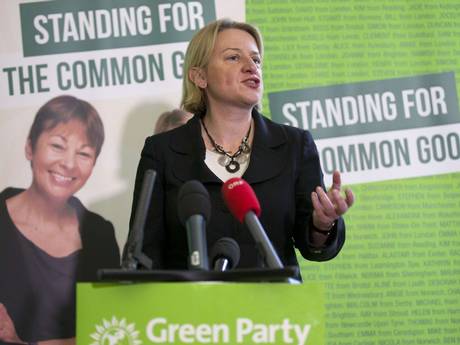
The highest earners would face a 60p top rate of tax under Green Party plans to make the richest “pay back” to society and deter companies from paying “excessive” salaries.
Britain’s top earners currently face a 45p rate on income over £150,000 but Natalie Bennett, the Green Party leader, claimed that they deserved to pay even more.
“What this 60p is for is really to identify the fact that some people are taking too much out of our society, they need to pay back,” she told the BBC’s Andrew Marr show.
You read that right. The Green Party actually believes that the people who invent things, make scientific breakthroughs, create jobs, run Britain’s top industries and make our art and culture the finest in the world take stuff out of our society. The people who already pay the most tax and keep our precious public services ticking over are nothing more than parasites, according to Natalie Bennett and the Greens.
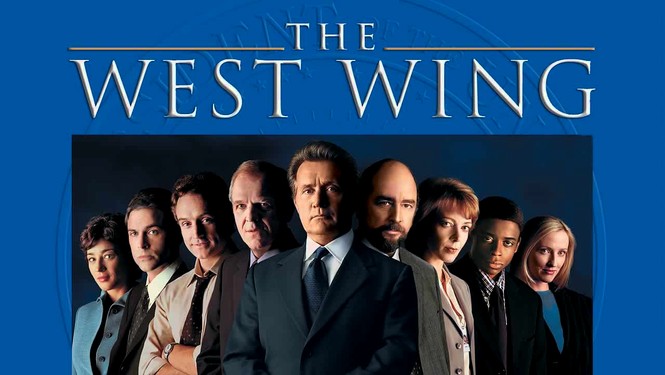
Clearly Natalie Bennett is not a fan of hit US television show The West Wing. If she was, she would know that even starry-eyed left wingers like fictional President Bartlett’s speechwriter, Sam Seaborn, accept that it is unseemly to bash the rich while taxing them to death at the same time.
“Every time your boss got on the stump and said it’s time for the rich to pay their fair share, I hid under a couch and changed my name. I left [my old job before going into politics] making $400,000 a year, which means I paid twenty-seven times the national average in income tax. I paid my fair share. And the fair share of twenty-six other people. And I’m happy to, because that’s the only way it’s going to work. And it’s in my best interests that everybody be able to go to schools and drive on roads.
But I don’t get twenty-seven votes on election day. The fire department doesn’t come to my house twenty-seven times faster and the water doesn’t come out of my faucet twenty-seven times hotter. The top one per cent of wage earners in this country pay for twenty-two per cent of this country. Let’s not call them names while they’re doing it, is all I’m saying”.
Hard to put it much better than that.
Of course, the Green Party delight in the fact that their radically “alternative” politics place them far to the left of even staunchly left-wing opinion.
But given the harm that a 60% top rate of tax would do – and it would be a catastrophic act of economic self-harm, based on Britain’s historical experience and the cautionary tale now underway in France under President François Hollande – even supporters of greater wealth redistribution may well think twice before endorsing this ruinous policy.
Meanwhile, the rest of us are left to wonder exactly what kind of twisted mind convinces itself that success is a bad thing, to be punished and discouraged at all costs?
Put aside the fact that the very idea of a “fair share” is completely meaningless, rendering itself open to redefinition and misuse in any number of ways. What matters is that the Green Party views the economy not as a diverse group of individuals with their own talents, skills and interests, but as a monolothic entity entirely separate from the people, a money-making machine to be cranked up and raided at will in order to fund the social objective of the day.
When you view the economy in this way, it’s natural to see the people who produce and contribute most to the “economy machine” as nothing more than resources to be raided and exploited for the greater good, not as human beings with their own hopes and dreams (and the ability to pick up sticks and move elsewhere if they find themselves being bullied by Big Government).
And it is partly this toxic mindset which drives the Green Party to propose a new 60% top rate of income tax, not just for the yacht-owning super-rich elite but on anybody earning over £150,000 per year.
The Green Party has announced it would put up the top rate of tax to 60p in the pound.
Party leader Natalie Bennett claimed the move would bring in an extra £2 billion a year for public services.
She said the Greens would like to see a “ten to one ratio between the top paid and lowest paid”.
Not contenting themselves with confiscatory rates of income tax, the Green Party also propose stealing peoples’ hard-earned wealth, which has of course already been taxed at the point it was created (and, in the case of inheritance tax, passed down the generations):
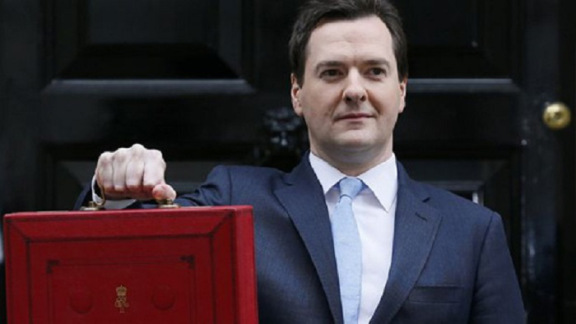
Setting out his plans in the Commons, Mr Osborne said: “We took difficult decisions in the teeth of opposition and it worked. Britain is walking tall again.
“Five years ago, our economy had suffered a collapse greater than almost any country.
“Today, I can confirm: in the last year we have grown faster than any other major advanced economy in the world.”
He said he would use a boost in the public finances caused by lower inflation and welfare payments to pay off some of the national debt and end the squeeze on public spending a year earlier than planned.
In 2019/20 spending will grow in line with the growth of the economy – bringing state spending as a share of national income to the same level as in 2000, the chancellor told MPs.
The BBC’s Robert Peston said this was a move aimed at neutralising Labour’s claim that the Conservatives would cut spending to 1930s levels.
But nothing did as much to condemn the Conservative Party’s half-hearted attempt to restore fiscal discipline to Britain over the past five years as Telegraph columnist Dan Hodges’ verdict on Budget 2015, the budget that “killed Labour”:





 Semi-Partisan Politics