Don’t Believe The Europhiles: There Is No Status Quo If We Vote To Remain

European Parliament

Anyone thinking of voting to Remain in the European Union through fear of the unknown must remember that the EU is on a journey of its own, and will look very different in ten, twenty and thirty years’ time


… The undiscovered Country, from whose bourn
No Traveller returns, Puzzles the will,
And makes us rather bear those ills we have,
Than fly to others that we know not of.

– Hamlet, Act III, Scene I


In a must-read piece, UK Unleashed invites us to imagine a near future in which Britain has made the mistake of voting to remain in the European Union in the coming referendum:

It’s 2030. Thirteen years previously, after a torrent of negative campaigning by the Remain side and having been mind-crippled by unparalleled EU funded FUD, the UK population voted to remain in a ‘reformed EU’. The fight was down to the wire and, yet again, pollsters were shown to be wide of the mark, yet surprisingly on message. But when the count came in, Remain won by a mere 2%.

This ‘significant majority’ was accepted as a mandate by the then Prime Minister David Cameron to take the the UK in to a new relationship with the EU. ‘The British Option’ as it was called, brought us to the outer ring in 2022 after it was ratified by the people of the UK in a second referendum. Although originally seen as a triumph against ‘ever closer union’, in 2030 there are now well established concerns. Whilst the likes of Norway (which continues to top the world ranking for prosperity) sit at the top tables of global bodies where the rules are hammered out, the UK are now further retracted and marginalised, neither taking a global position or one of prominence within the EU.

To compound matters, Montenegro, Serbia and Turkey have now all joined the ever growing federation, with Boznia Herzegovina and Kosovo also on the cusp of membership. Our margin of vote in the European Parliament and European Council are lower than ever and about to shrink yet again. In spite of complaints about the inability of any one member to stand up to the EU in any meaningful way, the committed europhiles, in thrall to their pay masters, repeat the mantra that we should be grateful to have the opportunity to ‘collaborate’. Our hands bound behind our backs, we’re unable to harness the power of the now maturing international markets, instead we remain chained to an ageing customs and political union in spite of the fact that EU exports have continued to decline year on year.

Unrealistic scaremongering? Hardly. Think of the organisation we joined back in 1973, and what a different beast it is today, both in size and competence. Then think of the current geopolitical crises and changes, and how they are already being used by the integrationists as a catalyst and excuse for further “essential reform”.

Only a fool could believe that the driving forces behind the EU think that their creation has reached a benign state of perfection, and that no further change is desirable. And only a fool could believe that the European Union’s response to the latest global challenges – from terrorism to climate change – will be anything other than “more Europe”.

This is a key point, because the chief argument of those who would keep Britain in the EU is the hysterical claim that leaving would be some terrible and unprecedented leap into the dark. Unable to wax lyrical about their beloved EU for fear of alienating vital swing voters – and because there is nothing remotely inspirational about the European Union – instead the europhiles hammer on relentlessly with the scaremongering notion that Brexit is scary while Britain’s future in the EU will be predictable, prosperous and permanently sunny.

Or as UK Unleashed memorably puts it:

I guess when you’re ensconced in the arms of the EU octopus and you’ve divested yourself of any sense of national identity, you’ll say what ever it takes to avoid being prised away. In their heads, these people probably don’t see themselves primarily as British, instead they’re EU nationals just waiting for the country to be hatched in the next treaty.

The europhiles are in absolutely no position to make such promises of security within the EU and destitution without. What little they know of the EU’s immediate future they cannot campaign on, because it would be repugnant to many British voters, and the rest is just as much a mystery to them as it is to everyone else. We simply do not know what future geopolitical challenges we will face, or precisely how they will be used by the arch-integrationists to continue the journey they began back in 1950.

All we can say with any degree of confidence is that the EU will look very different in 2050 than it looks today, and that the self-declared aspirations of many European national leaders and EU officials to pool even more sovereignty and undermine the nation state yet further will be in full fruition.

Dr. Richard North gives us a glimpse of what lies ahead:

Hidden in plain sight, as in various documents published in Europe including last September’s “State of the Union Address” by Commission President Jean-Claude Juncker, is the plan for a radical restructuring of the EU into two classes of member.

The 19 eurozone countries will move on to much closer political and economic union; while Britain and the rest become mere “associate members” (possibly also including countries outside the EU, such as Norway and Switzerland).

As Juncker explained, none of this is to be formally revealed until 2017, when the Commission issues a White Paper to trigger the laborious procedures now required for any new treaty. And these might not be concluded until 2025.

All of which completely transforms the game play. Mr Cameron can keep his original promise to hold a referendum in 2017, but only to ask the British people for permission to remain in the EU until the terms of the new treaty are clear. We will then have to hold a second referendum on whether we accept these terms.

Britain will then have the choice of belonging to the new inner core, the vanguard for the dissolution of the nation state, or membership of the outer rim of states, burdened with many of the same costs but with even less influence and fewer dubious benefits. That is what we can reasonably expect by voting to Remain – and if any EU supporter would care to argue otherwise, let them step forward and do so, presenting their own less dystopian vision of the future.

In reality, once the deceptive posturing of the Remain camp is stripped away, it is only the Leave campaign which gives the impression that they have given any thought at all to what life outside or inside the European Union might realistically look like for Britain beyond the next decade, or how such an exit from unwanted political union can be managed under a variety of scenarios.

And on this note it is extremely encouraging to see that Dr. Richard North, pre-eminent authority on the European Union and author of Flexcit (the best adaptive Brexit plan in existence), is partnering with Arron Banks and Leave.EU in a consultancy role to make Flexcit that group’s official exit plan.

This is great news, and means that one of the two largest Leave campaign groups (really the only one, since Vote Leave is teeming with people who don’t actually want to leave the European Union) actually has a robust, solid plan for Brexit. If Brexiteers learn about and support this excellent plan, we will be able to go into the referendum battle with the Remain camp’s best weapon – the false claim that Leave supporters have “no plan” for Brexit – broken in their hands.

The Remain camp’s whole fearmongering argument to persuade us to vote to stay in the European Union is that we are safer and more prosperous under our current arrangements, while Brexit would throw everything into flux, potentially create chaos and leave us worse off. Basically, their uninspiring campaign message is “better the devil you know than the devil you don’t.”

But that is not the choice before us in this referendum. The EU is changing, moving down a swift and pre-determined path to further integration for most member states with powerless irrelevance awaiting those other countries not wishing to join the core. There will be no “devil we know” to side with, but only devils we don’t. And of those, staying part of an ever-tightening political union for which most of us have no love or affinity is far more threatening a devil than having the faith and confidence that Britain can succeed as an independent country playing a full and unfiltered role on the world stage once again.

That’s the choice before us now. And since the Leave camp now has Flexcit on their side while the Remain camp has nothing but smears, scaremongering and a vision of the future they are too ashamed to articulate, the only devil to be avoided is the one which pledges fealty to Brussels.

Brexit - Flexcit - European Union

Agree with this article? Violently disagree? Scroll down to leave a comment.

Follow Semi-Partisan Politics on TwitterFacebook and Medium.

The Daily Toast: The Christian Case For Brexit, And Against The EU

Christianity - Europe - EU - Brexit - 3

There’s nothing Christian – or in any way moral – about throwing away our hard-won democracy in the drooling pursuit of European political union

Adrian Hilton of the excellent Archbishop Cranmer blog has a very noteworthy piece in Reimagining Europe, making the rare (but very welcome) argument against the European Union from a Christian perspective.

Hilton writes:

Unlike many politicians and most bishops and other circulating elites, I don’t equate historic Europe with the political civic empire called the EU, and it seems that my desire for UK secession from this artificial construct makes me ‘un-Christian’.

How welcome these words are. The lazy but insidious notion that the continent of Europe and the political construct known as the European Union are one and the same thing is hugely damaging yet near-universally held. People worry about “leaving Europe” as if by leaving one particular (very expensive) geopolitical club, Britain would literally be levering herself away from the continent of Europe, walling ourselves off in Fortress Britain, when this is clearly not the case.

But the lazy belief that British membership of the European Union is somehow as logical and essential as our geographical location within the continent of Europe is widespread, and so it is unsurprising to see it mindlessly repeated by the Church of England.

The same goes for the risible idea that leaving the EU would be to cease any kind of friendship or cooperation with the other countries of Europe, another argument commonly deployed by europhiles, as Hilton recounts:

“So we stop working with our neighbours; finding common ground; influencing for good – not my idea of Christian,” [Lord Deben] tweeted to me a few weeks ago. Like Jeremy Corbyn, it seems, I’m locked into an otiose 1970s view of the world. Everything has changed, and I just haven’t realised that sovereign nations can no longer work effectively with their neighbours on matters such as trade, taxation and regulation: “Most big international decisions (are) made between EU and US,” Lord Deben asserted, before needling: “Why do you want Britain excluded?”

You see how the caricature goes? The EU is ‘top table’ (though it really isn’t, but that’s another blog post), and Christians who favour UK-EU secession become isolationist, xenophobic, un-(anti?)-Christian ‘little Englanders’. He didn’t say ‘fruitcakes, loonies and closet racists’, but he might as well have done. My ‘idea of Christian’ is self-evidently blinded by nationalistic bigotry and naively fomenting apocalypse. No matter how much you try to reason back with gracious statistics, humble facts and philosophical insights, the inference is clear and crushing: there is no place in the Church of the Enlightenment for those who identify with the narrow, sectarian parochialism of a national democratic polity. No informed, intelligent or discerning Christian could possibly be so spiritually witless or theologically illiterate as to advocate withdrawal from the EU.

But of course there is nothing Christian about allowing the United Kingdom – our flawed but essentially decent democracy – to be subsumed into an explicitly political supranational union which is the peculiar, flawed vision of founding fathers who – unlike their American predecessors – are largely unknown and unloved, because their elitist vision for technocratic governance so utterly fails to resonate in the hearts of Europe’s citizens.

Neither is there anything “moral” or Christian about divesting ourselves of judicial, legislative and executive sovereignty, only to slowly and stealthily transfer and pool those powers into an entity with which most of us feel absolutely no heartfelt love, affiliation or loyalty.

Or as Hilton so eloquently puts it:

I support the Leave campaign not because I desire economic isolation or social exclusion from the Continent, but to extricate the UK from the unaccountable elitist pursuit of unending politico-economic integration at the expense of democracy, accountability and liberty, which, to me, are perfectly sound biblical principles.

Ask a europhile how these principles are to be preserved in a European Union of relentless, unapologetic political integration and you will be met with a very long silence.

Ask a europhile how they plan to preserve democracy when they undermine the nation state at every turn, and give its powers to a supranational organisation which commands no feeling of affinity, and you will get tumbleweeds. Because they have no answer. Either they have not thought the issue through, or – far more frightening – they have thought about the ramifications for our democracy, but simply don’t care.

Hilton concludes:

We, the governed, ask ‘Who governs?’, and the answer is lost in a pathology of bureaucracy and unfathomable institutional structures which seem purposely designed to convey a façade of democracy while shielding the executive elite government from the inconvenience of elections. We are governed by a wealthy, supranational, technocratic oligarchy, and no popular vote can remove them or change the direction of policy. This might fulfil Lord Deben’s apprehension of righteous government, and I am sensible to the fellow-feelings of European humanity in its unanimous yearning to eradicate civil strife and internecine war. But all I see are disparate peoples desperate for the restoration of national identity against the failures of forced continental integration.

UKIP. Front National. The Danish People’s Party. Jobbik. The Freedom Party. Finns. All across Europe, eurosceptic parties – some mainstream, some more extreme and less pleasant – are flourishing because of a growing number of citizens who have had enough of enforced European political unity and remote government-by-technocrat, and who would much rather that meaningful power returned from Brussels to the level where they feel a sense of belonging – be that their region, province or country.

Too often – at least in Britain, with the media’s patronising and dismissive coverage of UKIP leading up to the European and general elections – we explain away these populist movements, or belittle their support base by suggesting that they are all economically left-behind losers or curtain-twitching village racists.

And it’s partly true, only not as an insult. If you are a well paid professional in rude financial health you can better afford to be a consumer rather than a thinking citizen. You can use your vote to signal your virtue (anyone but UKIP!) or advance your lazily thought out utopian daydreams, with little fear of the consequences. But those of our fellow citizens on the sharp edge of globalisation – those whose livelihoods are impacted by deindustrialisation, new technology, outsourcing and the information economy – tend to see things differently.

This doesn’t mean that we should adopt every nativist, protectionist policy that comes along – because barriers to trade are never the right answer. But it does mean that we should acknowledge that the eurosceptic parties of the Right and the Left are at least asking some important questions that the mainstream parties, trapped in their centrist consensus groupthink, have consistently failed to do.

And too often the Church has sided with the establishment, reflecting the voice of the political class and the prosperous middle class rather than the informed citizenry or the imperilled working class. Worse still, it has done so while shamelessly dressing itself in the robes of enlightened internationalism, progressivism and virtue.

If nothing else, it is encouraging to see that thanks to the likes of Adrian Hilton, they will no longer be allowed to do so unchallenged.

More semi-partisan commentary on Re-imagining Europe here and here.

Christianity - Europe - EU - Brexit

Agree with this article? Violently disagree? Scroll down to leave a comment.

Follow Semi-Partisan Politics on TwitterFacebook and Medium.

Forget Migrant Benefits In The EU Debate; What About The S-Word?

Alan Johnson - Labour In for Britain

The EU debate is about so much more than relatively petty questions about migrant benefits and immigration. But few from the official “Leave” campaigns are willing to broaden the debate

It is rare for this blog to find itself in agreement with Labour grandee Alan Johnson, chairman of the “Labour In For Britain” campaign group.

But Johnson is absolutely correct in his criticism – expressed on the Andrew Marr show today – that the EU debate has been narrowed down to an insultingly simplistic degree.

LabourList reports:

Johnson, who is leading Labour’s campaign to stay in the EU, appeared on The Andrew Marr show this morning to make the case for Britain to stay in the EU. He pointed out that issues like climate change can only be solved by countries working together, and that the EU was an essential “political union”.

He slammed the Prime Minister for narrowing the debate, saying there has been a lot of focus on Cameron’s attempt to ban migrants who are in work from receiving benefits until they have been employed in the UK for four years. Cameron is thought to have abandoned these plans in favour of imposing new limits on benefit payments to out-of-work migrants instead of those people in jobs. Johnson said this focus had distracted from other important issues.

Forget the orchestrated shenanigans over David Cameron’s supposed tussle with other EU leaders over migrant benefits – this is a ridiculous sideshow obsessed over by a credulous media, as my Conservatives for Liberty colleague and editor Ben Kelly wearily points out.

But Alan Johnson’s broader criticism is devastatingly accurate. From the outset, particularly on the “Leave” side, the Westminster campaign has been incredibly myopic and unimaginative.

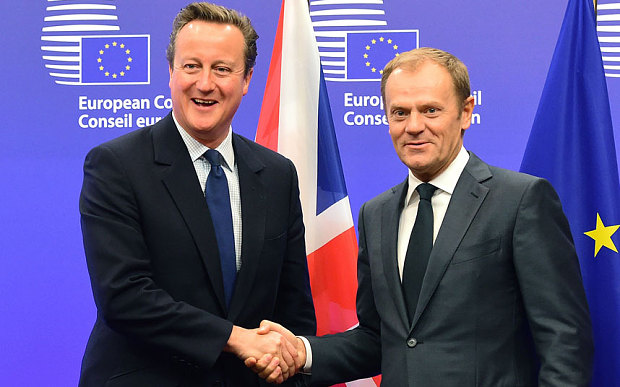
We should expect no better from the prime minister – David Cameron is an avowed europhile, has stated numerous times that his preference is for Britain to remain a member of the EU, and has been unable to force the words “campaign for Brexit” from his lips even as a remote hypothetical. And thus it is no surprise that Cameron went in to the renegotiation with no set demands (contrary to the media narrative) but simply with a begging letter to Donald Tusk pointing out areas for discussion.

And those areas do nothing to assuage the concerns of the thinking eurosceptic or Brexiteer. Because the real problem with our continued membership of the European Union is not immigration, welfare, fiscal policy, social policy or the euro. The real problem is the little-mentioned S-word: sovereignty. Because this one word encapsulates all of the many ways in which the EU infringes upon our democracy.

It’s not about Schengen, or the single market – Britain is already outside the former and a full member of the latter. That’s why when David Cameron comes back brandishing something called “associate membership” we should be immediately suspicious, because it will essentially be a formalisation of the status quo, with all of the existing drawbacks of Britain’s EU membership hardwired into a future new treaty, with a few extra problems sprinkled on top as a garnish.

The fundamental issue of sovereignty will go unanswered, because David Cameron is not even raising it as part of his sham renegotiation, and while the overly credulous may believe that a toothless and unenforceable exemption from “ever closer union” is some kind of great victory, it ignores the fact that our union with Europe is already far too close. The EU remains an explicitly political union (as Alan Johnson happily states in his Andrew Marr interview) and Britain remains firmly part of it.

Neither Leave.EU nor Vote Leave hammer the sovereignty aspect, having decided that scare stories about what the EU will do to “our NHS” (genuflect) and other public services will do more to win over the bovine masses. But sovereignty is the key.

Is Britain to be a real democracy, accountable to its own citizens once again? If so, then we need to recognise – and repeat endlessly – that national democracy and the European Union are fundamentally incompatible.

As the preamble to the Bertelsmann Stiftung report “A Fundamental Law of the European Union” (soon heading our way via the Five Presidents Report) explicitly states:

This proposal for a Fundamental Law of the European Union is a comprehensive revision of the Treaty of Lisbon (2007). Replacing the existing treaties, it takes a major step towards a federal union. It turns the European Commission into a democratic constitutional government, keeping to the method built by Jean Monnet in which the Commission drafts laws which are then enacted jointly by the Council, representing the states, and the European Parliament, representing the citizens. All the reforms proposed are aimed at strengthening the capacity of the EU to act.

It’s right there in black and white – a major step towards a federal union. The EU will drive a wedge between nation states and their citizens by enshrining and expanding the model whereby national governments sign off on laws and policies initiated by the EU Commission, while the people will have redress only through the European Parliament, thus (hope the federalists) gradually legitimising the Brussels and Strasbourg parliament.

But you’ll hear none of this from the major “Leave” campaigns, and certainly from nobody within the Conservative Party. The only real exception at present is the small but growing group of campaigners and bloggers coalescing around Dr. Richard North’s site eureferendum.com, who do a good job holding the media to account and pointing out lazy thinking and writing (sometimes including this blog) which unwittingly aids David Cameron’s agenda.

At least the Left and the “Remain” camps are able to appreciate that the EU referendum is a fundamental question of who we want to be as a country, and where we believe democracy and decision making should rightly sit. They have their particular vision – abhorrent to me, but clear and unambiguous – that the UK is a weak and ineffectual country incapable of robustly defending our own national interests, and that the fifth largest economy, formidable military power and cultural beacon that is the United Kingdom can only survive by dissolving our political identity into the European Union. And they will be repeating this message from now until referendum day.

The “Leave” campaigns have no similar clear vision. They believe that the referendum can be won by reducing the great questions of democracy and Britain’s place in the world to a tedious, nitpicking discussion over how many migrants can be kept out of Britain, or how much money saved by renegotiating the terms of our surrender. Alan Johnson’s view is utterly wrong, but at least he has the confidence to state his case.

When will the Leave campaigns appreciate that the referendum cannot be won if people believe that leaving the EU is a leap into the unknown, or when the only ones talking passionately about Britain’s place in the world are the europhiles?

When will the Leave campaigns stop their myopic obsession with issues like migrant benefits, an arbitrary issue picked by our devoutly pro-EU prime minister, which are only designed to distract our attention from the ultimate deal – associate membership – which will ultimately be presented?

And when will the Leave campaigns get over their overriding fear of the S-word?

David Cameron - Donald Tusk - EU Renegotiation - European Union - Brexit

Agree with this article? Violently disagree? Scroll down to leave a comment.

Follow Semi-Partisan Politics on TwitterFacebook and Medium.

The Daily Smackdown: David Cameron’s Transparent EU Posturing

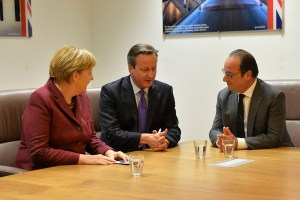
David Cameron - Angela Merkel - Francois Hollande - EU Renegotiation - Brexit

David Cameron has no respect for our intelligence if he thinks we will be fooled by claims that he is seriously considering campaigning for Brexit

Like this blog, the Times instantly saw through the prime minister’s latest desperate, amateurish attempt at brinksmanship and the dissemination of information by an often credulous media.

When David Cameron’s allies leaked that the prime minister was seriously considering recommending a Leave vote in the referendum if his renegotiation continues to be “theatrically spurned” by his EU partners, the story seemed too transparently false to be true. And it is.

The Times commented:

“It is patently clear that [David Cameron] cannot and will not become the man who tossed aside Britain’s EU membership. The hints from his allies that he might do so were a desperate negotiating tactic that has rightly backfired. This sort of melodrama is more likely to make negotiating partners giggle than give way.”

Absolutely. Every one of Cameron’s actions since he reluctantly promised the referendum as a too-little-too-late anti-UKIP defence has reeked of his desperate desire to keep Britain in the European Union at all costs.

As this blog pointed out yesterday:

Anybody with even one foot rooted in reality should be able to tell that this latest court gossip is nothing but spin. Having (unsurprisingly) gotten nowhere with his renegotiation efforts thus far, David Cameron needs to appear tough and resolute for the home audience. After all, it is pretty embarrassing that the leader of a global power and the world’s fifth largest economy has achieved precisely nothing, despite having embarked on a well-publicised begging tour of Europe. When begging and pleading with the Czechs for permission to change UK welfare rules yields no fruit, some kind of strong public stance is essential to preserve any kind of dignity.

The prime minister has never been able to force the words “Brexit” or any other specific phrase about Britain leaving the EU from his lips, and only on rare occasions has he even alluded to the fact that “nothing is off the table” if he judges the results of his renegotiation to be unsatisfactory.

Of course, since Cameron went into the British renegotiation carrying no demands at all – a point worth emphasising, and well made by Richard North at eureferendum.com – he is hardly likely to find his own efforts wanting. Who, given the chance to mark their own homework, would give themselves an F?

And when it comes to nothing being off the table in the event of failure, it remains easier to imagine the prime minister succumbing to a tearful, foot-stamping tantrum on live television than it is to picture David Cameron addressing the nation and declaring that Britain’s national interest would be better served by being outside the European Union.

EU Democracy - Brexit

Agree with this article? Violently disagree? Scroll down to leave a comment.

Follow Semi-Partisan Politics on TwitterFacebook and Medium.

Credulous Media Swallow David Cameron’s EU Renegotiation Myths

David Cameron - Donald Tusk - EU Renegotiation - European Union - Brexit

Nobody in their right mind seriously believes that David Cameron will campaign for Britain to leave the European Union. But that didn’t stop the media from earnestly reporting Number 10’s Brexit bluster

David Cameron is about as far from being a eurosceptic as a Conservative prime minister could possibly be. Sure, he was forced by the rise of UKIP into pledging a referendum on Britain’s EU membership – despite having previously stated that he didn’t think a referendum was appropriate – but this was only ever a matter of political expediency, not heartfelt desire for Brexit or deep conviction that the people should have the right to decide their own destiny.

But this has not stopped the media from willingly and credulously lapping up the latest spin emanating from Number 10 Downing Street – the risible idea that if David Cameron’s EU partners continue to treat him like the pesky kid at the adult’s table, he might seriously campaign for Brexit.

From the Telegraph:

David Cameron has privately conceded he will have to campaign to leave the European Union if he continues to be “completely ignored” by Brussels, the Daily Telegraph has learned.

[..] It has now emerged that Mr Cameron is telling senior figures in his party that he will be willing to campaign for a British exit if EU leaders do not back down over his key reform plans.

“He has said that if he is completely ignored or if they give him nothing he will campaign to leave,” the source said. “He has made that clear.”

Anybody with even one foot rooted in reality should be able to tell that this latest court gossip is nothing but spin. Having (unsurprisingly) gotten nowhere with his renegotiation efforts thus far, David Cameron needs to appear tough and resolute for the home audience. After all, it is pretty embarrassing that the leader of a global power and the world’s fifth largest economy has achieved precisely nothing, despite having embarked on a well-publicised begging tour of Europe. When begging and pleading with the Czechs for permission to change UK welfare rules yields no fruit, some kind of strong public stance is essential to preserve any kind of dignity.

And let’s be frank – the Telegraph didn’t so much “learn” that Cameron is considering campaigning for Brexit through canny investigative journalism, but rather they probably received a tip-off authorised by the Conservative Party hierarchy to place that narrative into the news cycle.

And what a successful stunt it has been. Now we are duly talking about how the prime minister feels so frustrated with the progress of his renegotiation that he is considering this drastic step, when deep down they (and most of us) know that David Cameron would sooner leave his daughter unattended in Nigel Farage’s local pub than recommend to the British people that they vote to leave the EU.

The truth, of course, is that this was always a sham renegotiation. David Cameron didn’t even bother to consult with the British people as to what they wanted out of any new settlement with Europe before jetting off to Brussels to set out his puny demands, so how could he claim to be representing the public’s real concerns?

This whole exercise has been about starting with the outcome of a “Remain” vote and then working backwards to determine the least possible number of concessions required from the EU to deliver that goal, rather than starting with a hard-headed assessment of Britain’s own national interest or public sentiment. And such a back-to-front renegotiation was never going to bear fruit.

As Mark Wallace points out in Conservative Home:

The conventional wisdom is that the Prime Minister has cut back his list of renegotiation demands in order to reach a swift agreement, in which he can claim victory and then hold an early referendum. That probably was his hope; it would certainly make political sense. Unfortunately for him, each aspect of that plan is foundering while the clock ticks down.

With every day that this supposed renegotiation goes on, Britain looks more and more like the weak supplicant nation asking its superiors for scraps from the table – and being rebuffed. This would be humiliating enough, but it is also self-reinforcing. The fact that our EU partners have already seen Cameron going cap-in-hand around the capitals of Europe begging for concessions (rather than boldly stating the UK’s national interest or presenting a radically different vision of EU membership) means that they are emboldened to give away fewer concessions when he comes knocking again.

Right now, the EU has bigger fish to fry than the Brexit question. And with immigration and terrorism top of the agenda, EU leaders feel confident in pushing our renegotiation way down the list of priorities because they know – even if our credulous media claims not to know – that David Cameron will campaign for a “Remain” vote, come what may.

France and Germany are both diplomatically canny countries. If they suspected for a moment that their treatment of David Cameron might seriously cause him to snap and embrace the Brexit cause then they would immediately start making more conciliatory noises. Secretly they might be glad to be rid of Britain, but they know that Brexit would be a stunning, unacceptable repudiation of their vision for Europe. Thus the fact that there is no diplomatic panic in Berlin or Paris is proof that Angela Merkel and Francois Hollande know that their British counterpart remains utterly pliable and sickeningly eager to please.

David Cameron can continue to authorise leaks suggesting that he is contemplating campaigning for Brexit, if it makes him feel better when he is politely ignored by the leaders of other countries a fraction of our size and power. He can promise all the table-thumping rows in the world, too.

But the one thing he cannot do is convince those of us who see through his cheap tricks that he is a real eurosceptic, or that he would ever allow his name to go down in the history books as the man who led Britain out of the European Union.

David Cameron - Angela Merkel - Francois Hollande - EU Renegotiation - Brexit

Agree with this article? Violently disagree? Scroll down to leave a comment.

Follow Semi-Partisan Politics on TwitterFacebook and Medium.