The Conscience-Free Conservatives

David Cameron - Conservative Party - Coke Zero Conservatives

What self-respecting conservative could now bring themselves to support David Cameron’s triangulating, authoritarian, soul-sappingly unambitious Tory party?

Has the time finally come for small-c conservatives to admit that they have been utterly betrayed by Cameronism, and salvage what dignity we have left by deserting David Cameron’s ideology-free Conservative Party?

Pete North argues the case convincingly in an important blog post deserving of wide coverage, in which he excoriates the modern Tory Party for its rootless, centrist managerialism:

If your values are remotely conservative, look around you. We have not seen a reduction in the size of the state. Sure, the registered number of state employees has gone down but that’s because so many functions have been farmed out instead of closed down or truly privatised. Let me remind you that outsourcing is not privatisation – and given the ineptitude of government procurement it’s not going to save you any money either.

Moreover, the so called party of defence has wasted vast sums of money on big ticket toys, most of which barely work and vastly reduce our capability. This is the party that left us without a maritime patrol aircraft and made a pigs ear of procurement.

We have seen back-tracks on free schools and education reforms, u-turns all over the shop, and whatever you might think of welfare, you don’t have to be a foaming leftist to see that it is failing those most in need. Moreover, what is it in your estimation thinks Britain is showing its mettle going grovelling to 27 other states for permission to make a marginal tweak to welfare and immigration policy?

No, the Conservative party is just a continuation of politics-free managerialism, beset by the usual nannying authoritarianism, big spend, high waste massive government and has baulked at any principled reform in the spirit of Mrs Thatcher. At best we can say that Cameron’s conservatives are marginally less dreadful than Miliband’s Labour party would have been.

I must admit that I find myself coming to the same conclusion – I now look at the party of David Cameron and George Osborne and find it utterly indistinguishable from the party of Tony Blair. Neither believe in truly shrinking the state – in fact, both see electoral advantages in keeping it bloated. Neither believe in empowering the individual over the government. And certainly neither believe in the importance of defending the nation state against antidemocratic supranational entities like the European Union.

I haven’t been a member of the Conservative Party since I left Britain for Chicago back in 2010, but when I came back there was little prospect of me rejoining the party for which I campaigned so enthusiastically that year. At the dog end of Gordon Brown’s reign of terror, a fresh Conservative agenda seemed just what the country needed. But after having somehow failed to win that election outright and entering into coalition with the Liberal Democrats, by 2012 it was very clear that in David Cameron we had found ourselves not a new Margaret Thatcher but rather a reanimated Ted Heath.

Of course, you wouldn’t know it from reading the left-wing press or the Left’s loudest voices on social media, all of whom are convinced that David Cameron’s utterly bland, uninteresting government are on an ideological crusade to drown government in the bathtub, trample human rights and sell off Our Blessed NHS to their corporate crony friends.

This would be the same Evil Tory government which has maintained international development spending at 0.7 per cent of GDP while slashing Defence to the bone, which only half rolled back Gordon Brown’s spiteful and unproductive increase in the top rate of income tax, and which ran for re-election on a manifesto pledging a paternalistic, nanny state “plan for every stage of your life”.

But it is on the question of the European Union and Brexit where the Conservative Party are now betraying their principles and their base most grievously, as Pete North points out:

Put simply, if you want to leave the EU, you have already made up your mind that change has to happen and in this there is no room for sentimentality for the brands that used to represent what we believe. Cameron’s empty shell of a party is in no better shape than Labour and if your loyalty to to a brand matters more then you are part of the problem. And that goes double for Ukippers.

If you are a conservative, Cameron is not on your side. He takes you for stupid with phantom vetoes and bogus reforms. This is a man who is lying to us all and treating us with contempt. In the final analysis it’s up to you to decide what it is you really want. If you do want to leave the EU, don’t come bitching to me for pointing out that the Tory Vote Leave operation is catastrophic. Break ranks and take it up with them.

This is absolutely right. The Tory leadership has been indulged and given the benefit of far too many doubts, and the time has come for small-c conservatives to call the bluff of every single sitting Tory MP who has ever uttered a eurosceptic sentiment – and to rain down shame and unrelenting pressure on those whose commitment was false.

Candidate after Conservative candidate won selection by their local association by prancing around as though they were the World’s Biggest Eurosceptic. But now we know that in too many cases, it was all an act. Handed an unexpected majority, a weak opposition and the lucrative prospect of uninterrupted career advancement, too many of the new generation of Conservative MPs are more interested in securing Tory hegemony in government than actually accomplishing any of the things that one might reasonably expect a conservative legislator to do in office.

Hence the sanctimonious, preachy letter signed by 74 of the new Conservative intake, lecturing their older colleagues on the importance of “party unity” and not doing anything to sow divisions during the referendum campaign. But of course, this advice only applies to eurosceptic MPs – europhiles eager to spout David Cameron’s pro-EU lines are unleashed to say and do as they please in their effort to keep Britain inside the EU. It is only the Brexiteers who are muzzled.

One might ordinarily feel sympathy for these older eurosceptic Conservative MPs, being lectured on the importance of putting the party first and not “banging on about Europe” by the new upstart generation of careerists. But then you look at what veteran eurosceptic Tory MPs are actually saying and doing, and any potential sympathy melts away, to be replaced by sheer incredulity that the people who spent twenty years posing as strong critics of Brussels have apparently given no thought at all to how Britain might best leave the European Union.

This could have been the finest hour of politicians like John Redwood, Michael Gove, Daniel Hannan, David Campbell Bannerman and Mark Pritchard. But instead they have either chosen personal loyalty to David Cameron over trifling questions about British democracy and self-determination by campaigning with the Remain side, or they are firing out contradictory statements and half-baked mechanisms for Brexit which are implausible at best, and outright reckless at worst.

And this failure to live up to their rhetoric is not on some trivial issue or arcane policy area, where political horse-trading is to be expected; it is on the single most defining, central question to face the United Kingdom in a generation. On this acid test of conservative principle, nearly all of the “big beast” eurosceptics within the Conservative Party have been found wanting. As few as five (generally second-tier) Tory ministers could end up campaigning for Brexit.

So what possible reason for the failure of the Conservative Party – given the fact that the long awaited referendum could be very imminent – to express anything other than murmurs of approval for David Cameron’s transparent act of political theatre masquerading as a “renegotiation”?

These are the only plausible motivations which come to mind:

1. Despite what Conservative candidates and MPs said when they sought selection and ran for election, they secretly believe in the EU project and want Britain to remain a part of it

2. They lack faith in Britain’s ability to survive or prosper outside the European Union, and this pessimism overrides whatever euroscepticism they have

3. They simply don’t care one way or another

4. They do want to see Britain leave the EU, but they would much rather see their own careers blossom under David Cameron’s patronage than risk isolation by campaigning against the prime minister

None of these possibilities is appealing. And none makes me eager to sprint to my polling station in 2020 to reward them with five more years.

The Conservative candidate in my own constituency of Hampstead and Kilburn (north west London) was a jabbering fool who thought that the EU was simply magnificent, the bedroom tax was actually a tax, and that Britain should unilaterally disarm and get rid of Trident because the United States would do our dirty work for us should the need ever arise. I didn’t vote for him and he didn’t win, because why would the liberal voters of Hampstead vote for a Tory who walks and talks like a Labour candidate when they could just vote for the real thing instead?

But although this breed of Conservative did not manage to win Hampstead & Kilburn in 2015, it is clear that many others did succeed in forming part of the new intake, while a similar number of longer-serving Tory MPs holding the same wishy-washy views entered the parliamentary party in previous elections.

It may sound harsh, but they are all wasting time – ours and theirs. Now is not a time for vacillating centrists and Red Tory / Blue Labour moderates. Now is not a time for fastidious, parsimonious obsession with our public services to the exclusion of all else, or a prime minister who aspires to be a lowly Comptroller of Public Services rather than a world leader. There are still far too many people trapped in welfare dependency or minimum wage drudgery for us to consider pulling up the drawbridge on radical conservative reform.

Steady-as-she-goes Blairism has now reigned for nineteen years, first under the auspices of New Labour and latterly through the coalition years and on into David Cameron’s majority Coke Zero Conservative government. And it is a dull, authoritarian, uninspiring philosophy for government, worthy of a country which has given up on playing any role in shaping human destiny going forward, preferring to jealously obsess over our public services and what’s in it for me, me, me.

I believe that Britain is better than that, and that we still have much to offer the world – particularly if we can now seize this last, best chance to break free of the European Union and rediscover what it means to be an independent, globally engaged, sovereign country once again.

And if achieving this dream means that David Cameron and the Conservative Party in its current form must be circumvented, undermined, sabotaged, attacked and sent to their Armageddon, then so be it. We will have lost nothing.
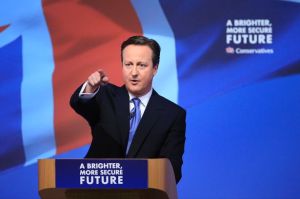
 

David Cameron - What Do The Conservatives Tories Stand For In The Age Of Jeremy Corbyn

NOTE:

I encourage you to read the entirety of Pete’s article, and to follow his blog. The analysis of the coming EU referendum and Brexit process to be found there is far superior to anything you will find in the mainstream media, and if there was any justice Pete would have the kind of platform and following usually only obtained by the C-student nepotism beneficiaries who seem to win many of the coveted gigs writing for prestige publications.

Reading Pete’s blog in particular can be a good reminder of the optimism behind the Brexit movement, and it is essential when we fight this campaign that we do not sound like dreary bores, cranks or obsessives focussing on the negatives of Brussels. For however dreary and stultifying the European Union may be, we are at our best when we present our compelling vision of a modern, forward-looking, globalised Britain which seeks to embrace the world rather than shutting ourselves off in a protectionist, mid-century regional trading bloc.

Agree with this article? Violently disagree? Scroll down to leave a comment.

Follow Semi-Partisan Politics on TwitterFacebook and Medium.

Time To Get Angry About David Cameron’s Brexit Negotiation Trickery

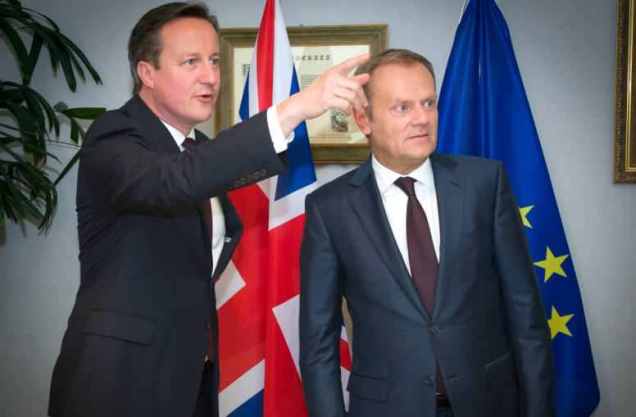
David Cameron - Donald Tusk - 2

Whether you are staunchly pro-EU or eager for Brexit, the prime minister is playing the British people for fools with his manufactured last-minute crunch talks with Donald Tusk. Do we really want to reward this kind of behaviour from our politicians?

If the conventional media narrative is to be believed (and it isn’t), David Cameron has secured a “major breakthrough” in his talks with EU leaders on our suddenly-central concern about migrants claiming benefits.

Of course, this “win” consists solely of a so-called “emergency brake” on immigration which could only be applied with the consent of other EU members. And migrants coming to Britain to supposedly claim benefits is so far down the list of things which are egregiously offensive and wrong with the European Union that the whole pantomime is laughable. But this is all that David Cameron has, and much of the media is gamely writing it up as a meaningful event.

From the Telegraph:

[European Council President] Mr Tusk had been due to publish his final offer to the UK today, but has now agreed to hold another 24 hours of talks after Mr Cameron told him that the deal on the table was “not good enough”. The Prime Minister warned Mr Tusk that Britain could vote to leave the EU unless Brussels does more to ensure that the number of foreigners coming to the UK is reduced.

[..] Last week the EU offered Mr Cameron a watered-down version of the “emergency brake” that would allow him to temporarily limit access to benefits – but only if Brussels agrees that UK public services are being strained. It was described by Eurosceptic Tories as a “bad joke” and “an insult to Britain”.

On Sunday night Mr Tusk accepted Mr Cameron’s demand that any “emergency brake” comes into force immediately. It allows Mr Cameron to reject claims that his “emergency brake” will be subject to a veto by Brussels.

Of course, this is being breathlessly talked up by Downing Street:

“It is very significant that they have conceded this,” a Downing Street source said. “They are saying that in the current circumstances, levels of migration into the UK meets the requirement for an emergency brake. It shows that this is not a theoretical brake and that it is something that will definitely happen.”

So because Donald Tusk has generously granted that the “emergency brake” may come into force straight away, we are supposed to gratefully take our crumbs from the table and forget about the fact that as with every other area that David Cameron once airily promised to reassert British sovereignty, the critical decision ultimately rests with Brussels.

What a transparently false and cosmetic exercise this all is. If Donald Tusk was prepared to release his “final offer” to the UK today and is now only delaying publication until tomorrow, no significant changes can possibly be made in that short span of time.

David Cameron may have huffed and puffed and made a great show of telling journalists that the current deal is not “good enough”, but he will secure no more from Donald Tusk. 24 hours is insufficient time for Tusk to hammer out a new deal and get sign-off from the twenty-seven other EU member states, so if anything radically different does appear tomorrow it will have been pre-agreed by the other twenty-seven and almost certainly shared with Cameron too as part of a cosmetic, scripted act of political theatre.

At this stage in the game, Donald Tusk knows what the other EU leaders are willing to concede and David Cameron knows exactly how much he can demand if he wants an agreement to be signed off in order to ram the referendum through by June (and this still seems very improbable to me). The only ones in the dark are the British public, who were never meaningfully consulted before the prime minister jetted off to air our concerns to Brussels – concerns which he never took the time to consult over or understand before embarking on his mission.

As I and many other Brexit bloggers have pointed out for some time, there is no “renegotiation” taking place, nor has there been. But if we must persist in talking in terms of a renegotiation then we should recognise that David Cameron is sitting at the same end of the bargaining table as the other EU leaders, sharing as they do a common goal of keeping Britain within the political union. We, the British people, are at the other end of the table, on our own. Nobody is arguing our case. Meanwhile, our prime minister colludes with his European colleagues to determine precisely how little they can get away with offering while still buying our acquiescence.

Of course, all of this is quite immaterial, depressing though it may be. For there is no change or concession possible which will change the European Union from being an explicitly political, tightening union whose every act and function serves to drain sovereignty and autonomy from its constituent member states and pool it in Brussels, where it can be wielded by politicians who make the Westminster political establishment look like the model of transparency and accountability.

On this point at least, Daniel Hannan is absolutely right when he writes in CapX:

Either way, the ‘row’ between David Cameron and Donald Tusk, which journalists are reporting so breathlessly, is non-existent. There is nothing to have a row about. Either Westminster is still in charge of welfare policy, in which case the PM doesn’t need anyone’s permission to change the rules; or Brussels is, in which case any alteration requires a treaty change which, as all sides now accept, won’t happen for many years.

I realise that reporters have to write something. I’m sure someone somewhere will have been interested to read that the Downing Street menu involved apple and pear crumble. But, please, guys: the whole thing is such an utter, obvious, confection. You can be pro-EU or anti-EU. There are sincere arguments both ways. But let’s not pretend that anything is changing.

But while the back-and-forth with Donald Tusk and the eventual reveal of whatever package they have already cooked up is hardly news, it is still worth reminding ourselves of the lengths to which the British prime minister will go in order to trick the British people into believing that he has radically changed the terms of our EU membership.

And it should rightly make one wonder: if David Cameron can be so manipulative when it comes to the European Union, how can we trust him on any other matter?

EU Referendum - Brexit - Democracy

Agree with this article? Violently disagree? Scroll down to leave a comment.

Follow Semi-Partisan Politics on TwitterFacebook and Medium.

Taking Advantage Of The EEA To Ensure A Soft Landing After Brexit

All the benefits of Brexit without the risk of a “hard landing”

Could Britain avail itself of our existing EEA membership to continue trading with EU member states as part of the single market while leaving the EUs’ explicitly political organisation and structures? In a word, yes.

Ben Kelly sets out the process by which this would work – and the many advantages of this transitional step – in an ongoing series over at Conservatives for Liberty.

And in the video above, Dr. Richard North of eureferendum.com discusses the solution in detail, in an interview for Icelandic TV.

Up-to-the-minute information and commentary here.

Download Flexcit here.

European Parliament

Agree with this article? Violently disagree? Scroll down to leave a comment.

Follow Semi-Partisan Politics on TwitterFacebook and Medium.

No, Mr. Cameron – This Is Not “Your Referendum”

As far as David Cameron is concerned, the coming EU referendum is nothing more than his personal plaything, an event to be moved about and manipulated as he pleases in order to achieve the “right” result

One throwaway line in the prime minister’s speech to the World Economic Forum in Davos yesterday captured at a stroke the sheer arrogance and duplicity behind the government’s approach to the EU referendum.

From the Independent’s summary of the speech:

David Cameron has told an audience at Davos that he would walk away from a Brussels summit in February if an agreement can not be reached on the UK’s EU Referendum.

“I want to put that to people in a referendum and campaign to keep people in the European Union. If there’s a good deal, we’ll take it. But if there’s not a good deal, I’m not going to hurry, I can hold my referendum any time until 2017,” Cameron said.

“My referendum”. Not Britain’s referendum. Not the public’s referendum. His referendum. David Cameron’s personal referendum.

Strangely, that might actually be the most honest thing that David Cameron has ever said on the subject of Europe and the coming EU referendum. Because given the fact that this cosmetic “renegotiation” has been taking place behind closed doors, with no formal demands and without any input from the British people themselves, the only fingerprints to be found on the whole rotten affair are indeed those of David Cameron and his ministers.

It is becoming increasingly clear to me (not that there was every any doubt) that this referendum will not be a fair fight – in fact, that it will be about as far away from a fair fight as it is possible to be. Just as Russia holding elections does not make that country a democracy, so the fact that the British people are being offered a Remain/Leave vote on the EU question does not mean that the outcome will be in any way legitimate.

It is possible to go through the rote motions of democracy, but do so without observing the spirit of democracy. And when that happens, neither side has cause for happiness with the outcome. If the Remain side win the referendum, their victory will be hollow, having been won on the back of a campaign built on fearmongering, outright deception and tactical manoeuvring by the government. And if (as currently seems probable) the Leave side loses the referendum, the issue will be far from settled. Many Leave campaigners, having been so blatantly cheated, will continue to rail against the European Union and do everything possible to raise awareness of its flaws and undermine the creaking structure from within. I certainly will.

The continued speculation over when exactly “David Cameron’s referendum” will take place is tedious and dispiriting. It should not be considered naive to hope for a prime minister – a leader – who sets out to do the work of the people, representing them and fighting for their priorities and interests in an honest, transparent manner. But in David Cameron we have a prime minister who gives every appearance of negotiating with the British people (or at least manipulating them) on behalf of the European Union, rather than the other way around.

All of this takes place between David Cameron’s repeated assurances to the European media that he feels “deeply European” from the “bottom of his heart” – either forgetting that in the year 2016 it is not possible to say something while abroad without it instantly filtering back home, or simply no longer caring about enraging eurosceptics by flaunting his own passionately pro-EU position.

Fine. Be that as it may. David Cameron was never a eurosceptic or a supporter of the Brexit cause, and at this point nobody expects anything else from him. But having so obviously sought to stack the deck in order to achieve his desired outcome from the referendum, the prime minister has no right to expect us to shut up and accept a future “Remain” vote when he has interfered with the process and undermined democracy at every turn.

David Cameron - European Union

Agree with this article? Violently disagree? Scroll down to leave a comment.

Follow Semi-Partisan Politics on TwitterFacebook and Medium.

Small Minds Discuss People: The Media’s Coverage Of The EU Referendum

Boris Johnson - Theresa May - EU Referendum - Brexit - Conservative Party

The EU referendum is about the British people, not the Westminster game of thrones

Another day brings another tiresome round of court gossip about which Conservative ministers might potentially campaign for Britain to leave the European Union in the coming referendum.

This time the breathless gossip is reported in Guido Fawkes:

A co-conspirator tucking into his ravioli in Westminster’s Quirinale restaurant looked up to see Theresa May and Liam Fox settling down to lunch. An hour earlier Fox had asked the Home Secretary for assurances over the government’s line on Russia, so you can bet that was on the menu. Though the main topic for discussion will almost certainly have been Europe.

There has been speculation that May has been meeting with leading Eurosceptics as she keeps her options open ahead of the referendum. Where better for Dr Fox to lobby her to lead the Out campaign than one of the pricier Italian restaurants in SW1? 

While the Evening Standard gushes about Boris Johnson:

What vexes the fledgling campaign to stay in the EU is the prospective behaviour of Boris Johnson and Theresa May: in the words of one Westminster insider, “they are the only players who could change the weather”.

True enough. Boris has the popular appeal to make the Out campaign blossom with optimism and good cheer, ridding it at a stroke of its negative, wintry disposition. May, on the other hand, would bring the authority of a great office of state to the Brexit campaign. Both politicians are taken seriously within the Tory tribe as prospective successors to Cameron. Small wonder that their every move is being scrutinised so closely.

Seasoned Boris-watchers (or Bozzologists) admit that his behaviour is presently inscrutable. Those I have spoken to incline — just — to the view that he will decide eventually to stick with the In camp, though without much conviction.

Before going on to say of Theresa May:

In 2010 May was startled to be given such a senior brief. Since then she has become incrementally persuaded that she has what it takes to succeed Cameron. Like Boris, she knows her leadership prospects are intimately entangled with her conduct in the EU referendum. But if she is serious about taking on the boys for the top job, she should give the Out camp a wide berth.

As Michael Heseltine used to say as he prepared his challenge to Margaret Thatcher, most contenders only have one bullet in the chamber. If May aligns herself with the Out movement, she will be handing the gun to others and inviting them to do as they please with her accrued political capital. So if her head has indeed been turned by the flattery of the Brexit crew, it should be turned back — and fast.

Because we all know that the really important thing in this referendum is not the profound and historic choice that the British people will make about how we wish to be governed in the twenty-first century, but rather the salacious court gossip over which cabinet ministers and wannabe future Tory leaders will risk their bright young (or not-so-young) careers by allying themselves with the Brexit cause.

Never mind that awkward S-word, sovereignty. That’s boring. Never mind a detailed and difficult discussion about the realities of global governance. That would require research. Proving the adage that great minds discuss ideas, average minds discuss events and small minds discuss people, most of the British media is happy to talk about people and the petty personalities involved in the public debate, to the near total exclusion of everything else.

If you want serious, granular analysis and argument on either side of the referendum debate, there is no point looking in the pages of the Times, the Telegraph, the Guardian, the Spectator or any other publication claiming prestige. All you will find there are thinly veiled press releases from one or other of the groups squabbling for lead designation, or worryingly naive editorials from household name commentators who sound suspiciously like they have done no independent research of their own. Very unimpressive.

No, for serious analysis you have to turn to the blogosphere, and sites like eureferendum.com and Leave HQ on the Brexit side, or Hugo Dixon on the Remain side. And the difference is like walking from a junior school classroom to a tutorial room at Oxford or Cambridge. Absent are the mindless platitudes and stale (often long-ago disproven) talking points that are so often repeated on television and in the broadsheets, and in their place are references to the real, murky world of global regulation – a world which, once discovered, proves that the EU is not the “top table” as europhiles blithely claim, but also that an orderly Brexit would not lead to an instant “bonfire of the regulations” as some on the Leave side stubbornly insist.

Some eurosceptics and Brexiteers would say I am wasting my time by even bothering to mention low-grade newspaper gossip such as the Boris Johnson vs Theresa May game of thrones. And they have a good point, to a degree. This referendum is about the British people and what they think is best, not what government ministers, opposition politicians or establishment media figures may want. Fair enough.

But you can’t just look at these shenanigans in isolation. Is the coming Brexit referendum the most important thing to happen politically in a generation? Yes, absolutely. But that does not mean that we should focus on the referendum outcome to the extent that we ignore the failings and misdeeds of the political class who were here before the referendum became a reality and will (sadly) be here long after it is but a footnote in history.

There is the future stewardship of the country to think about. And I want Britain’s future political leaders to be (so far as possible) principled people with the courage of their convictions. If they claimed to hold a certain view on an important issue like Britain’s membership of the European Union to get elected, they should then follow that through once in office.

Consequently, this blog will be taking a very dim view indeed of any Conservative politician who wrapped themselves in the cloak of euroscepticism to win selection, only to run loyally to David Cameron’s heels like an obedient dog and campaign for a “Remain” vote when it really counts.

This debate should be about ideas first and foremost. That is where this blog will focus. However – and maybe this a sign that I lack a great mind – I for one will certainly remember those people who put their personal careers ahead of their commitment to democracy when it comes to this existential referendum.

EU Democracy - Brexit

Agree with this article? Violently disagree? Scroll down to leave a comment.

Follow Semi-Partisan Politics on TwitterFacebook and Medium.