Labour Reveal Their Priorities

Miss me yet?


It was heavily trailed, but now we know for sure – Labour, who have been feeling the heat as a result of their total lack of credibility on the economy and the fact that the Tories are finally starting to benefit from the fruits of economic recovery, have been forced into revealing some of their plans for the future. And what plans they are. They can best be summarised as “let’s return to how things were in the final days of Gordon Brown’s premiership”.

Whether this makes you want to get out or chequebook and make a huge contribution to the Labour Party or scream and and fall down on the floor in absolute incredulity depends entirely on your political leaning.

The Telegraph reports on Ed Ball’s major policy speech:

[Shadow Chancellor Ed Balls] said it was wrong for the Coalition government to have decided to cut the 50p top rate of tax to 45p from April last year.

“When the deficit is still high, when tough times are now set to last well into the next parliament, when for ordinary families their real incomes are falling and taxes have risen, it cannot be right for David Cameron and George Osborne to have chosen to give the richest people in the country a huge tax cut,” Mr Balls said.

“That’s why for the next parliament the next Labour government will reverse this government’s top rate tax cut, so we can finish the job of getting the deficit down and do it fairly.

“For the next Parliament, we will restore the 50p top rate of tax for those earning over £150,000 – reversing this unfair tax cut for the richest one per cent of people in the country and cutting the deficit in a fairer way.”

Ed Balls calls cutting the top rate of income tax from 50 to 45% a “huge tax cut”. Let us leave aside for a moment the ludicrous presumption on Balls’ part that taking a full half of the incremental pound that someone earns in income tax alone (never mind National Insurance, indirect taxes and VAT) could ever be proposed in a sentence together with the word “fair” and be taken seriously. I am more interested in what Ed Balls and the Labour Party had to say when Gordon Brown decided to raise the top rate of income tax from 40% to 50%. I’m pretty sure that they didn’t call it a “huge tax increase”. In fact, I know that they didn’t sell it to the country that way. So if increasing the top rate of income tax by ten pence in the pound is not a huge increase, how can a partial rollback of five pence be considered a huge tax cut? The answer, of course, is that it cannot.

So a friend of mine had this great idea on tax...
So a friend of mine had this great idea on tax…


In what was doubtless intended as a ringing statement designed to assure us of Labour’s new-found commitment to sensible economic management, Balls also committed to eliminating the budget deficit by the end of the next Parliament, in 2020:

Mr Balls announced what Labour said would be a binding commitment to balance the books, deliver a surplus on the current budget and get the national debt falling in the next Parliament.

Quite why we would want to exchange a government that tried and failed to manage this feat in the lifetime of the current Parliament for one that never displayed an interest in doing so until now but which suddenly claims to be able to achieve it in the next Parliament if only they are given the keys to power is never fully explained.

Neither does Balls acknowledge the fact that even when the budget deficit is eliminated, the national debt will remain intact and ominously large – he makes no proposals about running a future surplus to begin paying down this debt and lowering the nation’s interest payments. Neither, of course, does George Osborne devote much of his time to that niggling fact – but if Ed Balls really wants to seize the mantle of economic trustworthiness from Osborne he needs to aim higher and show that he has a better grasp of the longer term picture than his counterpart.

The reaction to Balls’ speech from the business community – who Labour like to malign, but are actually the ones who create the jobs and pay corporation tax and National Insurance contributions – was predictably scornful. Words and phrases such as “absurd”, “disaster”, “unmitigated disaster”, “putting our economic security at risk”, “unhelpful” and “political posturing” were often deployed.

By contrast, the Unite trade union saw Balls’ announcement as a fantastic development, and urged Labour to ever more destructive heights of foolishness and irresponsibility:

However, the Unite trade union, Labour’s biggest donor, welcomed the policy but warned it was only “a beginning”.

A Unite spokesman said: “The commitment to restore the 50p top rate of tax is a sign that a future Labour government understands the need for a fairer taxation system in this country.

“This is a beginning; we would urge Labour to also tackle the disgraceful abuse of the system by the evaders and avoiders too.

You know what would make tax avoidance really difficult, unnecessary and socially unacceptable? A flat tax. But somehow I don’t see Unite advocating for that any time in the near future. Because, though they do not like to admit it in public, high taxes are not a regrettable but necessary evil to people like Ed Balls and his cheerleaders on the left. For Ed Balls, higher taxes are a desirable end in themselves, a last line of defence to ensnare anyone who defies the odds and manages to break through Labour’s dragnet legacy of mediocre standardised education, burdensome regulations and big government and succeed in spite of themselves.

With regard to Labour’s brave new economic stance, the British electorate will cast the only verdict that matters in May of 2015. But I think David Cameron and George Osborne will be sleeping a little more easily in their beds from now on, warm in the knowledge that Ed Balls has set Labour on a firm course back to 2010.

Saving The World, From A Swiss Fortress

The wait is finally over.


What do Bono, Eric Schmidt, Matt Damon, Jamie Dimon and David Cameron all have in common?

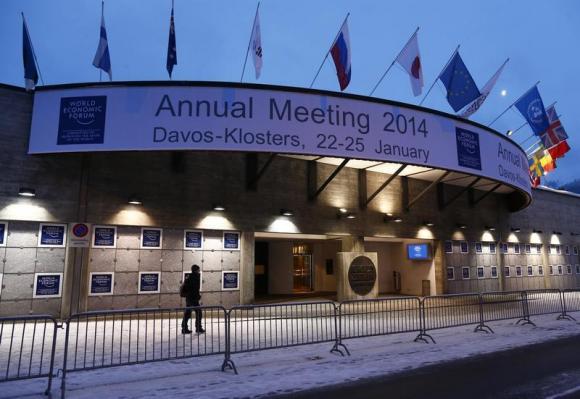
No, U2 are not auditioning for a new band member. The answer is even more thrilling – the World Economic Forum 2014 is convening for their annual gathering in Davos, Switzerland. The tired, the poor and the huddled masses can rest easy because these luminaries, together with Benjamin Netanyahu, the CEO of Wal-Mart and the King and Queen of Belgium have arrived in full pomp and splendour, to do…whatever it is exactly that they do there every year.

From the WEF homepage:

Profound political, economic, social and, above all, technological forces are transforming our lives, communities and institutions. Rapidly crossing geographic, gender and generational boundaries, they are shifting power from traditional hierarchies to networked heterarchies. Yet the international community remains focused on crisis rather than strategically driven in the face of the trends, drivers and opportunities pushing global, regional and industry transformation.

“The Reshaping of the World: Consequences for Society, Politics and Business” is therefore the thematic focus of the World Economic Forum Annual Meeting 2014. Our aim is to develop the insights, initiatives and actions necessary to respond to current and emerging challenges.

If this sounds to you like something you might hear in a second-tier business school lecture or the opening paragraphs of a particularly bad Tom Friedman column, you would be forgiven your mistake. It’s the year 2014 and our moral, intellectual and financial betters have apparently only just come to the realisation that technological forces are transforming our lives, communities and institutions.

Thank goodness for the sagacity of these wise men (and they still mostly are men), who alone among us have perceived that some kind of shift has taken place in our national economies and personal behavioural patterns since the internet and these fancy cell phones popped into being. It is astounding to witness how some of the brightest, busiest and most successful businesspeople, politicians and artists can sit and listen to so much meaningless garbage, and then come back a year later under the powerful spell of collective amnesia to do it all over again.

And seriously – “networked heterarchies”? All outward evidence suggests that there is but one solitary networked heterarchy that has gained and consolidated power in recent years, and that is the one currently booked into a Swiss convention centre to discuss just how wonderful networked heterarchies are, and to divide up the spoils of another bumper year.

In sessions with meaningless titles such as “The New Digital Context”, the world will be put to rights in Davos 2014 – and any outstanding items from the Bilderberg 2013 agenda will no doubt followed up and neatly resolved by those people privileged to be invited to both.

Here’s Klaus Schwab (what better name could there be for the leader of such an event?), the Founder and Executive Chairman of the WEF, welcoming the distinguished delegates to the annual shindig. And yes, he does have a symphony orchestra on the stage behind him. Pity them.


At least Schwab has the decency to admit at around the 1 minute 20 second mark that the whole affair is really about providing an opportunity for the global super-elite to relax, do business deals and network. He puts it somewhat more prettily than this, but the meaning is quite clear. This alpine convocation is like a gold-plated version of LinkedIn, with extra snow.

Cardinal Peter Turkson of the Pontifical Council for Peace and Justice also traveled to Davos, and read aloud a message from Pope Francis. Given the Pope’s well known thoughts about conspicuous displays of wealth and false displays of public piety, one must wonder whether poor Cardinal Turkson found himself having to ditch his prepared remarks and speak extemporaneously for fear of being run out of town for speaking truth to power.

On a personal level, I just don’t quite get it. For most of my career I have worked as a management consultant and project manager. But when I went on vacation, I left my work and all the trappings of my professional life behind at home. I didn’t walk the streets of Paris or the hills of the Lake District pretending to still be running IT projects or anything else to do with my line of work. And so if the shining people in Davos wants to have a good shindig in snowy Switzerland, I would have a lot more respect for them if they would just say so, and spend their time skiing rather than propagating the farcical myth that they are bringing their unique professional skills to bear on the problems of the world.

And yet every year we go through this worn-out pretense that the greatest minds of our generation are sequestering themselves in the mountains to hatch new plans to save the world, when really we all know they are there to slap themselves on the back for another successful year, drink glühwein and try to avoid being isolated in a corner and engaged in interminable, pious conversation by Gordon Brown.

So I have a proposal. Let’s test the mettle of these great, good and benevolent people who claim to care so much for us small folk. Let’s hold the World Economic Forum 2015 somewhere different, somewhere cheaper, calculate the difference in cost and give that sum of money to a front-line charity picked at random from a hat.

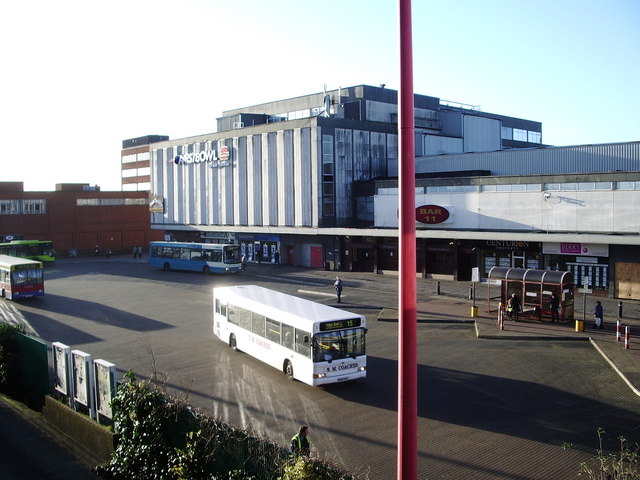
Let’s hold the World Economic Forum 2015 in my hometown of Harlow, Essex.

Superb transport links. Al Gore and Bono can hop on the 501 bus from Stansted Airport and stay at the new Holiday Inn Express.


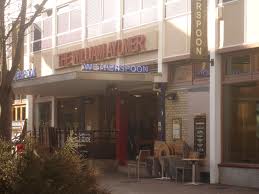
Marissa Mayer, Eric Schmidt and Mark Zuckerberg can network and negotiate new business deals at this conveniently located Wetherspoons pub.


Concrete jungle where dreams are made, oh, there's nothing you can't do.
Concrete jungle where dreams are made, oh, there’s nothing you can’t do.


I’ll see you there!


How Not To Do Tax Policy

Priti Patel, writing in The Spectator’s Coffee House blog, warns that:

… we should all fear Ed Miliband’s praise for a new socialist French President who plans to raise the top rate of tax to 75 per cent. It is a chilling reminder of Miliband’s own commitment to a permanent 50 per cent income tax rate in this country.

But as he visited the Elysée Palace this week, one of France’s leading newspapers warned that the 75 per cent tax rate threat is already leading to French businesses evacuating senior executives to London. Since François Hollande’s victory on 6 May, this exodus of enterprise has caused the waiting list of the prestigious Charles de Gaulle school in our capital to rocket by over 700 places. We haven’t even rolled out the red carpet yet.

Very true. Let this be a warning to all those who think either that there is a binary choice between “austerity” and “growth”, or that Britain’s (or France’s) finances can be rectified, and the current excessive levels of government spending maintained, simply by turning the screws on the rich a little more.

Unfortunately, Patel’s article also misses out the most crucial actions required to get the British economy moving again – introducing much needed supply side reforms. Note:

Yesterday’s economic news reminds us of the need for the Government to continue to focus relentlessly on getting our economy moving – dealing with the debt crisis, boosting bank lending to the real economy, and ensuring sustainable long-term prosperity through radical economic reform.

Nothing about reducing regulation, either independently or through the European Union. Nothing about tackling the restive trades union that are always a day or so away from striking for spurious reasons.

By all means warn about Labour’s policies on tax, but given the fact that Osborne messed up the Budget and left us with a 45% top rate of tax for the foreseeable future, let’s focus on where the coalition government has the political strength to do the most good to restore economic growth.

Cracking Down On The Black Economy

The Minister of the Bleeding Obvious states the bleeding obvious in this story from The Telegraph.

Treasury minister David Gauke informs us that it is “morally wrong” to pay tradesmen (plumbers, builders, electricians etc.) with cash in hand, as this makes it easier for them to evade VAT or income tax. Aside from the fact that every cabinet member from Cameron on downwards needs to quit the moral preaching (why can’t you just say “illegal” or “wrong”?), his basic point is right. Until he goes on to say: “Getting a discount with your plumber by paying cash in hand is something that is a big cost to the Revenue and means others have to pay more in tax”.

Seriously, Mr. Gauke? You expect us to believe that the black economy makes our taxes higher? You would tax us just as much as you already do even if you could get your hands on this missing slice of revenue – you would just find new ways to fritter it away on pointless, undeserving goals and beneficiaries. So let’s not pretend that the cash-in-hand job that your local plumber does on the sly is the one thing standing between us and an actual competitive tax code.

You must think we’re all really dumb.

Diagnosing The Coalition

It is hard to disagree with this uncompromising assessment of the UK Coalition Government’s performance over recent months, by Trevor Kavanagh at The Sun.

In particular:

Unless the PM and his deputy reach a truce soon this partnership will be lucky to survive the year.

A split would force an early election and, incredibly, put Labour back in power after one richly deserved term in Opposition.

The Lib Dems, with only nine per cent of the vote according to a new poll, would be wiped out as a political force.

Labour’s recovery is as astonishing as the slide in Coalition support. Ed Miliband can claim some credit. But this collapse is due entirely to Government bungling on just about every major issue.

Somehow it has allowed the impression that the Coalition, not Labour, is to blame for our economic woes.

Yes, yes, a thousand times yes. It is ridiculous almost to the point of complete disbelief that this government, and the senior Tory ministers within it, have allowed a situation where Labour’s economic policies and statements are given serious consideration only two years after they were so utterly and thoroughly debunked. That really takes a sustained level of incompetence to achieve, and the more you look at it, the more inescapable becomes the conclusion that the majority of the blame lies with George Osborne:

The PM has to decide whether the Chancellor is a statesman devoted full-time to keeping Britain’s precious Triple-A credit rating. Or a political bruiser who risks his credibility in unseemly brawls with Ed Balls.

It is Mr Osborne, not Nick Clegg’s Lib Dem rabble, who is to blame for the Government’s collapse in public esteem.

People don’t mind Westminster thuggery if it works. But torpedoing his own Budget with a catalogue of unforced errors and crass incompetence is unforgivable.

In a few short weeks, Mr Osborne has shredded his reputation and turned the Coalition into a lame duck administration.

It takes a special talent to cast Mr Balls on the right side of an economic argument but Mr Osborne somehow managed to do so.

If the Prime Minister cannot grasp this nettle, he is finished. A job swap with William Hague is the solution.

This is a genuinely interesting idea, though I very much doubt that David Cameron is about to replace his Chancellor in the upcoming reshuffle. But people expressed doubts at the time of his appointment about Osborne’s youth and inexperience, and while he is certainly a political bruiser, it must also be remembered that it was under his political stewardship that the Conservatives failed to gain an outright majority in the 2010 general election, tarnishing his credentials as a political operative as well as a Chancellor of the Exchequer.

It is also amusing that Hague’s name is now being floated as a potential replacement, given the sniping and complaining about his own performance that was taking place a year ago – “Hague Has Lost His Mojo”, etc. etc. In terms of cabinet minister performance, it would appear that slow and steady is winning the race at the moment.