How Dare David Cameron Question The Patriotism Of Britain’s Military Chiefs?

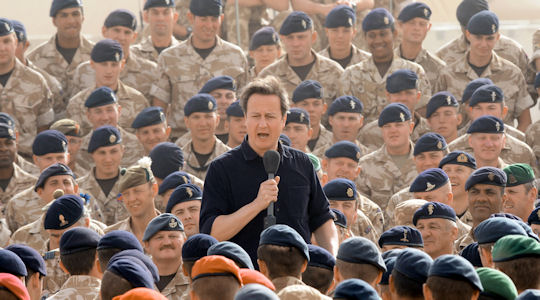
British Prime Minister David Cameron (C)


Anything goes in the build-up to a British general election. And the British people have certainly come to take for granted the endless stream of personal attacks, exaggerated claims, obfuscations and outright lies emanating from the main parties as they vie for position.

But jaded as we are, one still has to admire the gall displayed by David Cameron – a privileged, cosseted man who has never served a day in uniform – when he takes it upon himself to publicly question the patriotism and motivation of Britain’s senior military officers.

The Prime Minister, in full electioneering and damage control mode, did exactly this when responding to the growing chorus of concerns from current and ex-service chiefs alarmed at the degradation of Britain’s military capability and the prioritisation of almost every other area of government spending at the expense of the Defence budget.

The Telegraph reports:

David Cameron appears to have questioned the motives of senior military figures criticising his failure to commit to spending 2 per cent of GDP of defence.

The Prime Minister slapped down retired generals who have attacked the Government over its cuts to the military budget.

Speaking to LBC Radio, Mr Cameron put the generals’ interventions down to them “having their own book to talk, sometimes quite literally a book to talk”.

This is a hit below the belt, even by the no-holds-barred standard of British political debate. But more than this, it is an intolerable insult to the honour and dedication of the men and women who serve in our Armed Forces. And all this coming from someone who has never served personally, but who has been the happy beneficiary of the peace dividend made possible in part by Britain’s military capabilities.

Continue reading

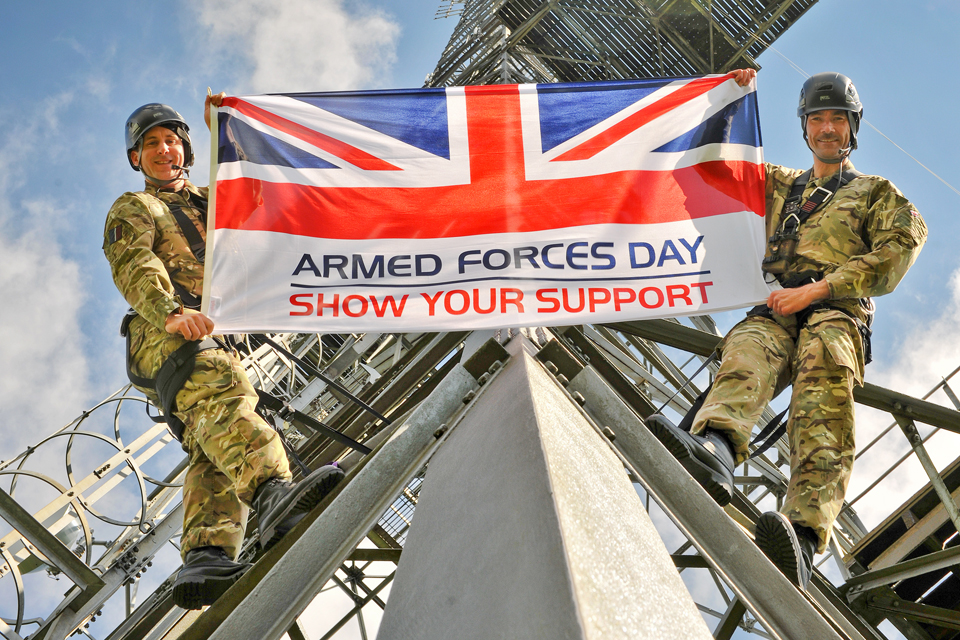
On Armed Forces Day


Saturday 28 June is Armed Forces Day in the United Kingdom.

Of course we should all take a moment to express our gratitude to the men and women who serve on the cutting edge of our nation’s defence and foreign policy projection capability – they toil and risk their lives for far less material reward or public recognition than many of us receive for doing far less.

But one day of public praise is not enough. Our armed forces are suffering significant cuts and capability reductions because of the coalition government’s refusal to protect the defence budget from spending cuts. These cuts include the compulsory redundancy of many long-serving, experienced veterans who deserve better from their government.

Britain is not like the United States – aside from our nuclear deterrent and pared-back blue water navy, we do not enjoy an advantage of many multiples over most of our current and potential future enemies, in terms of manpower or total defence spending. What advantage we have comes from our high-tech skills base, strong defence sector and the extraordinary professionalism of the people who serve our country in uniform.

All too often, people (particularly those on the left) suggest that defence spending should be pared back even further (“Shame on us for not investing more in schools while we build two new aircraft carriers”, etc.) It’s easy to say such things while quietly and ignorantly enjoying the fruits of Britain’s peace, prosperity and place in the world, which is underwritten by the very things that they want to see cut back or abolished. But in reality the opposite is true – having a powerful, effective and deployable military is crucial if Britain is to defend her interests, hedge against the unknown and be taken seriously on the world stage.

The introduction of Armed Forces Day has done a lot to promote greater knowledge, awareness and respect for the role that the armed forces play in our national life. But Britain still has a long way to go until serving soldiers and veterans are accorded the daily respect and acknowledgement that they deserve. Here, we can look to the United States as an example of giving the military a more prominent, respected role in society: from simple acknowledgement at places like airports, through discounts at stores and restaurants, up to incorporating more patriotic rituals – and yes, British Values – into the fabric of our national life.

And most importantly of all, we can put our money where our mouth is. In that spirit, Semi-Partisan Sam has made a small donation to veterans charity Help for Heroes, in support of the great work that they do supporting our wounded veterans.

Whatever our party allegiance or political differences may be, on this Armed Forces Day we should all be able to show our appreciation for those who fight our fights and wear the uniform.


End The Scandal Of Squalid Army Accommodation

Catterick Garrison


An overlooked article in the Telegraph reveals that serving British soldiers continue to endure crumbling substandard living accommodation at a time when the political elites in London are more focused on averting a tube strike and pandering to the whims of the RMT union and its overpaid train drivers than looking after the welfare of those who do a truly difficult and irreplaceable job.

The article quotes a complaint written to the letter’s page of Soldier Magazine, detailing conditions that should rightly cause many red faces at the Ministry of Defence:

The letter from an unnamed soldier complained: “We are constantly without hot water, have only three showers per platoon and not all of them work.

The rooms at Somme Barracks in Catterick are “falling to bits”, the soldier wrote.

“We have made every attempt to make them bearable to live in, but their poor condition is now starting to affect the lad’s morale.”

The response given to the soldier by the Ministry of Defence spokesman is breathtakingly dismissive and arrogant, and is worth quoting in full:

The accommodation at Somme Barracks is not condemned. The MOD has already invested some £1.2 million in improving the site in 2011 and 2012, redecorating and upgrading a number of areas including flooring, toilet facilities and utilities rooms.

We will continue to invest in the barracks and are replacing boilers supplying hot water to blocks 11 and 12. This work should be finished by May 2, 2014.

Comprehensive maintenance service is provided but occupants must report any problem promptly to the help desk or repair work may be delayed.

Essentially, the government’s response to a serving soldier’s complaint about appalling accommodation is to call him a liar, boast about supposed renovations that clearly delivered no noticeable improvement when they were completed two years ago, and then to blame the squalid conditions on the soldiers themselves, claiming that they did not report the issue to the help desk as one would a malfunctioning BlackBerry.

Compare the serving soldier’s description of substandard British army accommodation with this grim account of army housing in backward-sliding Russia, taken from the excellent book “Putin’s Russia” by the late journalist Anna Politkovskaya:

[The soldier’s] home is a dreadful officers’ hostel with peeling stairwells, half derelict and eery … The windows of many now uninhabited flats are dark … We go up to the second floor, and behind a peeling door is a squalid, spartan room … There is no hot water, and it is cold, draughty and uncomfortable.

It is a much overlooked outrage that some in the British army live in accommodation that can be described in very similar terms to Russian army lodgings, the Russian army being synonymous with mistreatment of its soldiers. The comparison is even more galling when one considers the fact that the Chief of the Defence Staff earns £250,000 per year, and the Permanent Undersecretary of Defence an impressive £185,000 for his bureaucratic skills.

The story has gained very little traction in the media aside from the Daily Telegraph story, and with much of the national media’ attention focused on the upcoming European elections it is unlikely to do so. But even if the Conservative-led coalition government remains committed to its policy of diminishing Britain’s military capability though underinvestment and spending cuts, ministers could at least ensure that all serving personnel have the dignity of adequate housing.
A New Argument Against Defence Cuts

troopingthecolour
Maybe they can fill out the ranks with some extra CGI characters.


When even this Conservative-led government is willing to degrade the military capacity of our nation, it has been understandable to despair of anyone in British politics other than Defence Secretary Philip Hammond continuing the argument for a strong, fully-capable armed forces.

Arguments against making experienced veteran soldiers redundant while flashy recruitment drives for new recruits clog the airwaves have fallen on deaf ears, as did the arguments against leaving Britain without full aircraft carrier capability until the new Queen Elizabeth class ships are commissioned. But now a new argument against further cuts to the military may succeed – and it is, of course, the least important or relevant of them all.

The Telegraph reports that additional cuts to the armed forces could impair their ability to carry out ceremonial functions such as Trooping the Colour or participating in state funerals:

Cuts to the armed forces are threatening to undermine the pageantry and pomp of Britain’s biggest ceremonial events, one of the Army’s most senior officers has warned.

Garrison Sergeant Bill Mott, who oversees all major ceremonial events, says he is now struggling to produce the “same spectacle” as the armed forces have shrunk.

His comments are likely to prove especially sensitive as Prince Harry is now a staff officer in the same district as Mr Mott, with a responsibility for helping to organise ceremonial events.

The Telegraph’s source is highly experienced and not prone to hyperbole:

Over the past 12 years Garrison Sergeant Major Bill Mott has overseen every major ceremonial event in London including the royal wedding, Baroness Thatcher’s funeral and the tradition of Trooping the Colour.

However, Mr Mott told Defence Focus, an internal Ministry of defence magazine, that soldiers are “gritting their teeth and getting on with it” in the face of the cuts.

I wonder if this approach might actually work. Since the memory of the Falklands conflict seems to have evaporated from the minds of most people, and a large segment of the population equates maintaining a strong national defence with a desire to embark upon new neo-conservative inspired nation-building jaunts abroad (when in fact there is no reason for the two to be linked), there has been no real attention-grabbing or compelling argument to make in favour of ring-fencing defence spending. Until now.

If this is what it takes to wrestle back the momentum and initiative in favour of protecting military spending, then I’ll take it. But it will not speak highly of the British people if we prove to be more concerned about our future ability to stage a Princess Diana-style funeral than we are our ability to protect ourselves and defend our interests.

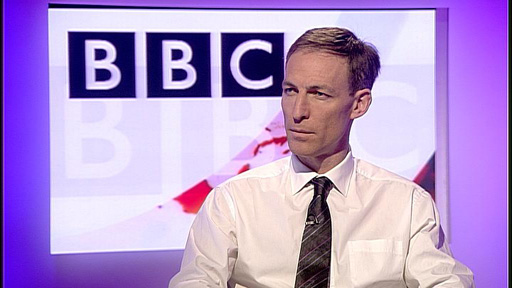
Jim Murphy: Labour’s Saving Grace?


After a day enduring the speeches at the 2013 Labour Party Conference in Brighton, I am rapidly coming to the conclusion that Jim Murphy MP, the shadow Defence Secretary, is the sole saving grace in Ed Miliband’s weak shadow cabinet.

Aside from the much-heralded rollout of a redundant proposal to specifically criminalise attacking a member of the armed forces, his speech – delivered without notes or teleprompter – was the best thing of the day:


Murphy rightly calls out the current government for their mistakes in defence policy, and though Labour’s record in this area is hardly stellar, he manages to land some punches that will hurt the Tories and which should give them serious pause for reflection as to their own conservative priorities and supposed natural affinity with the armed forces.

In so doing, he also managed to tick off an impressive list of Labour policies and pledges, as yet unmatched by the Tories, which would naturally appeal to service members and their families.

Legal aid and entitlements for veterans.

In-service education for serving troops.

Codifying the armed forces bill of rights in the Labour Party rule book.

Denouncing the decision to make tens of thousands of experienced veterans redundant while expecting their roles to be backfilled by reservists in the TA.

Mocking the lamentable fact that Britain’s new aircraft carriers will enter service years before the jets capable of flying from them.

Rightly calling out the government for failing to address the disastrously bloated and inefficient defence procurement system.

In their zealousness (but not effectiveness) to reduce Britain’s budget deficit and roll back the size of the state, the Conservative/Liberal Democrat coalition government has undeniably weakened Britain’s armed forces and military readiness, and Jim Murphy did well to draw blood on all of these points.

It is still a bit rich for Labour to try to seize the mantle of being the party of the armed forces, but Jim Murphy is a talented and competent politician with an obvious affection for and affinity with the military. He may not have owned up to Labour’s own past failings in the defence sphere – no one in the shadow cabinet has managed to do that – but he is no dove, and he clearly has his eye on the future.

Based on his recent performance, Jim Murphy would be a solid pick for the Labour party leadership after Ed Miliband has finished leading them into electoral oblivion.

The Conservative party should watch and beware.