This Week’s Cowardly Assault On Liberty Comes To You Courtesy Of David Cameron

David Cameron Paris Attack Charlie Hebdo 3


It is nearly one week since murderous Islamic extremists launched their three-day campaign of terror across Paris, striking at one of the core pillars of western democratic society: a free press exercising their fundamental right to freedom of speech. But before the victims of the Charlie Hebdo massacre and the kosher market siege have even been laid to rest, David Cameron and his government have started planning their own assault on the rights of the individual and the foundations of a free society.

Of course, David Cameron’s assault is couched in the gentle, persuasive diplomatic language of the politician. There will be no masked men clad in black, no sudden hail of gunfire and no hostages taken – unless you count the right to live our lives free from intrusive snooping from a government that believes it can keep us completely safe, if only it knows enough about us all.

The Guardian provides a good summary of the enhanced laws and powers that David Cameron and the security services want to take for themselves:

Continue reading

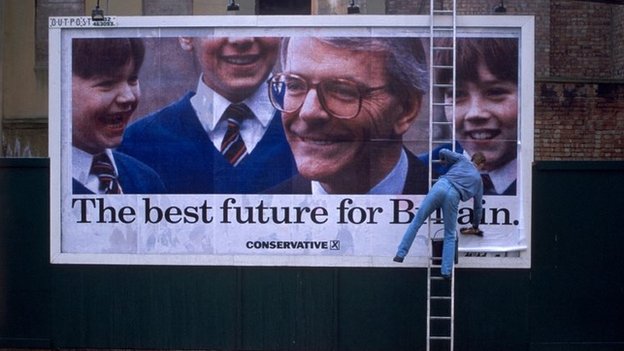
John Major’s Immigration Comments, And The Tory Dilemma

John Major Immigration


In a blast from the past, former prime minister John Major, continuing his recent trend of interventions in the British political debate, has made headlines for supposedly contradicting David Cameron’s stance on immigration.

The Huffington Post reports:

In an apparent snub to David Cameron, the former Conservative Prime Minister said it was admirable that people coming to the UK had the “guts and the drive” to travel thousands of miles to Britain in order to improve their lives, not just to “benefit from our social system”.

Speaking to the BBC Radio 4 programme Reflections with Peter Hennessy, he continued: “I saw immigrants at very close quarters in the 1950s and I didn’t see people who had come here just to benefit from our social system.

“I saw people with the guts and the drive to travel halfway across the world in many cases to better themselves and their families. And I think that’s a very Conservative instinct.”

Of course, John Major is absolutely right. People who make the long journey to Britain in order to build a better life for themselves and their families are highly likely to have drive, ambition and work ethic in greater degrees than the average sedentary Brit. But in seeking to create a story in the middle of political slow news season, many media outlets (including the BBC) have been somewhat disingenuous in the way that they presented Major’s remarks.

The former prime minister was quite specific that he was talking about the kind of immigration that he saw first-hand, growing up and living with his family in Brixton, London. The immigration profile at that time was light years away from the current breakdown of immigration in the 21st century, and crucially did not include large numbers of European immigrants coming to Britain availing themselves of their rights under the EU’s common market. In John Major’s youth, the EU and the dream of ever-closer union was but a twinkle in the eye of the era’s political leaders.

The 1950s did see a period of mass immigration, but it was not of the same scale in absolute numbers and was mostly immigration from the Commonwealth as British passport holders born overseas took advantage of their right to settle in the mother country. To speak in praise of immigration from this era is not necessarily to contradict the government’s efforts to reduce net immigration in the year 2014. Thus it is disingenuous for the British media to take John Major’s praise of a 1950s phenomenon and translate it into criticism of 21st century policy.

The one area where John Major is absolutely right, and was not misrepresented by the media, is his claim that many immigrants do indeed have quite conservative instincts at heart. This instinct can be broken down into two types – social conservatism (particularly the case for immigrants from heavily Catholic countries) and fiscal conservatism. The worry for the Tories is that they are completely failing to tap into either of these sentiments or to build meaningful levels of support among recent immigrants.

But how can the government go about doing this while honouring its pledge to reduce overall net immigration? There is a narrow tightrope to walk between responding to public concern about the current immigration rate and making it clear to existing immigrants that they are welcome, encouraging them to assimilate as quickly as possible and then reaching out to them to turn them into Conservative voters. The margin for error is small, but it should still be possible.

Many recent immigrants come from countries that only a few decades ago struggled to escape from under the heavy yoke of Soviet communism – think Poland or Slovakia as prime examples. There is a love and appreciation for capitalism and the free market among many Poles and Slovaks that is often absent from indigenous British people, who tend to take our system for granted or focus only on its faults. And at a time when Ed Miliband’s Labour party seem to offer heavy regulation and re-nationalisation as their only policy prescriptions, the Conservatives have a ripe opportunity to show that their vision of lower taxes and greater freedom will deliver for everyone in the UK, immigrants firmly included.

There is also political capital to be made in toughening up the rules around access to benefits for newly arrived immigrants. The notion that newly arrived immigrants should be allowed to claim support from a system which they have never contributed towards is just as galling to a Polish family settled in Britain for five years and paying taxes as it would be to any UK citizen. But successfully arguing this point would require deft and precise use of language so that the media has no opportunity to run with the false trope that the evil Tories believe that all immigrants are benefit-scrounging parasites.

In short, the areas where the Conservative party (and indeed UKIP) currently alienate immigrants tend to be around the semantics and tone of the debate, whereas their actual policy prescriptions (maximum freedom, low taxes) make an ideal fit for many prospective immigrant voters.

But the Conservatives should have absolutely no expectations that the media, or the Labour Party, will lift a finger to guide immigrants toward this truth. In fact, if the twisting of John Major’s words today is anything to go by, the opposite will take place – the Conservatives will be painted as heartless and cruel in wanting to enforce stricter entrance criteria, while the many negative ways that Labour policies have the potential to hurt economic migrants will be glossed over and excused.

The irony is that British immigration policy tends to only affect new immigrants once – at the point they enter the UK to settle and work. From that point onward, once they are safely settled and working in Britain, the issue becomes largely irrelevant. Ed Miliband and the Labour Party have thus far managed to coast along on the assumption that they will win the lion’s share of the recent immigrant vote because they tend to advocate for a more laissez-faire border policy. But there is absolutely no reason why this should be the case.

The Conservatives have a compelling message to offer those recent immigrants who will go to the ballot box for the first time in 2015. It is a message of liberty and personal responsibility which should resonate strongly with just the type of people who took a huge risk in packing up their lives and moving to Britain. But for all his well-intentioned words, John Major failed to deliver that message in a way that cut through the skewed agenda of the news editors.

David Cameron and the Conservative Party urgently needs charismatic MPs and councillors to step up, refine and then start sharing this new message, this Conservative pact with recent immigrants. If they do not rise to the challenge, Labour will win the immigrant vote by default once again.

Dear Insert Name, Thanks For Your Generic Efforts, Love DC

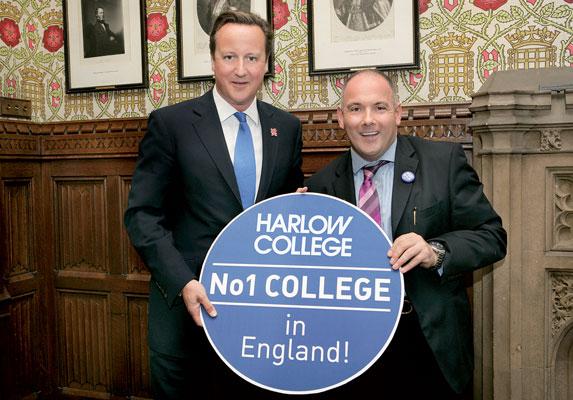
David Cameron Robert Halfon Backbencher MP Conservative


Many people, Semi-Partisan Sam included, receive at least one round-robin letter, trumpeting the glittering achievements and detailing the tribulations experienced by far-flung branches of the family, in the run-up to Christmas each year.

Folksy newsletters of this kind have long-attracted a mixture of ire, derision and pity, but we grudgingly read them because were it not for this (and the real-time bragging that takes place on Facebook), we would otherwise have absolutely no idea what’s new with Aunt Cersei and Uncle Jaime in Kings Lynn or cousin Arya in her gap year travels around the world.

But the one thing we round-robin recipients never do is boast about having received the same mail-merged missive as every single one of our other extended family members. This only makes it more odd that Robert Halfon, the Conservative MP for Harlow, took to Facebook today with evident pride to share a letter purportedly written and sent by David Cameron to celebrate the government’s achievements in the year to date.

The mediocre, mail-merged round-robin letter is shown in its banal entirety below:

David Cameron Robert Halfon Backbencher MP Parliament Letter

Cameron’s attempt at a morale-boosting letter is full of the meaningless platitudes about securing a “brighter future for Britain” that one might expect from a tired politician going through the motions on a local radio interview at 6AM, but it is doubtful that the prime minister personally authored the letter whilst away on vacation in Portugal. Far more likely that the job was delegated to a junior special adviser or some other paint-by-numbers Downing Street aide.

But what is truly interesting about this seemingly dull letter is the fact that the only identifying marker tailoring the letter to Robert Halfon is the inclusion of his name after the word “Dear” at the top. From that point onwards, David Cameron’s missive takes a lazy ramble across the current political landscape, touching on high-level achievements rather than the particular work or campaigning issues of Halfon and his fellow backbenchers.

The prime minister proudly acknowledges the “difficult decisions” that were taken to stabilise and return the British economy to growth. With a fanfare he takes credit for reducing the deficit by a third – some credit, considering that the government fell far short of its target on deficit reduction, and that the national debt continues to grow.

In his summer hubris, Cameron goes on to take personal credit for falling unemployment, reduced immigration (again, far from achieving the targets set out in the 2010 general election campaign), improved schools and, at probability’s furthest stretch, the supposed repatriation of previously outsourced and off-shored jobs to Britain. And the memo ends with a limp call to action, exhorting the prime minister’s Westminster foot soldiers to continue fighting the good fight to keep Ed Miliband out of Number 10 Downing Street (and Cameron on the business side of the famous black door).

But would it really have been so hard to add even a dash of customisation before firing out these letters? The recipient in question, Robert Halfon, is a relative newcomer to Westminster having joined the 2010 parliamentary intake, and so does not have a huge stable of stories, anecdotes, policies or victories for a hapless intern to research. But he does have several solid achievements and bold stances to his name that could have been used, had anyone been bothered.

The top paragraph of the Cameron-O-Gram might have approvingly mentioned the successful Fair Fuel campaign led by Halfon, conveyed thanks for leading the way in advocating more youth apprenticeships, or pledged to work with the Harlow MP to address the problem of prohibitively high car parking prices at NHS hospitals. But it did none of these things. In fact, the standardised email to lowly backbenchers went even further in demonstrating its ignorance or indifference to the work of individual MPs by prominently hedging its bets:

“So a big ‘thank you’ for everything you have done to get us this far. And thank you too for your campaigning this past term – whether that be in the local and European elections in May, or in Newark last month, where our Party came together to win our first by-election in government for 25 years.”

“Whether that be…”? Shockingly, David Cameron and his office seem entirely ignorant as to which MPs contributed the most and the least to recent campaigns, despite Grant Shapps’ threat to shame and punish any MP who failed to pull his or her own weight on the campaign trail. People accuse Ed Miliband’s office of being out of control and unable to properly co-ordinate, but now it seems as though the Conservatives are rapidly falling to a similar dull point.

“Letter-gate” reveals a picture of a prime minister and a government that not so long ago fawned over restive backbench MPs to keep them sweet, but which now believes that they can be treated with any amount of contempt given the fact that they will need help from CCHQ to survive the 2015 general election, and will overlook the snub.

And there can be few better ways to showcase this contempt than spamming hardworking backbench MPs with a cheesy, internal and non-specific campaign memo – ostensibly to give thanks for backbench loyalty – which is hardly different to the regular mailing list bulletins “written” by various Tory ministers and still received by Semi-Partisan Sam as a former member of the Conservative party.

At this point in the life cycle of government, a proactive and attentive leader might take the time to properly shore up morale and accrue some goodwill among his troops heading into party conference season. At the very least, a good party leader might feign an interest in the constituency work or personal causes of their MPs. But Cameron seems unable to even fake this enthusiasm.

Ironically, the earnest and hardworking MP who was so delighted to receive this piece of junk mail from Number 10 – the political equivalent of a pizza delivery leaflet shoved through the letterbox – was chastising his constituents, charities and community groups for spamming / petitioning MPs and adding to their workload in precisely this automated fashion only 30 months ago. In February 2011, Halfon wrote:

So what’s the best way to persuade an MP to support your cause? It’s simple. When I get an invite to visit the local branch of an organisation, I will always go. When I get a personalised letter, hand-signed from a chief executive (as opposed to public affairs officer) that contains local statistics and information, how can I not fail to be interested? When a local constituent calls me asking for a meeting, to talk about his or her involvement in her charity, I will always do it. I remember particularly how I was recently lobbied directly in the Commons by a resident who was involved with a breast cancer charity. She had a profound effect on me. I was only too pleased to support her cause.

So my final advice to charities and the voluntary sector is this: forget the impersonal emails, move away from computer generated email campaigns, stop sending reams of paper by post. Make it personalised and local, and you will not just have my real support, but that of many other MPs as well.

To counsel constituents against using inappropriate forms of communication while lauding precisely the same impersonal tactics when executed by 10 Downing Street, as Halfon seems to be doing, is puzzlingly contradictory to say the least. And at a time when Conservative MPs defending narrow majorities most need the help of their leader to retain their seats in 2015, it is especially odd that at least one backbencher is not more offended at being condescended to in this manner.

As the sweltering Parliamentary summer recess rolls on, the question we are left asking is this: With potent threats from both UKIP on the right and Labour on the left, how on earth does David Cameron expect to lead the Conservatives party to a majority and victory in 2015, when he clearly has so little respect for his generals in the field?

A postcard from Portugal would have cost so little, but said so much more.

The Underwhelming Return Of Boris Johnson

Boris Johnson Parliament 2015 General Election 3


Who cares that Boris Johnson, the current Mayor of London, has finally admitted the blazingly obvious and declared his intention to stand for Parliament in the 2015 general election?

Almost everyone in the commentariat class seems to care, and to have a strong opinion about what is perhaps the most unsurprising revelation in British politics. But precisely why the rest of us should care about this revelation is not so self-evident. There’s obviously something in it for Boris Johnson: the opportunity to compete for the Conservative Party leadership in the event of a 2015 general election or 2017 EU referendum defeat. But what does a potential future Boris Johnson premiership offer the country that merits such a fevered round of speculation and media coverage?

Read any of the articles breathlessly speculating about David Cameron’s annoyance at being outmanoeuvred by Boris whilst on holiday, where the Mayor of London will make his stand as he searches for a constituency, or the pieces imagining the circumstances in which Boris might beat George Osborne and Theresa May to the leadership in the event of Cameron’s early demise, and you will learn everything you possibly need to know about The Decision. Everything, that is, except for why a Boris Johnson administration would be interesting, or different, or especially harmful or beneficial to Britain. But you can’t entirely blame the press corps for the oversight – if they are unable to answer these questions it is because the great man himself is just as uncertain of the answer, and has taken every opportunity to avoid revealing his vision.

Those people hailing Boris Johnson’s announcement should explain to the rest of us exactly what it is about their man that makes it worth getting excited about. Is it his bold, original policies on this or that? Because precious little has been written about the stark policy differences that distinguish the London mayor from the likes of David Cameron or George Osborne. Is it his approach to the electorate and politics in general? Because the Boris trademark down-to-earth, sometimes frank demeanour is nothing that UKIP’s Nigel Farage does not already offer. Or is it because of his years of executive experience managing the capital city of the world? Because the competencies needed to be a competent mayoral figurehead are not necessarily the same skills of tenacity, diplomacy and coalition-building needed to succeed as prime minister.

In one of the few tangible political divides where Boris Johnson has forcibly expressed an opinion, he has been wrong, and unabashedly part of the problem rather than the solution. At a time when airport capacity in southeast England is under pressure and London’s competitiveness impacted, the British government has done what it does best – handwringing, buck-passing and stalling for time with lengthy enquiries – and London’s mayor has campaigned against the obvious solution of expanding Heathrow airport in favour of a hare-brained scheme to close the UK’s largest airport and replace it with an entirely new facility in the Thames estuary. This blog has repeatedly explained the foolishness behind the mayor’s alternative vision.

Boris Johnson is also on manoeuvres to distinguish himself from Conservative Party orthodoxy on the thorny subject of Britain’s EU membership, but even here his newfound embrace of euroscepticism is riddled with disclaimers and lacks sincerity. It is particularly telling that when polled, over half of UKIP voters said that if Boris Johnson were to stand for the Conservatives on their local constituency, it would make no difference to their voting intentions. While eurosceptics and believers in nation state democracy should be pleased when any prominent Conservative politician commits to campaigning for a British EU secession in the event that renegotiations fail, in Johnson’s case it does not automatically make up for his previous equivocation and instinctive desire for Britain to remain inside the European Union.

In David Cameron and his coalition government, Britain already has a thoroughly conservative-lite leader, happy to talk the talk about fiscal responsibility and small government while carelessly treading the same uncompetitive, centrist and statist path as his predecessors. If the British electorate is to be asked to vote Conservative again, do they not deserve an upgrade from the Tories’ 2010 offering? Differences of image and style aside, it is very difficult to discern how Boris Johnson represents anything new, let alone an improvement on David Cameron.

And in a surprise twist, one of the few senior politicians (aside from Boris Johnson’s direct competitors for the Tory leadership) to see through the bumbling, affable persona is the usually hapless deputy prime minister, Nick Clegg:

“The thing about Boris Johnson is despite all the clumsiness and bumbliness he’s actually a really, really ambitious politician,” Mr Clegg said.

“He treats his political ambition like he treats his hair. He wants everybody to think he doesn’t really care, but he actually really, really does care.

“His tousled hair, his bumbliness, all that’s great. But behind all of that is someone who is absolutely fixated with his own political ambitions.”

The only thing missing from Nick Clegg’s timely critique is this blog’s concern that there might actually not be anything beneath the populist image and the driving ambition. It would be bitterly ironic if Britain’s next Conservative prime minister turned out to be the polar opposite of his most recent Labour predecessor in every area except for one – that they both shared a burning desire to reach Number 10 Downing Street, but had absolutely no idea what to do with the prize once they had it.

So why should we care that David Cameron’s former classmate has made official his plans to return to Parliament? The onus is still on Boris Johnson to convince us that it matters in the slightest.

British Conservatives Must Show The Courage Of Their Convictions

Bring Back British Rail


David Cameron’s cabinet reshuffle dominated the news over the past week – at least, until it was totally overshadowed by world events in Gaza and Ukraine. But the punditry and speculation about who is up and who is down, who succeeded in clawing their way into Cameron’s inner circle and who was excommunicated to the fringes, generally lacked a certain something. Call it relevance.

Beware of anyone offering a neatly packaged, coherent analysis of David Cameron’s cabinet reshuffle so early in its aftermath. There’s a lot of ready made narratives out there – Ken Clarke’s departure heralding the death of the big beasts, the timely promotion of women to the cabinet, the opportunistic promotion of women to the cabinet, the misogynist promotion of women to the cabinet, the triumph of social conservatives, the social conservative purge and the elevation of arch-eurosceptics, to name just a few. The only thing uniting these narratives is that they are quite contradictory, and that they are already out of date.

If you insist on looking for a consistent theme in the Cabinet reshuffle in place of the dull reality (a series of largely independent political calculations by a cautious government), it is not the glaring fact that this was a political reshuffle – paging Captain Obvious – but that it was such a defensive political reshuffle in the run-up to the general election.

With less than a year left of the current coalition government, there was really no point in having a reshuffle at all, from a policy perspective. Little real governing will be done with the coalition partners both manoeuvring to define themselves against each other and take credit for past accomplishments, meaning the only real work left to be done is the cementing and locking down of reforms that have already been made. For all intents and purposes, we are now entering a lame duck session of Parliament.

Given this fact, the most sensible thing for David Cameron to have done – both to achieve the goals of cementing existing government policies and publicly standing behind them – would have been to not have a Cabinet reshuffle at all. But resoluteness and steadfastness was not on David Cameron’s list of priorities. In far too many cases, the personnel changes suggested an apology for successful conservative policy and right-wing thinking in general.

The plain truth is that the conservative agenda – enacted properly and with consideration – works. Privatisation works, welfare reform works (as Fraser Nelson forcefully argued last week), conservative education reform works. Though we should rightly acknowledge and mitigate the negative side effects of weaning people off government aid – and be blunt that these are often counted in terms of human suffering – conservatives should stand unapologetically behind their record, and the ideology which underpins it.

But just when the Conservative Party should be standing up for its beliefs and accomplishments, the coalition government seems more eager to run away from them, to excuse them in the context of “tough decisions to pull the country out of recession”, or to reveal their fear by preventing the proper scrutiny of opposing ideas.

Take the Commons vote to allow the Office for Budgetary Responsibility to audit and pass judgement on Labour Party budget proposals. A confident Tory party that stood behind its accusations of thoughtless left-wing spendthriftery would welcome the harsh spotlight of a non-partisan body like the OBR being shone on official Opposition proposals, but instead the Conservatives made it known (with dubious reasoning) that they were against the proposal.

(It should be noted that in the United States, the equivalent Congressional Budget Office scrutinises draft legislation submitted by both Republicans and Democrats, which further helps to cement its reputation as a non-partisan body).

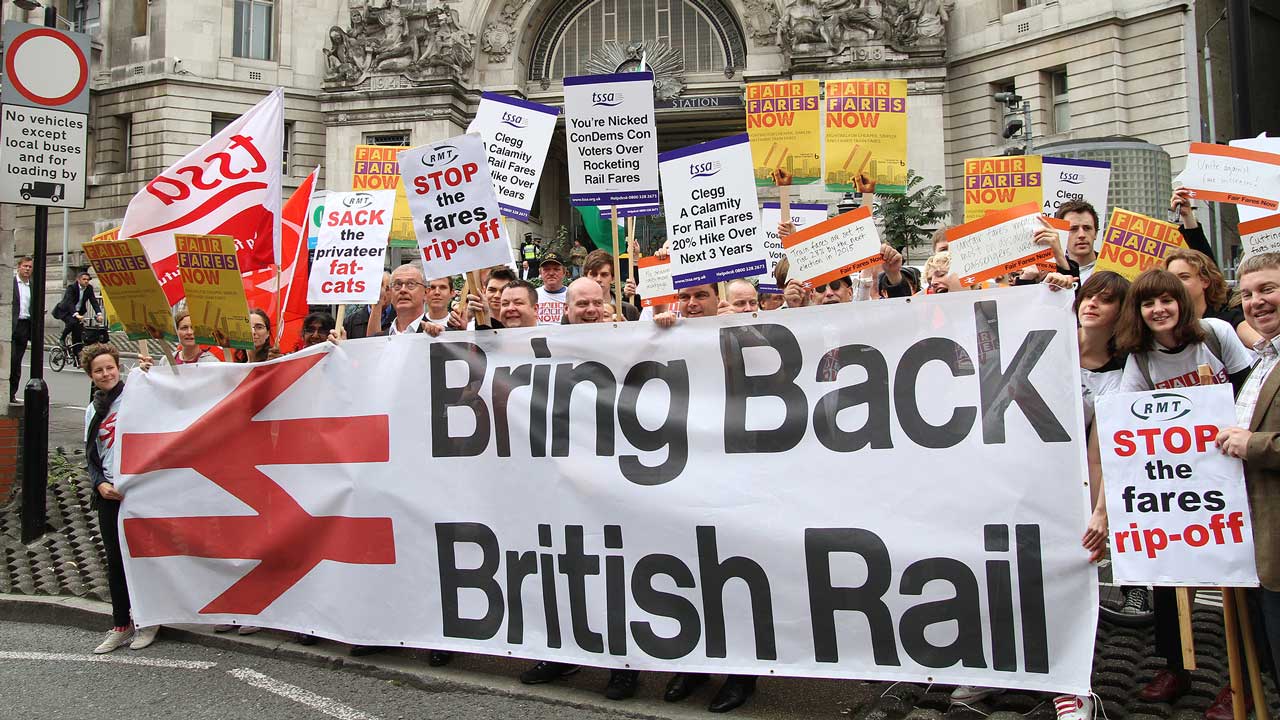
Look also at the question of railway renationalisation. Pushing an even greater proportion of the British economy into the dead hands of the state is generally a terrible idea, but reflexive Tory opposition to what Ed Miliband and Labour are proposing is counterproductive. Firstly, it glosses over some of the legitimate flaws in the way that the rail privatisation was carried out, and the way in which the privatised railway system is structured. Ignoring legitimate criticism is never the path to good future governance. But secondly, it suggests a lack of confidence in the Tories’ own ideology. If the private sector is so darn efficient and dynamic, what worry should private firms have if the bloated, inefficient state tries to bid for their train franchises, when surely they would lose every single time?

And in the most high profile case of conservative reshuffle apologetics, Michael Gove – one of the few Conservative ministers to successfully enact genuinely bold conservative reforms – was moved away from the Department of Education and demoted to the position of Chief Whip (those arguing that it was not a demotion should compare the salaries of the two roles).

Alarmingly, much of the reaction to Gove’s departure suggested that he was moved on not because his reforms had failed, but because he hadn’t flattered people with enough platitudes while successfully enacting them. The truth about Mr Gove can be discerned by parsing the reaction of Russell Hobby, general secretary of the National Association of Head Teachers. The Telegraph reports Hobby’s view:

“Michael Gove had a radical and sincere vision for transforming education but he often failed to bring the profession with him.

“His diagnosis was frequently astute but his prescriptions were hard to swallow. It is now time to rebuild trust and confidence between government and teachers so that improvements can endure.”

Translated, this means that Gove’s ideas and reforms were quite sound, but he rubbed too many powerful special interests up the wrong way in the course of implementing them. With his removal by Cameron, good policymaking was subordinated to public sector union ego-stroking.

The unions clearly felt that Michael Gove did not respect them – time and time again, in interview after interview with cheerful teachers, this was the constant refrain. After the dust settles, perhaps people will start asking when the pride of the teachers unions and the egos of individual teachers became more important than implementing the best possible education policy for Britain’s children.

At the recent Margaret Thatcher Conference on Liberty, organised by the Centre for Policy Studies think tank, former Australian prime minister John Howard made an important observation. Reflecting on his three successive election victories, Howard said: “The worst way to try to win office is to pretend you’re not too different from your opponents.”

If David Cameron and the Conservative Party are to succeed in their audacious goal of winning an outright majority in the 2015 general election, the path to victory does not lie in pretending to be Ed Miliband’s mollycoddling Labour Party with a small added dose of fiscal realism. If people want a fiscally irresponsible government pledging obsequious servitude to the public sector unions and buying into their pretence of representing the public interest, they will vote for the real thing, not a pale imitation. The Conservative Party must stand behind their limited successful reforms, and promise to double down if they are re-elected to government in 2015.

With the general election less than ten months away, this is no time for small government conservatives to falter.