How Dare David Cameron Question The Patriotism Of Britain’s Military Chiefs?

British Prime Minister David Cameron (C)


Anything goes in the build-up to a British general election. And the British people have certainly come to take for granted the endless stream of personal attacks, exaggerated claims, obfuscations and outright lies emanating from the main parties as they vie for position.

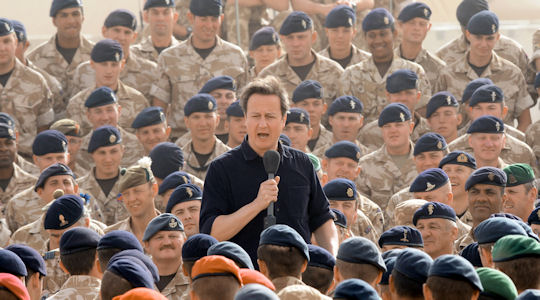
But jaded as we are, one still has to admire the gall displayed by David Cameron – a privileged, cosseted man who has never served a day in uniform – when he takes it upon himself to publicly question the patriotism and motivation of Britain’s senior military officers.

The Prime Minister, in full electioneering and damage control mode, did exactly this when responding to the growing chorus of concerns from current and ex-service chiefs alarmed at the degradation of Britain’s military capability and the prioritisation of almost every other area of government spending at the expense of the Defence budget.

The Telegraph reports:

David Cameron appears to have questioned the motives of senior military figures criticising his failure to commit to spending 2 per cent of GDP of defence.

The Prime Minister slapped down retired generals who have attacked the Government over its cuts to the military budget.

Speaking to LBC Radio, Mr Cameron put the generals’ interventions down to them “having their own book to talk, sometimes quite literally a book to talk”.

This is a hit below the belt, even by the no-holds-barred standard of British political debate. But more than this, it is an intolerable insult to the honour and dedication of the men and women who serve in our Armed Forces. And all this coming from someone who has never served personally, but who has been the happy beneficiary of the peace dividend made possible in part by Britain’s military capabilities.

Continue reading

Conservative Media Demeans Itself By Calling Cameron’s Debate Critics ‘Totalitarian’

General Election 2015 Leaders Debate Cameron Miliband Totalitarian


The new political week picks up exactly where last week left off, with much of the right-wing press waging a furious rearguard effort to distract attention from David Cameron’s cowardly attempt to scupper the televised leaders’ debates.

The Telegraph in particular is hitting back at the near-universal condemnation of the Prime Minister with nearly the same intensity with which they defended themselves against ex-columnist Peter Oborne’s devastating accusations of compromised editorial standards relating to the newspaper’s coverage of HSBC, an important advertiser.

But now some in the Tory-friendly media have outdone themselves, accusing those who criticise David Cameron’s weaselling out of the television debates and who want to see such debates permanently enshrined in the British political calendar of harbouring “totalitarian” instincts.

Graeme Archer writes in his latest Telegraph column:

Continue reading

Why Is The Conservative Press Excusing Cameron’s Debate Cowardice?

David Cameron Leaders Debate General Election 2015


The Prime Minister of the United Kingdom, a supposed Conservative, is so terrified of debating Labour’s ineffectual leader that he is refusing to take part in planned televised leaders’ debates ahead of the general election. But rather than excoriating David Cameron for refusing to articulate conservative, small government principles to a national audience, the Tory-friendly press is squandering its credibility defending him. Why?

You can work out the party allegiance of any British newspaper simply by observing its coverage of David Cameron’s craven refusal to give the people what they want, a series of televised pre-election debates featuring the Prime Minister and the leaders of various other parties.

But while British newspapers have a dubious tradition of naked partisanship, not remotely confined to the editorial section, it is disheartening to view the speed with which much of the Conservative-friendly press has been willing to throw the national interest and the health of our democracy out the window in the attempt to shore up David Cameron’s indefensible position.

The Telegraph is the worst offender, clearly not the least bit chastened after having been caught red-handed in the process of dismantling the “Chinese wall” between their commercial and editorial operations in their desperation to keep scandal-plagued HSBC’s advertising account.

Leading with an article about the BBC’s “institutional arrogance”, the Telegraph managed to turn David Cameron’s months of manoeuvrings and evasions into a story about failings within the British media:

Continue reading

Cameron’s Cowardice Is A Betrayal Of British Conservatism

2015 general election britain leaders debate


David Cameron and the Conservative campaign team believe that their record in government and 2015 manifesto will not withstand the scrutiny of a televised debate with  Ed Miliband. If they have so little faith in the appeal of conservative policies, why should we have faith in them?

When your estimated share of the vote hovers around the mid thirties and the opinion polls predict another hung parliament, a serious political party at ease with itself simply cannot afford to be risk averse. And yet that is precisely what both Ed Miliband and David Cameron are doing – the former by pursuing his 35% core vote strategy and the Prime Minister by throwing up as many obstacles as possible between himself and the prospect of taking part in the televised leaders’ debates.

The Guardian shows with one pertinent example why the debates, though a new tradition in British politics, have become an important part of our democratic process:

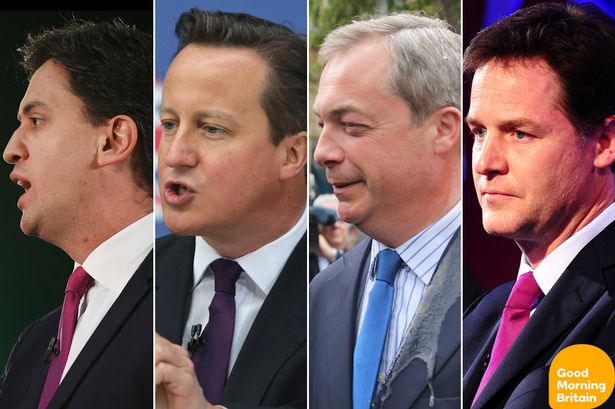
There is a broader and important point about the accountability of politicians. Tony Blair, ever the showman, held monthly press conferences in an attempt to explain himself. Sometimes, if the timing was right, these events were a very difficult hour for the prime minister. Gordon Brown broadly continued the tradition. Cameron abolished them. He remains available for the occasional newspaper interview with a friendly proprietor and, at conference time, finds time for a 20-minute breakfast inquisition. But his favourite forum is Good Morning Britain, a revealing discussion with a woman’s magazine about his cooking prowess or three questions on regional radio interspersed with a Barry Manilow song.

And Janet Daley, writing in The Telegraph, explains why Cameron’s latest dodge may be a political miscalculation:

Continue reading

TV Election Debates? Empty-Chair The Lot Of Them


Behold our political leaders debating whether or not they should participate in televised debates ahead of the general election.

We have wasted an inordinate amount of time over the past two weeks worrying about the general election televisised party leader debates. Countless headlines and front pages have been devoted to the “will they, won’t they” game of brinksmanship being played out by David Cameron and the other party leaders. Ed Miliband wasted the better part of his Prime Minister’s Questions attack on the subject. And for what?

What are we really getting excited about when we feverishly speculate over whether the debates will happen, and which of the identikit politicians will bother to appear on stage? Do we actually expect to hear serious new policy initiatives being announced? An honest discussion about the budget deficit, and competing but realistic spending plans that will bring the public finances back into balance? A searching discussion about twenty-first century Britain’s place in the world?

Has anything happened over the past five years to give us cause to hope for these things? And here’s an even more important question: Why do we care about the debates anyway?

Continue reading