Thirty Years After Challenger, Who Now Inspires Us To Dare Mighty Things?

Whether we meet triumph or disaster in our national endeavours, our politicians – and their words – are no longer up to the job of inspiring us to move forward

“Far better it is to dare mighty things, to win glorious triumphs, even though checkered by failure, than to take rank with those poor spirits who neither enjoy much nor suffer much, because they live in the gray twilight that knows not victory nor defeat”

– Theodore Roosevelt, 1899

Thirty years ago today, the NASA space shuttle Challenger exploded in flight shortly after takeoff, killing the crew of seven.

Responding to the tragedy, which was witnessed by millions of people on live television – including many schoolchildren, for one of the astronauts was to be the first teacher in space – US president Ronald Reagan addressed the nation. He said:

We’ve grown used to wonders in this century. It’s hard to dazzle us. But for twenty-five years the United States space program has been doing just that. We’ve grown used to the idea of space, and, perhaps we forget that we’ve only just begun. We’re still pioneers. They, the members of the Challenger crew, were pioneers.

And I want to say something to the schoolchildren of America who were watching the live coverage of the shuttle’s take-off. I know it’s hard to understand, but sometimes painful things like this happen. It’s all part of the process of exploration and discovery. It’s all part of taking a chance and expanding man’s horizons. The future doesn’t belong to the fainthearted; it belongs to the brave. The Challenger crew was pulling us into the future, and we’ll continue to follow them.

[..] There’s a coincidence today. On this day three hundred and ninety years ago, the great explorer Sir Francis Drake died aboard ship off the coast of Panama. In his lifetime the great frontiers were the oceans, and a historian later said, “He lived by the sea, died on it, and was buried in it.” Well, today, we can say of the Challenger crew: Their dedication was, like Drake’s, complete.

The crew of the space shuttle Challenger honored us by the manner in which they lived their lives. We will never forget them, nor the last time we saw them, this morning, as they prepared for their journey and waved goodbye and “slipped the surly bonds of earth” to “touch the face of God.”

Two decades earlier, and another tragedy. On April 4 1968, Martin Luther King Jr. was been shot and killed by an assassin in Memphis, Tennessee.

On hearing the news, Robert Kennedy, then junior senator from New York, addressed a crowd of people in the open air in Indianapolis, saying:

Martin Luther King dedicated his life to love and to justice between fellow human beings. He died in the cause of that effort. In this difficult day, in this difficult time for the United States, it’s perhaps well to ask what kind of a nation we are and what direction we want to move in. For those of you who are black — considering the evidence evidently is that there were white people who were responsible — you can be filled with bitterness, and with hatred, and a desire for revenge.

We can move in that direction as a country, in greater polarization — black people amongst blacks, and white amongst whites, filled with hatred toward one another. Or we can make an effort, as Martin Luther King did, to understand, and to comprehend, and replace that violence, that stain of bloodshed that has spread across our land, with an effort to understand, compassion, and love.

My favorite poem, my – my favorite poet was Aeschylus. And he once wrote:

Even in our sleep, pain which cannot forget
falls drop by drop upon the heart,
until, in our own despair,
against our will,
comes wisdom
through the awful grace of God.

What we need in the United States is not division; what we need in the United States is not hatred; what we need in the United States is not violence and lawlessness, but is love, and wisdom, and compassion toward one another, and a feeling of justice toward those who still suffer within our country, whether they be white or whether they be black.

[..] And let’s dedicate ourselves to what the Greeks wrote so many years ago: to tame the savageness of man and make gentle the life of this world. Let us dedicate ourselves to that, and say a prayer for our country and for our people.

Now think about the last great British political speech you remember.

And don’t mention Hillary Benn huffing about Britain doing “our bit” to defeat ISIS in Syria, because competent and well delivered though it was, if that now passes for a great political speech for the ages then we are all ruined.

Need some more time to think?

Challenger Shuttle Memorial

There is no poetry in our politics any more. There is barely even decent prose, judging by the inauthentic passion of Ed Miliband or the randomised utterances of someone like Sarah Palin in America. In place of poetry – the kind of language which is only possible when we focus on ideas, goals or aspirations bigger than ourselves – we have dull, technocratic language about the performance of our precious public services, and overwrought emotional language either detailing how something makes us feel, or demonising the other side (the Evil Tories).

Imagine if David Cameron responded to some future aviation or exploration disaster by talking about slipping the surly bonds of Earth and touching the face of God. Just picture it. He would be laughed out of office – or at least mercilessly pilloried in the press – for speaking in what we would now consider to be such a pompous way. At best you might tease from him a few careless, cookie-cutter lines about the families of the victims being in our “thoughtsnprayers” (or just thoughts now, more commonly). But nothing big picture. Nothing that encourages us to look beyond ourselves for one second.

That’s because in our society today, there is nothing bigger than the Self. We are the gods of our own lives – or at least we often think so. And politicians, painfully aware of this fact, talk down to us as though we were children, always seeking to catch our eye with flashy pledges of “what’s in it for us” rather than what is necessarily good for the country, or for human liberty and progress.

Vote Labour and your NHS waiting times will go down. But don’t worry, we’ll get them to pay for it through higher taxes. Vote Conservative and your taxes will go down, and if that means fewer public services for them, so be it.

Now I’m certainly not suggesting that taxes and public spending are not important issues. But when even the Conservative Party can fight the 2015 general election on an offensively paternalistic manifesto promising “a plan for every stage of your life“, can we really deny that we have become a nation of consumers rather than citizens, more interested in who will deliver the most goodies for ourselves and the people we like than who will best steer the ship of state through challenging times?

That’s what we now expect from our prime ministers today – not a world leader, but a lowly Comptroller of Public Services. No call to arms in service of a great national goal. Nothing remotely inspirational at all. Just a checklist of things promised to us in return for our vote. I’m not assigning blame for this depressing chicken-or-egg state of affairs. But this is how our politics now works, more than ever. Less asking “what you can do for your country”, and much more emphasis on “what your country can do for you”.

Even the coming EU referendum – when the British people have a vanishingly rare opportunity to reconsider the very way that we are governed, the way we face the world and deal with the challenges and opportunities of globalisation – is being treated by the main campaign groups on either side as a parsimonious matter of saving or incurring relatively trivial sums of money, with rival (and equally ludicrous) numbers being batted back and forth by the rival camps.

Vote Leave asks us to imagine freedom from the EU in dismal terms of saving enough money to build a new NHS hospital every week, as though that trumps the democratic right of the British people to live in a sovereign country, while Britain Stronger in Europe attempt to bribe us with a gimmicky calculator purporting to show how much our shopping bill will go up unless we remain part of a European political union.

It’s all so tediously depressing and uninspiring. Is it any wonder then that political apathy is on the rise, and that those of us who remain engaged increasingly opt for virulently anti-establishment parties like UKIP or the SNP? Or that with the decline of moderate religion and our failure to confidently express and transmit British values through our culture, some disaffected young Muslims, rootless and yearning to feel part of something bigger, are stealing away to Syria to fight for ISIS?

I’m a political blogger, and for my sins I sit and listen to far too many political speeches by cabinet ministers, shadow ministers and other establishment types. And to begin with, I thought that I would judge a speech according to whether it felt in any way inspirational, transcendent or like a genuine attempt to rally people toward a goal beyond their own personal enrichment and the state-sanctioned smiting of the hated “other”. A speech which, regardless of its political leaning, might set the pulse racing a little with possibility.

Well, four years later and my pulse continues to flatline. I haven’t heard a genuinely good speech yet – as in one that you might actually remember six months later or recite a key passage from – at least not one hailing from the three main parties. If anybody believes that they have heard one, please send me a link or transcript and I will be forever in your debt.

Maybe I’m just romanticising the past. Maybe in thirty years’ time when Ed Miliband’s kid is running for the leadership of the Labour Party, we will all look back on Ed’s fifteenth personal relaunch speech or David Cameron’s 2015 general election stump speech and hail them as bold, visionary masterpieces. Maybe.

But I strongly suspect that in the year 2046, anybody wanting to listen to listen to a great British political speech – with the exception of those made by firebrands like Margaret Thatcher – will have to look back in time almost a century, and certainly past the haunted late years of the 2010s.


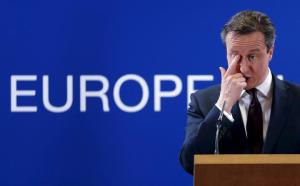
Downing Street - Podium - Lectern - Press Conference.jpg

Agree with this article? Violently disagree? Scroll down to leave a comment.

Follow Semi-Partisan Politics on TwitterFacebook and Medium.

No, Mr. Cameron – This Is Not “Your Referendum”

As far as David Cameron is concerned, the coming EU referendum is nothing more than his personal plaything, an event to be moved about and manipulated as he pleases in order to achieve the “right” result

One throwaway line in the prime minister’s speech to the World Economic Forum in Davos yesterday captured at a stroke the sheer arrogance and duplicity behind the government’s approach to the EU referendum.

From the Independent’s summary of the speech:

David Cameron has told an audience at Davos that he would walk away from a Brussels summit in February if an agreement can not be reached on the UK’s EU Referendum.

“I want to put that to people in a referendum and campaign to keep people in the European Union. If there’s a good deal, we’ll take it. But if there’s not a good deal, I’m not going to hurry, I can hold my referendum any time until 2017,” Cameron said.

“My referendum”. Not Britain’s referendum. Not the public’s referendum. His referendum. David Cameron’s personal referendum.

Strangely, that might actually be the most honest thing that David Cameron has ever said on the subject of Europe and the coming EU referendum. Because given the fact that this cosmetic “renegotiation” has been taking place behind closed doors, with no formal demands and without any input from the British people themselves, the only fingerprints to be found on the whole rotten affair are indeed those of David Cameron and his ministers.

It is becoming increasingly clear to me (not that there was every any doubt) that this referendum will not be a fair fight – in fact, that it will be about as far away from a fair fight as it is possible to be. Just as Russia holding elections does not make that country a democracy, so the fact that the British people are being offered a Remain/Leave vote on the EU question does not mean that the outcome will be in any way legitimate.

It is possible to go through the rote motions of democracy, but do so without observing the spirit of democracy. And when that happens, neither side has cause for happiness with the outcome. If the Remain side win the referendum, their victory will be hollow, having been won on the back of a campaign built on fearmongering, outright deception and tactical manoeuvring by the government. And if (as currently seems probable) the Leave side loses the referendum, the issue will be far from settled. Many Leave campaigners, having been so blatantly cheated, will continue to rail against the European Union and do everything possible to raise awareness of its flaws and undermine the creaking structure from within. I certainly will.

The continued speculation over when exactly “David Cameron’s referendum” will take place is tedious and dispiriting. It should not be considered naive to hope for a prime minister – a leader – who sets out to do the work of the people, representing them and fighting for their priorities and interests in an honest, transparent manner. But in David Cameron we have a prime minister who gives every appearance of negotiating with the British people (or at least manipulating them) on behalf of the European Union, rather than the other way around.

All of this takes place between David Cameron’s repeated assurances to the European media that he feels “deeply European” from the “bottom of his heart” – either forgetting that in the year 2016 it is not possible to say something while abroad without it instantly filtering back home, or simply no longer caring about enraging eurosceptics by flaunting his own passionately pro-EU position.

Fine. Be that as it may. David Cameron was never a eurosceptic or a supporter of the Brexit cause, and at this point nobody expects anything else from him. But having so obviously sought to stack the deck in order to achieve his desired outcome from the referendum, the prime minister has no right to expect us to shut up and accept a future “Remain” vote when he has interfered with the process and undermined democracy at every turn.

David Cameron - European Union

Agree with this article? Violently disagree? Scroll down to leave a comment.

Follow Semi-Partisan Politics on TwitterFacebook and Medium.

Small Minds Discuss People: The Media’s Coverage Of The EU Referendum

Boris Johnson - Theresa May - EU Referendum - Brexit - Conservative Party

The EU referendum is about the British people, not the Westminster game of thrones

Another day brings another tiresome round of court gossip about which Conservative ministers might potentially campaign for Britain to leave the European Union in the coming referendum.

This time the breathless gossip is reported in Guido Fawkes:

A co-conspirator tucking into his ravioli in Westminster’s Quirinale restaurant looked up to see Theresa May and Liam Fox settling down to lunch. An hour earlier Fox had asked the Home Secretary for assurances over the government’s line on Russia, so you can bet that was on the menu. Though the main topic for discussion will almost certainly have been Europe.

There has been speculation that May has been meeting with leading Eurosceptics as she keeps her options open ahead of the referendum. Where better for Dr Fox to lobby her to lead the Out campaign than one of the pricier Italian restaurants in SW1? 

While the Evening Standard gushes about Boris Johnson:

What vexes the fledgling campaign to stay in the EU is the prospective behaviour of Boris Johnson and Theresa May: in the words of one Westminster insider, “they are the only players who could change the weather”.

True enough. Boris has the popular appeal to make the Out campaign blossom with optimism and good cheer, ridding it at a stroke of its negative, wintry disposition. May, on the other hand, would bring the authority of a great office of state to the Brexit campaign. Both politicians are taken seriously within the Tory tribe as prospective successors to Cameron. Small wonder that their every move is being scrutinised so closely.

Seasoned Boris-watchers (or Bozzologists) admit that his behaviour is presently inscrutable. Those I have spoken to incline — just — to the view that he will decide eventually to stick with the In camp, though without much conviction.

Before going on to say of Theresa May:

In 2010 May was startled to be given such a senior brief. Since then she has become incrementally persuaded that she has what it takes to succeed Cameron. Like Boris, she knows her leadership prospects are intimately entangled with her conduct in the EU referendum. But if she is serious about taking on the boys for the top job, she should give the Out camp a wide berth.

As Michael Heseltine used to say as he prepared his challenge to Margaret Thatcher, most contenders only have one bullet in the chamber. If May aligns herself with the Out movement, she will be handing the gun to others and inviting them to do as they please with her accrued political capital. So if her head has indeed been turned by the flattery of the Brexit crew, it should be turned back — and fast.

Because we all know that the really important thing in this referendum is not the profound and historic choice that the British people will make about how we wish to be governed in the twenty-first century, but rather the salacious court gossip over which cabinet ministers and wannabe future Tory leaders will risk their bright young (or not-so-young) careers by allying themselves with the Brexit cause.

Never mind that awkward S-word, sovereignty. That’s boring. Never mind a detailed and difficult discussion about the realities of global governance. That would require research. Proving the adage that great minds discuss ideas, average minds discuss events and small minds discuss people, most of the British media is happy to talk about people and the petty personalities involved in the public debate, to the near total exclusion of everything else.

If you want serious, granular analysis and argument on either side of the referendum debate, there is no point looking in the pages of the Times, the Telegraph, the Guardian, the Spectator or any other publication claiming prestige. All you will find there are thinly veiled press releases from one or other of the groups squabbling for lead designation, or worryingly naive editorials from household name commentators who sound suspiciously like they have done no independent research of their own. Very unimpressive.

No, for serious analysis you have to turn to the blogosphere, and sites like eureferendum.com and Leave HQ on the Brexit side, or Hugo Dixon on the Remain side. And the difference is like walking from a junior school classroom to a tutorial room at Oxford or Cambridge. Absent are the mindless platitudes and stale (often long-ago disproven) talking points that are so often repeated on television and in the broadsheets, and in their place are references to the real, murky world of global regulation – a world which, once discovered, proves that the EU is not the “top table” as europhiles blithely claim, but also that an orderly Brexit would not lead to an instant “bonfire of the regulations” as some on the Leave side stubbornly insist.

Some eurosceptics and Brexiteers would say I am wasting my time by even bothering to mention low-grade newspaper gossip such as the Boris Johnson vs Theresa May game of thrones. And they have a good point, to a degree. This referendum is about the British people and what they think is best, not what government ministers, opposition politicians or establishment media figures may want. Fair enough.

But you can’t just look at these shenanigans in isolation. Is the coming Brexit referendum the most important thing to happen politically in a generation? Yes, absolutely. But that does not mean that we should focus on the referendum outcome to the extent that we ignore the failings and misdeeds of the political class who were here before the referendum became a reality and will (sadly) be here long after it is but a footnote in history.

There is the future stewardship of the country to think about. And I want Britain’s future political leaders to be (so far as possible) principled people with the courage of their convictions. If they claimed to hold a certain view on an important issue like Britain’s membership of the European Union to get elected, they should then follow that through once in office.

Consequently, this blog will be taking a very dim view indeed of any Conservative politician who wrapped themselves in the cloak of euroscepticism to win selection, only to run loyally to David Cameron’s heels like an obedient dog and campaign for a “Remain” vote when it really counts.

This debate should be about ideas first and foremost. That is where this blog will focus. However – and maybe this a sign that I lack a great mind – I for one will certainly remember those people who put their personal careers ahead of their commitment to democracy when it comes to this existential referendum.

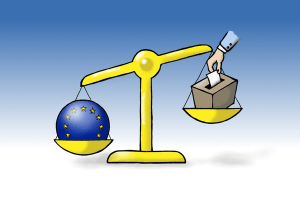
EU Democracy - Brexit

Agree with this article? Violently disagree? Scroll down to leave a comment.

Follow Semi-Partisan Politics on TwitterFacebook and Medium.

Cameron’s Fear That EU Partners Will Reveal Truth About His “New Deal”

British People - EU Renegotiation - Referendum - Brexit

David Cameron is negotiating with the British people on behalf of the European Union, not the other way around

David Cameron’s entire “renegotiation” (in fact in has been no such thing, for there were never any demands made) has all been completely backwards, with the prime minister far more interested in huddling with fellow European ministers to work out what kind of a deal might be successfully snuck past the British people than conducting any kind of listening exercise with the British public to determine what key concerns and demands need to be taken to Brussels.

And we see yet more evidence of this in the Times’ Red Box briefing today, which reports on the understandable concern from the government that the meaningless superficiality of David Cameron’s “reform” will be inadvertently exposed by a fellow European leader or minister who makes the mistake of telling the truth:

British ministers are urging their European counterparts to talk up David Cameron’s renegotiation deal to persuade British voters that it is significant.

There are fears in the UK government that some foreign leaders, who have been irritated by Cameron’s demands, will be publicly dismissive of any deal agreed at next month’s European Council summit.

Senior British figures point to polling that shows that opinion on the EU is evenly split, but if voters think the prime minister has secured “major change” they will vote overwhelmingly to stay.

[..] The nightmare scenario is if a minister from Germany, France or Poland goes on the record to say Cameron’s changes are meaningless window dressing.

The piece goes on to quote polling which suggests that successfully presenting the output from the renegotiation as “major change” dramatically increases the probability of a “Remain” vote:

Asked to “imagine David Cameron has secured a small change in Britain’s relationship with the European Union, securing guarantees over some key issues that he said protected British interests, but without any major change in which policy areas the European Union has powers in”, 38 per cent wanted to leave and 37 would want to stay.

If Cameron “could not secure any change” and the referendum was held with the EU “as it is now”, 46 per cent would leave and only 32 per cent remain.

But if Cameron gets “major change” including “substantial changes to the rules Britain has to follow and British opt-outs from European Union rules in several different policy areas” the result is dramatically shifted

Some 50 per cent of people would then vote to remain, with only 23 per cent determined to leave.

None of this is in any way surprising, and as such it is not really “news” at all. Anybody with their head properly screwed on knows that the government is not conducting a serious renegotiation with the EU in good faith with their mandate from the British people, and that everything we are now witnessing is part of a co-ordinated public perceptions and expectations management effort from a prime minister and a government who made their minds up long ago.

But while this is hardly breaking news, it is still worth taking the time to pause, step back from the daily commotion of the Brexit debate, and marvel at the bigger picture.

The first duties of any elected government – of any prime minister – are to advance the national interest of the United Kingdom, and to fulfil the mandate on which they were elected in the first place. Feeling the pressure from UKIP midway through the last parliament, David Cameron chose to offer a referendum on Britain’s continued membership of the EU – against his better judgement, his personal pro-Europeanism and his (wrong but sincerely held) belief that Brexit would be against our national interest.

But since having been returned to power in May, the prime minister has not acted in good faith based on that mandate. In fact, he has been deliberately deceptive and manipulative, seeking to create and propagate the illusion that he is pounding tables in Brussels and fighting for our priorities in Europe, when he never even bothered to check what those priorities are, let alone insist on any specific concessions.

David Cameron and his loyalist cheerleaders prance around as though they have bravely confronted the EU with a specific list of demands designed to win back sovereignty and secure it forever, when all they did was write a wheedling, begging letter to Donald Tusk hesitantly suggesting a few topics of discussion – half of which were slapped down the same day.

This is how you end up with the risible scenario of George Osborne appearing on Newsnight yesterday to give an update on “renegotiations” which are not taking place, and declaring himself a eurosceptic despite the fact that he is currently engaged in nothing more than a joint marketing effort with our EU partners to hoodwink British voters into thinking that we have won some meaningful concessions:

If David Cameron, George Osborne and the more vacuous half of the Conservative Party can all describe themselves as “eurosceptic” and do so with a straight face, then we are all eurosceptics now. Everyone, from Martin Schulz, Jean-Claude Juncker, Kenneth Clarke and the entire sorry cast of Britain Stronger in Europe would qualify as a eurosceptic by this metric, because everybody concedes that the EU needs reform of one kind or another (even if that reform involves “more Europe”).

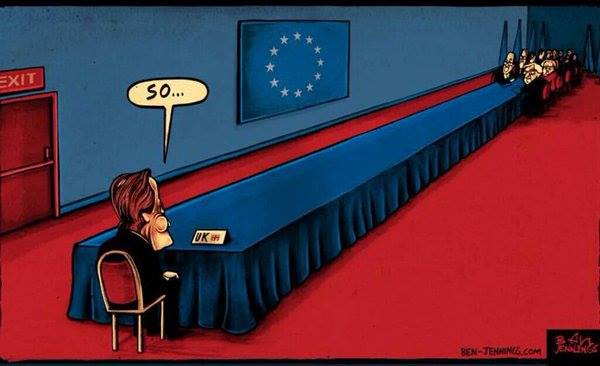
In fact, it is not an exaggeration to say that when it comes to this non-renegotiation, the British public are effectively sitting at one end of the long conference table while the British government schemes and confers with the rest of the European Union at the other end.

I know it is hopelessly idealistic of me, but I expect more from my elected government. And it is getting tremendously tiring waking up every day wondering what new schemes,devices and cunning plans the prime minister of this country intends on using to hoodwink and misdirect the people he supposedly serves into believing that he is in any way working on their behalf.

A greater man than David Cameron – if his devotion to the EU and fear of Brexit were similarly genuine – might have stood up and declared that because he believes EU membership to be strongly in our national interest, he couldn’t in good conscience put it to a popular vote or negotiate in an unbiased way on behalf of the United Kingdom. Yes, such a stance would have further fuelled the rise of UKIP, but at least I could respect the intellectual honesty and consistency.

But David Cameron did not do this. Rather than behaving with honour or principle, Cameron swanned around, pretending to share the public’s concerns about the European Union, and then – as soon as his re-election was secure and the UKIP threat neutralised – zipped across to Brussels to begin plotting with fellow EU heads of government and state as to how Britain’s pesky electorate could best be mollified, placated and distracted while the Brussels juggernaut rolls on unopposed.

And they wonder why there is a strong public perception of a self-serving European political elite who doggedly pursue their own interests in direct opposition to the will and interests of their national electorates!

There is only so much that one can take of duplicitous politicians who pretend to be eurosceptic and favour Brexit when stumping for votes or positive headlines, but whose every action contradicts this stance once in power. And I may have finally reached my limit.

If the EU’s form of parochial pseudo-internationalism really does represent the best future of human governance – and it really, really, really doesn’t – then politicians should come out and say so. They should own their love and admiration of the EU and their lack of faith in Britain, instead of hiding from these things and pretending to be eurosceptics.

I respect any politician of any stripe who has the courage of their convictions – who is able to articulate a sincerely held viewpoint without first running it by a focus group, and whose commitment to their causes runs deeper than exploiting them for electoral gain. That’s why I maintain a degree of respect for Jeremy Corbyn, despite sharing none of his socialist beliefs.

Jeremy Corbyn’s sincere-but-loopy socialism I can respect. The unabashed European federalists in Brussels I can respect, too. Though hardly any of them are democratically elected officials, at least they have the courage to hail their creation for what it is – an embryonic state in gestation.

But David Cameron and George Osborne – europhiles in stolen eurosceptic clothing, actively engaged in perpetrating a moral fraud on the British public – people like that I cannot respect, do not respect and will never respect.

Brexit - Flexcit - European Union

Top image: cartoon by Ben Jennings

Agree with this article? Violently disagree? Scroll down to leave a comment.

Follow Semi-Partisan Politics on TwitterFacebook and Medium.

A Plan For Every Stage Of Your Life

David Cameron - Parenting Classes - Plan for every stage of your life - Coke Zero Conservatism

David Cameron’s rootless Conservative government is casting around, finding ever more ways to shoehorn the state into our lives

Buried in all the talk of Brexit and Bowie this week has been the Prime Minister’s announcement that he intends to force every British parent to take state-run classes in parenting – if not on pain of criminal penalty then at least at the sharp end of some pointed fiscal incentives.

The Telegraph reports:

All parents should enrol in state-backed parenting classes to learn how to raise their children properly, David Cameron will say as he announces a new plan to stop families breaking up.

[..] He will use a major speech on Monday to set out proposals for a new voucher system to incentivise parents to attend the classes in an attempt to make parenting advice socially “normal” and even “aspirational”.

The Prime Minister’s plan comes as he announces a £70 million investment in relationship counselling to prevent hundreds of thousands of families splitting up over the next five years.

Mr Cameron’s speech marks the latest step in delivering on the Conservatives’ key election promise to help families at every stage of life.

So here we are. The man who lets his daughter be carried around in a Waitrose bag in the Downing Street gardens – when he isn’t accidentally leaving her behind at the pub – thinks that the rest of the country make such bad parents that what they really need is a big, heaped spoonful of big government medicine to set them straight.

One does not have to deny that family breakdown and – how to put it – “unaspirational” parenting have real, negative consequences in our society to balk at the notion of government run classes enforcing the childrearing fads of the day on first time parents.

And Cameron is not even targeting potentially troubled familes – that would be far too judgemental. No, these classes will be “made available” to all, because children “don’t come with a manual” and apparently what has worked for parents for thousands of years is suddenly insufficient to the task of raising a child in twenty-first century Britain.

Dr. Ellie Lee retorts in Spiked magazine:

As parents well know, it is one thing to seek out genuine expertise and help when a child has specific problems (for example, parents of a sick or disabled child will do everything they can to get help from doctors and find all the advice possible to make their child’s life better). But it is quite another to imagine that parents want to be taught the supposedly general skill of parenting. Rather, being a parent means taking on the responsibility for trying, experimenting, failing and learning from experience over and over again. And parents find that the best people to support them in their childraising are those in their family and local community.

… [This] episode shows how a belief in parental determinism, justified through neuro-nonsense, generates a policy programme based on the idea that raising children is just too important and difficult to be left to mere parents, their families and their communities. Those who hold an a priori belief in the need for parenting education simply cannot accept that parents may neither need nor want expert advice. The only conclusion they draw is that more must be done to find ways to train parents, and to increase parents’ ‘demand’ for their own training. Furthermore, they openly support the idea that taking babies away from their mothers is a way to ‘alter destinies’ and ‘improve life chances’.

Policymakers and a parasitical layer of third-sector organisations, whose claim to expertise and professional status lies in knowing how to improve others’ ‘relationships’, are telling us nothing about parents and the family. And it’s not just parents who lose through the relentless politicisation of parenting, and, by association, the private sphere; it’s all of us.

How long, one wonders, until David Cameron seizes upon that totalitarian idea from north of the border, and seeks to introduce a Scottish-style Named Person scheme in England and Wales, whereby a specified adult named by the government is placed in a position of co-responsibility, together with the parents, for the welfare of every newborn child?

Don’t think he wouldn’t do it. If we have learned nothing else about David Cameron since he came to power in 2010, we know that there is no conservative, small government principle which he is not happy to cast into the woodchipper if it helps him to dominate the political centre ground and atone for the supposed reputational sins of Thatcherism.

Never mind that the Named Person scheme was cooked up by Nicola Sturgeon’s swivel-eyed SNP government in Scotland, and is the complete antithesis to how a restrained state should behave. That won’t stop David Cameron if he spies an opportunity to undermine the nationalists, steal a march on the Labour Party and gain short-term tactical political advantage.

But that doesn’t make it good policy, good politics or the right thing for any party calling itself “conservative” to be doing. Who within the Conservative Party – James Cleverley, Chris Philp, Lucy Allan, David Nuttall? – will stand against this creeping tide of paternalism, one which is otherwise likely to be implemented unopposed given that both sides of the warring Labour Party would probably also approve?

Mandatory parenting classes as part of your masterplan for every stage of our lives?

Dear God, man, stop talking. You sound more socialist than Jeremy Corbyn.

No to Named Person Scheme

Agree with this article? Violently disagree? Scroll down to leave a comment.

Follow Semi-Partisan Politics on TwitterFacebook and Medium.